Getting an Oklahoma marijuana grow license right now is more complicated than it sounds, mainly because new commercial grower licenses have been under a state moratorium since August 2022. If you are researching an Oklahoma grow license today, you need to know that upfront before you spend time preparing an application. That said, the moratorium is tied to a specific end date, the regulatory landscape is actively shifting, and understanding the full process now puts you in a much stronger position to move fast when the window reopens. This article covers what a grower license actually lets you do, who qualifies, what it costs, and exactly how to apply. Note: this is regulatory information, not legal advice.
Oklahoma Grow License Guide: Types, Costs, Steps, Limits

Marcus Whitley
3 Apr 2026
What an Oklahoma grow license lets you do

An Oklahoma grower license, issued by the Oklahoma Medical Marijuana Authority (OMMA), authorizes a business to legally cultivate marijuana for medical purposes in the state. It is a commercial license, not a personal or home grow permit. If you want to grow cannabis plants as a licensed business and sell or transfer that product to other licensed businesses, this is the license you need.
One useful detail: when OMMA approves a grower license, it simultaneously issues a transporter license to that same licensee. That transporter credential allows you, through licensed transporter agents, to move your own medical marijuana and products to other licensed businesses. So the grow license comes bundled with the legal ability to handle your own product transportation, which simplifies at least part of the compliance picture.
The license is tied to a specific physical location. You cannot use one license to grow at multiple addresses. The address on your license is the address you operate from, period.
Oklahoma grow license requirements: eligibility, facilities, and rules
Who can apply

OMMA has clear eligibility rules. Applicants must be Oklahoma residents and at least 25 years old. On the ownership side, at least 75% of the ownership interests in the business must be held by Oklahoma residents. All owners and officers must pass a background check, and the cost of those background checks falls on the applicant, not the state.
For the background check process, OMMA requires documentation of completed checks. If you run into trouble getting national fingerprint results, OMMA does have a temporary attestation pathway that involves completing an OSBI state background check plus submitting an "Attestation Regarding National Background Check" form. The grower license page spells this out, so check there if you hit a snag.
Facility and location requirements
- Your grow facility's property line must be at least 1,000 feet from the property line of any public or private school.
- You must submit a surety bond or proof of land ownership as part of your application.
- A Certificate of Occupancy (or Attestation of Application for a Certificate of Occupancy) and a Certificate of Compliance with local zoning are required documents.
- The license is tied to the exact physical address on file — if you move or open a second site, you need a separate license.
- Your business name on the license must match your legal business name; if you operate under a trade name or DBA, that must be listed separately.
OMMA's Commercial Application Checklist is the most important document to read before you start filling anything out. It covers the full range of documentation requirements and catches a lot of the detail errors that slow applications down. Security requirements and other operational restrictions also apply, and the checklist along with OMMA's published rules are where those are fully laid out.
Signage compliance (don't skip this)
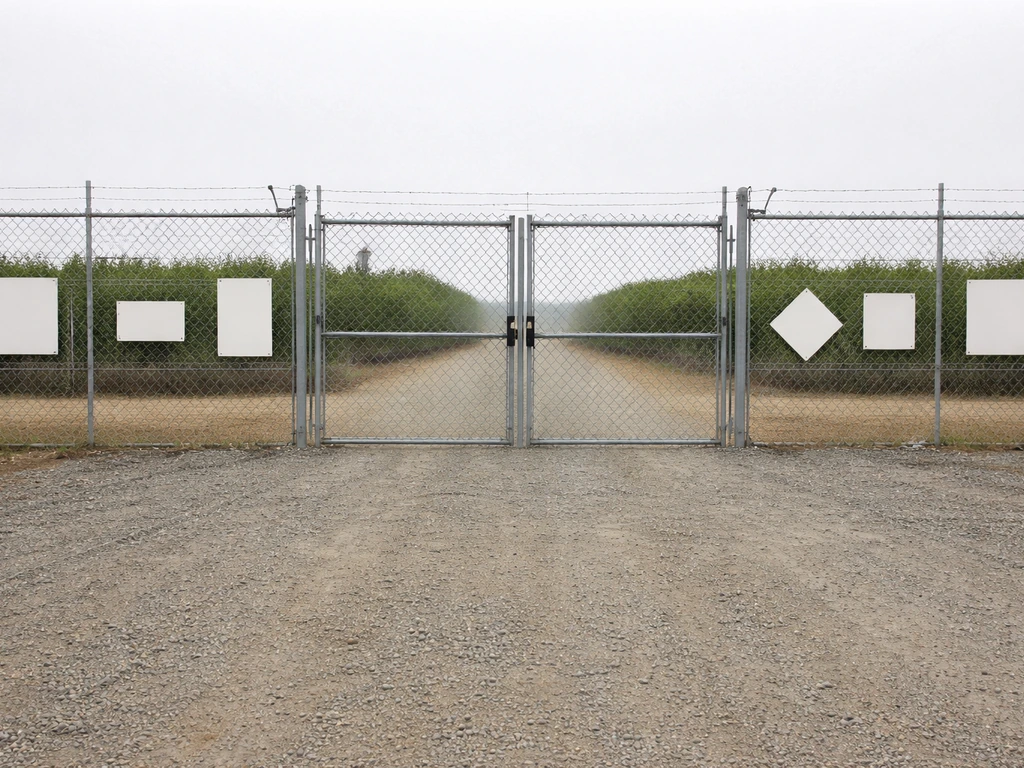
Even after you are licensed, OMMA enforces physical compliance at your grow site. Oklahoma law requires commercial growers to post signage at the perimeter of their facility that includes the business name, address, phone number, and OMMA license number. OMMA took legal action against 165 grow facilities over signage noncompliance, so this is not a technicality they overlook. Get your signage right from day one.
License types and who should apply for each
Oklahoma's grower license system is tiered by canopy size rather than offering separate license categories for "small" versus "large" grows. All commercial growers apply for the same grower license type, but the application fee and renewal fee scale based on how many square feet of canopy you plan to operate. Here is the full fee tier structure for indoor, greenhouse, and light deprivation grows:
| Tier | Canopy Size | Application Fee |
|---|---|---|
| Tier 1 | Up to 10,000 sq. ft. | $2,500 |
| Tier 2 | 10,001 – 25,000 sq. ft. | $5,000 |
| Tier 3 | 25,001 – 50,000 sq. ft. | $10,000 |
| Tier 4 | 50,001 – 75,000 sq. ft. | $20,000 |
| Tier 5 | 75,001 – 100,000 sq. ft. | $30,000 |
| Tier 6 | 100,001 – 150,000 sq. ft. | $40,000 |
| Tier 7 | 150,001+ sq. ft. | $50,000 + $0.25 per additional sq. ft. |
Most first-time applicants starting a cultivation operation will fall into Tier 1 or Tier 2. If you are comparing Oklahoma's approach with other states, it is worth noting that states like New Mexico structure their grow license costs very differently, which gives useful context for what Oklahoma's fees actually mean in a regional market.
There is no separate "home grow" or caregiver cultivation license through OMMA's commercial program. If you want to grow for personal medical use, that falls under patient rules, not the commercial grower license covered here.
How to get a grow license in Oklahoma: the application steps
- Check the moratorium status at OMMA's Apply page before doing anything else. As of today, new grower licenses are under a moratorium extended to August 1, 2026. Unless OMMA's Executive Director determines that pending reviews, inspections, and investigations are complete, no new applications will be processed before that date.
- When the moratorium lifts, create your account on the OMMA MedPortal, which is OMMA's official licensing and inspection software platform. All applications go through this system.
- Download and work through OMMA's Commercial Application Checklist. This document tells you exactly what to upload and what must be in order before you submit.
- Confirm your business structure and ownership documentation. You need entity formation documents and proof that 75% of ownership interests are held by Oklahoma residents.
- Order background checks for all owners and officers. Budget time for this — OSBI and national fingerprint results can take weeks, and your application cannot move forward without them.
- Secure your facility documentation: surety bond or proof of land ownership, Certificate of Occupancy (or attestation if it's pending), and your local Certificate of Compliance showing zoning approval.
- Confirm your location is at least 1,000 feet from any school property line. Document this measurement.
- Submit your application through MedPortal with all required documents uploaded. OMMA processes commercial license applications within 90 business days of a complete submission.
- After approval, make sure your perimeter signage is up immediately with all required information: business name, address, phone number, and OMMA license number.
The 90-business-day processing window only starts on a complete application. Incomplete submissions restart the clock, which is one of the most common ways applicants lose months of time they did not need to lose.
How many grow licenses are available in Oklahoma
Oklahoma does not operate on a simple "first come, first served, unlimited" model. There are two important limitations to understand: the current moratorium and a legislated cap on total licenses.
On the cap side, legislation passed in 2026 (HB 3144) placed a hard cap of 2,550 total medical marijuana commercial grower licenses statewide. OMMA's licensing and tax data reports show the licensed grower count has been declining as licenses expire or are surrendered: January 2, 2026 showed 2,261 active growers, February 2, 2026 showed 2,164, and March 2, 2026 showed 2,175. That means as of early 2026, the number of active licenses is already well below the 2,550 cap, which is worth noting for when the moratorium lifts.
OMMA publishes updated license counts on its Licensing and Tax Data page, which releases reports on a monthly basis. That is the right place to check current numbers. There is also a policy discussion at OMMA's advisory council level about future licensing models, including a potential lottery and point-based system for new licenses once adult-use frameworks come into play, so the rules could look different by the time new applications are accepted. Watch OMMA's Legislative Updates page for any changes.
For comparison, states that have gone through similar market corrections after issuing too many licenses include Ohio, which has its own grower license structure and Mississippi, which took a more controlled approach to issuing grow licenses from the start. Oklahoma's moratorium is essentially a course correction after years of aggressive license issuance.
What an Oklahoma grow license actually costs

The application fee is the most visible number, but it is not the only cost you will encounter. Here is a realistic picture of what to budget.
Application fees
The fee tiers listed in the table above are the base application fees. On top of those, OMMA charges a credit card processing fee of 2.25% of (application fee + $2). For a Tier 1 application at $2,500, that adds $58.30, bringing your total to $2,558.30. For higher tiers, that processing fee adds up quickly. The annual license renewal fee is also canopy-based, calculated on actual square feet harvested, transferred, or sold during the previous 12 months, so your renewal cost could differ from your initial application fee depending on how much you actually produced.
Other costs to budget
- Background check fees for all owners and officers (cost varies; OMMA does not cover this).
- Surety bond premiums, if you are using a bond rather than outright land ownership to satisfy that requirement.
- Local zoning and Certificate of Occupancy fees, which vary by municipality.
- Signage fabrication and installation at your facility perimeter.
- If your operation will transport product, note that the transporter license comes with the grower approval, but transporter agent credentials cost $25 per agent.
- OMMA's licensing/inspection software (MedPortal) costs are built into the compliance infrastructure, but factor in any third-party compliance software your operation might need.
If you are weighing Oklahoma against neighboring states, Arkansas has a different cost structure for grow licensing that may be worth comparing depending on where your operation is located relative to state lines.
Common pitfalls and compliance tips before you apply
The most expensive mistakes in this process are the ones that delay your application or trigger enforcement action after you are already operating. Here are the ones worth knowing about before you start.
- Submitting an incomplete application: OMMA's 90-business-day clock starts on a complete, not submitted, application. Missing documents — especially background checks or local compliance letters — are the top reason applications stall.
- DBA/trade name mismatches: If your business operates under a name different from your legal entity name, both must appear correctly on the application. A mismatch here can hold up processing.
- Assuming your property qualifies without measuring: The 1,000-foot school setback needs to be documented, not estimated. Measure and confirm before you commit to a location.
- Ignoring signage from day one: OMMA has shown it will take legal action over signage issues. Post compliant perimeter signs as soon as your license is active.
- Treating the moratorium as a minor detail: The moratorium is real and it affects new applicants directly. If you are a current licensee renewing, it does not apply to you. But if you are trying to get a brand-new license, you cannot apply until it lifts.
- Not monitoring OMMA's Legislative Updates page: The rules around Oklahoma grow licensing have changed multiple times in recent years (caps, moratoriums, fee structures). Staying current is part of the job.
- Underbudgeting for background checks and bonding: These are not optional line items, and they take time to arrange. Start both early in your planning process.
If you want to see how a neighboring state handles some of these same compliance pain points, Missouri's grow license process offers a useful comparison, particularly around background check and ownership documentation requirements.
States that moved through a moratorium or cap period and came out with a functional licensing market include Montana, which navigated its recreational grow license transition with a staged rollout, and Nevada, which has its own established commercial grow licensing framework. Oklahoma's market will get there; the moratorium is a pause, not a permanent closure.
For anyone wanting to explore micro-scale commercial options in a different state as a comparison point, New Mexico's micro grow license requirements show how a smaller-footprint licensing tier works in practice.
Your next steps right now
If you are planning to apply for an Oklahoma grower license, here is what to do today, even with the moratorium in place: bookmark OMMA's Apply page and Grower License page, download the Commercial Application Checklist, and start building your documentation file now. Get your business entity in order, identify your ownership structure, confirm the 75% Oklahoma residency requirement is met, and begin the background check process for all owners and officers. Identify your facility location and run the 1,000-foot school setback check. By the time the moratorium lifts on August 1, 2026 (or sooner if OMMA acts earlier), you will be ready to submit a complete application immediately rather than starting from scratch.
FAQ
Can I change my grow site address after I receive an Oklahoma grow license?
Yes, but you need to treat it as a compliance issue rather than a paperwork issue. The grow license is tied to a specific address, so if you plan to relocate after approval you will generally need OMMA guidance on whether an amendment or new application is required. Before moving, confirm the exact operational status you can maintain at the new site and whether you must update security and signage immediately.
If I have a commercial grow license, can I also grow for my own medical use under the same operation?
Not in the straightforward way many people expect. The state runs a commercial grower license and patient rules separately, and the commercial license is for business cultivation and transfer. If you are trying to combine “personal medical” production with a commercial buildout, you should clarify with OMMA which plants and outputs are tied to the commercial license versus patient activity to avoid mixing that can create enforcement risk.
How can I avoid the 90-business-day clock restarting when I submit an Oklahoma grow license application?
Because processing time starts only when the application is complete, the practical move is to do a completeness pre-check using OMMA’s Commercial Application Checklist and your own document index. Track proof types (for example, fingerprints results versus attestation materials), dates, and signature requirements for each owner and officer. Also plan buffer time for background check documents, since national results can be delayed even when you used the attestation pathway.
What’s the most common ownership residency mistake applicants make under the Oklahoma 75% rule?
The 75% Oklahoma residency rule is about ownership interests, so you need to validate each owner’s status against the ownership structure you plan to submit. A common mistake is assuming “a majority of people are in Oklahoma” is enough, when the rule depends on ownership interests, not headcount. Reconcile cap table math to ensure the qualifying percentage holds before you submit.
How do the credit card processing fees change the real cost of an Oklahoma grow license application?
Yes, but the credit card fee calculation includes both the application fee and a small fixed amount ($2), so the true payment total will differ from the base fee shown in tier schedules. If you are budgeting for multiple submissions, include the processing fee each time you pay, since it will apply again to each separate application payment attempt.
Can my Oklahoma grow license renewal cost be higher or lower than my initial application fee?
Plan for renewal risk based on what you actually harvested, transferred, or sold in the prior 12 months, because the renewal fee is canopy-based on those actual figures. That means a first-year buildout might renew at a different level than your initial application expectations, especially if production ramps slower than anticipated.
What should I verify about the 1,000-foot school setback before signing a lease for an Oklahoma grow facility?
You cannot rely on the general idea of a school setback and assume the same treatment as other states. Oklahoma requires a 1,000-foot school setback check for the facility, so you should confirm the specific point of measurement and the relevant school locations for your address before finalizing a facility lease or build plans.
What details must be on perimeter signage for an Oklahoma grow site, and when should it be installed?
Signage compliance is not just a “once per year” task. OMMA requires the perimeter signage to include the business name, address, phone number, and OMMA license number, and enforcement actions have been taken specifically for signage noncompliance. Build signage installation into your opening timeline so you can document completion immediately when you start operations.
How should I track the statewide license cap situation while preparing to apply?
Because there is a statewide license cap and the market is constrained, you should watch license counts right up to your planned submission. OMMA’s monthly licensing and tax data updates are the best internal signal for active grower trends, and if counts move toward the cap you may see tighter practical competition even if the law provides a ceiling.
What happens if I change owners or officers during the Oklahoma grow license application process?
Even with a facility ready, your ownership and officer background check documentation must be in order for all involved parties. A frequent edge case is adding, replacing, or changing officers during preparation or before submission, which can trigger additional background check steps and delays. If your team is still finalizing, lock the ownership and officer roster early.
Next Article
How to Get a Micro Grow License in Canada: Step-by-Step
Step-by-step on getting a Canadian micro-cultivation cannabis licence, eligibility, costs, timelines, and compliance bas