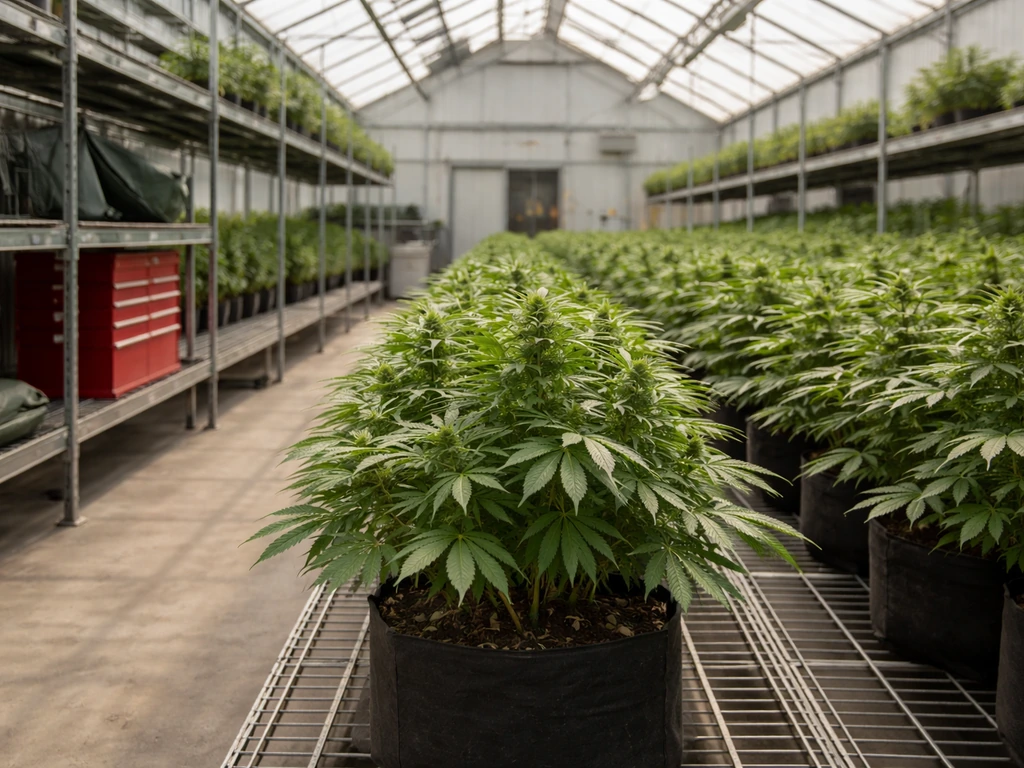
Mississippi does not allow home cultivation of cannabis for personal use. If you want to legally grow cannabis in Mississippi, you need a commercial cultivation license issued through the Mississippi State Department of Health (MSDH) under the state's Medical Cannabis Program. There is no recreational cannabis program and no personal grow permit as of April 2026. That means the only legal path to growing cannabis in Mississippi runs through a licensed medical cannabis cultivation facility.
Mississippi Grow License Guide: Steps, Costs, and Eligibility

Marcus Whitley
26 Apr 2026
What a Mississippi grow license is and when you need one
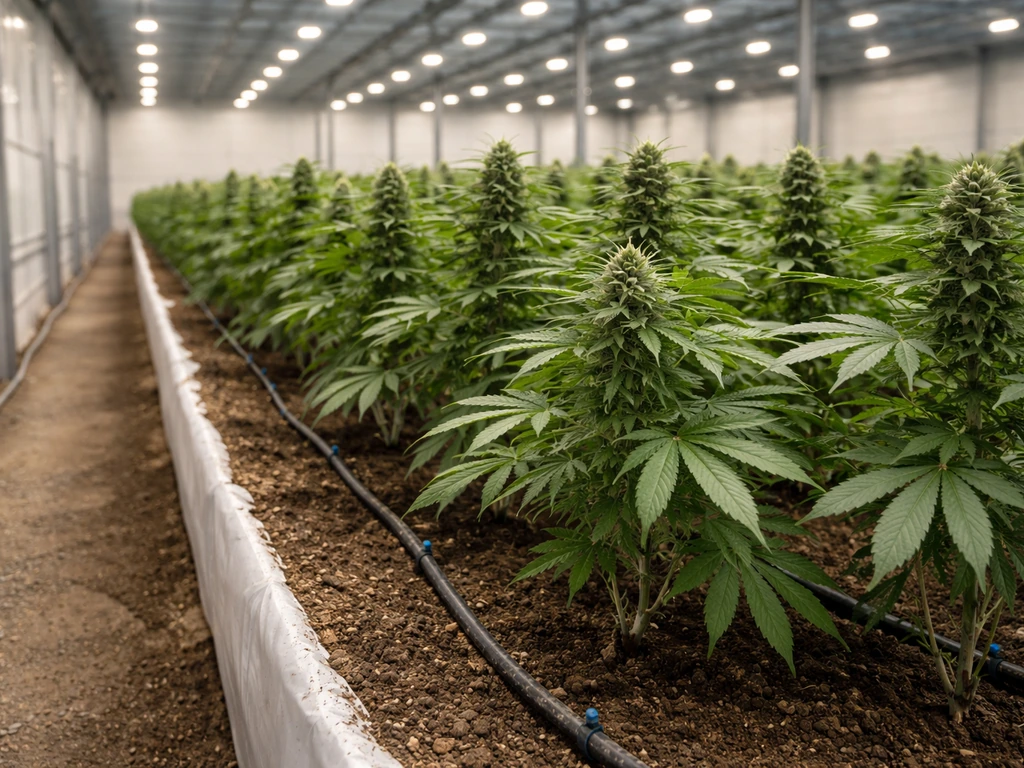
A Mississippi grow license is officially called a medical cannabis cultivation license. It authorizes a business entity to cultivate cannabis plants at an approved facility for sale into the state's medical cannabis supply chain. The license is required any time cannabis plants are grown for commercial purposes, including growing plants that will be sold to processors, dispensaries, or other licensed entities.
You do not need a grow license just to be a patient or caregiver in Mississippi's medical program. Patients and caregivers cannot grow their own plants under any circumstance. The grow license is purely for commercial operators who want to be in the business of cultivating cannabis.
If you've been researching grow licenses in neighboring states like Arkansas or Oklahoma, keep in mind that Mississippi's rules are more restrictive than many of its neighbors. If you are looking at a Missouri grow license, you will also need to follow the state's medical cannabis rules and licensing process for cultivation. If you are specifically researching the Arkansas grow license, review that state's medical cannabis cultivation requirements alongside Mississippi's rules before you plan your next steps. If you are looking at Oklahoma, you can compare its licensing approach to Mississippi's more restrictive rules before you plan your application timeline Oklahoma grow license. There is no home-grow exception here.
License types for growing cannabis in Mississippi
Mississippi's Medical Cannabis Program, established under the Mississippi Medical Cannabis Act (SB 2095, signed 2022), created several license categories. For cultivation specifically, the main license type you're looking at is the Cultivation Facility license. Here's how the core license types break down:
| License Type | What It Covers | Relevant For Growers? |
|---|---|---|
| Cultivation Facility | Growing cannabis plants from seed or clone through harvest | Yes — this is the grow license |
| Processing Facility | Extracting, manufacturing, or packaging cannabis products | Only if you also process after harvest |
| Dispensary | Retail sale of cannabis to registered patients | No |
| Testing Laboratory | Third-party testing of cannabis products | No |
| Transportation Entity | Moving cannabis between licensed facilities | No |
Most people searching for a Mississippi grow license need the Cultivation Facility license. If you plan to both grow and process cannabis (for example, making extracts from your harvest), you'll need both a cultivation license and a processing license. You cannot process cannabis under just a cultivation license.
Eligibility and restrictions you need to know before applying

Mississippi sets a meaningful bar for who can hold a cultivation license. The program is designed for real commercial operators, not casual growers. Here are the core eligibility requirements and restrictions:
- Applicants must be at least 21 years old.
- You must form a legal business entity registered in Mississippi (LLC, corporation, partnership, etc.) before applying.
- No principal or owner can have a felony drug conviction. Background checks are required for all owners, officers, directors, and employees with significant control.
- You must demonstrate financial solvency and capitalization sufficient to operate a commercial facility.
- A physical facility location must be identified and must comply with local zoning requirements before MSDH will issue a license.
- The facility cannot be within 1,000 feet of a school, church, or other restricted use zones as defined by local ordinance.
- Mississippi residents or entities with a Mississippi business registration are eligible; out-of-state entities must register a Mississippi business entity.
- A separate license is required for each physical cultivation location.
Mississippi does not publish a hard plant count limit in the same way some states do. Cultivation canopy and capacity limits are tied to the license tier you apply for, and the MSDH may set canopy restrictions as part of the approval. The Mississippi Medical Cannabis Program publishes a schedule of establishment application fees by cultivation tier, with tiered fees varying by canopy size tier (for example, Micro-Cultivation Tier fees) Cultivation canopy and capacity limits are tied to the license tier you apply for. You'll need to specify your intended canopy size in your application, and scaling up later requires notifying or reapplying to the MSDH.
Timeline note: Mississippi's licensing system opened in late 2022 and early 2023. As of April 2026, the program has been operational for several years. New applicants are subject to availability of licenses in their region and any application windows the MSDH opens. Check the MSDH Medical Cannabis Program page directly for current application availability since the state has periodically paused and reopened licensing.
How to apply: step-by-step
The application is submitted through the MSDH Medical Cannabis Program portal. Here is the practical workflow from start to finish:
- Form your business entity. Register your LLC or corporation with the Mississippi Secretary of State before you touch the application. You'll need your Certificate of Formation and EIN.
- Secure your facility location. Identify a physical location, confirm local zoning allows a cannabis cultivation facility, and get a signed lease or proof of ownership. This address goes on your application and must be locked in before submission.
- Run background checks. All owners, directors, officers, and anyone with a financial interest over a threshold set by MSDH must submit to a criminal background check. Mississippi uses a third-party vendor for this — collect those results before you apply.
- Gather your financial documentation. Bank statements, financial projections, capitalization documentation, and proof of funding source are all required. Mississippi wants to see you can actually fund and operate the facility.
- Draft your operating plan. You'll need a detailed operational plan covering security, employee procedures, cultivation practices, record-keeping, and your seed-to-sale tracking integration. This is one of the most time-consuming parts of the application.
- Prepare your facility/site plan. A detailed floor plan of your facility, including all rooms where cannabis will be grown or stored, is required. Security system layout must be included.
- Submit your application through the MSDH Medical Cannabis Program online portal (msdh.ms.gov). Pay the application fee at submission.
- Respond to any MSDH deficiency letters promptly. If MSDH reviewers find missing or incomplete items, they'll send a deficiency notice. You typically have a limited window (often 30 days) to cure deficiencies.
- Facility inspection. Before a license is issued, MSDH will conduct an on-site inspection of your facility to verify it matches your application. Do not start construction or major build-out without confirming inspection requirements first.
- Receive your provisional or final license. Once approved, you'll receive your cultivation license and can begin operations within the scope approved.
Processing times have varied since the program launched. Budget for several months from submission to license issuance, and longer if there are deficiencies or inspection delays. Applying before your facility is fully built is common, but the final license won't issue until the inspection passes.
Fees, renewal, and what you owe after approval

Mississippi's medical cannabis cultivation license fees are structured as follows (verify current amounts with MSDH, as these can be adjusted): If you are asking about New Mexico specifically, you will need to check New Mexico’s licensing process and fee structure for a grow license in that state New Mexico grow license. New Mexico also has its own micro grow program rules, including specific licensing requirements and limits new mexico micro grow license requirements.
| Fee Type | Estimated Amount |
|---|---|
| Cultivation Facility Application Fee | $5,000 (non-refundable) |
| Cultivation Facility License Fee (annual) | $25,000 |
| Renewal Fee (annual) | $25,000 |
| Change of Location/Modification Fee | Varies by change type |
Licenses are issued on an annual basis and must be renewed each year. Missing your renewal window can result in license lapse, so mark the date and start the renewal process at least 60 days early.
Ongoing compliance obligations
Once you're licensed, the compliance requirements are substantial. Mississippi's regulations under Part 22 of Title 15 (the Medical Cannabis Program rules) lay out exactly what you're on the hook for after approval: Operational and recordkeeping requirements for Mississippi's medical cannabis program are set out in Title 15, Part 22, Subpart 4, including statewide seed-to-sale system and inventory control obligations.
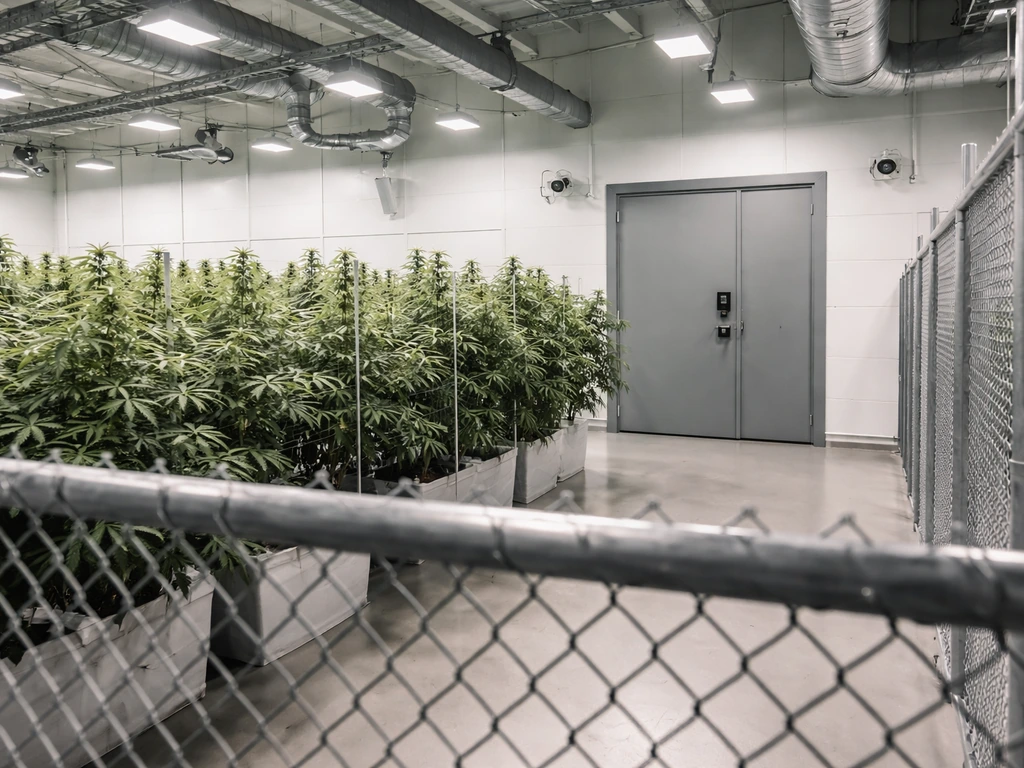
- Security and surveillance: You must designate a security manager responsible for security adherence and conducting semiannual security audits. Your facility needs alarm systems that transmit unauthorized-entry signals to a central monitoring company or law enforcement, with 24/7 coverage of all ingress/egress points and every room where cannabis is present or production occurs. The system must include failure notification and must stay operational during power outages. Video surveillance must provide 24/7 continuous coverage of all ingress/egress points and rooms with exterior walls, cannabis, or production operations.
- Seed-to-sale tracking: Every plant and every unit of product must be logged in Mississippi's statewide seed-to-sale tracking system. This is not optional and your operations depend on it working correctly from day one.
- Product testing: After harvest, your product must be tested by a licensed cannabis testing entity. Testing personnel must have on-site access to your entire batch for sampling. You cannot sell or transfer untested product.
- TIC investigations: If a testing lab submits a TICs (tentatively identified compounds) report flagging unexpected compounds in your product, MSDH can open an investigation and require additional testing at your expense.
- General recordkeeping: Employment records, operational records, inventory logs, and compliance documentation must be maintained and available for inspection.
- Inspections: MSDH can conduct unannounced inspections at any time. Your facility and records must be inspection-ready at all times, not just around renewal.
Common mistakes that get applications delayed or rejected
A lot of cultivation applications run into the same problems. Here are the ones that most commonly cause delays or outright denials in Mississippi:
- Submitting before securing a compliant location. If your proposed facility doesn't meet local zoning requirements or is too close to a restricted use, your application will fail. Confirm zoning before you pay the application fee.
- Incomplete background check submissions. Forgetting a minority owner or silent investor who has a disqualifying record is a common and costly mistake. Run checks on everyone with a financial interest above the threshold.
- Vague or incomplete operating plans. MSDH reviewers are looking for specificity. A generic plan about how you'll 'use best practices' won't pass review. Detail your security layout, cultivation procedures, employee training, record-keeping methods, and seed-to-sale integration explicitly.
- Underestimating financial documentation requirements. Showing a small personal bank account as proof of capitalization won't work. You need to demonstrate you have the capital to build and operate a compliant commercial facility.
- Missing the deficiency response window. If MSDH sends a deficiency notice and you don't respond in time, your application can be closed. Monitor your application portal and email constantly after submission.
- Facility doesn't match the application. If your floor plan shows one layout and MSDH inspectors find another, you'll be sent back to fix it. Build to what you submitted.
- Skipping local approvals. State license approval does not override local government requirements. Get your local business license, building permits, and any local conditional use approvals sorted independently.
What to do if you can't get a cultivation license right now
If you're not eligible, not ready to invest at the commercial level, or if Mississippi's application window isn't open, you have a few practical options: If you cannot get an Ohio grow license right away, consider similar neighboring-state pathways and timing constraints as options to pursue while you wait for Mississippi’s next application window.
- Work with an existing licensee as a contractor or employee. Licensed cultivation facilities hire growers, compliance managers, and operations staff. Getting hands-on experience inside a licensed facility is one of the best ways to prepare for a future application.
- Pursue a processing or dispensary license instead. If cultivation isn't accessible right now, the supply chain has other entry points. Some operators start with processing or retail and move into cultivation later.
- Monitor MSDH for new application windows. The Mississippi Medical Cannabis Program has managed license issuance in batches. If the window is closed, watch the MSDH Medical Cannabis Program page (msdh.ms.gov) for announcements.
- Clean up eligibility issues. If a background issue or financial gap is blocking you, work on resolving those first. Some disqualifying factors have paths to expungement or waiver depending on your specific situation — an attorney familiar with Mississippi cannabis law can help assess this.
- Look at neighboring state programs for comparison. States like Arkansas and Oklahoma have active cultivation licensing programs with different structures and cost thresholds, which can be useful reference points if you're considering where to operate.
The short path to legally growing cannabis in Mississippi is narrow but clear: commercial cultivation license through MSDH, full compliance with Part 22 regulations, and a well-documented application. If you are trying to understand how a Montana recreational grow license works, compare Montana's recreational licensing rules to Mississippi's MSDH commercial pathway commercial cultivation license. If you're also comparing other states' timelines and requirements, review Nevada's medical cannabis cultivation licensing options under a nevada grow license before finalizing your strategy. There's no workaround, no home-grow exception, and no shortcut past the inspection and tracking requirements. If you go in prepared, the process is manageable. If you go in half-ready, it gets expensive fast.
FAQ
Can I start growing as soon as I apply for a Mississippi grow license?
Yes, but only through an MSDH-approved path for companies. You can submit and manage the license application as an entity, but you generally cannot use the license to have employees or contractors grow off-site. Your cultivation must occur at an approved facility that matches what you described in your application and what MSDH inspects.
If I’m a registered patient or caregiver, can I grow a few plants at home in Mississippi?
No. Patient and caregiver status does not grant any right to cultivate, even for limited “personal” amounts. The only legal cultivation route is a medical cannabis cultivation license held by a qualifying business, operating at the licensed premises.
Do I need a processing license if I want to make edibles or extracts from my cultivation harvest?
You usually need both licenses if your business model includes making extracts or other downstream products from the plants you cultivate. A cultivation license covers growing for the medical supply chain, but processing requires a separate processing license, and MSDH can restrict what you do with harvested cannabis if the processing authorization is missing.
Is there a maximum number of plants I can grow under a Mississippi grow license?
Mississippi uses license tiers and capacity planning instead of a simple, universal plant count for every applicant. Your application should include your intended canopy size and operating footprint, and if you later expand beyond what was approved, you may need MSDH notification and approval steps before you can increase production.
Can I build the facility and plan my grow before the final Mississippi cultivation license is issued?
If your license is approved but your facility is not yet inspection-ready, you can often still proceed with construction and preparation, but you should not assume cultivation approval to begin. The license issuance and ability to operate are tied to passing the required inspection and meeting ongoing compliance, so plan for time gaps between application, buildout, and inspection.
What’s the risk if I miss the annual renewal window for my Mississippi grow license?
License renewal is annual, and missing the renewal deadline can cause a lapse. A practical safeguard is to calendar renewal at least 60 days early and to keep your compliance documentation current during the final quarter, since last-minute gaps can delay renewals even when the business is otherwise compliant.
What are the most frequent reasons MSDH delays or denies cultivation license applications in Mississippi?
Common problems include mismatch between what you applied for and what you build, incomplete documentation for eligibility, and failure to meet compliance requirements tied to cultivation operations and tracking. Another frequent issue is underestimating inspection readiness, so build your compliance binder and SOPs in parallel with facility work.
How should I time my funding and construction if Mississippi’s cultivation licensing window is uncertain?
If you are investing based on a regional plan, the safest approach is to treat Mississippi’s application windows as variable and prepare your site and documentation so you can respond quickly when the portal opens. If your preferred timeline is tight, you can compare neighboring-state medical cultivation pathways, but Mississippi still requires its own approvals, inspections, and tracking once you decide to operate there.
Can investors or partners grow cannabis under my Mississippi grow license arrangement?
Co-ownership and involvement by investors are typically addressed through the business entity structure and disclosure requirements in the application process. However, the key operational issue is that cultivation must be controlled and executed through the licensed entity at the approved facility, not by individuals or “informal” arrangements that can violate eligibility and compliance rules.
What ongoing compliance tasks should a cultivation facility plan for after it receives a Mississippi grow license?
After approval, you should expect ongoing compliance work beyond initial licensing, such as maintaining required security, inventory controls, and adherence to the rules in the MSDH regulations. Build internal accountability early (for recordkeeping, inventory reconciliation, and audit readiness) because compliance failures can be more disruptive than application delays.
Next Article
Arkansas Grow License: Types, Eligibility, and How to Apply
Guide to getting an Arkansas grow license: types, eligibility, application steps, fees, and compliance to avoid denial.