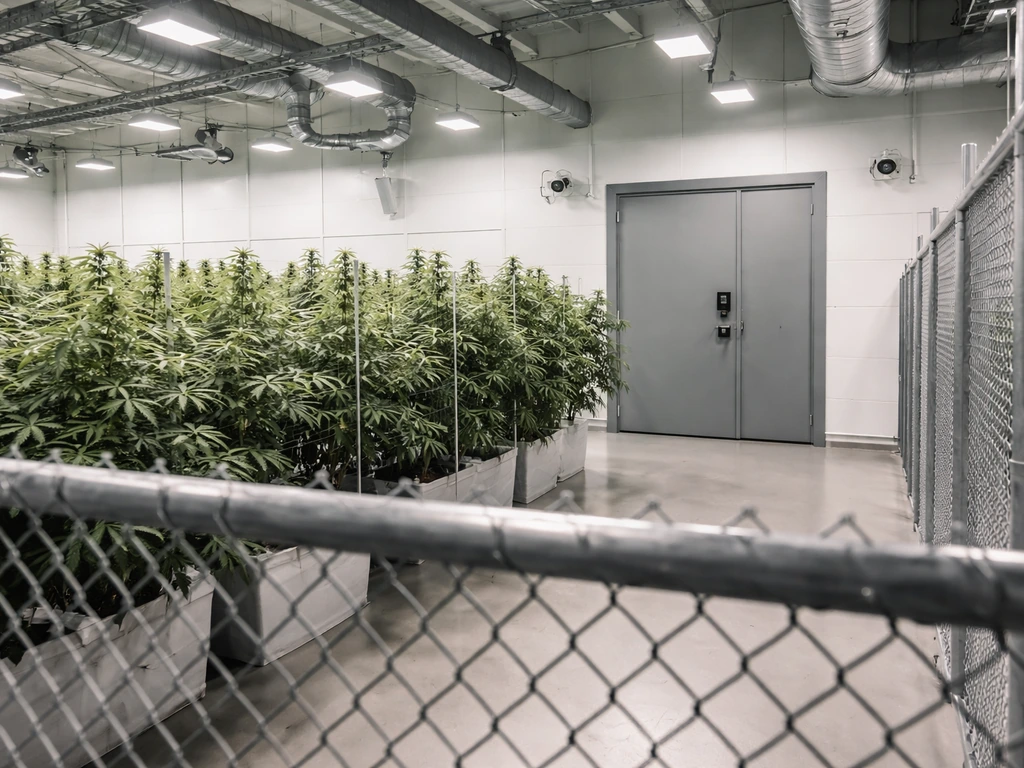
To legally grow cannabis in Nevada as of April 2026, you need a Cannabis Cultivation Facility license issued by the Nevada Cannabis Compliance Board (CCB). There is no separate "home grow" commercial license, Nevada draws a clear line between personal adult-use home cultivation (no license required, up to six plants per person in a private residence) and commercial cultivation (a full CCB-issued facility license). The City of Las Vegas also notes that cannabis production or cultivation establishments may need blank" rel="noopener noreferrer">local city business licensing and approvals, which can be required even when you have state licensing. If you want to grow cannabis to sell, distribute, or process at any scale, you are in commercial territory and the CCB licensing process applies to you.
Nevada Grow License Guide: Eligibility, Costs, and Steps

What a Nevada grow license lets you do
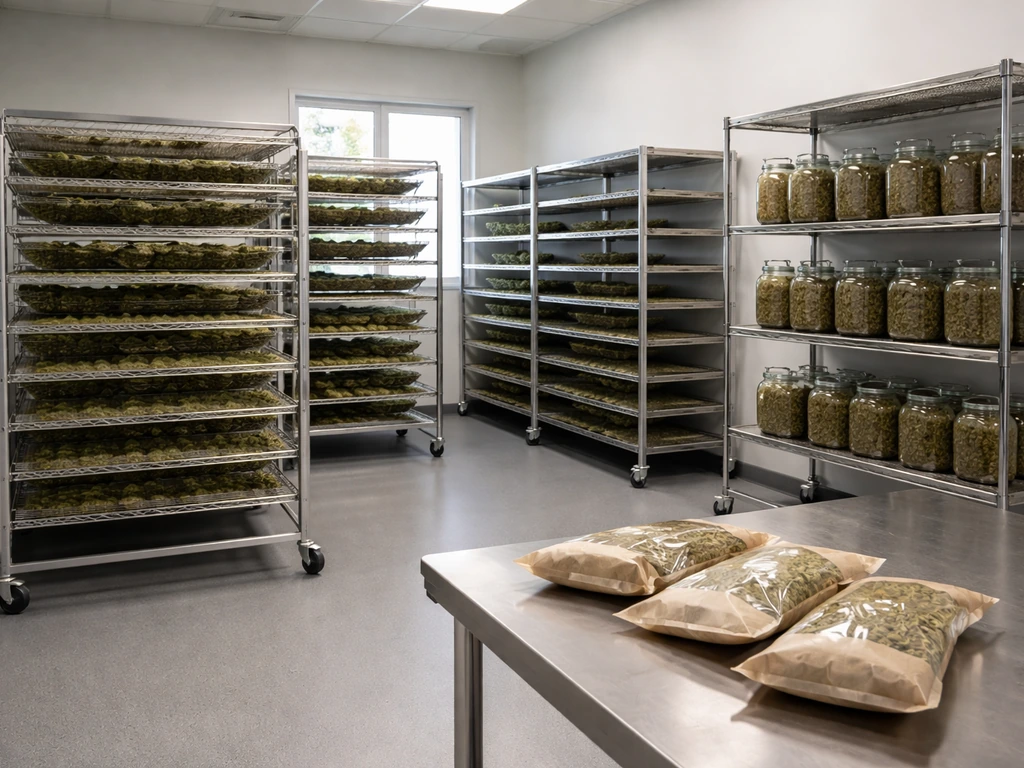
A Nevada Cannabis Cultivation Facility license authorizes you to cultivate, harvest, trim, dry, cure, and package cannabis at a licensed physical location. You can sell your product to licensed cannabis distributors, production facilities, or retail stores, but not directly to consumers. The license is tied to a specific address and a specific canopy size tier, so what you can grow is defined at the time of licensing.
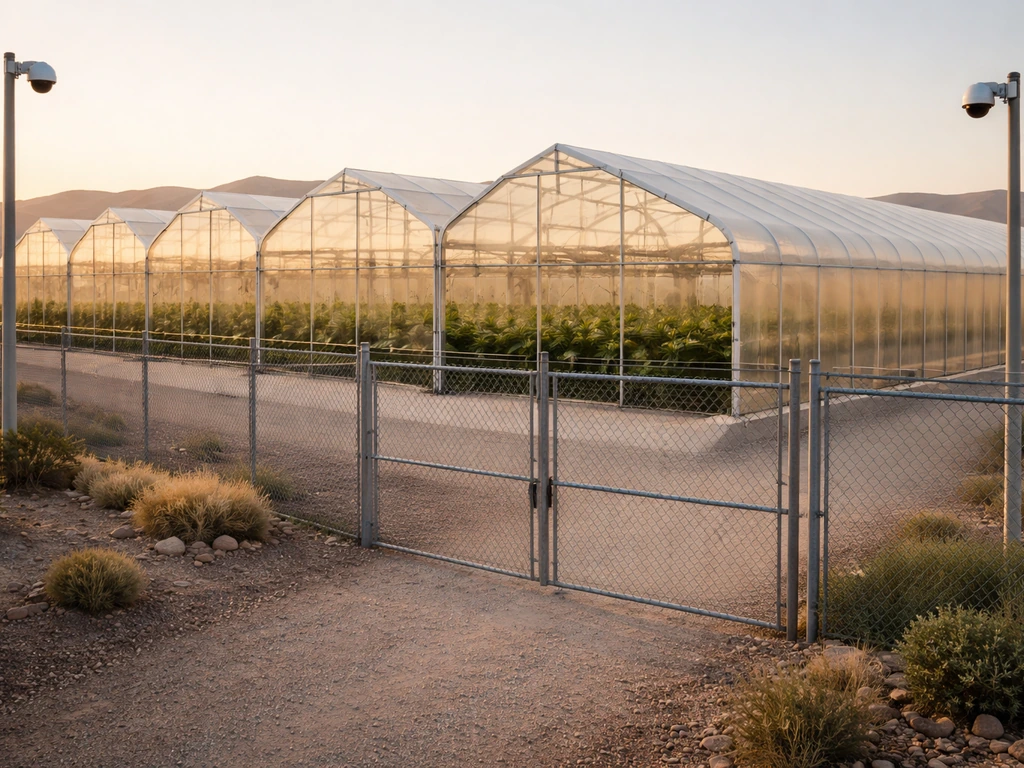
Cultivation can happen indoors, in a greenhouse, or outdoors, but each comes with strict conditions. All indoor and greenhouse cultivation must take place in an enclosed, locked facility at the address registered with the CCB. Outdoor cultivation is only permitted if the crop is sufficiently hidden from public view and adequately isolated from neighboring properties. Before starting any outdoor grow, you must obtain written verification of adequate isolation from the CCB. Nothing you grow should ever be visible from a public place by normal, unaided vision, that applies to both plants and signage.
Nevada license types for cultivation: home vs. commercial
Personal adult-use home cultivation
Nevada adults 21 and older can grow up to six cannabis plants per person at their primary residence, with a household maximum of twelve plants regardless of how many adults live there. This does not require any license from the CCB. The plants must be kept in a locked space not visible to the public. If you are only growing for your own personal use at home, you are done, no application, no fees, no Board involvement.
Commercial Cannabis Cultivation Facility license
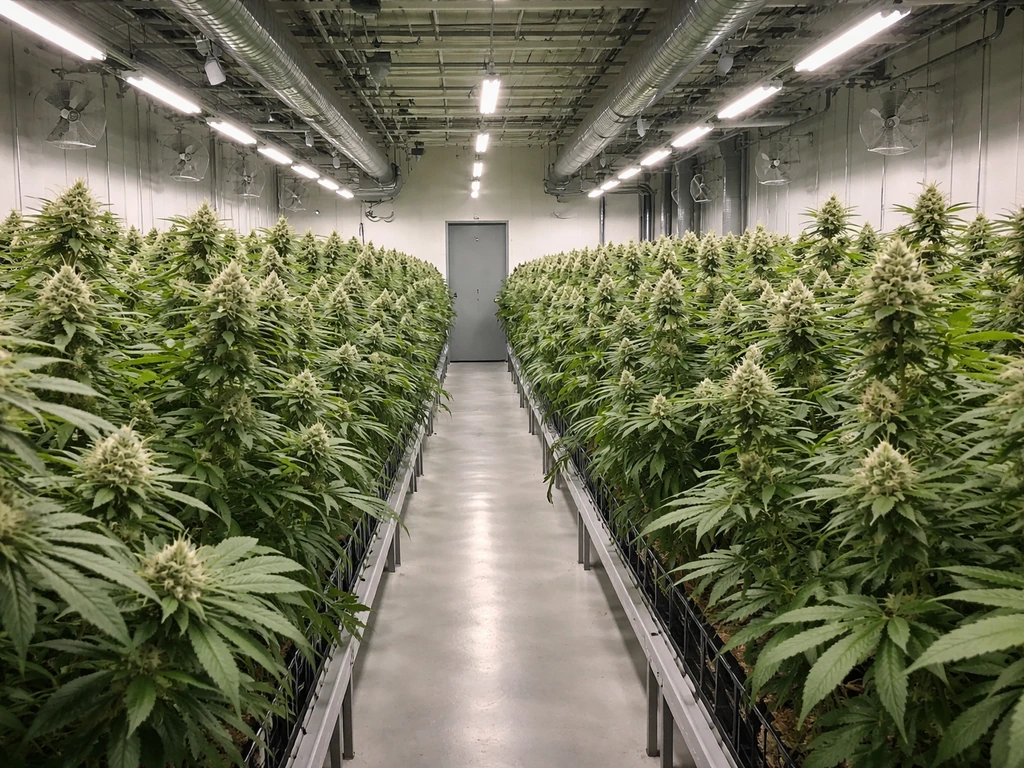
The moment you grow cannabis with any commercial intent, selling wholesale, supplying a dispensary, or operating as part of a vertically integrated cannabis business, you need a CCB Cannabis Cultivation Facility license. If you are specifically trying to obtain a Mississippi grow license, the licensing concept is similar, but you still must follow that state’s program requirements and application steps. Nevada has tiered canopy size categories within this license type, ranging from small craft operations to large-scale production facilities. If you are also looking at getting started in Arkansas, you will need to follow the Arkansas grow license requirements that apply to your intended license type and activities. If you are researching an Oklahoma grow license, the licensing structure will differ, but the core idea is the same: your plan and eligibility must match the state’s cultivation requirements tiered canopy size categories. Your canopy tier determines your application fee, annual fee, and how much space you can cultivate. Licensees can apply to expand their canopy tier later, but that requires a separate amendment application and approval.
Nevada does not currently offer a "micro" cultivation tier in the same way some neighboring states do. If you are comparing Nevada's structure to the micro grow license framework available in New Mexico, for example, Nevada's entry-level commercial tier is a full cultivation facility license with the same core compliance obligations as larger operators, just a smaller canopy allowance and lower fees. In New Mexico, the cost of a grow license is set by the specific license type you apply for and can differ from Nevada's tiered canopy approach micro grow license framework available in New Mexico. If you are specifically trying to understand whether Missouri has a “grow license” pathway and what the rules look like, you should review Missouri’s licensing requirements directly before planning your next steps Missouri grow license.
Eligibility requirements and key restrictions
Before you put together an application, you need to make sure you actually qualify. The CCB is strict on eligibility and will disqualify applicants who do not meet the baseline criteria.
- You must be at least 21 years old.
- You must be a Nevada resident or have a registered Nevada business entity in good standing.
- You cannot have a felony drug conviction within the past ten years. Certain other convictions can also be disqualifying depending on their nature and recency.
- All owners, directors, managers, and anyone with 5% or more financial interest in the business must be disclosed and individually vetted by the CCB through a background check.
- You cannot hold a cultivation facility license if you also hold a retail store license in a way that violates vertical integration limits set by Nevada statute.
- Your proposed facility must be located in a zone that permits cannabis cultivation under local ordinance — state licensing does not override local land-use rules.
- You must have a physical Nevada address for the facility before you can complete the application. You cannot apply for a cultivation license for a location that has not yet been identified.
- The facility cannot be located within 300 feet of a school, community facility, or other protected use as defined by local jurisdiction (distances can vary by county or city).
One thing that catches a lot of applicants off guard: every single person with a financial interest of 5% or more is treated as a "principal" and must go through the full background check process. If you have investors, make sure they are prepared for that requirement before you apply.
Step-by-step application process
Where to apply
All Nevada cannabis licensing applications are submitted through the CCB's online licensing portal at ccb.nv.gov. The portal handles both new applications and renewals. Do not mail anything or show up in person expecting to hand in paperwork, it all goes through the online system.
What you need before you start
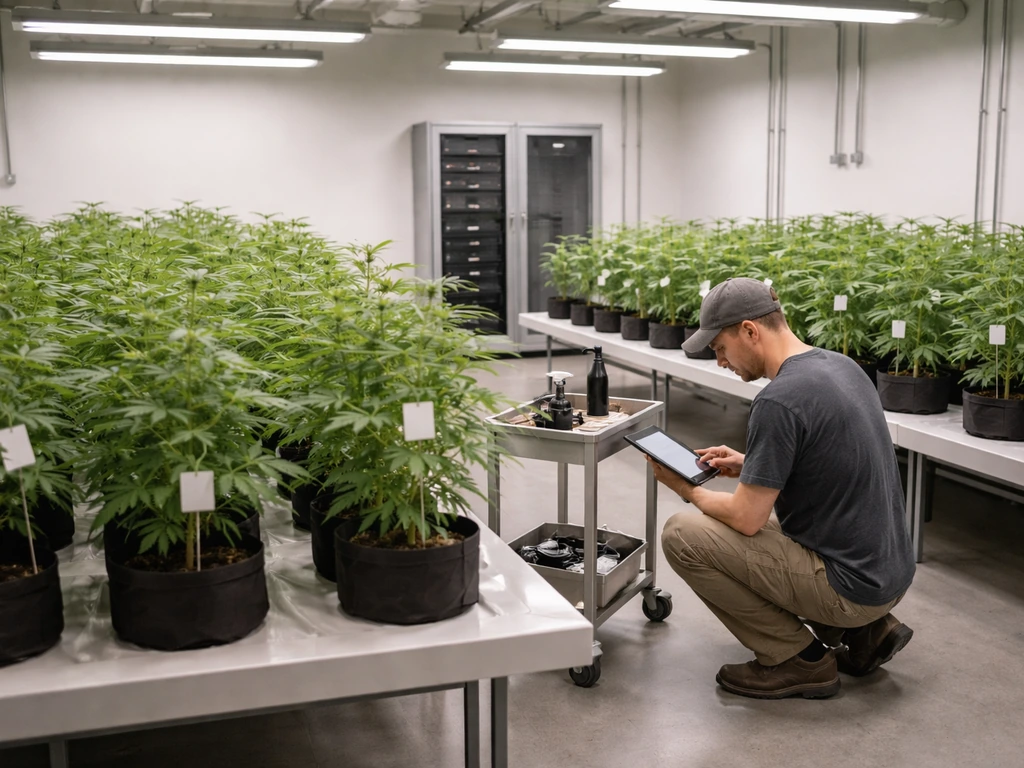
- Nevada business entity registration (Articles of Incorporation or Organization from the Nevada Secretary of State)
- Operating agreement or bylaws listing all principals and their ownership percentages
- Proposed facility address and proof of property control (lease agreement, purchase contract, or deed)
- Local land-use approval or documentation showing the location is in a cannabis-permissible zone
- Floor plan or site plan for the facility showing cultivation areas, storage, security infrastructure, and canopy dimensions
- Security plan outlining cameras, access controls, alarm systems, and visitor log procedures
- Cannabis tracking plan confirming how you will use Nevada's seed-to-sale tracking system (Metrc)
- Financial disclosure documents for all principals (bank statements, source of funds documentation)
- Government-issued ID for all principals
- Background check authorization forms for all principals
The application workflow
- Create an account in the CCB online portal and start a new Cannabis Establishment Application.
- Select "Cannabis Cultivation Facility" as the establishment type and choose your canopy size tier.
- Enter all business entity information and add every principal with their ownership percentage.
- Upload all required documents: operating agreement, facility lease or ownership proof, floor plan, security plan, and tracking plan.
- Pay the non-refundable application fee through the portal.
- Each principal completes their individual background check submission through the portal — the CCB uses a third-party vendor for fingerprinting and criminal history review.
- The CCB reviews your application for completeness. If anything is missing or unclear, you receive a deficiency notice and must respond within the specified deadline (typically 30 days).
- The CCB conducts a pre-licensing inspection of your facility to confirm it matches your submitted plans before issuing the license.
- Upon passing inspection and full Board approval, your license is issued and you can begin operations.
Costs, timelines, renewals, and transfers
Application and license fees
Nevada cultivation facility fees are tiered by canopy size. The application fee and the annual license fee are separate charges. As of 2026, application fees for cultivation facilities start at around $5,000 for smaller canopy tiers and scale up significantly for larger operations. Annual license fees follow a similar structure. These are non-refundable even if your application is denied, so make sure you are ready before submitting.
| Canopy Tier | Approx. Application Fee | Approx. Annual License Fee |
|---|---|---|
| Tier 1 (smallest) | ~$5,000 | ~$3,000 |
| Tier 2 | ~$10,000 | ~$7,500 |
| Tier 3 | ~$15,000 | ~$12,500 |
| Tier 4 (largest) | ~$30,000+ | ~$20,000+ |
Confirm the exact current fee schedule directly on the CCB website before you apply, as these figures are subject to regulatory updates.
How long does it take?
Expect the full process from application submission to license issuance to take anywhere from three to nine months, depending on application completeness, background check processing times, and inspection scheduling. Applications with missing documents or incomplete principal disclosures can add months to that timeline. The pre-licensing facility inspection cannot be scheduled until the CCB is satisfied with your paperwork, so delays early in the process push everything back.
Renewals
Nevada cultivation facility licenses are renewed annually. The CCB sends renewal notices in advance of your expiration date, and you renew through the same online portal. You must be current on all compliance requirements, have no unresolved violations, and pay the renewal fee on time. Operating on an expired license is a serious violation, so calendar your renewal date and do not wait for the notice to start the process.
Ownership changes and transfers
Cannabis cultivation facility licenses in Nevada are not freely transferable. Any change in ownership, including adding or removing a principal with 5% or more interest, requires prior CCB approval. You must submit a change application, the new principal undergoes a full background check, and the Board must approve the change before it becomes effective. Trying to informally transfer ownership or restructure without notifying the CCB is one of the fastest ways to put a license at risk.
Compliance basics: security, tracking, inspections, and recordkeeping
Security requirements
Nevada's CCB Regulation 8 lays out specific security standards for cultivation facilities. Your facility must have a comprehensive video surveillance system covering all cultivation areas, storage areas, entry and exit points, and anywhere cannabis is handled or weighed. Cameras must record continuously, footage must be stored for at least 30 days, and the system must have a backup power source. Access to cultivation areas must be restricted to licensed employees and authorized visitors, with a maintained visitor log.
Cannabis must not be observable from outside the facility or visible from any public place by normal, unaided vision. For indoor operations, this means opaque walls and covered windows in cultivation rooms. For outdoor operations, adequate screening and isolation are mandatory, and you must have the CCB's pre-approval for isolation adequacy before any outdoor cultivation begins. Odor control is also required for non-outdoor facilities, a functioning carbon filtration or equivalent odor mitigation system is expected.
Seed-to-sale tracking with Metrc
Nevada uses Metrc as its mandatory cannabis track-and-trace system. Every plant in your facility must be tagged and entered into Metrc from the moment it is propagated. Every harvest, package, transfer, and disposal must be logged in real time. The CCB can pull your Metrc data at any time, and discrepancies between your physical inventory and your Metrc records are one of the most common compliance violations found during inspections. Before your facility opens, make sure at least one person on your team has completed Metrc training, the system has a learning curve.
Inspections
The CCB conducts both pre-licensing inspections and ongoing unannounced compliance inspections. During an inspection, agents typically check that your physical setup matches your approved floor plan, that your camera system is fully operational, that your Metrc records match your physical plant count and inventory, that restricted areas are properly secured, and that required postings and logs are in place. Routine inspections can happen at any time without advance notice, so treat compliance as a daily operational standard, not something you prepare for when you know an inspector is coming.
Recordkeeping
- Maintain employee records including CCB agent cards for all staff who handle cannabis.
- Keep visitor logs for all non-employee access to restricted areas.
- Store all Metrc transaction records and be able to reconcile them with physical inventory on demand.
- Retain purchase and sale records for all cannabis transfers to and from licensed facilities.
- Keep surveillance footage for a minimum of 30 days.
- Document all pesticide applications, including product name, application date, and applicator information.
- Maintain waste disposal logs for any cannabis plant material destroyed or discarded.
Common mistakes and how to avoid license delays

Most application delays and denials come down to a handful of avoidable mistakes. Here is what to watch for.
- Incomplete principal disclosure: Missing even one person with a financial interest above 5% can freeze your entire application. Audit your ownership structure before you submit.
- No local approval in place: State licensing does not substitute for local zoning approval. If your city or county has not cleared your location for cannabis cultivation, the CCB will not issue a license regardless of how strong your application is.
- Vague or non-compliant floor plans: Your floor plan must clearly show cultivation canopy areas, security camera placement, restricted access zones, and storage areas. Generic or hand-drawn sketches regularly trigger deficiency notices.
- No Metrc setup plan: Applicants who submit without a credible plan for Metrc implementation raise red flags during review. Show that you know the system and have a designated account holder ready.
- Underestimating the background check timeline: Third-party fingerprinting and criminal history processing can take weeks. If you have multiple principals, start that process as early as possible — it often becomes the rate-limiting step.
- Outdoor grow without isolation verification: Starting outdoor cultivation before receiving CCB verification of adequate isolation is a direct regulatory violation. Get that documentation before a single seed goes in the ground.
- Letting the license expire during renewal: The CCB does not grant grace periods for expired licenses. If you miss the renewal deadline, you must stop operations immediately. Set calendar reminders 90 days, 60 days, and 30 days before your expiration date.
- Unreported ownership changes: Any principal-level change not pre-approved by the CCB is a violation. Run every ownership or investor conversation through your compliance checklist before anything is finalized.
If you are navigating this process and feel like the regulatory language is getting confusing, you are not alone. Nevada's cannabis licensing framework is detailed, and the CCB does expect operators to know the rules. Reno’s municipal land use code, published through Municode, explains how spacing is measured in straight lines from the cannabis establishment to nearby parcels such as schools, community facilities, and other sensitive uses blank" rel="noopener noreferrer">The CCB does expect operators to know the rules. For complex ownership structures or situations involving prior convictions, working with a cannabis attorney before you apply is worth the cost. This guide gives you the regulatory framework, but it is not a substitute for legal advice tailored to your specific situation. If you are looking at Montana recreational grow license options instead of Nevada, the requirements and licensing pathway will be different.
FAQ
Can I start growing at one address and later move to a different facility without reapplying?
No. In Nevada, the cultivation facility license is tied to a specific licensed address and the approved canopy tier. If you want to grow at a different site, even temporarily, you generally need that new location covered through the CCB approval process, typically via an amendment or other authorization before cultivation starts there.
Does Nevada allow me to grow just enough for “testing” or limited sales without a nevada grow license?
Yes for some business activities, but it is still commercial cultivation. If you are culturing plants for sale, distribution, processing, or as part of any supply arrangement with other licensees, you are operating commercially and need the Cannabis Cultivation Facility license, not the home-grow allowance.
If my grow is in a greenhouse, is it treated like indoor cultivation for licensing and security?
You usually need to treat your greenhouse like a licensed cultivation environment, not a semi-private backyard. Greenhouse cultivation must be enclosed, locked, and at the registered address, so any use of the greenhouse that allows public view or access to be treated as “home grow” would conflict with the enclosure and visibility requirements.
What counts as “visible from a public place,” does signage matter too?
Signage is included in the “no public visibility” concept. If any plant, entry signage, or branding related to cultivation can be seen from a public place by normal unaided vision, you are risking a compliance violation, even if the actual plants are in a locked room.
What can stop my cultivation facility license renewal, beyond paying the fee on time?
Not just a renewal fee. Renewal depends on being current on compliance, having no unresolved violations, and submitting on time through the portal. Also, keep in mind that operational issues like Metrc inventory mismatches or security deficiencies can create renewal blockers even if your cultivation is otherwise compliant.
If I bring in a new investor, do they have to wait for CCB approval before I update ownership?
Often yes, but only with prior CCB approval. If the change involves adding or removing a principal with 5% or more interest, restructuring ownership, or otherwise affecting qualifying parties, you should file a change application first, because unapproved changes can lead to enforcement and complicate license status.
Can I hire contractors to work on the crop, and do they count as visitors?
Yes, but only if those people are authorized and you are running the facility as approved. You should ensure any guests or authorized visitors are logged and access is restricted to cultivation areas as required, and you should not assume that “contractors” can roam areas without documentation and controls.
How do I prepare my team for Metrc so I do not fail an early compliance check?
Plan for a realistic Metrc readiness process. Metrc requires tagging entries from propagation and real-time logging for harvest, transfers, and disposal, so you should confirm your workflow and assign an internal owner who has completed training, otherwise you risk inventory discrepancies during the ramp-up.
What happens if my video surveillance system has downtime during an inspection period?
It is not safe to assume you can “fix it later.” If cameras are down, footage storage is inadequate, or coverage gaps exist, inspections can flag it as a security or compliance issue. Most facilities treat the security system as continuously maintained, with backup power and operational verification.
What are the most common causes of Metrc record mismatches during cultivation inspections?
Metrc discrepancies are one of the most common compliance problems, and they often stem from workflow issues like missed tag entries, delayed harvest updates, or improper disposal documentation. Before the license is active, test your process end-to-end and reconcile physical counts to Metrc records regularly.
Why do some applicants experience longer delays, even after filing the application?
Plan the schedule earlier than you think. The CCB typically cannot schedule pre-licensing inspection until your paperwork satisfies their review, so missing documents, incomplete principal disclosures, or unresolved issues can push the inspection and total timeline out.
Is there any legal way to “transfer” a nev ada grow license informally between partners?
No, because the license is not designed for ad hoc or casual transfer. Any change in ownership typically requires prior CCB approval, including changes to principals, and you must submit and wait for approval before the change becomes effective.
Do I need isolation verification before planting outdoors, or can it be done after my first season starts?
For outdoor grows, you should not rely on your own assessment of screening alone. The CCB requires written verification of adequate isolation before you start, and “sufficiently hidden” is measured against normal unaided public vision, so treat isolation adequacy as a documented compliance deliverable.
If I expand canopy size later, do I just update my records, or do I need an amendment?
If you are planning capacity changes, you should plan for a separate amendment rather than assuming it is handled as a normal operational adjustment. Expanding canopy tier generally requires amendment application and approval, which can affect both timelines and fees.
Mississippi Grow License Guide: Steps, Costs, and Eligibility
Mississippi grow license guide: required license type, eligibility, step-by-step application, fees, and compliance after