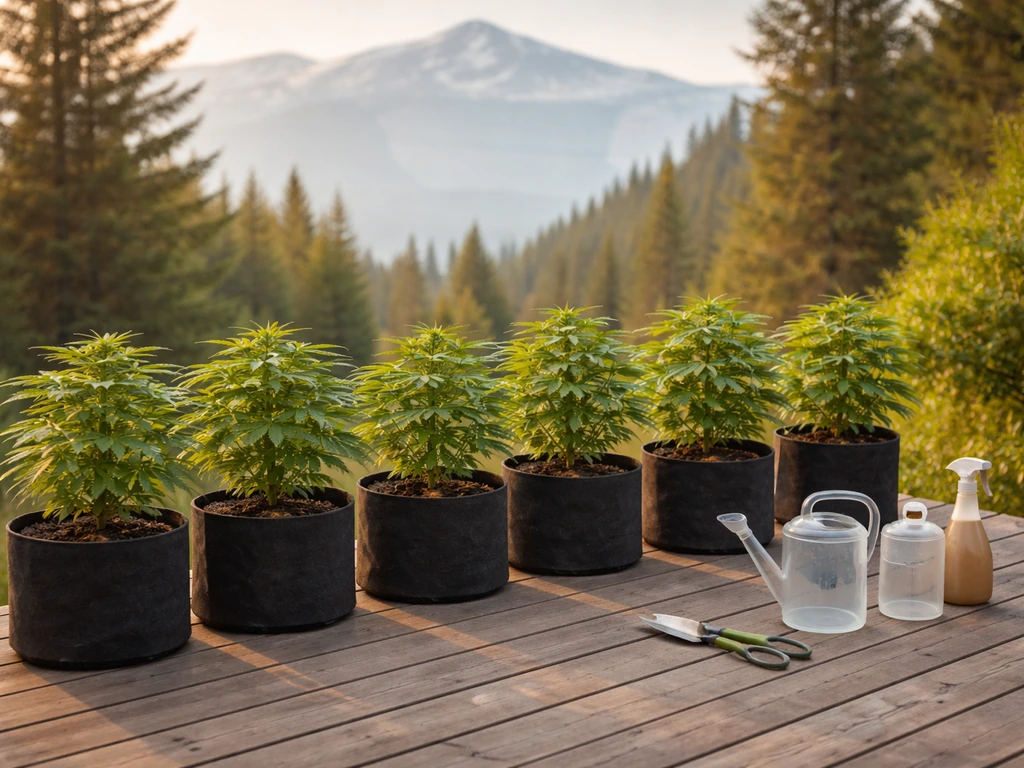
Cannabis cultivation in Arkansas is legal, but only through a licensed commercial cultivation facility. There is no home grow option for patients or caregivers. If you want to grow cannabis legally in Arkansas, you need a cultivation facility license issued by the Arkansas Medical Marijuana Commission (MMC), which operates under the Department of Finance and Administration (DFA). That is the only legal path to cultivation in the state as of today.
Arkansas Grow License: Types, Eligibility, and How to Apply

Marcus Whitley
24 Apr 2026
What an Arkansas cannabis grow license is (and what it isn't)
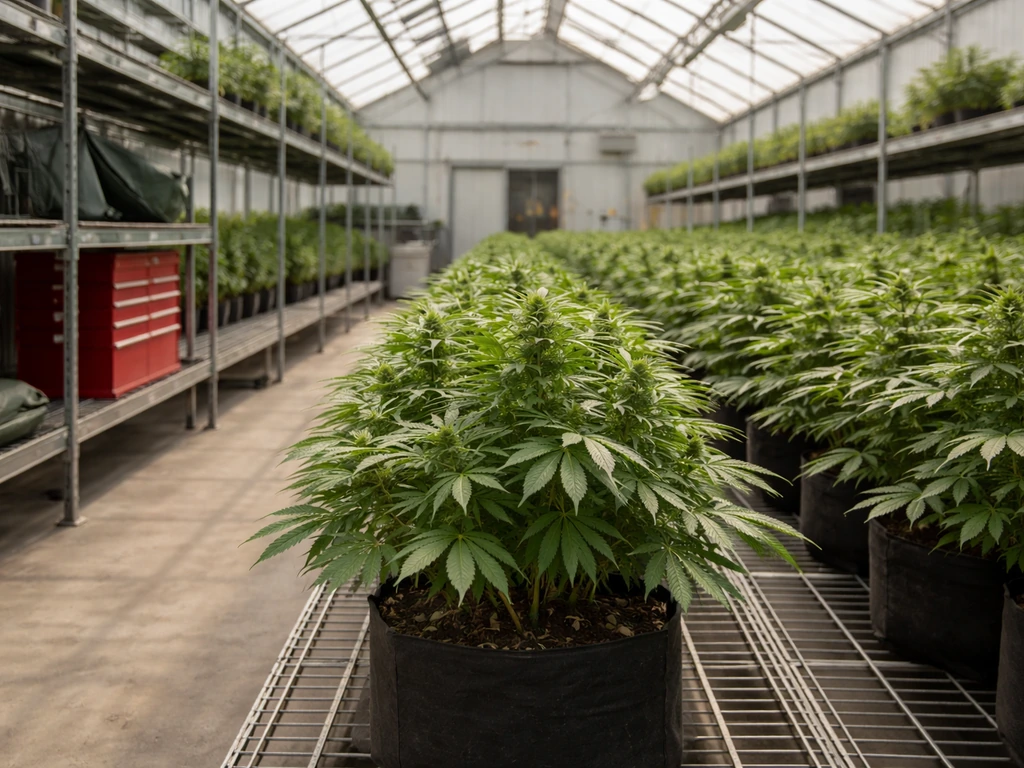
An Arkansas cannabis grow license is a state-issued cultivation facility license that authorizes a business entity to grow, harvest, and process raw cannabis for the state's medical marijuana program. It is a commercial license, not a personal or patient-use permit.
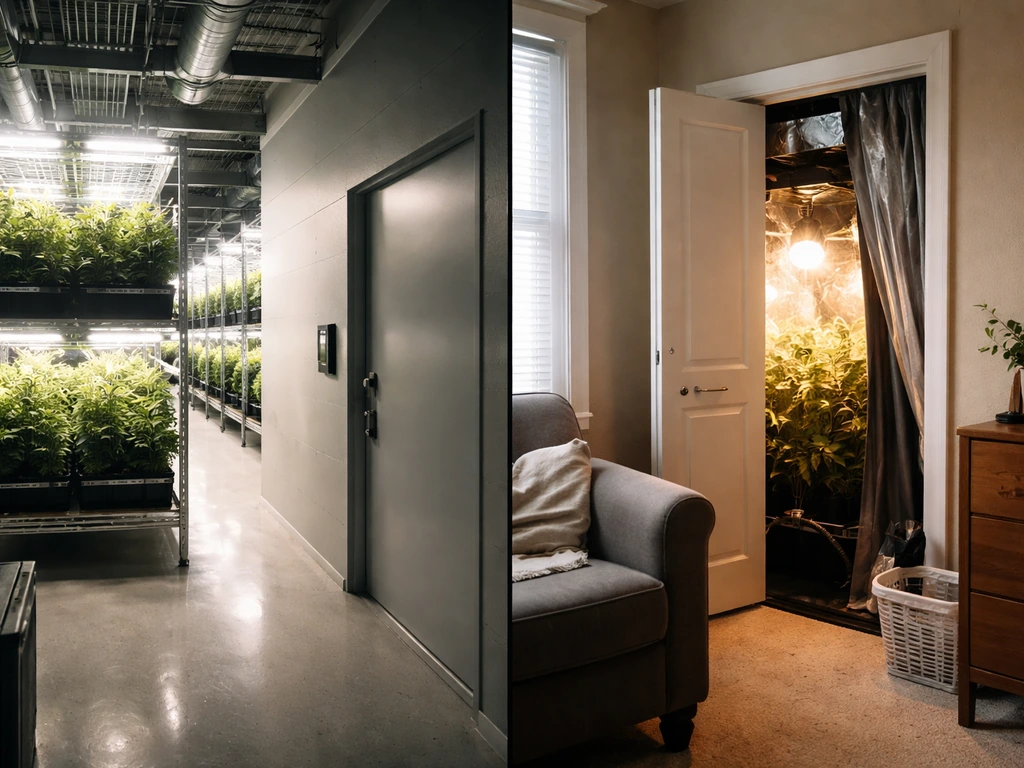
It is not a home grow permit. It is not a caregiver cultivation authorization. Arkansas never built a home cultivation pathway into its medical marijuana law, so there is no small-scale personal license to apply for. If you were hoping to grow a few plants at home as a registered patient, that pathway simply does not exist in Arkansas. The Arkansas Department of Health FAQs are explicit: qualifying patients and their designated caregivers are not permitted to grow or cultivate medical marijuana. According to the Arkansas Department of Health FAQs, qualifying registered patients and their designated caregivers cannot grow or cultivate medical marijuana.
What the license does authorize is a facility-level operation: a physical location where cannabis is grown, managed under security and recordkeeping requirements, and distributed only to other licensed entities in the supply chain.
Who needs a license vs. who can grow legally without one
Anyone cultivating cannabis in Arkansas must hold a state cultivation facility license. Full stop. There are no carve-outs for patients, caregivers, hobbyists, or small-scale growers. This puts Arkansas in a stricter category compared to states like New Mexico or Montana, where registered patients or adults can cultivate a limited number of plants at home. Montana also has different rules for recreational cultivation, including what a Montana recreational grow license allows and how eligibility works. If you are trying to estimate licensing costs there, you will also need to check the current New Mexico grow license fee schedule states like New Mexico. New Mexico micro grow license requirements can be different from Arkansas, especially around patient cultivation limits and eligibility.
Recreational cannabis is not legal in Arkansas, so there is no adult-use home grow option either. The state's framework is entirely medical, and the medical framework is entirely commercial and licensed. If you are a patient who wants access to cannabis, you purchase it from a licensed dispensary. Growing it yourself, even for your own medical use, is not a legal option. If you are also looking at opportunities in other states, you may want to review Nevada grow license requirements before making plans.
The only people who interact with cannabis cultivation legally without personally holding a cultivation facility license are employees of a licensed cultivation facility, and those employees must hold their own employee license issued by the MMC.
Arkansas grow license types, eligibility, and ownership rules

Arkansas issues one primary cultivation-specific license: the Cultivation Facility License. This authorizes the licensee to cultivate, prepare, and package medical marijuana and to sell or distribute it to licensed dispensaries, processors, transporters, and other cultivation facilities, or to approved laboratories for testing.
Eligibility requirements for a cultivation facility license are rigorous. Arkansas Administrative Code (20 CAR § 800-204) sets minimum applicant qualifications, including that applicants must be 21 or older and current Arkansas residents for seven consecutive years before the application date, and it also includes restrictions such as no outstanding tax delinquencies. Applicants are typically business entities (not individuals acting alone) and must demonstrate financial suitability, a compliant facility plan, and a clean background check for all owners, officers, and board members. Arkansas imposes ownership and control rules that restrict who can hold an interest in a cultivation license, including disqualifying individuals with certain criminal histories.
The MMC has also historically limited the total number of cultivation licenses available statewide, meaning this is a competitive licensing process, not an open-enrollment system. When application windows open, applicants are scored and ranked. If you missed a prior application window, you need to monitor the MMC for when the next one opens.
Beyond the facility license, employees working at a cultivation facility must obtain a separate cultivation facility agent license. This applies to anyone who works at or for the facility in a hands-on capacity.
Application steps: where to apply, what you need, and how long it takes
The Arkansas Medical Marijuana Commission, under the DFA, is the licensing authority. All applications go through the MMC. You can find current application materials, rules, and open windows at the DFA's MMC webpage (dfa.arkansas.gov, then navigate to ABC/MMC).
Because cultivation licenses are limited in number and awarded competitively, the application process is more involved than a standard business permit. Here is what the process generally looks like:
- Monitor the MMC website for an open application window. Cultivation licenses are not available on a rolling basis.
- Download and review the current cultivation facility application packet and all applicable rules before filling out a single form.
- Prepare your entity documentation: business formation documents, ownership structure, and a list of all principals with ownership or control.
- Gather background check materials for all owners, officers, directors, and controlling members.
- Prepare a detailed facility plan including location, physical security design, and operational procedures.
- Prepare financial documentation demonstrating you have the capital to build out and operate the facility.
- Complete the application forms in full, attach all required exhibits, and pay the application fee.
- Submit the complete package by the stated deadline. Incomplete applications are typically disqualified.
- Wait for the MMC scoring and review process. If approved, you will receive conditional approval and must complete facility buildout and a pre-opening inspection before the license activates.
Timelines vary depending on when an application window is open and how many applications the MMC is reviewing. From application submission to final license issuance, the process can take several months. Build that timeline into your planning.
Costs, renewals, and ongoing compliance requirements
Arkansas cultivation facility licenses carry both an application fee and a license fee. The exact amounts can change and should be confirmed directly with the MMC at the time you apply. Application fees are typically non-refundable regardless of whether you are approved.
On renewal: the cultivation facility license term expires on June 30 each year. Renewal is due on or before June 30 for the fiscal year beginning July 1. This is an annual renewal cycle, and the facility must continue to meet all compliance requirements to renew. If you miss the renewal window or fall out of compliance, your license can lapse or be revoked.
Ongoing compliance costs go beyond the renewal fee. You will also need to account for seed-to-sale tracking system fees (Arkansas requires use of a state-approved tracking system), security infrastructure maintenance, laboratory testing costs for your product, and any inspection-related expenses.
Limits and operational rules: plants, security, tracking, and inspections
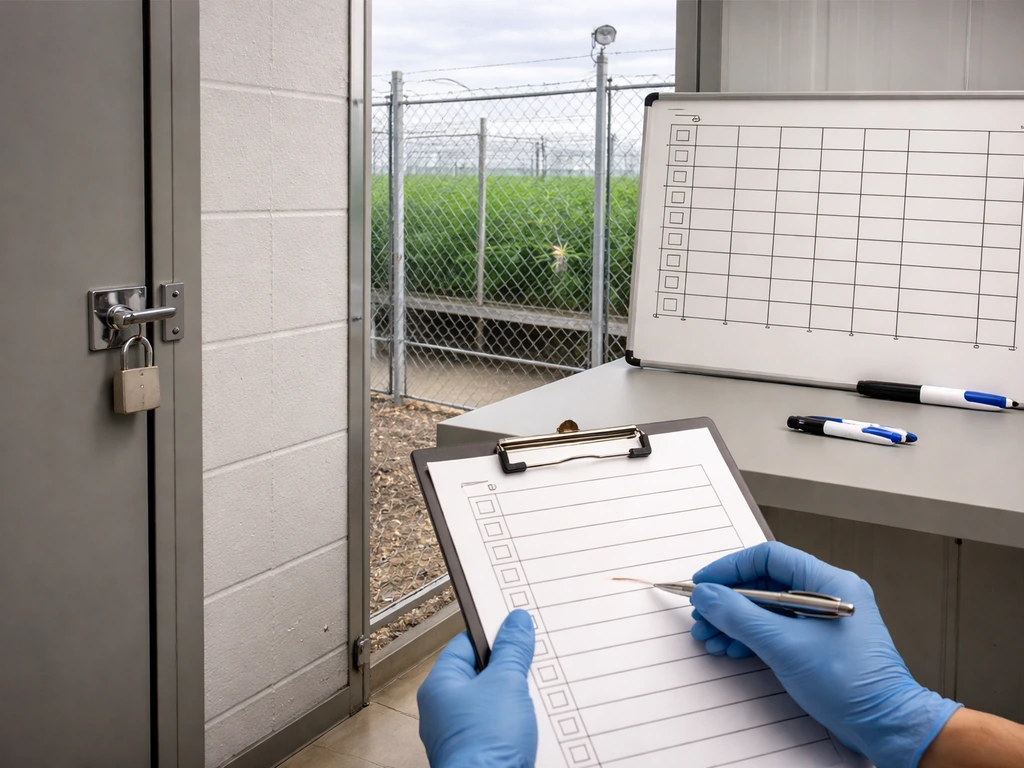
Licensed cultivation facilities in Arkansas operate under detailed rules set by the MMC. Here are the key operational requirements you need to understand before you apply:
- Distribution is restricted: a cultivation facility may only transport or deliver medical marijuana to other licensed cultivation facilities, licensed processors, licensed transporters, licensed dispensaries, or an approved laboratory. You cannot sell or deliver to unlicensed parties.
- Security is mandatory: facilities must meet physical security standards including surveillance cameras, alarm systems, and restricted access controls as specified in the MMC rules.
- Seed-to-sale tracking: all cannabis plants and product must be tracked through the state-approved system from the moment of planting through final sale or disposal.
- Recordkeeping: detailed records of all cultivation activity, inventory, transfers, waste disposal, and employee activity must be maintained and available for inspection.
- Inspections: the MMC and its agents can inspect a licensed facility at any time. You must provide access to all areas, records, and systems.
- Testing: all product must be tested by an approved laboratory before it can be distributed.
- Canopy and plant limits: specific limits on total canopy or plant counts are defined in the MMC rules and your license conditions. Review the current rules for the exact figures that apply to your license tier.
The rules are detailed and specific. Before you finalize your facility design or operational plan, download the current version of the DFA ABC Rules Governing Oversight of Medical Marijuana Cultivation Facilities and read them cover to cover. Building a facility that does not meet the rules is an expensive mistake.
Common mistakes that get applications denied and how to avoid them
Arkansas cultivation license applications are competitive and scored. The bar for a complete, compliant application is high. These are the most common reasons applications fail:
- Incomplete applications: missing a required document, form, or exhibit is often an automatic disqualification. Go through the checklist item by item before you submit.
- Ownership disclosure errors: failing to disclose all individuals with an ownership interest or control over the entity, even minority stakeholders, is a serious problem. Arkansas requires full transparency on ownership.
- Background check issues: undisclosed criminal history or history that disqualifies a principal from holding a license will sink your application. Know the disqualifying offenses before you apply and address them honestly.
- Weak facility or security plan: a vague or non-compliant security or facility plan scores poorly. Hire someone who knows the MMC's specific requirements if you are not confident in your design.
- Insufficient financial documentation: you need to demonstrate you actually have the capital to build and operate the facility. Weak financial documentation is a common reason for low scores or denial.
- Applying outside an open window: the MMC does not accept cultivation facility applications on a rolling basis. Submitting outside an open window means your application will not be reviewed.
- Confusing license types: applying for the wrong license category or treating a dispensary license like a cultivation license is a basic error that wastes your application fee.
- Missing the June 30 renewal deadline: for existing licensees, missing the annual renewal date puts your license at risk. Set a calendar reminder well in advance.
Where to verify the latest requirements
Cannabis regulations change, and the details that matter most (fees, canopy limits, application window dates) are the ones most likely to be updated. Always verify directly from official sources before acting.
- Arkansas DFA Medical Marijuana Commission (MMC): dfa.arkansas.gov — this is the primary source for application packets, current rules, fee schedules, and license status lookups.
- Arkansas Department of Health (ADH): the ADH handles patient and caregiver registration and can confirm what patients are and are not permitted to do under state law.
- Arkansas Administrative Code: the full text of cultivation facility rules is published in the Arkansas Administrative Code and accessible through the state's official code databases and sites like Justia.
- Contact the MMC directly: if you have a specific question about your situation, calling or emailing the MMC is the most reliable way to get a current, authoritative answer. Do not rely on third-party summaries (including this one) for final compliance decisions.
If you are comparing Arkansas to neighboring states with different frameworks, states like Oklahoma and Missouri have their own distinct cultivation licensing structures worth reviewing if you are considering where to operate. If you are also considering Missouri, review Missouri grow license requirements for eligibility and the application process before planning your operation. If you are also looking at options outside Arkansas, review Oklahoma grow license requirements for that state’s eligibility and application process Oklahoma and Missouri have their own distinct cultivation licensing structures. The rules vary significantly from state to state, and what applies in one jurisdiction does not carry over to another.
The bottom line: getting an Arkansas grow license is a serious, competitive, and document-intensive process aimed at commercial operators. Determine whether you are eligible, wait for an open application window, build a complete and compliant application package, and understand that compliance does not end at approval. For Mississippi, you will need to review the Mississippi grow license requirements and timelines before planning your application. If you are exploring opportunities in Ohio instead, you will need to look up the current Ohio grow license requirements and timelines before planning your application. Annual renewal, ongoing inspections, and strict operational rules are the reality of holding this license.
FAQ
Can a company apply for an Arkansas grow license if it does not yet have the facility location secured?
Usually, you need to show a compliant facility plan and practical readiness as part of the application. If your site is not under control (for example, secured lease or ownership) you may struggle to demonstrate feasibility. Plan to have the physical premises and design aligned with the current DFA rules before submitting.
Is there any way for an Arkansas patient or caregiver to obtain authorization to cultivate, even indirectly?
No. Arkansas does not create a home or caregiver cultivation authorization pathway. Patients must purchase from licensed dispensaries, and caregivers are not permitted to grow or cultivate under the medical program. The only cultivation activities tied to the license are performed by a licensed facility and its licensed employees.
Do owners and officers need employee licenses, or is the cultivation facility license enough?
The cultivation facility license covers the business and the facility activities, but employees who work in a hands-on, at-the-facility capacity typically need their own MMC employee or agent license. Corporate owners with limited involvement may still trigger licensing expectations depending on role, so confirm job duties against the MMC’s employee licensing requirements.
What happens if my background check issues disqualifying history for one owner or officer?
Ownership and control rules can restrict who may hold an interest in a cultivation license. If a disqualifying history applies to an owner, officer, board member, or certain controlling persons, the application can be denied. Many teams reduce risk by doing internal eligibility reviews before investing heavily in facility design.
How strict are the application deadlines for the competitive windows?
They are critical. If the MMC has a scoring and ranking process, submitting late can mean you cannot compete for that cycle. Build compliance tasks (financing documents, facility documentation, tracking readiness) around the open window rather than trying to rush at the end.
Are license and application fees refundable if the MMC denies the application?
Typically no. Application fees are often non-refundable even if you do not receive the license. You should treat early costs like a sunk cost and only spend additional funds (construction, vendors, staff licensing) after confirming the application window requirements and completeness expectations.
How do seed-to-sale tracking costs work in practice for Arkansas cultivators?
Arkansas requires use of a state-approved tracking system, which creates ongoing monthly or per-transaction costs depending on the vendor and configuration. Budget for staff time to keep records current, system integration, and any additional fees tied to reporting and compliance audits.
If my facility is compliant at approval, can I change the operation later without re-approval?
Changes can still require MMC review depending on what you alter, such as layout, security, plant handling processes, or operational capacity. Keep a change-management process that documents what changed and how it remains compliant, because unapproved deviations can lead to enforcement or renewal problems.
How do the annual renewal timing rules affect a cultivation schedule?
Renewal is tied to an annual cycle ending June 30, with renewal due on or before that date for the fiscal year beginning July 1. If your internal compliance calendar is late, you risk lapse or revocation. Plan inspections, renewals, training for employee licensing, and tracking system checks early enough to avoid last-minute compliance gaps.
What are the most common compliance failures after licensing, not during application?
Even licensed facilities can fail renewals or face enforcement if they miss security or recordkeeping expectations, let tracking data fall out of sync, or incur inspection issues. Build a compliance calendar for audits, testing coordination, SOP reviews, and incident reporting, and assign ownership for each regulatory obligation.
Can a cultivator export product or sell outside Arkansas?
The framework is built around distribution to licensed entities within the Arkansas medical marijuana supply chain. Selling or distribution outside the approved local structure is generally not authorized under the state’s medical program rules, so plan commercial arrangements only with permitted counterparties.
Do I need to budget for lab testing costs even if production is delayed?
Yes. Cultivation facilities are responsible for testing-related compliance for their product pipeline. If production delays are tied to compliance remediation, you can still incur costs from test coordination, retesting, and product disposition requirements, so include those in scenario planning.
Next Article
Montana Recreational Grow License: Step-by-Step Guide
Step-by-step guide to Montana recreational grow license, eligibility, limits, application steps, compliance, and renewal