
If you're searching for a Montana recreational grow license, here's the straight answer: Montana does not issue a special license for personal home growing. Adults 21 and older can legally cultivate cannabis at home under state law without applying for any license at all. The "license" concept only kicks in when you're running a cannabis business. Understanding which category you fall into saves a lot of confusion, so let's walk through both paths clearly.
Montana Recreational Grow License: Step-by-Step Guide

Marcus Whitley
22 Apr 2026
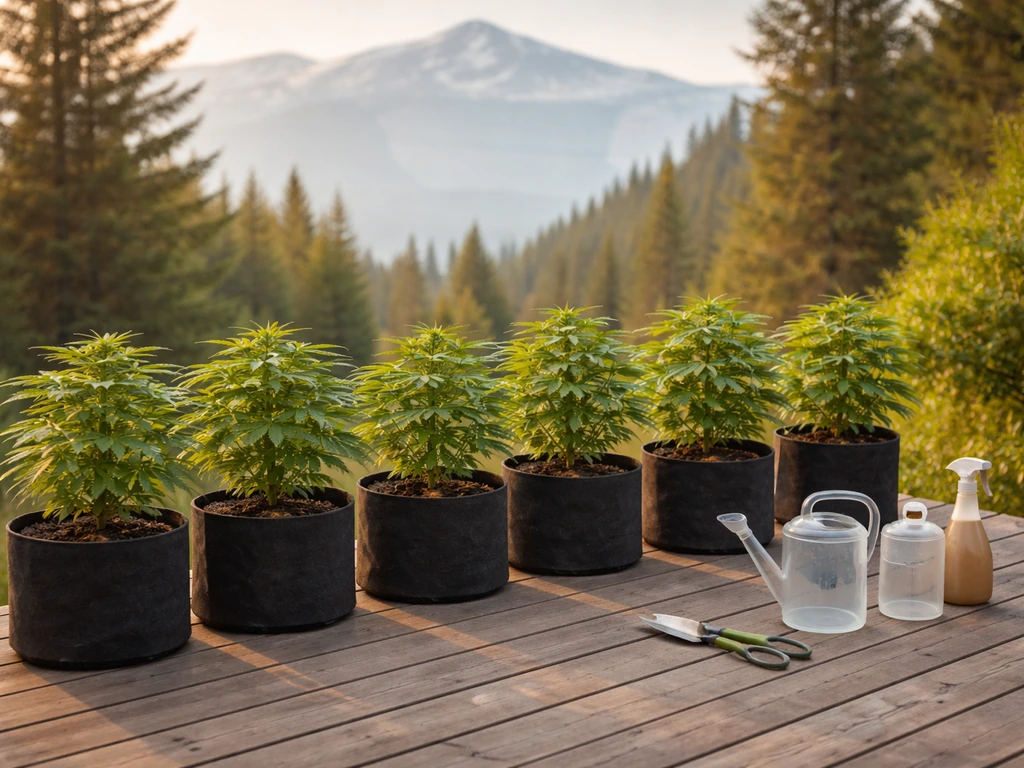
What 'recreational grow license' actually means in Montana
Montana's cannabis framework lives under Title 16, Chapter 12 of the Montana Code Annotated (MCA), and it's administered by the Montana Department of Revenue through its Cannabis and Alcohol Regulation Division (CARD). The state separates cultivation into two distinct buckets: personal-use home growing (no license required, just rules to follow) and commercial cultivation (requires a formal Marijuana Cultivator License issued by CARD).
When someone searches for a "recreational grow license," they usually mean one of two things: they want to grow a few plants at home for personal use, or they're thinking about starting a cannabis cultivation business. These are entirely different legal situations. If you're growing a couple of plants for yourself, you're operating under MCA 16-12-106 as a personal cultivator. If you're growing to sell, you need a business license. This article covers both, so you can figure out which lane you're in.
Eligibility checks before you do anything else

For personal home growing
Personal cultivation in Montana is straightforward on eligibility. You need to be 21 or older and growing at a private residence. The state's own "blank" rel="noopener noreferrer">Know Before You Grow" guidance spells out two additional factors worth checking before you plant anything:
- You must be growing at a private residence. If you own the home, you're covered. If you rent, you need written permission from the property owner before you start.
- The space you use for growing cannot be shared with, rented to, or leased to a marijuana business. Personal grow space and commercial business space must stay completely separate.
- Your plants cannot be visible from a street or any other public area. This is a compliance requirement, not just a courtesy.
For a commercial cultivator license
If you want to grow commercially, the eligibility bar is higher. Applicants must submit fingerprints to CARD at the time of initial application and then every five years after that. Background checks are part of the process. You'll also need a compliant physical location that can pass a pre-licensing inspection, and your business structure must meet state requirements. There are no explicit residency requirements for commercial applicants in the publicly available guidance, but the fingerprint and background check process effectively screens applicants through CARD before any license is issued.
One important timing note: Montana passed legislation (SB 27) that created a freeze on new licensed cultivation locations. Under that rule, applications received after July 1, 2025 that were incomplete were denied outright. If you're applying now in 2026, check the current status of any application freeze directly with CARD before investing time in an application, as the regulatory environment around new commercial locations has been in flux.
License types and what each one allows
| Category | License Required? | Plant Limit | Who Can Do It | Key Restrictions |
|---|---|---|---|---|
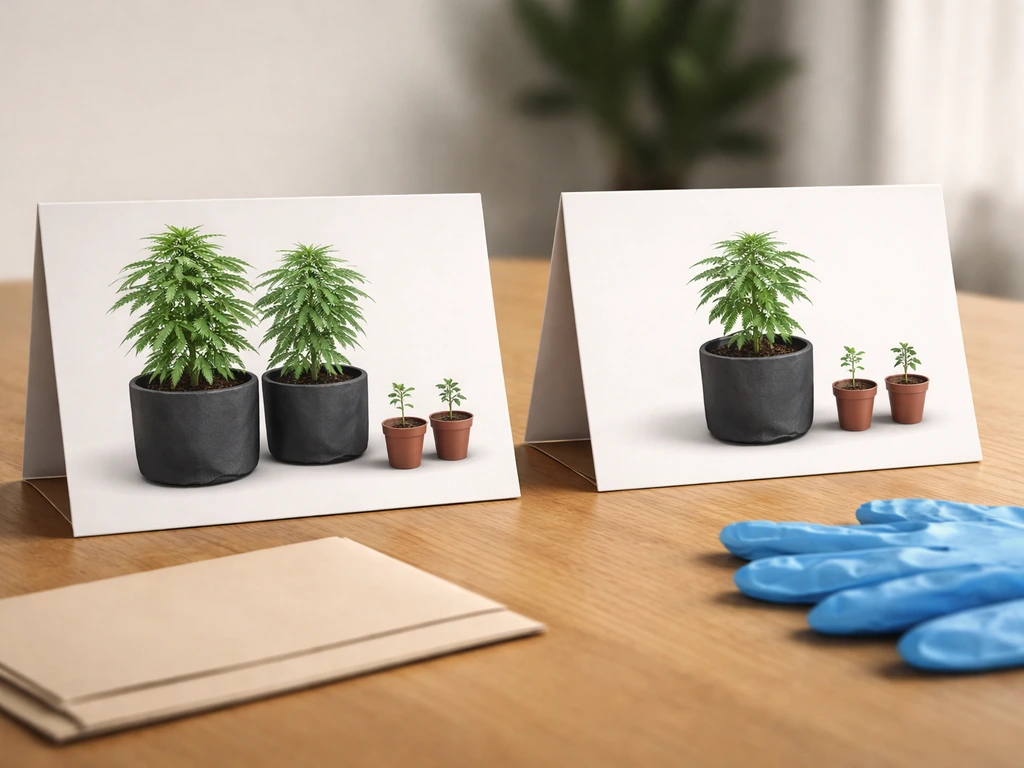
| Personal home cultivation | No license needed | 2 mature plants + 2 seedlings per adult (up to 4 mature + 4 seedlings per household with 2+ adults 21+) | Montana residents 21+ | Private residence only; not visible from public; excess over 1 oz must be locked; no mixing with business space |
| Commercial cultivation (business) | Yes: Marijuana Cultivator License from CARD | Determined by license tier | Business applicants meeting CARD requirements | Must use TAP portal; fingerprints required; annual inspections; seed-to-sale tracking; SOPs manual on-site |
Personal cultivation limits in detail
Under MCA 16-12-106, a person 21 or older can cultivate up to two mature marijuana plants and two seedlings at their private residence for personal use. If two or more adults 21 and older share a residence, the household limit doubles: up to four mature plants and four seedlings at the same time. There is no mechanism to go beyond that at the personal level, regardless of how many adults live there.
Anything you produce beyond one ounce must be stored in a locked space within or on the private residence. It also must not be visible by normal, unaided vision from any public place. Violating the visibility rule carries a civil fine of up to $250 plus forfeiture of the plants, so it's not just a technicality.
Commercial cultivator license
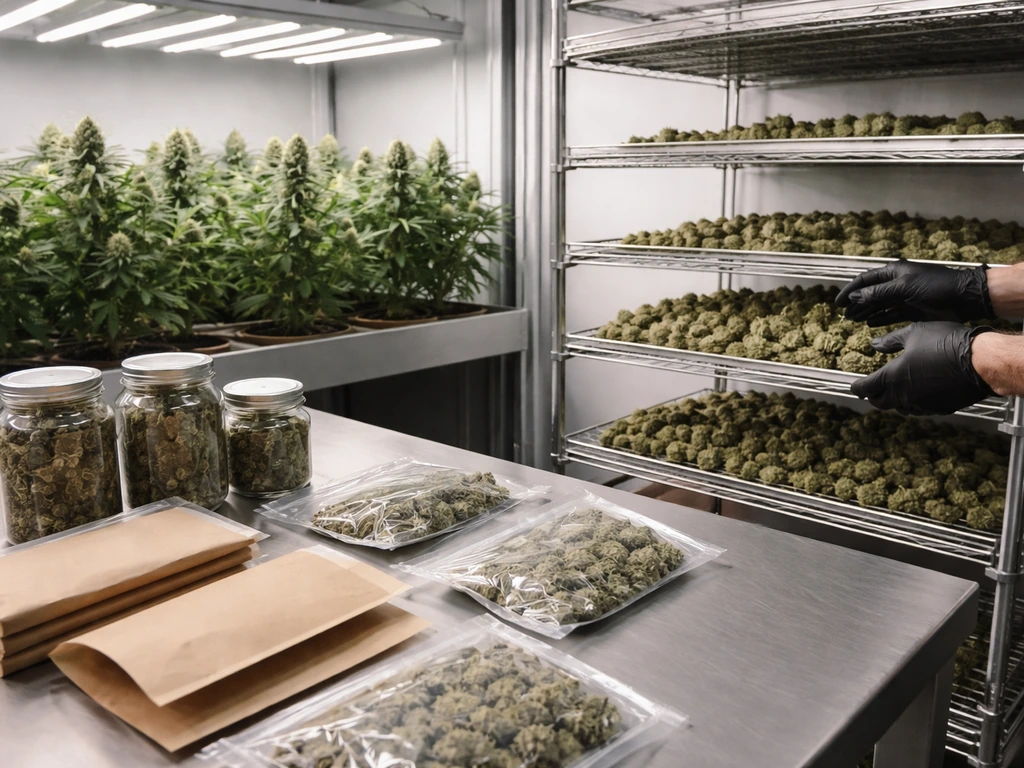
ARM 42.39.405 defines what a Marijuana Cultivator License actually authorizes: planting, cultivating, growing, drying, packaging, and labeling marijuana, plus selling to other licensed entities (manufacturers, dispensaries, and other cultivators). This is a full business license with tiered fee structures and significant compliance obligations. It's not designed for someone growing a few personal plants; it's for operations producing cannabis for the commercial market.
Applying for a commercial cultivator license: fees, documents, and steps
If personal cultivation isn't what you're after and you want to run a legitimate cultivation business, here's how the application process works.
Where to apply
All Montana cannabis business license applications, including cultivator licenses, are submitted through Montana's TransAction Portal (TAP)</a>. dor.mt.gov/). TAP is the Department of Revenue's online platform for tax and licensing matters. You'll create or log into a TAP account and submit your application from there. CARD does not accept paper applications mailed in.
Fees
Montana uses a tiered fee structure for cultivator licenses, with the specific fee depending on your license tier (which relates to canopy size and operation scale). On top of the license fee itself, ARM 42. 39. 104 requires a nonrefundable processing fee equal to 20% of the applicable license fee, paid at the time of application.
This processing fee is not returned if your application is denied or if you withdraw, so only submit when your application is genuinely complete. Always check CARD's current fee schedule on the Department of Revenue's cultivator license page, as fees can be updated. If you're trying to budget for a similar grow license in New Mexico, the fees can differ, so it's worth checking how much is a grow license in New Mexico before you apply.
Documents and requirements

- Completed application through TAP
- Nonrefundable processing fee (20% of license fee) paid at submission
- Fingerprints submitted to CARD (with consent form signed)
- Business entity documentation showing your ownership structure
- Proposed premises information sufficient for a pre-licensing inspection
- Any additional documents required under General License Application Requirements posted by CARD
Timeline
After submission, CARD reviews your application for completeness. Incomplete applications are not processed and will be denied if they don't meet completeness requirements by applicable deadlines. Once deemed complete, CARD schedules a pre-licensing inspection of your premises. The license is issued for a one-year period from the date of approval. There is no publicly stated fixed processing timeline, so building in several months of lead time before your intended start date is wise.
Staying compliant after your license is approved
Getting the license is step one. Keeping it requires ongoing compliance. CARD's inspection program conducts at least one inspection per year for licensed cultivators, plus additional follow-up or compliance verification inspections as needed. Here's what you need to have in order at all times.
For personal home growers
- Keep plants within your allowed count (no more than 2 mature + 2 seedlings per adult, or 4 + 4 per qualifying household)
- Store any produced marijuana exceeding 1 ounce in a locked space on the private residence
- Ensure no plants or marijuana are visible from a public place by normal unaided vision
- Keep your grow space completely separate from any cannabis business operations
- If you're a renter, keep your written permission from the property owner on file
For commercial cultivators
- Maintain a written standard operating procedures (SOPs) manual at the licensed premises and make it available for CARD inspection at all times
- Log all pesticides, fertilizers, and agricultural chemicals used in production in the state's seed-to-sale tracking system, updated weekly
- Comply with all labeling, packaging, and product handling rules under ARM regulations
- Be ready for annual inspections (and potentially more frequent compliance visits)
- Track all plant and product movement through the seed-to-sale system as required
- Keep all required records at the licensed location and accessible during inspections
Renewals, reporting, and mistakes that trip people up

Commercial cultivator licenses run for one year and must be renewed annually. CARD makes renewal applications available 90 days before your license expiration date, and you must submit your renewal at least 60 days before expiration to allow time for inspection and processing. Missing that 60-day window can create a gap in your licensed status, which is a serious problem for any operating business.
Montana's Department of Revenue publishes a Cannabis Newsletter Archive with operational updates that affect licensing, renewals, and compliance requirements. Subscribing or checking it regularly is one of the easiest ways to stay ahead of rule changes that could affect your renewal or operations.
Common mistakes to avoid
- Submitting an incomplete TAP application: incomplete applications are denied, and you lose your nonrefundable processing fee
- Missing the 60-day renewal submission deadline and risking a lapse in licensure
- Personal growers letting plants become visible from a street or public area, triggering a civil fine and forfeiture
- Renters starting to grow without written property owner permission on file
- Combining personal grow space with any commercial cannabis business activity
- Failing to update the seed-to-sale tracking system on time (weekly pesticide/fertilizer logs for commercial cultivators)
- Letting your fingerprint submission lapse: CARD requires resubmission every five years
Your next-steps checklist for today
Whether you're a personal grower or pursuing a commercial license, here's what to do right now to move forward without guesswork. Whether you're comparing Montana to nearby states or looking for a state-specific path, review the Missouri grow license process if that is your destination. Mississippi has its own licensing process for cultivators, so you’ll want to review Mississippi’s current requirements before applying Mississippi grow license. If you’re specifically trying to get an Arkansas grow license, the requirements and application steps will differ from Montana’s rules, so check Arkansas’s licensing guidance for your grower type. If you're instead asking about Oklahoma grow license requirements, you should check Oklahoma’s current rules and licensing steps before applying.
If you want to grow at home for personal use
- Confirm you're 21 or older and growing at a private residence.
- If you rent, get written permission from your property owner before planting anything. Use the Property Owner Permission Form available in CARD's Know Before You Grow resources.
- Count your household adults 21+: one adult gets 2 mature plants + 2 seedlings; two or more qualifying adults gets 4 mature + 4 seedlings maximum.
- Plan your grow location so plants are completely out of sight from any street or public space.
- Set up locked storage for any harvest that exceeds 1 ounce at a time.
- Download and read Montana's Know Before You Grow PDF from the Department of Revenue website so you have the current rules in one place.
- You're done: no application, no license, no fee required.
If you want a commercial cultivator license
- Check CARD's current cultivator license page on the Montana Department of Revenue website for the latest fee schedule, tier structure, and any active application freezes or restrictions (the SB 27 footprint freeze is a real factor to verify before you invest time in an application).
- Create or log into your Montana TAP (TransAction Portal) account at tap.dor.mt.gov.
- Review CARD's General License Application Requirements and the cultivator-specific checklist so you know exactly what documents to gather.
- Arrange fingerprinting: download the Consent to Fingerprint form from CARD's forms page and follow submission instructions.
- Prepare your premises documentation and make sure your location meets all physical requirements for a pre-licensing inspection.
- Calculate your total fee: license fee (based on your intended tier) plus the nonrefundable 20% processing fee. Have this ready before you submit.
- Submit your complete application through TAP. Do not submit until everything is ready; incomplete applications are denied and the processing fee is not refunded.
- Sign up for CARD's Cannabis Newsletter updates so you're notified of any rule or timeline changes that affect your license.
- Plan for a pre-licensing inspection and build your SOPs manual before that inspection occurs.
If you're comparing Montana's approach to what other states require, the structure here is fairly typical for adult-use states: personal home cultivation is permitted without a license under defined limits, while commercial cultivation requires a formal state-issued business license with fees, inspections, and ongoing compliance obligations. If you are looking into an ohio grow license instead, the application steps and eligibility rules will be state-specific like Montana’s are through CARD.
States like Nevada and New Mexico follow a similar split between unlicensed personal cultivation and licensed commercial activity, though the specific plant counts, fees, and application processes differ. If you’re specifically trying to understand the Nevada grow license process and requirements for a commercial operation, you’ll need to check Nevada’s current licensing rules for your grower type.
If you're interested in New Mexico micro grow license requirements, the key eligibility and application steps will differ from Montana's general commercial framework. To avoid delays, also review how an Oklahoma grow license works for your intended grow type and timeline. To find out how much a grow license costs in New Mexico, you'll need to look up the current New Mexico licensing fees for the specific grower type you're applying for. Montana's personal limits (2 mature plants and 2 seedlings per adult) are on the more conservative end compared to some other states.
This article is informational only and not legal advice. Montana's cannabis regulations change, and the Montana Department of Revenue's CARD division is the authoritative source for current rules, forms, and fee schedules. Always verify details directly with CARD before making business or compliance decisions. If you're also evaluating micro grow licensing in New Mexico, be sure to review the specific New Mexico micro grow license requirements and application details before you invest in setup.
FAQ
What’s the fastest way to confirm whether I’m considered a personal home grower or a business in Montana?
Check what you intend to do with your cannabis, if you will transfer or sell it to licensed businesses, that moves you into the commercial lane. If you are only cultivating for your own personal use at a private residence within the household plant limits, you are in the personal-use lane and you do not apply for a cultivator license.
Can roommates or a couple in the same household grow more than Montana’s personal-use household limit?
No. Montana’s personal-use caps are based on adults 21 and older at the same residence, but the maximum is still the household doubling described for personal cultivation (it does not scale beyond that even if there are more adults). If you need more production, that generally means pursuing a commercial cultivation license.
Do the personal-plant limits apply to plants grown outdoors, in a shed, or on a balcony?
The key personal-use rules are eligibility (age and private residence) and the storage and visibility requirements. Even if plants are outside the home structure, they still must be kept in compliance with the locked-storage requirement for anything produced beyond one ounce, and plants cannot be visible by normal unaided vision from public places.
What counts as “visible by normal, unaided vision,” for the personal-use visibility rule?
The rule is tied to what a person can see from public places without special tools. Practical takeaway, avoid placements where someone could see plants, growing areas, or exposed product from a street, sidewalk, driveway, or other public vantage point, even if the grow area is partially screened.
If I’m growing for personal use, can I give away small amounts to friends?
This question is riskier than it sounds. Montana’s personal cultivation allowance focuses on growing within the home limits and following storage and visibility rules, but distribution and transfers can trigger regulatory issues. If you plan to provide cannabis to others, you should verify how that is treated under Montana law before doing it.
For a commercial montana recreational grow license application, do I need fingerprints again if I already submitted them for another cannabis license type?
Commercial cultivator licensing includes fingerprinting for the initial application and then again every five years. Even if you previously submitted fingerprints for a related cannabis role, you should confirm with CARD whether the timing is still valid for the cultivator application you are starting.
What happens if my commercial application is missing documents or information on TAP when CARD reviews it?
Incomplete submissions are not processed and can be denied if they do not meet completeness requirements by the applicable deadlines. To reduce this risk, build a checklist for every attachment and answer on TAP before submitting, and confirm the application status immediately after submission.
Does Montana’s “processing fee equals 20% of the license fee” apply to every cultivator tier?
Yes, the processing fee is required as a percentage of the applicable license fee tier you select. The fee is nonrefundable if you are denied or withdraw, so it is worth verifying the correct tier and canopy size basis before paying.
How should I plan around the pre-licensing inspection for a commercial cultivator?
Treat the inspection as a compliance checkpoint. You should have the location prepared to match what you described in the application (security, operational setup, and any required controls), and be ready for follow-up inspection if CARD identifies issues during the initial visit.
If I miss the renewal timing, do I automatically lose my ability to operate immediately?
Renewals must be submitted at least 60 days before expiration to allow for inspection and processing, and missing that window can create a gap in licensed status. Plan a renewal timeline so you are still covered through the expiration period, and do not assume you can continue operating while renewal is pending.
Are there any common mistakes applicants make that cause montana cultivator licenses to be denied?
The most frequent problems tend to be incomplete applications on TAP, misunderstanding the licensing tier or canopy scope, and not having a premises that can pass the pre-licensing inspection. Another common issue is failing to account for timing and recent regulatory changes affecting new cultivation locations.
Does SB 27’s cultivation-location freeze affect personal home growers?
The freeze described in the article is tied to new licensed cultivation locations, so it applies to commercial licensing. Personal-use home growing is not created through the license system, so the freeze should not be read as limiting the ability to grow at a private residence within personal-use rules.
Where can I see the current fee amounts and renewal deadlines before I submit or renew?
Use CARD’s current cultivator materials and the Department of Revenue’s published schedules for the relevant licensing period. Fees can be updated and renewal windows can change operationally, so verify the exact numbers and dates in the most recent guidance before you pay or submit paperwork.
Next Article
Ohio Grow License: How to Apply and Stay Compliant
Step-by-step Ohio grow license guide: apply, fees, limits, documents, and ongoing compliance for legal cannabis cultivat