Your "grow area" in cannabis licensing terms is determined by two things: the exact address of your property and the layers of jurisdiction that sit on top of it. That means your state program, your county, your municipality, and any local zoning or overlay rules that specifically govern cannabis cultivation. All four of those layers have to line up before you can legally grow, and they each may impose different requirements. The process of figuring out where you stand is not complicated, but it does require checking each layer in order.
What Grow Area Am I In? Step-by-Step Cannabis Jurisdiction Check

Marcus Whitley
11 May 2026
What "grow area" actually means in a licensing context
The phrase "grow area" means different things depending on who is using it. In everyday conversation it might just mean "the region where I grow." In cannabis licensing, it has at least three distinct meanings, and mixing them up is one of the most common mistakes new applicants make.
- Jurisdiction: The state, county, and city or municipality whose laws govern your property. This determines which license you need and whether cultivation is even allowed at your address.
- Zoning or overlay designation: The specific land-use classification assigned to your parcel. Cannabis cultivation is often restricted to certain zones (agricultural, industrial, commercial) and may be prohibited in residential zones even if the state allows home grows.
- Premises cultivation area: The physical footprint of your actual grow operation. California's State Water Resources Control Board, for example, defines "Cannabis Cultivation Area" as the perimeter of the planted area for in-ground plants, or the perimeter of the area containing containers for outdoor container grows, including immediately adjacent access pathways. This matters for water rights, permit conditions, and license applications.
- Buffer/setback zones: Distance restrictions from sensitive uses like schools, parks, and childcare centers. Washington State, for example, prohibits new cannabis licenses within 1,000 feet of elementary and secondary schools, playgrounds, childcare centers, and public parks.
When you are trying to answer "what grow area am I in," you are really asking all four of those questions at once. The sections below walk you through how to answer each one.
Start with your exact location details

Before you look up anything, gather the basic property information you will need. Every state licensing agency and local planning department will ask for some version of this list, so having it ready speeds everything up.
- Full street address, including suite or unit number if applicable (Washington's LCB requires the exact street address and suite number on the license certificate)
- County name
- Parcel number or Assessor's Parcel Number (APN), which you can find on a property tax bill or your county assessor's website
- Tax lot number and assessor's map number (Oregon's statutes specifically list these as required evidence for grow site address verification)
- GPS coordinates or latitude/longitude of the property, especially if you are in a rural area without a standard postal address (California requires geographic coordinates for certain water-related elements on a cultivation premises diagram)
- Property type: residential, agricultural, commercial, industrial
- Whether a primary residence is located on the same parcel as the proposed grow area (Oregon's OLCC premises map requirements specifically require identifying any primary residence on the same tax lot)
If your property does not have a standard USPS address, Oregon's statutes offer a useful model: you can establish a grow site location using an assessor's map number plus a map showing the exact location. Most other states accept something similar, but check with your state agency directly.
Identify your governing jurisdiction
Cannabis is regulated at the state level and again at the local level, and you need authorization from both. California's dual-licensing model makes this explicit: a cannabis business must obtain a state license AND a local permit or authorization to operate. Local governments in California can develop their own licensing programs or opt to ban commercial cannabis activity entirely, which creates a patchwork where legality varies block by block. Most other legal states follow a similar structure.
To identify your governing jurisdiction, start with your address and work from the top down.
- Confirm your state. This sets the baseline rules: which licenses exist, plant limits, application fees, and who administers the program.
- Confirm your county. County governments often have their own cannabis ordinances that sit between state law and city rules.
- Confirm your city or municipality. If your address falls within city limits, the city's rules apply. If you are in an unincorporated area, county rules govern you instead.
- Check whether your municipality has opted in or opted out of cannabis activity. A state-legal address in a jurisdiction that has banned local cannabis businesses means you cannot get a license there, even if you meet every state requirement.
Your county assessor's website or a quick call to the county clerk can confirm whether your property falls inside city limits or in an unincorporated area. Many states also have an online license lookup or jurisdiction map tool that lets you enter an address and see whether that location is in an opted-in jurisdiction.
Check your zoning and any cannabis overlay rules
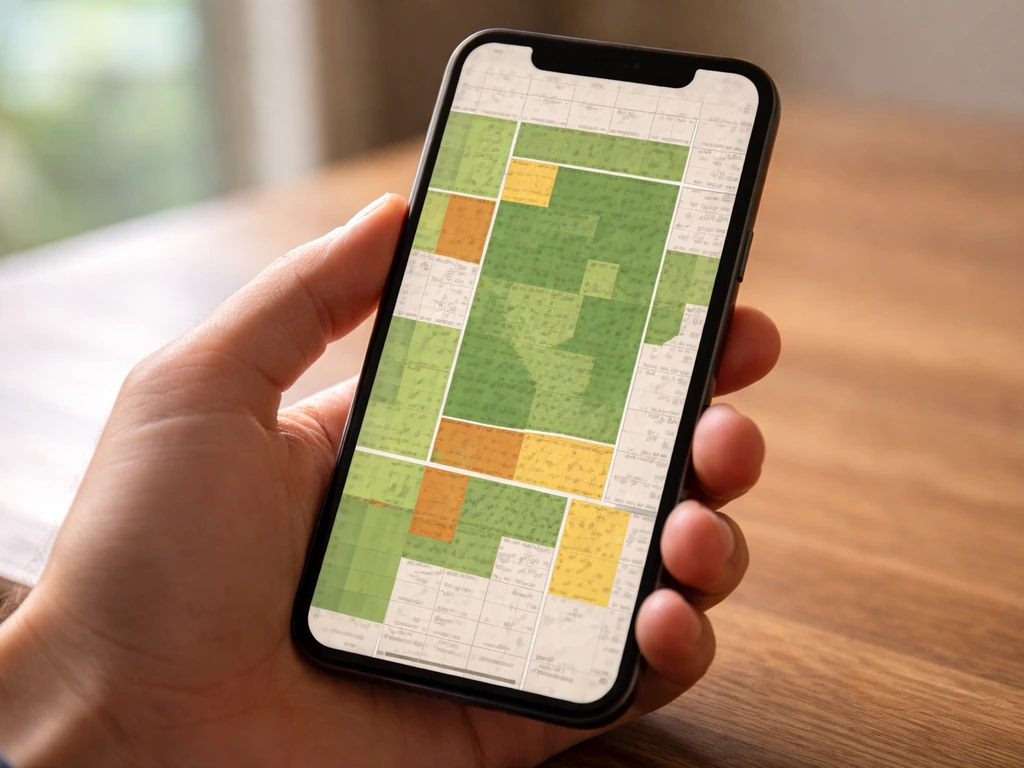
Even inside a jurisdiction that allows cannabis cultivation, your specific parcel has to be zoned appropriately. Most municipalities restrict cannabis grows to agricultural, industrial, or specific commercial zones. Residential zones almost universally prohibit commercial cultivation, and even personal home grows may be restricted by local ordinance.
To check your zoning, go to your city or county planning department's website and search for a zoning map or parcel lookup tool. Enter your address or APN and note the zoning designation. Then look up what that designation permits for cannabis cultivation specifically. Zoning codes often have a table of permitted uses, and cannabis cultivation may be listed as permitted, conditionally permitted, or prohibited.
Beyond base zoning, watch for overlay districts. Some jurisdictions create specific cannabis cultivation zones or buffer zones layered on top of standard zoning. Oregon's OLCC is clear that it cannot license a location that does not have defined premises boundaries, which means a vaguely bounded rural parcel could create problems even if the base zoning is correct. Make sure your parcel boundaries are clearly documented.
Buffer or setback rules are a separate check. Washington's blank" rel="noopener noreferrer">1,000-foot restriction from schools and parks is one of the more well-known examples, but many states and municipalities have their own setback requirements. The Washington State Liquor and Cannabis Board states it cannot issue a new cannabis license for premises located within 1,000 feet of an elementary or secondary school, playground, childcare center, public park, public transit center, or library blank" rel="noopener noreferrer">Washington's 1,000-foot restriction from schools and parks. Run your address through your state's buffer tool (most LCBs and cannabis control offices publish one) or manually measure distances using a mapping tool if no official tool exists.
Confirm whether medical or adult-use rules apply to your location
Many states run separate programs for medical and adult-use cannabis cultivation, and the rules are not always the same. Plant limits, license types, fees, and local authorization requirements can differ significantly between the two. Your address may be eligible for one program but not the other.
A few things to check for your specific location: Does your jurisdiction allow adult-use commercial cultivation, medical cultivation, or both? Some municipalities opted into medical programs before adult-use was legalized and have not extended that authorization to adult-use. If you are a home grower, does your state's medical home grow program require patient registration and a grow site address filed with the state? Oregon, for example, requires that if a marijuana grow site has a USPS address, the application must include the physical address, and the state ties that grow site to a specific registered patient or caregiver.
Check your state cannabis agency's website for a list of opted-in jurisdictions and which program types each jurisdiction has authorized. If that information is not clearly published, call your local cannabis licensing office and ask directly which programs are available at your address.
Match your location to the right license type and limits
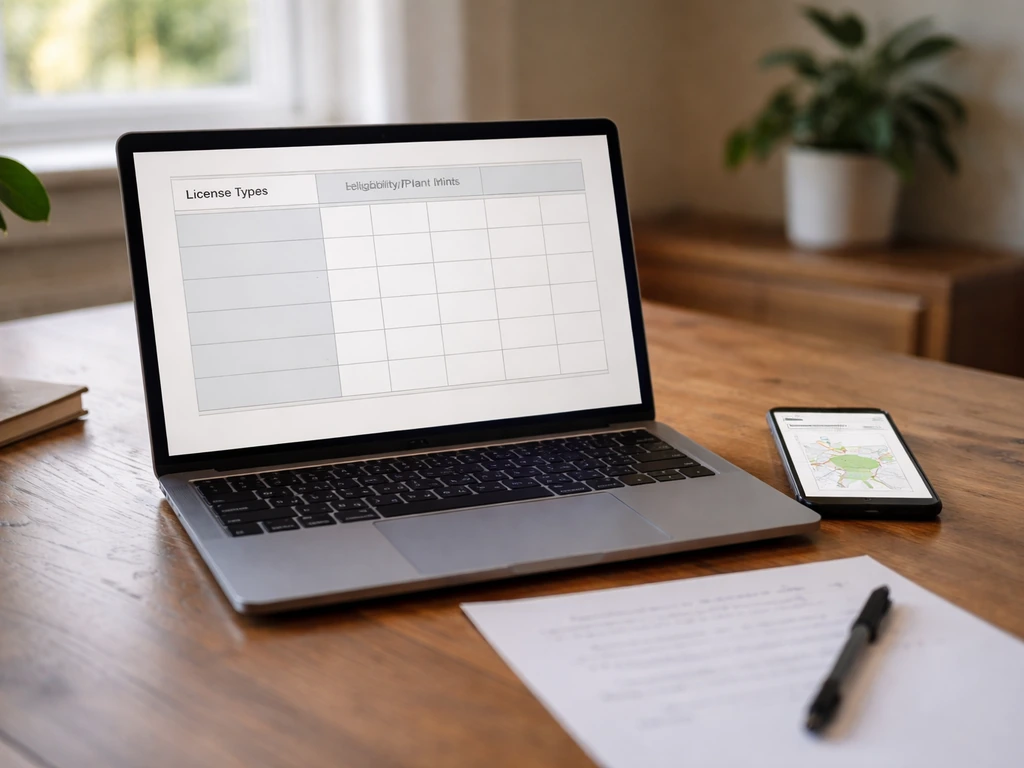
Once you know your jurisdiction and zoning status, you can match your situation to the specific license requirements that apply. The key variables to confirm are license type, plant or canopy limits, and what the "grow area" means on the actual application form.
| Factor | Home Grower | Commercial Applicant |
|---|---|---|
| Primary concern | Am I in an eligible address/zone to grow at home? | Does my parcel meet all state + local commercial requirements? |
| Plant/canopy limit | Set by state law (often 3–6 plants per adult) | Set by license tier; canopy size determines tier |
| Local authorization needed | Usually not (but check local ordinance) | Yes, mandatory in most states |
| Premises diagram required | No | Yes, with defined boundaries and functional areas |
| GPS/coordinates required | No | Often yes, especially for water sources or rural parcels |
| Zoning check required | Yes, residential restrictions may apply | Yes, must be a permitted zone for commercial cultivation |
For commercial applicants, the premises diagram is where the "grow area" concept becomes very concrete. California's cultivation licensing guidance requires applicants to identify specific functional areas within the premises on a diagram, including cannabis waste areas and any areas used for pesticide storage, composting, or shared infrastructure. If your operation uses water from a diversion, groundwater well, or rain catchment system, you will need to include the geographic coordinates of those elements. Oregon's OLCC requires a premises boundary sketch that includes a survey or tax assessor map showing the tax lot boundaries with the production area clearly identified within the property, plus a scaled floor or plot plan for any enclosed growing areas.
For home growers, the grow area question is simpler but still matters. Whether it is safe to live next to a grow house depends on the same “grow area” legality checks, plus local rules about setbacks, odors, and permitted uses near residential properties. You need to confirm that your address is in a jurisdiction that allows home cultivation, that your property type and zoning do not prohibit it, and that you do not exceed the plant count set by state law. Some states also require home growers to register their grow site address with the state, particularly under medical programs.
When it's still unclear: how to verify and who to contact
Zoning maps are sometimes outdated online, jurisdictional boundaries can be genuinely confusing in unincorporated areas, and some state licensing portals do not make jurisdiction eligibility obvious. If you have worked through the steps above and still are not sure what grow area you are in, here is how to get a definitive answer.
- Call your county planning or zoning department. Give them your APN and ask specifically whether cannabis cultivation (home or commercial, whichever applies to you) is a permitted use on that parcel and in that zone.
- Contact your city's planning or community development department if your address is within city limits. Ask whether the city has a local cannabis ordinance and whether your parcel is in a permitted area.
- Call your state cannabis licensing agency directly. Every state program has a licensing division that can confirm whether a given address falls within a jurisdiction that has opted in to cannabis licensing and which license types are available there.
- Use your state's online cannabis jurisdiction map or license lookup tool if one exists. California, Oregon, Washington, and most other legal states publish these tools. Enter your address and confirm what it returns.
- For rural or unaddressed parcels, pull your assessor's map and tax lot number and bring those to the planning department. Oregon's statutes explicitly recognize assessor's map numbers and tax lot numbers as valid evidence of grow site location when a standard postal address does not exist.
- If you are a commercial applicant, consider hiring a land-use attorney or cannabis licensing consultant to review your parcel before you invest in a full application. Getting the jurisdiction or zoning wrong at the start means your application will be rejected, and application fees are often non-refundable.
One practical tip: when you contact any agency, ask them to confirm their answer in writing (email is fine). Verbal guidance from a government office is helpful, but having written confirmation protects you if there is ever a dispute about what you were told and when. If you are concerned about how police investigate grow houses, make sure your licensed premises and documentation clearly match the jurisdiction and zoning you confirmed with the local agencies.
Avoid these common jurisdiction mistakes
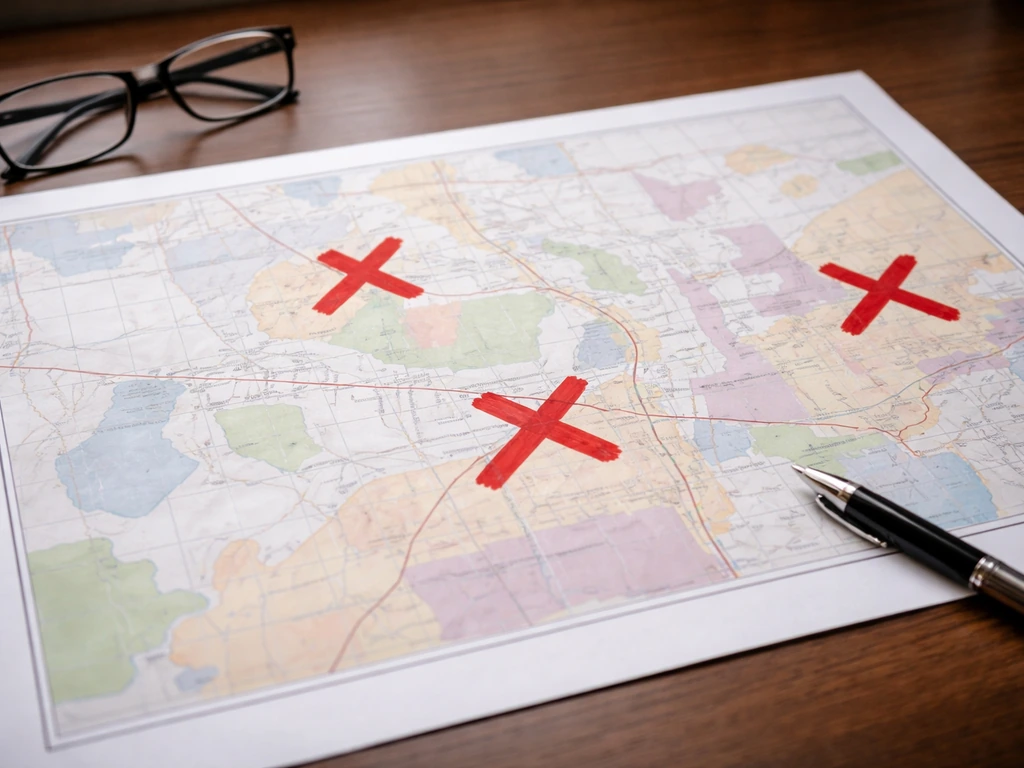
Most compliance problems that come from choosing the wrong grow area trace back to a few recurring errors. Knowing them ahead of time saves a lot of headache.
- Assuming the state program is all you need. Local authorization is required on top of state licensing in virtually every legal state, and many applicants skip this check.
- Using a neighboring city's zoning rules because they are easier to find online. Always confirm rules for the exact jurisdiction your parcel sits in.
- Confusing county unincorporated rules with city rules. If your address is technically outside city limits, city ordinances do not apply to you, but county ordinances do.
- Ignoring buffer zones. A property that passes every zoning check can still be disqualified if it sits within a protected setback distance from a school or park.
- Leaving grow area boundaries vague on an application. Oregon's OLCC explicitly states it cannot license a location without defined premises boundaries. California requires a premises diagram with specific functional areas labeled. Vague boundaries are grounds for rejection.
- Not checking whether a medical vs adult-use distinction affects your eligibility. Some jurisdictions authorized one program type but not the other.
The grow-area question is foundational to everything else in the licensing process. Get this right first, and the rest of the application, from license type selection to plant limits to fee schedules, becomes much more straightforward. It is also worth knowing that the issues around identifying a legitimate grow location are separate from concerns neighbors might have about unlicensed grow operations in their area, which is a different topic entirely.
FAQ
On my cannabis application, does “grow area” mean my whole property or only the production area?
Start by confirming what your state form means by “grow area,” because some applications use it to refer to the entire premises boundary, while others mean only the production footprint. If you are unsure, ask the licensing agency whether they expect the full parcel outline or only the fenced/enclosed growing zone.
What should I do if online maps show different jurisdictions for my parcel or address?
If your address is in a boundary area, use an APN or tax lot number to cross-check city limits and unincorporated status, then verify with the county assessor or clerk. Online jurisdiction tools can disagree, so the safest approach is to request written confirmation from the local cannabis office for your exact parcel.
My mailing address is one thing, but the grow will be on a different part of the parcel. Which location matters?
If your USPS address points to the correct general area but your actual grow structure sits on a different portion of the lot, treat the physical location as the key and document it with a premises sketch and parcel boundary. Tell the licensing office exactly where the production area sits relative to the tax lot lines, not just the mailing address.
What if the premises boundary on my parcel is unclear or doesn’t match the state’s licensing sketch requirements?
When a state tool will not accept your “premises boundary” clearly, you may need a surveyor’s map, a tax assessor map plus annotations, or a boundary sketch that matches the parcel description used by the county. The goal is to make the production area and all required functional areas unambiguous on paper.
If I’m eligible for the right grow area, can I start building or cultivating immediately?
Yes, for both compliance and timing. Even if you are eligible to grow, local approval processes (and in some places moratoria or application windows) can determine whether you can start work or even submit for that program type. Ask the agency whether “authorization to operate” is required before construction, installation, or cultivation begins.
Can I apply for one program type now (medical or adult-use) and switch later?
Switching between medical and adult-use is not just a paperwork change. Your local authorization, plant or canopy limits, and license category may differ, so you must confirm that your jurisdiction has opted into both program types for your address. Plan for a re-review of zoning and premises diagrams if you change categories.
How exactly are setback distances measured, from the building, from the grow footprint, or from the property line?
Setbacks are measured in a specific way, usually from the nearest point of the structure or cultivation area to the nearest boundary of a protected site. Measure using the method your state or local regulator specifies, and keep screenshots or exported measurements as part of your application records.
If I’m a home grower, do I need to register the grow site address and keep it tied to a patient or caregiver?
For home cultivation under programs that require registration, you should confirm the exact registration requirement for your jurisdiction, including whether patient or caregiver linkage is required and what information must match the registered grow site address. If the program uses a registered site, changing location may require an update before planting.
What if I have multiple grow buildings or separate enclosures on different parts of the property? Does that change “grow area” reporting?
If you operate in multiple parcels or multiple structures, “grow area” calculations can change depending on how the premises diagram treats each functional area. Ask the licensing office how they want separate production zones shown (for example, different rooms, enclosures, or lots) and whether separate boundaries affect counts and permits.
What are the most common reasons people get the grow area answer wrong even after they checked zoning?
Common compliance issues include using outdated zoning information, relying on general city limits without confirming parcel-level zoning, or failing to consider overlay districts and buffers. Another frequent mistake is selecting a license type that does not match what the jurisdiction at the exact address is authorized to do.
How do I get a written answer that will actually be useful if there is later a dispute?
Do not rely on a single staff member’s verbal answer. Email or request a written eligibility confirmation that includes your parcel identifier or address, the program type authorized, and any key conditions (for example, setbacks, production area limits, or required premises boundary documentation).
If I have local approval for something, can it still be invalid for my specific grow area or activity type?
Yes, because some local rules affect cultivation even after state approval. If you have a permit or authorization for one activity but not for another (for example, cultivation vs processing on the same premises), ask whether the entire operation is covered under the local authorization tied to your address and grow area diagram.
If I use a well, diversion, or rain catchment, what details about the water location do I need for the grow area check?
Document the water source location and any relevant coordinates or descriptions in the same way the state asks for in your premises sketch, especially if you use diversion infrastructure or groundwater. If you cannot provide the exact geographic location, ask what level of specificity is acceptable before you submit, because incomplete premises details can delay review.
Next Article
Is It Safe to Live Next to a Grow House? Risks and Steps
Assess safety risks of living near a cannabis grow, including air, fire, mold, pests, and how to verify licensing