If you searched 'mn micro grow license,' you're almost certainly looking for Minnesota's cannabis microbusiness license, issued by the Office of Cannabis Management (OCM). But it's worth knowing that 'nm micro grow license' refers to New Mexico's producer microbusiness license, issued by the Cannabis Control Division (CCD), and those two abbreviations get mixed up constantly. This guide covers both so you can confirm which one applies to you and follow the right steps today.
MN Micro Grow License Guide and MN vs NM Steps

Marcus Whitley
28 Apr 2026
MN vs NM: Make Sure You're Looking at the Right State
Minnesota's postal abbreviation is MN. New Mexico's is NM. One letter difference, two completely different licensing systems, two different agencies, and two different fee structures. If you're in Minneapolis, Duluth, or anywhere else in the Land of 10,000 Lakes, you want the Minnesota OCM process. If you're in Albuquerque, Santa Fe, or anywhere in the Southwest, you want the New Mexico CCD process. Double-check before you fill out a single form.
One more thing worth clarifying upfront: if you just want to grow cannabis for personal use at home in Minnesota, you may not need any license at all. Adults 21 and older can grow up to eight plants per residence (no more than four being mature, flowering plants) under Minnesota's adult-use home-grow provisions, which took effect August 1, 2023. A microbusiness license is for operating a commercial cannabis business, not home cultivation. To get a micro grow licence in Canada, you still need to follow Health Canada’s cannabis licensing process and meet provincial requirements where you operate microbusiness license. New Mexico similarly has home-grow provisions that don't require a CCD license. The rest of this guide is about the commercial licensing pathway.
What a Micro Grow License Actually Lets You Do
Minnesota Microbusiness
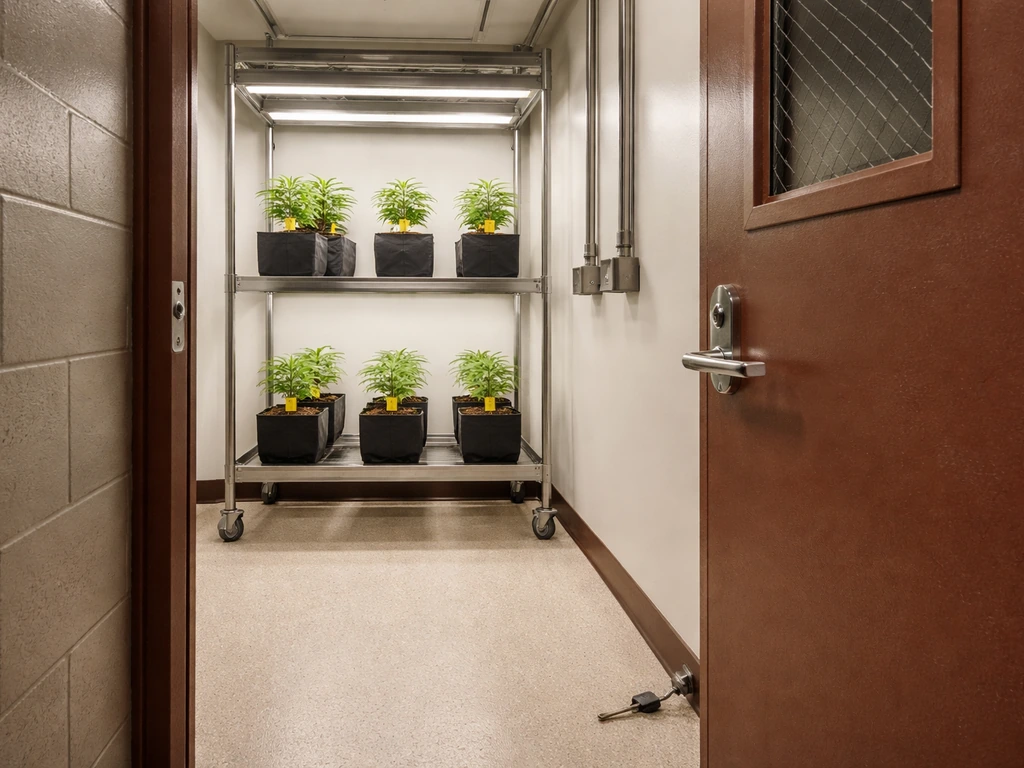
Minnesota's cannabis microbusiness license is a vertically integrated license category under Minnesota Statutes, Chapter 342. 'Vertically integrated' means a single microbusiness license can cover multiple activities (cultivation, processing, and retail) rather than requiring separate licenses for each. The cultivation limit for an indoor microbusiness is up to 5,000 square feet of plant canopy. One important restriction: you cannot grow both indoors and outdoors simultaneously under Minnesota law (Minn. Stat. § 342.25, subd. 7 and Minnesota Rules 9810.2000). You pick one mode and stick with it.
New Mexico Producer Microbusiness
New Mexico offers two relevant license types through the CCD. The Cannabis Producer Microbusiness License covers cultivation of up to 200 plants and has an annual fee of $1,000. The Integrated Cannabis Microbusiness License is a multi-activity option covering up to three cannabis activities (retail, manufacturing, and production) at a single location, with an annual fee of $2,500. Both are authorized under the New Mexico Cannabis Control Act. If you want to grow and sell from one location at small scale, the integrated option gives you more flexibility, but it costs more.
| Feature | MN Microbusiness | NM Producer Microbusiness | NM Integrated Microbusiness |
|---|---|---|---|
| Issuing Agency | MN Office of Cannabis Management (OCM) | NM Cannabis Control Division (CCD) | NM Cannabis Control Division (CCD) |
| Cultivation Limit | Up to 5,000 sq ft canopy (indoor) | Up to 200 plants | Up to 200 plants (production activity) |
| Vertically Integrated? | Yes (can include processing & retail) | No (cultivation only) | Yes (up to 3 activities) |
| Annual/Initial Fee | $0 initial; $2,000 renewal | $1,000/year | $2,500/year |
| Application Platform | Accela Citizen Portal | CCD Online License System | CCD Online License System |
Who Qualifies: Eligibility Requirements
Minnesota Eligibility
Your business must be physically located in Minnesota. Owners and controlling persons go through background checks, and certain felony convictions are disqualifying under Minn. Stat. § 342.15, including convictions related to illegal cannabis sales. As of March 1, 2026, background checks for cannabis businesses and prospective employees must go through the Bureau of Criminal Apprehension (BCA) process, so make sure you're using the current system.
Minnesota also has a social equity licensing track. To qualify as a social equity applicant, at least 65% of the business must be owned by social equity applicants as defined under Minn. Stat. § 342.185. Social equity status can affect your application priority and certain fee considerations, so it's worth reviewing whether you qualify before you apply.
New Mexico Eligibility
New Mexico requires all controlling persons to submit an 'Authorization for Release of Information' form. This form must be signed, notarized, and submitted directly to the New Mexico Department of Public Safety (DPS) with a $15 fee. This is one of the most commonly botched steps in the NM application process, and a missing or incorrect form will stall your application. Get this done early. The CCD reviews controlling persons for disqualifying factors similar to other state cannabis programs.
How to Apply: Step-by-Step for Each State
Minnesota Application Process
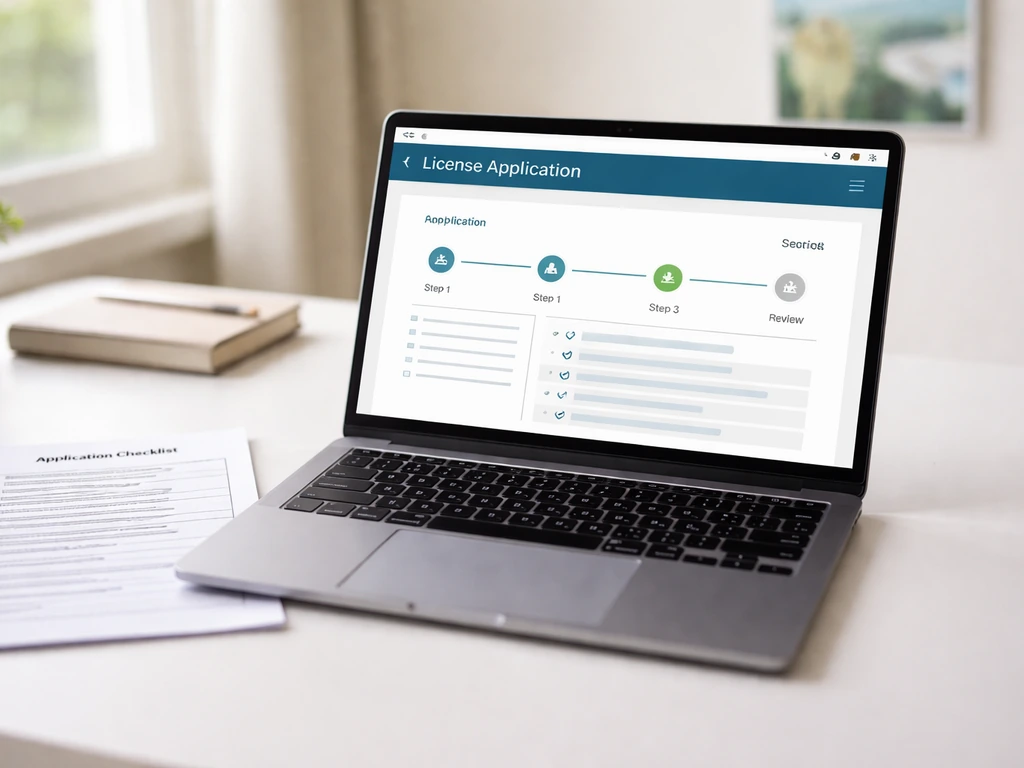
- Confirm the current application window is open. OCM runs licensing cycles with defined application windows. A recent cycle ran February 18 to March 14, so check the OCM website for the current open period. Microbusinesses are not subject to license caps or a lottery, which makes the process more straightforward than some other license types.
- Create an account on the Accela Citizen Portal, which is OCM's official online application platform.
- Complete the application form, including all owner and controlling person information. Every person with ownership or control must go through the BCA background check process.
- Pay the initial application fee. As of the most recent guidance, the initial microbusiness license fee is $0. However, the $2,000 renewal fee applies when you renew, and all fees are nonrefundable.
- Submit your application and monitor your portal for any 'Request for More Information' (RFI) notices. If OCM sends an RFI, you have 14 calendar days to respond. Missing that window can end your application.
- After conditional approval, submit your Final Plan of Record (FPOR). This is a detailed compliance package OCM requires before issuing a final license. It includes a facility diagram, Site/Security/Operations plan, Inventory Control and Diversion Prevention SOP, Quality Assurance SOP, and Accounting and Tax Compliance SOP.
- Satisfy local government requirements. Minnesota's system includes a local registration component, and local zoning rules can affect where you operate. Check with your city or county before selecting a site.
New Mexico Application Process
- Download the CCD's application checklist for a Cannabis Producer Microbusiness or Integrated Cannabis Microbusiness from the NM RLD website. Use this checklist to gather every required document before starting your online application.
- Handle the controlling person background authorization first. Each controlling person must complete the 'Authorization for Release of Information' form, have it notarized, and submit it to NM DPS with the $15 fee. Do not wait until the last minute on this step.
- Prepare your premises documentation. You'll need proof of ownership or legal authority for the property (such as a lease agreement) and a diagram of the premises showing which areas will be used for cannabis business activities.
- Log into the CCD's online license application system and complete the application form for your chosen license type.
- Upload all required documents per the checklist. The RLD provides walkthrough PDFs specifically for the Producer Microbusiness application, so use them.
- Pay the applicable annual license fee: $1,000 for a Producer Microbusiness (1–200 plants) or $2,500 for an Integrated Cannabis Microbusiness.
- Await CCD review. Monitor your application status through the online portal and respond promptly to any requests for additional information.
Staying Compliant After You're Approved
Minnesota Compliance Basics
Once you have your Minnesota microbusiness license, your FPOR documents become your operational blueprint. You're expected to operate according to the SOPs you submitted, including your security plan. Minnesota Statutes Chapter 342 requires security measures designed to deter theft, diversion, and unauthorized entry. In practice, OCM expects things like video surveillance, access logging for storage areas, and documented procedures for who can access cannabis at any given time.
Inventory control and seed-to-sale tracking are non-negotiable. Your Inventory Control and Diversion Prevention SOP needs to reflect how you're actually tracking plants and products. OCM uses this SOP as a benchmark during compliance reviews, so if your real-world operations drift from what you submitted, that creates a compliance risk.
New Mexico Compliance Basics
New Mexico uses a statewide cannabis reporting portal for ongoing inventory tracking. One specific rule that trips up new licensees: new producers and micro producers have a 15-day window to enter seeds and clones into the system without a source code. After that window closes, you need a valid source code for all plant entries. Missing this window creates inventory discrepancies that can trigger compliance issues, so get your initial plant inventory entered promptly after you receive your license.
Keep your controlling person information current with the CCD. If ownership or control of your business changes, you'll need to update your license. Failing to report changes in controlling persons is a common compliance violation in cannabis licensing programs nationally.
Common Pitfalls That Delay or Kill Applications
Minnesota

- Missing the RFI response window: OCM gives you 14 calendar days to respond to a Request for More Information. If you miss it, your application can be closed. Set a calendar alert the moment you submit and check your portal regularly.
- Incomplete FPOR: Submitting an FPOR that's missing required SOPs (especially the inventory control or security plan) is one of the most common reasons for delays after conditional approval. Use OCM's published FPOR checklist and don't leave anything out.
- Background check process issues: With the BCA transition effective March 1, 2026, make sure every owner and controlling person is using the current background check process, not an older method.
- Choosing the wrong cultivation mode: Trying to grow both indoors and outdoors simultaneously is prohibited. Lock in your cultivation mode before applying and make sure your FPOR reflects it.
- Ignoring local zoning: OCM approval doesn't override local government rules. Confirm your site is in a properly zoned location before committing to a lease or property purchase.
New Mexico
- Not notarizing the controlling person authorization: This is the single most cited reason for NM application delays. The Authorization for Release of Information must be notarized and mailed to NM DPS with the $15 fee before your application can be processed.
- Incomplete premises documentation: Missing a property diagram or failing to show which areas are designated for cannabis activities will stall your review.
- Wrong license type: If you want to both grow and sell retail from one location, you need the Integrated Cannabis Microbusiness, not the Producer Microbusiness. Applying for the wrong type wastes time and money.
- Missing the seed entry window: As mentioned above, failing to enter initial seeds and clones within the 15-day window creates inventory compliance problems right from the start.
Your Quick Checklist and Next Steps for Today
Before anything else, confirm which state you're in: Minnesota (MN) or New Mexico (NM). Then work through the checklist below that matches your state. If you are specifically preparing an application for micro grow license, make sure you follow the correct state agency steps and eligibility rules first.
Minnesota (MN) Checklist
- Go to the OCM website (mn.gov/ocm) and check whether the current application window is open.
- Create your Accela Citizen Portal account if you don't have one.
- Identify all owners and controlling persons and initiate BCA background checks for each.
- Determine if you qualify for social equity applicant status under Minn. Stat. § 342.185.
- Select your cultivation mode (indoor only or outdoor only) and identify your facility location.
- Confirm local zoning approval or the process for getting it.
- Start drafting your FPOR documents now, even before you apply: facility diagram, security/operations plan, inventory control SOP, QA SOP, and accounting/tax compliance SOP.
- Note the $2,000 renewal fee and plan for it in year two.
New Mexico (NM) Checklist
- Go to the NM RLD CCD website and download the application checklist for your license type (Producer Microbusiness or Integrated Cannabis Microbusiness).
- Identify all controlling persons and get the Authorization for Release of Information forms notarized and submitted to NM DPS with the $15 fee per person immediately.
- Gather premises documentation: proof of property ownership or a lease agreement, plus a premises diagram showing cannabis activity areas.
- Decide which license type you need: Producer Microbusiness ($1,000/year, cultivation only, up to 200 plants) or Integrated Cannabis Microbusiness ($2,500/year, up to three activities).
- Create your account on the CCD online license application system.
- Use the RLD's walkthrough PDF to complete your application and upload documents.
- Plan to enter your initial seeds and clones into the reporting portal within 15 days of receiving your license.
For both states, the golden rule is to verify current requirements directly from the official agency before you submit. If you are asking, “Do you need a license to grow microgreens,” you should verify the rules that apply to your specific crop and whether it is considered commercial cultivation in your state verify current requirements. OCM and NM RLD both update their guidance, fee schedules, and application windows regularly. What was true six months ago may not be exactly true today, and this guide reflects the most current publicly available information as of April 2026. If you're exploring how other states structure similar licenses, programs in Maryland, Massachusetts, and Missouri each take a different approach to micro-scale cultivation licensing, and the application mechanics vary significantly from what Minnesota and New Mexico require. If you are comparing other states, Massachusetts micro grow license rules are a helpful adjacent benchmark before you finalize your own application plan. If you are looking specifically at a micro grow license in Missouri, you should confirm the latest rules with Missouri’s cannabis authorities before planning your application timeline. If you are comparing other states, review each state’s <a data-article-id="2017BBCA-961F-46E2-A659-0A90B536A1AE"><a data-article-id="2B9E0485-C97E-4BCE-8F61-7DA9C32A2AFB">micro grow license</a></a> rules carefully before planning your timeline. Maryland micro grow license requirements can differ from Minnesota and New Mexico, so be sure to check the Maryland rules for the correct licensing pathway.
FAQ
I searched “mn micro grow license,” but I only want to grow at home. Do I need a license?
In Minnesota, a microbusiness license is for operating a commercial cannabis business, not for home growing. If your plan is limited to adult-use home cultivation, you generally rely on the home-grow allowance (up to eight plants per residence, with maturity limits) rather than applying for a microbusiness license.
Can a Minnesota microbusiness grow both indoors and outdoors under the same license?
Minnesota allows choosing either an indoor or an outdoor cultivation mode, but you cannot run both at the same time under the same license. If you anticipate switching modes later, plan your compliance and space use carefully, because your current license setup should match your actual cultivation operations.
I’m located near a state border. If I apply in one state, can I operate in the other?
If you plan to operate in Minnesota, you should treat “MN” as the governing state even if you are physically near the border. NM’s producer microbusiness licenses are not interchangeable with MN’s OCM license requirements, so cross-border applicants still must meet the Minnesota residency and OCM operational rules.
Is “micro grow license” the same thing in Minnesota and New Mexico?
A common mistake is assuming that “micro grow” means the same thing in every state. Minnesota’s microbusiness license is a vertically integrated category, while New Mexico offers separate producer and integrated options, each with different activity coverage and plant limits. Confirm which category matches what you actually plan to do (cultivation only versus multiple activities).
How strict is Minnesota’s indoor canopy limit for a microbusiness?
Minnesota’s indoor canopy limit is a fixed operational constraint you must design around when you submit your plan and SOPs. If your canopy will exceed the limit due to staging or expansion, you should revisit your business model before applying, since operating beyond the stated limit creates compliance exposure.
Does Minnesota’s background check process change anything about my application timeline?
In Minnesota, the background check system for cannabis businesses and prospective employees changed as of March 1, 2026, routing checks through the Bureau of Criminal Apprehension (BCA). If you are timing hires or submitting controlling person information, confirm you are following the current BCA flow so you do not miss required steps or processing windows.
What’s the easiest way to mess up the New Mexico DPS Authorization for Release of Information step, and how do I avoid it?
In New Mexico, the Authorization for Release of Information must be signed, notarized, and submitted directly to DPS with the correct $15 fee. If it is missing, not notarized, or sent to the wrong place, it can stall review even if your other materials are complete.
What is the 15-day “source code” issue in New Mexico, and what should I do to avoid inventory discrepancies?
New Mexico’s system uses a specific plant-entry timing rule, new producers and micro producers get a 15-day window to enter seeds and clones without a source code. To avoid inventory discrepancies, have your initial inventory and your tracking plan ready so entries are made within that window after licensure.
Do my SOPs need to exactly match how we operate, or is it okay if we adjust later?
Minnesota’s approval expectation is that your written SOPs, including security and access procedures, match what you actually do day to day. If your real security practices, access logs, or inventory handling drift from the SOPs you submitted, it increases your risk during compliance reviews.
If a partner leaves or a new person becomes a controller, do I need to update my license immediately?
If ownership or control of your Minnesota or New Mexico cannabis business changes, controlling person information often must be updated. The safer approach is to treat controlling person updates as an ongoing governance task, not something you do only when the regulator contacts you.
If I want to do more than cultivation in New Mexico, when does the integrated microbusiness license make sense?
In New Mexico, the integrated cannabis microbusiness license is meant to cover multiple activities at one location, but it is not simply a lower-effort substitute for separate licenses. You should map your intended workflow (retail, manufacturing, production) to the integrated category so you do not end up operating an activity you are not authorized for under your chosen license type.
Next Article
Micro Grow License Missouri: Eligibility, Limits, and Steps
Missouri micro grow license guide: eligibility, limits, tier options, application steps, fees, and delay reasons to avoi