A micro grow license in Canada is a federally issued authorization that lets you cultivate cannabis commercially at a smaller scale, up to 800 square metres of plant canopy. It sits below the standard cultivation licence in terms of capacity, but it is still a full commercial licence issued by Health Canada under the Cannabis Act. If you are trying to figure out whether this is the right path for you and how to actually apply, this guide walks through everything you need to know today.
Micro Grow License Canada: How to Apply and Stay Compliant

Marcus Whitley
12 Apr 2026
What a micro grow license is (and what it isn't)
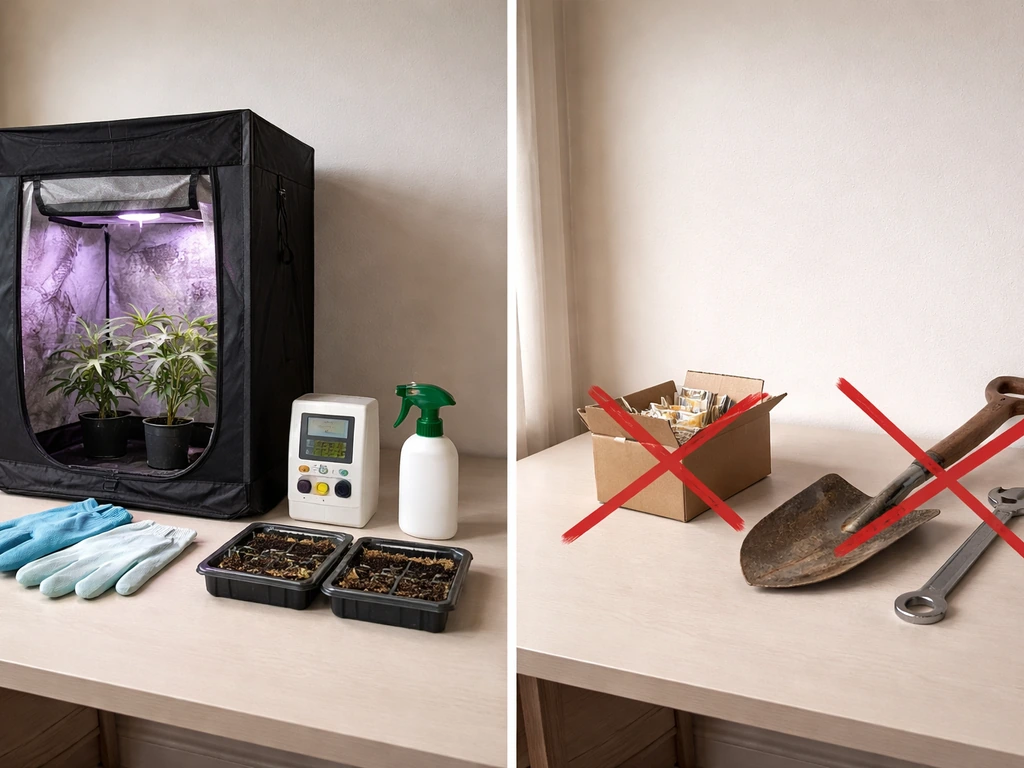
The term "micro grow license" gets used loosely, and that causes confusion. In the Canadian federal system, the correct name is a licence for micro-cultivation. It is a subclass of the broader cultivation licence category under the Cannabis Regulations (SOR/2018-144). It is not a home-grow permit, a hobbyist card, or a provincial authorization. It is a commercial licence that allows businesses or individuals to cultivate cannabis plants within a defined canopy area.
What it is not is equally important. A micro-cultivation licence does not cover processing or selling. If you want to process your harvest (extract, refine, package), you would need a separate micro-processing licence. If you want to sell for medical purposes, that requires yet another licence class. The micro tier simply defines how much growing space you are authorized to use, not what you can do downstream with the product.
It is also worth knowing that microgreens are a completely different subject. If you are wondering whether food-grade microgreens need a licence, that is a separate question entirely. The micro grow licence discussed here covers cannabis cultivation only. Whether you need a licence to grow microgreens is a common point of confusion, but those are two entirely different regulatory frameworks.
Canada overview: who regulates micro-grow cultivation
Cannabis cultivation licensing in Canada is a federal responsibility. Health Canada is the regulating authority. Provinces and territories do not issue cultivation licences, though they do control retail, distribution, and some related business activities. When you apply for a micro-cultivation licence, you are applying to Health Canada, not to your provincial government.
Health Canada administers everything through the Cannabis Tracking and Licensing System (CTLS), an online portal where you submit your application, upload documents, manage your licence, and communicate with regulators. The portal is accessible at Canada.ca/cannabis and you log in using a GCKey or a Partner login. Every transaction, from the initial application to expansion requests, flows through CTLS.
If you are curious how this compares to the process in other countries, getting a micro grow licence in Canada is structured quite differently from US state-level programs, where licensing authority sits entirely with individual states rather than a federal body. In Canada, you deal with one federal regulator regardless of your province.
Eligibility, licence types, and limits (plants and canopy)
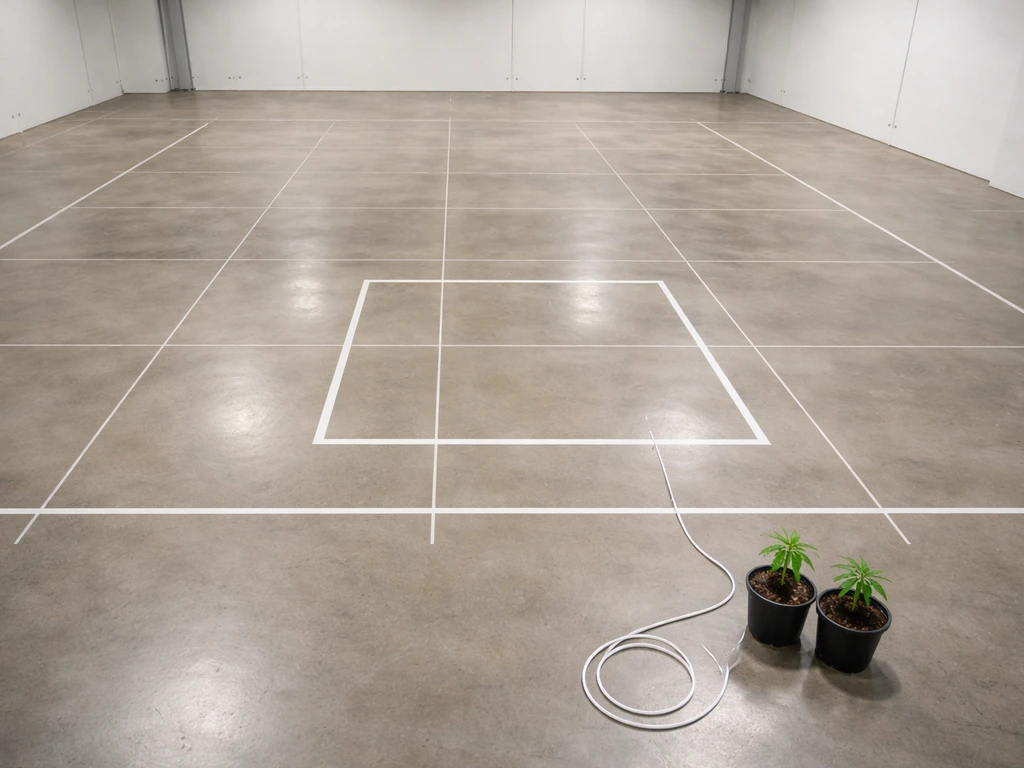
As of March 12, 2025, amendments to the Cannabis Regulations raised the micro-cultivation canopy limit from 200 square metres to 800 square metres. This is a significant change. Earlier documents you might find online (including a 2022 Health Canada progress report that cited 200 m² and a 600 kg annual possession limit) reflect the old thresholds. Always confirm you are reading current consolidated regulations.
Under the current rules, a micro-cultivation licence holder must clearly delineate a surface area that does not exceed 800 m² in which all cannabis plants, including all plant parts, must be contained. Health Canada must approve that specific area before you can use it. You cannot simply expand into additional space because you have room on your property.
Health Canada frames micro-cultivation as a starting point, not a ceiling. You can start with a modest site and scale later toward a standard cultivation licence as your operation grows. This makes the micro path genuinely practical for new entrants who do not want to commit to the overhead of a large facility before they have proven their operation.
Here is a quick comparison of licence types to clarify where micro-cultivation sits:
| Licence Type | Canopy/Capacity Limit | Regulator | Processing Included? |
|---|---|---|---|
| Micro-cultivation | Up to 800 m² | Health Canada | No (separate micro-processing licence needed) |
| Standard cultivation | No defined upper canopy limit | Health Canada | No (separate processing licence needed) |
| Nursery | Defined plant propagation limits | Health Canada | No |
| Micro-processing | Up to 2,400 kg dried cannabis equivalent per year | Health Canada | Yes (processing only, not cultivation) |
Eligibility requirements focus heavily on security. Key individuals at your operation must obtain security clearances from Health Canada before the licence application can be submitted in CTLS. These clearances assess whether an individual could pose an unacceptable risk to public health or safety. You cannot substitute security clearances from other government departments or programs. Each person in a key role must go through Health Canada's own process.
The rules in different states and provinces can differ considerably from each other. For example, Maryland micro grow license requirements follow a completely different framework from the Canadian federal system, and Missouri's micro grow license process is another distinct state-level path. If you are in the US, your process will be entirely different from what is described here.
How to apply in Canada: forms, documents, and process steps
The application process has a defined sequence. Skipping steps or doing them out of order is one of the most common reasons applications stall. Here is the correct order:
- Get your security clearances in place first. Anyone who needs a security clearance must submit their application form before the licence application can be submitted in CTLS. Do not start your licence application until this is underway.
- Create a CTLS account using GCKey or a Partner login at Canada.ca/cannabis. Record your CTLS account ID as you will need it throughout the process.
- Create a new licence application in CTLS. Select the cultivation workflow and choose micro-cultivation as your class and subclass.
- Complete all sections in CTLS, including identifying key individuals and their roles, your proposed site details, and your intended activities.
- Prepare your site evidence package. For micro-cultivation, this is a specific package of documentation (floor plans, photos, diagrams, security evidence) that differs from the standard cultivation package. Upload it in CTLS.
- Submit your application in CTLS and pay the $1,638 screening fee within 30 days of submission.
- Submit your site evidence package to Health Canada within 10 business days of submitting your licence application in CTLS. Missing this window is a common application failure point.
- Prepare your Organizational Security Plan (OSP) and physical security documentation in line with Health Canada's published guidance for micro-cultivation, nursery, and micro-processing licences.
- Respond to any Health Canada requests through CTLS during their review. Use CTLS to track your application status and access any site evaluation information Health Canada has completed.
The site evidence package deserves extra attention. It needs to clearly show the delineated 800 m² (or smaller) canopy area, your physical security measures, and your operational setup. Health Canada will not approve your canopy area until they are satisfied with this evidence. If you are unsure what to include, Health Canada's published preparation guidance walks through exactly what to prepare for micro-cultivation applications specifically.
If you want a closer look at the full application for a micro grow license and what each section requires, going through that detail before you open CTLS will save you a lot of back-and-forth with the regulator.
Costs, timelines, and operational requirements

Fees
The screening fee for a micro-cultivation licence application is $1,638, payable within 30 days of submitting your application. This fee is set in the Cannabis Fees Order (SOR/2018-198). If you apply for micro-cultivation, micro-processing, and sale for medical purposes together as a combined set, the same $1,638 figure applies to that combined scenario as well according to the Cannabis Fees Order Guide. Always verify current fee schedules directly with Health Canada before you apply, as fees can be updated.
Timelines
Health Canada does not publish a guaranteed processing timeline for micro-cultivation applications. A Reddit AMA discussion also describes real-world expectations for how long Health Canada’s micro-cultivation licence process took and what applicants struggled with processing timelines for micro-cultivation. Processing times depend on application completeness, security clearance timelines, and Health Canada's current review queue. Incomplete applications dramatically extend timelines. The 10-business-day window for submitting your site evidence package after the CTLS application is a hard deadline. Missing it can result in your application not being processed.
Security requirements
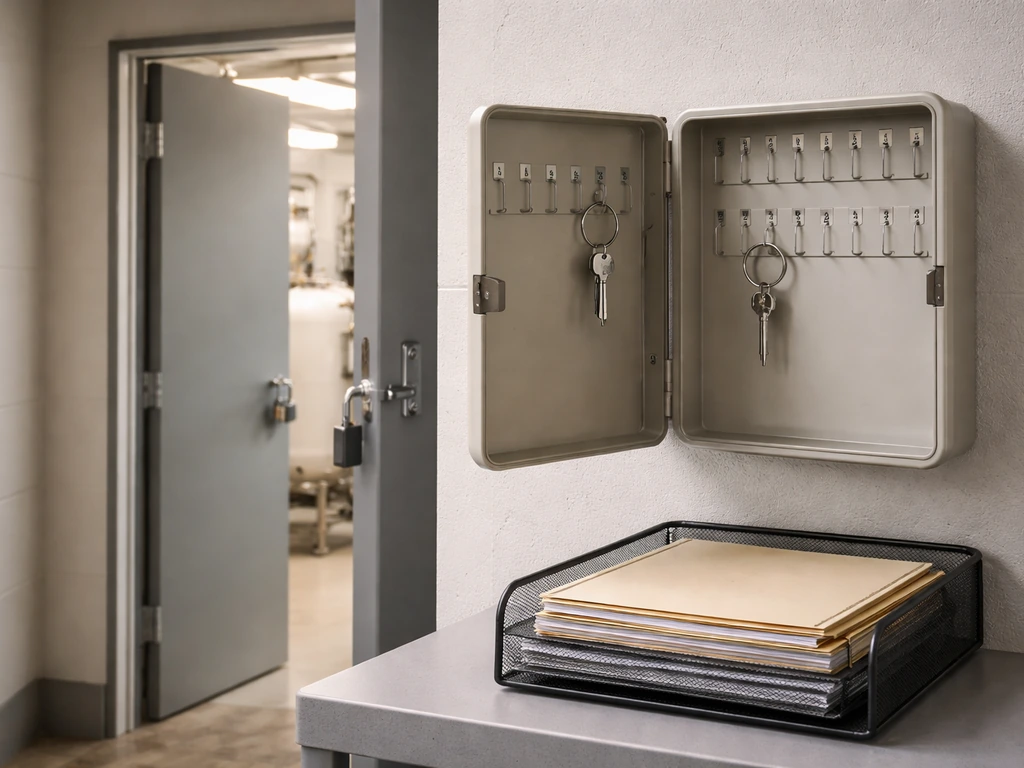
Physical security measures at micro-cultivation sites must meet Health Canada's published standards for micro-cultivation, nursery, and micro-processing licences. These standards are documented in a dedicated guide Health Canada publishes specifically for this licence tier. Requirements typically cover perimeter security, access controls, intrusion detection, and storage. The micro-tier standards are less extensive than those for standard cultivation sites, but they are not minimal. You still need proper controls in place before Health Canada will approve your licence.
Recordkeeping and operations
You must maintain an Organizational Security Plan (OSP) as an applicant and as a licence holder. The OSP documents how your organization manages security, key personnel, and access. Health Canada has published guidance specifically on the OSP requirements. Once licensed, you will also have cannabis tracking and reporting obligations through CTLS, including inventory records and any transfers of cannabis.
If you want to add an outdoor grow area after receiving your licence, that requires Health Canada's approval. You cannot expand your canopy or change your site without going back through the regulatory process. This is an operational constraint that catches new licensees off guard.
Common mistakes and compliance traps
- Starting the CTLS licence application before security clearances are submitted. CTLS requires clearances to be in process before you can complete the application. Doing this out of order stalls everything.
- Using outdated canopy size or possession limit figures. The pre-2025 thresholds (200 m² canopy, 600 kg annual possession) appear in many older resources. The current limits are 800 m² canopy and 2,400 kg for micro-processing. Always check the current consolidated Cannabis Regulations.
- Missing the 10-business-day site evidence package deadline. Your licence application in CTLS and your site evidence package are two separate submissions. Many applicants think submitting in CTLS is enough. It is not.
- Submitting an incomplete or vague site evidence package. If your floor plans do not clearly delineate your canopy area, or your security evidence is insufficient, Health Canada will flag it and your timeline extends significantly.
- Assuming your province handles the licence. Health Canada is the only issuing authority. Your provincial government has no role in approving your cultivation licence.
- Trying to use security clearances from other federal programs. Health Canada requires its own security clearance process. Clearances from other departments do not transfer.
- Planning to expand your canopy without regulatory approval. Any change to your approved canopy area requires Health Canada sign-off. Build your expansion plans into your initial application if you can.
- Confusing micro-cultivation with micro-processing. If you intend to process cannabis, you need a separate micro-processing licence. The micro-cultivation licence covers growing only.
State-level programs in the US have their own distinct pitfalls. For example, Massachusetts micro grow license applicants deal with a completely different state regulatory body and application structure, and Minnesota's micro grow license process follows yet another state-specific path. If you are not in Canada, the federal CTLS process described here does not apply to you.
Province and territory checklist: next steps to apply today
Because cannabis cultivation licensing is federal, the core application process is the same regardless of your province or territory. But your province may publish additional guidance specific to applicants in that jurisdiction. British Columbia, for example, has its own guidance page for becoming a licensed producer that references CTLS sequencing and fee information, even though the actual licence application goes to Health Canada. Check your provincial government's website for any locally published producer guidance, then follow the federal steps below.
- Confirm your intended activities: cultivation only (micro-cultivation), processing (micro-processing), nursery, or a combination. Each requires its own application.
- Identify all key individuals at your operation who will need security clearances and submit their clearance applications to Health Canada before anything else.
- Set up your CTLS account at Canada.ca/cannabis using GCKey or a Partner login. Record your account ID.
- Review Health Canada's current published guidance: "Before you start applying," "Prepare your information," and the dedicated micro-cultivation/nursery/micro-processing licence application page.
- Download and study Health Canada's physical security measures guide for micro-cultivation, nursery, and micro-processing licences. Confirm your site can meet these requirements before you commit to it.
- Prepare your Organizational Security Plan and your site evidence package (floor plans, canopy delineation, security diagrams, photos) before you open the CTLS application.
- Create your new licence application in CTLS, select micro-cultivation, and complete all sections.
- Submit your CTLS application and pay the $1,638 screening fee within 30 days.
- Submit your site evidence package to Health Canada within 10 business days of your CTLS submission.
- Monitor your application status in CTLS and respond promptly to any Health Canada requests.
- Check your province's government website (such as BC's licensed producer guidance page) for any province-specific sequencing notes or local contacts.
- Verify the current Cannabis Regulations consolidated text at Justice Laws (SOR/2018-144) to confirm the latest canopy and possession thresholds before you submit.
This guide covers regulatory information to help you understand the licensing process. It is not legal advice. Cannabis regulations change, and the specific facts of your situation may require professional legal or regulatory guidance. Always verify current rules directly with Health Canada and the current consolidated Cannabis Regulations before you apply.
FAQ
Does a micro grow license let me process or sell cannabis after harvest?
No, micro-cultivation only authorizes growing within the approved surface area. If you plan to extract, refine, package, or otherwise process cannabis, you will need a separate processing licence class (and you must design your site and security accordingly for that additional activity).
Can I exceed the 800 m² limit if I only expand later after I start operations?
You need an approved delineated area that stays within the micro-cultivation canopy limit, and Health Canada must approve the specific boundary before you start using it. You cannot simply start small and then move plants into new sections of the property without getting approval for the change.
If I have a micro grow license, do I automatically have permission to grow microgreens?
Not automatically. Food-grade microgreens are regulated under a different framework than cannabis, so having a cannabis micro grow license does not mean you can legally produce cannabis microgreens or cannabis sprouting without the right cannabis licence and compliant cultivation controls.
Can I use security clearances from other government programs to speed up my micro grow licence application?
In Canada, the security clearance requirement is tied to key individuals at your operation, and each key person must go through Health Canada’s security clearance process. You generally cannot replace this with clearances from other programs or agencies.
Do I still need an Organizational Security Plan after my micro grow license is approved?
Yes. Your organization must have (and be able to maintain) an Organizational Security Plan, and it needs to cover how security, access, and key roles are managed. Even after you receive the licence, the plan is not “set and forget,” you should be ready to update it if roles or site conditions change.
What happens if I miss the deadline to submit my site evidence package in CTLS?
You must submit your site evidence package within the required deadline window after the CTLS application, and you should treat that as a strict operational step. If the evidence is late or incomplete, the regulator can refuse to start the review in a meaningful way, which delays processing.
How can I reduce the chances my micro-cultivation licence application gets delayed?
Because there is no guaranteed review timeline, one practical way to reduce delays is to ensure your CTLS application is complete before submission and that your evidence clearly maps the approved boundary, containment approach, and security measures. Incomplete submissions are a common reason for long delays.
If I want to modify my site layout or add outdoor space, do I need to reapply or request an amendment?
If you need to change the site, add outdoor areas for cultivation, or otherwise modify the approved footprint, you must request Health Canada approval and you cannot treat those changes as internal operational tweaks. Expect to update your evidence and security details to match the new configuration.
What CTLS obligations should I plan for once I’m licensed, especially around inventory and transfers?
Your ability to track and report through CTLS includes inventory records and any transfers of cannabis under the licence. If you plan to move product between sites or licence classes, confirm that your intended transfers are supported by your licence scope before you ship anything.
If I apply for micro-cultivation plus other licence types, does the screening fee change?
If you apply alongside micro-processing and medical sales, do not assume everything is handled the same way in practice. Fee guidance indicates the same screening fee figure may apply in combined scenarios, but you still must meet the licensing requirements and documentation for each activity you are authorized to do.
Next Article
Maryland Micro Grow License Requirements: Step by Step
Step-by-step Maryland micro grow license requirements: eligibility, application steps, limits, and post-approval complia