
Missouri does have a micro grow license pathway for cannabis cultivation, and it falls under the state's microbusiness wholesale license program. If you want to legally cultivate cannabis on a small scale in Missouri, this is the license you're after. The cap is 250 flowering plants at any one time, the program is run by the Missouri Department of Health and Senior Services (DHSS) Division of Cannabis Regulation (DCR), and applications go through an online portal during specific acceptance windows. Here's exactly how it works.
Micro Grow License Missouri: Eligibility, Limits, and Steps

Marcus Whitley
25 Apr 2026
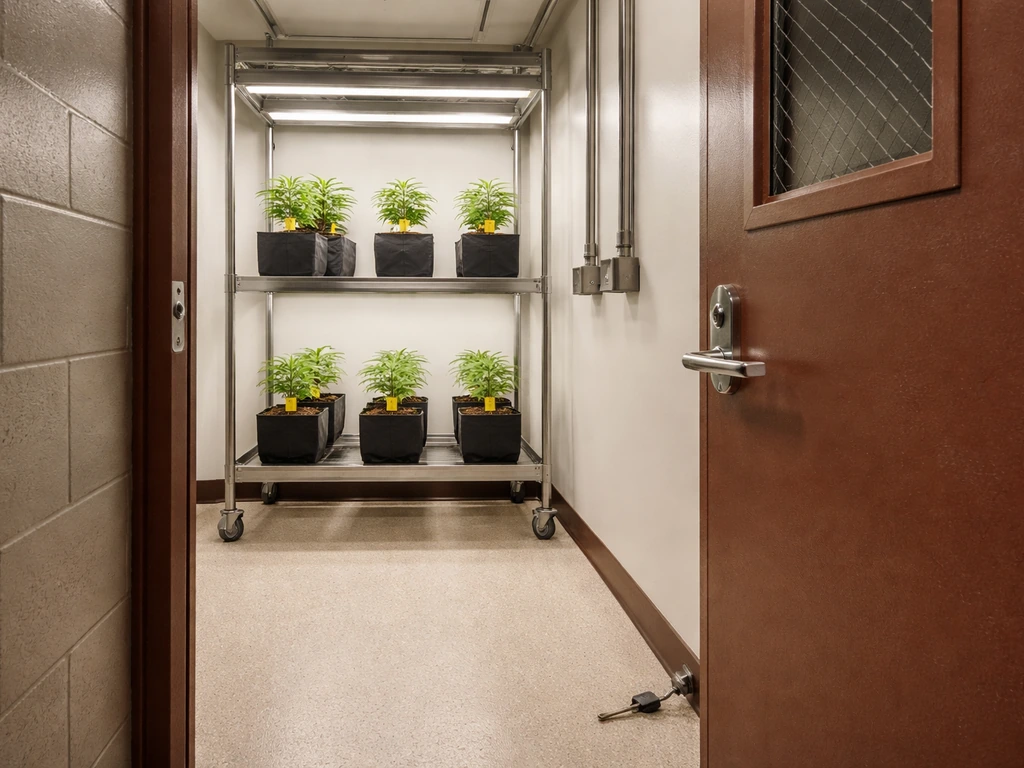
What a "micro grow" license actually means in Missouri
Missouri doesn't use the phrase "micro grow license" in its official documents. What you're looking for is a microbusiness wholesale license with a cultivation designation. The microbusiness program was created under Article XIV, Section 2 of the Missouri Constitution specifically to give smaller, lower-resource operators a realistic path into the cannabis industry without competing directly against well-funded multi-state operators.
A microbusiness wholesale facility is essentially a small-scale cultivation operation. It's distinct from a standard cultivation facility license, which has higher plant limits, higher fees, and significantly more capital requirements. The micro designation matters because eligibility rules, fee schedules, plant limits, and the application process are all handled separately from the standard commercial license track.
Eligibility rules and who can apply
This is where a lot of people get tripped up, so pay close attention. Missouri's microbusiness license is specifically designed for applicants who meet financial and personal eligibility thresholds. You can't just form an LLC and apply. The eligibility requirements are tied to the individual owners, and the state verifies them.
One of the core financial eligibility criteria is that applicants must submit sworn financial statements demonstrating a net worth below $250,000 at the time of application. This is a hard ceiling, not a guideline. The point is to ensure the program goes to people who genuinely don't have the resources to compete for a standard commercial license.
Beyond the financial threshold, Missouri has revoked microbusiness licenses in cases where the majority owner didn't demonstrate adequate knowledge or understanding of the business operations and agreements. The DCR takes this seriously. If you're the majority owner on paper but someone else is actually running things, that's a problem.
Key eligibility points to be aware of before you apply:
- Net worth under $250,000 per sworn financial statement at time of application
- Majority ownership must be genuine, not nominal (the state has revoked licenses for "strawman" ownership arrangements)
- All owners, officers, directors, managers, and employees with facility access must obtain a Facility Agent ID card
- Criminal background checks via fingerprinting are required for Facility Agent ID applicants
- Applications are only accepted during specific submission windows, not on a rolling basis
License types, plant limits, and operating rules
The microbusiness wholesale license
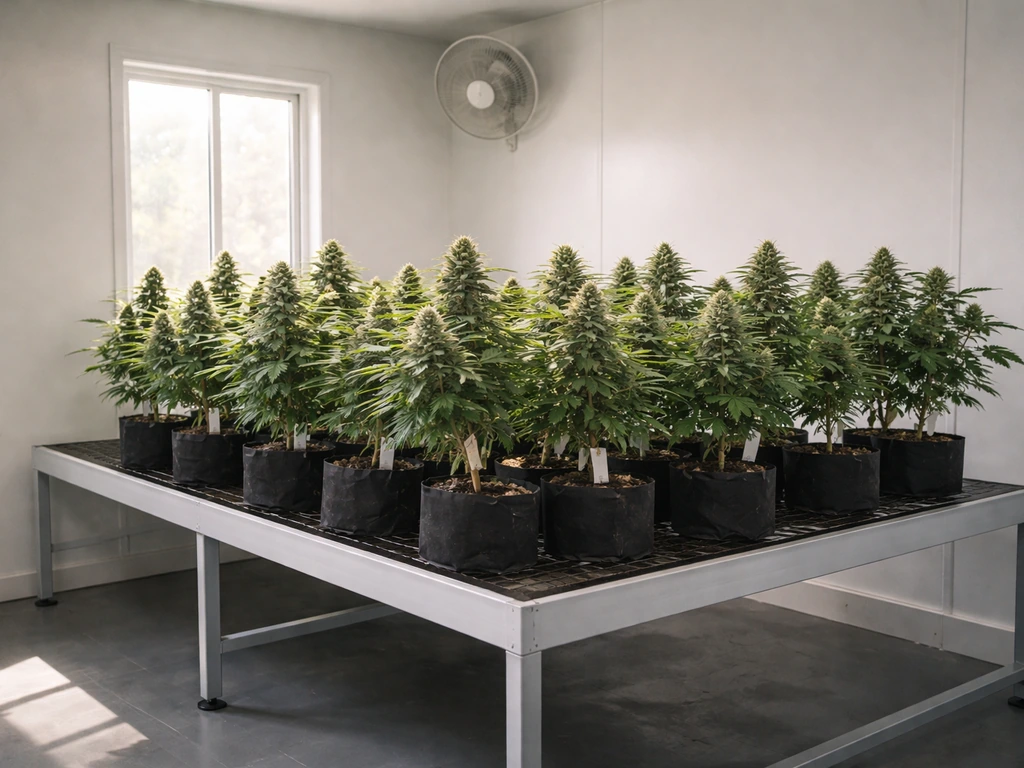
For cultivation specifically, you want the microbusiness wholesale license. This allows you to grow cannabis and sell it wholesale to other licensed facilities. You are not permitted to sell directly to consumers under this license type. If you want retail, that's a different microbusiness license category entirely.
The plant limit for a microbusiness wholesale facility is 250 flowering plants at any given time. This is a hard cap, not a target. Going over it puts your license at serious risk.
Ongoing operating requirements
Once you're licensed and operational, Missouri requires that your METRC inventory mirror your physical inventory at the end of every single day. METRC is Missouri's seed-to-sale tracking system, and daily reconciliation is non-negotiable. If your physical plants don't match what's in METRC, you have a compliance problem.
Security is also heavily regulated. Your facility must have alarm systems, monitoring, visitor controls (including escort requirements and visitor-to-staff ratios), and in some cases security film, glass, or vault requirements depending on your setup. You're also required to notify law enforcement of any unauthorized breach of the facility.
Before you start cultivating in a new location or a changed space, you must complete the cultivation new-location checklist provided by DCR. Commencement inspections must be passed and approved before you begin growing. If your space involves shared areas, there are additional shared-space requirements on that checklist that must all be checked off before DCR will accept the submission.
How to apply: steps, documents, and timelines
Missouri's microbusiness application process runs through a centralized online portal. To get started, review the Missouri requirements for the <a data-article-id="EB782896-4E24-4799-92C2-41145F6A58B6">application for micro grow license</a> and follow the instructions for the online submission windows. To make the process simpler, review our guide to the mn micro grow license requirements before you submit anything through the portal. Here's the practical path from start to finish.
- Go to Cannabis.mo.gov and navigate to Microbusiness Information, then click "How to Apply" to access the application portal instructions and user guide.
- Access the online registry portal at mo-public.mycomplia.com. Missouri recommends a specific browser (check the user guide for the current recommendation, as this does matter for portal functionality).
- Download and review the microbusiness license application checklist PDF from the DHSS Application Resources hub. This checklist tells you every document you need to submit before the portal will accept your application.
- Gather your required documents: sworn financial statement showing net worth under $250,000, ownership structure documentation, facility lease or ownership documents, security plan, and any other items on the checklist.
- Submit your application during an open acceptance window. Applications are only accepted during specific periods announced by DCR, not on a rolling basis.
- Apply for Facility Agent ID cards for all required individuals (owners, officers, directors, managers, and anyone with facility access). Each person must complete fingerprinting for a criminal background check.
- After submission, track your application status through the mo-public.mycomplia.com portal dashboard.
- If selected (through lottery if the pool is oversubscribed), complete the commencement inspection process before beginning cultivation.
Timelines are not publicly fixed to a specific number of days in Missouri's microbusiness guidance. The process involves a submission window, a potential lottery selection (if applications exceed available licenses), review, and then a pre-commencement inspection phase. Plan for months, not weeks, from submission to your first legal plant in the ground.
Costs, fees, and what to budget for
Missouri publishes a consolidated fee schedule on the DHSS website. The microbusiness wholesale license has both an application fee and an annual license fee listed as separate line items. Always pull the current fee schedule directly from the DHSS fee schedule page before budgeting, because fees can be updated.
In addition to the license itself, every person who needs a Facility Agent ID card pays a $75 non-refundable application fee per card. Those cards are valid for three years, after which they must be renewed. If you have multiple owners and employees with facility access, these costs add up quickly.
Here's a realistic cost checklist to build into your budget:
- Microbusiness wholesale application fee (check current DHSS fee schedule for exact amount)
- Annual microbusiness wholesale license fee (check current DHSS fee schedule for exact amount)
- Facility Agent ID card: $75 non-refundable per person, valid 3 years
- Fingerprinting fees for each person requiring a criminal background check
- METRC setup and ongoing tracking costs
- Security infrastructure: cameras, alarms, monitoring systems, any vault/glass requirements
- Compliance costs for daily inventory reconciliation and record-keeping
Don't treat the application fee as your only upfront cost. Security systems, METRC onboarding, and legal structure setup (if you haven't already formed your business entity) can easily run into the thousands before you cultivate a single plant.
Where to apply and how to check your status
Everything in Missouri's microbusiness cannabis process runs through two main resources: the DHSS website at Cannabis.mo.gov (specifically the Microbusiness Information section) and the online registry portal at mo-public.mycomplia.com.
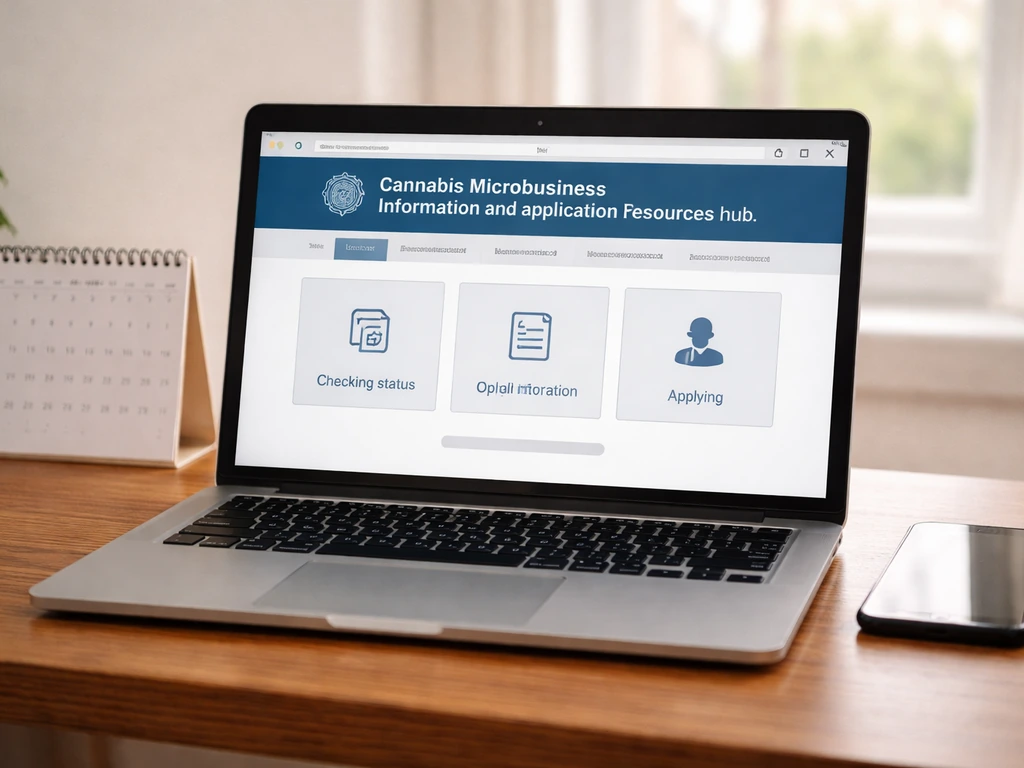
The DHSS Application Resources hub is where you'll find the current microbusiness license application checklist, user guides for the portal, and any announcements about open submission windows. Bookmark this page and check it regularly, because application windows open and close and you do not want to miss one.
To check your application status after submitting, log into mo-public.mycomplia.com and navigate to your facility application dashboard. Missouri provides specific instructions for viewing application status in the portal, and the status will update as DCR moves through their review process.
Why applications get delayed or denied (and how to avoid the common mistakes)
Missouri has publicly revoked microbusiness licenses and given clear guidance on what went wrong. If you learn from those cases, you can avoid the same mistakes during your application.
| Common Problem | Why It Happens | How to Avoid It |
|---|---|---|
| Incomplete application checklist | Applicants skip items assuming they're optional | Go through the DHSS checklist line by line and only submit when every item is addressed |
| Net worth above $250,000 threshold | Financial statements not reviewed carefully before submission | Have your financials reviewed by an accountant before signing the sworn statement |
| Nominal/strawman majority ownership | Someone else is running the business while another person is listed as owner for eligibility purposes | The majority owner must genuinely control and understand operations, period |
| Majority owner can't demonstrate knowledge of operations | Owner is passive, not involved in day-to-day decisions | The listed majority owner must understand the business agreements and operations in detail |
| Missing Facility Agent ID cards | Applicants don't realize all key personnel need cards before commencement | Start Facility Agent ID applications early, fingerprinting adds time |
| Applying outside an open window | Applicants don't track when submission windows open | Monitor Cannabis.mo.gov regularly; windows are announced in advance |
| Facility not ready for commencement inspection | Security systems or shared-space requirements incomplete | Use the cultivation new-location checklist fully before scheduling inspection |
The revocation cases Missouri has made public are worth reading in full. DCR published a news release detailing why nine microbusiness licenses were revoked, and the issues listed are a direct roadmap of what to get right. The most consistent theme is that the majority owner must be a real, knowledgeable, active participant in the business, not a placeholder.
One more thing: if you're comparing Missouri's program to similar micro cultivation frameworks in other states, the structure here is reasonably accessible by design, but the eligibility rules are strict. States like Maryland and Massachusetts have their own micro grow or craft cultivation frameworks with different thresholds and processes, so if you're researching across state lines, make sure you're looking at Missouri-specific rules and not mixing up requirements. If you are looking specifically at Massachusetts, the Massachusetts micro grow license framework is a separate set of rules from Missouri’s program. Maryland micro grow license requirements may differ significantly from Missouri's microbusiness wholesale rules, including eligibility and plant limits States like Maryland and Massachusetts.
Your next steps
If you're serious about pursuing a Missouri microbusiness wholesale (micro grow) license, here's what to do right now:
- Go to Cannabis.mo.gov and find the Microbusiness Information page. Read everything on it.
- Download the current microbusiness license application checklist from the Application Resources hub.
- Check the DHSS fee schedule page for the current application and annual license fees.
- Have your personal financials reviewed to confirm you're under the $250,000 net worth threshold.
- Identify every person who will need a Facility Agent ID card and start that process early since fingerprinting takes time.
- Sign up for or bookmark the DHSS announcements page so you know exactly when the next application window opens.
- Use the mo-public.mycomplia.com portal to track your application once submitted.
This article is intended to give you regulatory information and a practical starting point, not legal advice. Missouri's cannabis regulations are updated regularly, and the specific requirements, fees, and application windows can change. Always verify current details directly with the Missouri DHSS Division of Cannabis Regulation at Cannabis. If you want to grow microgreens, you’ll need to check whether any state or local licensing applies to your specific situation, because rules can differ by location and the way you plan to sell or distribute your crop. mo.gov before making any business or financial decisions based on what you've read here.
FAQ
Can I use the microbusiness wholesale (micro grow) license to sell cannabis products to dispensaries or directly to patients?
No. Under the microbusiness wholesale cultivation designation, your sales are limited to other licensed facilities for wholesale. Direct-to-consumer sales (including to dispensaries or patients) are not covered by this license category, so you must plan distribution through properly licensed downstream businesses.
What happens if my plants exceed 250 flowering plants in a single day, even briefly?
Treat 250 as a compliance trigger, not a target. If you go over the cap, you increase the risk of enforcement, license action, or revocation, especially because Missouri expects your METRC inventory to match physical counts daily. Build operational controls to prevent accidental overcounting, such as staging harvests and reconciling counts before end-of-day METRC updates.
Does the $250,000 net worth limit apply per owner or to the business entity as a whole?
The program is tied to individual owners, and eligibility verification is based on the majority owner meeting the threshold when applying. Don’t assume an LLC structure alone satisfies eligibility. If there are multiple owners, confirm how each owner’s financial statements are reviewed for compliance before filing.
If the majority owner is qualified on paper, can another person manage day-to-day operations without issues?
Missouri has revoked microbusiness licenses where the majority owner did not demonstrate adequate knowledge and meaningful participation in operations and agreements. You can have managers or employees, but the majority owner must be actively involved and demonstrably knowledgeable, not a figurehead or placeholder.
How strict is the daily METRC reconciliation requirement, and what’s the safest workflow?
It is non-negotiable to have METRC mirror physical inventory at the end of every day. A practical approach is to schedule daily end-of-day reconciliation with one accountable person, verify plant counts before updates, and keep documented procedures for how harvests, transfers, and discard events are recorded so physical reality matches the tracking system.
Do I need to complete the cultivation new-location checklist every time I adjust part of my grow space?
You need to complete the new-location checklist when you start cultivating in a new location or when the space changes in a way that triggers the checklist requirements. If you reconfigure rooms, expand designated areas, or modify shared spaces, don’t assume it is optional, because DCR acceptance depends on the checklist being fully satisfied.
What security requirements commonly cause application or inspection delays for microbusiness facilities?
Common problem areas include incomplete visitor control planning (escort procedures and visitor-to-staff ratios), missing or improperly configured alarm and monitoring systems, and documentation gaps around unauthorized access response. If your setup affects film, glass, or vault needs, confirm those requirements early so you can test systems before your commencement inspection.
Is there a way to reduce the risk of the application process taking months longer than expected?
Yes, focus on readiness before the submission window closes. Because you may face a lottery step and then a pre-commencement inspection, delays often come from waiting on facility buildout readiness, METRC onboarding readiness, or incomplete checklists. Prepare documentation, security installation, and operational procedures ahead of the portal submission so review does not uncover preventable gaps.
How do Facility Agent ID cards work, and who actually needs to pay the $75 fee?
The $75 non-refundable fee applies per Facility Agent ID card for each person who requires a card to support facility access roles. If multiple individuals will have facility access (owners, agents, key staff), you should budget per-card costs and account for the three-year validity and renewal cycle so you don’t get caught short later.
What’s the biggest budgeting mistake applicants make besides underestimating license fees?
Applicants often forget that upfront compliance readiness can cost more than the application fee. Security buildout, METRC onboarding and setup tasks, and legal and operational setup (including business structure steps) frequently require thousands in spending before you see any cultivation revenue, so budget for end-to-end compliance not just DHSS line-item fees.
Where can I verify my application status after submitting, and what should I do if information looks wrong?
Use the mo-public.mycomplia.com portal and check your facility application dashboard for status updates. If the portal reflects issues, don’t wait passively, because missing or incorrect items can stall review. Contact the portal support or follow DCR instructions promptly to correct discrepancies while the application is still actively managed.
Next Article
Application for Micro Grow License: Step by Step Guide
Step-by-step micro grow license application checklist: eligibility, documents, fees, timeline, portal steps, and complia