Maryland's micro grower license is a real, defined license category under state law, and the requirements are more specific than most people expect. If you're trying to figure out whether you qualify, what the application involves, and what you're signing up for long-term, this guide breaks it all down in plain terms. Just know upfront: this is compliance guidance, not legal advice.
Maryland Micro Grow License Requirements: Step by Step

Marcus Whitley
8 Apr 2026
What a Maryland micro grow license actually covers
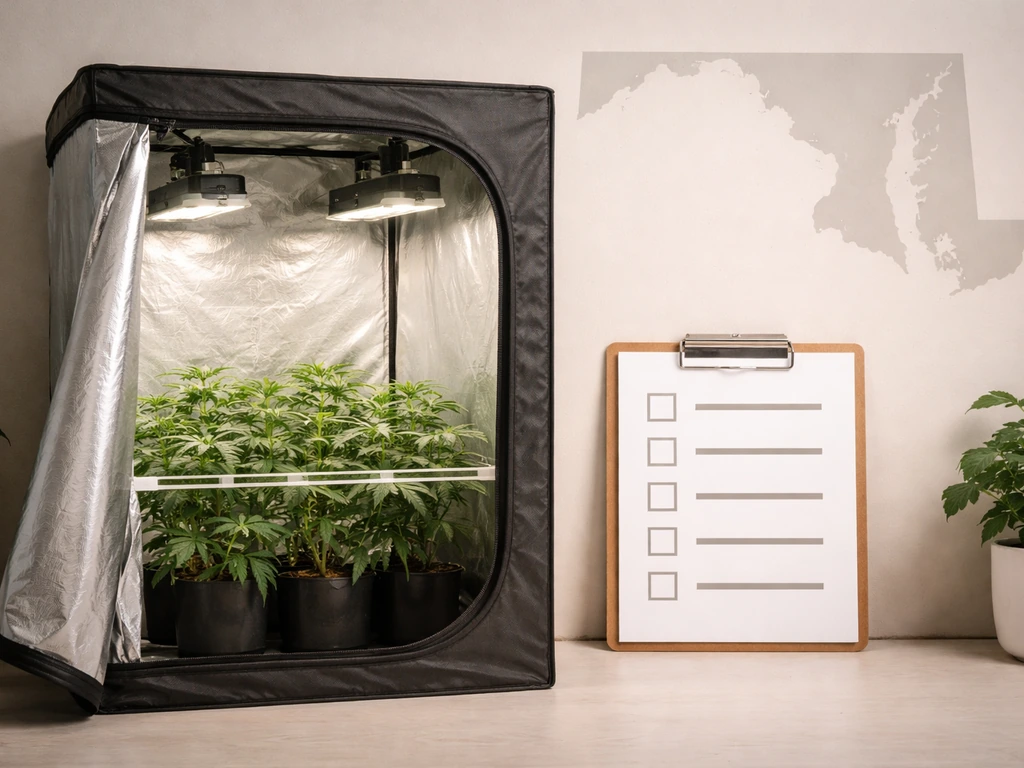
A Maryland micro grower license, as defined under COMAR 14.17.07.05(A), authorizes you to do two things: cultivate or package cannabis, and provide that cannabis to other licensees and registered independent testing laboratories. That's it. You're not licensed to sell directly to consumers or operate a dispensary under this license.
If you want a broader picture of what a micro grow license looks like across different states before diving into Maryland specifics, that context can help you understand how Maryland's version compares to other jurisdictions. Maryland's rules are fairly structured, and knowing the general framework makes the specifics easier to follow.
The micro grower license is distinct from Maryland's standard grower license. It's designed for smaller operators and comes with a lower application fee and a defined canopy cap. But it's still a commercial license, not a home grow permit, so you're expected to operate as a registered cannabis business.
Who can apply: eligibility and applicant requirements

Maryland's micro grower licensing rounds have been structured around social equity. Under the evaluation criteria tied to Alcoholic Beverages and Cannabis Article §36-404(d), applications are considered only when at least 65% of the ownership or control of the applicant entity is held by individuals who meet the state's social equity criteria. This isn't optional language; it's a threshold requirement for the licensing rounds that have been conducted so far.
Before you even apply, you need to verify social equity status through Creative Services, Inc. The application itself must include a Creative Services verification report confirming that at least 65% ownership or control is held by verified social equity applicants. It also needs to include a registration with the Maryland Department of Assessments and Taxation and a capitalization table that matches the ownership interests you've entered in the OneStop portal.
One rule that catches people off guard: Maryland prohibits individuals from holding multiple grower or processor licenses. If you're selected for both a micro and a standard grower license (or any combination), you have to choose one. You can't hold both.
Background checks are required. If you're selected for a conditional license, you'll go through a criminal history records check under §36-505. That means submitting two complete sets of legible fingerprints, one set for the Central Repository and one for the FBI, along with the Central Repository access fee and the FBI processing fee. This happens after selection, not at initial application.
The canopy limits and operational boundaries you need to know
Maryland sets the micro grower canopy cap at 10,000 square feet of indoor canopy, or its equivalent. That limit comes directly from Alcoholic Beverages and Cannabis Article §36-401(c)(2)(i) and is reinforced in COMAR 14.17.07.05(B).
If you're planning outdoor or greenhouse cultivation, the state uses a conversion ratio: 1 square foot of indoor canopy equals 4 square feet of outdoor canopy. So if you wanted to operate entirely outdoors, your equivalent limit would be 40,000 square feet. The Maryland Cannabis Administration calculates canopy equivalency, so don't assume your own math will be the final word.
Any modifications or renovations to your canopy may require prior MCA approval, and you cannot exceed the statutory canopy limit during or after any expansion. This is worth keeping in mind from day one when you're designing your facility layout.
If you're curious how Maryland's 10,000 square foot indoor cap compares to neighboring states, it's worth looking at how the Massachusetts micro grow license works, since Massachusetts has its own tiered cultivation framework that some applicants use as a benchmark when evaluating their options.
How the application process works in Maryland

Applications are submitted through the Maryland OneStop portal. Before you can access any application, you need to register for a OneStop account. Don't wait until the application window opens to do this; set up your account early so you're not scrambling.
The micro license application fee is $1,000, non-refundable, due at the time you submit. This compares to $5,000 for standard licenses, so the lower fee is one of the concrete advantages of the micro tier. Payment is made through OneStop via ACH or credit card.
The full application requires business, operational, and diversity plans in addition to the ownership documentation. Because Maryland's licensing rounds have used a lottery or selection process for social equity applicants, timing matters. The MCA announces licensing program steps and outcomes through its Cannabis Business Licensing page, and rounds are not continuously open. You need to watch for announced windows.
- Register for a Maryland OneStop account at the OneStop portal before the application window opens.
- Complete your Creative Services, Inc. social equity verification before applying (this takes time, so start early).
- Register your business entity with the Maryland Department of Assessments and Taxation.
- Prepare your capitalization table, ownership/control documentation, and business and operational plans.
- Submit your application and $1,000 fee through OneStop during the announced licensing round.
- If selected in the lottery or conditional license phase, complete the criminal history records check (fingerprints, fees).
- Receive your conditional license and work toward meeting any remaining pre-licensing requirements.
The application for a micro grow license involves more moving parts than most people expect, particularly around the ownership verification and social equity documentation. Build in extra time before each application deadline.
Where to find the official rules and verify what's current
Maryland's cannabis regulations have been active and evolving. The MCA maintains a central Laws and Regulations page that includes updates, Notice of Proposed Action (NOPA) activity published in the Maryland Register, and links to current rule text and guidance documents. This is the authoritative source, and you should check it regularly rather than relying on third-party summaries.
The primary regulatory text is in COMAR Title 14, Subtitle 17 (the Cannabis Administration rules). The underlying statutory authority comes from Maryland's Alcoholic Beverages and Cannabis Article. Both are publicly available online.
MCA also publishes Cannabis Policy FAQs, which are versioned documents. As of May 2025, the FAQ document was at Version 5. Always check the version date when reading these, because outdated FAQ versions can have different guidance than what's currently in force.
If you want to see how other states structure their verification resources, looking at how people get a micro grow licence in Canada can give you a sense of how regulatory bodies typically communicate updates, though the process itself is completely different from Maryland's.
After approval: what you're on the hook for

Getting licensed is step one. Staying compliant is an ongoing job. Maryland has specific annual reporting requirements for micro growers, and missing them can result in fines or sanctions.
Annual canopy reporting
Under COMAR 14.17.07.05, you must report the square footage of your indoor and outdoor canopy to the MCA on or before October 1 of each year. This uses the canopy definitions from COMAR 14.17.01. It sounds straightforward, but you need to have accurate measurements and records ready.
Ownership and control disclosure
Under COMAR 14.17.16.02, you must submit an ownership and control disclosure by July 1 each year. You also have to file within 10 days of any change in ownership or control that exceeds 5%, and upon request from MCA. Failing to submit results in fines or sanctions. If your ownership structure changes at all, notify MCA promptly rather than waiting for the annual deadline.
Annual minority and women report
By August 1 each year, you must submit a minority and women report covering the number of minority and women owners, their ownership interests, and the count of minority and women employees. This is tied to Alcoholic Beverages and Cannabis Article §36-801. It's not optional, and it applies even if nothing has changed from the prior year.
| Report | Deadline | What's required |
|---|---|---|
| Annual canopy report | October 1 | Indoor and outdoor canopy square footage per COMAR 14.17.01 definitions |
| Ownership/control disclosure | July 1 (or within 10 days of a >5% change) | Current ownership and control interests per COMAR 14.17.16.02 |
| Minority and women report | August 1 | Counts of minority/women owners and employees, ownership interests held |
Inspections and ongoing operations
MCA has the authority to inspect your operation. Keep your records organized, your canopy measurements documented, and your tracking system current. The MCA uses seed-to-sale tracking, and your data needs to match what's reported annually. Canopy expansions or facility modifications may require prior MCA approval before you start any work.
For reference, some applicants exploring cultivation licensing also look at how other states handle similar small-scale programs, like the mn micro grow license or the micro grow license in Missouri, both of which have their own structures and limits worth understanding if you're considering operations across state lines.
A note on microgreens vs. cannabis micro grow
One quick clarification: this article is entirely about cannabis cultivation licensing. If you landed here wondering whether you need a license to grow microgreens (the salad greens, not cannabis), that's a completely different topic covered separately. Maryland's micro grower license framework described here applies only to cannabis.
The bottom line for Maryland applicants
Maryland's micro grower license is a well-defined but demanding path. The 10,000 square foot indoor canopy cap, the social equity ownership threshold of 65%, the $1,000 application fee, and the multiple annual reporting obligations are all fixed requirements, not suggestions. If you meet the social equity criteria, have your business entity registered, complete the Creative Services verification, and submit a complete application during an open window through OneStop, you're on the right track.
The biggest mistakes people make are waiting to set up their OneStop account, underestimating the documentation lead time for social equity verification, and not building the annual reporting calendar into their operations from day one. Get those three things right and the rest of the process becomes much more manageable.
FAQ
If I get a Maryland micro grow license, can I sell cannabis directly to customers?
No. A Maryland micro grower license does not authorize consumer sales, dispensary operations, or retail delivery to the public. Under this license you can only cultivate or package cannabis, and then provide it to other licensees and registered independent testing laboratories.
When do background checks actually happen for Maryland micro grow applicants?
If your operation is not selected for a conditional license, you still prepare for background screening later. The criminal history records check steps described in the article apply to conditional selection, so build fingerprint capacity and timeline in case you get moved forward after submitting materials.
How should I plan canopy limits if I want both indoor and outdoor (or greenhouse) cultivation?
Your micro canopy cap is measured in indoor square footage, and outdoor greenhouse area is converted using the 1 to 4 equivalency (indoor to outdoor). If you plan a mix of indoor and outdoor, you should plan as if the total equivalents will be audited against the statutory limit, and request MCA guidance if your facility layout or measuring method is unusual.
Do I need MCA approval if I renovate my grow space but my canopy footprint stays the same?
Often, yes, but the key is whether the change alters canopy amount, layout, or cultivation capacity. The article notes that modifications or renovations to your canopy may require MCA approval, and you cannot exceed the statutory canopy limit during or after expansion, so treat any facility change as a compliance decision, not a construction-only decision.
Can I satisfy the 65% social equity rule by self-attesting on the application?
Not automatically. The social equity verification requirement is tied to meeting the 65% ownership or control threshold through verified individuals, and the application package must include a Creative Services verification report. You cannot simply claim eligibility without the verification report being included and aligned to your stated ownership interests.
What happens if I’m offered a spot in both micro and standard grow licensing?
If you are selected into more than one grower or processor category, Maryland does not let you hold multiple grower or processor licenses. Practically, you should decide early which one you would operate, because switching later could complicate ownership documentation, planned canopy, and operational readiness.
Do I need to file a new ownership disclosure if my ownership changes slightly mid-year?
Yes. The article requires an ownership and control disclosure by July 1 each year, and also requires filing within 10 days of ownership or control changes exceeding 5%, plus additional disclosure if MCA requests it. In practice, you should track changes continuously, especially if equity is held through trusts, affiliates, or management entities.
If my numbers do not change, do I still need to submit the minority and women report and canopy reports?
Your reporting deadlines are not limited to one cycle. Even if nothing changes, you still have to submit the annual minority and women report by August 1, and you must submit canopy square footage by October 1. Build those tasks into your compliance calendar, not your “only if changed” calendar.
What are common recordkeeping issues that lead to problems during MCA inspection?
It depends on the scope of the change, but assume that changes affecting your seed-to-sale inputs, canopy measurement approach, or facility records can create mismatches. Since MCA uses seed-to-sale tracking and expects your data to match what you report annually, keep your internal measurement and inventory records consistent with what you submitted to MCA.
Which measurement standard should I use for reporting indoor and outdoor canopy square footage?
You should use the canopy definitions from COMAR 14.17.01 when measuring, because the annual reporting requirement references those definitions. If your measurement method is not aligned with the defined canopy boundaries, you risk reporting a figure that MCA considers inaccurate.
Are Maryland micro grow license applications open year-round?
Yes. The micro application process uses social equity selection rounds rather than a continuous intake, so you must monitor MCA’s licensing program steps and outcomes announcements. Waiting to set up OneStop or gather verification materials until an announcement is made is one of the most frequent causes of missed windows.
If my micro grow application is denied or I withdraw, is the $1,000 fee refundable?
The application fee is $1,000 and is non-refundable when you submit through OneStop. This means you should finalize your documentation set, ownership structure, and verification report alignment before paying, since you cannot recover the fee if you withdraw or the submission is rejected.
Does a cannabis micro grow license requirement apply if I want to grow microgreens (salad greens) for food?
No. Micro licensing in Maryland is specific to cannabis cultivation and packaging under the cannabis regulatory framework described in the article. If you are considering growing non-cannabis crops like microgreens for food, you need to look at the separate rules for that activity, because the micro grower license requirements discussed here are for cannabis only.
Next Article
Commercial Grow License in the US: Requirements, Costs, and Steps
US guide to commercial grow licenses: eligibility, application steps, costs, facility rules, canopy limits, and complian