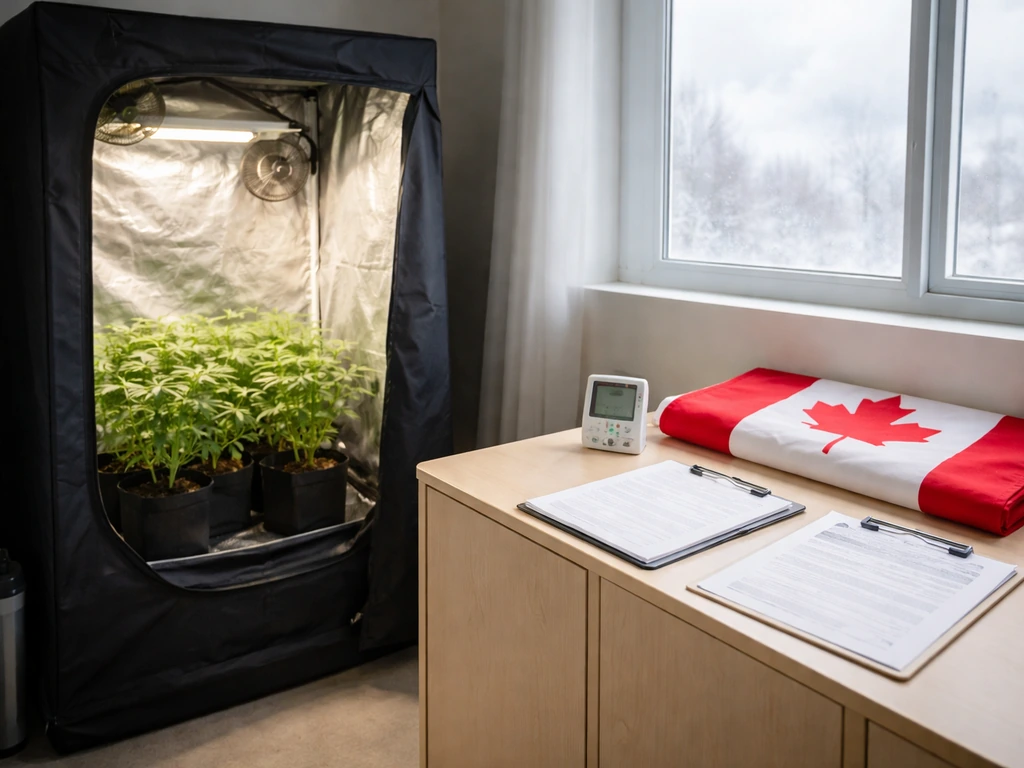
Massachusetts does not have a license called a 'micro grow license.' What the state does have is a Marijuana Microbusiness license, which can include a Tier 1 Marijuana Cultivator component. That is the closest official equivalent to what most people mean when they search for a Massachusetts micro grow license. In short, the Microbusiness license is the state’s most common route for what people call a micro grow license in Massachusetts. If you are trying to legally grow cannabis at a small commercial scale in Massachusetts, the Microbusiness path is almost certainly what you are looking for. This guide walks you through everything you need to know to apply for it today. If you are ready to submit your application for micro grow license in Massachusetts, use the MassCIP workflow described in this guide apply for it today.
Massachusetts Micro Grow License: Eligibility, Steps, Fees

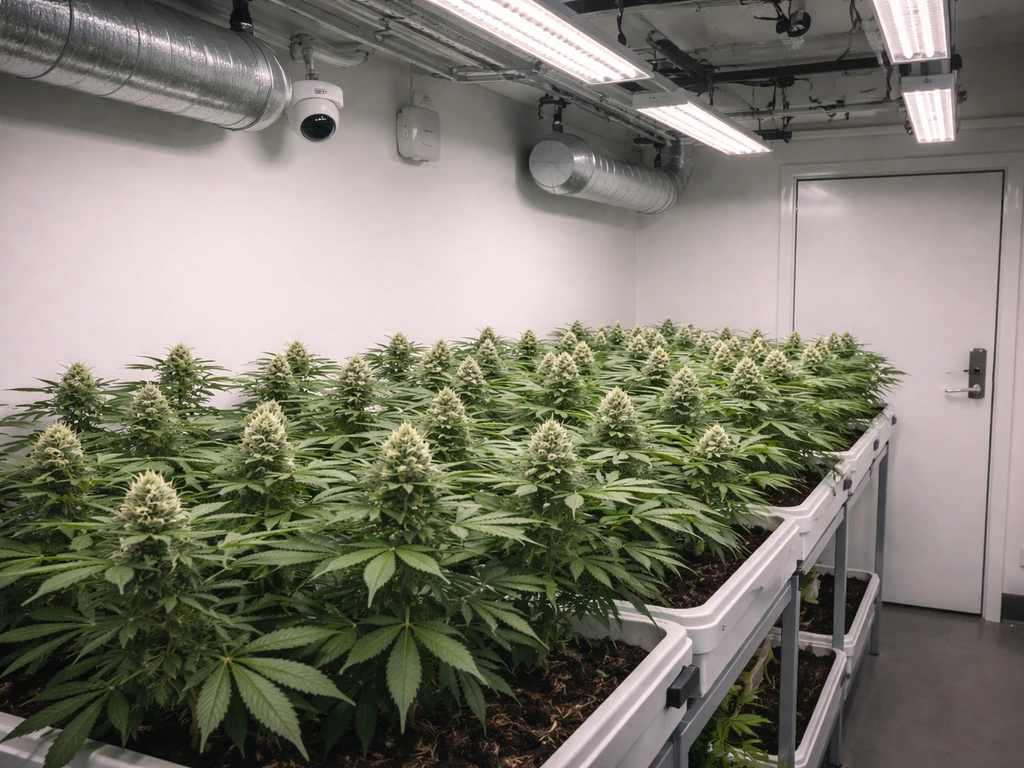
What a Massachusetts Micro Grow License Actually Is
The Cannabis Control Commission (CCC) regulates all adult-use cannabis in Massachusetts under 935 CMR 500.000. Within that framework, commercial cultivators are licensed as Marijuana Establishments, and cultivation is tiered by canopy size. The tiers run from Tier 1 (smallest canopy) up through higher tiers for larger operations. If you are searching for do you need a license to grow microgreens, note that Massachusetts treats micro grow operations as commercial adult-use cultivation, which means you generally need a Microbusiness license or a Tier 1 cultivation license depending on your plan.
A Marijuana Microbusiness is a specific co-located Marijuana Establishment license that bundles Tier 1 cultivation and/or marijuana product manufacturing under one roof and one license. It is not a standalone grow-only permit. If you want to grow at the smallest legal scale, you either apply as a Tier 1 Marijuana Cultivator or as a Microbusiness that includes a Tier 1 cultivation component. Most people wanting a 'micro grow' track end up choosing the Microbusiness route because it offers flexibility to also manufacture products from what they grow.
One important distinction: Massachusetts has no legal home grow for adult recreational use. Everything here applies to commercial operations. There is no personal or hobbyist cultivation license. If you are comparing Massachusetts to other states, you will find some states (like Maryland or Minnesota) have different small-cultivation structures, but the Massachusetts framework is commercial-only.
Who Is Eligible to Apply

Eligibility for a Microbusiness license in Massachusetts has a few hard requirements you need to clear before anything else.
Residency requirement
A majority of the executives or members of a Microbusiness must be Massachusetts residents for at least 12 consecutive months prior to applying. This is a firm rule, not a preference. If your ownership group does not meet this threshold, you are not eligible for the Microbusiness license specifically. Standard cultivator licenses do not carry this same residency requirement, which is one reason some applicants choose the straight Tier 1 Cultivator path instead.
Background checks and suitability

Every person associated with the license, including owners, executives, managers, and anyone with a financial interest, must pass a suitability review under 935 CMR 500.800 through 500.802. This involves a criminal history background check and a fingerprint-based review. The CCC evaluates mandatory disqualifying factors under those regulations. If someone has certain criminal convictions, they may be automatically disqualified.
Suitability is not a one-time check. The CCC requires that all license-associated persons remain suitable throughout the life of the license. If anyone is charged with or convicted of a relevant offense after licensing, you must notify the CCC within ten days. Failing to do so is itself a compliance violation.
Entity formation
You must be an organized legal entity (LLC, corporation, etc.) registered in Massachusetts. Sole proprietors applying in their personal name are not eligible. Have your business entity fully formed and in good standing with the state before you start the application.
Plant Canopy Limits, Facility Rules, and Operating Requirements
Canopy limits for Tier 1
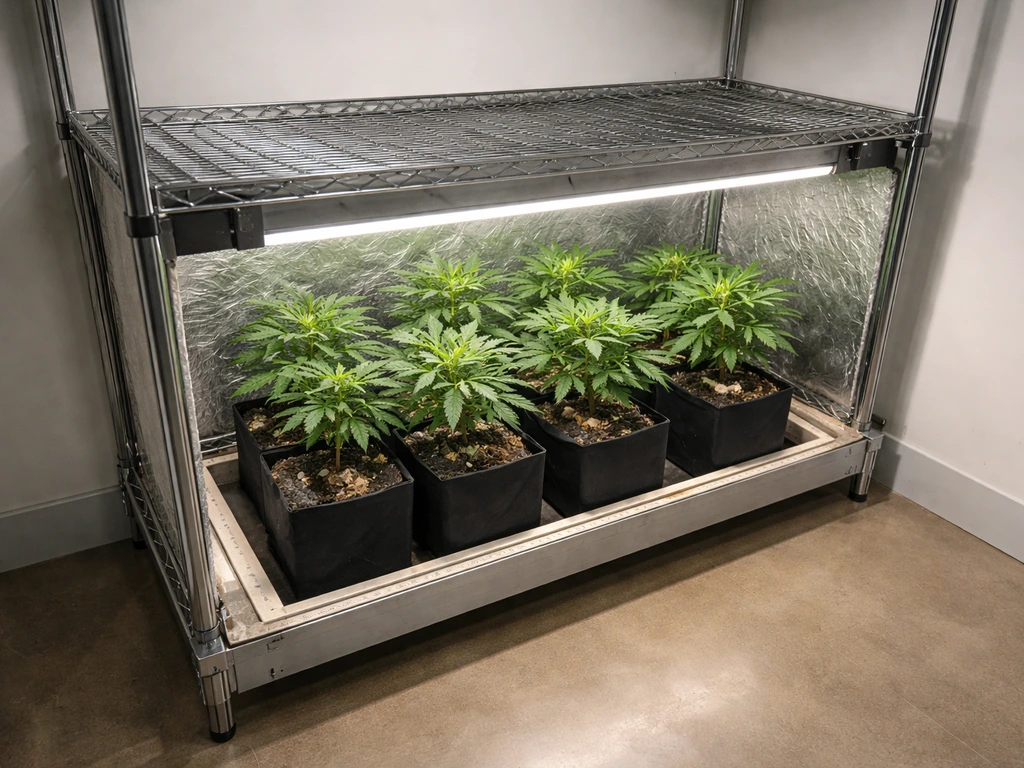
The Microbusiness license ties cultivation to Tier 1 canopy limits, which represent the smallest commercial canopy category under the CCC's tiered system. The CCC publishes the specific canopy square footage caps for each tier in its licensing materials. Before you finalize your facility plan, confirm the current Tier 1 canopy ceiling directly on the CCC's License Types page or in the Microbusiness License Packet, as these figures can be updated through regulatory revision.
Facility requirements
Your grow space must comply with the security requirements laid out in 935 CMR 500.110. The key physical requirements include:
- 24-hour continuous video surveillance covering all controlled areas, with recordings retained for the required period
- Restricted access to cultivation and storage areas, limited to authorized personnel
- Alarm systems covering all entry and exit points
- Adequate lighting in all interior and exterior areas
- A documented security plan submitted as part of your application
Your location must be zoned appropriately for cannabis operations in the municipality where you plan to operate. Zoning approval is not the CCC's job, it is the municipality's, and you need to sort that out before you can get very far in the CCC application process.
Operating rules
As a Microbusiness, your cultivation and any manufacturing must be co-located at a single premises. You cannot cultivate at one address and manufacture at another under a single Microbusiness license. You are also required to maintain detailed seed-to-sale tracking through the state's tracking system, submit to unannounced inspections, follow testing and quality control procedures, and maintain all required operational policies in writing.
How to Apply Today: Steps, Timeline, and Documents
Before you touch the portal
There is meaningful groundwork to do before you open the Massachusetts Cannabis Industry Portal (MassCIP). Skipping these steps will stall your application.
- Confirm your business entity is formed and registered in Massachusetts
- Verify that your ownership group meets the 12-month residency requirement for a majority of executives/members
- Identify your proposed location and confirm it is in a municipality that has opted in to allowing cannabis establishments (some municipalities have banned commercial cannabis)
- Engage with the host municipality: you are required to complete community outreach and sign a Host Community Agreement (HCA) with the city or town before you can receive a final license
- Begin gathering all required documents (see list below)
Key documents you will need
- Certificate of Good Standing from the Massachusetts Secretary of State for your business entity
- Organizational documents (operating agreement, articles of organization, ownership charts)
- Executed Host Community Agreement with the municipality
- Evidence of right to occupy the proposed premises (lease or deed)
- Security plan compliant with 935 CMR 500.110
- Management and Operations Profile: this includes your business plan, operating policies and procedures, quality control and testing procedures, training plans, emergency contacts, and personnel details
- Fingerprint and background check documentation for all required individuals
- Any other documents listed in the current Microbusiness License Packet from the CCC
Submitting through MassCIP
All adult-use Marijuana Establishment applications, including Microbusiness, are submitted through the Massachusetts Cannabis Industry Portal (MassCIP). You create an account, select the Microbusiness license type, and work through the application workflow. During the workflow you select which components apply to your Microbusiness (Tier 1 Cultivator, product manufacturer, or both).
You pay the application and background check fees at submission. Once you submit, the CCC reviews the application for completeness. If they determine it is complete, the application moves into substantive review under 935 CMR 501.102. Background check and fingerprint reviews can take up to approximately 90 days, so build that into your timeline expectations.
Provisional license and beyond
If your application passes review, the CCC issues a Provisional License. A Provisional License lets you finalize your facility but does not authorize you to begin operating. After your facility is ready, you request a Compliance Review. The CCC inspects your premises, and if everything meets the standards, you receive your Final License to begin operations. Do not start cultivating with only a Provisional License.
Costs, Fees, and What Ongoing Compliance Will Run You
Application and licensing fees
One meaningful financial benefit of the Microbusiness track is the fee structure. The CCC's license fee guidance states that the annual licensing fee for a Marijuana Microbusiness is 50% of all applicable license fees. If you are operating a Marijuana Microbusiness engaged in cultivation, the annual licensing fee is set at 50% of the annual license fee for a Tier 1 Marijuana Cultivator annual licensing fee for a Marijuana Microbusiness is 50%. In practical terms, this means your annual licensing costs are meaningfully lower than running separate full-cost cultivator and manufacturer licenses. Always check the current fee schedule on the CCC's License Fees page before budgeting, as fee amounts can change with regulatory updates.
Beyond CCC fees, budget for the following real costs:
- Background check fees for each person requiring a suitability review
- Legal and consulting costs to prepare your application package (optional but strongly recommended for first-time applicants)
- Facility build-out costs to meet security and operational requirements
- Seed-to-sale tracking system costs
- Municipal fees or requirements imposed as part of your Host Community Agreement
- Ongoing compliance costs: testing, record-keeping systems, staff training
Renewals
License renewals are managed through MassCIP. The CCC sends automated renewal reminders at multiple intervals before your license expiration date. Do not wait for the reminder to start preparing. Renewals require you to confirm that all information on file is still current, pay renewal fees, and certify ongoing compliance. If your ownership, location, or operations have changed, those changes need to be properly disclosed and approved before or during renewal.
Mistakes That Get Applications Rejected or Delayed
Most application problems are avoidable. Here are the ones that come up most often:
- Applying without a signed Host Community Agreement: this is a hard requirement, not something you can submit later
- Incomplete Management and Operations Profile: this is one of the most detailed parts of the application and applicants routinely underestimate what is required; missing policies or vague plans get flagged
- Residency requirement not met for a Microbusiness: if your ownership group does not have a Massachusetts-resident majority with 12+ months of residency, you are applying for the wrong license type
- Applying in a municipality that has banned cannabis establishments: this is a dead end until the municipality opts in
- Background check issues not disclosed proactively: trying to hide prior criminal history makes things worse; the CCC has a process for evaluating history, and disclosure is always better than omission
- Failing to notify the CCC within ten days of a new charge or conviction after licensure: this is an independent compliance violation
- Security plans that do not meet 935 CMR 500.110 standards: a vague or template-only security plan will not pass
- Lease or property documents that do not clearly establish your right to occupy and use the space for cannabis cultivation
How to Choose the Right License if You Are Not Sure Which One You Need
If you searched for a Massachusetts micro grow license and you are not completely sure the Microbusiness is the right fit, here is how to think through it.
| License type | Best for | Key constraint | Fee benefit |
|---|---|---|---|
| Marijuana Microbusiness (Tier 1 Cultivator + optional manufacturer) | Small-scale growers who may also want to make products, and who meet the residency rule | Majority of executives must be MA residents for 12+ months; co-located only; Tier 1 canopy cap | Annual fees at 50% of applicable license fees |
| Tier 1 Marijuana Cultivator (standalone) | Small-scale growers who do not meet Microbusiness residency rules, or who want cultivation only without the Microbusiness structure | Tier 1 canopy limits; no residency requirement | Standard cultivator fee schedule |
| Tier 2 and above Marijuana Cultivator | Larger commercial cultivation operations that exceed Tier 1 canopy | Higher canopy, higher fees, more complex compliance | Standard fee schedule at higher tiers |
If you want to grow small and you meet the residency requirement, the Microbusiness license is the most cost-effective path. If you do not meet the residency requirement, apply as a standalone Tier 1 Marijuana Cultivator. If your intended grow operation exceeds Tier 1 canopy limits, you are not on the micro track at all and need to apply at the appropriate cultivator tier.
Massachusetts's licensing structure is more specific than some other states. If you are comparing notes with growers in other states, keep in mind that frameworks like Maryland's or Missouri's small-cultivation tracks are structured differently, so what applies there does not necessarily apply here.
Your Next Steps Before You Apply
Here is a practical checklist to work through before opening MassCIP:
- Download the current Microbusiness License Packet from the CCC's Public Documents page and read it completely
- Review the current License Fees page on the CCC website to get exact fee amounts
- Confirm your proposed municipality has opted in to cannabis establishments and is open to new applicants
- Contact the municipality's cannabis licensing office to begin the Host Community Agreement process
- Verify that the majority of your ownership group meets the 12-month Massachusetts residency requirement
- Draft your Management and Operations Profile using CCC templates and the 935 CMR 500 operational requirements as a checklist
- Plan your security build-out to meet 935 CMR 500.110 before your Compliance Review
- Create your MassCIP account and review the application workflow before your submission date so there are no surprises
The CCC's official starting point for all of this is their Licensing Process page at mass.gov, and MassCIP is where the actual application lives. If you are working through the application and hit a specific regulatory question, the CCC has a public inquiry process. For anything touching legal structure or background check implications, it is worth getting at least a one-time consultation with an attorney who knows Massachusetts cannabis licensing, especially before you invest in a facility build-out.
FAQ
Can I get a Massachusetts micro grow license if I only want to grow, not manufacture products?
Yes, but only if you qualify for a Microbusiness that includes a Tier 1 cultivation component. If you want to keep things strictly at the smallest canopy limits, you must structure your application and facility plan around the Tier 1 canopy caps, and you still need co-location for any allowed manufacturing tied to the Microbusiness.
What happens if my ownership group changes after I apply for the Microbusiness license?
You should expect that changing ownership can affect eligibility and suitability. If any person with a financial interest or management role changes after filing, you may need to update the CCC and, depending on the change, trigger suitability-related review. In practice, many applicants schedule planned ownership changes either before submitting or only after they have secured provisional approval.
How strict is the 12-month Massachusetts residency requirement for Microbusiness eligibility?
Don’t rely on a “residency” assumption based on where people live part of the year. The rule requires Massachusetts residency for at least 12 consecutive months prior to applying for the Microbusiness eligibility requirement for a majority of executives or members, so confirm dates and keep records you can support during review.
If I do not meet the residency requirement, can I still qualify for the micro grow track by adding manufacturing under a Microbusiness?
Not always. If you cannot meet the residency requirement for the Microbusiness, you generally cannot substitute a different component (like adding manufacturing) to bypass it. In that situation, the more straightforward alternative is usually a standalone Tier 1 Marijuana Cultivator application, assuming you stay within Tier 1 canopy limits.
Can a sole proprietor apply first and switch to an LLC later during the MassCIP process?
You must have a Massachusetts-registered entity before you start the application, and you should also make sure the entity is in good standing. Starting as a sole proprietor or personal application and then trying to “convert” later is a common failure point, because the CCC expects the license applicant itself to be the properly formed legal entity.
Can I begin setting up and growing while I have only a Provisional License?
No. A Provisional License is not authorization to cultivate. You should plan to wait for the Compliance Review inspection and Final License before beginning cultivation or manufacturing, and you need your facility ready to pass inspection when you request the Compliance Review.
Can I change my planned facility layout or license components after the CCC issues a Provisional License?
Yes, but it depends on what you change. If the change affects key eligibility items (ownership, executives, location, or operational components) you may need CCC approval and it can slow renewal or compliance. Keep your floor plan, security plan, and component selections consistent with what you applied for, and treat location changes as high-friction events.
Do I need municipal zoning approval before applying in MassCIP for a Microbusiness?
Your zoning approval must come from the municipality, and you should confirm the specific cannabis zoning outcome before you invest heavily in facility build-out. The CCC reviews licensing compliance, but it does not replace municipal zoning authority, so missing zoning can effectively stop the process regardless of how complete your MassCIP application is.
What counts as “co-located” for a Microbusiness if I have multiple buildings on the same property?
Co-location is tied to having cultivation and any permitted manufacturing under a single premises for the Microbusiness license. If your plan involves moving product between addresses, or operating manufacturing at a different location, that usually points you away from the Microbusiness structure and toward a different licensing plan.
How can I reduce the chance that my Microbusiness application gets delayed during the suitability and fingerprint review?
Expect a delay that can extend beyond the initial review estimate, especially if the background and fingerprint component encounters issues. To reduce surprises, confirm that your submitted names and identifying information match official documents, and budget time for any additional instructions you receive during suitability processing.
Who should manage the “ongoing suitability” monitoring after I receive a Microbusiness license?
The CCC requires ongoing suitability after licensing, so if someone associated with the license is charged or convicted of a relevant offense you must notify the CCC within ten days. A good internal practice is to assign an owner or compliance lead who monitors criminal justice notifications for all associated persons and documents the notification timing.
How do I make sure my planned grow area will not exceed the Tier 1 canopy limits?
If you exceed Tier 1 canopy limits, you are not on the micro track. The decision aid here is simple, model your canopy based on the CCC’s square footage caps for Tier 1, and then build a small buffer for how you measure and operate your grow area to avoid unintentionally crossing into a higher tier.
What are the most commonly underestimated costs once the Microbusiness license is approved?
Budget for operational costs beyond license fees, especially compliance-heavy items like seed-to-sale tracking readiness, testing and quality control processes, and the physical security build-out required by 935 CMR 500.110. Many applicants underestimate the staffing and documentation burden of these ongoing obligations.
What should I do in advance to avoid problems when renewing a Marijuana Microbusiness license?
Renewal timing is not just about paying the fees. You also need to re-certify compliance and confirm that all information on file is still accurate, including ownership and operational details. If you have had any changes since approval, start compiling supporting documentation early so you can respond quickly during the renewal workflow.
Micro Grow License Canada: How to Apply and Stay Compliant
Step-by-step guide to getting a micro grow license in Canada, meeting eligibility, security, canopy limits, and complian