There is no single official California state program called the "Grow Program." When people search that term, they almost always mean California's cannabis cultivation licensing track, which is administered by the Department of Cannabis Control (DCC). If you want to grow cannabis commercially and sell it in California, you need a cultivation license from the DCC. That licensing framework, along with its license types, fees, and compliance rules, is what this article covers.
What Is the Grow Program in California? Eligibility Guide

Marcus Whitley
11 Apr 2026
What "Grow Program" actually means in California
The phrase "Grow Program" is informal shorthand. Some people use it to describe California's regulated cultivation licensing system. Others confuse it with county-level programs, equity initiatives, or even personal-use allowances under Proposition 64. None of those things are officially branded as a "Grow Program" by the state.
The DCC's official language refers to "cultivators" as businesses that grow cannabis plants which are then harvested, sold as flower, or turned into products. The pathway to doing that legally is a cultivation license. So when someone asks "what is the grow program in California," the most accurate answer is: it is the state's cultivation licensing framework, managed through the DCC's Cultivation Licensing System (CLS).
One important distinction to make upfront: personal home growing is separate from commercial cultivation licensing. Under Prop 64, adults 21 and older can grow up to six plants inside a private residence or in a locked area on the grounds of a private residence without a commercial license. Cities and counties can add restrictions, but they cannot outright ban personal cultivation. If you are growing six plants at home and not selling anything, you do not need to go through the commercial licensing process at all.
How the "Grow Program" connects to California's licensing system
If you want to grow commercially and sell cannabis or cannabis products, you are squarely inside California's cultivation licensing system. The DCC is the state agency responsible for issuing and overseeing these licenses. Understanding how a grow license works in California is the foundation for everything else in this process.
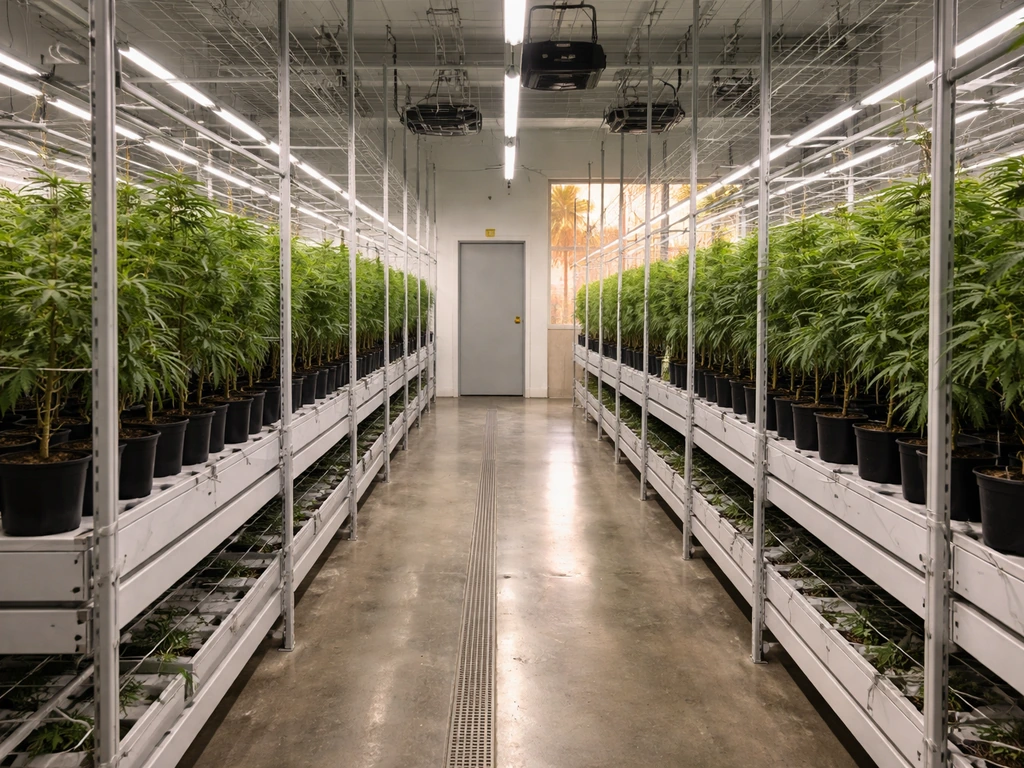
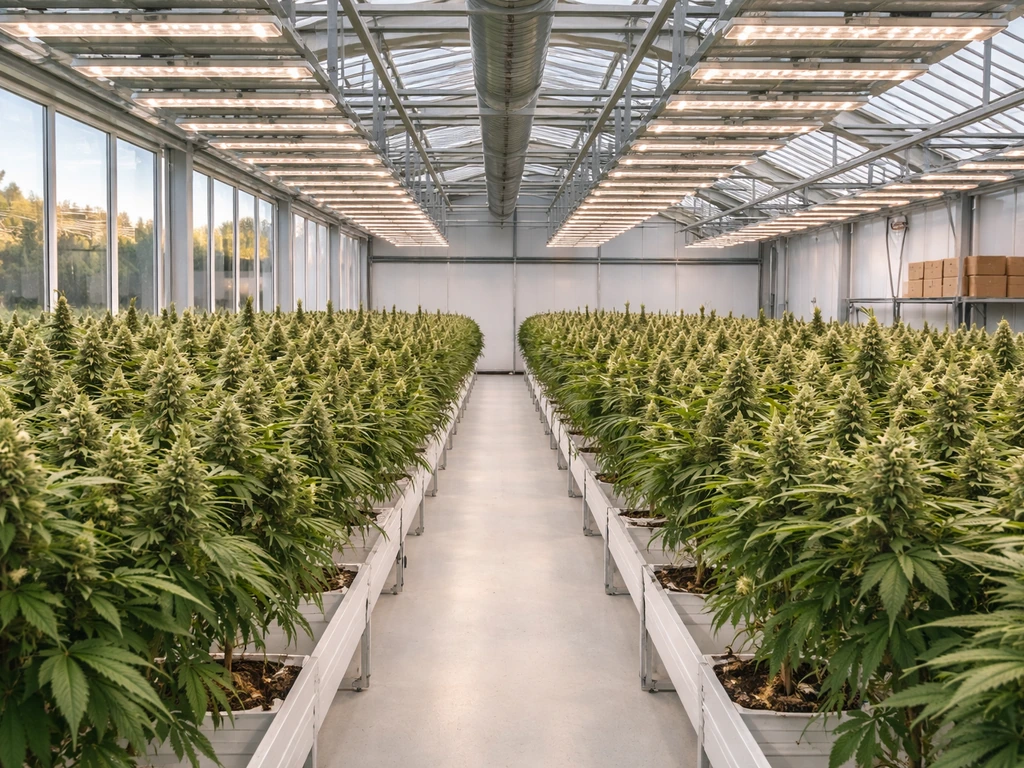
California's cultivation licensing is not one-size-fits-all. The license type you need depends on how many plants you grow or the size of your canopy, and what cultivation method you use (outdoor, indoor, or mixed-light). The DCC has defined a tiered structure of license types that scales from small cottage operations up to large commercial farms.
It is also worth knowing that California's system is not unique in its structure. If you have looked into what a grow license requires in general, California follows a similar pattern to other states: you pick a license tier based on cultivation size, meet local requirements, submit an application with supporting documents, pay fees, and go through a review process.
License types and canopy size limits
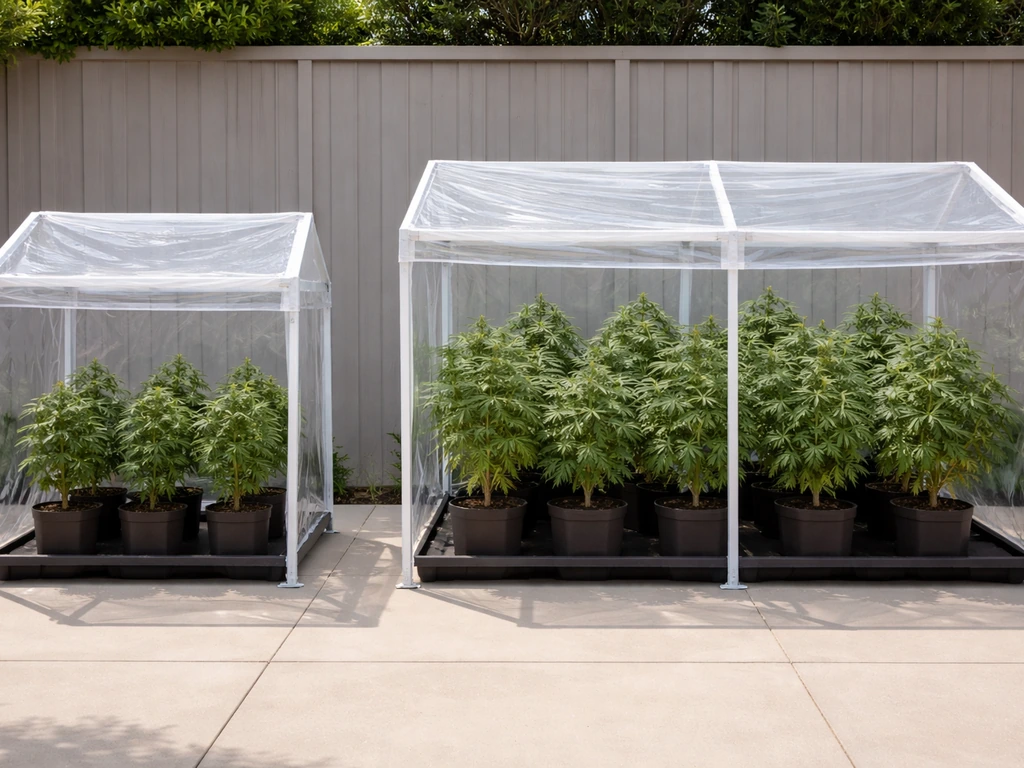
Your license type is determined by how much you are growing. Here is how the DCC tiers the main cultivation license categories:
| License Type | Canopy / Plant Limit | Cultivation Method |
|---|---|---|
| Specialty Cottage Outdoor | Up to 25 sq ft or up to 25 mature plants | Outdoor |
| Specialty Outdoor | Up to 50 mature plants or up to 5,000 sq ft | Outdoor |
| Small Outdoor | 5,001 to 10,000 sq ft | Outdoor |
| Medium Outdoor | 10,001 sq ft to 1 acre | Outdoor |
| Large Outdoor | More than 1 acre | Outdoor |
| Specialty Cottage Indoor | Up to 500 sq ft | Indoor |
| Specialty Indoor | 501 to 5,000 sq ft | Indoor |
| Nursery | N/A (propagation only) | Any |
| Processor | N/A (processing only) | Any |
Similar tiering exists for mixed-light licenses. Nursery and processor licenses are separate tracks and do not qualify for canopy size reductions. If you want to reduce your canopy after licensing, you need to submit an updated premises diagram showing both the original and reduced canopy areas, and the DCC must approve the change before you make it.
Who can apply
To apply for a California cultivation license, you need to meet both state and local requirements. On the state side, every owner of the business must create an account in the CLS, submit a separate Owner Application, and complete fingerprinting and a background check (via Live Scan). Criminal conviction history must be disclosed on the Owner Application. Disclosures do not automatically disqualify you, but they can trigger additional review or a denial.
The application also requires you to designate a Designated Responsible Party (DRP), who must also be an owner, and an Agent for Service of Process (ASOP). These are not optional roles. The DRP is the person who manages the application on behalf of the business, submits the final affidavit, and initiates any amendments during or after review.
On the local side, your proposed cultivation premises must have authorization from the city or county where it is located. California law lets local jurisdictions restrict or limit cannabis businesses, including cultivation, and some jurisdictions have strict caps on how many licenses they will issue. If you do not have valid local authorization before you apply, the state application will not move forward. This is one of the most common reasons applications stall.
Equity applicants may be eligible for a waiver of the license fee. During the application, there is a specific section in the CLS where you attest to locally verified equity status if your jurisdiction offers that designation. Not all cities or counties have equity programs, so you need to check with your local authority.
Application steps: what to prepare and how the process works

The entire application happens inside the DCC's Cultivation Licensing System (CLS). Here is the general sequence:
- Create accounts: Every owner creates their own CLS account and submits an individual Owner Application.
- Choose your application type: Adult-Use or Medicinal (or both).
- Choose your license type: Based on your canopy size and cultivation method.
- Provide your premises details: This includes the address, Assessor's Parcel Number (APN), and your local jurisdiction authorization.
- Upload required documents: Including your premises diagram, proof of legal right to occupy the property, and local authorization.
- Submit fingerprinting: Each owner completes a Live Scan application for background check purposes.
- Complete the DRP declaration and final affidavit.
- Pay the application fee: The CLS will show you what is owed after submission. You can pay online, by mail, or in person. The DCC does not begin processing your application until this is paid.
- Wait for review: DCC reviews the application and may issue deficiency notices if anything is missing or incorrect.
- Respond to deficiencies: Owners must respond through their own CLS accounts. Deficiencies must be cleared before the license can be issued.
- Pay the license fee if approved.
- Access and print your cultivation license from the CLS.
The premises diagram is one of the most technically demanding parts of the application. It must be accurate and complete, and it drives your canopy calculation. If you use shelving systems, the surface area of every level counts toward the total canopy. Any changes to the diagram after licensing require prior DCC approval through what is called a Science Amendment, which is submitted through the CLS by the DRP.
Application and license fees
Fees vary significantly by license type and cultivation method. Here are some concrete examples from the DCC fee schedule as of early 2026: For example, the DCC’s cultivation fee schedule lists example annual cultivation license fees such as Specialty Cottage Indoor at a $1,830 annual license fee concrete examples from the DCC fee schedule.
| License Type | Application Fee | License Fee |
|---|---|---|
| Specialty Cottage Outdoor | $135 | $1,205 |
| Specialty Cottage Indoor | $205 | $1,830 |
| Small Outdoor | $535 | $4,820 |
| Medium Indoor | $8,655 | $77,905 |
| Large Indoor | $8,655 | $77,905 |
These numbers can change, and renewal fees are calculated based on gross revenue from the expiring license period, so your renewal cost may differ from your initial license fee. Always verify current amounts directly on the DCC's fee schedule page before submitting your application.
Compliance basics once you are licensed
Getting licensed is the beginning of compliance, not the end. California cultivation licensees must operate within the canopy limits set by their specific license type, keep an accurate premises diagram on file with the DCC at all times, and get prior approval before making any material changes to the premises or canopy.
Track-and-trace reporting is mandatory. The DCC contracts with METRC as California's track-and-trace system, and all licensees must use it from seed to sale. This means tagging plants, recording transfers, logging package adjustments with the correct reason codes, and meeting tight recording windows (for example, trade sample transactions must be recorded within 24 hours of transfer). DCC’s “Trade samples: FAQ” says that under regulation §15049, a licensee must record having provided a trade sample within 24 hours of occurrence trade sample transactions must be recorded within 24 hours of transfer. Non-compliance with METRC requirements is a real enforcement risk.
Local Air Quality Management Districts (AQMDs) can impose additional restrictions on generators and other equipment at your cultivation site, so compliance is both a state and local responsibility. Keep your local authorization in good standing, because the DCC can take action if you fall out of compliance with your local jurisdiction.
At renewal time, you will need to document gross revenue from the prior license period to determine your renewal fee tier. Keep clean financial records from day one. This is also a good reason to understand renewal requirements before you even apply, since the recordkeeping habits you build at the start of operations affect how smoothly renewal goes.
Provisional licenses are no longer an option in 2026
This is an important timeline note for anyone applying right now: as of January 1, 2026, provisional licenses are no longer in effect (with very limited exceptions for certain local equity retailers). The DCC stopped renewing provisional licenses after January 1, 2025. If you were operating on a provisional license and have not transitioned to an annual license, you need to address that immediately. Going forward, all new cultivation applicants are on the annual license track from the start.
Common pitfalls that delay or kill applications
The most frequent reasons cultivation applications get delayed or denied are predictable and largely avoidable. Here is what to watch for:
- Missing or invalid local authorization: If your city or county has not approved your operation, the state application cannot proceed. Secure local authorization before you start the state application.
- Incomplete or inaccurate premises diagram: The diagram must reflect actual canopy measurements and include all shelving levels if applicable. Errors here cause deficiency notices and restarts.
- Owners not completing their individual CLS accounts and Owner Applications: Every owner must do this separately. It is a frequent oversight that holds up the whole application.
- Unpaid application fee: The DCC will not review your application until the fee is paid. Do not assume submission equals processing.
- Unanswered deficiency notices: Deficiencies must be resolved through the relevant owner's CLS account. Missing a notice window can result in denial.
- Operating without a valid license: California enforcement agencies have conducted large-scale crackdowns on unlicensed cultivation, including seizures of tens of thousands of plants at a time. The commercial "grow program" is not optional if you are selling cannabis, and there is no workaround.
It is also worth noting that California's approach is stricter on local authorization than some other states. For comparison, if you have looked at <a data-article-id="28BCE67-0DFB-4720-92FA-9DA81785B25F">grow license costs in Oklahoma</a>, you will find that California's fees and local approval requirements are considerably more complex. Similarly, anyone who has gone through the process of getting a <a data-article-id="111FC667-0DFB-4720-92FA-9DA81785B25F">grow license in Florida will recognize the pattern of state-plus-local compliance, though California's scale and fee structure is in a different league.
How this compares to growing cannabis in other places
California's cultivation licensing is among the most layered systems in North America. For context, getting a grow license in Canada operates under a federally unified framework, while California layers state regulations on top of dozens of different local jurisdictions, each with their own rules. That local variability is one of California's biggest practical challenges for applicants.
Where to confirm current rules and next steps
Regulations and fee schedules change. Before you submit anything, verify the current requirements directly through the DCC. The key resources are:
- DCC's Cultivation page: Confirms what a cultivation license covers and which activities require one.
- DCC's Cultivation License Types page: Shows the current canopy thresholds for each license type.
- DCC's Application and License Fees page: Always check this before budgeting. Fees are updated periodically.
- DCC's CLS portal: Where you will actually submit the application and manage all correspondence, including deficiency notices.
- DCC's CannaConnect hub: Covers METRC training, compliance resources, and track-and-trace requirements for licensees.
- Your local city or county planning or cannabis office: Required for local authorization before you begin the state application.
If you are ready to move forward, start with your local jurisdiction. Find out whether cultivation is allowed in your area, what local permit or authorization is required, and whether your jurisdiction has an equity program. Once you have that confirmation, open your CLS account and begin the state application. The application is not short, but the DCC's online system walks you through each section. Give yourself time for the premises diagram, because it is the piece most people underestimate.
The bottom line: there is no mysterious "Grow Program" in California sitting outside the licensing system. If you want to grow cannabis commercially, you need a DCC cultivation license matched to your canopy size and method. That license, and the compliance obligations that come with it, is what the term actually refers to in practice.
FAQ
Is there an official state “Grow Program” I can apply to in California?
No. “Grow Program” is not an official DCC program name. The closest official equivalent is the cultivation licensing framework under the Department of Cannabis Control, handled through the Cultivation Licensing System (CLS). If you see a listing or marketing page that claims a separate “Grow Program,” treat it as unofficial unless it ties directly to DCC cultivation licensing.
Can I use Prop 64 home growing to sell cannabis in California?
You usually cannot. If you are growing for commercial sale, you must align with the cultivation license tier and canopy limits for your license type, even if your operation is small. Home cultivation under Proposition 64 is separate, and selling from home growing generally puts you into the licensed track.
Who has to complete fingerprinting and background checks for a cultivation application?
You need a CLS account and an Owner Application for each business owner, plus owner fingerprinting. If you are forming a new entity, plan ownership and roles early, because ownership changes during the process can trigger amendments and delay timelines.
What happens if I do not have the required DRP and ASOP roles ready?
The Designated Responsible Party and the Agent for Service of Process are functional requirements, not optional roles. Your DRP must be an owner and must actively manage the application and submit final attestations, while your ASOP ensures you can be formally served during reviews and enforcement.
Why would my DCC cultivation application stop even after I submit everything in CLS?
No. Even with DCC readiness, the application can stall if your premises are not locally authorized. Many jurisdictions restrict cultivation, cap the number of licenses they will approve, or require specific local permits before the DCC moves forward.
Can I make changes to my grow setup after I get licensed?
Yes, but approval matters. If you change shelving layouts, canopy area, or any element that affects your premises diagram calculation, you generally need prior DCC approval before the change is implemented, using the amendment process described in DCC guidance (often referred to as a Science Amendment).
Do I automatically qualify for equity fee relief if I meet some statewide criteria?
Not all equity designations are identical. Even if CLS has an equity attestation section, your eligibility depends on whether your specific city or county recognizes and locally verifies an equity status for the relevant licensing category, so you must confirm with your local jurisdiction.
What are the most common METRC mistakes that cause enforcement problems?
Track-and-trace compliance is enforced with real consequences. If your METRC entries are late or inaccurate, you risk enforcement actions that can include license impacts. A practical safeguard is to assign responsibility for METRC logging to a specific role and build checks to confirm tagging, transfers, and package adjustments are recorded within the required windows.
Can local air quality rules require changes even after my cultivation license is approved?
Potentially, yes. Utilities, permits, and restrictions can affect your ability to operate legally, including electrical load, generator requirements, and emissions-related constraints. Even if DCC approves your cultivation plan, local Air Quality Management District rules can still restrict equipment use at your site.
How should I prepare financially for cultivation license renewal?
Renewal fees are tied to the gross revenue tier for the prior license period, so messy revenue records can create renewal problems. Keep clean bookkeeping from day one, and ensure you can support revenue reporting for the period covered by the renewal calculation.
What should I do if I currently operate under a provisional cultivation license?
If you are on a provisional license and have not transitioned by the applicable dates, you need to address it immediately. As of January 1, 2026, provisional licenses are generally not in effect, and the DCC stopped renewing provisional licenses after January 1, 2025 (with limited exceptions).
What are the best ways to avoid delays during the licensing review?
There is no single guaranteed “fast track,” but you can reduce delays by aligning your tier choice with your actual canopy and method, matching your premises diagram precisely, and making sure disclosures and local authorization documents are consistent with your application statements. Most avoidable delays come from mismatches between what is applied for and what is documented for the premises and ownership roles.
Next Article
Grow License California: How to Get Cultivation Approval Today
Step-by-step to get a California cultivation grow license, from eligibility and local zoning to fees, timelines, and ren