That said, there is a significant catch right now: OMMA has an active moratorium on new grower license applications, extended through August 1, 2026, unless OMMA's Executive Director determines that all pending reviews, inspections, and investigations are wrapped up before that date. If you are an existing licensee, the moratorium does not affect your renewal.
If you are a new applicant, you cannot submit a grower license application until the moratorium lifts.
Oklahoma grow license types and who they are for
Oklahoma keeps its cultivation licensing structure under the commercial medical marijuana umbrella. There is one primary license category for growing: the medical marijuana grower license. It is a business license, not a personal or individual license, meaning you are applying as an Oklahoma-registered business entity, not as a private individual who just wants to grow a few plants at home.
The grower license allows the licensee to cultivate, harvest, and prepare marijuana for sale to licensed processors, dispensaries, and other growers. OMMA's commercial license hub also includes processor and dispensary categories, but if cultivation is your goal, the grower license is the one that applies. There is no tiered micro-grower or home-grower license distinct from the commercial grower license in Oklahoma's current framework, which means even small-scale commercial operations use the same license pathway as larger ones.
If you are comparing this to other states, California, for example, breaks cultivation licenses into multiple tiers by canopy size, and Florida has its own vertically integrated structure. If you want to compare programs, California's grow program is organized by canopy size and uses its own licensing tiers and requirements. Oklahoma's approach is more streamlined in category terms, but it is still a commercial-only licensing system with real business and facility requirements.
Step-by-step application process (when the moratorium lifts)
Because new grower applications are currently paused, now is actually a good time to get your documents and business setup in order so you can move quickly once OMMA reopens. Here is how the application process works.
- Register your business entity in Oklahoma. You must have a valid Oklahoma business registration before applying. LLCs and corporations are common choices. Make sure your registered agent information is current.
- Confirm ownership eligibility. Oklahoma requires that at least 75% of the business applying for an OMMA license is owned by Oklahoma residents. Each owner with 10% or more interest must be identified and verified.
- Gather required documentation. This typically includes your Oklahoma business registration, proof of Oklahoma residency for qualifying owners, a diagram or description of your grow facility, proof of legal property access (lease or deed), background check authorization for all applicable owners, and a valid government-issued ID for each owner.
- Create your OMMA online account. All applications go through OMMA's online licensing portal. You will create a business account and fill out the commercial grower application directly in the portal.
- Pay the application fee. Fees are submitted with the application. See the cost breakdown section below for current amounts.
- Submit and wait for OMMA review. OMMA will review your application for completeness, run background checks, and may request additional documentation. Processing times vary, but plan for several weeks to a few months depending on application volume.
- Schedule your facility inspection. Before your license is issued, OMMA will inspect your grow facility to confirm it meets security, operational, and compliance standards.
- Receive your license and begin operations. Once approved, you will receive your grower license and can begin cultivating within the rules tied to that license.
The key practical step right now, given the moratorium, is to monitor OMMA's official Apply page closely. OMMA has said the moratorium end date could move earlier than August 1, 2026 if the Executive Director determines pending matters are resolved. Keep an eye on OMMA announcements so you are not caught off guard.
Oklahoma grow license cost breakdown

Here is the cost-focused breakdown you are probably searching for. Oklahoma's OMMA grower license involves a non-refundable application fee paid upfront, plus the license fee itself. Below is a summary of the main costs involved.
| Cost Item | Amount | Notes |
|---|
| Application fee (commercial grower) | $2,500 | Non-refundable; paid when submitting application |
| License fee (upon approval) | $2,500 | Paid when license is issued; covers the initial license period |
| Annual renewal fee | $2,500 | Paid each year at renewal; moratorium does not affect renewals |
| Late renewal penalty | Varies | Additional fees apply if renewal is not submitted before expiration |
| Facility/compliance costs | Variable | Security systems, record-keeping software, seed-to-sale tracking system (METRC) fees |
The application fee and license fee together mean you are looking at approximately $5,000 in OMMA-direct costs to get your first grower license. Every year after that, the $2,500 renewal keeps you licensed. These are the OMMA fees specifically. Your real total cost of compliance is higher once you factor in ongoing operational requirements.
METRC is Oklahoma's mandatory seed-to-sale tracking system, and licensed growers are required to use it. METRC charges per-tag fees for plant and package tags, which are an ongoing operational cost. Depending on your grow size, METRC costs can range from a few hundred to several thousand dollars annually. You will also need to budget for security camera systems, alarm systems, and potentially a secure perimeter, all of which OMMA inspects for compliance.
If you are comparing cost structures across states, Oklahoma's flat-fee model is relatively straightforward compared to California's tiered canopy-based licensing fees, which can run significantly higher for larger operations. If you are looking at Canada too, review how Canadian provinces handle grow licenses and compliance requirements before you plan your investment grow license in Canada. For a reference on how other states structure their programs, the grow license pages for California, Florida, and Canada offer useful context.
If you are also exploring a grow license in Florida, you should compare Florida’s vertically integrated licensing structure and requirements before you commit to a plan. If you are looking at California, you will also want to understand what a grow license in California requires and how the licensing tiers work grower license pages for California.
Plant limits, canopy rules, and operational compliance
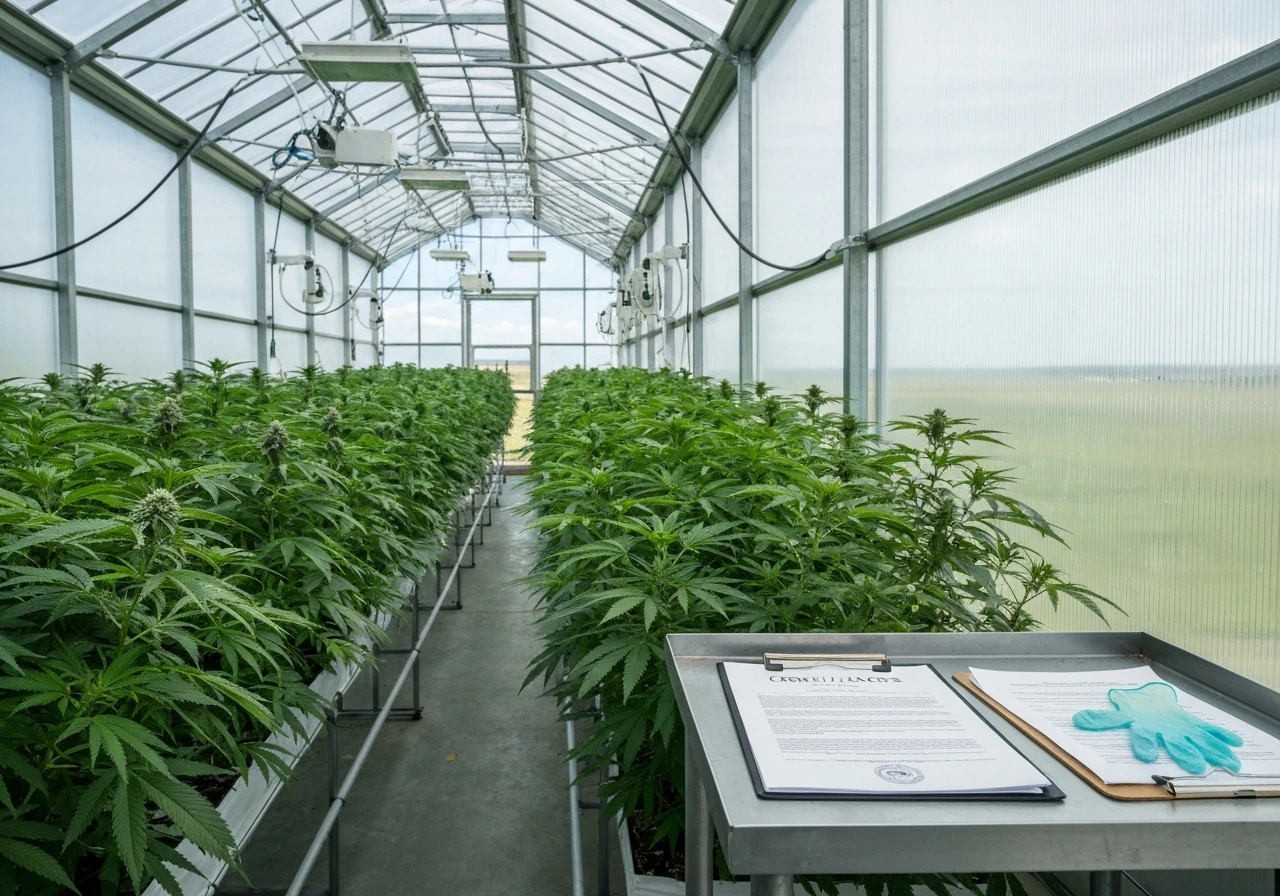
Oklahoma does not publish a fixed statewide plant count limit the way some states do. Instead, OMMA growers are regulated based on their licensed canopy footprint and operational setup as declared in the application and verified at inspection. Your grow facility must match what you described and what OMMA approved. You cannot quietly expand your canopy without updating your license.
Here are the key compliance requirements tied to your grower license that you need to plan for before you pay your application fee.
- All marijuana plants must be tracked in METRC from seed or clone through harvest and transfer. Every plant gets a physical METRC tag.
- Your facility must have a functional security system with video surveillance covering all grow areas, entrances, and exits, with footage retained for a minimum period as specified by OMMA rules.
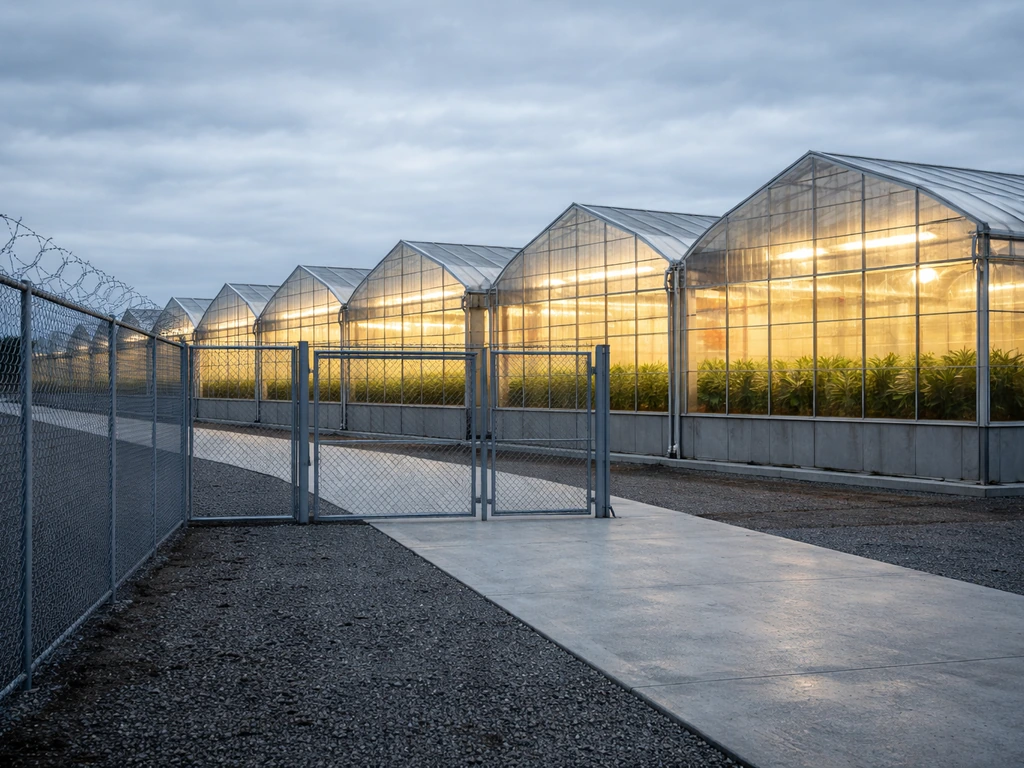
- The grow location must be enclosed and secured to prevent unauthorized access. Outdoor grows must meet specific perimeter requirements.
- You may only sell or transfer product to other licensed OMMA entities: dispensaries, processors, or other growers. No direct sales to patients or the public.
- All employees working at the facility must be registered with OMMA as licensed agents.
- Any changes to your grow location, ownership structure, or canopy must be reported to OMMA before implementation, not after.
- Waste disposal must follow OMMA's marijuana waste disposal procedures and be logged in METRC.
The biggest surprise for new growers is usually the METRC tracking requirement. It is not optional and it is not simple. Budget time to learn the system or hire someone who already knows it before your first harvest.
Why applications get delayed or denied, and how to avoid it

Most delays come down to incomplete paperwork and eligibility issues that could have been caught before submitting. Here are the most common problems and what you can do about them.
- Oklahoma residency documentation is missing or inconsistent. Every owner with 10% or more interest needs to prove Oklahoma residency. Utility bills, lease agreements, and Oklahoma driver's licenses are commonly used. Make sure all documents show the same address and are current.
- Business registration is not active or does not match the application. Pull your Oklahoma Secretary of State registration before you apply and confirm the entity name, registered agent, and status are all correct.
- Facility does not meet security requirements. OMMA will deny or delay your license if your physical grow space is not properly secured at the time of inspection. Do not wait until after approval to install your security system.
- Background check issues. Certain criminal convictions will disqualify owners from holding an OMMA license. Review OMMA's eligibility criteria carefully before investing in facility setup.
- Ownership structure exceeds the non-Oklahoma-resident cap. If more than 25% of your business is owned by non-Oklahoma residents, your application will not be approved.
- Incomplete or vague facility diagram. OMMA wants to see exactly where you plan to grow, including the canopy area, entry points, security camera placement, and storage areas. A rough sketch is not enough.
- Submitting during the moratorium. Right now, submitting a new grower application would be rejected because the moratorium is in effect through at least August 1, 2026. Wait for the official reopening announcement.
Renewals, inspections, and staying compliant long-term
Once you are licensed, your work is not done. Oklahoma grower licenses are annual, and OMMA expects ongoing compliance between renewals, not just at application time.
Renewal is straightforward if you have kept your operation clean. You pay the $2,500 renewal fee, confirm your information is still current, and submit through the OMMA portal before your expiration date. The moratorium specifically does not block renewals, so current licensees can and should renew on schedule without interruption.
OMMA can conduct inspections at any point during your license period, not just at initial approval. Inspectors can show up to verify that your METRC records match your physical inventory, your security systems are functioning, your employee agent registrations are current, and your facility matches your approved layout. These are not announced inspections in most cases, so your operation needs to be inspection-ready at all times, not just when you know someone is coming.
If OMMA finds violations, the consequences can range from a fine to a license suspension or revocation depending on severity. Keeping clean METRC records and maintaining your facility to the security standards you described in your application are the two most practical things you can do to stay out of trouble.
For long-term compliance, build a simple internal calendar: track your renewal deadline, your employee agent registration expirations, and any equipment maintenance schedules for your security systems. A missed renewal or a camera that goes offline for weeks is the kind of thing that creates problems during an inspection.
Your next steps today
If you are a new applicant, the honest next step is to prepare now and apply the moment the moratorium lifts. If you are asking how to grow license California, the process and timing will differ from Oklahoma’s rules and application steps apply the moment the moratorium lifts. Get your Oklahoma business entity registered, gather your ownership and residency documents, start designing your facility with security compliance in mind, and bookmark OMMA's Apply page for moratorium updates. The August 1, 2026 date is the current ceiling, but it could open earlier.
If you are an existing licensee, make sure your renewal is on track, your METRC records are current, and your facility still matches your approved application. The moratorium does not touch you, but a lapsed renewal or a surprise inspection with compliance gaps absolutely will.
The total cost to get licensed in Oklahoma is roughly $5,000 in OMMA fees upfront, $2,500 per year after that, plus real operational costs for METRC tags, security infrastructure, and any facility buildout. It is not a cheap startup, but compared to many other state licensing structures, Oklahoma's fees are on the more accessible end for commercial cultivation.