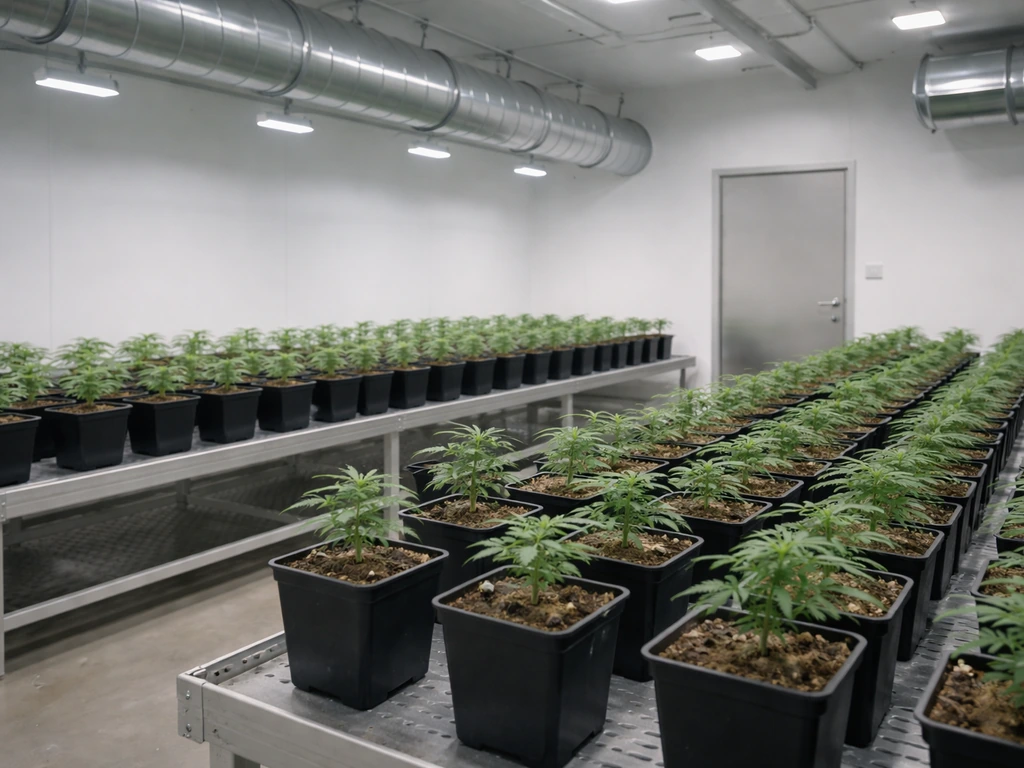
A grow license is the legal authorization to cultivate cannabis, whether that means a small home grow or a large commercial operation. What makes it confusing is that the term itself means different things depending on where you are. In California, it's called a cultivation license. In Oklahoma, the state agency literally calls it a "grower license." In Canada, Health Canada issues cultivation licences with subcategories like micro-cultivation, nursery, and standard. The name changes, the regulator changes, the requirements change, and the plant limits change. So the first thing you need to do is pin down your jurisdiction, because there is no single universal grow license.
Grow License Guide: US Steps, BC Meaning, and Licensing Checklist

Marcus Whitley
3 Apr 2026
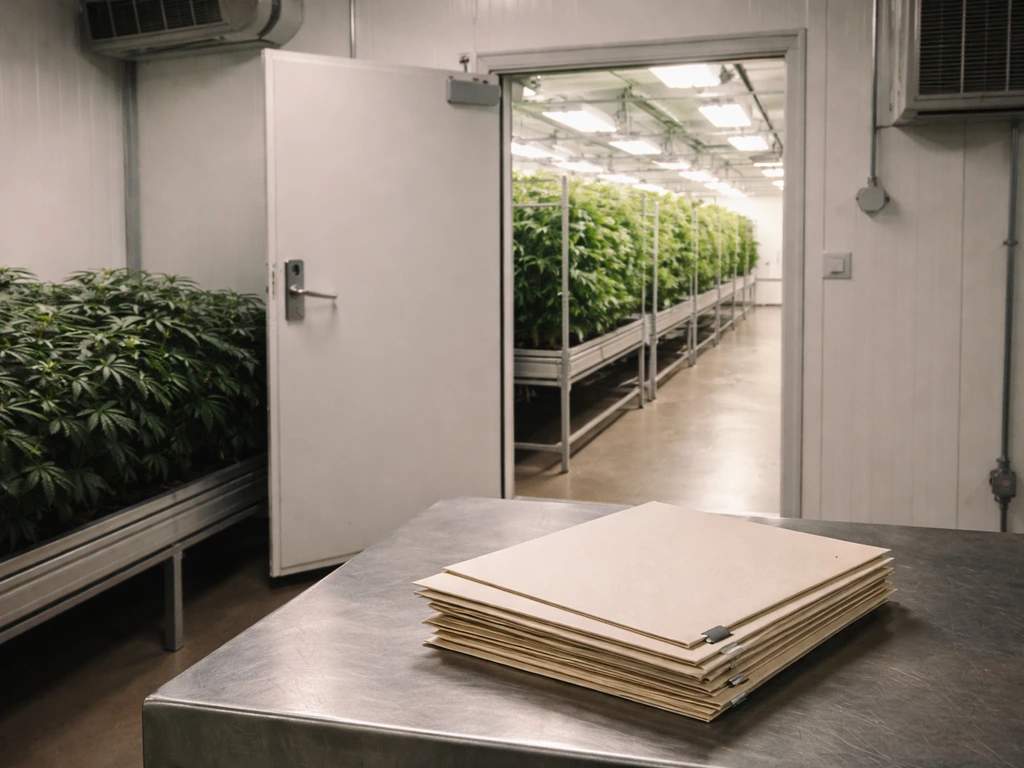
What "grow license" actually means (and why it's different everywhere)
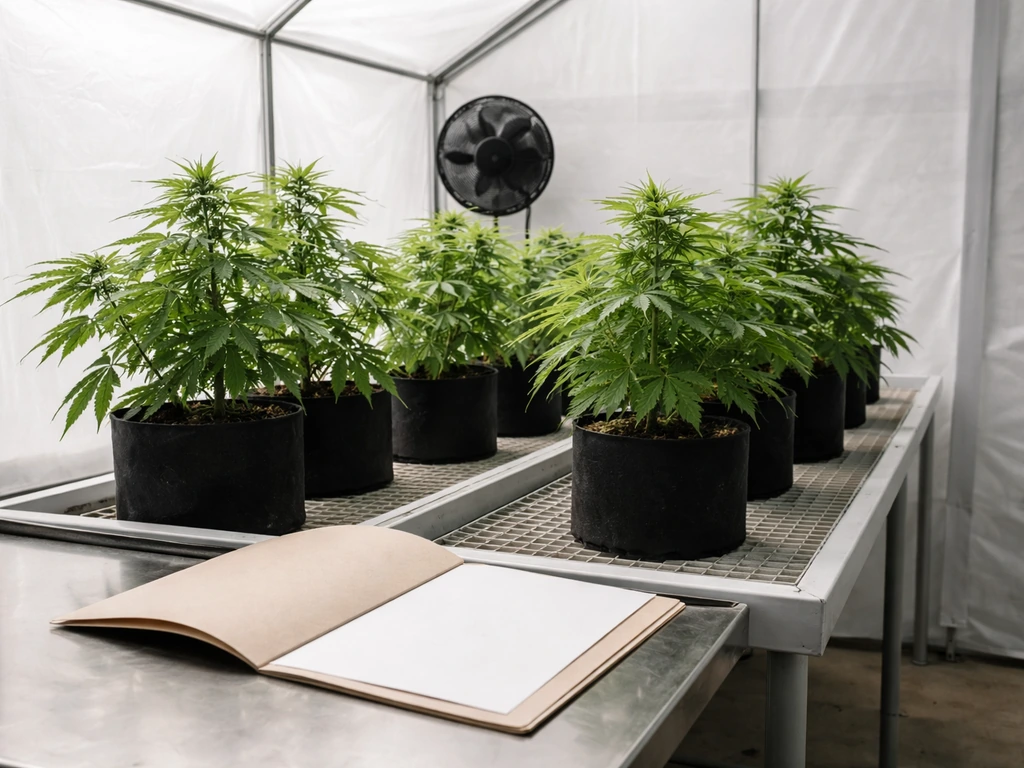
In cannabis regulation, a grow license is specifically tied to the activity of cultivation, meaning growing, propagating, and harvesting cannabis plants. It's distinct from a manufacturer license (processing), a retailer license (selling), or a distributor license (transporting). When you search for a grow license, you're looking for the cultivation category within your state or country's licensing framework, not a general cannabis business permit.
The reason requirements vary so much is that every US state that has legalized cannabis built its own regulatory system. California's Department of Cannabis Control issues cultivation licenses based on site size and cultivation method. Oklahoma's OMMA issues a grower license specifically described as allowing a business to legally grow marijuana for medical purposes. Canada runs a federal licensing system through Health Canada entirely separate from any US state. These are different programs, different agencies, different forms, and different fees.
Home growing is a separate category from commercial cultivation in most jurisdictions. Many states allow adults to grow a small number of plants at home without any license at all, while commercial cultivation always requires formal licensing. Knowing which category applies to you saves a lot of time.
What "BC" most likely means in this context
If you searched "grow license bc," you almost certainly mean British Columbia, Canada, not a US state. "BC" is not a standard US state abbreviation (no US state uses BC), so in a cannabis licensing context it almost always refers to the Canadian province. Here's what's important to understand: British Columbia does not issue its own cannabis cultivation licenses for commercial production. If you want to grow cannabis commercially in BC, you need a federal license from Health Canada, not a provincial one.
The Province of British Columbia's own guidance is clear on this: if you intend to produce cannabis for commercial purposes, you are required by law to be licensed, and to grow cannabis you'll need a standard cultivation licence and/or nursery licence from Health Canada. The province handles retail licensing and sets some local rules, but the cultivation licensing is entirely federal.
To confirm you're in the right place: if you want to grow commercially in British Columbia, your application goes through Health Canada's Cannabis Tracking and Licensing System (CTLS), not a BC provincial portal. If you want to grow a few plants at home in BC, the provincial rules allow up to four plants per household, though local and Indigenous governments may have additional restrictions. You can read a full breakdown of how to get a grow license in Canada for the complete federal process.
Finding the right license type for your situation
Before you look at any application form, you need to answer two questions: Are you growing for personal/home use or for commercial purposes? And if commercial, what scale and method are you operating at? The answers determine which license category you're applying for and which agency you're dealing with.
Home grow vs. personal cultivation
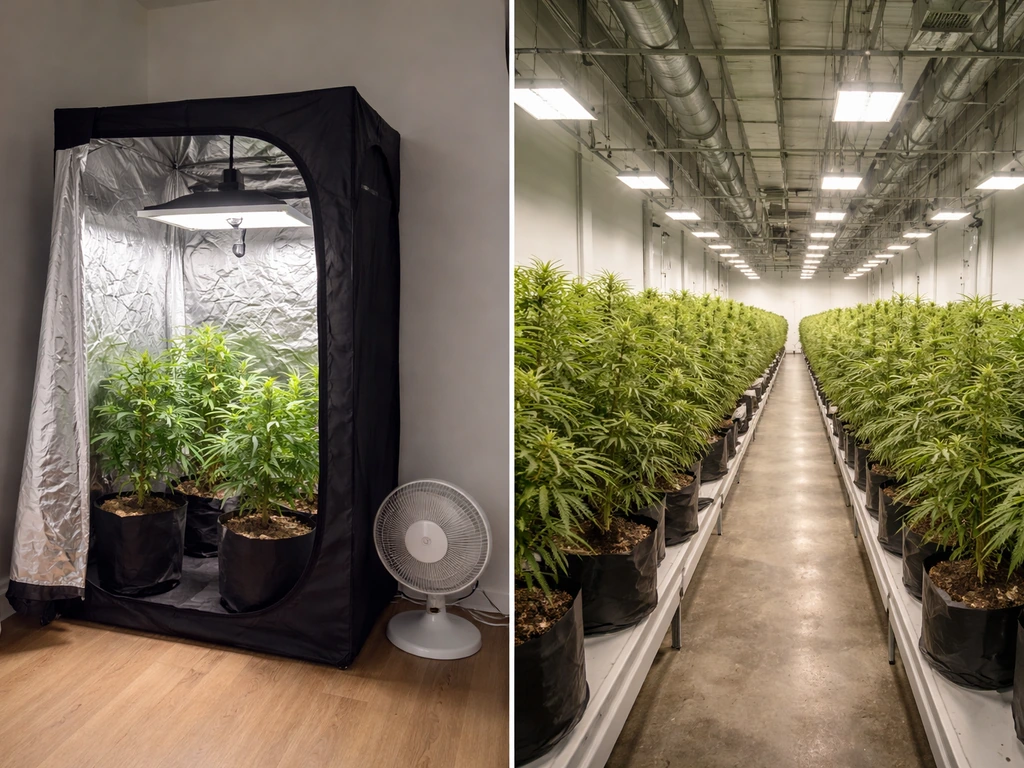
Most adult-use states allow a small number of plants per household without a license. BC allows four plants per household under federal rules (with possible local restrictions). The Province of British Columbia notes that BC’s general limit is four plants per household, and that growing more than four plants requires a medical cannabis authorization or a production licence up to four plants per household. Many US states have similar allowances. If you're only growing a handful of plants for personal use, check your state's home grow rules first, because you may not need a license at all. If you do need one, it's typically a simpler process than commercial licensing.
Commercial cultivation license types
For commercial operations, the license type usually depends on your scale and what you're doing with the plants. Here's how the major frameworks break it down:
| Jurisdiction | License Name | Key Category Distinctions |
|---|---|---|
| California (DCC) | Cultivation License | Type based on site size and cultivation method (indoor, outdoor, mixed-light); separate adult-use vs. medicinal applications |
| Oklahoma (OMMA) | Grower License | Commercial only; medical marijuana cultivation for licensed dispensaries/processors |
| Canada (Health Canada) | Cultivation Licence | Three subtypes: micro-cultivation (small scale, possession limits apply), nursery (plants/seeds only), and standard (no size limit on canopy) |
| British Columbia | No provincial cultivation license | Must apply federally through Health Canada; province handles retail only |
In California, the DCC's Cultivation Licensing System (CLS) asks you to choose between Adult-Use and Medicinal as your application type, then select a license type based on your site size and cultivation method. These are different workflows and different license categories, so picking the wrong one at the start means starting over. If you're working through California's system, the California grow license process covers this in detail, including the specific DCC license categories.
In Canada, the distinction between micro-cultivation and standard cultivation is significant. A micro-cultivation licence limits what you can possess: only cannabis harvested from your own micro-cultivation site, or plants and seeds received from other licence holders. A standard cultivation licence has no size limit on your grow surface area or plant canopy. If you expect to scale, starting with a micro licence and later transitioning to standard triggers regulatory upgrades including physical security upgrades and higher annual fees, so plan your category carefully from the start.
California also has a specific program worth understanding if you're in that state. The GROW program in California is a distinct initiative within the state's cannabis framework, and it's worth confirming whether it applies to your situation before you start an application.
Eligibility and requirements you need to meet
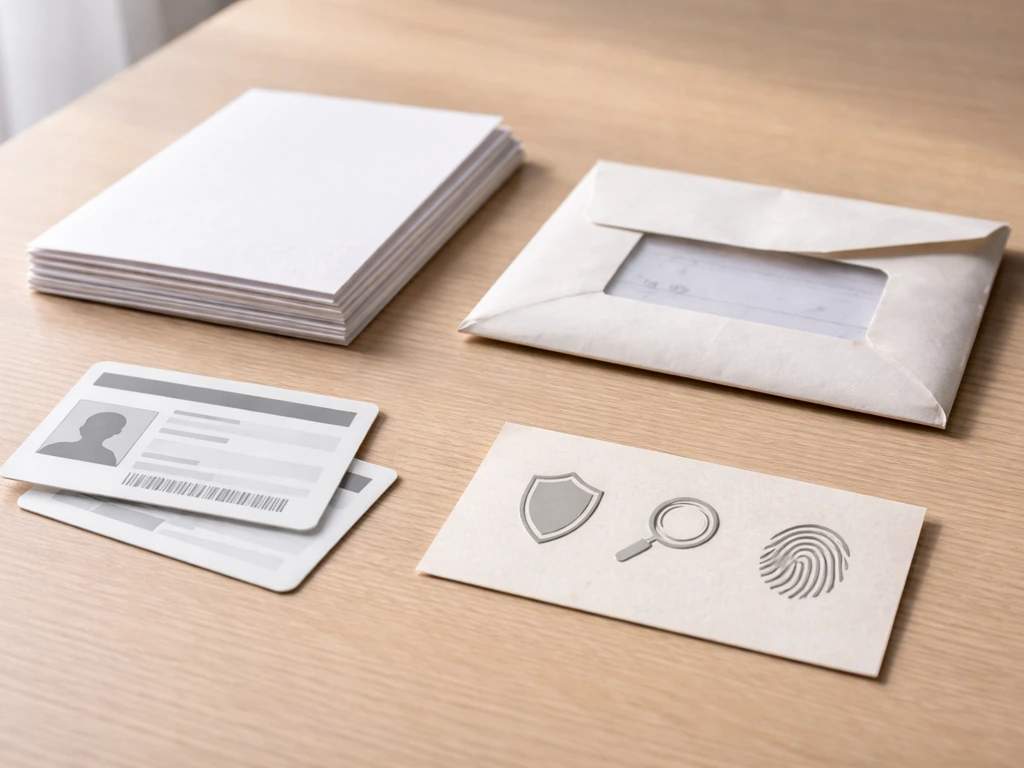
Every jurisdiction has baseline eligibility requirements. They differ in the details, but these categories come up almost everywhere:
- Residency: Many US states require applicants to be state residents or have a resident ownership stake. Oklahoma requires OMMA licensees to be Oklahoma residents. California has ownership disclosure requirements tied to residency. Check your state's specific rule.
- Background checks: Commercial cultivation applicants almost universally undergo criminal background checks. Certain felony convictions (especially drug trafficking) can disqualify you, though expungement rules vary by state.
- Age: You must be 21 or older in most US adult-use states. Canada's federal system also has age requirements.
- Facility and site requirements: Your grow site must meet zoning requirements, building codes, and in many cases, local government approval before the state will issue a license. California's application checklist includes proof of local fire department notification for indoor cultivation sites and pesticide compliance evidence.
- Ownership and financial disclosures: Most states require full disclosure of all owners, investors, and financial backers above a certain ownership threshold.
In Canada, Health Canada has additional requirements around security clearances for key personnel, site evidence packages, and standard operating procedures (SOPs) that must be submitted as part of the application. These are more document-intensive than most US state processes.
Costs, plant limits, and what you're actually allowed to grow
Costs vary widely by state and license category. Oklahoma is one of the more affordable states for commercial cultivation licensing, and if you want to understand how that compares before committing, the breakdown of grow license costs in Oklahoma gives you a concrete benchmark. Florida's commercial cultivation licensing operates under a much more restricted structure with historically high barriers to entry, and the rules around getting a grow license in Florida reflect that complexity.
In California, cultivation license fees are tied to license type and size tier, and they're paid annually. In Canada, Health Canada charges annual regulatory fees based on licence category, and the fees increase when you move from a micro-cultivation licence to a standard cultivation licence.
Plant limits work differently depending on whether you're in a home grow or commercial context. For home grows, states typically set a per-household plant count (BC's federal limit is four plants per household). For commercial cultivation, most jurisdictions don't set a fixed plant limit, instead regulating by canopy size or grow area. Canada's standard cultivation licence, for example, has no size limit on grow surface areas or plant canopies, while micro-cultivation has a defined canopy ceiling.
What you're allowed to grow also depends on the license subtype. A nursery licence in Canada only allows you to produce cannabis plants and seeds, not harvested flower or trim. A cultivation licence in California allows you to grow but not necessarily package or sell directly without additional license categories. Check the specific activities covered by your license type before assuming you can do everything under one permit.
The application process: documents, steps, and where people go wrong
General steps across most jurisdictions
- Confirm your jurisdiction's regulator (e.g., California DCC, Oklahoma OMMA, Health Canada for BC/Canada) and create an account on their official licensing portal.
- Determine your license type based on your operation scale, cultivation method, and whether you're adult-use or medical.
- Secure local approval first (in most US states, you must have local government authorization before the state will complete your application).
- Gather your documentation package: proof of premises, ownership/financial disclosures, operating procedures, background check consent forms, and any jurisdiction-specific items.
- Submit the application and pay the application fee.
- Respond promptly to any deficiency notices or requests for additional documentation.
- Prepare for and pass a site inspection before final license issuance.
Canada-specific: the CTLS evidence package timing rule
If you're applying through Health Canada's CTLS (the federal system for BC and all of Canada), there's a specific timing rule you need to know: Health Canada requires your site evidence package to be submitted within 10 business days of your licence application submission. Missing this window can stall or void your application. This is one of the most common process mistakes for first-time Canadian applicants.
Common reasons applications get rejected
- Incomplete or missing local approval documentation before state/provincial submission
- Background check disqualifiers that weren't addressed or disclosed upfront
- Site evidence that doesn't match the application (wrong address, non-compliant zoning)
- Missing the CTLS evidence package deadline (Canada)
- Choosing the wrong license category (e.g., adult-use vs. medicinal in California)
- Insufficient security plans or facility diagrams that don't meet regulatory standards
- Ownership disclosures that are incomplete or inconsistent with financial records
Timelines: plan for longer than you expect
Processing times are genuinely unpredictable. In California, a state performance audit found major variability in timeframes across counties, with some provisional cultivation license holders in certain counties waiting significantly longer than others, due to local authority involvement in the process. Health Canada's CTLS process has its own multi-step review phases that can take many months. Budget for at least six months from application to license issuance in most jurisdictions, and don't sign a lease or invest heavily in a facility until you have strong confidence in your local approval status.
After approval: staying compliant once you're licensed
Getting the license is step one. Keeping it is an ongoing job. Here's what ongoing compliance typically involves across most cultivation licensing frameworks:
- Annual renewals: Most cultivation licenses require annual renewal with updated fees. In Canada, transitioning from micro to standard cultivation triggers a new fee tier and additional regulatory requirements.
- Seed-to-sale tracking: US states with adult-use cannabis typically require licensees to track all cannabis through a state-mandated system (like Metrc in California). Every plant, harvest batch, and sale must be logged.
- Security requirements: Surveillance cameras, restricted access, alarm systems, and visitor logs are standard requirements. Upgrading your license category may trigger mandatory security upgrades.
- Inspections: Regulators can and do conduct inspections. California's DCC provides a self-inspection checklist for cultivators to use when preparing for DCC staff visits. Going through that checklist periodically is smart practice.
- Reporting: Many states require regular production reports, inventory reports, and waste disposal records.
- Changes to ownership or location: Most jurisdictions require you to notify or get approval from the regulator before making material changes to ownership, key personnel, or your grow site.
Quick compliance checklist after license issuance
- Set a calendar reminder for your renewal deadline (typically 60-90 days before expiration to start the process).
- Register with your state's seed-to-sale tracking system if required and train all staff who will enter data.
- Install and test all security systems required by your license conditions before beginning cultivation.
- Document your standard operating procedures and keep them accessible for inspectors.
- Confirm your waste disposal procedures comply with state rules (cannabis waste has specific disposal requirements in most states).
- Keep a log of any visitors, deliveries, or transfers on and off your licensed premises.
- Use your regulator's self-inspection checklist (California DCC publishes one specifically for cultivators) to do internal audits at least quarterly.
A note on this information vs. legal advice
Everything in this guide is based on publicly available regulatory information from state agencies, Health Canada, and provincial sources. Regulations change, and local rules can add another layer on top of state or federal requirements. This site provides regulatory reference information, not legal advice. Before submitting any application, verify current requirements directly with your regulator's official website or licensing office. If your situation involves complex ownership structures, prior criminal history, or a large commercial operation, consulting a cannabis licensing attorney who practices in your state or province is genuinely worth the cost.
The best thing you can do right now is identify your jurisdiction's official licensing portal and read the current application checklist directly from the source. California applicants should go to the DCC's CLS portal. Oklahoma applicants should go to OMMA. Anyone growing commercially in British Columbia should go to Health Canada's CTLS. Use California's DCC license search tool to verify that businesses you're researching or partnering with are legitimately licensed, since it's updated daily and filterable by license type. Start there, then come back to the detailed guides on this site for jurisdiction-specific guidance.
FAQ
If I’m “commercial” in California, does that mean I’m selling cannabis as well, or is growing alone enough to require a cultivation license?
In most jurisdictions, “commercial” refers to operating beyond permitted home cultivation, not whether you personally sell. In California, a cultivation license is tied to growing activities, so if your operation is cultivating for commercial distribution, you generally need the cultivation license even if you are not holding a separate retail license.
Can I start building a grow facility or sign a lease before my cultivation license is approved?
You can, but it’s high risk. Many applicants regret heavy investments before local approvals and review timelines clear. A practical approach is to negotiate lease terms with contingencies, budget time for local authority reviews (especially in California), and avoid irreversible facility spend until your approval path is strong.
What’s the most common reason Canadian (BC) cultivation applications get delayed or rejected in CTLS?
Missing the CTLS timing requirement for the site evidence package is a major cause of stalls. Health Canada requires that submission within 10 business days after you apply, so set an internal deadline and collect evidence before you click “submit”.
In Canada, what’s the practical difference between micro-cultivation and standard cultivation besides the plant limits?
Beyond scale, the categories affect what cannabis you can possess and how you can source cannabis from others. Micro-cultivation restricts possession to product harvested from your own micro-cultivation site and plants or seeds you legally receive from other licence holders, while standard cultivation removes the grow-surface ceiling and changes compliance expectations.
If I start with a micro-cultivation licence in Canada, can I later upgrade to standard without restarting everything?
Often you can transition, but upgrading typically triggers regulatory upgrades that can include higher fees and added compliance controls like physical security enhancements. Plan the category early, and treat the upgrade as a separate compliance and budget event, not a simple paperwork change.
For a Canada nursery licence, am I allowed to produce seeds and plants only, or can I also harvest flower/trim?
A nursery licence is limited to producing cannabis plants and seeds. It does not generally authorize you to harvest usable flower or trim, so if your business model depends on harvested product, you will usually need a cultivation licence category that covers those activities.
Do US states that allow home growing still require anything if I’m using a grow operation for research or a small “for sale” arrangement?
Home-grow allowances typically cover personal use only. If the activity shifts to sale, transfer, or other non-personal uses, you may fall outside the home-grow exemption and into the licensed-commercial cultivation framework, even if the scale is small.
How do I avoid picking the wrong cultivation licence subtype in California’s DCC system?
Before you fill anything out, confirm your operating model (adult-use vs medicinal where applicable), then align your license type with both site size and cultivation method. The California workflow can require restarting if you select the wrong application path at the start, so verify category definitions before submitting.
Are plant limits always “the number of plants,” or can commercial rules depend on grow area instead?
Commercial frameworks commonly regulate by canopy size or grow area rather than a fixed plant count. Canada’s standard cultivation licence is a clear example of size-based permission rather than a simple per-plant limit, so don’t rely on home-grow numbers when estimating commercial requirements.
What compliance documents should I expect to prepare for a Health Canada cultivation application (especially for BC)?
Be ready for a document-intensive “site evidence package” plus operational materials like standard operating procedures, along with security-related requirements for key personnel. If your SOPs or security evidence aren’t ready, your application timeline can be affected even if your facility plan looks complete.
How can I confirm a potential partner is genuinely licensed before I invest or sign agreements?
Use the official license search tools provided by the regulator in your jurisdiction. For example, California’s license search is updated frequently and can be filtered by license type, which helps you avoid partnering with entities that are not active or not authorized for the specific cultivation activity you need.
What’s a safe way to estimate licensing timelines if processing is unpredictable?
Use a conservative planning assumption, commonly budgeting at least six months from application to issuance in many jurisdictions, then add extra time for local approvals. Also build in buffer time for document collection, evidence packages, and any county or phase-based reviews.
Next Article
How to Get a Micro Grow License in Canada: Step-by-Step
Step-by-step on getting a Canadian micro-cultivation cannabis licence, eligibility, costs, timelines, and compliance bas