Getting a grow license in Canada means getting federally licensed by Health Canada under the Cannabis Act. There is no provincial cannabis cultivation license for commercial production, the federal government controls who can legally grow cannabis, and every cultivation operation, from a small micro-grow to a large commercial facility, needs to go through Health Canada's licensing process. This guide walks you through exactly what that process looks like, what documents you need, how province and municipality rules add extra layers, and what ongoing compliance looks like once you have the license in hand.
Grow License in Canada: Step-by-Step Guide to Get Approved

Marcus Whitley
15 Apr 2026
One quick note before we get into it: this is informational guidance, not legal advice. For anything that affects your specific situation, confirm current requirements directly with Health Canada and consult a professional where needed.
What 'grow license' actually means in Canada
In Canada, a "grow license" is a cannabis cultivation licence issued by Health Canada under the Cannabis Act and its companion legislation, the Cannabis Regulations (SOR/2018-144). This licence authorizes you to conduct cultivation activities, growing cannabis plants, at a specific, approved site. It also typically covers ancillary activities tied directly to cultivation, like drying, trimming, and milling the cannabis you produce. Without this licence, growing cannabis beyond what personal-use rules allow is illegal under federal law.
It's worth clarifying what this is not. This guide focuses on obtaining a grow license for lawful cannabis production, either micro-scale or standard commercial, rather than on personal adult-use home growing, which is handled separately under provincial rules. If you want to run a legitimate cultivation business or produce cannabis for medical purposes, Health Canada licensing is the path.
Which license type you actually need
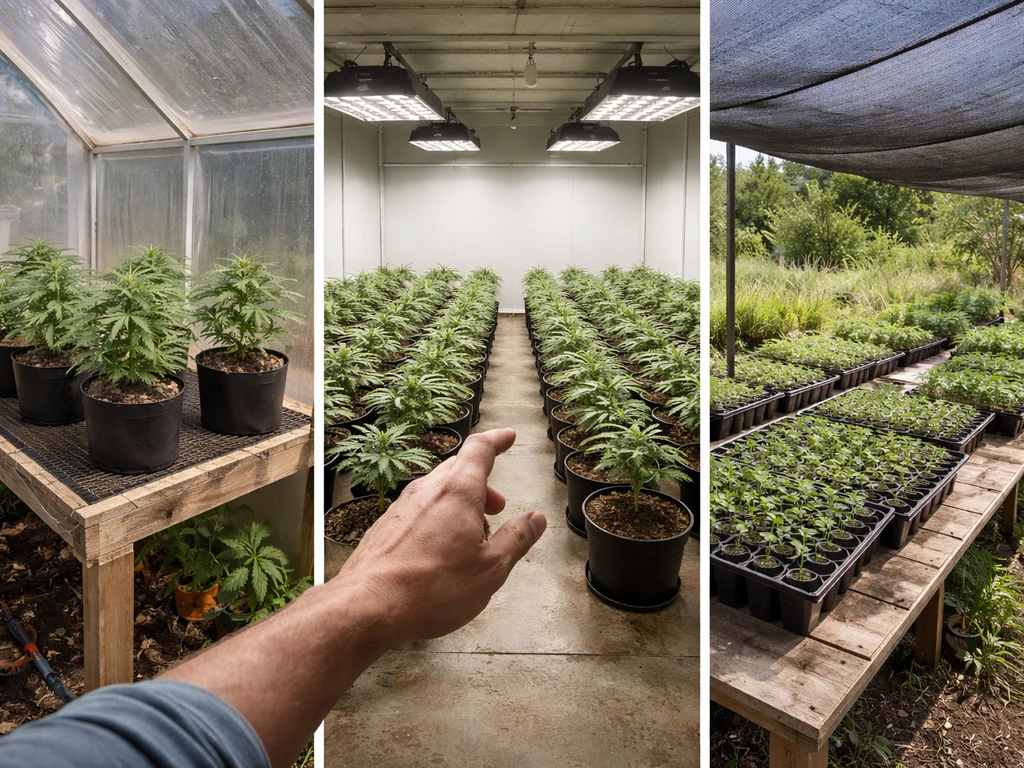
Health Canada offers three cultivation-related licence classes: micro-cultivation, standard cultivation, and nursery. The right one depends on your scale and what you plan to do.
| Licence Type | What It Authorizes | Best For |
|---|---|---|
| Micro-Cultivation | Growing cannabis at a smaller scale; canopy size capped (typically 200 m² or less) | Startups, small producers, first-time applicants testing the market |
| Standard Cultivation | Growing cannabis at commercial scale with no fixed canopy cap | Established operations or those planning high-volume production |
| Nursery | Propagation activities — producing seeds and starter plants (clones/seedlings) | Operations focused on supplying genetic material to other licensed producers |
For most people searching for a grow license in Canada, micro-cultivation is where to start. The application is somewhat less complex, the site footprint is smaller, and Health Canada has specific guidance published for micro-cultivation, nursery, and micro-processing licences that lays out a more accessible path. You can scale up later by transitioning to a standard cultivation licence once you've proven your operation.
A cultivation licence on its own does not allow you to sell cannabis. In a discussion on r/canadients, community members interpret licensing to distinguish cultivation licences from sales permission, noting that cultivation is for growing and related activities rather than consumer sales. If you want to sell, you'll need a separate sale for medical purposes licence or to supply a licensed distributor. Keep this in mind when planning your business model, because the licence combinations you apply for affect your application fees.
Who can apply and what you need to have ready first
Health Canada doesn't publish a simple eligibility checklist, but the application requirements make the bar clear. You need to be an adult, you need a real site (not a proposed or theoretical location), and you need to have your key personnel identified before you submit anything. This last point trips up a lot of applicants.
Key personnel required for most cultivation licence applications include a Responsible Person (the primary contact accountable for compliance), a Head of Security, and a Master Grower. Depending on your licence type and activities, you may also need a Quality Assurance Person (QAP). All of these individuals need to create their own accounts in Health Canada's Cannabis Tracking and Licensing System (CTLS) and be linked to your application. Every key person also needs to obtain a federal security clearance, and those clearances have to be in place before your application can move forward.
Beyond personnel, you need a site that is physically ready, or close to ready, to meet Health Canada's physical security requirements. Don't expect to apply with a lease you just signed on an empty building and get approved quickly. The more your site documentation reflects a real, compliant operation, the faster things move.
The application process: what you need to pull together

All applications are submitted through the Cannabis Tracking and Licensing System (CTLS). This is the platform Health Canada calls the "primary manner" for submitting licensing applications. Everything goes through it: your application form, your documents, your security plan, your personnel links. If you haven't created a CTLS account, that's your very first step.
Site evidence package
Health Canada's own guidance recommends building your site evidence package as you fill out the CTLS application, not after. The site evidence package is a collection of documents proving your physical location meets all regulatory requirements. It typically includes site plans (floor plans with dimensions), proof of site ownership or a lease agreement, and documentation showing your physical security setup is in place.
Physical security requirements
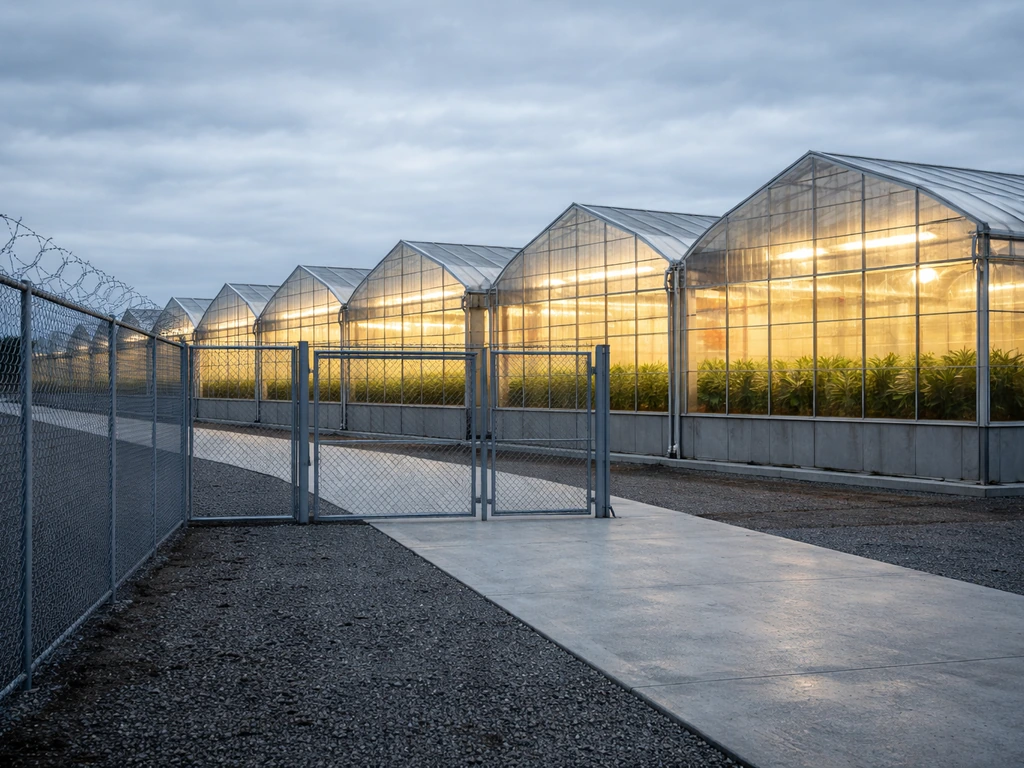
Physical security is one of the most detailed parts of the application. Health Canada requires secure barriers, intrusion detection systems, and 24/7 visual monitoring with recording capability in specific areas of your site. For cultivation, propagation, and harvesting rooms specifically, 24/7 video surveillance and recording for all entries and exits is required. These aren't suggestions, they're hard requirements, and your site documentation needs to demonstrate compliance with each one.
Organizational Security Plan (OSP)
You also need to prepare and upload an Organizational Security Plan (OSP) in CTLS. The OSP outlines how your operation manages security risks, including personnel security, physical access controls, and procedures for dealing with security incidents. Health Canada specifies which official roles must appear in the OSP, including the Responsible Person, Head of Security, Master Grower, and QAP where applicable. Keep a current copy of your OSP on file at all times, if you make any changes to it after licensing, you're required to notify Health Canada within 5 days.
Application checklist summary
- Create a CTLS account and have all key personnel do the same
- Identify and confirm your key personnel roles (Responsible Person, Head of Security, Master Grower, QAP if applicable)
- Initiate federal security clearance applications for all key personnel through CTLS
- Secure your physical site and build your site evidence package (floor plans, lease/ownership proof, security layout)
- Prepare your Organizational Security Plan (OSP) and upload it in CTLS
- Gather all supporting documents using Health Canada's CTLS naming conventions and required categories
- Notify local authorities (local government, fire authority, police/RCMP) as required
- Complete all sections of the CTLS application and submit — Health Canada only begins processing after full submission
How province and territory rules affect your application
Federal licensing is handled entirely by Health Canada, but provincial and municipal rules add real constraints that can block or delay your operation even if Health Canada approves you. This is one of the most misunderstood parts of the Canadian cannabis licensing landscape.
At the federal level, your CTLS application requires you to provide advance notice to local authorities, specifically your local government, local fire authority, and local police force or RCMP detachment. British Columbia guidance notes that you must provide blank" rel="noopener noreferrer">written notice to local authorities and points applicants to “Notices to Local Authorities” in the Health Canada application guide (section 6.7). Your CTLS application also requires “Notice to local authorities” (section 6.7) as required information for cultivation licence classes in the Cannabis licensing application guidance advance notice to local authorities, specifically your local government, local fire authority, and local police force or RCMP detachment. This is a required step in the application process, not optional. In British Columbia, for example, provincial educational materials spell out exactly which fields in the notice must be completed and confirm it corresponds to Section 6.7 of the Cannabis Licensing Application Guide.
Beyond that notice requirement, municipalities control land use. Your cultivation facility must be in a zone that permits cannabis production. Many municipalities have specific separation distances between cannabis operations and schools, parks, or residential areas. The City of Calgary, for instance, describes municipal land-use separation distance rules for cannabis facilities and makes clear that municipal compliance is required on top of federal licensing. This means you can have a Health Canada licence and still be unable to operate if your site doesn't comply with local zoning bylaws.
The practical lesson here: confirm municipal zoning approval for your specific site before investing heavily in site build-out. Check with your local planning department, not just your landlord. If you're looking at how other jurisdictions handle cultivation licensing more broadly, for example, comparing the Canadian model to how things work in states like California or Florida, it's useful context. The grow license California framework and the grow license in Florida process both illustrate how layered federal-state-local approval systems work, and Canada's federal-provincial-municipal structure operates on similar logic.
Costs, timelines, and what kills most applications
What it costs
Health Canada charges application screening fees under the Cannabis Fees Order, and the fees depend on which licence types and combinations you apply for. Invoices are sent after you submit your application, not before. The Cannabis Fees Order Guide provides examples of screening fee combinations, for instance, if you apply for standard cultivation plus standard processing plus sale for medical purposes, each component has its own fee that stacks into a total. Review the current fee tables on Canada.ca before you budget, because fees can change and the combination you choose matters. Be aware that fees are generally non-refundable even if your application is refused.
Beyond federal fees, budget for site costs (security systems, build-out, cameras), legal and consulting fees if you hire help, and the time cost of your key personnel completing security clearances and application work. This process is not cheap, and underestimating total costs is one of the most common mistakes first-time applicants make. For a cost comparison reference point from another jurisdiction, the grow license Oklahoma cost breakdown illustrates how state-level fees compare to Health Canada's structure.
How long it takes
Health Canada publishes service standards for screening and review of new cultivation, processing, and sale for medical purposes licence applications, but these standards are explicitly non-binding. Critically, any time Health Canada spends waiting for you to submit additional information does not count toward their service standard clock. If your application is incomplete or triggers a request for more documents, the timeline resets on your end. Plan for the process to take many months from submission to approval, and plan your site lease timing accordingly.
Why applications fail or get delayed
- Incomplete or non-compliant site evidence: missing floor plans, inadequate security documentation, or documents not following CTLS naming conventions
- Security clearances not completed for all key personnel before submission
- Organizational Security Plan missing required roles or not uploaded in CTLS
- Local authority notification not completed or documented
- Site zoning not confirmed before applying — municipal approval gaps discovered after submission
- Applying for the wrong licence type for the intended activities
- Key personnel not linked to the CTLS application correctly
Staying licensed: what ongoing compliance looks like
Getting the licence is step one. Keeping it is the ongoing work. Health Canada has clear expectations for licence holders, and falling behind on any of them puts your licence at risk.
Monthly reporting via CTLS
Every cultivation licence holder must submit monthly reports through CTLS, due no later than the 15th day of each month. These reports track your opening and closing inventory across cannabis product categories, reported in kilograms for most categories. CTLS runs automated validation on opening and closing inventory fields, so inconsistencies get flagged immediately. If Health Canada needs clarification on your submitted data, they'll reach out via a "Monthly Report Clarification" email, respond promptly, because unresolved clarifications can affect your standing.
Good Production Practices (GPP)
Health Canada's Good Production Practices (GPP) guide is the operational compliance framework for licence holders. It covers quality management, sanitation, pest control, record-keeping, and Quality Assurance Person (QAP) responsibilities. The QAP role is particularly important, this person is accountable for ensuring your production meets GPP standards, and Health Canada specifies what qualifications they need. Think of GPP compliance as your ongoing operational license to keep your licence.
Keeping your OSP and personnel records current
If anything changes in your Organizational Security Plan, notify Health Canada within 5 days of making the change. If key personnel change, update your CTLS records and ensure new personnel complete their security clearances. Missing or lapsed security clearances for directors, officers, or partners can affect your renewal.
Licence renewal
Renewal applications must be submitted at least 3 months before your licence expiry date. Don't leave this until the last minute. Health Canada's renewal guidance specifically flags that missing security clearances for key personnel, partners, directors, or officers can affect renewal approval. Build a compliance calendar that includes renewal deadlines, monthly reporting deadlines, and OSP change notification windows.
Your next steps starting today
Here's what to do right now if you're serious about getting a grow license in Canada. Don't hire a consultant until you've done these steps yourself, many of the foundational decisions are ones only you can make, and understanding the process saves you money when you do bring in outside help.
- Go to Canada.ca and read Health Canada's current cannabis licensing pages for micro-cultivation and standard cultivation — they update guidance regularly and you want the current version
- Create a CTLS account at the Health Canada portal — this is free and gets you familiar with the application environment before you commit to anything
- Identify your intended site and confirm municipal zoning permits cannabis cultivation at that address before signing anything
- Draft your key personnel list — figure out who will fill the Responsible Person, Head of Security, Master Grower, and QAP roles, and confirm they're willing to undergo federal security clearance
- Review the Cannabis Fees Order Guide on Canada.ca so you know what the application screening fees will be for your specific licence type combination
- Download Health Canada's CTLS application checklist for cultivation licences — it lists every required document category and naming convention
- If you're in B.C., also review the province's own guidance on becoming a licensed cannabis producer, since B.C. has published supplementary materials on the local authority notification process
- Contact your local planning department directly to ask about separation distances, zoning bylaws, and any municipal cannabis facility requirements before finalizing your site
If you want to understand how Canada's licensing framework compares to program-based cultivation systems in other jurisdictions, reading about what the GROW program in California involves gives useful perspective on how cultivation licensing structures differ across North America. Canada's model is federally centralized in a way that most US state frameworks are not, which makes Health Canada the single most important regulator you need to understand.
The process is genuinely complex, but it's also well-documented by Health Canada. Most application failures come down to not reading the guidance carefully enough, not having the right people in place early, or picking a site without checking municipal zoning first. Fix those three things before you start, and you'll be ahead of the majority of first-time applicants.
FAQ
Can I move my grow operation to a different address after I get the grow license in Canada?
No. In Canada, “grow” authorization is site-specific under the Health Canada cultivation licence you receive, so you cannot swap locations or start operating at a different address without amending permissions through CTLS. If you’re still pre-licence, try to avoid signing a long-term lease until you have written confirmation that the proposed address can meet municipal zoning and your security documentation can be built for that exact site.
Is it acceptable to apply before my cultivation building is fully built or secured?
You usually cannot apply with only a proposed site and expect approval to proceed. Health Canada expects the site to be physically ready or close to ready, and your site evidence package should describe real layouts, dimensions, and security arrangements you can demonstrate. If you are leasing space, make sure your lease terms allow you to install required security systems and that you can document the build-out timeline.
If I want to dry and trim cannabis, do I still need extra permissions beyond the cultivation grow license?
Yes, but it depends on your licence activities. The licence class (micro-cultivation, standard cultivation, nursery) determines what you can do, and ancillary activities like drying, trimming, and milling are typically covered only when they are tied to cultivation activities on the approved site. If you plan to do additional production steps or separate processing under different assumptions, you may need to align your licence type combinations before you apply.
What should I do if Health Canada sends a clarification request during my grow license application?
Health Canada can request clarifications, and resolving them quickly matters because unresolved issues can affect your application outcome. A practical approach is to build an internal review process where every CTLS submission is double-checked for match across personnel names, security plan references, and the site evidence package documents. Treat “clarification emails” like urgent tasks rather than administrative follow-up.
What happens if my required key personnel are not fully cleared when I submit the application?
The safest path is to make sure every key person you list can meet clearance timing and account requirements before submission. If a key person’s security clearance is not in place, it can stop the application from moving forward or delay your screening. Plan for lead time, because clearances and CTLS account setup can take longer than the application form itself.
Do monthly CTLS reports cover everything I need for ongoing compliance, or are there other recurring obligations?
CTLS handles the operational reporting, but your compliance calendar should also cover provincial and municipal follow-ups that can affect continuity. For example, municipal issues like noise, traffic, or land-use conditions can force operational changes that later require updates to your security plan or procedures. If you change operations, confirm whether you must notify Health Canada within the required window.
How do I handle small day-to-day security changes without risking non-compliance?
If your Organizational Security Plan changes, you generally must notify Health Canada within 5 days of making the change. That means you should avoid making ad hoc security tweaks, even small ones like changing access routes or surveillance angles, without checking whether the updated detail needs to be reflected in your OSP and communicated promptly.
If I replace the Responsible Person or Master Grower, will it affect renewal or licence status?
Potentially, yes. If changes involve key personnel, you must update CTLS records and ensure new personnel complete required security clearances. Missing or lapsed clearances for directors, officers, or partners can affect renewal, so build a replacement plan that includes clearance timelines, not just employment start dates.
What are the most common reasons grow licences in Canada get delayed or denied at renewal?
It can. Renewal requires submitting at least 3 months before expiry, and Health Canada flags security clearance issues as a common renewal problem. Create a renewal packet checklist that includes confirmation of current clearances, current OSP version, and proof that monthly reporting is consistently on time and accurate.
How can I reduce the chance of application refusal due to security plan or site evidence issues?
You should budget for both the federal screening fees and the practical costs of meeting physical security and documentation requirements. A common mistake is underestimating build-out and evidence work, like producing site plans with correct dimensions and installing systems that match your submitted security narrative. If you are working with a consultant, still verify the site evidence package quality yourself before submission.
If I plan to sell my harvest, what licence steps should I plan for alongside the cultivation grow licence?
If you want to sell cannabis, you generally need separate authorization beyond cultivation. A cultivation licence does not automatically permit sale, so your business model should match your licence combination strategy from day one. If sale is part of your plan (medical supply or distributor supply), confirm the intended licence structure before investing in equipment and hiring.
Next Article
Grow License in Florida: Steps, Eligibility, Costs, and Compliance
Learn how to get a grow license in Florida: eligibility, application steps, costs, and compliance requirements.