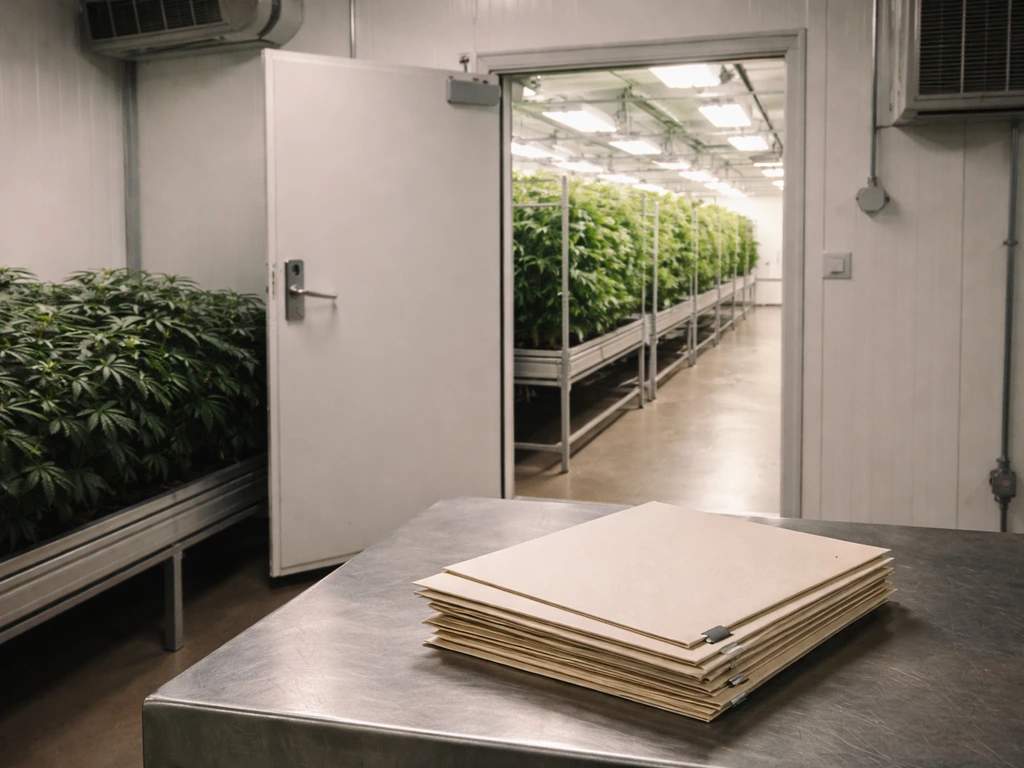
Yes, you can legally grow cannabis in California, but what that looks like depends entirely on whether you're growing for personal use or commercial sale. The term "grow license" in California really refers to a state-issued cultivation license administered by the Department of Cannabis Control (DCC). There is no single "grow license", it's a category of licenses that covers different settings, scales, and purposes. If you're trying to figure out which one applies to you and how to actually get it, this guide walks through the whole thing.
Grow License California: How to Get Cultivation Approval Today

Marcus Whitley
4 Apr 2026
What does "grow license" actually mean in California?
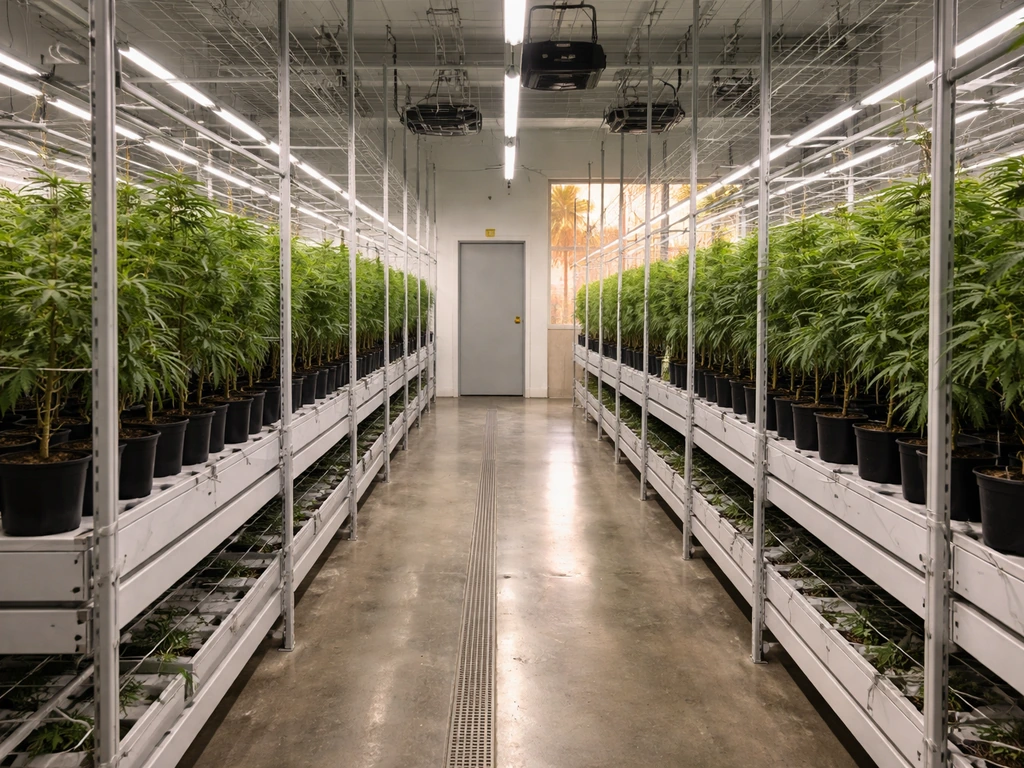
In California, a "grow license" is shorthand for a cultivation license issued by the DCC. The DCC framework organizes cultivation licensing around two main factors: the setting where you grow (outdoor, mixed-light, or indoor) and the canopy size of your operation. Your license type is determined by the combination of those two variables. If you want a broader breakdown of what this looks like at the federal and state level, the reference on grow license requirements is a useful starting point before diving into California specifics.
One important distinction up front: California's cultivation licensing framework is aimed at commercial cannabis activity. Adults 21 and older can grow up to six plants at home for personal use without a license under Proposition 64. However, the moment you sell, distribute, or commercially produce cannabis, you need a valid DCC-issued cultivation license before doing anything. Operating without one is not a gray area, it's illegal.
Home growing vs. commercial cultivation licenses
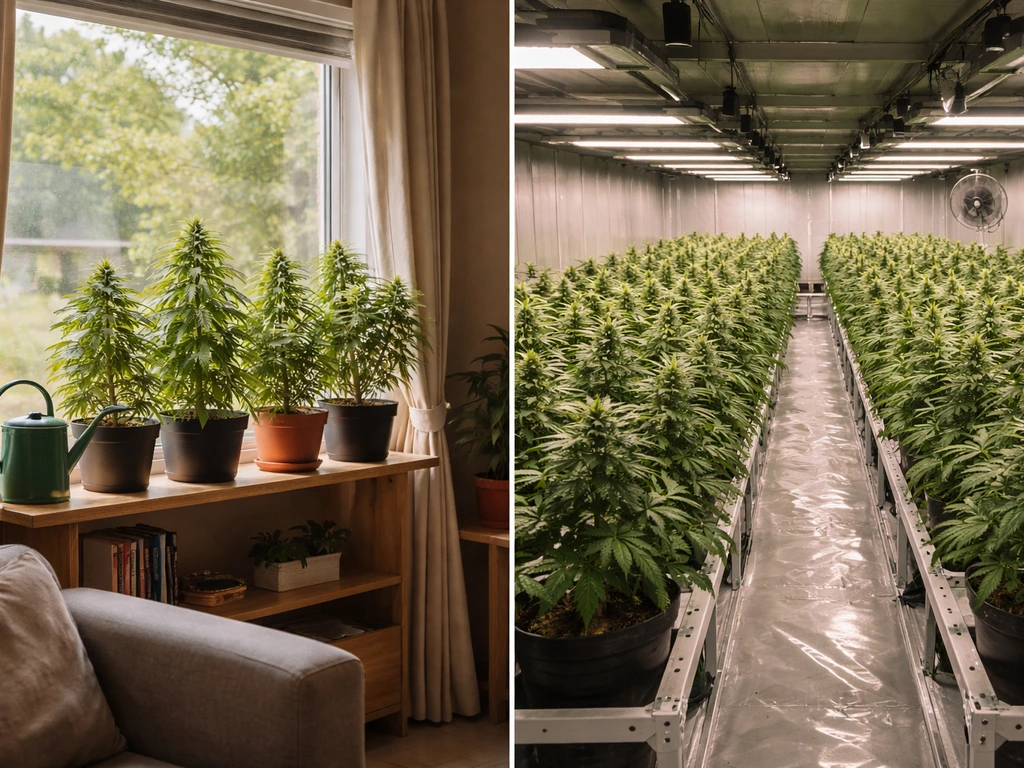
For home growers keeping it personal, California law allows up to six living plants per adult at a private residence. Local cities and counties can add restrictions, some ban home cultivation entirely, so check your local rules. But you do not apply for a DCC license if you are only growing six plants for yourself.
For commercial cultivation, the DCC issues several distinct license types under California Business and Professions Code §26061. The main ones are organized by setting (outdoor, mixed-light tier 1 and 2, indoor) and by canopy size tier. There's also a Type 4 nursery license if you're propagating seeds and clones rather than producing mature cannabis. If you want to understand more about what is the grow program in California as a whole, including how the DCC framework is structured, that context helps before you pick a license type.
A microbusiness license is another route if you want to combine cultivation with other activities like distribution or retail. Under California’s microbusiness structure, a microbusiness is licensed by the Department of Cannabis Control (DCC) under one license to engage in commercial cannabis activities such as distribution, manufacturing, cultivation, or retail microbusiness license. Under the microbusiness structure, you can include outdoor, mixed-light, indoor, and/or nursery cultivation up to a total of 10,000 square feet of canopy. It's a popular option for smaller operators who want to do more than just grow.
Cultivation license types at a glance
| License Type | Setting | Canopy Limit | Best For |
|---|---|---|---|
| Specialty Cottage | Outdoor / Mixed-Light / Indoor | Up to 2,500 sq ft (mixed-light example) | Very small commercial operations |
| Specialty | Outdoor / Mixed-Light / Indoor | Tier-defined, larger than Cottage | Small-scale commercial growers |
| Small | Outdoor / Mixed-Light / Indoor | Tier-defined, step up from Specialty | Growing operations scaling up |
| Type 4 Nursery | Any setting | Propagation focus, no mature plants | Seed and clone producers |
| Microbusiness (cultivation component) | Outdoor / Mixed-Light / Indoor / Nursery | Up to 10,000 sq ft total | Growers who also want to distribute or retail |
Fee amounts and canopy caps vary across these tiers, and the DCC publishes updated cultivation rules including specific square-foot caps by tier and setting. Always confirm current figures directly with the DCC, since these numbers do get updated through rulemaking (most recently regulations implementing SB 833 were filed March 17, 2025).
Eligibility basics and the local approval hurdle

Before you even think about submitting a DCC application, you need to sort out local authorization. This is the step that catches most people off guard. California's cannabis licensing system is two-tier: the state won't issue you a license unless your local city or county has already given you the green light. If your jurisdiction doesn't allow commercial cannabis cultivation, or if you're not in a zone that permits it, you're blocked at the local level before the state is even involved.
The DCC is explicit about this: confirm that you meet local requirements with the city or county where your business is located before submitting your state application. That means calling or visiting your local planning or zoning department, checking whether your parcel is in an approved zone, and obtaining the required local authorization document. Some jurisdictions issue permits, some issue conditional use approvals, and some have a cap on the number of licenses they'll grant. Find out exactly what your locality requires.
Beyond zoning, general eligibility for a DCC cultivation license includes being 21 or older, having no disqualifying criminal history under DCC rules, and meeting ownership disclosure requirements. All owners with a financial interest in the business must be identified in the application, and each will typically need to complete an electronic fingerprint application as part of the background check process.
How to apply: step by step
The DCC uses an online portal called the Cultivation Licensing System (CLS) to process all cultivation license applications. Here's how the process works in sequence.
- Secure your local authorization first. Get the required local permit, approval, or authorization from your city or county. Do not skip ahead — you'll need to upload proof of this in your state application.
- Identify your DCC license type. Based on your setting (outdoor, mixed-light, or indoor) and your canopy size, determine which cultivation license tier applies to your operation. The DCC's license types page lists all options with their canopy limits.
- Gather your application documents. The DCC's cultivator application checklist (updated July 2024) outlines everything you need. Core items include: proof of legal right to occupy the premises (lease, deed, or agreement), a site plan and premises diagram, your local authorization document, a fire department notification attestation if you're applying for an indoor license type, and the power source identification for indoor or mixed-light operations.
- Create an account and start your application in the CLS. Log in to the DCC's online CLS portal and select your license type. The system will prompt you for conditional information based on your selection — for example, indoor and mixed-light applicants will be asked to specify their power sources.
- Upload all required documents and complete the owner applications. Every owner must complete a separate owner application including the electronic fingerprint process. Missing this is one of the most common deficiency triggers.
- Submit the application and pay the application fee. Once your application is marked complete, submit it and pay the applicable fee. The DCC will not process your application without payment.
- Respond to any deficiencies. After submission, the DCC's Licensing Division reviews your application and may contact you with deficiency notices. You respond through an amendment workflow in the CLS and can upload additional documents as needed. Deficiencies must be resolved before your license is issued.
- Receive your license and set up METRC. Once approved, you'll receive your DCC cultivation license. Before you begin operations, complete your METRC (California Cannabis Track-and-Trace) training and get your system access set up so you can record inventory from day one.
Costs, timelines, canopy limits, and compliance requirements
Fees
The DCC sets cultivation license fees based on license type, setting, and canopy size. Fees scale significantly as you move up in tier. For large outdoor operations, fees are calculated per acre. For mixed-light licenses, fees are tied to square-foot increments. The DCC's application and license fees page lists current amounts, and these figures are determined through an economics-based study approach. Check that page directly before budgeting, since fee schedules do change with rulemaking updates. It's also worth comparing how California's fee structure stacks up against other states, for context, grow license Oklahoma cost gives a useful comparison point for how differently states approach cultivation fee structures.
Timelines
There is no fixed published processing time from the DCC, and timelines vary based on application completeness and review workload. The fastest path through is submitting a complete application with all documents in order the first time, responding to deficiency notices quickly, and having your local authorization already secured before you start. Incomplete applications or slow responses to deficiencies are the biggest timeline killers.
One important timing note for 2026: provisional licenses are no longer valid. January 1, 2026 was the last day any provisional license could be in effect. If you were operating under a provisional license and haven't converted to an annual license, you are currently out of compliance. New applicants in 2026 should plan for an annual license from the start, there is no provisional pathway available.
Canopy and plant limits
Your canopy limit is determined by your license tier and setting. The Specialty Cottage mixed-light tier, for example, caps out at 2,500 square feet of canopy. Other tiers have higher limits that step up as you move through the Specialty, Small, and larger categories. The DCC's cultivation updates documentation specifies exact square-foot caps for each tier and setting combination. Apply only for the canopy size you're actually using, applying for more than your current operation to "leave room" can create compliance problems and costs you more in fees.
Required compliance items from day one
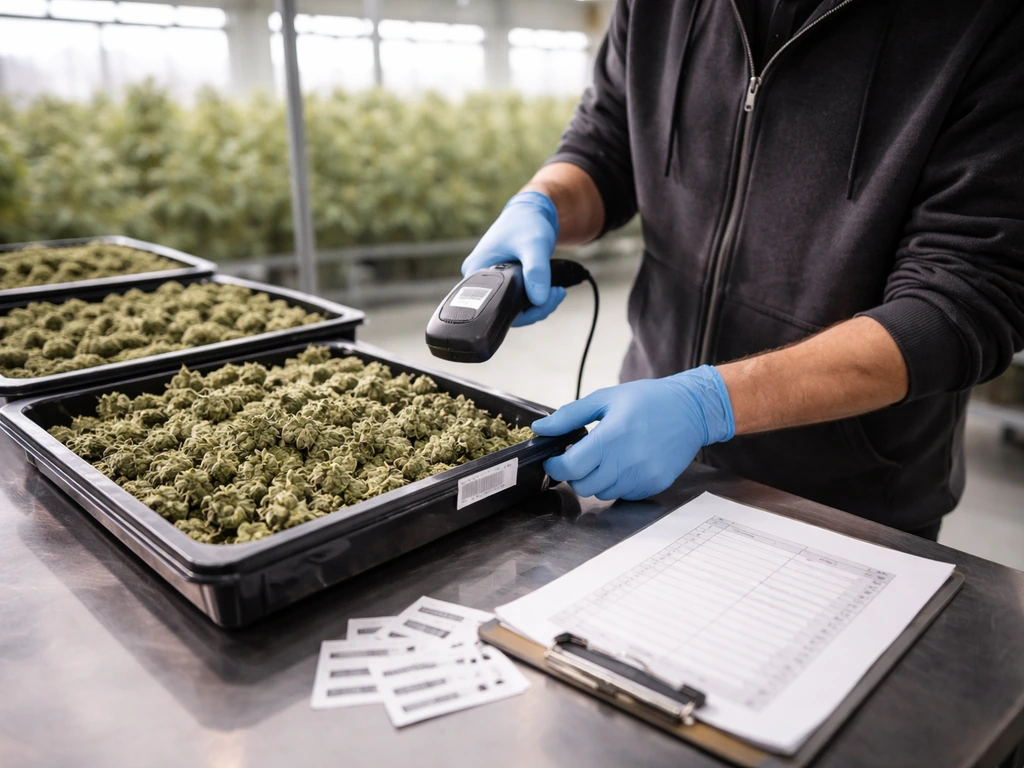
- METRC (California Cannabis Track-and-Trace): All commercial cannabis licensees are required to use METRC to record inventory and movement from cultivation through the supply chain. This is mandatory from the start of operations.
- Electricity reporting: Cultivation and microbusiness licensees must report total electricity use for each power source upon license renewal using the DCC's Electricity Reporting Worksheet.
- Record-keeping and inventory management: The DCC's cultivator self-inspection checklist covers inventory management and track-and-trace as core ongoing compliance items.
- Site and premises compliance: Your operation must match your approved premises diagram and site plan at all times.
After approval: renewals, reporting, and inspections
Getting your license is the beginning, not the end. DCC cultivation licenses are annual, and renewal is an active process with real requirements. You must submit a completed renewal and pay the renewal fee before your license expiration date. Late renewal that isn't submitted in time can put your license at risk, so set a reminder well in advance.
At renewal, you'll need to upload documentation of your gross revenue for the 12-month period of the expiring license. The DCC uses this to verify the appropriate license fee tier. You also submit your Electricity Reporting Worksheet at this time, reporting total electricity use by power source for the license period. The Department of Cannabis Control’s science amendment guidance for power, water, and electricity explains which fields you must provide to identify your power sources and document electricity usage when changes are needed Electricity Reporting Worksheet.
If your operation has changed scale, renewal is the point where you can request modifications. The DCC allows licensees to request a reduced-size cultivation license or to place a cultivation license in Limited Operations Status at renewal. Limited Operations Status requires paying 20% of the original cultivation license fee, which is a useful option if you're temporarily scaling back rather than giving up the license entirely.
Inspections can happen as part of the licensing process and as part of ongoing operations oversight. Using the DCC's cultivator self-inspection checklist regularly helps you stay prepared. The checklist covers inventory management, track-and-trace compliance, premises conditions, and record-keeping, basically everything an inspector would look at.
METRC reporting is an ongoing obligation, not a one-time setup. Every movement and inventory change in your operation needs to be recorded in the system. The DCC offers training workshops on the METRC system, and completing that training is a required step after licensing. If you're curious how California's track-and-trace obligations compare to other licensing systems internationally, the overview of grow license in Canada provides an interesting point of comparison on how other jurisdictions handle compliance tracking.
Common mistakes and how to avoid them
The most common mistake is skipping the local authorization step. People submit their DCC application, realize they don't have local approval, and then have to pause the whole process. Always start with your city or county, before you fill out a single field in the CLS.
Another frequent problem is selecting the wrong license type. Applying for an indoor license when your operation is actually a mixed-light greenhouse, or vice versa, creates deficiencies that slow down your application significantly. Match your license type to your actual setup carefully, and refer to the DCC's definitions for each setting type if you're unsure.
Missing owner applications is a consistent deficiency trigger. If any owner doesn't complete their individual application and fingerprint process, your license won't be issued. Coordinate with all owners early in the process so no one is a bottleneck at the end.
Assuming your provisional license is still valid in 2026 is a serious compliance error. As of January 1, 2026, all provisional licenses have expired. If you were relying on a provisional license, you need to apply for an annual license now.
Finally, not responding to DCC deficiency notices promptly can stall your application indefinitely. Check your CLS account and email regularly after submitting, and treat any deficiency notice as an urgent action item. The DCC won't chase you, the burden is on the applicant to respond and clear deficiencies before issuance.
If you're considering growing in another state as an alternative or comparison, the guide on grow license in Florida covers how that state handles cultivation licensing, which takes a very different approach than California's tiered DCC framework.
Where to verify current requirements
Cannabis regulations in California change. The DCC has updated its cultivation rules multiple times, including rulemaking filed as recently as March 2025. Always verify current requirements directly through official DCC sources before making any decisions based on this or any other third-party guide.
- DCC License Types page (cannabis.ca.gov): Current list of all cultivation license types with canopy limits and settings.
- DCC Application and License Fees page: Current fee schedule by license type and tier.
- DCC Application Resources page: Cultivator application checklist, CLS instructions, and supporting documents.
- DCC Cultivation page: Operational compliance information including METRC requirements and electricity reporting.
- DCC Rulemaking page: Latest adopted and pending regulations including cultivation-specific changes.
- Your local city or county planning/zoning department: Local authorization requirements, permitted zones, and any local license caps or restrictions.
This article is a practical reference guide and not legal advice. Cannabis licensing rules are complex and change with rulemaking and legislation. If your situation involves unusual circumstances, multiple owners, complex financing structures, or an operation that spans multiple license types, consulting a licensed California cannabis attorney or compliance consultant is a smart move before you invest in an application.
Your next steps checklist
- Confirm your local jurisdiction allows commercial cannabis cultivation and find out exactly what local authorization you need.
- Determine your license type based on your cultivation setting (outdoor, mixed-light, or indoor) and your canopy size.
- Check the current DCC fee schedule so you can budget accurately.
- Gather your documents: premises proof, site plan, local authorization, fire department attestation (if indoor), power source info (if indoor or mixed-light), and owner information for all owners.
- Create your CLS account and start your application, selecting the correct license type.
- Coordinate with all owners to complete their individual owner applications and fingerprint submissions.
- Submit your application and pay the application fee.
- Monitor your CLS account and email for deficiency notices and respond promptly.
- After license issuance, complete METRC training and set up your track-and-trace system before beginning operations.
- Calendar your renewal deadline and start gathering gross revenue documentation and your Electricity Reporting Worksheet well before expiration.
FAQ
Can I grow commercially on a small property or multiple lots and still get a grow license in California?
Yes, but the location still must be authorized locally before the DCC will even consider your request. You cannot rely on the fact that you are only using a small footprint, you still need your parcel in a zone that permits commercial cultivation (or the specific use approvals your city or county requires). If you have multiple addresses, ask your local planning/zoning office whether each premises address needs separate authorization, because the DCC application typically ties license compliance to the specific premises.
If I’m only selling a little cannabis, do I still need a grow license in California?
Not automatically. If you do any commercial activity such as selling, distributing, or providing cannabis for remuneration, you generally need a DCC cultivation license tied to your production. If your plan is strictly personal use within the permitted home-plant allowance, you would not apply for a DCC license. The line can get complicated if you plan to share with others or receive money, so you should talk it through with a California cannabis attorney if your “personal” plan includes any compensation or transfer.
If my setup is a greenhouse but I plan to add supplemental lighting, should I apply as mixed-light or indoor?
Often, yes, but they must be consistent with your license tier and setting. Many deficiency issues come from building out facilities that look like one category (for example, indoor) but are documented as another (for example, mixed-light). For new builds or major retrofits, confirm which setting definition the DCC uses for your exact lighting and enclosure setup before you finalize plans, so your license application and your operational reality do not diverge.
What should I do if I need to reduce canopy or pause part of my grow before renewal?
You can request reductions at renewal through options like Limited Operations Status, which reduces the required fee payment, but you still must remain compliant with all applicable conditions. A common mistake is reducing canopy informally and assuming it covers you until renewal. If you are changing operations during the license year, document what changed and contact the DCC or your compliance advisor to confirm whether you need a modification or status adjustment rather than waiting for renewal.
Does Limited Operations Status let me stop METRC reporting or reduce compliance obligations?
Limited Operations Status is handled through the renewal process, so it is not something to assume mid-year. Also, it does not change ongoing obligations like METRC reporting, electricity reporting, and maintaining accurate inventory records. If you anticipate a reduction, plan around renewal timing so you do not create mismatch risk between what you are reporting, what you are operating, and what your license authorization allows.
How do multiple owners affect the timeline for a California grow license application?
Yes, you can have multiple owners, but each person with a financial interest usually has to be disclosed and complete their own electronic application and fingerprint process. A typical delay comes from one owner completing steps late or missing documentation, so create a checklist for every owner, confirm their fingerprint status early, and track completion dates before you submit the cultivation application in CLS.
If I mostly produce clones and seeds, do I still apply for a standard cultivation grow license?
Yes. Certain license types are more appropriate when you are propagating rather than producing mature cannabis. If your operation is primarily seeds and clones, you may need a nursery-related license route, such as Type 4 nursery, depending on your activities. If you apply for a cultivation license that does not match your actual production workflow, it can cause deficiencies and slow the process.
Does the six-plant personal-use allowance automatically apply in every California city or county?
Your home cultivation plant limits are not a license, and you still must comply with local limits. Many cities and counties restrict home cultivation further or ban it entirely. If you are unsure, the safest approach is to check your local ordinance and then confirm whether your parcel is within any restriction zone before you rely on the statewide plant allowance.
Is it safer to apply for more canopy capacity than I plan to use right away?
The correct approach is to use only what you actually intend to cultivate under that authorization. Applying for “extra space” to “leave room” can still put you at risk if your documented canopy buildout and operational reality cannot support that capacity, because license tier and canopy caps affect compliance expectations and fees. If you are scaling gradually, consider aligning your application with your initial build and then plan the next increase through a future modification path or renewal process.
If I inherited a provisional license from someone else, can I still operate in 2026?
In 2026 you should plan on an annual license, not any provisional pathway. If someone told you they are covered by a provisional license or a partner’s provisional situation, verify the license status and expiration in their DCC records and ensure your own operation is matched to the valid authorization. Assuming provisional status in 2026 is a frequent compliance trigger and can lead to an enforcement problem.
What parts of renewal are most likely to cause trouble, and how should I prepare now?
Your electricity reporting and gross revenue documentation at renewal are not optional paperwork exercises. Electricity Reporting Worksheet submissions and gross revenue reporting are used to validate the appropriate fee tier and compliance context for the expiring license period. If your accounting system is messy, set up tracking early so the numbers you report match your operational records.
What is the best way to avoid the local-authorization delay that people run into with DCC applications?
It is common to be stopped by local authorization even if the CLS submission is ready. Before you submit to the DCC, get clarity on the exact local authorization document needed (permit type, conditional use, or zoning approval) and keep a copy of that approval for your DCC package. If you submit first and local approval lags, you can end up with avoidable pauses while you wait for the missing local step.
How can I reduce the risk of choosing the wrong license type for my facility?
Not necessarily. The DCC distinguishes setting types and canopy tiers, and your real-world cultivation setup must fit the license application. For example, if you are actually operating like indoor but apply like mixed-light, you can get deficiencies that require rework. Use the DCC definitions for outdoor, mixed-light, and indoor, and document your facility details before filing so there is a clear match between your buildout and your license type.
If I receive a deficiency notice in CLS, what response strategy helps me clear it fastest?
You should treat deficiency notices as time-sensitive tasks tied to your application status in CLS. If you miss the response window or provide incomplete corrections, your application can stall. Put a single person in charge of monitoring CLS and responding, and prioritize deficiencies that affect eligibility, ownership, or premises authorization first.
Next Article
Grow License Guide: US Steps, BC Meaning, and Licensing Checklist
Step-by-step US guide to get a grow license, clarify BC meaning, choose category, eligibility, fees, timeline, and compl