Getting a grow license in Texas is not a single straightforward process. It depends entirely on what you're growing. Texas has two completely separate regulatory tracks: one for hemp (plants at or below 0.3% delta-9 THC), managed by the Texas Department of Agriculture, and one for regulated low-THC cannabis under the state's medical program, managed by the Department of Public Safety. Most people searching this question fall into one of those two buckets, and picking the wrong track wastes time and money. This guide walks you through both, helps you figure out which one applies to you, and gives you concrete steps to move forward today.
How to Get a Grow License in Texas Step-by-Step Guide

Marcus Whitley
16 Apr 2026
What 'grow license' actually means in Texas
Texas does not have a recreational cannabis program. There is no adult-use market, no retail dispensary system open to the general public, and no home cultivation right for personal use. So if you're thinking about growing cannabis in the way states like Colorado or California allow, that option does not exist in Texas right now.
What Texas does have is two distinct legal frameworks for plant cultivation that involve cannabis-related crops. First, hemp: any Cannabis sativa plant with a delta-9 THC concentration at or below 0.3% is legally defined as hemp under Texas law, mirroring the federal threshold. Growing hemp commercially requires a hemp grower's license from the Texas Department of Agriculture under Chapter 122, Subchapter C of the Texas Agricultural Code. Second, low-THC cannabis: Texas has a tightly controlled medical program called the Texas Compassionate Use Program (TCUP), codified at Health and Safety Code Chapter 487. Under TCUP, a licensed "dispensing organization" is authorized to cultivate, process, and dispense low-THC cannabis to qualified patients. That is the only legal pathway for growing regulated cannabis in Texas today.
The confusion comes from the word "cannabis." In Texas law, hemp and low-THC medical cannabis are treated as separate things even though they come from the same plant species. The THC concentration is the legal dividing line. If you want to grow for commercial hemp purposes (fiber, seed, CBD, etc.), you go through TDA. If you want to participate in the medical cannabis supply chain, you go through DPS under TCUP. Those two agencies, two statutes, and two application processes do not overlap.
Texas licensing pathways: which one do you actually need?
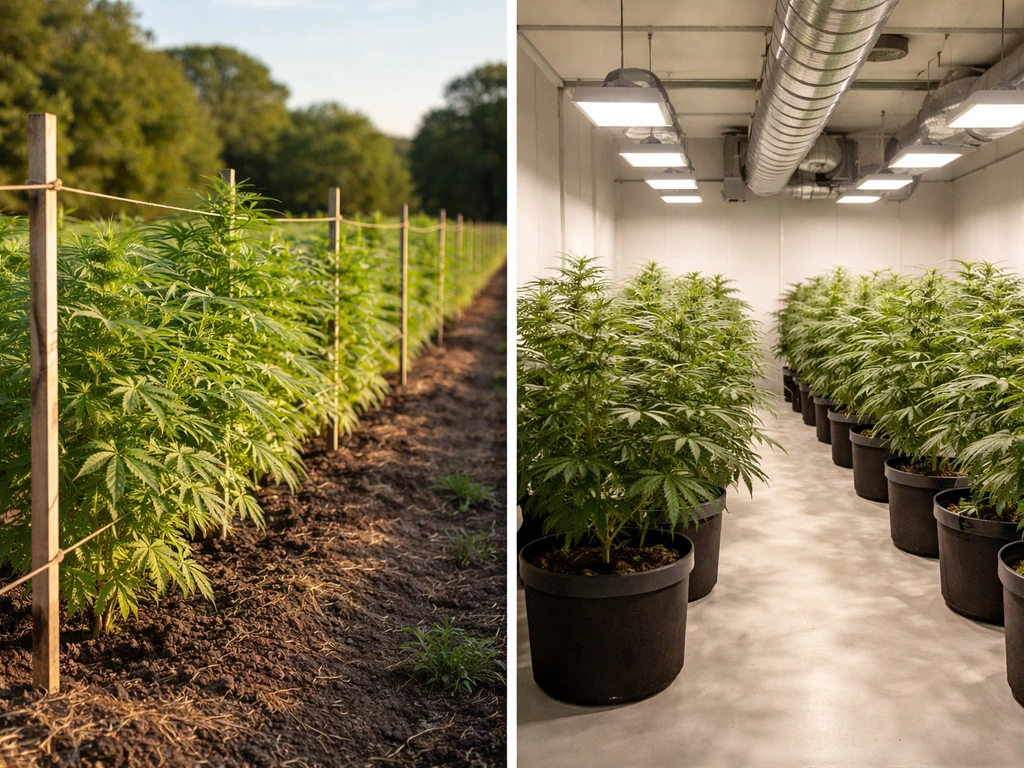
Here is the practical breakdown. If you want to grow hemp commercially, you need a TDA Hemp Grower's License. This is the accessible route for most small and mid-size cultivators. The application goes through the Texas Department of Agriculture, fees are low, and the process is relatively straightforward compared to the TCUP route.
If you want to grow regulated low-THC cannabis for medical patients, you need a TCUP Dispensing Organization license from DPS. This is a vertically integrated license, meaning one organization must handle all cultivation, processing, and dispensing at a single location. You cannot get a standalone cultivation-only license under TCUP. The program is small, highly competitive, and operates under strict statutory limits on the number of licenses issued. DPS only accepts new applications during specific open windows, and those windows are announced publicly. DPS’s TCUP supplemental page lists the submission window as open from Aug. 15, 2025 through Sept. 15, 2025 DPS only accepts new applications during specific open windows, and those windows are announced publicly.. The most recent example: DPS accepted Phase II expansion applications between August 15 and September 15, 2025, with selected applicants announced no later than April 1, 2026.
There is also no home cultivation license in Texas. No statute authorizes individuals to grow cannabis plants at home for personal or medical use, regardless of their patient status. If that is what you were hoping for, Texas law does not currently provide that pathway.
| Feature | TDA Hemp Grower's License | TCUP Dispensing Organization License |
|---|---|---|
| Governing agency | Texas Department of Agriculture | TX Dept. of Public Safety (DPS) |
| Governing law | Ag. Code Ch. 122, Subchapter C | Health & Safety Code Ch. 487 |
| THC limit for crop | 0.3% delta-9 THC (hemp threshold) | Low-THC cannabis for medical use |
| Application fee | $100 license + $100 per lot | $7,356 (paid via wire transfer) |
| Open to new applicants? | Yes, ongoing | Only during announced windows |
| Cultivation-only option? | Yes | No — must also process and dispense |
| Facility requirement | Registered grow site | Single integrated facility |
| Who can apply? | Individuals or businesses | Organizations/entities |
Eligibility requirements: who can apply and how to set up
Hemp grower eligibility (TDA)

The TDA hemp program is open to both individuals and business entities. You do not need to be a Texas resident to apply, but you do need a registered grow site in Texas and you must comply with all state and federal hemp rules. There are no explicit residency or ownership percentage requirements published in the TDA framework, but any criminal history related to controlled substances can affect your eligibility. The TDA application asks for your farm/site information, and each distinct growing location (called a "lot") requires its own permit on top of the base license fee.
TCUP dispensing organization eligibility (DPS)
TCUP licenses are issued to organizations, not individuals. You will need a properly formed legal entity (corporation, LLC, or similar structure) before you apply. DPS reviews the background of owners, officers, and key personnel as part of the application. Certain criminal offenses are disqualifying, and DPS publishes a list of those disqualifying offenses in Administrative Rule 12.23. If you or any principal has a relevant conviction, you will be denied. Review that list before you invest time in the application.
DPS does not publish explicit Texas residency requirements for TCUP applicants, but applicants must demonstrate operational capacity in Texas, including a real facility. Because cultivation, processing, and dispensing must all happen at a single location under Chapter 487, your facility must be operational or clearly defined before you apply. This is a high bar: you are essentially showing DPS that your organization can run an integrated cannabis operation from day one.
The application process from start to finish
Applying for a TDA hemp grower's license

- Go to the Texas Department of Agriculture licensing portal and create an account if you don't have one.
- Complete the hemp grower license application, including all farm/site location details.
- Submit a $100 license fee plus $100 for each lot (grow site) you plan to register.
- Once approved, register your specific lots/fields so they are authorized for planting.
- Before harvest, coordinate with TDA for mandatory crop sampling. Samples are taken from your lot within 15 days prior to your anticipated harvest date, per 7 CFR §990.3(a)(2)(i).
- Ensure your crop tests at or below 0.3% delta-9 THC on the sample results. If it tests above that threshold, it is not considered hemp under Texas law.
- Complete all licensing activity, including testing, within one year of your application date. TDA will void incomplete applications and will not refund the application fee.
The TDA process is manageable for most agricultural applicants. The biggest operational risk is a crop that tests above the legal THC threshold at harvest, which can result in mandatory destruction of the lot. Under Texas Agricultural Code Chapter 122, a license holder generally may not harvest hemp (or plants intended or believed to be hemp) unless a representative pre-harvest sample is collected and tested using the statute’s specified methods to determine delta-9 THC concentration pre-harvest sampling and testing requirements for hemp. Build that risk into your planning.
Applying for a TCUP dispensing organization license (DPS)
- Monitor the DPS website for announced application windows. Applications are only accepted during specific open periods.
- Form your legal entity and ensure all principals are identified and ready for background checks.
- Prepare your operational plan. DPS expects detailed documentation of your proposed cultivation, processing, and dispensing operations, all at a single integrated facility.
- Prepare facility documentation: location, layout, security plans, and evidence you control the property.
- Gather financial documentation demonstrating your organization's capacity to operate.
- Submit the application through DPS during the open window. Pay the $7,356 application fee to the Texas Comptroller via wire transfer as instructed by DPS.
- DPS conducts a multi-phase review. Applicants selected in a given phase are publicly announced after the window closes.
- If approved, your organization must begin dispensing within 24 months of license issuance. Failure to do so can support revocation or enforcement action under Chapter 487.
The TCUP application is a serious undertaking. It is not a form you fill out in an afternoon. Expect to spend weeks developing your operational plan, securing a facility, and documenting your team's qualifications. If you have looked at how other states handle similar competitive licensing processes, such as the kind covered in a guide on how to get a grow license in NY, you will recognize the same competitive, documentation-heavy structure.
Costs, fees, and realistic timelines
Hemp grower costs
The TDA hemp license fee is $100. Each lot permit costs an additional $100. So if you are growing on three separate registered lots, your total state fee is $400. These are among the lowest licensing fees in the country for any commercial agricultural operation. You will also need to budget for third-party testing costs, any infrastructure needed to meet state growing requirements, and the cost of any crop that fails the THC threshold and must be destroyed.
Timeline: TDA processes applications on a rolling basis. Realistically, once submitted and complete, most applicants get a decision within a few weeks. The full cycle from application to first harvest, including the mandatory pre-harvest sampling window, generally takes at minimum a full growing season.
TCUP dispensing organization costs
The DPS application fee for a TCUP dispensing organization license is $7,356, paid by wire transfer to the Comptroller. This is a non-trivial upfront cost, and you should treat it as a sunk cost if you are not selected, because application fees are not refunded for unsuccessful applicants. Beyond the application fee, the real costs for TCUP are the capital required to build, secure, and operate an integrated cannabis facility. You are looking at a significant real estate, construction, security infrastructure, and staffing investment before you ever dispense a product.
Timeline: TCUP is not a fast process. Application windows are narrow (typically about 30 days based on recent cycles). After the window closes, DPS conducts its multi-phase review process and announces selected applicants. Based on the Phase II cycle, that announcement process alone can take several months. Then you need time to build out operations before the 24-month dispensing deadline begins to run. From first application to first patient served, plan for at least one to two years under the best circumstances.
Staying compliant after you're licensed
Hemp grower ongoing compliance
- Renew your TDA hemp grower license annually and keep your lot registrations current.
- Participate in mandatory pre-harvest sampling. Planting without coordination for sampling can result in compliance violations.
- Keep records of all crop testing results and maintain them for TDA review.
- If producing consumable hemp products, ensure a Certificate of Analysis confirms delta-9 THC content does not exceed 0.3% (Texas DSHS requires this for consumable hemp compliance).
- Comply with any additional rules from the Texas DSHS if your hemp products enter the consumable market.
TCUP dispensing organization ongoing compliance
For TCUP license holders, Chapter 487 sets out significant ongoing operational requirements. You must maintain controls over all raw materials, finished products, and by-products produced during cultivation and processing to prevent unauthorized access or diversion. DPS takes this seriously, and your security infrastructure needs to reflect that. Think physical access controls, video surveillance, inventory management, and documented chain-of-custody procedures for every plant and product.
- Maintain a single integrated facility for all cultivation, processing, and dispensing activities. You cannot split these functions across locations.
- Keep detailed seed-to-sale records. Inventory discrepancies are a red flag during inspections.
- Comply with DPS inspection requirements. Inspectors can review your facility, records, and operations.
- Begin dispensing within 24 months of license issuance or risk enforcement action.
- Renew your license on the schedule DPS sets and report any material changes to your organization, ownership, or facility.
- Review Administrative Rule 12.23 and stay current on any updates to the disqualifying offenses list, because new principals added to the organization also go through background review.
One operational note specific to TCUP: local governments generally cannot enact rules prohibiting the cultivation, production, dispensing, or possession of low-THC cannabis as authorized under the TCUP chapter. This means a city or county ordinance cannot effectively block a licensed dispensing organization from operating. That protection is built into the statute. However, you should still consult with local authorities on zoning and building permits, because those processes operate separately from the state licensing framework.
Why applications get denied and how to avoid it
For hemp applications through TDA, the most common issues are incomplete applications, missing lot registration information, and failure to complete all licensing activity (including testing) within the one-year window. TDA will void an incomplete application and will not refund your fee. The fix is simple: submit a complete application and stay on top of your timeline.
For TCUP applications through DPS, the stakes are much higher and the denial reasons are more complex. DPS can deny an application based on a disqualifying criminal offense for any owner, officer, or principal listed on the application. Missing or inadequate documentation of your operational plan, facility, security systems, or financial capacity are also common reasons applications do not move forward. Since TCUP is a competitive, limited-license process, even a technically complete application may not be selected if competing applicants present stronger operational proposals.
Applicants who are denied a TCUP license can appeal through the DPS administrative hearing process. DPS directs applicants to review Administrative Rule 12.23 alongside relevant provisions of the Texas Occupations Code when navigating that process. If you are denied and believe it was in error, the appeal route is available, but it adds significant time and cost. It is far better to build a strong application up front than to count on the appeal process. If you are curious how other competitive state processes compare, the guides on how to get a grow license in Florida and how to get a grow license in California illustrate just how differently each state structures its review criteria.
Pre-application checklist
Before you submit anything, work through this checklist. It covers both pathways, so check the column that applies to you.
| Item | Hemp (TDA) | TCUP (DPS) |
|---|---|---|
| Legal entity formed (LLC, corp, etc.) | Optional for individuals | Required |
| All principals identified for background check | Recommended | Required |
| Disqualifying offenses reviewed (Admin Rule 12.23) | Relevant | Required |
| Registered grow site / facility address confirmed | Required | Required — single integrated location |
| Lot boundaries and acreage documented | Required | N/A |
| Operational plan prepared | Basic | Detailed — cultivation, processing, dispensing |
| Security plan documented | Basic | Comprehensive physical and procedural security |
| Application fee ready | $100 + $100/lot | $7,356 via wire transfer |
| Application window open | Rolling | Only during DPS-announced periods |
| One-year completion deadline noted (TDA) | Required | N/A |
| 24-month dispensing deadline noted (TCUP) | N/A | Required |
| Current DPS/TDA rules reviewed for any recent changes | Required | Required |
Your next steps right now
If you are pursuing a hemp grower's license, go directly to the Texas Department of Agriculture website, find the hemp program section, and start your application. The fees are low, the process is rolling, and there is no reason to wait. Make sure you understand the lot registration requirements and build your harvest timeline around the mandatory sampling window.
If you are pursuing a TCUP dispensing organization license, the first thing to do is check the DPS website to find out when the next application window opens. Do not spend money on a facility or build out an operational plan for a window that is already closed. Once you know the next window, work backward from that date to prepare your application. That means forming your entity, completing background checks on all principals, securing a facility, and developing a detailed operational plan well before the window opens.
Texas regulations in both programs can change. The TCUP program has expanded in phases, and future expansion rounds may bring new license opportunities or changed requirements. For hemp, federal rule changes at the USDA level can flow through to the TDA program. Always verify current requirements directly with TDA (for hemp) or DPS (for TCUP) before submitting anything. If you want to see how other jurisdictions handle cultivation licensing to benchmark your preparation, the approach outlined in a guide on obtaining a New York cannabis grow license offers a useful comparison, as does the process described for how to get a grow license in Manitoba if you are interested in how a government-controlled market handles cultivation licensing differently from a state-licensed private model.
FAQ
Which Texas license should I pursue if my crop is intended for CBD or “low THC” products but I do not have a medical supply chain role?
If you are selling or using the crop in a non-medical, commercial context, the relevant starting point is the Texas Department of Agriculture hemp grower licensing track, because TCUP is reserved for a vertically integrated dispensing organization that cultivates and processes for the medical program. If your plan includes only general CBD use and you are not set up to run cultivation, processing, and dispensing under one TCUP organization location, do not budget for the DPS TCUP application.
Can I apply for TDA hemp and TCUP low-THC cannabis at the same time?
In practice, you can apply to both, but you should assume they are separate compliance worlds and you must design your operations so your “hemp” lots cannot be treated as TCUP cannabis, and vice versa. Many applicants fail by mixing operational records, sourcing, or plant handling assumptions, even when they intend the split legally. Treat them as two distinct programs with separate documentation and chain-of-custody.
What happens if my hemp crop tests above 0.3% delta-9 THC at harvest?
A failed THC test can trigger mandatory lot destruction under the hemp framework, which means you may lose the entire lot even if only part of the field is over the threshold. Build a mitigation plan before planting, such as choosing genetics and agronomic practices that historically stay below the cutoff, budgeting for retesting where allowed, and treating testing timelines as a gating item in your harvest schedule.
Do I need to register a new lot for every separate field or growing location under the TDA process?
Yes. The TDA framework is built around registered growing locations, and each distinct lot requires its own lot permit on top of the base license fee. A common mistake is assuming one license covers multiple sites, then discovering you lacked lot registration details for a location you planned to grow on.
Is Texas residency required to get a TDA hemp grower license or a TCUP dispensing organization license?
Texas residency is not required for the TDA hemp grower application, but you must have a registered grow site in Texas. For TCUP, residency is not the key issue, operational capacity is, DPS expects a real facility and the ability to run cultivation, processing, and dispensing from a single location, so applicants should plan around Texas-based operations rather than personal residency.
Can individuals apply to the TCUP program, or do I need an LLC or corporation?
TCUP licensing is for organizations, not individual applicants. You should plan to form an eligible legal entity before the DPS application window opens, then ensure all owners, officers, and key personnel are properly documented for background review.
How far in advance should I complete background checks for a TCUP application?
Start early enough that you can verify eligibility for every principal and officer listed on the application before the window closes. A practical approach is to compile your “principal roster” first (owners, officers, and key personnel), then run the eligibility review against the disqualifying-offense list so you can swap out team members or change organizational roles before you invest heavily in facilities and operational planning.
What does “operational capacity” mean for a TCUP applicant, and how strict is it?
Operational capacity generally means DPS expects a facility that is either already operational or clearly defined as ready to operate, because the model requires cultivation, processing, and dispensing to be housed under one organization and one location. The strictness shows up in application reviews, incomplete facility readiness narratives and vague security or inventory plans are common denial triggers.
Can my city or county stop a TCUP license from operating after I get DPS approval?
The state framework limits local laws that would directly block a TCUP-authorized operation, so local ordinances generally cannot effectively prohibit a licensed dispensing organization from operating under Chapter 487. However, local zoning, building permits, and safety compliance still matter, so you should coordinate with local authorities even if local governments cannot deny the state license itself.
How long should I plan for before I can sell or dispense anything under each pathway?
For TDA hemp, expect the full cycle to reach first harvest over at least a growing season, and plan around any mandatory sampling windows and lot-level steps. For TCUP, plan for a longer runway, at minimum one to two years from first application to first patient served in favorable circumstances, because of narrow application windows, DPS multi-phase review, and build-out plus operational deadlines.
Are TCUP application fees refundable if I am not selected?
No, the application fee should be treated as non-refundable for unsuccessful applicants. Many applicants underestimate this and then underfund their preparation timeline, so you should only move into an application cycle when you are confident your team eligibility, facility readiness, and operational plan are strong.
If I am denied a TCUP license, how useful is an appeal compared to preparing better initially?
Appeals can be meaningful if you believe an error occurred, but they add months or more and increase costs, so they are not a substitute for building a technically and competitively strong application. If the denial reason relates to missing evidence (security plan details, documentation gaps, or operational-capacity proof), correcting it after denial is typically more expensive than fixing it before filing.
What is the fastest “next step” for someone who is unsure whether they are in the hemp track or the TCUP track?
Write down your intended end use and distribution model before you apply. If your plan does not involve the medical program structure where an organization cultivates, processes, and dispenses low-THC cannabis under a TCUP license, you are almost certainly in the hemp track, which uses TDA and focuses on staying below the THC cutoff at harvest.
How do I confirm I have the right requirements immediately before submitting?
Do not rely solely on older guidance. Recheck both the TDA hemp program requirements and the DPS TCUP rules directly for the current application cycle, because expansion phases and rule updates can change what is required and when. A common failure is preparing a complete package for one set of expectations, then losing time when a late-cycle requirement changes.
Next Article
How to Get a Grow License in Manitoba: Step by Step
Step-by-step guide to getting Manitoba cannabis grow authorization, eligibility, documents, federal vs provincial steps,