If you're searching for how to get a grow license in Manitoba, the first thing to know is that the answer depends entirely on what you're trying to do: grow a few plants at home for personal use, or run a commercial cannabis production operation. These are two completely different paths with different rules, different agencies, and very different levels of complexity. This guide walks through both, starting with the simpler one most people are actually asking about.
How to Get a Grow License in Manitoba: Step by Step

Marcus Whitley
15 Apr 2026
Home grow vs. commercial: what "grow license" actually means in Manitoba
Most people searching this question want to grow a few plants at home, not start a licensed production facility. Here's the key point: there is no separate provincial license required for personal home cultivation in Manitoba. If you meet the eligibility criteria and follow the rules, you can legally grow cannabis at home without applying for anything. The rules come from both the provincial government (the Liquor, Gaming and Cannabis Authority of Manitoba, known as the LGCA) and the federal government, and both layers apply to you.
Commercial cannabis production is an entirely different situation. Running a licensed commercial grow operation in Manitoba requires a federal license issued by Health Canada under the Cannabis Act. The province plays a role in certain aspects of retail and distribution, but the actual production license for growing cannabis at commercial scale is a federal matter, not a provincial one. Manitoba does not issue its own commercial cultivation licenses separate from Health Canada's framework.
Who can grow at home in Manitoba
Manitoba only recently allowed home cultivation. The provincial rules permitting residential growing came into effect on May 1, 2025, making Manitoba one of the last provinces to allow it. If you were watching this issue before that date, the rules have now changed in your favor.
To legally grow cannabis at home in Manitoba, you need to meet these baseline eligibility requirements:
- You must be 19 years of age or older.
- You must be growing in a private residence where you ordinarily live.
- You must comply with both Manitoba's Cannabis Regulations (M.R. 120/2018) and the federal Cannabis Act.
- You must not be growing more than four plants per household, regardless of how many adults live there.
That last point about households is worth emphasizing. Even if three adults aged 19 or older all live in the same home, the limit is still four plants for the entire residence, not four per person. This is a common source of confusion and one of the first things regulators look at.
Plant limits and how you must grow them
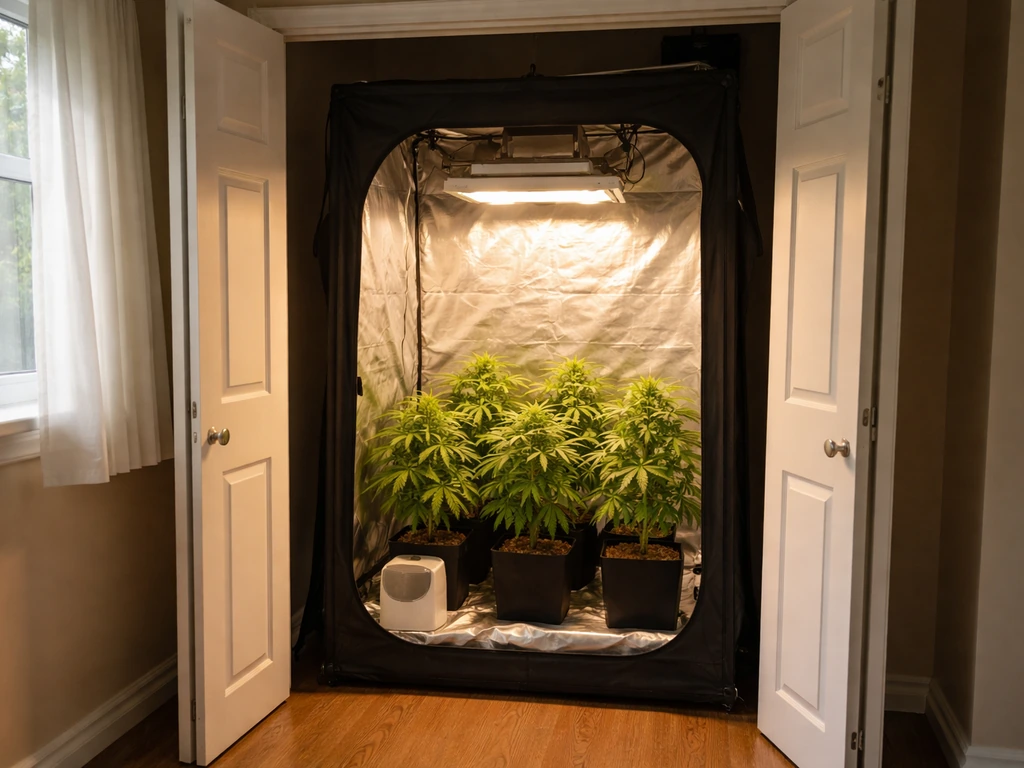
Manitoba allows up to four cannabis plants per residence for personal non-medical use. The plants must be grown indoors. Outdoor cultivation is not permitted under the current Manitoba rules, which is stricter than some other provinces.
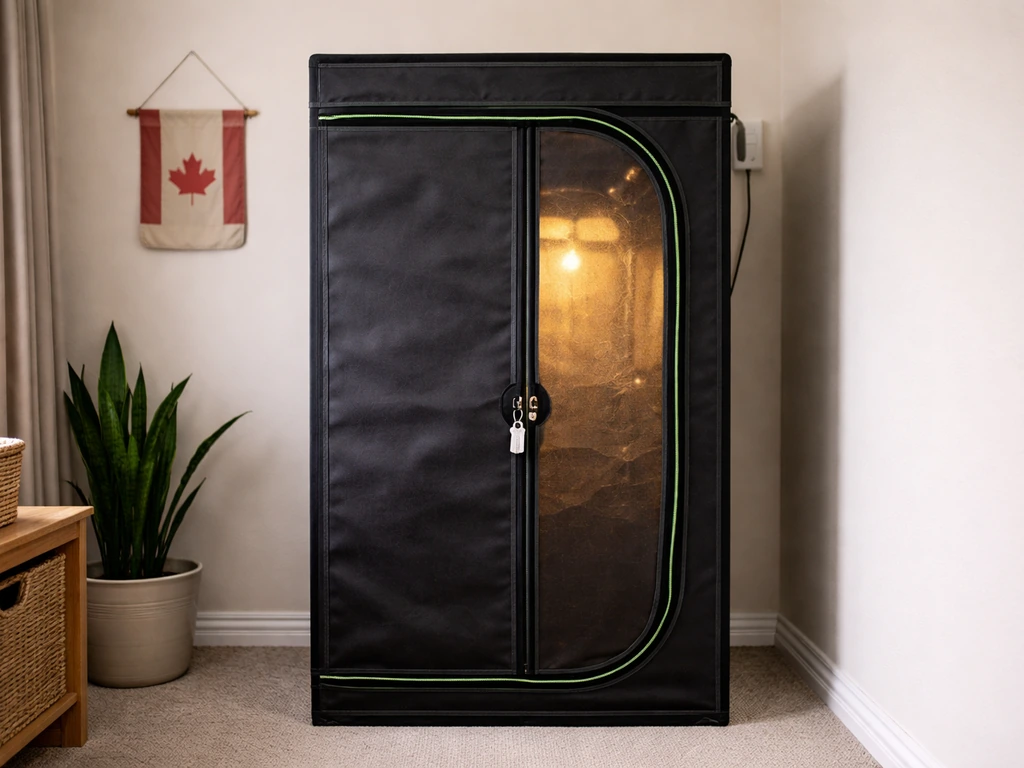
Beyond the indoor requirement, Manitoba's Cannabis Regulations specify that plants must be cultivated in a securely locked room or container, or at minimum in a location that is not accessible to anyone under 19 years of age. This is a real compliance requirement, not a suggestion. If you have kids or young visitors in your home, you need a physical barrier that prevents access, not just a closed door.
For medical cannabis cultivation, the federal rules under the ACMPR (Access to Cannabis for Medical Purposes Regulations) allow registered patients or their designated producers to grow more plants, with the count tied to your medical document from a healthcare practitioner. Medical home cultivation is authorized by Health Canada, not the LGCA, and the plant limits can be substantially higher depending on your prescribed daily amount.
Step-by-step: how to start growing legally at home
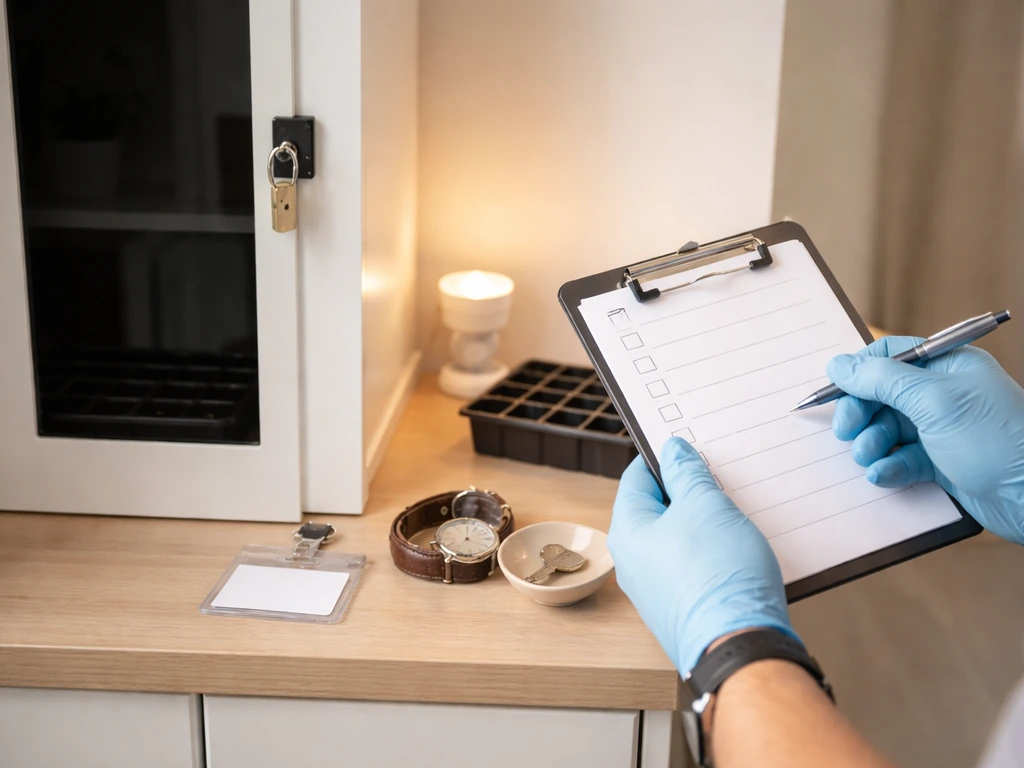
Because home cultivation in Manitoba does not require a license application, the process is less about paperwork and more about making sure your setup meets the legal requirements before you start. Here's the practical sequence:
- Confirm you are 19 or older and that you live at the residence where you plan to grow.
- Count the plants already growing in the household. The combined total across all adults living there cannot exceed four.
- Designate an indoor growing space. This cannot be outdoors.
- Install a lock on the room, cabinet, or enclosure where the plants will be kept. This needs to be a real lock that prevents access by anyone under 19.
- Source your seeds or starter plants legally. In Manitoba, you can purchase cannabis seeds from licensed retailers or online from the Manitoba Liquor and Lotteries cannabis store.
- Keep a basic record of your plants in case you are ever asked to demonstrate compliance. This is not legally required but is genuinely practical.
- Check the LGCA website and the Province of Manitoba's cannabis information page periodically, as rules can and do change.
The federal layer: Cannabis Act and ACMPR basics
Federal law sits on top of provincial rules. The federal Cannabis Act sets the national framework, including the four-plant personal cultivation limit for non-medical use. Manitoba cannot give you more than what federal law allows, and cannot override federal restrictions. If you are ever in doubt about whether something is permitted, check both sources.
For medical growers, Health Canada's registration process under the ACMPR is entirely separate from anything Manitoba administers. You would apply directly to Health Canada with a medical document from a licensed healthcare practitioner, and if approved, you receive a registration certificate authorizing a specific number of plants. The LGCA and Manitoba's provincial rules are mostly irrelevant to that process once you hold a valid federal registration.
Commercial production licensing in Manitoba
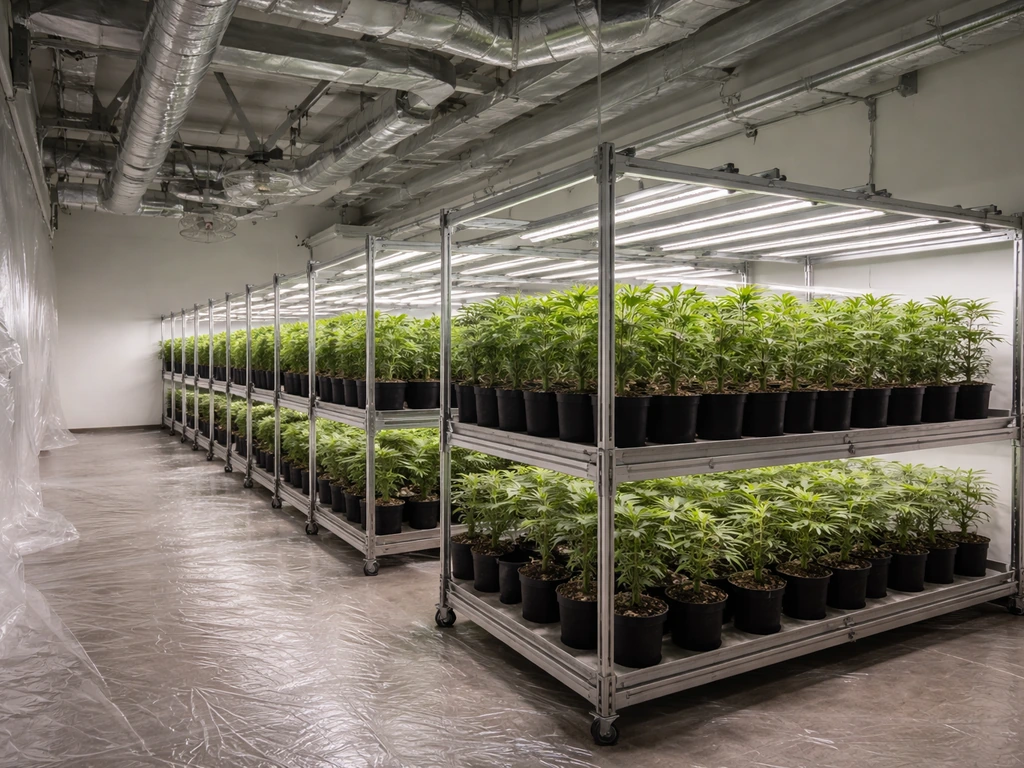
If your goal is a commercial cannabis cultivation operation, you are looking at a Health Canada licensing process under the Cannabis Act, not a Manitoba provincial application. Health Canada issues several license types relevant to production:
| License Type | What It Covers | Who Issues It |
|---|---|---|
| Micro-cultivation | Small-scale commercial cannabis growing (canopy limit applies) | Health Canada |
| Standard Cultivation | Larger-scale commercial production with no canopy cap | Health Canada |
| Nursery | Production of cannabis plants and seeds for sale to other licensed producers | Health Canada |
| Processing | Extracting, refining, or packaging cannabis products | Health Canada |
Micro-cultivation licenses are often the starting point for smaller operators. The canopy for micro-cultivation is capped at 200 square metres for indoor grows. Standard cultivation has no upper canopy limit but comes with significantly more scrutiny during the application review. Federal Cannabis Regulations set specific licence-class requirements for cultivation, including micro-cultivation and standard cultivation, and these are tied to defined cannabis surface area and plant-canopy limits micro-cultivation and canopy limits tied to surface area.
Documents and facility requirements for commercial applicants
If you are pursuing a commercial license through Health Canada, the documentation and facility requirements are extensive. Here is what you need to prepare before submitting:
- Completed application through Health Canada's Cannabis Tracking and Licensing System (CTLS).
- Site evidence package: floor plans, site plans, and evidence of ownership or right to use the property.
- Security plan: detailed description of physical security measures including intrusion detection, access controls, video surveillance, and perimeter security.
- Good Production Practices (GPP) standard operating procedures for how cannabis will be cultivated, handled, and stored.
- Ownership and organizational structure documentation, including background check consent forms for all directors, officers, and individuals with significant financial interest.
- Financial information demonstrating the business is viable.
- Local government confirmation that the proposed site complies with municipal zoning bylaws (Manitoba municipalities control zoning, so check with your local government before committing to a site).
- Security clearance applications for key personnel (processed by Health Canada).
The security requirements for commercial grows are detailed and non-negotiable. Health Canada will conduct a security clearance review of your key personnel, and in some cases an in-person site inspection before final approval. Do not build out your facility assuming approval is coming before you have at least received a pre-license inspection.
Costs and timelines: what to realistically expect
For home growers, the cost is essentially zero in terms of licensing fees because no license is required. Your only costs are seeds, growing equipment, a lock for your grow space, and electricity.
Commercial licensing fees from Health Canada vary by license type and activity. As of 2026, Health Canada charges a base application fee plus annual regulatory fees calculated based on your declared revenue. For micro-cultivation, the application processing fees are lower than for standard cultivation, but plan for costs in the thousands of dollars over the first year when you factor in application fees, compliance costs, and any consultant or legal support you bring in.
Timeline is where most commercial applicants get surprised. Health Canada's review process for a new commercial cultivation license routinely takes 12 to 18 months or longer from a complete application submission to final approval. Applications that are incomplete or have security issues get pushed back, and each revision cycle adds months. For comparison, jurisdictions like those covered in guides on how to get a grow license in Florida or how to get a grow license in California have their own state-level timelines, but Canada's federal licensing process is centralized through Health Canada and operates on its own pace.
For medical ACMPR personal production registration, timelines are generally shorter, often in the range of eight to twelve weeks for a complete application, but Health Canada's processing times fluctuate and can extend beyond that.
How approval and rejection work
Health Canada will contact you if your application is incomplete and give you an opportunity to provide missing information. A Notice of Deficiency means your application is not rejected outright, but you have a deadline to respond. Missing that deadline can result in your application being withdrawn.
Rejection happens when the application does not meet the requirements and cannot be remedied, when a security clearance is denied, or when the proposed facility does not meet physical security standards after inspection. If rejected, you generally have the right to submit a new application, but you start the clock over and pay fees again.
For home growers, there is no formal approval or rejection process because no application is required. Your compliance is a matter of meeting the rules in practice. If enforcement does occur, it is typically through local police or provincial regulators, not an application review.
Mistakes that delay or derail your grow authorization
Whether you are a home grower or a commercial applicant, some mistakes are predictably common and worth avoiding from the start.
- Exceeding the four-plant household limit: Many home growers assume the limit is per person, not per residence. It is per residence.
- Growing outdoors: Manitoba does not permit outdoor home cultivation. All plants must be indoors.
- No locked access control: Growing in an open basement or garage without a locked barrier that prevents access by minors violates Manitoba's regulations even if your plant count is correct.
- Sourcing seeds illegally: Seeds must come from a licensed retailer. Using seeds from non-licensed sources puts you outside the legal framework regardless of your plant count.
- Submitting an incomplete commercial application: Health Canada's CTLS system is detailed. Missing security plans, floor plans, or key personnel background check forms are the most common reasons applications stall.
- Ignoring municipal zoning for commercial sites: Manitoba municipalities have their own zoning rules for cannabis production facilities. Assuming a site is compliant without checking with local government is a costly mistake.
- Letting your medical ACMPR registration lapse: If you are growing under medical authorization, your registration has an expiry date. Growing beyond that date without renewal puts you out of compliance.
Ongoing compliance: what you need to keep checking
Getting compliant is one thing. Staying compliant is ongoing work, especially because cannabis regulations in Canada continue to evolve. Manitoba's home grow rules only came into effect in May 2025, which means you're still in an early period where guidance, enforcement practices, and community norms are being established.
Here is a practical compliance checklist to review regularly, whether you are a home grower or a commercial operator:
- Plant count is at or below four for the entire household (home growers).
- All plants are indoors, in a locked or otherwise secured space not accessible to anyone under 19.
- Seeds and starter plants were purchased from a licensed source.
- Cannabis is not being sold or distributed, even informally: personal use only.
- If growing medically, your Health Canada ACMPR registration is current and your plant count matches what is authorized.
- For commercial operators: annual Health Canada regulatory fees are paid, GPP procedures are current, security systems are functioning and documented, and key personnel security clearances are up to date.
- Provincial rules have not changed: check the LGCA site and Province of Manitoba cannabis page at least annually.
How Manitoba compares to other jurisdictions
It is useful context to know that Manitoba was one of the holdouts on home cultivation. Most Canadian provinces allowed it from the start of legalization in 2018. Manitoba and Quebec were the exceptions, and Quebec still restricts home growing as of 2026. This means Manitoba's home grow framework is relatively new and still being interpreted in practice.
For readers who are also navigating licensing questions in other jurisdictions, the structure of the problem is similar but the specifics differ widely. State-level guides like how to get a grow license in New York or how to get a grow license in Texas show how dramatically different US state systems are from Canada's federal-provincial model. In Canada, the federal Cannabis Act creates the floor for everyone, and provinces can only add restrictions on top, not loosen them. That is why Manitoba could not allow home growing until they changed their own provincial rules, even though federal law had always permitted it.
If you are curious how commercial cultivation licensing structures compare across different markets, articles like the New York cannabis grow license breakdown illustrate how US states handle licensing types and fees at the state level, which is structurally similar to what Health Canada does federally for Canadian producers.
What to do right now
If you are a home grower in Manitoba, your action list is short and concrete. Confirm you are 19 or older, count your household's plants (maximum four total), set up an indoor locked growing space, buy legal seeds from a licensed retailer, and start growing. No application needed.
If you are pursuing medical authorization to grow more than four plants, start by speaking with a healthcare practitioner who can provide a medical document. Then visit Health Canada's website to access the ACMPR personal production registration application. The form is available online and the process is handled entirely federally.
If you are pursuing a commercial cultivation license, start by reviewing Health Canada's Cannabis Licensing Application Guide, then set up an account in the Cannabis Tracking and Licensing System (CTLS). Before you commit to a facility or invest in buildout, get your zoning confirmed with your local Manitoba municipality. That step costs nothing and saves enormous amounts of time and money if there is a problem.
For those wanting another US-state comparison reference point while doing research, the guide on getting a grow license in Florida covers a fairly complex state licensing process and gives useful context on what commercial licensing due diligence looks like at the state level, even though the Canadian federal system works differently.
FAQ
If there is no Manitoba license for home growing, do I still need to register anything with the LGCA or Manitoba government?
For personal, non-medical home cultivation, you generally do not register with Manitoba or apply for any provincial grow authorization. Your main obligation is to follow the federal Cannabis Act rules and the Manitoba residential conditions (indoor only, locked/secured grow area, and the household plant limit).
How do I count “up to four plants per residence” if multiple adults live together or if I have plants for different people?
The limit is four plants total for the entire household, not four per adult. If you have visitors or roommates, you still count all plants located in the residence toward the same four-plant cap. Moving plants in and out of the home does not reset the limit.
Can I grow more than four plants for personal use if I rotate plants or stagger germination?
No. The rules apply to the total number of cannabis plants you cultivate at the residence, even if they are at different growth stages. Rotating plants can still put you over the cap if the plant count exceeds four at any point.
Is outdoor growing allowed in Manitoba if I keep plants behind a fence or on a locked balcony?
Under the Manitoba residential rules described for the current framework, outdoor cultivation is not permitted. Even if an area is fenced or has a lock, you should treat the indoor requirement as strict and plan your setup accordingly.
What qualifies as a “locked room or container,” and is a door with a key enough?
A workable approach is to use a physical barrier that prevents access by anyone under 19, not just a general barrier like a loosely secured door. In practice, many compliant setups use a lockable room or a lockable grow cabinet/container with controlled access.
What if my household changes, for example someone moves out or a new adult moves in, can I increase the plant count?
Plant limits tied to the residence do not increase based on who lives there. If you were already at the maximum and your household composition changes, you still must follow the same four-plant household limit for personal use.
If I have a medical document, do I still need to follow Manitoba’s four-plant home rules?
Medical cultivation is handled federally under the ACMPR, so the applicable plant limit comes from your ACMPR authorization rather than the personal four-plant household cap. You still need to follow the physical-security and access rules applicable to your authorized setup, but the plant number is determined by your federal medical registration.
Can I apply for a commercial grow license in Manitoba without getting zoning approval first?
You can submit an application without confirming zoning, but it is a common way to waste time and money. Manitoba municipalities can affect whether a site is allowed for cultivation, so getting zoning confirmation before investing in facility plans helps avoid a costly redesign or a late-stage failure.
What happens if Health Canada finds security issues after I start the process for a commercial license?
A security clearance denial can lead to rejection, and the application clock effectively resets when you reapply. It is usually worth preparing key personnel documentation carefully, since Health Canada reviews key personnel and may require additional steps that can extend timelines.
How do I respond to a Notice of Deficiency, and does it mean my application is rejected?
A Notice of Deficiency means the application is not rejected outright, you are given a deadline to fix specific problems, like missing information or documentation gaps. Missing the response deadline can result in withdrawal, so calendar the due date and ensure a complete, compliant resubmission.
If my commercial application is rejected, can I reuse the same plans and just reapply?
Often you can resubmit, but you should expect to address the specific deficiencies that caused the rejection, such as security, facility compliance, or documentation requirements. You should also plan for renewed fees and additional review time, since reapplying is not the same as getting a quick correction.
Do commercial cultivation license timelines start from when I create a CTLS account or when I submit a complete application?
Timelines typically align with Health Canada’s review of a complete application submission. Creating an account or early setup is not the same as “complete submission,” so treat estimates like 12 to 18 months as applying after you have submitted everything required.
Is there any way to shorten the process if I’m doing medical ACMPR personal production?
You can reduce delays by ensuring your medical document is properly completed and that your application package is complete before submission. Even with medical pathways often taking roughly 8 to 12 weeks for complete files, processing times can still extend based on Health Canada workload and application completeness.
Next Article
New York Cannabis Grow License Guide: Apply Step by Step
Step-by-step guide to New York cannabis grow licenses: choose the right type, meet eligibility, apply, costs, limits, co