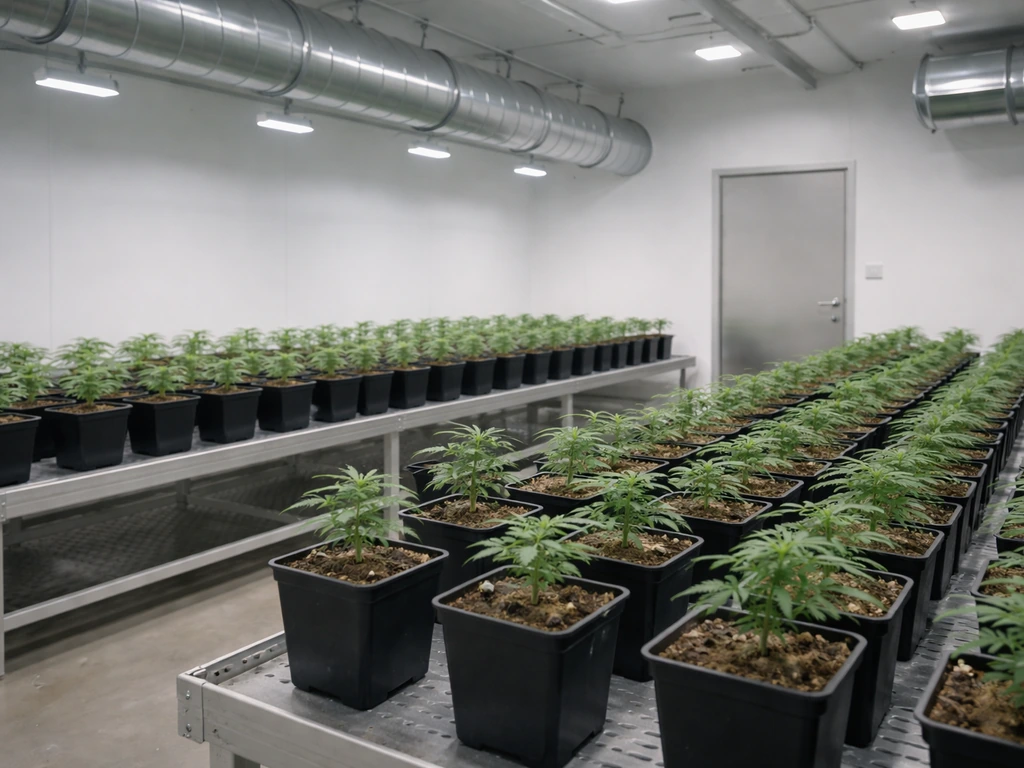
If you've been searching for an "OMMA grow license," there's an important clarification to make upfront. OMMA stands for the Oklahoma Medical Marijuana Authority, which is the state agency in Oklahoma that handles medical marijuana licensing. If you're in Ontario, Canada, that acronym doesn't apply to you at all. Ontario doesn't have its own "OMMA" licensing body. Instead, cannabis cultivation and commercial production in Ontario is regulated federally by Health Canada, and personal home growing follows Ontario's provincial rules. This guide covers both sides of that picture so you can figure out exactly which path applies to your situation.
OMMA Grow License Cost and How to Apply in 2026

Marcus Whitley
10 Apr 2026
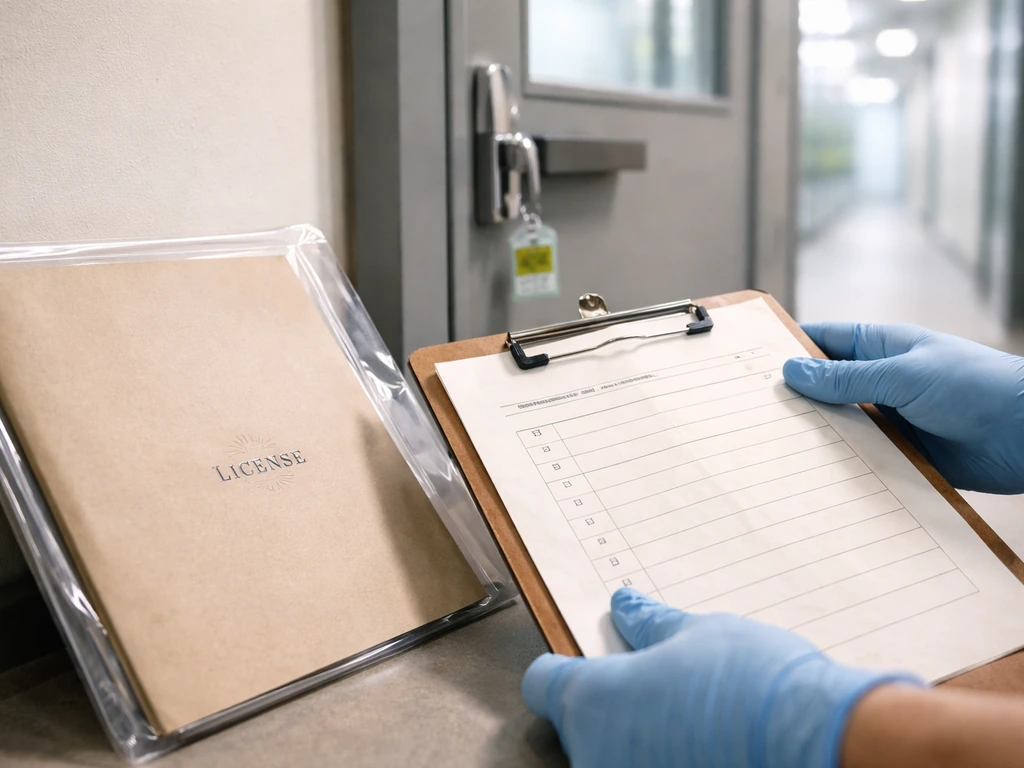
What "OMMA grow license" actually refers to

OMMA is specifically the Oklahoma Medical Marijuana Authority, the state regulator in Oklahoma that processes patient, caregiver, and commercial medical marijuana license applications. If you're in Oklahoma, OMMA is your licensing authority for everything from growing as a patient to running a commercial cultivation operation.
If you're in Ontario, Canada, the picture is different. Ontario's provincial government sets the rules for personal home growing, but the moment you're talking about producing or selling cannabis for medical purposes, that's exclusively a federal matter under Health Canada. You won't find an "OMMA" equivalent in Ontario because no single provincial body owns that licensing role. It's worth getting clear on this early so you don't waste time looking for the wrong application portal.
License types and who can apply
Whether you're in Oklahoma or Ontario, the type of license you need depends on what you're actually doing. The Oklahoma Bar Association also notes that to grow, process, transport, dispense, or possess legally, a company must have both an active OMMA license and an active OBN registration, and that these are one-year terms with renewal timing needed for continued operation. There are two broad categories: personal/home growing and commercial cultivation.
Home and personal medical growing
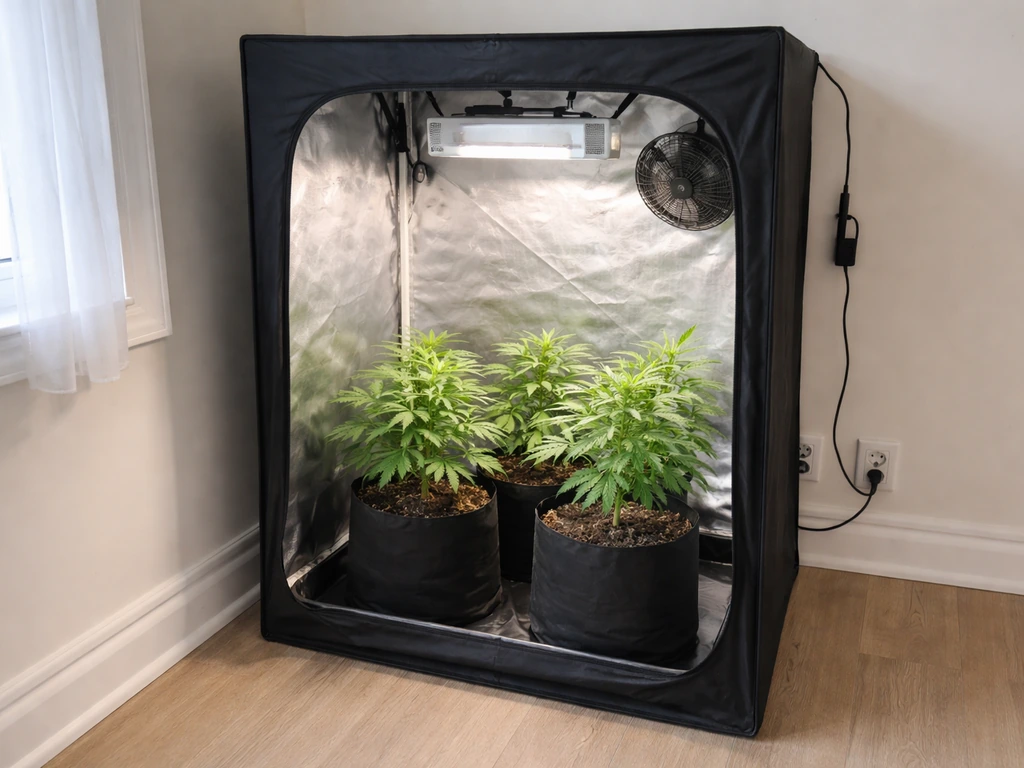
In Ontario, you can grow up to four cannabis plants per residence for personal use, as long as you start from a legal source like the Ontario Cannabis Store or an authorized retail store. That limit is per household, not per person, so two adults sharing a home still get a maximum of four plants combined, not eight. No commercial license or federal application is required for this.
For medical purposes, Health Canada allows registered patients and designated persons to grow cannabis at home through what's called a "personal production" registration. To qualify, you need a healthcare practitioner's recommendation and a valid registration certificate. The certificate specifies your authorized plant count and possession limits, and staying within those numbers is non-negotiable. One detail that surprises a lot of people: Health Canada does allow multiple registrations at the same location, up to four separate registrations at one address. That's useful for household situations where multiple registered patients each have their own growing authorization, but each registration must still comply independently with its own certificate limits.
If you want to explore what ommp grow site rules look like under similar medical personal-production frameworks, that's a closely related area worth reviewing alongside Health Canada's guidance.
Commercial cultivation licenses (micro vs. standard)
If you want to produce cannabis commercially for medical purposes in Ontario, you apply through Health Canada's Cannabis Tracking and Licensing System (CTLS). The two main cultivation license classes are micro-cultivation and standard cultivation. Micro-cultivation is the entry point for smaller operations and comes with lower fees. Standard cultivation is for larger-scale grows and carries higher regulatory costs. There are also nursery licenses and processing licenses, but those are separate streams. Choosing between micro and standard comes down to your production capacity and footprint.
For anyone curious about how outdoor commercial grows are handled specifically, the omma commercial outdoor grow rules framework provides a useful reference point for understanding how regulators approach outdoor site requirements.
What it actually costs to get a grow license

This is the part most people want answered clearly, so here's a straightforward breakdown. Costs fall into a few buckets: application screening fees, annual regulatory fees, and practical add-ons you'll pay regardless of which line item they appear under.
Federal commercial cultivation fees (Health Canada)
Health Canada charges a licence application screening fee when you submit a CTLS application. The exact amount depends on the license class. Micro-cultivation has a fixed application screening fee that is lower than what standard cultivation applicants pay. The Cannabis Fees Order (SOR-2018-198) is the official legal document that sets these amounts, and Health Canada adjusts them periodically. There was a rate adjustment effective April 1, 2026, so if you're applying now in April 2026, make sure you're looking at the current fee schedule rather than older published guides. Health Canada also offers a discounted screening fee when multiple licence types are included in a single application, which can be worth considering if you're planning both cultivation and processing.
Beyond the screening fee, standard cultivation licence holders pay an annual regulatory fee calculated using a formula tied to their revenue. Micro-cultivation has a minimum annual fee that's much more predictable for small operators. These annual fees are ongoing, so they factor into your year-two-and-beyond budget just as much as the upfront application cost.
| License Type | Application Screening Fee | Annual Regulatory Fee | Best For |
|---|---|---|---|
| Micro-Cultivation | Fixed lower amount (check current CTLS schedule) | Minimum fixed amount | Small-scale or startup grows |
| Standard Cultivation | Higher fixed amount (check current CTLS schedule) | Formula-based, revenue-linked | Larger commercial operations |
| Nursery | Separate fixed fee | Applicable minimum | Propagation/seedling supply |
| Personal Medical Production | No application fee (registration-based) | No annual fee | Individual patients with HC recommendation |
Renewal fees and timing
Health Canada requires you to submit a renewal application in CTLS at least three months before your licence expiry date. Missing that window is a common mistake that can leave your operation in a grey zone, so set a calendar reminder well in advance. The renewal process involves re-submitting updated site and security information, not just paying a fee, so budget time as well as money.
Add-on costs you should budget for
- Security infrastructure: physical security measures meeting Health Canada standards aren't free, and you'll need to document and label visual monitoring and intrusion detection devices uniquely for your application and renewals
- Legal and consulting fees: many applicants hire a consultant or lawyer to prepare the site evidence package, which can run anywhere from a few thousand dollars to well over ten thousand depending on complexity
- Business registration documents: you'll need your certificate of incorporation or business registration as part of the CTLS submission
- Staff security clearances: any responsible persons linked to the licence must obtain security clearances through Health Canada, and managing that process takes administrative time and sometimes fees
- Site preparation: the site evidence package must show an operational and functional facility, which means the physical build-out needs to be largely done before you apply
How to apply: step by step
The application process for a Health Canada commercial cultivation licence runs through CTLS, the federal Cannabis Tracking and Licensing System. For details on portal access and setup, see the OMMA MedPortal landing and workflow page resources OMMA MedPortal page documents portal access/setup. Here's how it actually works from start to finish.
- Plan your site first: before you open CTLS, make sure your physical location is ready or nearly ready. The site evidence package, submitted separately, must demonstrate an operational and functional site. You can't bluff this with renderings alone.
- Prepare your documents: pull together your certificate of incorporation or business registration, a declaration under subsection 10(2) of the Cannabis Regulations, your security plans with labelled device locations, and your Good Production Practices documentation.
- Submit your application in CTLS: create or log into your CTLS account, select the correct licence class (micro-cultivation, standard cultivation, etc.), and complete the online form. Pay the application screening fee at this stage.
- Send your site evidence package: after submitting in CTLS, you have 10 business days for your site evidence package to be received by Health Canada. Missing this window can stall or void your application, so ship it immediately.
- Wait for screening: Health Canada screens the application before it enters active review. If something is missing, they'll flag it during this phase.
- Active review period: once in active review, Health Canada's service standard is 80 business days (roughly 16 weeks) to reach a decision. That's about four months from the active review start date, not from your submission date.
- Respond to any information requests promptly: Health Canada generally aims to respond to queries within 10 business days, and delays on your end slow down the clock significantly.
- Receive your licence and link security clearances: once approved, your responsible persons must link their security clearances to the licence in CTLS before the operation can begin.
Realistically, budget four to six months from CTLS submission to approval if your application is clean and your site evidence is solid. Incomplete applications or site issues can push this well past six months.
Staying compliant after your licence is approved
Getting the licence is only the first step. Health Canada has specific ongoing obligations that trip up new licence holders more than the application ever did.
Security and recordkeeping
Your security infrastructure needs to stay operational and documented. Visual monitoring devices and intrusion detection devices must remain in place, uniquely labelled, and you'll need to verify their locations when you renew. Don't wait until renewal time to audit your security setup. Treat it as an ongoing operational standard, not a one-time checkbox.
Reporting obligations
Licence holders are required to report adverse reactions to Health Canada using the specified reporting procedures. This applies beyond just patient safety incidents. Keep a record of what's been reported and when, since Health Canada can request this documentation during inspections.
Inspections and production practices
Health Canada can inspect your facility, and your Good Production Practices documentation needs to be current and accessible. New licence holders especially should read through Health Canada's guidance for new licence holders carefully because it outlines the production requirements you're expected to follow from day one. Inspections are not announced far in advance, so your site should be audit-ready at all times, not just when you know someone is coming.
Personal medical production compliance
If you're growing under a personal production registration rather than a commercial licence, your main compliance obligation is staying within the plant counts and possession limits on your registration certificate. Exceeding those limits is the most common eligibility and compliance failure Health Canada sees. If your medical needs change, update your registration through the proper channels rather than just growing more plants and hoping nobody notices.
What to do if the standard path doesn't work for you
Not everyone will qualify for or be able to afford a commercial cultivation licence, and that's worth addressing honestly. Here are the realistic alternatives depending on your situation.
If you're an Ontario resident who just wants to grow for personal use and doesn't have a medical authorization, the home growing option (up to four plants per residence from a legal source) is your straightforward path. No federal licence, no CTLS, no site evidence package. Just follow the provincial rules and keep your plant count at or below four.
If you want to grow for medical purposes beyond the home-grow limit, you need a healthcare practitioner's recommendation and a Health Canada personal production registration. This is a separate, lower-cost pathway that doesn't require a commercial licence but does require medical authorization. If your application is rejected because you're not authorized by a practitioner or because you've exceeded your certificate limits, the only fix is addressing those root eligibility issues, not reapplying.
If a commercial licence feels out of reach financially or logistically right now, micro-cultivation is the lowest-cost entry point into the commercial space. It's worth comparing that option carefully against your business plan before defaulting to standard cultivation. Think of it the way you'd compare a place to grow license options side by side before committing to a path.
For anyone exploring Canadian provincial licensing comparisons more broadly, understanding how other provinces structure their frameworks can also be helpful context. Looking at something like a place to grow ontario license plate requirements alongside federal rules illustrates how provincial and federal layers interact differently across the country.
Your practical checklist before you apply
- Confirm which licensing body applies to you: OMMA (Oklahoma) or Health Canada via CTLS (Ontario/Canada)
- Decide on your licence type: personal production registration, micro-cultivation, or standard cultivation
- Pull the current fee schedule from Health Canada's CTLS portal (rates updated April 1, 2026)
- Prepare your site evidence package before submitting, not after
- Gather business registration documents and any required declarations
- Plan for security infrastructure costs and label all devices before the site evidence submission
- Initiate security clearances for all responsible persons early, since this step can take time
- Budget four to six months minimum for the active review period
- Set a calendar alert to renew at least three months before your licence expiry date
- Review Health Canada's Good Production Practices guidance before your first inspection
FAQ
Is there an “OMMA grow license” in Ontario that I should apply for through a provincial site?
No. In Ontario, “OMMA” is not a licensing authority for cannabis cultivation or medical production. If you are producing cannabis for medical purposes, the applicable pathway is the federal one through Health Canada, using CTLS for commercial cultivation.
Which license should I choose if I want to grow for medical reasons but stay small, do I need commercial cultivation?
If you are only growing for personal use under medical authorization, you generally use Health Canada’s personal production registration instead of a commercial cultivation licence. A commercial cultivation licence is for operations producing commercially, which triggers CTLS licensing and ongoing commercial compliance obligations.
For Ontario home growing, is the four-plant limit per person or per home?
It is per household (per residence), not per person. If two registered adults share one home, their combined total cannot exceed the plant limit, and you should plan plant allocation accordingly.
Can I get multiple Health Canada personal-production registrations at the same address, and how do the plant limits work?
Yes, Health Canada can allow multiple registrations at one address, up to four separate registrations at the same location. However, each registration has its own authorized plant count and possession limits, so you must comply with each certificate independently.
What’s the most common way people accidentally lose compliance on personal-production registrations?
The most frequent issue is exceeding the plant count or possession limits listed on the registration certificate. If your medical situation changes, you should update the registration through the proper channels, rather than simply growing more plants.
Do I need to renew my Health Canada licence, and when should I start the renewal?
Yes, you must submit a renewal in CTLS at least three months before your licence expiry date. The renewal is not just payment, it also requires re-submission or updates to site and security information, so start gathering documents early.
Does Health Canada require security devices to be uniquely labelled and location-verified?
Yes. Security hardware such as monitoring devices and intrusion detection devices must remain operational and documented, with requirements around unique labelling and verification of their locations at renewal. You should periodically audit the device list and placements so it is consistent with your records.
How long should I budget for CTLS approval, and what commonly delays it?
A practical planning window is four to six months from CTLS submission to approval when the application is complete and site evidence is strong. Delays most often come from incomplete uploads, weak or inconsistent site documentation, or unresolved site-related issues.
If I include more than one licence type in my CTLS application, can I reduce fees?
Often, yes. Health Canada offers discounted application screening fees when multiple licence types are included in a single application. This can be beneficial if you are planning a combination like cultivation plus another licence stream, but you should confirm the discount applies to the specific combinations you intend.
What’s the difference between micro-cultivation and standard cultivation for a cost and planning perspective?
Micro-cultivation typically has a lower, more predictable entry cost and a lower application screening fee, with minimum annual fees that are easier to budget. Standard cultivation usually has higher application and ongoing annual fees tied to a revenue formula, so it often suits larger operations with clearer output projections.
What should I do to stay inspection-ready after I receive my commercial licence?
Keep your Good Production Practices documentation current and readily accessible, and do ongoing internal checks rather than waiting for renewal or an announced visit. Because inspections can happen without much lead time, your site should be audit-ready at all times.
Are there reporting obligations that apply after licensing even if nothing goes wrong clinically?
Yes. Licence holders are expected to report adverse reactions through the specified Health Canada procedures, and you should maintain a timeline record of any reports made. Even if incidents seem minor, having documentation organized can reduce issues if Health Canada requests records during inspections.
Next Article
How to Get a Micro Grow License in Canada: Step-by-Step
Step-by-step on getting a Canadian micro-cultivation cannabis licence, eligibility, costs, timelines, and compliance bas