Whether you need a formal license to grow weed at home depends entirely on your state. If you are looking for a license to grow medical weed in Ohio, check how Ohio handles patient registration and home grow authorization under its medical program medical-program-only states. In most adult-use states, personal home cultivation is a legal right that doesn't require a license at all. You just have to follow plant limits, keep your grow secure, and comply with local rules.
License to Grow Weed at Home in Your State: Steps

Marcus Whitley
4 May 2026
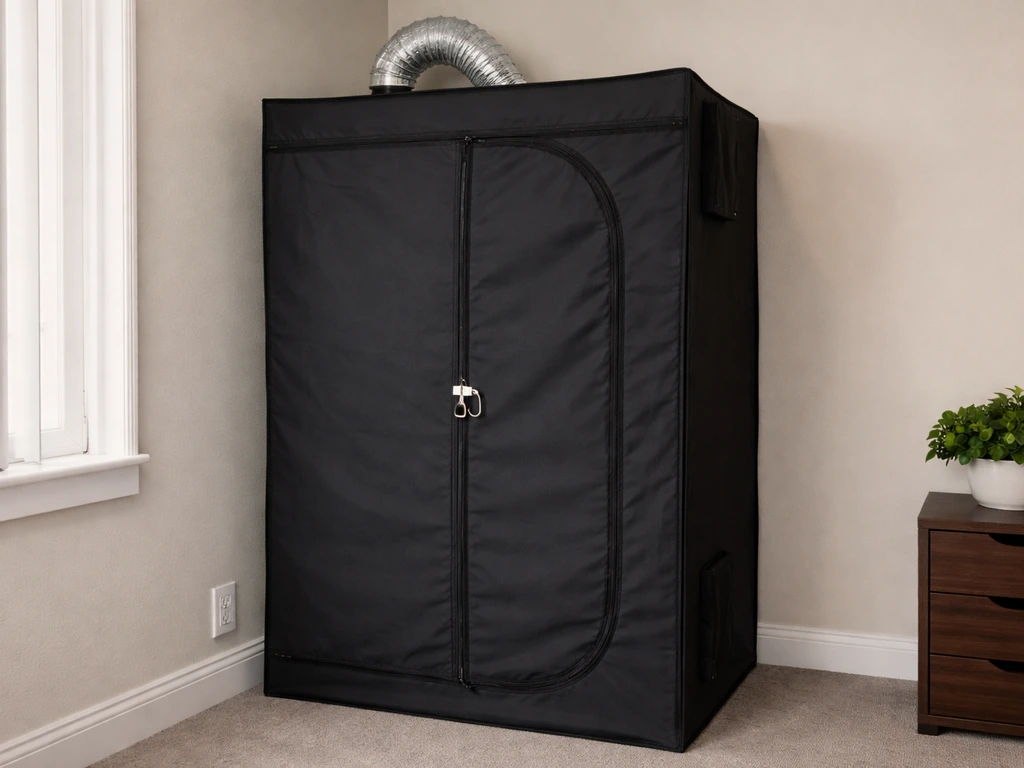
But a handful of states, including Florida and Arkansas, prohibit home cultivation entirely regardless of your medical status. Qualified registered patients and their designated caregivers cannot grow or cultivate medical marijuana Arkansas.
In Arkansas, home cannabis cultivation is not permitted, so you should not expect any home-growing allowance even if you are seeking medical cannabis options home cultivation is not permitted in Arkansas. And a few others, like Washington, only allow home grows for registered medical patients.
Knowing which category your state falls into is the first and most important step.
Does your state actually require a license to grow at home?

Most people searching for a 'license to grow weed at home' don't actually need a license. What they need is to understand whether home cultivation is legal in their state and what rules they must follow. In states like California, Colorado, Oregon, Michigan, New York, Ohio, and Arizona, adults can grow cannabis at home as a personal-use right. No cultivation license is required. The rules exist, but they look more like compliance conditions than a formal licensing process.
The license picture changes when you're a medical patient in a state that only allows home cultivation through the medical program. Washington state, for example, doesn't allow adult-use home cultivation as of 2026. Only qualifying patients registered under RCW 69.51A can grow at home, and that registration functions as your authorization. It's not a 'grow license' exactly, but it's the credential you need.
Then there are states where home cultivation simply doesn't exist as a legal option. Florida prohibits patients from growing cannabis at home. Only licensed Medical Marijuana Treatment Centers can cultivate and supply cannabis to patients. Arkansas is in the same situation. The state's Medical Marijuana Amendment framework channels all cultivation through licensed facilities, not patients or caregivers. If you're in one of these states, there's no license to apply for because there's no pathway.
blank" rel="noopener noreferrer">Louisiana follows the same pattern. The state limits marijuana cultivation to licensed production facilities as defined in the Louisiana Administrative Code. No home cultivation is authorized, even under the medical program. If you are a qualifying medical patient, Louisiana still does not issue a grow license for home cultivation, so you must follow the state-approved medical framework instead license to grow medical weed in louisiana.
Step-by-step: how to apply (or register, depending on your state)
Since the process varies so much by state, here's a practical breakdown of the two main paths you'll encounter.
Path 1: No license required (adult-use states)
- Confirm your state allows adult-use home cultivation (see the state reference table below).
- Check your local city or county ordinances. Some municipalities have stricter rules or outright bans, even in legal states like California.
- Note the plant limits that apply to you and your household.
- Set up your grow space to meet the 'enclosed and locked' requirement that most states mandate.
- Keep your cultivation within the legal canopy or plant count. Don't exceed the household cap.
- Don't sell, distribute, or transfer cannabis from your home grow. Personal use only.
Path 2: Medical patient registration required

- Get a physician certification for your qualifying medical condition.
- Register with your state's medical cannabis program. In Washington, this is through the Medical Cannabis Authorization Database under RCW 69.51A.
- Obtain your patient or caregiver card/registration documentation.
- Locate the specific home cultivation provisions in your state's medical program rules to confirm you're authorized to grow.
- Follow all plant limits, security, and storage requirements tied to your registration.
- Renew your registration on schedule to maintain your cultivation authorization.
If you're looking to grow commercially rather than for personal use, that's a different process entirely. Commercial cultivation licenses require formal applications through your state's cannabis regulatory agency, significant fees, facility inspections, background checks, and ongoing compliance obligations. That's a separate category from home cultivation and is out of scope for personal growers.
License types, eligibility, and plant limits for home grows
The term 'license' is used loosely when it comes to home cultivation. In most legal adult-use states, there's no license type specific to personal home growing. You're operating under a statutory exemption, not a permit. The only time something resembling a license applies to a home grower is in the medical-program-only states, where your patient registration or caregiver designation is the authorization.
Plant limits and eligibility vary by state and, in some cases, by household. Here's a consolidated view of how the major states handle it.
| State | Adults 21+ Can Grow? | Plant Limit (per person) | Household Cap | License/Registration Required? |
|---|---|---|---|---|
| California | Yes (adult-use) | 6 plants | 6 per residence (local rules may be stricter) | No license; follow local ordinances |
| Colorado | Yes (adult-use) | 6 plants (max 3 mature) | 12 per household (2+ adults) | No license; enclosed/locked space required |
| Oregon | Yes (adult-use) | 4 plants | 4 per residence | No license required |
| Michigan | Yes (adult-use) | 12 plants | 12 per household | No license; enclosed/locked space required |
| New York | Yes (adult-use) | 3 mature + 3 immature | 6 mature + 6 immature per household | No license; security requirements apply |
| Ohio | Yes (adult-use) | 6 plants | 12 per household (2+ adults) | No license; ORC § 3780.29 governs |
| Arizona | Yes (adult-use) | 6 plants | 12 per household (2+ adults) | No license; not visible from outside |
| Nevada | Yes, if no licensed retailer within 25 miles | 6 plants | 12 per household (2+ adults) | No license; 25-mile rule applies |
| Washington | Medical patients only | Varies by patient/caregiver status | Per registration | Medical patient registration required (RCW 69.51A) |
| Illinois | Medical patients only (registered qualifying patients) | Up to 5 plants over 5 inches tall | Per household (patient program) | Medical registration required |
| Florida | No | Prohibited | N/A | No pathway exists |
| Arkansas | No | Prohibited | N/A | No pathway exists |
| Louisiana | No | Prohibited | N/A | No pathway exists |
In Michigan, the medical program under MCL 333.26424 allows qualifying patients and caregivers to grow up to 12 plants in an enclosed, locked facility. That's separate from the adult-use personal cultivation right. Illinois's Cannabis Regulation and Tax Act allows registered qualifying patients to cultivate up to 5 plants taller than 5 inches per household without needing a cultivation center or craft grower license, but this is only for medical registrants.
Costs, timelines, and what to prepare
Adult-use states (no license needed)
If you're in a state where personal home cultivation is an exemption rather than a licensed activity, there's no application fee or approval wait time. Your prep work is about compliance, not paperwork. What you actually need to prepare: a proper grow space (enclosed and lockable), a clear understanding of your plant limits, and confirmation that your local city or county hasn't banned home cultivation. That last one trips up more people than anything else.
Medical patient registration (states that require it)
Registration costs and timelines for medical cannabis programs vary by state. Generally, you're looking at a physician certification fee (which varies widely and isn't state-controlled), plus a state registration fee that typically runs between $25 and $100 per year. Background checks are not a standard part of home cultivation registration for patients in most states, though some states may screen for certain disqualifying offenses. Processing times for patient card approval typically run two to four weeks, though some states offer expedited processing for terminal patients.
What to prepare for a medical registration application in most states: proof of state residency, a valid photo ID, written certification from a licensed physician documenting your qualifying condition, and the registration fee. If you're a caregiver registering to grow on behalf of a patient, you'll also need documentation linking you to the patient and, in some states, a background check.
Compliance requirements after you start growing
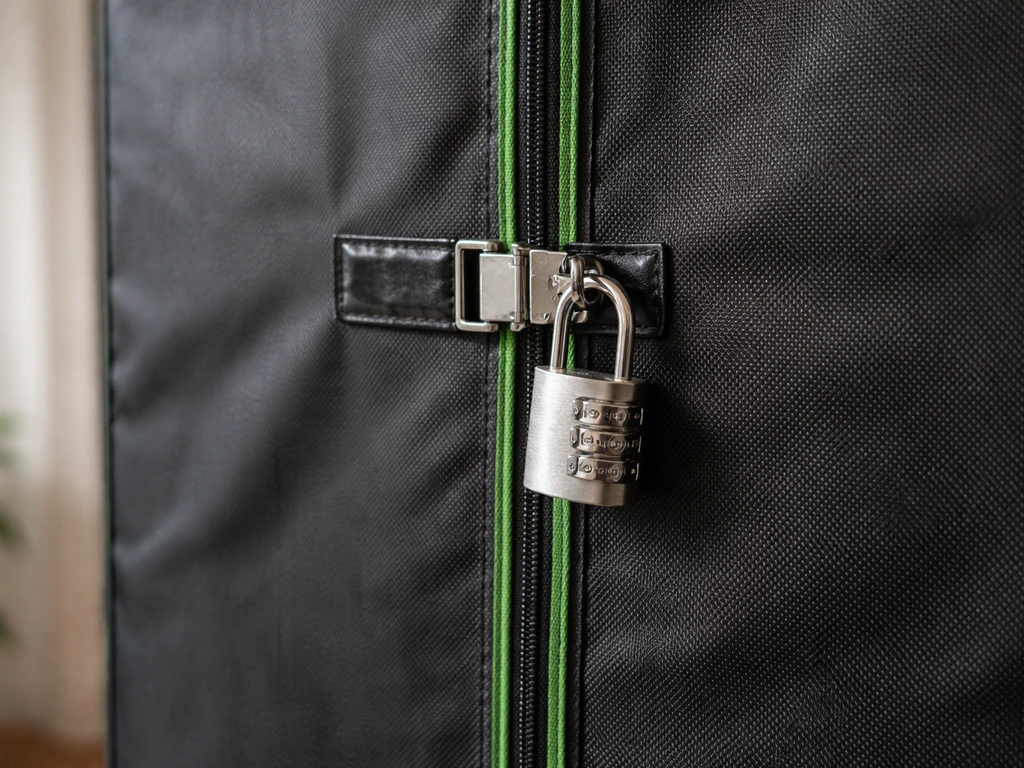
Getting your grow set up legally is step one. Staying legal is the ongoing job. Even without a formal license, personal home grows carry real compliance obligations that, if ignored, can expose you to penalties.
Security and access control
Nearly every state that allows home cultivation requires the grow space to be enclosed and locked. Colorado's Amendment 64 language specifies an 'enclosed, locked space.' Michigan's statute uses 'enclosed, locked facility.' New York's 9 NYCRR § 115.3 and the OCM home cultivation guidance require plants to be secured with locks, gates, or doors. The practical minimum is a lockable room or grow tent inside a lockable room. If you're growing outdoors, a locked greenhouse or fenced enclosure that prevents visibility and unauthorized access is the standard.
Arizona takes visibility seriously. Plants cannot be visible from outside the property. Nevada has a similar expectation. These aren't just advisory, they're part of the legal framework.
Recordkeeping and tracking
For personal home grows in adult-use states, there are no state-mandated recordkeeping or tracking systems required. Those obligations apply to commercial licensees. That said, keeping basic personal records (when you started growing, current plant count, any purchases of seeds or clones) is a practical good habit if you're ever questioned about compliance.
Inspections
Personal home grows are generally not subject to routine regulatory inspections the way commercial cultivation facilities are. Law enforcement can still respond to complaints or investigate suspected violations. Oregon's OLCC notes that enforcement of home grow provisions may be at the discretion of local jurisdictions, state police, and other law enforcement. Don't assume that being within plant limits is a complete shield if your grow isn't secured or is visible to neighbors.
Storage and staying within plant limits
Harvested cannabis from your home grow is subject to the possession limits in your state, not just the plant limits. Check your state's rules for how much processed cannabis you can legally possess at home. The plants you're actively growing count toward your plant limit, so track your grow carefully if you're near the household cap. In Colorado, for instance, a household with two adults could have up to 12 plants total, but no more than 6 should be mature and flowering at any one time per person.
State-by-state quick reference and where to find the official rules
The table above covers the most common states, but cannabis laws change. Here's where to find authoritative, current rules for your specific state.
- California: California Department of Cannabis Control (cannabis.ca.gov) and California Health and Safety Code § 11362.2 for personal cultivation rules. Check your local ordinance as well.
- Colorado: Colorado CDPHE Retail Marijuana FAQs and Colorado Revised Statutes Title 25 for the plant-limit language. Local county/municipality rules may also apply.
- Oregon: Oregon Liquor and Cannabis Commission (oregon.gov/olcc) FAQ section for home grow limits. ORS 475C is the adult-use framework statute.
- Michigan: Michigan Cannabis Regulatory Agency (michigan.gov/cra) for adult-use home cultivation under MRTMA. For medical, see MCL 333.26424.
- New York: New York Office of Cannabis Management (cannabis.ny.gov) and 9 NYCRR § 115.3 for adult-use home cultivation rules finalized June 2024.
- Ohio: Ohio Revised Code § 3780.29, titled 'Home Grow,' is the direct statutory reference.
- Arizona: Arizona Revised Statutes as amended by Proposition 207 for adult-use home cultivation limits.
- Nevada: Nevada Cannabis Compliance Board (ccb.nv.gov) and Nevada Revised Statutes Chapter 678D for the adult-use exemption including the 25-mile retailer rule.
- Washington: Washington LCB (lcb.wa.gov) publishes home cultivation research briefs. RCW 69.51A governs medical patient home cultivation rights.
- Illinois: Illinois Department of Agriculture and the Cannabis Regulation and Tax Act (ILCS) for qualifying patient cultivation provisions.
- Florida: Florida Department of Health Office of Medical Marijuana Use and Florida Statutes § 381.986. Home cultivation is not permitted.
- Arkansas: Arkansas Medical Marijuana Commission and Amendment 98. Home cultivation is not permitted.
- Louisiana: Louisiana Department of Health and the Louisiana Administrative Code for medical marijuana. Home cultivation is not permitted.
If your state isn't listed, look for your state's cannabis or liquor control board website first. Search for 'home cultivation' or 'personal cultivation' in their FAQ or consumer guidance sections. State legislature websites (which publish codified statutes) are the most authoritative source for plant limits and eligibility language. For states with specific licensing cost questions, the Oregon grow license cost structure and state-specific medical grow programs in states like Florida, Ohio, Louisiana, and Arkansas are covered in more detail in related guides on this site. In Oregon, the “grow license” question is usually really about whether you need medical registration versus operating under the personal home cultivation rules how much is a grow license in oregon.
Common application mistakes and how to avoid delays

Most problems with home cultivation compliance come down to a handful of avoidable errors. Here are the ones that come up most often.
- Assuming state law overrides local rules: In California especially, local ordinances can prohibit home cultivation even though state law allows it. Always check your city and county rules, not just state law.
- Exceeding plant limits at the household level: Individual limits and household caps are different numbers. A household with two adults in Colorado has a 12-plant household cap, but each person is still limited to 6 (with no more than 3 mature per person). Counting wrong is a common mistake.
- Growing in an unsecured or visible space: The 'enclosed, locked' requirement isn't optional. Plants visible to neighbors or accessible to minors violate the conditions in virtually every state that allows home cultivation.
- Applying for a commercial cultivation license when you only want to grow personally: A commercial grow license is a completely different regulatory track with much higher costs, facility requirements, and compliance obligations. Personal home cultivation doesn't require it.
- Missing the physician certification step for medical programs: If you need a medical registration to grow, starting the grow before your registration is approved puts you out of compliance, even if you eventually qualify.
- Ignoring the 25-mile rule in Nevada: Nevada's home cultivation exemption only applies if there's no licensed retail cannabis store within 25 miles of your home. Growing at home in Las Vegas or Reno without checking this condition is a violation.
- Failing to renew medical registration: In states where home cultivation is tied to a patient or caregiver registration, a lapsed registration means your cultivation is no longer authorized. Keep renewal dates on your calendar.
- Selling or transferring home-grown cannabis: No personal home cultivation exemption in any state allows you to sell what you grow. Gifting rules vary, but selling crosses into commercial territory requiring a license.
The most useful thing you can do right now is go to your state's cannabis regulatory agency website and search specifically for home cultivation rules. Don't rely on general summaries alone, including this one, for the final word. Laws change, local rules vary, and the official statutes and agency guidance are what enforcement will reference. Use this guide to orient yourself, then verify the specifics in your jurisdiction before you plant anything.
FAQ
Do I need a license to grow weed at home if I am only growing for personal use?
In most adult-use states, no. You typically operate under a legal exemption, meaning there is no application fee, permit number, or approval process. The key requirement is meeting your state’s plant and location rules (especially the “enclosed and locked” requirement where applicable).
What if my state allows home cultivation but my city or county bans it anyway?
State legality does not always override local restrictions. Before you start, confirm your local jurisdiction has not prohibited home grows through local zoning, nuisance, or ordinances. Even in “legal” states, enforcement often focuses on local compliance and whether your grow location violates local rules.
If I am a medical patient, do I still follow the adult-use plant limits?
Usually no. In medical-program-only states, patient authorization typically has its own plant caps and conditions that differ from adult-use rules (and sometimes it is only allowed inside an enclosed, secured space). Check the medical authorization rules for your patient status, not the general adult-use exemption.
What counts as an “enclosed and locked” grow space at home?
It is not just “in a room.” Many states require an enclosed, lockable area (for example, a lockable room or a grow tent placed inside a lockable room). If you use outdoor growing, you generally need a locked greenhouse or fenced enclosure that prevents both access and unwanted visibility.
Can I grow outdoors if my state does not say I must grow indoors?
Sometimes, but only if visibility and access controls are met. Some states explicitly restrict visibility from outside the property, and they expect fencing, locked enclosures, or greenhouse setups that prevent unauthorized entry. If plants can be seen from a public area, it can be treated as noncompliant even when the plant count is within limits.
Do home growers need to register, submit paperwork, or keep purchase records?
For many adult-use home grows, there is no routine state registration and no mandatory tracking like commercial licensees. However, keeping basic personal notes (start date, current plant count, and what you bought, seeds or clones) can protect you if you are questioned, and it helps you stay under household caps.
What happens if I accidentally exceed the plant limit by one or two plants?
Small overages can still create legal risk, especially if plants are visible or the grow space is not properly secured. The practical approach is to reduce immediately to within the legal maximum for your household and keep the grow enclosed and locked. If you are near a household cap, track maturation timing because some states count “mature and flowering” separately.
Does harvesting change what limits apply to my home grow?
Yes. Plant limits cover how many plants you can grow, while possession limits cover how much cannabis you can possess after harvest. If you store extra amounts, you can be out of compliance even if your current plant count is legal, so verify both limits for your state.
If I qualify as a medical patient, do I need a separate “grow license” to grow at home?
Often there is no separate grow license. In medical-program-only states, your patient registration or caregiver designation functions as the authorization credential. The decision is whether your status is properly registered under the medical program requirements for home cultivation.
Are there background checks or criminal history checks for home cultivation registration in medical states?
It varies by state. Background checks are not universal, but some states may screen for certain disqualifying offenses. If you are considering medical registration for home growing, review your state’s eligibility criteria so you understand whether prior offenses could block authorization.
How can I confirm the current rules in my state without missing local or recent changes?
Use your state cannabis or liquor control agency consumer guidance or FAQ, then verify against the governing statute and any agency updates. Also check local rules, because enforcement can reference local ordinances even when the state allows home cultivation.
Next Article
License to Grow Medical Weed in Louisiana: Step by Step
Step-by-step guide to getting a Louisiana medical cannabis grow license, including eligibility, fees, security, timeline