To legally grow medical cannabis in Ohio, you need a state-issued cultivator license under the Ohio Medical Marijuana Control Program (MMCP). There is no personal-use grow option for patients or caregivers in Ohio, cultivation is strictly commercial and regulated. The program offers two tiers: a Level I cultivator license (up to 25,000 sq ft of cultivation area) and a Level II cultivator license (up to 3,000 sq ft). Both are issued by the Ohio Department of Commerce, and getting one is a serious undertaking involving background checks, facility approvals, detailed business plans, and ongoing compliance obligations.
License to Grow Medical Weed in Ohio: How to Apply

Marcus Whitley
27 Apr 2026
What Ohio's medical weed grow license actually is

Ohio's medical cannabis program operates under Chapter 3796 of the Ohio Revised Code. Within that framework, the Ohio Department of Commerce oversees cultivator licensing. The MMCP blank" rel="noopener noreferrer">defines "cultivate" specifically as growing, harvesting, packaging, and transporting medical marijuana, all under program rules. This is a regulated commercial activity, not a permit for a patient to grow at home.
It's worth clearing up a common misconception: Ohio does not allow medical marijuana patients or caregivers to grow their own cannabis at home for personal use. If you were hoping to get a simple "grow your own" card or permit, that option does not exist under Ohio law as of April 2026. The licenses available are for businesses supplying the medical market.
Ohio also has a separate section of its legal code (Chapter 928) that deals with agricultural plant cultivation broadly, but that framework has nothing to do with cannabis. Ignore it entirely for these purposes, MMCP rules under Chapter 3796 and the Ohio Administrative Code Chapter 3796:1-1 are what govern medical cannabis cultivation.
Who can apply and what each license tier covers
Ohio issues two types of cultivator licenses, and choosing the right one depends on the scale of your planned operation.
| License Type | Max Cultivation Area | Best For |
|---|---|---|
| Level I Cultivator | Up to 25,000 sq ft (expandable with approval) | Larger commercial operations targeting significant wholesale supply |
| Level II Cultivator | Up to 3,000 sq ft | Smaller or startup cultivators entering the market at a manageable scale |
Both licenses allow the holder to grow, harvest, package, and transport medical marijuana within Ohio's program. Neither allows retail sales directly to patients, that requires a separate dispensary license. Cultivators sell their product to licensed processors or dispensaries.
To be eligible to apply, you must be at least 21 years old, have no disqualifying criminal convictions (particularly drug trafficking or distribution felonies), and be able to demonstrate sufficient capital to build and operate a compliant facility. Ohio’s Administrative Code rule for the provisional cultivator license specifies Level I liquid assets of at least $500,000 and Level II liquid assets of at least $50,000 blank" rel="noopener noreferrer">provisional cultivator license liquid-asset tiers. Applicants must also demonstrate Ohio residency or significant Ohio business ties, depending on current rules, confirm residency requirements directly with the Department of Commerce since these details can shift.
Applications are submitted by entities (LLCs, corporations, partnerships) rather than individuals, so you will need a properly formed Ohio business entity before you apply. All owners, officers, and board members with a significant interest in the entity are subject to background checks.
The application process, step by step

Ohio opens cultivator license applications during specific application windows announced by the Department of Commerce. These are not rolling applications, you must apply during an open period. Check the Department of Commerce's cannabis division page regularly for announcements.
Here is what the application process generally looks like from start to finish:
- Form your Ohio business entity and secure your EIN from the IRS.
- Identify and secure a proposed cultivation facility location that meets zoning requirements (local municipal approval is required — confirm with your local government before committing to a lease or purchase).
- Gather all required documentation (detailed list below).
- Submit your application through the Department of Commerce's online portal during an open application window.
- Pay the required application fee at submission.
- Complete the background check process for all principals, officers, and significant owners.
- Respond to any requests for additional information from the Department of Commerce.
- If provisionally approved, complete your facility build-out and pass a pre-operational inspection.
- Receive your active cultivator license and begin operations.
Documents and information you will need to prepare
- Business entity formation documents (articles of incorporation or organization, operating agreement)
- Full list of all owners, officers, and board members with ownership percentages
- Personal history and background disclosure forms for each principal
- Proof of capitalization (bank statements, lines of credit, or investor commitment letters showing you can fund the operation)
- Proposed facility address with evidence of control (lease, purchase agreement, or deed)
- Local zoning approval or documentation showing the site is in a compliant zone
- Detailed floor plan and facility layout for the cultivation area
- Comprehensive business plan including financial projections
- Security plan meeting MMCP requirements (more on this below)
- Employee and staffing plan
- Description of cultivation methods, inventory tracking procedures, and waste disposal plan
Ohio's application is detailed and competitive. A weak business plan or incomplete documentation is one of the fastest ways to get denied. Give yourself at least three to six months of preparation time before an application window opens.
Costs, space limits, and operational requirements
Application and license fees
Ohio charges both an application fee (paid at submission and non-refundable) and a separate license fee (paid upon provisional or final approval). Fee amounts have changed across application rounds, so confirm current figures directly with the Department of Commerce before budgeting. As a rough planning benchmark, application fees for cultivators have historically been in the range of several thousand dollars, with annual license fees reaching into the tens of thousands depending on the license tier. If you are budgeting across states, you can also look up how much is a grow license in oregon to compare likely application and annual fee ranges. If you are trying to figure out a license pathway similar to a home-grow concept, review how the license to grow weed at home differs from Ohio's regulated cultivator licensing. As you plan your budget, you should also review how much the license to grow medical weed costs in Ohio for your specific tier how much is the license to grow medical weed. Build both into your startup budget and do not assume the fee you find referenced on older resources is still accurate.
Plant and canopy limits
Your canopy size is capped at your license tier: 3,000 sq ft for Level II and 25,000 sq ft for Level I. Level I holders can apply for expansion beyond 25,000 sq ft with Department of Commerce approval, but you cannot simply build larger without going through that process. Your actual plant count will flow from your canopy and cultivation method, Ohio tracks plants through its seed-to-sale system, so every plant must be logged from propagation through harvest.
Security requirements
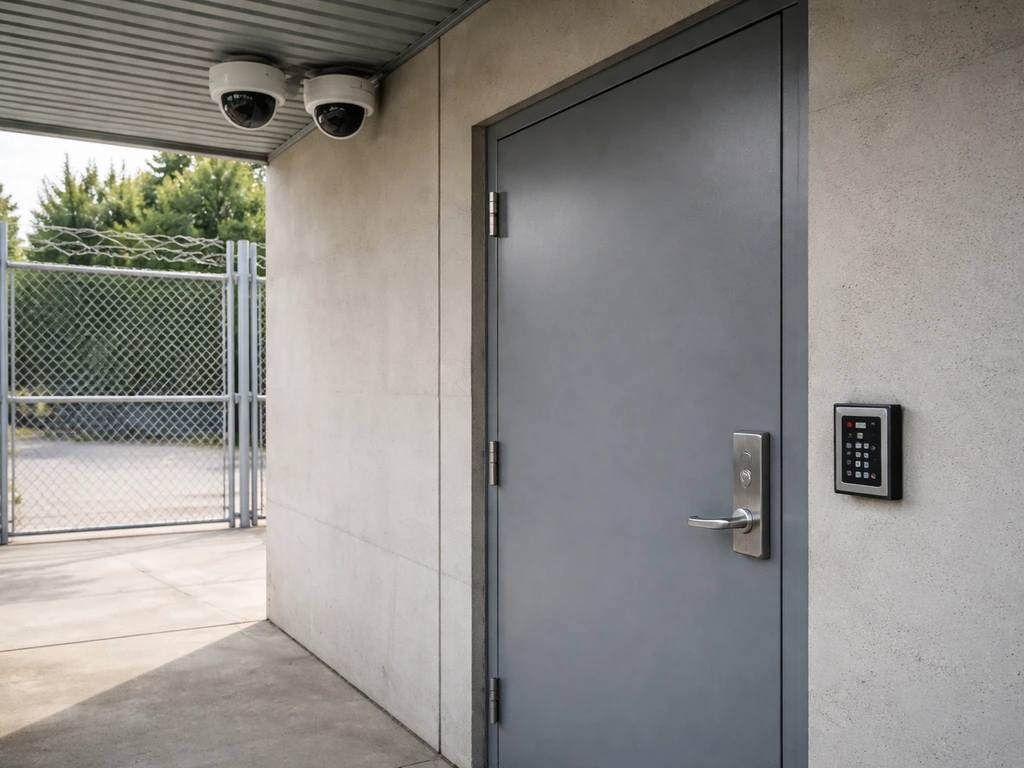
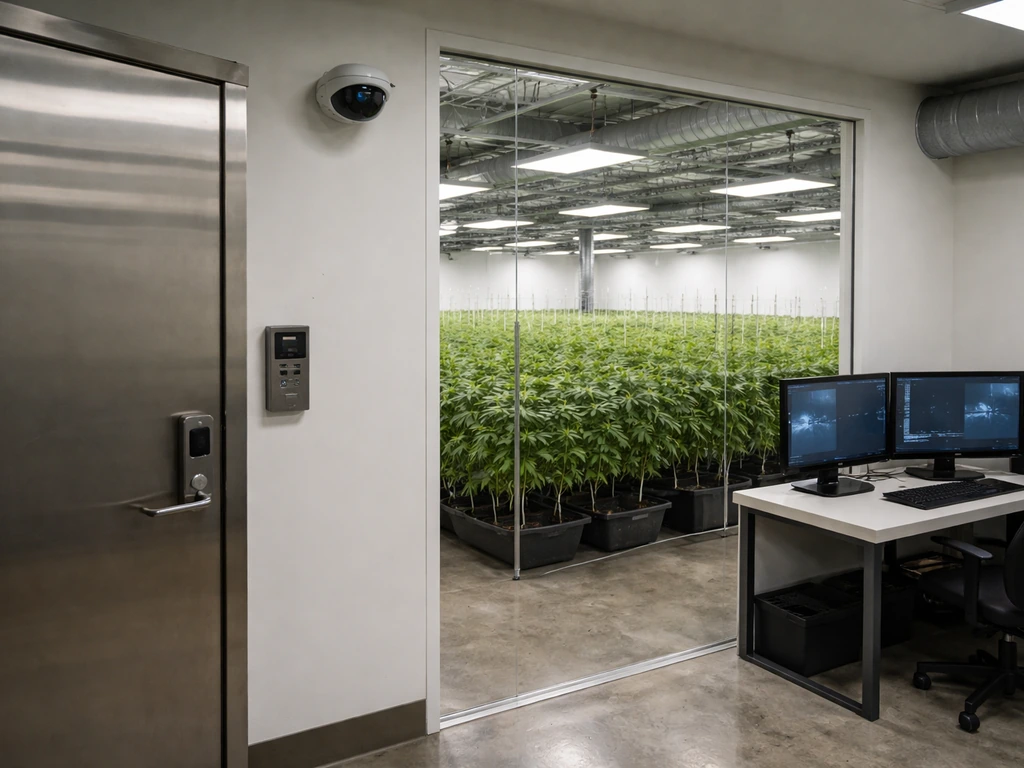
Ohio's MMCP rules require cultivators to operate a robust physical and electronic security system. This includes 24-hour video surveillance covering all cultivation areas, entry points, and storage areas, with footage retained for a minimum period specified in the rules. You also need access controls (key cards or similar), alarm systems, and limited access areas for the actual cultivation and storage spaces. Security plans must be submitted with your application and your facility must pass inspection before you can operate.
Staffing and compliance personnel
All employees working in your cultivation facility must pass background checks and be registered with the state. You are responsible for maintaining accurate employee records and ensuring no disqualified individuals have access to the facility or the cannabis itself. Most operations of any meaningful size designate a compliance officer or point of contact who manages documentation and state reporting.
What you are required to do after you get the license
Getting the license is the beginning, not the finish line. Ohio cultivators carry ongoing obligations that, if neglected, can result in fines, suspension, or revocation.
Seed-to-sale tracking

Ohio requires cultivators to use a state-mandated seed-to-sale tracking system (Metrc has been the platform used in Ohio's program). Every plant must be tagged and every transaction, including transfers to processors or dispensaries, must be logged in the system in real time. Gaps in your tracking records are a compliance violation.
Seed and clone controls
You can only obtain seeds and clones from other licensed Ohio cultivators or through approved acquisition processes. You cannot legally source plant material from unlicensed sources, including out-of-state suppliers, regardless of how they are marketed. Every acquisition must be documented and entered into the tracking system.
Renewals and inspections
Cultivator licenses are not permanent. Ohio requires annual renewal, which typically involves paying a renewal fee and attesting to continued compliance. The Department of Commerce can conduct unannounced inspections of your facility at any time. Keep your physical space, records, and security systems inspection-ready every day, not just when you expect a visit.
Reporting obligations
Beyond real-time inventory tracking, cultivators must submit periodic reports to the Department of Commerce covering production volumes, waste disposal, and any significant operational changes. You must also report security incidents, theft, and significant losses promptly. Failing to report a loss or incident is treated as seriously as the incident itself.
Why Ohio cultivation applications get denied and how to avoid it
Ohio's cultivation license process is competitive and the Department of Commerce scores applications on multiple criteria. Here are the most common reasons applications fail, and what to do instead:
| Common Denial Reason | How to Avoid It |
|---|---|
| Incomplete or inconsistent application | Do a full document audit before submitting. Every section must be filled out and consistent with the others. |
| Inadequate capitalization proof | Show liquid capital or committed financing sufficient to build and operate the facility for at least 12 months. |
| Weak security plan | Hire a security consultant familiar with MMCP requirements to draft your plan. Generic plans consistently score poorly. |
| Zoning or local approval issues | Confirm zoning compliance and get written local government acknowledgment before choosing your site. |
| Disqualifying background issues for a principal | Run internal background checks on all principals before applying. One disqualified owner can sink the whole application. |
| Vague or unrealistic business plan | Use specific numbers, realistic projections, and concrete operational details. Reviewers can spot filler. |
| Missing or unsigned forms | Use a checklist and have a second person verify every required form is present, signed, and dated. |
| Late submission or wrong application window | Monitor the Department of Commerce announcements closely. Applications submitted outside the window are not accepted. |
Your next steps: what to do right now
If you are serious about pursuing an Ohio medical cannabis cultivator license, here is a practical action list to start working through today:
- Go directly to the Ohio Department of Commerce's cannabis division website and check for any open or upcoming application windows.
- Decide between Level I and Level II based on your capital, intended scale, and facility availability.
- Form your Ohio business entity if you have not already and get your EIN.
- Begin site search with local zoning verification as a prerequisite — do not sign a lease until you confirm cannabis cultivation is permitted at that address.
- Start gathering entity documents, financial records, and preparing your business and security plans.
- Run background checks on all principals before anything else gets too far along.
- Budget for application fees, license fees, facility build-out, security systems, and Metrc setup costs.
- Consider working with a consultant who has Ohio MMCP experience — the application is complex enough that expert help often pays for itself in avoided mistakes.
If you are comparing Ohio's process to other states, the general framework here is similar in structure to programs in Florida, Louisiana, and Arkansas, all of which have their own cultivator license categories, fees, and operational requirements. If you're wondering about Arkansas, the process is similar in that you still need a state license and ongoing compliance for cultivation license to grow medical weed in Arkansas. In Louisiana, you also need a state-approved license to grow medical weed, along with compliance steps similar to other regulated programs license to grow medical weed in louisiana. In Florida, pursuing a license to grow medical weed typically involves state oversight, facility requirements, and strict compliance steps before you can cultivate programs in Florida. Ohio sits in the mid-complexity range, but the limited number of licenses available makes each application window competitive.
Everything on this page is informational and reflects Ohio's MMCP framework as understood through current rules and research. Regulations, fees, and application windows change. Before you spend serious money or time on this, verify current requirements directly with the Ohio Department of Commerce's Division of Cannabis Control. This is not legal advice, and for anything involving entity structuring, criminal history analysis, or contract review, talk to a licensed Ohio attorney.
FAQ
Can an individual get a license to grow medical weed in Ohio, or does it have to be a business entity?
Ohio cultivator licenses are issued to qualifying entities (such as LLCs or corporations), not individual applicants. You generally need to form the Ohio business entity before applying, and owners, officers, and certain board members with significant interest should expect background checks.
If I already run a farm or greenhouse, can I use that existing facility to apply for a Level I or Level II cultivator license?
You can sometimes leverage an existing greenhouse structure, but the facility still must be brought into compliance with MMCP security, access control, and inspection requirements. The Department of Commerce will evaluate layout, security coverage, and ability to operate under seed-to-sale controls, so plan for upgrades rather than assuming current farm infrastructure qualifies.
What happens if my application documents or business plan have minor gaps, like missing attachments or inconsistent floor plan details?
In a competitive program, incomplete or inconsistent documentation is a common denial driver. Build a submission checklist that matches what the application specifically requests, and confirm all attachments and descriptions are consistent with your proposed canopy area, security design, and operational workflow.
Is it possible to start with Level II and later expand if I succeed?
You cannot treat canopy limits as flexible without following the rules. If you want to increase beyond your tier’s cap, you typically need an approval path with the Department of Commerce rather than simply expanding production. Plan expansion budgets and compliance updates upfront.
Do I need separate licenses for growing versus selling to patients directly?
Yes. A cultivator license does not allow retail sales to patients. Cultivators must sell to licensed processors or dispensaries, so if your end goal includes patient-facing sales, you would need separate licensing for that business activity.
Can I hire out security or compliance, like using a third-party company for cameras and alarms?
You can use vendors, but your organization remains responsible for having compliant systems and for submitting required security plans. Also confirm vendor capabilities around 24-hour video retention, access control integration, and the documentation the state expects during application and inspections.
How strict is the seed-to-sale logging requirement, and what counts as a “gap” in compliance?
Logging must reflect real operational activity, including tagging plants and recording transfers in real time as required by the state’s tracking rules. Even short periods where transactions are missing or inventory is not reconciled can create compliance exposure, so implement procedures for daily reconciliation and staff accountability.
Where can Ohio cultivators legally get seeds or clones?
You generally can only obtain seeds and clones through licensed Ohio cultivators or through approved acquisition channels. Sourcing from unlicensed or out-of-state suppliers can create a compliance violation, so vet acquisition partners and keep acquisition documentation aligned with tracking requirements.
Can a cultivator change key staff, like the compliance point of contact or officers, after the license is issued?
You can make personnel changes, but you usually need to ensure the state has the required updated information and that background-check obligations are handled for covered individuals. Set an internal process to notify the appropriate department contacts and to prevent unapproved access by any individual who would require screening.
Do I need to renew every year, and can I keep operating while renewal is pending?
Cultivator licenses require annual renewal. Whether continued operation is allowed while renewal is pending depends on the status of your renewal and any conditions provided by the Department of Commerce, so plan ahead and avoid relying on assumptions if your renewal is late.
Are unannounced inspections only about security, or do they also cover records and inventory?
Inspections typically cover more than cameras and doors. Expect scrutiny of security system functionality, compliance documentation, employee access controls, and seed-to-sale records and reconciliation, so keep both the physical facility and electronic records inspection-ready at all times.
What are common practical reasons applicants fail, beyond “bad paperwork,” and how do I reduce that risk?
Beyond missing documents, failures often stem from weak operational planning, misalignment between the proposed facility and what the security plan requires, and unrealistic capacity assumptions for the licensed canopy. Reduce risk by doing a gap review against the application scoring criteria, then run a mock audit of tracking, acquisition, and waste workflows.
If I’m out of state, can I still apply if I have Ohio business ties?
Eligibility may depend on Ohio residency or the nature of Ohio business ties, and those details can change. If you do not meet residency expectations, document the specific ties (such as ownership structure, location-based operations, and business premises) and verify current requirements directly with the Department of Commerce before you incur major costs.
Next Article
License to Grow Medical Weed in Florida: Step by Step
Step-by-step Florida guide to obtaining a medical cannabis grow license, costs, eligibility, timeline, and post-approval