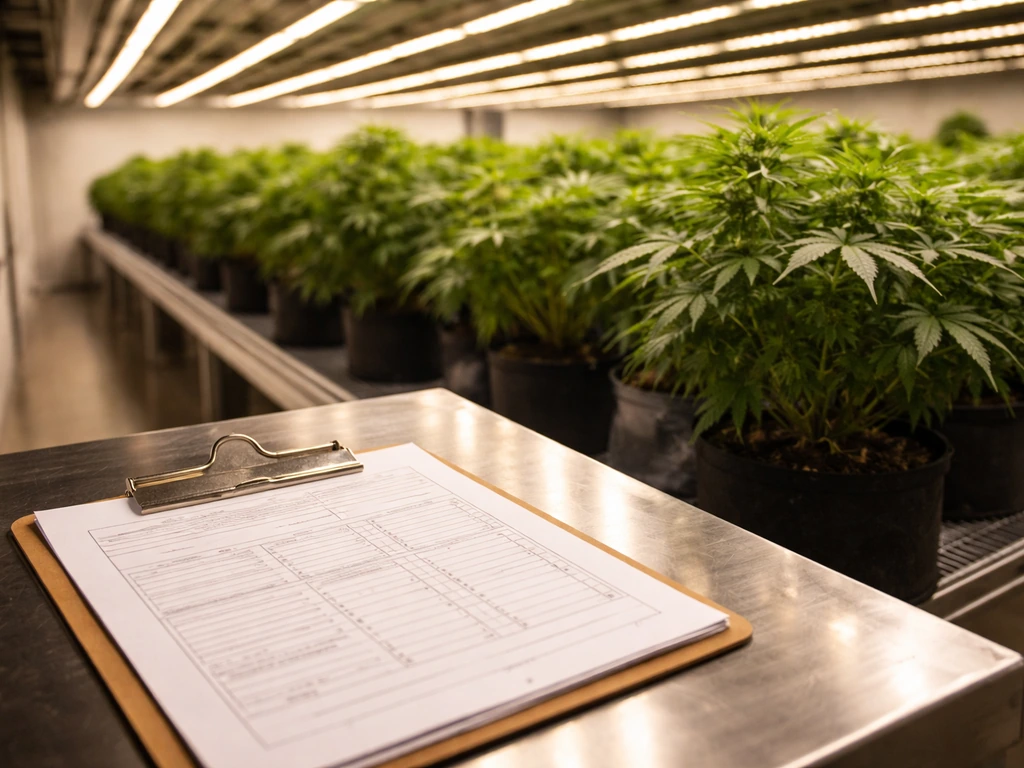
Getting a license to grow medical weed in Arkansas is not something an individual patient or home grower can do. Arkansas only allows commercial cultivation through licensed cultivation facilities, and those licenses are tightly controlled by the state. If you want to grow legally in Arkansas, you need to go through the commercial licensing process run by the Arkansas Medical Marijuana Commission (MMC). Here is exactly what that looks like.
License to Grow Medical Weed in Arkansas: Steps, Fees, Rules

Marcus Whitley
14 Apr 2026

Is it legal to grow medical cannabis in Arkansas, and who can do it?
Yes, growing medical cannabis is legal in Arkansas, but only at the commercial level. Amendment 98, passed by voters in 2016, established the state's medical marijuana program and made it clear that cultivation must happen inside a licensed cultivation facility. There is no provision for patients to grow at home. If you are a patient, caregiver, or just a curious individual wondering about growing weed at home, Arkansas simply does not allow it under any license category.
The entities that can legally grow are licensed cultivation facilities, which are commercial operations that must meet facility, security, financial, and operational standards before they ever touch a seed. The Arkansas Medical Marijuana Commission, which sits under the Department of Finance and Administration (DFA), is the body that grants, monitors, and revokes these licenses.
Arkansas medical cannabis license types that allow cultivation
Arkansas has a few license categories under its medical marijuana program, and not all of them allow growing. Here is how they break down as far as cultivation is concerned:
- Cultivation Facility License: This is the only license that authorizes a business to cultivate (grow) medical marijuana plants in Arkansas. Cultivation facilities can sell marijuana plants, seeds, and usable marijuana to dispensaries, other cultivation facilities, or processing facilities within the state. Sales outside Arkansas are only permitted to the extent that federal law allows.
- Dispensary License: Allows retail sale to qualifying patients. Dispensaries do not have a general right to cultivate under this license alone.
- Processor License: Covers manufacturing of marijuana-infused products. No grow rights attached.
- Transporter/Distributor License: Covers movement of product between licensed facilities. No grow rights.
If your goal is to grow, the cultivation facility license is the one you need. The Commission also licenses individual employees of these facilities separately, so key personnel at any licensed operation must go through their own background and credentialing process.
For a broader look at how cultivation licensing compares across different states, it helps to understand the general license to grow pot framework that most state programs use as a starting point, even though the specifics vary significantly.
Eligibility, residency rules, and disqualifiers
Arkansas takes eligibility seriously, and there are several hurdles to clear before you even get your application reviewed. Here are the key requirements and common disqualifiers:
- Arkansas residency: Applicants and principal owners generally must meet state residency requirements. Arkansas has historically prioritized in-state ownership, and the Commission can scrutinize ownership structures.
- Criminal background checks: All principals, directors, officers, and certain employees must submit to State Police background checks. A felony conviction, particularly for a drug-related offense, is a major disqualifier. The DFA Applications and Forms page includes the State Police background application form you will need.
- Financial suitability: You must demonstrate the financial capacity to build, equip, and operate a compliant cultivation facility. This includes proving access to legitimate, traceable funds.
- No prior license violations: If you or a business partner was previously involved in a cannabis license that was revoked or suspended due to noncompliance, expect that history to be a problem.
- Ongoing noncompliance: The Commission can deny a renewal, and by extension an initial application, for records showing continuing noncompliance with state regulations.
The Commission can also conduct additional background checks at renewal time to confirm that principals still meet eligibility requirements. This is not a one-time check. Staying clean and transparent throughout the life of the license is part of the deal.
Step-by-step: how to apply for a cultivation facility license

The application process is formal and competitive. Arkansas has a fixed number of cultivation facility licenses, and applications are evaluated against each other during open licensing windows. Here is how the process works in practice:
- Watch for a licensing window. The Commission announces when applications are being accepted. These windows are not always open, so monitor the DFA Medical Marijuana Commission page regularly if you are planning to apply.
- Download the application package. The DFA hosts all required forms, including the State Police background check application and change-in-information forms, on its Applications and Forms page.
- Prepare your facility plan. You need to document your proposed grow site in detail: square footage, security layout, ventilation systems, access controls, camera placement, and how you plan to meet the state's operational requirements. This is where many applicants lose points, so be thorough.
- Prepare your business and financial documents. This includes entity formation documents, proof of capitalization, ownership disclosures, and any lease or deed for the proposed facility location.
- Complete background check forms for all principals. Everyone with an ownership or managerial stake in the business needs to go through the State Police process. Budget time for this because it is not instant.
- Submit your application to the Arkansas Medical Marijuana Commission through the NIC Licensing System. The DFA uses this platform for both initial applications and renewals.
- If selected, submit your $500,000 performance bond within 7 days of written notice. This is a hard deadline. Missing it can cost you the license slot even after you have been selected.
The rules governing this process are codified in Arkansas Administrative Code under Division 28 (Rule 006.28.17-001 and the updated Rule 006.28.20-001), which cover the full application, issuance, and renewal framework for cultivation facilities, dispensaries, and processors.
If you want to compare how another southern state runs its application process, the guide on the license to grow medical weed in Louisiana is a useful reference point given how similar the regulatory structures can be in neighboring states.
License costs, fees, and what to expect on timing
The costs associated with an Arkansas cultivation facility license are significant. Amendment 98 sets the ceiling for the initial application fee at $15,000, and the Commission has the authority to set fees up to that amount. But the application fee is actually the smallest financial commitment you will make. Under 20 CAR § 800-210, within seven days of written notice of selection a selected applicant must submit the $100,000 cultivation facility license fee in cash or certified funds payable to the State of Arkansas.
| Cost Item | Amount / Details |
|---|---|
| Initial application fee (max) | Up to $15,000 (set by the Commission under Amendment 98) |
| Performance bond (if selected) | $500,000, submitted within 7 days of selection notice |
| Facility buildout | Highly variable; compliant security, climate, and access systems can run into the hundreds of thousands |
| Renewal fees | Set by the Commission; renewal handled through the NIC Licensing System |
| Employee licensing fees | Per-employee background and licensing costs for all principals and staff |
The $500,000 performance bond is the number that surprises most people new to this process. It is not a fee you pay and lose. It is a bond held to ensure your facility performs its obligations, but you still need the financial relationship with a bonding company to secure it, which means demonstrating creditworthiness and often putting up collateral.
On timing, expect the process from application submission to receiving a license to take several months at minimum, especially during competitive application cycles. After you receive your license, you will still need to complete facility construction or buildout and pass pre-operational inspections before you can start growing. All in, a realistic timeline from application to first harvest is often 12 to 18 months or longer depending on construction and inspection scheduling.
For context on how Arkansas fees compare to other markets, it is worth looking at resources like how much a license to grow medical weed costs across different states, since fee structures vary widely and Arkansas sits on the higher end of upfront financial requirements.
What you have to do once you are licensed: operational requirements
Getting the license is only the beginning. Arkansas Administrative Code Rule 006.02.20-009, titled Oversight of Medical Marijuana Cultivation Facilities, lays out the operational rules you must follow every single day. Here is what the major requirements look like in practice:
Security and surveillance
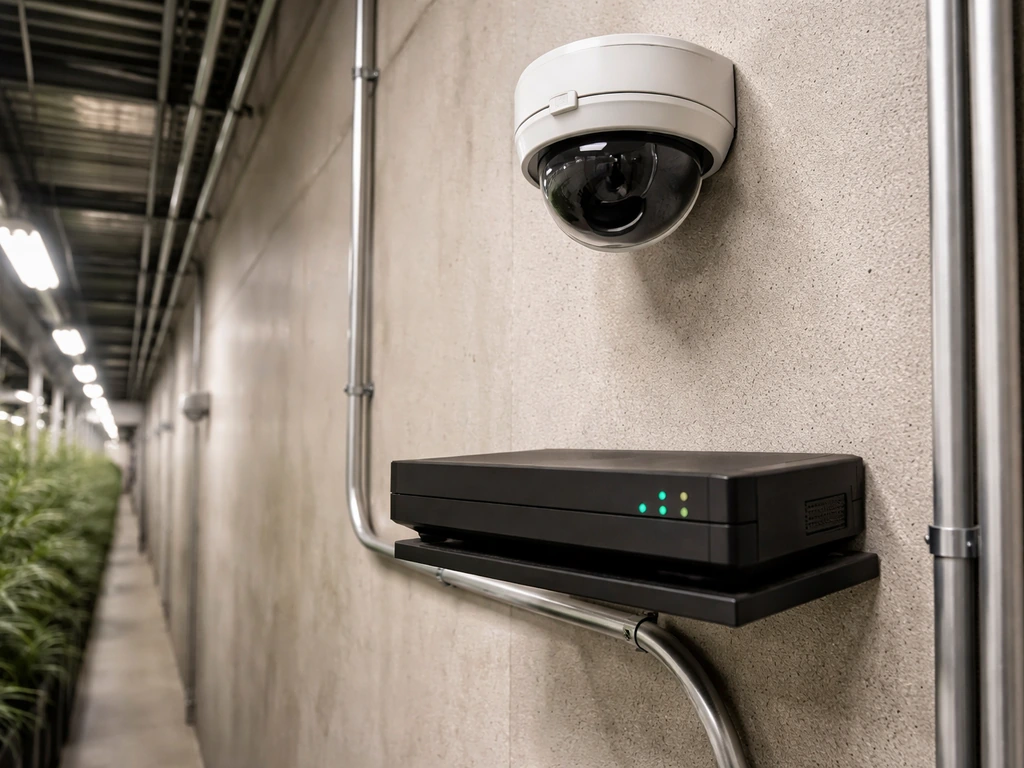
Your facility must have a functioning security recording system. The rule specifically requires recording devices capable of capturing still images, and you must maintain a video printer on-site. Cameras need to cover all entry and exit points, grow areas, storage, and any area where product or cash is handled. Access to the facility must be controlled and logged. This is not a system you can cut corners on. Inspectors check it.
Inventory tracking and seed-to-sale compliance
Arkansas requires cultivation facilities to track every plant from seed or clone through to final sale. This means using the state's designated seed-to-sale tracking system, recording plant counts at each growth stage, logging all transfers between your facility and dispensaries or processors, and reconciling your inventory on a regular basis. Discrepancies in your plant counts are a red flag during inspections and can trigger enforcement action.
Authorized sales channels
As a cultivation facility, you can only sell marijuana plants, seeds, and usable marijuana to licensed dispensaries, other licensed cultivation facilities, or licensed processing facilities within Arkansas. Sales outside the state are only permitted to the extent that federal law allows, which in practice means interstate sales are essentially off the table for now.
Inspections and enforcement
The Commission and its agents can inspect your facility. There is no advance notice requirement for all inspection types, so your operation needs to be inspection-ready at all times, not just when you know someone is coming. If the Commission finds violations, it can initiate suspension or revocation proceedings. Those hearings go before the Alcoholic Beverage Control Director or a designated hearing officer, and fines are also on the table. The process has formal notice requirements, but enforcement can move quickly if violations are serious.
States with mature medical programs tend to converge on similar operational standards. For comparison, see how Ohio handles its medical weed grow license requirements, which shares many of the same seed-to-sale and security principles as Arkansas.
Renewals, transfers, and staying compliant long-term
Cultivation facility licenses in Arkansas are not permanent. You need to renew them, and the renewal process is not just a formality. Here is what ongoing compliance looks like:
Renewals
Renewals are submitted through the NIC Licensing System, which is the same platform used for initial applications. Before renewing, the Commission can require you to submit additional information and may conduct new background checks on principals. If your compliance history during the license period shows ongoing violations, the Commission can deny renewal. This is a significant risk for operators who let issues pile up without addressing them.
Transfers and ownership changes
If ownership of your cultivation facility changes, you must notify the Commission. There are change-in-information forms available through the DFA Applications and Forms page for exactly this purpose. Transferring a license or bringing in new principals without prior disclosure is a compliance violation. Any new principal will also need to go through the background check process.
Long-term compliance habits that matter
- Keep your seed-to-sale records current and reconciled at all times, not just before inspections.
- Maintain your security system and address equipment failures immediately.
- Report any material changes (ownership, facility location, key personnel) to the Commission promptly using the proper forms.
- Stay current on updates to Arkansas Administrative Code rules, since regulations do get amended and you are expected to know and follow current requirements.
- Keep your performance bond in force for the life of the license.
It is also worth keeping an eye on how neighboring states evolve their programs. The license to grow medical weed in Florida framework, for example, has gone through several significant regulatory updates in recent years, and Arkansas could follow similar patterns as the program matures.
How Arkansas compares to other commercial cultivation states
If you are evaluating Arkansas as a market or comparing it to other states before committing to an application, here is a quick look at where it stands on the major factors:
| Factor | Arkansas | Oregon (for comparison) | Ohio (for comparison) |
|---|---|---|---|
| Home grow allowed? | No | Yes (patients) | No |
| Max application fee | $15,000 | Varies by tier | Varies by license type |
| Performance bond | $500,000 | Not required at this level | Required (varies) |
| License type for growing | Cultivation Facility License only | Multiple tiers including micro | Cultivator License |
| Sales restrictions | To dispensaries, cultivators, processors in-state only | In-state only | In-state only |
Oregon, for comparison, has a much more accessible tiered licensing structure with lower upfront costs. You can get a sense of that difference by looking at how much a grow license costs in Oregon, which reflects a very different market philosophy than what Arkansas has built. Oregon also has a separate license to grow pot in Oregon framework that includes tiers for smaller operations, something Arkansas does not currently offer.
A few things to keep in mind before you move forward
Arkansas's cultivation licensing program is built for well-capitalized commercial operators, not small growers or individuals. The $500,000 performance bond requirement alone filters out most individual applicants who do not have institutional backing or significant personal assets. If you are serious about pursuing a cultivation facility license, you need a legal entity, a compliant facility plan, clean financial records, and principals who can all pass background checks.
The application windows are also competitive and not always open. Missing a window can mean waiting a year or more for the next opportunity. Start preparing your documentation and facility planning well before a window opens, not after.
This site provides regulatory information to help you understand the landscape, but it does not provide legal advice. For anything involving your specific application, ownership structure, compliance obligations, or facility design, work with a licensed attorney who has experience in Arkansas cannabis law. The rules are specific and the financial stakes are high enough that professional guidance is worth the cost.
FAQ
If I am an Arkansas medical patient, can I get a license to grow medical weed in arkansas under any patient or hardship category?
No. Arkansas does not offer a home-grow license for patients or caregivers, and the cultivation-related license categories are limited to licensed cultivation facilities. If you want legal access to cannabis, your path is through an allowed dispensary purchase under your patient status, not through any personal cultivation authorization.
Can my business apply for a license to grow, even if we are not fully built yet?
You can apply as a legal entity, but the state will require that your proposed operation can meet facility, security, and operational standards. The practical issue is that, after you receive approval, you must still complete construction or buildout and pass pre-operational inspections before you can begin growing, so funding and scheduling need to cover both the licensing and readiness phases.
What common mistake disqualifies applicants for a cultivation facility license in Arkansas?
A frequent issue is failing to align the ownership and principal information with eligibility expectations, such as incomplete or inconsistent background-related disclosures. Because the Commission can run additional background checks at renewal, any gaps or unclear documentation can create problems later, even if the initial application is accepted.
Do cultivation facility employees need separate licensing, and does that affect who can work at the facility?
Yes. Arkansas requires separate licensing for individuals employed by cultivation facilities. That means you must plan staffing so key personnel complete their credentialing process, and you should avoid assigning regulated roles to people who are not yet properly licensed.
How strict are security requirements, and what happens if parts of the system fail?
Security expectations are ongoing, not one-time. Cameras must cover required areas, recording capability must meet the rule’s technical expectations, and access control must be logged. If inspectors find that coverage is missing or recording capability is inadequate, enforcement can begin quickly, including potential suspension or revocation actions.
Is seed-to-sale tracking something we set up once, or do we need daily operational controls?
It requires continuous operational discipline. You need plant counts at each growth stage, regular inventory reconciliation, and correct logging of transfers. Discrepancies are treated as a compliance risk, so many operators implement internal audits and reconciliation routines well before scheduled inspections.
Can a cultivation facility sell to out-of-state customers or ship products across state lines?
Sales outside Arkansas are not generally available through the state medical system. The program is structured around sales to Arkansas-licensed dispensaries, other licensed cultivation facilities, or licensed processing facilities, and interstate sales are limited in practice because federal constraints prevent the kind of routine cross-border commerce that some businesses assume is possible.
How do inspections work, and do we get advance notice?
Not all inspection types require advance notice. Your facility must be inspection-ready at all times, meaning equipment, logs, tracking entries, and physical controls should be maintained continuously rather than only during the period leading up to an expected visit.
What are the biggest risks to renewal after we earn a license?
Renewal is not automatic. The Commission can request additional information and may conduct background checks again, and ongoing violations during the license term can lead to renewal denial. To reduce risk, operators typically treat compliance as a permanent program, not a short-term project tied to annual filings.
If ownership changes (or we bring in a new principal), do we need prior approval?
You must notify the Commission about ownership or principal changes. You should use the change-in-information process rather than waiting, because bringing in new principals without prior disclosure is treated as a compliance violation, and any new principal must satisfy background-check requirements.
How long does it usually take from application to starting cultivation, and what delays are most common?
Even after you receive a license, you still must complete construction or buildout and pass pre-operational inspections, so the overall timeline commonly runs 12 to 18 months or longer. Delays often come from facility construction scheduling, inspection availability, and correcting security or operational readiness issues found during pre-operational reviews.
What should we prepare financially for beyond the application fee?
The performance bond is a major ongoing and structuring requirement, not just a one-time payment. Because it involves working with a bonding company and may require demonstrating creditworthiness or collateral, many applicants underestimate how long it can take to secure the bond and finalize the financial arrangements.
Does missing an application window mean you lose your chance permanently?
No, but you can be forced to wait until the next open licensing window. That can add significant time to your plan, so it is important to prepare documentation, entity paperwork, and facility planning before windows open rather than scrambling during the application period.
Next Article
License to Grow Pot in California: Steps, Permits, Costs
California guide to cannabis licenses or permits for growing, costs, eligibility, plant limits, and compliance steps.