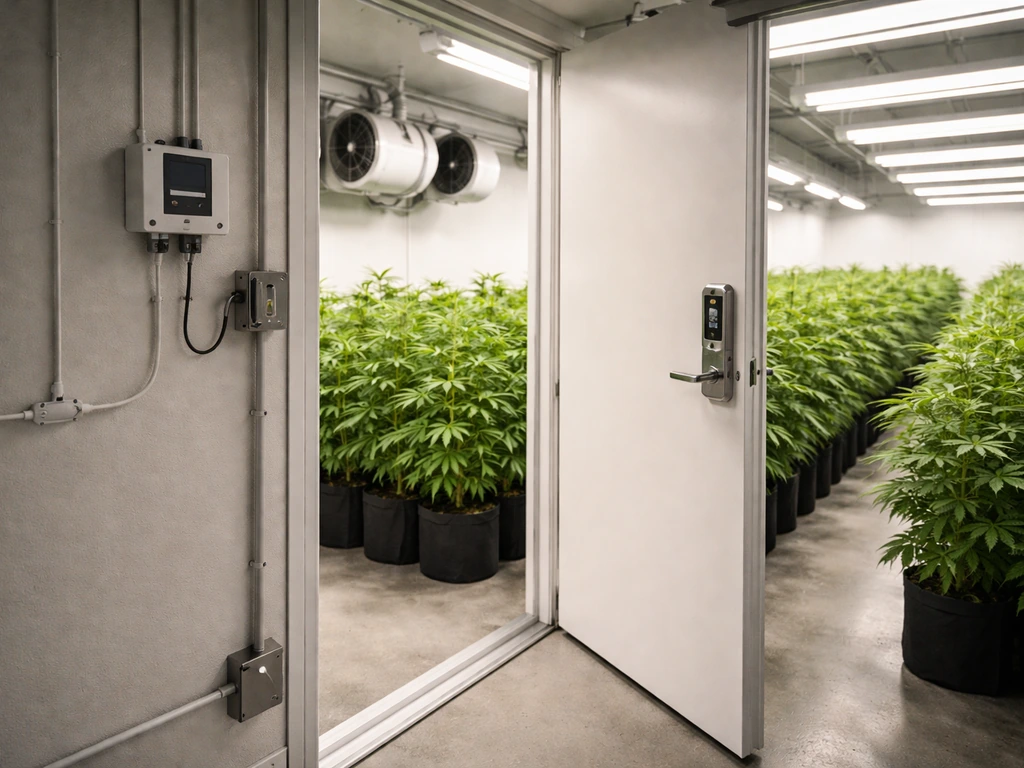
Yes, a cannabis cultivation license is a real, government-issued authorization in states where cannabis cultivation is legal. It is not a scam concept, but there are plenty of scammy third-party "license services" that prey on people who don't know how the process actually works. The license itself comes from a state agency, costs real money, requires real documentation, and comes with real ongoing compliance obligations. If someone is selling you a "license to grow" outside of that official government process, that is the scam, not the license itself.
Is License to Grow Legit? US Cannabis Licensing Steps

Marcus Whitley
7 May 2026

What 'license to grow' actually means (and what it doesn't)
A cannabis cultivation license is a government-issued permit that authorizes you to legally grow cannabis, either for personal/household use (where home cultivation is allowed without a separate license) or for commercial purposes (where a formal license from a state agency is required). The two are very different things.
Home cultivation in places like New York doesn't require you to apply for anything. New York adults 21 and older can grow up to six plants per person (three mature, three immature) or up to twelve per household, no license required. That is just a right granted by law.
Commercial cultivation, where you grow cannabis to sell, process, or distribute, is a completely different category. That requires a formal license from your state's cannabis regulatory agency. Each state has its own agency that handles this: California's Department of Cannabis Control (DCC), Colorado's Marijuana Enforcement Division (MED), Oregon's Liquor and Cannabis Commission (OLCC), Washington's Liquor and Cannabis Board (LCB), and so on.
What a license does NOT mean: no third-party company, website, or consultant can issue you a legitimate cannabis cultivation license. If you're seeing ads or platforms offering to sell you a "license to grow cannabis" for a flat fee with no government involvement, that is not a real license. The only valid license comes from the state (and often the local jurisdiction too). You should also know that some license types don't even authorize plant-touching activity, so getting the right license type matters as much as getting any license at all.
It's also worth noting that some people searching "license to grow" are actually looking at unrelated contexts, like mushroom cultivation licensing or hair salon business licensing. If you meant a hair salon or other business, check your state and city rules, since a license to grow cannabis is not the same thing as salon licensing license to grow salon. License rules also vary for other crops, so it helps to look up the specific licensing requirements before you start mushroom cultivation license to grow mushrooms. This article focuses specifically on cannabis cultivation in the US.
Legality check by state: can you even legally grow where you live?
Before worrying about applications, you need to confirm that cultivation is legal in your state at all. Here's a practical snapshot of where things stand in key legal states as of 2026, and how to verify official status.
| State | Home Cultivation (Personal) | Commercial Cultivation License | State Agency | License Lookup Tool |
|---|---|---|---|---|
| California | Allowed (medical patients, with limits) | Yes, required for commercial activity | Dept. of Cannabis Control (DCC) | DCC online License Search Tool (updated daily) |
| Colorado | Yes, up to 6 plants per adult (3 mature) | Yes, via MED | Marijuana Enforcement Division (MED) | MED Licensee Information & Lookup Tool |
| Oregon | Yes, up to 4 plants per household | Yes, via OLCC (some categories under moratorium) | OR Liquor and Cannabis Commission (OLCC) | OLCC eLicense portal |
| Washington | Not permitted for recreational use | Yes, via LCB | Liquor and Cannabis Board (LCB) | LCB Licensee List (Active vs. Closed) |
| Michigan | Yes, up to 12 plants per household | Yes, tiered classes via CRA | Cannabis Regulatory Agency (CRA) | CRA public license search |
| New York | Yes, up to 6 per adult / 12 per household | Yes, via OCM | Office of Cannabis Management (OCM) | OCM licensing page |
| New Jersey | Not currently permitted | Yes, via NJ-CRC | Cannabis Regulatory Commission (NJ-CRC) | NJ-CRC Licensing Portal |
| Massachusetts | Yes, up to 6 plants per adult | Yes, via Cannabis Control Commission | Cannabis Control Commission (CCC) | CCC public records |
| Illinois | Not permitted | Yes, via IDOA | IL Dept. of Agriculture (IDOA) | IDOA licensing portal |
The fastest way to verify legality in your specific location is to search for your state's cannabis regulatory agency directly (use the agency names above) and look at their official licensing page. Never rely on a third-party website's summary of state law as your final word, regulations change, and you need the current official source.
One important caveat: even if your state allows it, your county or city may prohibit cultivation businesses. California is a clear example where you need both a state DCC license and a local permit or authorization before you can legally operate. Michigan has a similar rule: the state's Cannabis Regulatory Agency cannot issue a license if the municipality hasn't passed an ordinance authorizing that type of facility. Always check local zoning and municipal rules alongside the state requirements.
How cannabis cultivation licenses actually work
License types you'll encounter
States don't issue one-size-fits-all cultivation licenses. Most states use a tiered system based on the scale of your operation. Massachusetts, for example, recognizes three adult-use cultivation license types: Marijuana Cultivator, Craft Marijuana Cooperative, and Microbusiness. Illinois has a Cultivation Center license category administered through the Illinois Department of Agriculture. New Jersey's Cannabis Regulatory Commission issues licenses covering different business operations including cultivator licenses for both medical and recreational cannabis.
Washington does things slightly differently: an LCB cannabis license is actually structured as an endorsement on a Business License issued by the Washington State Department of Revenue's Business Licensing Service, so it's layered into a broader business registration process.
Plant limits by license class
Plant caps are one of the most important details to get right before applying. Michigan's grower licensing is a good illustration of how tiered caps work in practice: a Class B grower license, for example, authorizes up to 1,000 cannabis plants. Each class has a defined cap, and you need to apply for the class that fits your intended operation. Applying for a class that's too small limits your revenue potential; applying for one that's too large may put you out of compliance if you can't meet the operational standards for that tier.
Who qualifies

Eligibility requirements vary by state but generally include: being 21 or older, passing a background check, having no disqualifying criminal history (state-specific rules vary significantly), demonstrating financial standing, and having a compliant physical location. Some states like Washington and New Jersey have also created Social Equity programs that affect which applicants are prioritized or accepted during restricted application windows.
Costs, timelines, and what to do today
Realistic costs
Application fees are typically nonrefundable, which makes it critical to get your application right the first time. Michigan's Cannabis Regulatory Agency charges a $3,000 nonrefundable application fee just for the prequalification step, before you've even secured a location. State license fees on top of that vary by license type and tier. Beyond state fees, you'll also likely pay local permit fees, legal or consulting fees if you hire help, facility buildout costs to meet security and operations standards, and ongoing compliance costs like seed-to-sale tracking software.
There's no universal number here, but a realistic range for commercial cultivation licensing (application fees, local permits, and basic compliance setup) in most legal states starts in the low thousands and can climb into the tens of thousands before you've grown a single plant.
Typical timelines
Plan for months, not weeks. Michigan uses a two-step process where Step One (Prequalification) can be completed before a location is secured, but Step Two requires a physical location and full documentation review. State agency review timelines vary, and some states have application moratoriums or caps for certain license categories. Oregon's OLCC, for example, has periods where new applications for producer, processor, wholesaler, or retailer licenses are not being accepted. You need to check current application status directly on your state agency's site before investing time in an application.
Practical steps to take right now
- Go to your state's cannabis regulatory agency website directly. Use the agency names and lookup tools listed in the table above.
- Check whether your license category is currently open for new applications. Some states have moratoriums.
- Verify local authorization: contact your city or county planning/zoning department to confirm cannabis cultivation businesses are permitted in your intended location.
- Download the official application packet from the state agency. Read it fully before spending any money.
- Identify your license type and corresponding plant tier based on your planned operation size.
- Gather required documentation: proof of identity, financial records, property/lease documentation, a cultivation plan, security plan, and business entity formation documents.
- Start both the state and local application processes simultaneously where possible, since both are typically required and local approval can take time.
- Create required accounts for any state-mandated tracking systems. Illinois, for example, requires applicants to create a Metrc Learn account as part of the licensing setup.
- Pay application fees only through the official state licensing portal. Never pay a third party claiming to process your application on your behalf.
Where applications fall apart (and how to spot scams)
Common reasons applications get denied
- Missing local zoning approval: many applicants submit state applications without confirming the local jurisdiction even allows cannabis cultivation businesses. In California and Michigan, the state literally cannot issue a license without local authorization in place.
- Wrong license type: applying for a license that doesn't authorize the activities you plan to do. Some license types don't authorize plant-touching activity at all.
- Incomplete or inconsistent documentation: cultivation plans, security plans, and financial disclosures that don't align with each other or with the physical location.
- Location restrictions: Washington's LCB, for example, has specific location-related rules that prohibit licensed facilities near certain sites. Choosing a location without checking these restrictions is a fast path to denial.
- Disqualifying background history: not all criminal history disqualifies applicants, but failing to disclose relevant history when required causes automatic problems.
- Applying during a moratorium: submitting an application when the state is not currently accepting new applications for your category wastes time and fees.
How to spot fake license services
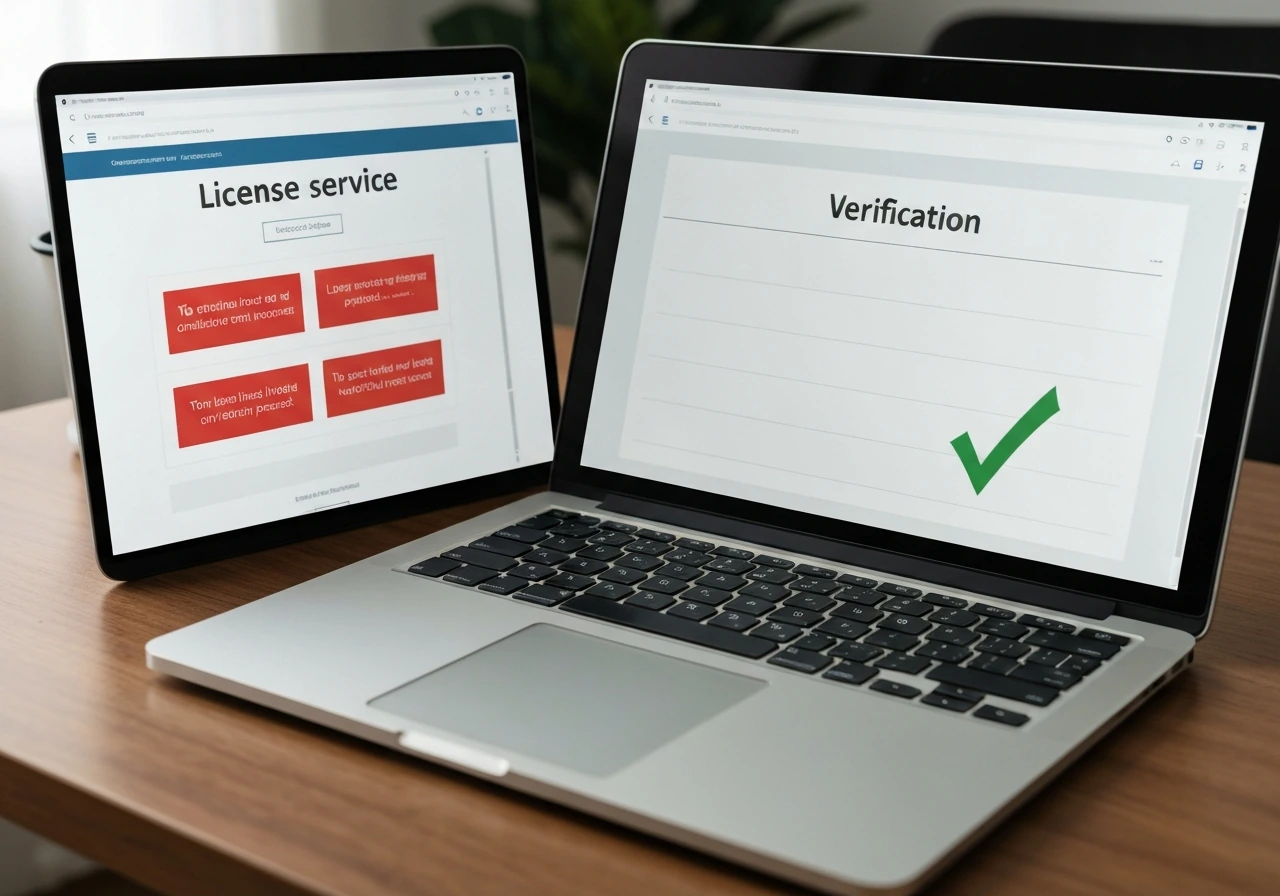
Red flags include: any website or service claiming to "issue" you a cannabis cultivation license outside of the official state process; services charging upfront fees to "process" or "approve" your application on your behalf through unofficial channels; promises of guaranteed approval; and services that don't direct you to the official state agency portal as the final destination for your application. Legitimate consultants and attorneys can help you prepare your application, but they submit through the official portal and cannot guarantee outcomes.
The verification test is simple: go to your state's official agency website (California DCC, Colorado MED, Oregon OLCC, etc.) and check their License Search Tool or licensee lookup. If a business or person claiming to hold or issue a license doesn't appear there as active, the license is not valid. California's DCC license search is updated daily and shows status categories including Active and Revoked. Washington's LCB publishes a Licensee List that shows Active vs. Closed status. Use these tools.
Staying compliant after you're approved
Renewals
Cannabis cultivation licenses are not permanent. They require annual renewal through the state licensing portal. New Jersey's Cannabis Regulatory Commission, for example, explicitly requires annual renewal submissions through the NJ-CRC licensing portal. Missing renewal deadlines can result in license lapse, which means you're no longer authorized to cultivate, even if you've been operating legally for years.
Seed-to-sale tracking
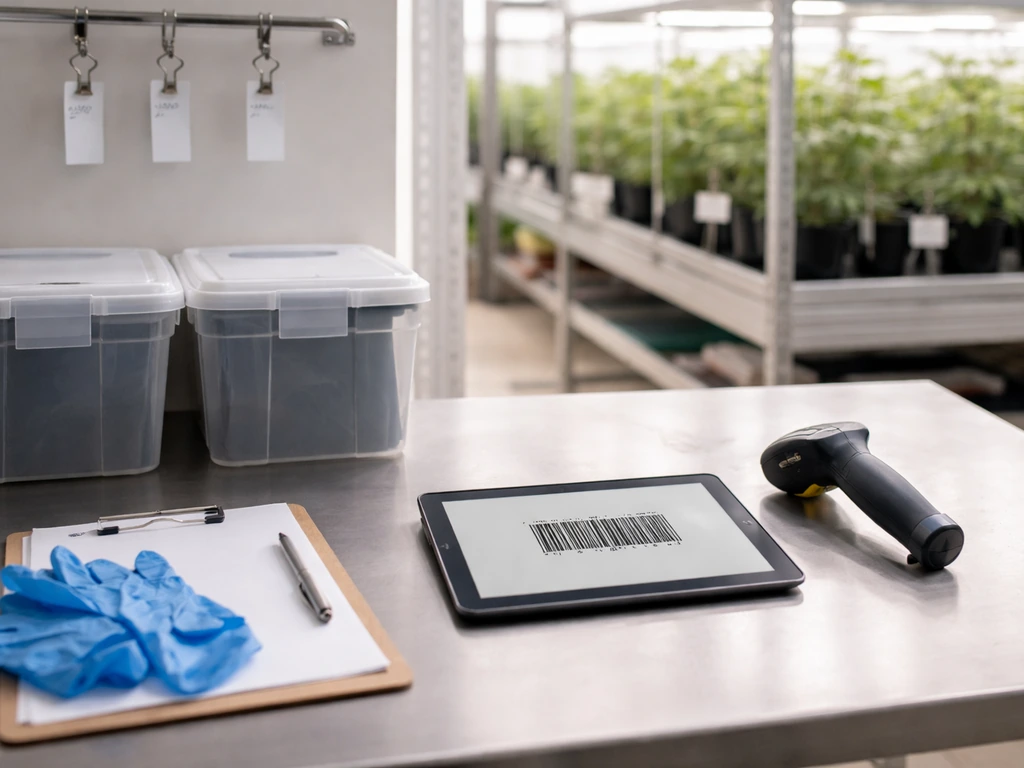
Most legal states require licensed cultivators to use a state-mandated seed-to-sale tracking system, and the dominant platform is Metrc. Illinois requires all licensed cannabis businesses to use Metrc, enforced through the Illinois Department of Agriculture's Licensee Services program. Massachusetts uses Metrc as its statewide seed-to-sale tracking system for all licensees. New Jersey references its own seed-to-sale tracking portal (also Metrc) through the NJ-CRC Business Resources page. California has its own Cannabis Track-and-Trace system with specific onboarding steps. Setting up and actively using these systems is not optional; it's a core compliance requirement from day one.
Inspections
State agencies have the authority to inspect licensed cultivation facilities. This means your security systems, record-keeping, plant counts, and physical facility all need to match what's in your approved application at any time. Keeping accurate records and maintaining your facility to the standards described in your application is ongoing work, not a one-time setup task.
Penalties for growing without a valid license
Growing cannabis commercially without a valid license in a legal state is still illegal and comes with serious consequences. New York's Office of Cannabis Management can issue a Notice of Violation (NOV) for cultivating or processing cannabis products without proper authorization under state Cannabis Law. New York OCM also makes clear that selling cannabis products without an OCM-approved license is illegal, regardless of whether cannabis is broadly legal in the state. Penalties can include fines, cease-and-desist orders, and criminal charges depending on the state and scale of the violation. A licensed cultivator who lets their license lapse is in the same position as someone who never had one.
The bottom line: yes, a license to grow cannabis is completely legitimate, and in states where commercial cultivation is legal, it is the only legitimate path to operating. The process is real, government-run, documented, and verifiable through official state agency lookup tools. If you're doing it right, every step traces back to an official agency portal, an official fee schedule, and an official license that appears in a public search tool. If any step in the process you're being sold doesn't trace back to that, stop and verify before paying anything.
FAQ
Can I buy a license to grow cannabis from a private company and still be legit?
In most cases, a real cultivation license cannot be “bought” from a third party as a shortcut. If someone offers you a license for a flat fee, the key test is whether the license number exists in the state’s official license search tool as Active (or the relevant equivalent). If it is not publicly verifiable, it is not legitimate, even if the seller provides paperwork or a photo of a document.
What if I find a “license” but it might not allow plant-touching or sales?
Yes, a license might exist but not cover the activity you want. Some license types authorize ancillary roles or limited phases, for example propagation only, nursery operations, or non-plant-touching activities. Before applying or paying, confirm in the state rules what your specific authorization allows, including whether you can handle plants, sell to which license classes, and whether “adult-use” and “medical” are separate categories.
How can I tell the difference between a legitimate consultant and a scammy license service?
Legit help usually looks like attorney or consultant support for applications, compliance, and facility readiness, but the state portal is still where the submission happens. If you are told not to use the official agency portal, asked to hand over login credentials, or promised guaranteed approval, treat it as a scam. Also, reputable professionals will clearly separate their service fees from state government fees and provide a written scope of work.
Does prequalification count as being licensed to cultivate?
Prequalification and final licensure are not the same thing. In tiered states, you may be allowed to complete early steps without a fully approved final authorization to operate. If a seller implies that paying for “preapproval” means you can start cultivating, you should verify the license status in the official lookup and confirm the exact status label used by your state.
If home cultivation is legal, can I sell my homegrown cannabis without a commercial license?
Sometimes a home cultivation right exists without a commercial license, but it does not automatically convert into commercial legality. If you plan to sell, process, or distribute, that typically triggers commercial licensing, even in states where home growing is allowed. Before investing, write down your intended activities (grow, store, transfer, sell) and match each one to what the license category authorizes.
What should I check locally if my state says cultivation is allowed?
Usually, the municipality question is separate from the state question. Even if the state would approve you, local zoning, ordinances, or permitting can still block operation, and some states require local authorization before the state finalizes licensing. Practical next step: call the local building and zoning office and ask what the local process is for cannabis cultivation facilities in that specific address.
What happens if I miss the license renewal deadline?
Missing or late renewals can cause a lapse, and a lapse can create exposure even if you are otherwise compliant. The safest approach is to build a renewal calendar that starts well before the annual deadline and to track whether your seed-to-sale system is still active in the renewal period. If you miss renewal, contact the regulator promptly, since reinstatement options and timelines vary by state.
Can I apply anytime, or do states sometimes pause new cultivation licenses?
Some states have application windows, caps, or moratoriums for certain license categories. If you apply during a restricted period, your application may be rejected, deferred, or you may be required to reapply later. Practical next step: check the agency’s “news” or “licensing updates” page for the latest status of new applications, caps, and expected re-open dates.
What are the most common costly mistakes when selecting a cultivation license tier?
For many applicants, the most expensive mistakes are choosing the wrong tier and underestimating facility and security buildout costs. If you select a tier that does not match your intended plant count, canopy, or operational model, you can end up unable to meet compliance requirements. Before filing, map your projected inputs to the tier definitions (plant limits, canopy limits, staffing, security requirements) using the state’s tier tables.
What do people get wrong about seed-to-sale tracking when starting cultivation?
Seed-to-sale and tracking requirements vary by state, but most require that you actively use the mandated system from the start of regulated operations. A common pitfall is installing software, but not completing onboarding steps or not assigning authorized roles in time. Confirm your state’s onboarding checklist, the expected timeline to become “ready” in the system, and whether inspections or audits will check your real-time tracking.
If my facility or business plan changes after approval, do I need to update my license?
States generally require that your approved site and operations match what was in your application, and changes may require notice or prior approval. If you change your facility footprint, security vendors, plant capacity, key personnel, or operational scope, it can trigger an amendment process. Keep a change log and verify with the regulator whether each change is “minor” or “requires approval.”
What should I do if a seller claims their license is real but I can’t find it in the official search tool?
If you suspect something is off, do not rely on seller claims like “we submitted it” or “it’s in progress.” Instead, confirm using the regulator’s licensee lookup and verify the exact status shown. If the license is not found, or the status is not active, stop payment. You can also report suspicious activity to the state agency or consumer protection office, especially if the service asked for large upfront sums with no official pathway.
Next Article
License to Grow Salon: Cannabis Grow License Guide (US)
Guide to cannabis cultivation licenses in the US: disambiguate “salon,” apply step-by-step, meet security, renew, stay c