If you searched 'license to grow reddit' and landed here, here's the direct answer: Reddit threads can point you in the right direction, but they cannot tell you what license you actually need, whether you qualify, or what the current rules are in your state. The real answer comes from your state's cannabis regulator. This guide walks you through what a cannabis grow license actually means, how to find the right one for your situation, and the exact mistakes that get applications denied so you can avoid them.
License to Grow Reddit: State-by-State Next Steps Today

Marcus Whitley
1 May 2026
What 'license to grow' actually means: home grow vs commercial cultivation
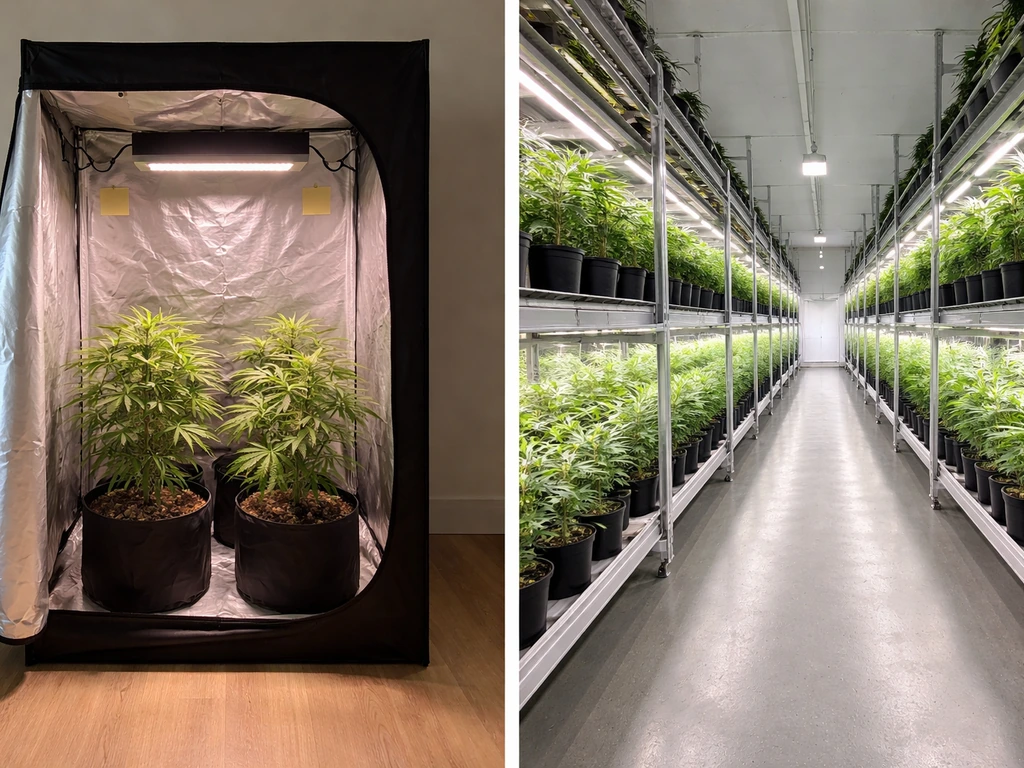
The phrase 'license to grow' means very different things depending on whether you're a home grower or a commercial operator. It's worth getting clear on this before you do anything else, because the application processes, costs, and requirements are worlds apart.
For home growers, most states that allow personal cultivation don't require a formal license at all. Instead, they set legal possession and plant limits by statute. Connecticut, for example, allows qualifying adults to grow up to 3 mature and 3 immature plants at home, with a hard cap of 12 plants per household. New York allows home cultivation with a possession limit of no more than 5 pounds of cannabis flower at the home premises. Ohio's adult-use code similarly authorizes home grows at a consumer's primary residence when specific statutory conditions are met. In these cases, 'getting a license to grow' at home often just means confirming your state allows it and following the plant count rules, not filling out a commercial application.
Commercial cultivation is a completely different category. Here, you are applying for a state-issued business license that authorizes you to grow cannabis at a specific, approved location for sale or distribution. In other words, it is the state’s authorization that makes a commercial grow legit state-issued business license. Nevada is explicit about this: only businesses licensed by the state specifically for cannabis operations may legally grow, manufacture, distribute, or sell cannabis. No state license means no legal commercial grow, full stop.
Within commercial cultivation, 'license to grow' isn't even a single license type. California's Department of Cannabis Control (DCC) breaks it down further. California's Department of Cannabis Control uses license types to frame who can legally cultivate under each category, including Nursery and Processor licenses as described by Calicannabis.org. A 'Nursery' license covers cultivators that only grow clones, immature plants, seeds, or other propagation material. A 'Processor' license is for operators that only trim, cure, dry, grade, package, or label cannabis. Neither of those is the standard cultivation license. New York similarly separates nursery licenses (production and sale of clones, immature plants, seeds) from distributor licenses (acquisition, possession, distribution of cannabis from processors to retailers). If you apply for the wrong license type, your application is dead on arrival.
How to use Reddit without getting burned
Reddit can be genuinely useful for cannabis licensing questions. Communities like r/weedbiz and r/OKmarijuana have practitioners who share real operational experience. But the risks are significant and specific.
The core problem is that Reddit posts are anecdotal, time-stamped to a moment in the past, and not jurisdiction-specific unless the poster says so explicitly. A Reddit thread discussing Metrc compliance timelines in Oklahoma, for instance, may have been accurate when posted but is now outdated as OMMA updates its own requirements. California's DCC provisional license rules are another good example: a Reddit post might discuss a deadline extension for provisional licenses, but whether that extension applies to your specific license type and situation depends entirely on the DCC's own communications, not a forum comment.
Even AMAs with regulatory staff (like the OMMA Compliance Department AMA on Reddit) contain useful general information, but the details, such as specific Metrc tagging requirements or exact timelines, must still be validated against the official, current regulator guidance before you act on them.
The right way to use Reddit: treat it as a pointer. If multiple experienced operators in a thread say 'your zoning approval has to come before your state application,' take that seriously and go verify it with your state regulator. One thread in r/weedbiz put it simply: 'Know your state laws.' If you're posting on Reddit asking whether you need a license, that's a signal you haven't done that research yet. Reddit is not a substitute for it.
- Use Reddit to identify questions you didn't know to ask
- Note which state the advice applies to before treating it as relevant to yours
- Check the post date: cannabis rules change frequently, and a post from two years ago may describe a process that no longer exists
- Always validate specific claims (costs, timelines, plant limits, tracking requirements) against the current regulator website
- Never rely on Reddit for legal eligibility determinations or application instructions
State-by-state licensing pathways: how to find the real steps
There is no single national cannabis cultivation license. Every state with legal cannabis has its own regulator, its own application portal, and its own eligibility rules. Here's how the process looks across several key states, and more importantly, where to find the current official workflow for yours.
California
California's DCC handles all cannabis licensing through its Cultivation Licensing System (CLS). The application requires you to identify an Agent for Service of Process, specify your power source, select the correct license type (Nursery, Processor, or one of the cultivation tiers), and complete a local approval step before or alongside the state application. California has time-bound compliance milestones that applicants must track: provisional licenses that did not transition to annual licenses before their 2025 expiration date required operations to cease. If you're applying in California today, check the DCC's current provisional license timeline page to confirm which deadlines are still active and what stage your application needs to reach.
Oregon
Oregon's OLCC licenses cannabis producers through its CAMP online portal. Applications are submitted on commission-prescribed forms and must include water-use documentation. If you are not the owner of the premises where you plan to grow, you need an informed consent form from the property owner. All individuals within the legal entity must submit criminal background check information and fingerprints. Oregon also requires checking your application status through your official OLCC online account rather than relying on external sources. The Oregon rules allow mixed production (both indoor and outdoor at the same premises) but require written approval before changing your approved canopy area.
Illinois
Illinois is particularly strict about license staging. A cultivation center that has received a conditional or preliminary award cannot grow, purchase, possess, or sell cannabis until the Adult Use Cultivation Center License is actually issued by the Illinois Department of Agriculture. The license is also tied to the specific location on the application, so changing your site after receiving a conditional award creates serious compliance problems. Applicants must also create a Metrc Learn account with training paths matched to their license type as part of the compliance process.
Nevada
Nevada's Cannabis Compliance Board handles licensing. The cultivation license specifically authorizes growing, harvesting, and packaging cannabis. Nevada treats distribution as a separate license category, so if you plan to move product you'll need to understand both. Check the CCB's Industry page for current application steps and eligibility criteria.
New York
New York's Office of Cannabis Management (OCM) oversees adult-use licensing. License functions are separated: a nursery license covers propagation and clone sales, while separate licenses cover processing and distribution. For home cultivation, New York's Penal Law Section 222.15 covers personal cultivation and home possession with specific plant and possession limits. Always check OCM's current application portal for open application windows, as New York has rolled out license types in phases.
Massachusetts
Massachusetts uses a canopy-tier system under 935 CMR 500.050 to classify cultivation licenses. Your tier determines your maximum canopy and associated fees. The Cannabis Control Commission can also reduce your maximum canopy at renewal based on prior production and harvest performance, so meeting your projected output isn't just a business goal but a compliance factor.
License types, plant limits, and canopy sizes

Plant limits and canopy sizes are the most practical numbers to understand before you start. For home growers, limits are set by plant count. For commercial cultivators, most states use canopy square footage as the governing metric, not plant count.
| State | Home Grow Limit | Commercial Canopy (example tiers) | License Authority |
|---|---|---|---|
| California | Not specified in this data (check DCC) | Specialty Cottage Outdoor: 2,500 sq ft; Specialty: 5,000; Small: 10,000; Medium: 1 acre+ | CA Dept of Cannabis Control (DCC) |
| Connecticut | 3 mature + 3 immature plants; 12 plant household cap | Commercial licensing separate | CT Dept of Consumer Protection |
| New York | 5 lb flower possession limit at home premises | Separate tiers by license type (nursery, processor, etc.) | NY Office of Cannabis Management (OCM) |
| Oregon | Check OLCC rules for current home grow status | Canopy limits set per license; mixed production requires written approval | Oregon OLCC (CAMP portal) |
| Massachusetts | Check state rules for current status | Tier-based canopy system; commission can reduce at renewal | MA Cannabis Control Commission |
| Nevada | Check CCB for current home grow status | Cultivation license: grow, harvest, package; distribution is separate | Nevada Cannabis Compliance Board (CCB) |
| Illinois | Check state statute for current status | Cultivation center; canopy tied to specific licensed location | IL Dept of Agriculture (IDOA) |
California's canopy tiers give you a clear sense of how commercial cultivation scales. Indoor Specialty Cottage starts at 500 square feet; Indoor Specialty goes to 5,000; Indoor Small goes to 10,000; Indoor Medium goes to 22,000; Large Mixed-Light covers greater areas. Choosing the wrong tier at application (too large and you overpay, too small and you're out of compliance on day one) is a common and avoidable mistake.
Oregon uses a mixed production concept: if you grow both indoors and outdoors on the same licensed premises, the OLCC allocates canopy size limits using a ratio concept across both methods, and you need written approval before changing the characteristics of your approved canopy area. This is the kind of operational detail that almost never surfaces accurately in Reddit threads.
Costs, timelines, and staying compliant after you're licensed
Cannabis licensing costs vary significantly by state and license type. Application fees are typically non-refundable, and annual license fees are usually separate from application fees. In California, cultivation license fees scale with canopy size tier. In Massachusetts, canopy tiers drive both the initial license fee and the renewal fee. In Nevada, the CCB publishes fee schedules on its Industry page.
Timelines are equally variable. Some states process applications in 60 to 90 days; others, especially states with limited license windows or competitive application processes like Illinois, can take a year or more. California's provisional-to-annual transition process added another layer of timeline complexity: applicants had to complete the transition by a specific date or cease operations. Always check the regulator's current published timelines, not Reddit estimates.
Ongoing compliance after licensing has several consistent requirements across states. Seed-to-sale tracking (Metrc is used in California, Oregon, Illinois, and Oklahoma among others) is mandatory, and operators must be trained on it before they can legally move product. Oregon requires surveillance recordings to be kept for a minimum of 90 calendar days. Massachusetts requires backup alarm capabilities and detailed data security and records retention procedures including body camera video. These aren't optional; they are license conditions, and violations put your license at risk.
Renewal compliance matters too. In Massachusetts, if your actual production and harvest fall short of your projected capacity, the Cannabis Control Commission has the authority to reduce your maximum canopy at renewal. In California, provisional licenses that missed transition deadlines required complete cessation of operations. Build your compliance calendar the day you receive your license, not the week before renewal.
Why applications get denied and how to avoid the most common mistakes
Application denials and deficiency notices follow predictable patterns. Most of them are avoidable if you know what to look for before you submit.
- Wrong license type: Applying for a general cultivation license when you need a nursery license, or vice versa, gets your application flagged immediately. Map your actual intended activity to the specific license category in your state before you start the form.
- Missing local approval: Most states require a local jurisdiction approval (zoning clearance, local permit, or letter of approval) before or simultaneously with the state application. Submitting without it is an automatic deficiency in states like California.
- Premises consent issues: In Oregon, if you don't own the premises, you must include an informed consent form from the property owner. Missing this document stalls the application. Other states have similar requirements.
- Inadequate security plan: States including Massachusetts and Oregon require specific security infrastructure: surveillance cameras in all areas where regulated cannabis is present, backup alarm systems, and documented data retention policies. Vague or incomplete security plans are a common denial trigger.
- Ownership and eligibility problems: Many states disqualify applicants with certain criminal convictions, require background checks and fingerprints for all principals and owners, and prohibit applicants with financial interests in too many licenses. Oregon requires criminal background check information for all individuals within the legal entity.
- Operating before the license is final: Illinois explicitly prohibits any growing, purchasing, possessing, or selling cannabis until the Adult Use Cultivation Center License is actually issued. Acting on a conditional award as if it were a final license is a serious compliance violation.
- Missing documentation: Water-use documentation (Oregon), power source details (California), and proof of compliant premises are all required elements that applicants forget or submit incompletely.
- Relying on outdated information: California's provisional license deadline extensions, New York's phased rollout, and OMMA's evolving Metrc requirements are examples of rules that change. If your application is based on a Reddit post or an old forum thread, you may be filing under rules that no longer apply.
What to gather before you apply: your practical checklist
Before you open any state application portal, get these items in order. This checklist applies whether you're a first-time applicant or someone who's done this in another state.
- Confirm your state's current licensing status: is the application window open? Check the regulator's official website today.
- Identify the exact license type that matches your intended activity (propagation, cultivation, processing, distribution) using the state's own license type definitions.
- Verify your local zoning: confirm the municipality or county where you plan to operate allows cannabis cultivation at that location.
- Get your premises documentation in order: property deed or lease, plus owner consent forms if you don't own the property.
- Prepare your ownership and entity documentation: state business registration, operating agreements, ownership structure disclosures.
- Run criminal background checks on all principals, owners, and key employees before the regulator does.
- Draft a security plan that meets your state's specific requirements: camera placement covering all regulated areas, backup alarm system, data retention timeline (90 days minimum in Oregon; check your state's rule).
- Identify your seed-to-sale tracking system (Metrc or equivalent) and create your operator account and training credentials.
- Calculate your intended canopy size and match it to the correct license tier in your state.
- Confirm your water source and document it if required (Oregon requires this; others may as well).
- Set up your application portal account: California uses CLS, Oregon uses CAMP, other states have their own systems.
- Check application and license fees from the current official fee schedule, not third-party estimates.
How to find your state's current application portal
Search your state's cannabis regulator by name, not by general search terms. Here are the direct authorities for the states covered in this guide.
| State | Regulating Agency | Portal Name |
|---|---|---|
| California | Department of Cannabis Control (DCC) | Cultivation Licensing System (CLS) |
| Oregon | Oregon Liquor and Cannabis Commission (OLCC) | CAMP online portal |
| Illinois | IL Department of Agriculture (IDOA) | IDOA licensing portal |
| Nevada | Cannabis Compliance Board (CCB) | CCB Industry portal |
| New York | Office of Cannabis Management (OCM) | OCM licensing portal |
| Massachusetts | Cannabis Control Commission (CCC) | CCC licensing portal |
| Connecticut | Dept of Consumer Protection (DCP) | DCP cannabis portal |
| Ohio | Ohio Division of Cannabis Control | Ohio state licensing portal |
Once you're on the official portal, look for the current application status page, not just the general licensing overview. Oregon's OHA, for example, publishes a specific 'how to apply or renew' page where you check your application status through your official account. That is the authoritative source, not any forum or third-party tracker.
One final note: this guide covers cannabis cultivation licensing specifically. If you came here after seeing 'license to grow' used in a different context (such as mushroom cultivation, salon services, or a specific brand name), those follow entirely separate regulatory frameworks. For cannabis, everything above applies. For anything else, you'll need to verify which regulator and which ruleset governs that activity in your state. If you meant a different kind of business approval, the process for a license to grow salon can vary a lot from cannabis cultivation licensing, so confirm which regulator governs your activity.
FAQ
How do I figure out whether I should be looking for a home grow allowance or a commercial grow license?
Start by asking, “Will I grow only for personal use at my primary residence, or will I transfer product to others or run it as a business at a fixed site?” If you plan to sell, distribute, or even hold product for others, you are in commercial territory and you will need a state-issued business license tied to an approved address, not just a home-plant limit. If you are unsure, treat it as commercial and confirm with your state regulator first.
If a Reddit post says a certain license is enough, how can I verify the correct license type without guessing?
Use the regulator’s own license taxonomy and matching instructions for your planned activities. For example, propagation-only (clones, seeds) often maps to a nursery category, while trimming, curing, and packaging map to processor categories, and distribution is frequently separate. Before filing, write down your exact workflow (who grows, who packages, who sells, where product moves) and compare it to the regulator’s license descriptions line-by-line.
Can I apply for one cannabis cultivation license tier and then change my canopy size later if my plans change?
In many states, changing the approved canopy characteristics after application or after you receive a conditional award can trigger compliance issues or require written approval. The safest approach is to select the tier that matches your realistic operating plan and budget at submission. If you must change, ask the regulator whether an amendment is required and what documentation they want.
What should I do if I already started construction or purchasing equipment before my license is issued?
Treat this as a high-risk area because some states restrict operations, possession, and even certain site activities until the final license is issued, not just awarded or provisionally approved. Before spending, confirm which activities are allowed during conditional, provisional, or “pending” stages, and whether you need to keep any purchases segregated or documented for inspection.
Do I need an “agent for service of process,” and what are common mistakes that cause problems with that requirement?
If your state requires an agent for service of process, the most frequent mistakes are using an outdated address, failing to ensure timely acceptance, or selecting someone who is not eligible under the regulator’s rules. Verify the exact format the portal accepts, and confirm the agent’s willingness to handle legal paperwork during the entire license term, not just during the application.
Are background checks and fingerprints always required for everyone in the ownership structure?
Often yes for applicants and those who control the entity, but the trigger thresholds (who counts as an owner, officer, manager, or principal) vary by state. A common denial or delay cause is missing someone who falls into the regulator’s “involved persons” category. Build an ownership chart early and reconcile it against the regulator’s exact definition before you submit.
How do I avoid relying on outdated timelines or “current as of” dates from forum posts?
Use the regulator’s published pages that specify deadlines, renewal schedules, and “how to apply or renew” steps. If a forum post mentions a deadline, confirm whether it is still active for your exact license type and stage (application, provisional, conditional award, transition, annual renewal). When in doubt, request clarification or rely only on the regulator’s current milestone language.
What is the most common reason cultivation license applications get denied for deficiencies?
Missing or mismatched elements, such as choosing the wrong license category for your actual activities, not completing required local approval steps, or failing to provide accurate premises and operational details that match the regulator’s criteria. Another frequent issue is submitting incomplete ownership or background check information, even when the portal looks like it accepted the upload. Before submission, do a “test pass” against the portal checklist and deficiency instructions, not just the overview.
If a state uses seed-to-sale tracking, what usually causes early compliance failures after licensing?
Early failures typically come from training gaps or operational setup mistakes, like incorrect tagging plans, moving product before being authorized in the tracking system, or using the wrong steps in the tracking workflow for your license type. Create a pre-launch compliance runbook that maps every movement (receiving, transfers, harvest, packaging) to the required tracking actions, and ensure staff training matches your license scope.
How should I plan for renewal if my actual production ends up lower than what I projected?
Several states treat projections as compliance inputs and may reduce maximum canopy or impose conditions at renewal if performance is below plan. The practical move is to build a production model tied to your approved canopy limits and realistic yield assumptions, then adjust your operational plan early if you see you will miss projections. Also confirm what evidence you need at renewal to support any changes.
What should I check about surveillance, records retention, or data security, since these details rarely come up in Reddit threads?
Look for license conditions that specify minimum retention periods and technical requirements, like surveillance retention length, backup alarm capabilities, or record security procedures. Do not assume “good enough” will satisfy the regulator. Document your setup (who monitors feeds, how footage is stored, backup and access control procedures) so you can demonstrate compliance if audited.
I searched “license to grow reddit” for something non-cannabis, like mushrooms. Does the cannabis licensing guidance still apply?
No. The phrase can appear in other regulated contexts (for example, non-cannabis agriculture or unrelated business categories), and the governing regulator and ruleset can be completely different. If you are not growing cannabis, identify the correct regulator for your state and activity before you spend time filling out cannabis-specific portals or checklists.
Next Article
License to Grow Mushrooms: Requirements and Application Guide
Step-by-step guide to get a license to grow mushrooms, including psychedelic rules, permits, fees, compliance, and denia