Whether a "license to grow mushrooms" exists for you depends almost entirely on what kind of mushrooms you mean and what state you live in. For culinary or gourmet mushrooms, there is no special cultivation license in the U.S. beyond standard business permits. For psilocybin mushrooms, only Oregon and Colorado have active licensing programs as of April 2026, a handful of other states are building frameworks, and everywhere else it is still a serious federal and state criminal matter. This guide focuses on the psilocybin side, since that is almost certainly why you are here.
License to Grow Mushrooms: Requirements and Application Guide

Marcus Whitley
26 Apr 2026
What "license to grow mushrooms" actually means in your state
The phrase means something very different depending on your jurisdiction. In most states, psilocybin mushrooms are classified as a Schedule I controlled substance under both state and federal law, which means there is no licensing pathway for growing them at all. In Oregon and Colorado, the legislature created tightly regulated programs that allow licensed businesses to cultivate psilocybin within a specific commercial pipeline. No state has created a license for private individuals to grow psilocybin mushrooms at home for personal use.
The federal classification is worth understanding before you go further. Under 21 CFR § 1308.11, psilocybin and psilocin are listed as Schedule I controlled substances at the federal level. That classification does not disappear just because a state passes its own law. State licenses in Oregon and Colorado authorize activity within state borders under state law, but they do not provide any federal protection. This matters if you are thinking about crossing state lines, applying for federal grants, or operating on federally regulated land.
The bottom line on legal classification: if your state is not Oregon or Colorado (or a jurisdiction with a formally enacted program), a "license to grow psilocybin mushrooms" does not currently exist for you. Jump to the section on what to do when no license pathway exists in your state if that is your situation.
How mushroom cultivation is regulated: psychoactive vs. non-psychoactive
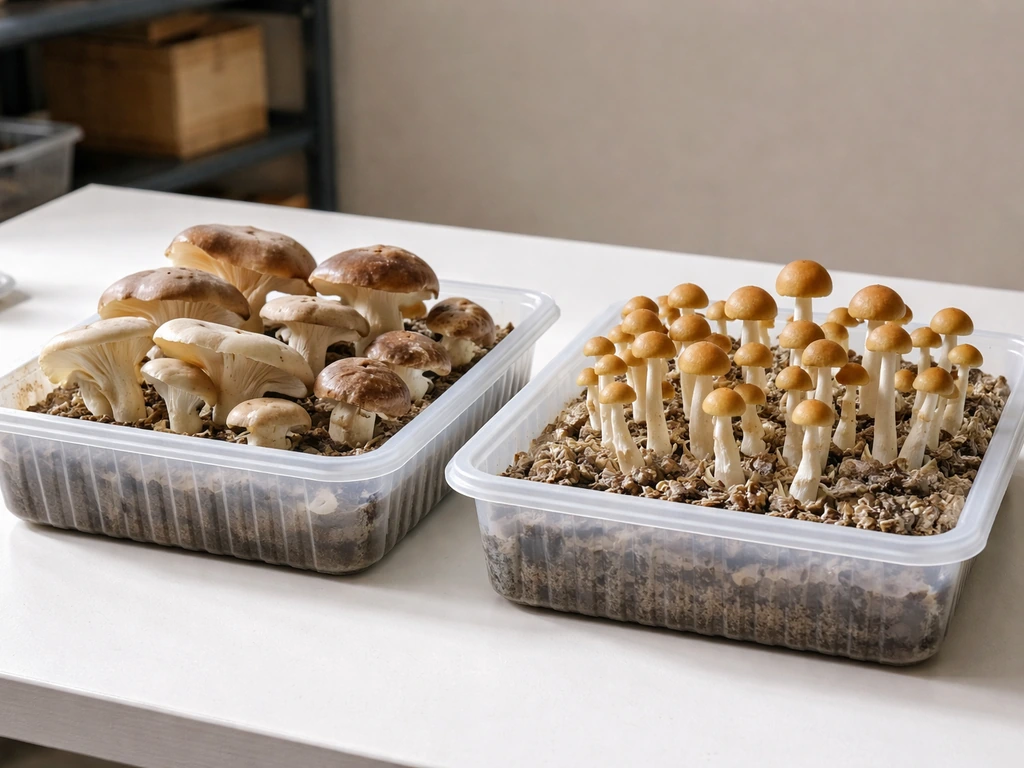
Non-psychoactive mushrooms (oyster, shiitake, lion's mane, and so on) are treated like any other agricultural product. You do not need a cultivation license. You may need a general business license, a cottage food permit if selling from home, or a food handler's permit depending on your state. None of that involves the kind of controlled-substance licensing this guide is primarily about.
Psilocybin mushrooms are regulated as controlled substances because of their active compounds. In the two states with active programs, the regulatory approach is not "grow whatever you want as long as you have a license." It is much more like the early cannabis licensing model: you apply for a specific license type, your premises are approved, your products must be tracked and tested, and you can only transfer to other licensed parties within the program. You are not selling to the public directly from a cultivation facility.
Oregon and Colorado both use a service-based model. That means a cultivation license authorizes you to grow and supply psilocybin products to licensed service centers or healing centers where trained facilitators administer them to clients. You are a supplier in a regulated pipeline, not a retailer.
Where licenses actually exist right now: state by state
Oregon
Oregon has the most developed psilocybin cultivation licensing program in the country, operated by the Oregon Health Authority (OHA) under the Oregon Psilocybin Services (OPS) program, established through ORS 475A. The license you want as a grower is called a Manufacturer License. Under Oregon law, "manufacture" explicitly includes planting, cultivation, growing, harvesting, preparation, propagation, and processing of a psilocybin product, along with packaging and labeling.
Within the manufacturer license, you apply for specific endorsements that define exactly what you are authorized to do. The endorsements relevant to growing include fungi cultivation, psilocybin extraction, and edible psilocybin production. You apply for only the endorsements that match your actual operation. A cultivation-only business would apply for the fungi cultivation endorsement.
Applications are submitted through OPS's online platform called the Training, Licensing, and Compliance (TLC) system. This is also where you handle product tracking requirements. Before you can transfer any product, it must be tested by a licensed laboratory and properly packaged and labeled. You can only transfer to licensed service centers.
Colorado
Colorado's program was created by SB23-290 and is administered jointly by the Department of Revenue (DOR) and the Department of Regulatory Agencies. For cultivation specifically, the DOR licenses and regulates "Natural Medicine Cultivation Facilities." A cultivation facility is defined as a location where regulated natural medicine (which includes psilocybin mushrooms) is grown, harvested, and prepared for transfer to healing centers, facilitators, manufacturers, or other cultivation facilities.
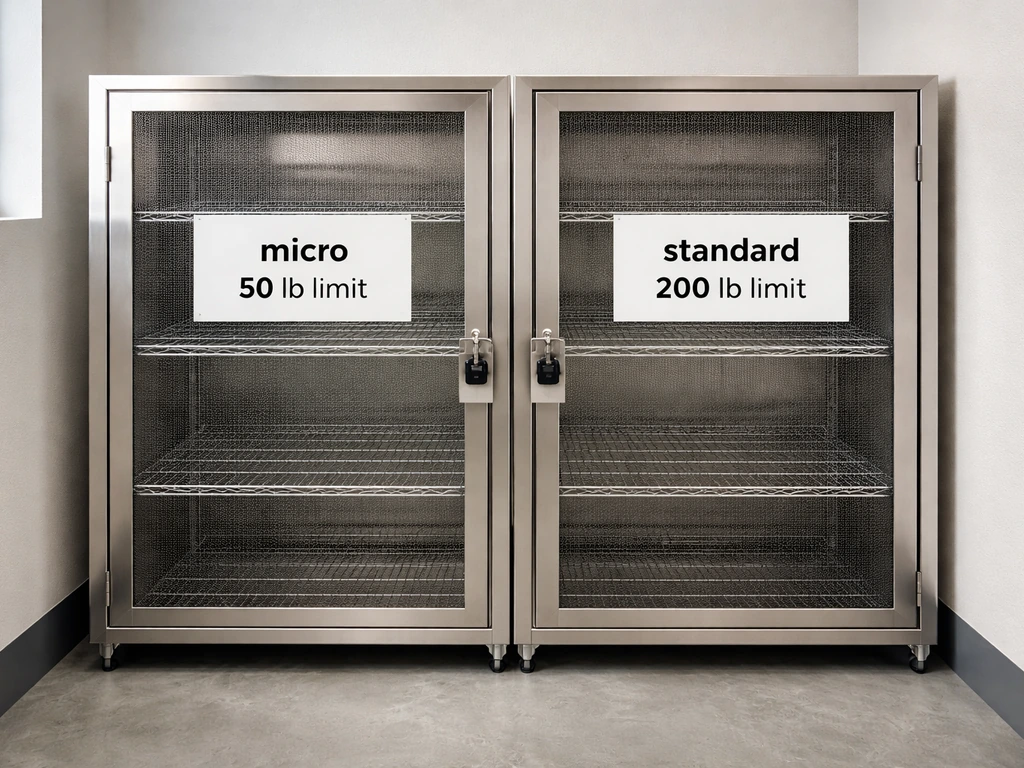
Colorado uses a tiered storage system for cultivation facilities. The micro tier allows you to store up to 750 grams of dried fruiting bodies at any one time. The standard tier allows up to 5 kilograms of dried fruiting bodies. Your tier affects your fee, your compliance obligations, and likely your facility requirements.
Washington and other states
Washington has a codified psilocybin therapy services chapter (RCW 19.410), but it uses a therapy-services model rather than an open adult-use cultivation licensing system. Proposed legislation (SB 5921) has included a "producer license" concept that would authorize growing and processing psilocybin products for supply to approved clinicians, but as of April 2026, this has not been enacted into a functioning cultivation licensing program. Watch Washington's legislative session for updates.
Other states, including California and several others, have passed or proposed various decriminalization measures, but decriminalization is not the same as licensing. Decriminalization typically removes or reduces criminal penalties for small amounts; it does not create a legal market or a cultivation license. If you are in a decriminalized state, growing psilocybin mushrooms may carry reduced criminal risk locally but remains federally illegal and carries no state-issued permit.
| State | License Type | Program Status | Regulating Agency |
|---|---|---|---|
| Oregon | Manufacturer License (with fungi cultivation endorsement) | Active, accepting applications | Oregon Health Authority (OPS) |
| Colorado | Natural Medicine Cultivation Facility License | Active, accepting applications | Colorado Dept. of Revenue (DOR) |
| Washington | Producer License (proposed) | Framework enacted, cultivation license not yet active | TBD under RCW 19.410 |
| All other states | None | No legal cultivation licensing pathway | N/A |
Eligibility, application steps, and what you actually need to submit

Oregon manufacturer license: eligibility and application
You must be applying as a business entity (or in a permitted individual capacity under OPS rules), and you will go through a background check. Your licensed premises must be a specific physical location approved for manufacturing activity. You cannot just designate any space.
- Create an account in the OPS TLC system (Oregon Health Authority's online licensing portal).
- Select 'Manufacturer License' and choose your endorsements (e.g., fungi cultivation).
- Submit premises information: your physical address, floor plan, and documentation that the location is appropriately zoned and approved for this use.
- Submit the Property Owner Consent for Manufacture of Psilocybin form (this was revised in 2026 and is now required at renewal too, so get a current version from OHA).
- Complete your background check through the required process (criminal history is reviewed for disqualifying factors).
- Submit your operating plan describing cultivation practices, security measures, and recordkeeping procedures.
- Pay the applicable application fee.
- Await OHA review and any requests for additional information.
Your premises must pass an inspection before you are fully licensed to operate. OHA will review your application for completeness before scheduling that inspection.
Colorado natural medicine cultivation facility: eligibility and application
Colorado requires that business owners pass a name-based criminal history background check, and results must not show any disqualifying convictions under the state's natural medicine program rules. You will also need to determine your tier (micro or standard) before applying, as this affects your fee and the requirements you will be held to.
- Review the Colorado Department of Revenue's Natural Medicine Regulated Natural Medicine Fees schedule to understand your application and license costs.
- Determine whether you are applying as a micro or standard cultivation facility based on your planned production volume.
- Prepare your business entity documents, premises information, and floor plan.
- Complete the criminal history background check process as directed by the DOR.
- Submit your application through the DOR's designated application portal with all supporting documentation.
- Pay application and license fees at the time of submission.
- Respond to any deficiency notices from the DOR during the review period.
- Pass facility inspection before beginning operations.
Costs, storage limits, compliance rules, and inspections
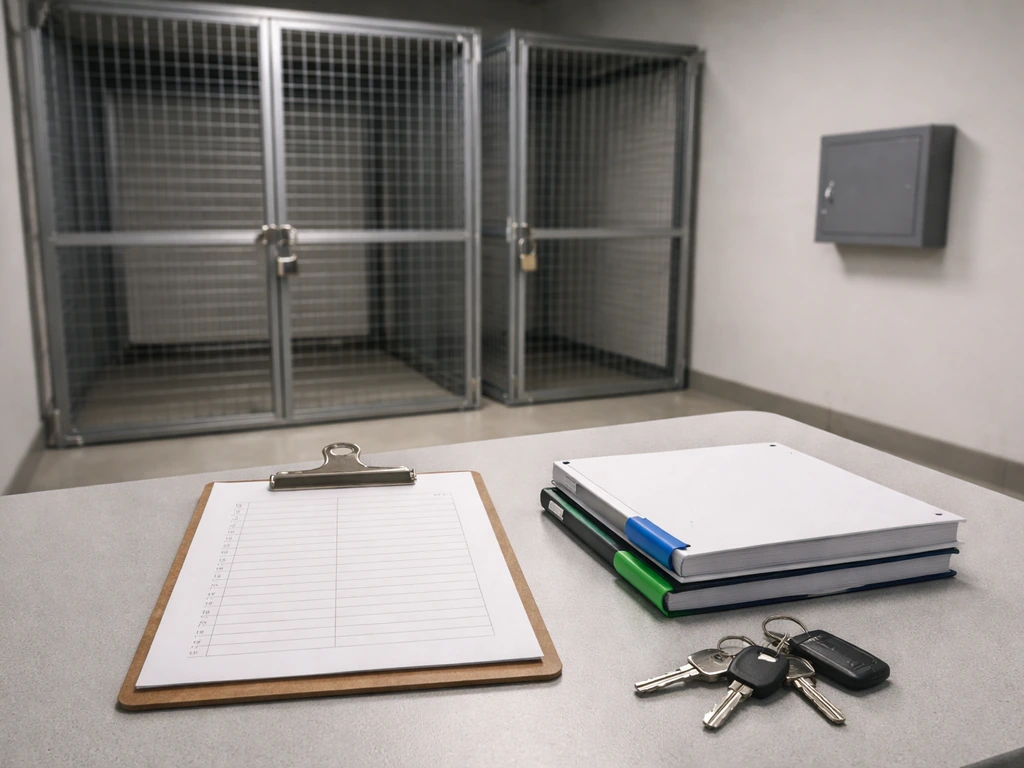
Exact fee amounts change with each program cycle, so always pull the current fee schedule directly from the regulating agency rather than relying on a number you found online. That said, here is the framework for what you will be paying and what you will be held to.
Oregon
- Application fees and license fees apply (check the current OPS fee schedule in the TLC system).
- No explicit storage weight tiers like Colorado, but product must be tested, packaged, and labeled before transfer.
- Specific cultivation restrictions apply: you cannot use manure in cultivation or production, and wood chips are prohibited as a growing medium under OAR 333-333.
- All products must go through a licensed testing laboratory before being transferred to a service center.
- Product tracking is required through the TLC system, including unique identifiers and harvest/cultivation documentation.
- Inspections are conducted by OHA; you must maintain your premises in compliance with all applicable rules at all times, not just at the initial inspection.
Colorado
- Micro cultivation tier: maximum 750 grams of dried fruiting bodies stored at any one time.
- Standard cultivation tier: maximum 5 kilograms of dried fruiting bodies stored at any one time.
- Application, licensing, and renewal fees are set in the Natural Medicine Regulated Natural Medicine Fees schedule.
- The Division can direct you to submit product samples to a licensed testing facility for laboratory and chemical analysis at any time.
- Traceability and recordkeeping are required to document all cultivation activity and transfers.
- All transfers must go to other licensed parties within the regulated pipeline (healing centers, facilitators, manufacturers, or other cultivation facilities).
Why applications get denied and how to avoid it
Most denials come down to a small set of preventable problems. Here is what trips people up and how to handle each one before you submit.
| Denial Reason | How to Prevent It |
|---|---|
| Incomplete application | Use the agency's current checklist and confirm every required field and document is present before submitting. Missing a single document (like the updated Property Owner Consent form in Oregon) can hold up or kill an application. |
| Disqualifying criminal history | Review the specific disqualifying conviction list for your state's program before applying. Some older convictions may not disqualify you, but you need to know exactly what the rules say. |
| Premises not properly zoned | Confirm with your local government that your physical location is zoned to allow this use before you sign a lease or purchase a property. Local zoning approval is a separate step from state licensing. |
| Inadequate security plan | Your operating plan must describe how you will secure your facility. Vague or incomplete security descriptions are a common red flag during review. |
| Outdated forms | Agencies update their required forms. Oregon updated the Property Owner Consent form for 2026 renewals. Always download forms directly from the agency's current website, not from a third-party or cached copy. |
| Cultivation practices that violate operational rules | In Oregon, using manure or wood chips as growing media is explicitly prohibited. Reviewers and inspectors look for this. Read the full operational rules, not just the application instructions. |
| Missing endorsements | In Oregon, if you plan to do extraction or edible production in addition to cultivation, each requires its own endorsement. Forgetting to apply for an endorsement you need means you cannot legally do that activity even after approval. |
Timeline, renewals, and staying compliant after approval
Realistic processing timelines vary by program and application volume. Oregon and Colorado have both seen significant wait times during early program rollout. Plan for at least 60 to 120 days from a complete application submission to license issuance, though it can be longer if there are deficiencies or inspection scheduling delays. Do not sign a long-term lease or make major capital investments until you have confirmation that your application is complete and moving through review.
Oregon has a specific rule worth knowing about renewals: if you submit your renewal on time and OPS cannot process it before your license expiration date, you are allowed to continue operating on the expired license while the renewal is pending. This means submitting your renewal as early as the window opens is genuinely protective, not just a formality.
For ongoing compliance after approval, treat inspections as something that can happen at any time, not just at renewal. In Colorado, the Division can direct you to submit product samples for analysis whenever it chooses. In Oregon, OHA can conduct compliance inspections of your licensed premises. Your recordkeeping, tracking entries in the TLC system, and physical premises all need to be inspection-ready on any given day, not just when you know someone is coming.
Renewals in both states will repeat the core compliance checks. Background checks may be re-run. In Oregon, the updated Property Owner Consent form is now a mandatory part of renewal submissions, which means if you have a new landlord or a new lease, you need to get that form signed and filed. Mark your renewal window in your calendar and build in time to gather updated documents, not just to click submit.
Tax registration in Oregon
One requirement that catches Oregon operators off guard: psilocybin service center operators must register with the Oregon Department of Revenue for a psilocybin tax account for each licensed location. If you are operating a cultivation facility that supplies service centers, make sure you understand whether this registration obligation applies to your specific license type and location structure. Check directly with OHA and the Oregon DOR on your specific situation.
If there is no license pathway in your state
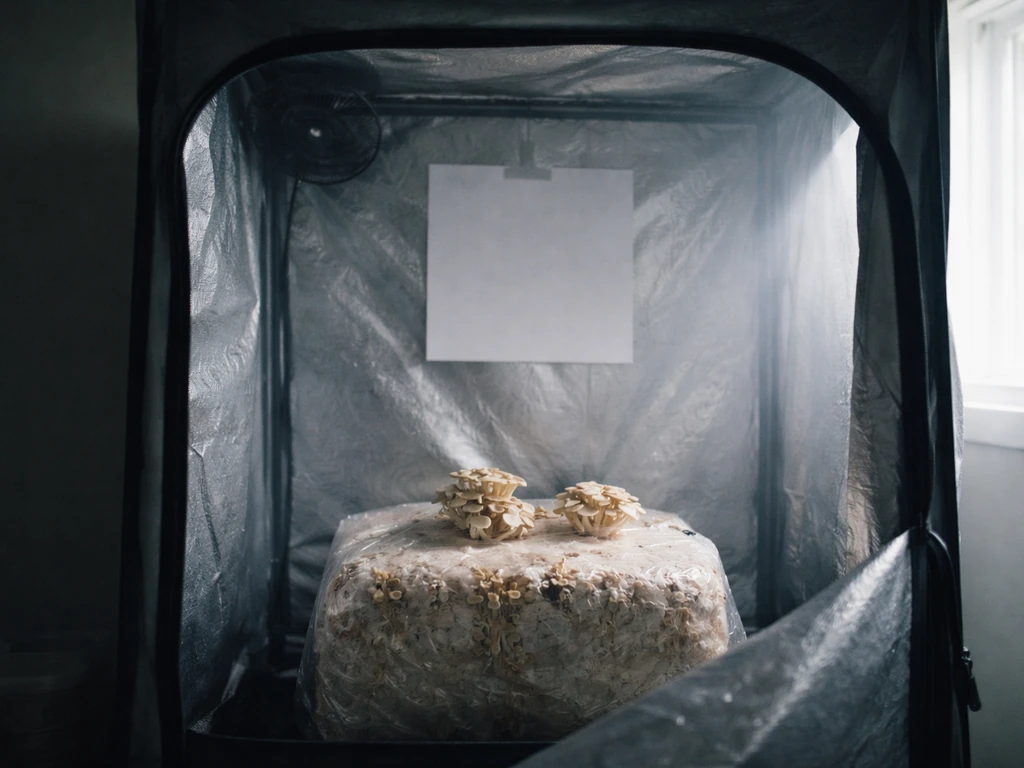
If you are not in Oregon or Colorado, there is no legal pathway to grow psilocybin mushrooms with a state-issued license right now. You may see summaries or “licence to grow reviews,” but the key point is that only jurisdictions with an enacted program offer a real licensing pathway. If you are seeing results for “license to grow reddit” as a brand or service, that is a related but separate concept to the government-issued “license to grow” framework discussed above license to grow reviews. The honest answer is: wait, watch, and prepare. Several states are working on legislation, and the landscape is changing quickly. You can follow your state's legislative process, engage with local advocacy organizations, and educate yourself on the regulatory frameworks in Oregon and Colorado so you are ready to apply if your state opens up.
If you are interested in growing non-psychoactive mushrooms for culinary or commercial purposes, that is a completely different and much more accessible path. You will need standard business licenses, possibly a cottage food permit, and to follow your state's agricultural and food safety rules, but nothing like the controlled-substance licensing framework described above.
For research purposes involving psilocybin, there is a federal path through the DEA under 21 U.S.C. § 823, which allows researchers to register to work with Schedule I substances. This is a separate, highly regulated federal process that requires institutional affiliation and demonstrated research protocols. It is not a grow license in any commercial sense, but it is a legal route for academic or clinical research contexts.
A note on other resources: if you came here from a search that turned up results about "License to Grow" as a brand name or service, that is a different topic entirely and worth looking into separately. If you are seeing results for “License to Grow Salon” as a brand or service, treat that as a related but separate concept from the government-issued “license to grow” framework described above licence to grow salon. This guide is specifically about government-issued cultivation licensing in the psilocybin regulatory space. This article is informational only and does not constitute legal or regulatory advice. Licensing rules change, and you should verify current requirements directly with the Oregon Health Authority, Colorado Department of Revenue, or your state's relevant agency before taking action.
FAQ
If my state has decriminalized psilocybin mushrooms, do I still need a license to grow them legally?
Decriminalization usually changes penalties for possession, it does not create a controlled-substance cultivation market. You would still be operating without a state-issued grow license, and the activity remains federally unlawful. The practical risk reduction is limited, and you still should not treat decriminalization as permission to cultivate.
Can I grow psilocybin mushrooms at home and apply for a license later?
In Oregon and Colorado, the licensing frameworks are built around approved premises, inspections, product tracking, and transfers to specific licensed entities. Home cultivation is not positioned as a licenseable pathway, so planting before you have approval creates compliance problems and can increase criminal exposure.
Does an Oregon or Colorado license let me ship psilocybin mushrooms to other states?
No. State licensing authorizes activity within that state under state law, but it does not protect interstate shipping or federal enforcement risk. If you move products across state lines, you generally lose the protective effect of a state-only authorization.
What exactly counts as “manufacturing” under Oregon’s grower license?
Oregon treats “manufacture” broadly for psilocybin products, it is not limited to extraction or processing. It covers multiple steps in the product lifecycle, including cultivation activities like planting through harvesting, plus preparation and packaging. If your workflow includes any of those steps, you may need the corresponding endorsements.
If I only want to grow, do I still need extraction or edible production endorsements in Oregon?
Usually no, you should only apply for endorsements that match what you will actually do. If you plan to do any extraction or produce edible psilocybin items, you would need those specific permissions. Misrepresenting your intended activities can trigger denial or later enforcement during compliance checks.
How do I choose the correct Colorado tier (micro vs standard)?
Start by estimating your maximum on-site dried fruiting-body storage at any one time, not your average production. Colorado’s tier affects your fees and the compliance expectations tied to your facility. If you routinely exceed the micro threshold, you should plan for the standard tier instead of risking a noncompliance finding.
Can I switch tiers or expand capacity after I am already licensed in Colorado?
Typically you should expect a change to your approved storage capacity and facility obligations. The safe approach is to confirm the process with the regulating agencies before you start operating above your current tier limit, since changes can affect compliance requirements and fees.
What are common reasons applications get denied, and how can I pre-check mine?
The most frequent issues are usually paperwork completeness, mismatches between what you described and how your premises operate, and background-check disqualifiers. Before submitting, do a gap review of your premises description, ownership or tenancy documents, and your endorsement scope so your application aligns with your actual process and facility setup.
Do I need to be fully licensed before I sign a lease or start any buildout?
You should avoid major commitments until you know your application is complete and moving through review. Even if timelines are known, inspection scheduling and deficiency reviews can change when you can lawfully begin operations, so treating the lease as conditional helps reduce sunk-cost risk.
If my Oregon renewal is submitted on time but processing takes longer, can I keep operating?
Yes. Oregon allows continued operation on an expired license when the renewal is timely submitted and OPS cannot process it before expiration. However, you still need to make sure your renewal is actually within the allowed window and that you submitted all required renewal documents.
Do compliance inspections happen only at renewal in Oregon and Colorado?
No. You should assume inspections can occur any time after approval. Your recordkeeping, tracking entries, storage areas, and physical premises should be inspection-ready continuously, because regulators may schedule visits outside the renewal cycle.
In Oregon, what should I confirm about Oregon Department of Revenue tax accounts?
If you are supplying or operating within the service center ecosystem, confirm whether you need a psilocybin tax account for each licensed location. The requirement can depend on how your business is structured and where activities occur, so you should verify your situation directly with OHA and the Oregon DOR rather than assuming it is automatic.
Is there a legal “research grow” route for psilocybin that is different from commercial licensing?
Yes, there is a federal DEA registration path for researchers working with Schedule I substances, but it is tied to institutional affiliation and an approved research protocol. It is not a general commercial grow license, so startup timelines, oversight, and permissible activities usually look very different from Oregon or Colorado grower licensing.
Next Article
Licence to Grow Reviews: How to Verify Rules and Costs
How to use licence to grow reviews to verify real rules, costs, and local eligibility before applying for cannabis culti