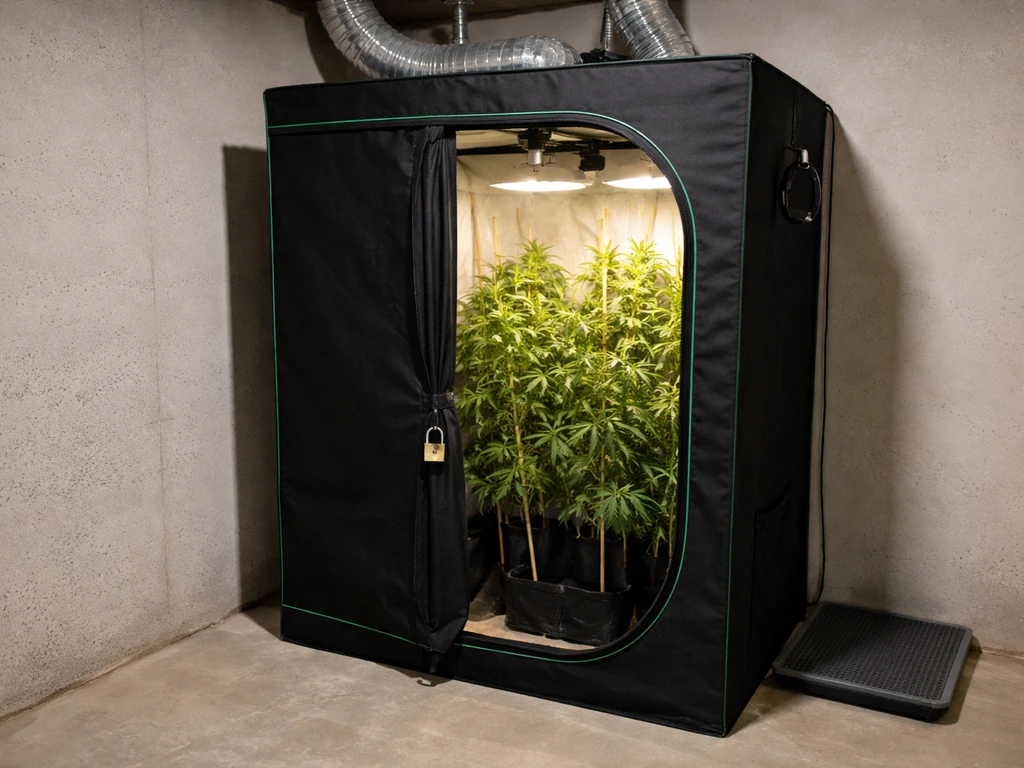
A commercial grow license is a state-issued authorization that lets a business legally cultivate cannabis for sale. Every state that has legalized adult-use or medical cannabis requires one before you touch a single plant commercially, and each state calls it something slightly different: Washington calls it a "producer" license, Oregon uses "marijuana producer," Nevada just says "cultivation," and Massachusetts issues a "cultivator" license under its Marijuana Establishment framework. To get a weed grow license and stay compliant, you also need to match your state’s exact license naming and requirements before you touch any plants. If you are pursuing an Arizona commercial grow license, make sure you confirm the exact license name, application window, and requirements for your facility type in Arizona before you start. Whatever the name, the core idea is the same: you cannot legally grow cannabis and sell it to anyone, whether that's a retailer, a processor, or another cultivator, without this license in hand first.
Commercial Grow License in the US: Requirements, Costs, and Steps

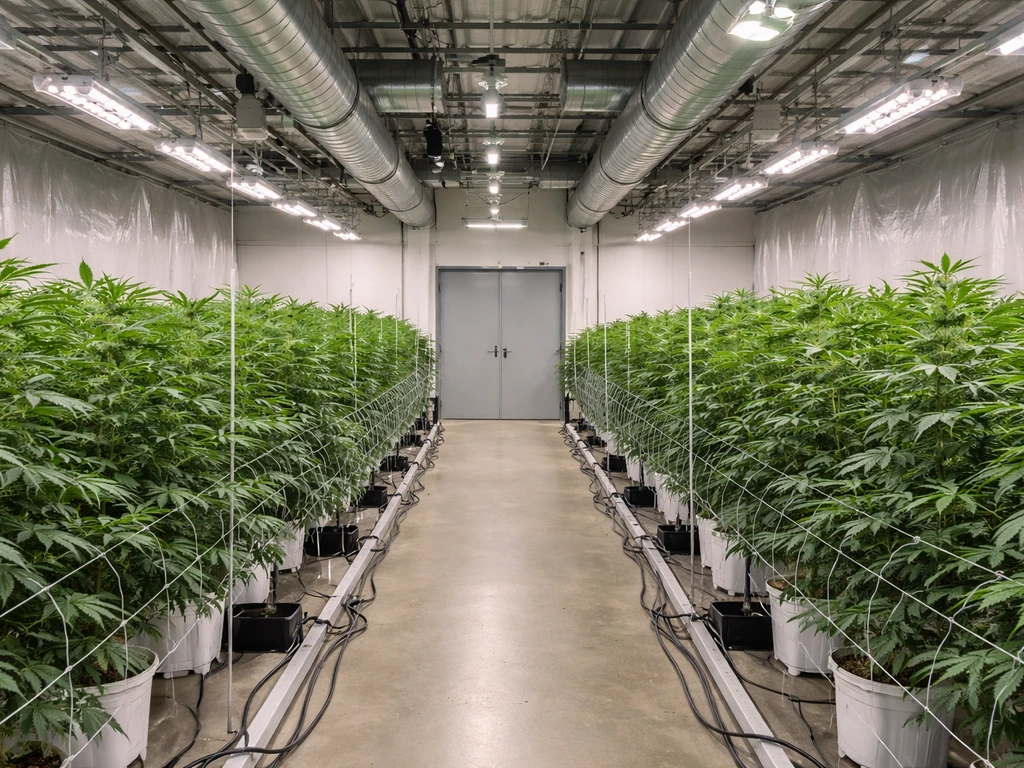
What a commercial grow license actually means (and who really needs one)
A commercial grow license is specifically for businesses. It is not the same as a personal cultivation allowance, which many states offer to adults who want to grow a few plants at home for their own use. If you are growing cannabis to sell it, process it, or distribute it, you need the commercial cultivation license. If you are growing six plants in your basement for personal use in a state that allows it, that is a different framework entirely.
The commercial license also does not automatically give you the right to sell directly to consumers. In most states, a cultivation license only lets you sell to other licensed entities, like processors, dispensaries, or other cultivators. You would need a retail license on top of that to sell to the public. Understanding this distinction matters because applying for the wrong license type wastes months and thousands of dollars.
Who needs one: anyone operating a cannabis farm, greenhouse, or indoor grow facility as a business. This includes sole proprietors, LLCs, corporations, and co-ops that plan to sell their harvests into the licensed supply chain. If you are considering a personal grow license instead, that is a separate topic worth looking into before you go down the commercial path.
How licensing pathways differ by state
The license name and structure vary significantly by jurisdiction, which is the first thing you need to nail down for your specific state. Here is a snapshot of how a few major states structure commercial cultivation licensing:
| State | License Name | Regulating Agency | Who You Can Sell To |
|---|---|---|---|
| Washington | Cannabis Producer | Liquor and Cannabis Board (LCB) | Other producers, processors (wholesale only) |
| Oregon | Marijuana Producer | Oregon Liquor and Cannabis Commission (OLCC) | Licensed processors, wholesalers, retailers |
| Massachusetts | Cultivator (Marijuana Establishment) | Cannabis Control Commission (CCC) | Licensed manufacturers, retailers, other MEs |
| Nevada | Cultivation Establishment | Cannabis Compliance Board (CCB) | Retail stores, other cultivation facilities, licensed channels |
| Alaska | Cultivation Facility | Alcohol and Marijuana Control Office (AMCO) | Licensed manufacturers, retailers, other cultivators |
Some states also tier their cultivation licenses by size. Massachusetts, for example, distinguishes between standard cultivators and microbusinesses. Nevada separates cultivation facilities by canopy size tier. Oregon has had moratoriums on new producer applications at various points, so always check whether your state is even accepting new applications before you invest time in the process. Alaska has its own specific requirements worth reviewing separately if that is your jurisdiction.
Beyond state licensing, many counties and municipalities require a local permit or conditional use approval before a state license can be issued. In some states, local approval has to happen first. Do not skip this step or assume the state license is sufficient on its own.
Who qualifies (and common reasons people get disqualified)
Every state runs background checks on applicants. Certain criminal convictions, particularly drug trafficking felonies, will disqualify you in most jurisdictions, though the specific lookback period and disqualifying offenses vary by state. Some states have moved to reduce barriers for people with prior cannabis convictions, especially simple possession, so do not assume a past record automatically rules you out. Check your specific state's list of disqualifying offenses carefully.
Beyond criminal history, common eligibility requirements include:
- Being 21 years of age or older (all owners, officers, and financial interest holders)
- Residency requirements in some states (varying from full residency to partial ownership thresholds)
- Proof of legal business entity formation (LLC, corporation, partnership)
- No existing license violations or prior license revocations in cannabis or alcohol industries
- Disclosure of all financial interest holders, including silent investors, above a threshold (commonly 10% or more)
- Compliance with local zoning: the proposed facility must be in a zone where cannabis cultivation is permitted
- Separation distance from schools, daycares, and other sensitive uses (typically 500 to 1,000 feet depending on the state)
If multiple owners or investors are involved, all of them typically go through background checks. A single disqualifying partner can sink the entire application, so vet everyone on your ownership structure before you submit.
Step-by-step: how the application process actually works
The general flow is similar across most states, even if the specific forms and portals differ. Here is how the process typically unfolds:
- Confirm local zoning approval: Before anything else, contact your city or county planning department to verify that your proposed location is zoned for commercial cannabis cultivation and get any required local permit or conditional use approval.
- Register your business entity: Form your LLC, corporation, or other legal entity with your state's business registry if you have not already. You will need your EIN, Articles of Organization or Incorporation, and operating agreement.
- Create an account on your state's licensing portal: Washington uses the LCB's online system, Oregon uses OLCC's licensing portal, Massachusetts uses the CCC's online platform, and Nevada uses the CCB's system. Each has its own account setup process.
- Gather required documents: These typically include proof of business formation, lease or deed for the proposed facility, financial disclosures, business plan, security plan, site plan, and operating procedures. Oregon and other states also require fingerprint cards for all owners and officers.
- Submit fingerprints for background checks: Most states require live-scan fingerprinting or ink card fingerprinting through approved vendors. This runs a state and federal criminal history check.
- Pay the application fee: Fees at this stage are usually non-refundable, even if the application is denied.
- Respond to agency requests for additional information: After initial review, the licensing agency may ask for clarifications, additional documents, or corrections. Missing this response window can result in your application being withdrawn.
- Pass a pre-license inspection: Many states require an on-site inspection of your facility before issuing the license to confirm it meets security, zoning, and operational standards.
- Receive your license and begin operations: Once approved, you receive your license number and can begin cultivating. You cannot start growing before this point.
Timelines vary widely. Some states process applications in 60 to 90 days; others take 6 to 12 months or longer, especially if local approvals are backed up or the state has a limited application window. Plan your financing and facility lease timing around a longer timeline to avoid burning money on an empty facility while you wait.
What it costs: fees, taxes, and ongoing obligations
The out-of-pocket costs for a commercial grow license go well beyond the application fee. Here is what you are typically looking at:
| Cost Type | Typical Range | Notes |
|---|---|---|
| Application fee | $250 to $5,000+ | Usually non-refundable; varies by state and license tier |
| Annual license/renewal fee | $1,000 to $10,000+ | Washington LCB charges annual fees based on canopy tier; other states vary |
| Local permit fees | $500 to $5,000+ | Varies heavily by city/county |
| Fingerprinting and background checks | $50 to $150 per person | Per applicant/owner/officer |
| Facility build-out and compliance | $50,000 to $500,000+ | Security systems, HVAC, lighting, track-and-trace setup |
| Cannabis excise taxes | 10% to 37% of wholesale/retail price | State-specific; often passed through supply chain |
| Track-and-trace software | $200 to $1,000+/month | Ongoing operational cost; required in most states |
Federal tax law under IRC Section 280E also significantly impacts cannabis businesses. Because cannabis remains federally classified as a Schedule I controlled substance, standard business expense deductions are not available to cannabis companies the way they are in other industries. This means your effective tax burden as a commercial cultivator can be substantially higher than a comparable non-cannabis business. This is not legal or tax advice, but it is a real financial factor you need to discuss with a CPA who specializes in cannabis before you build your financial projections.
Beyond fees and taxes, ongoing obligations include regular reporting to your state agency, maintaining your track-and-trace records (more on this below), submitting renewal applications before your license expiration date, and complying with any state-mandated social equity or labor peace agreements where applicable.
Facility, security, and compliance requirements
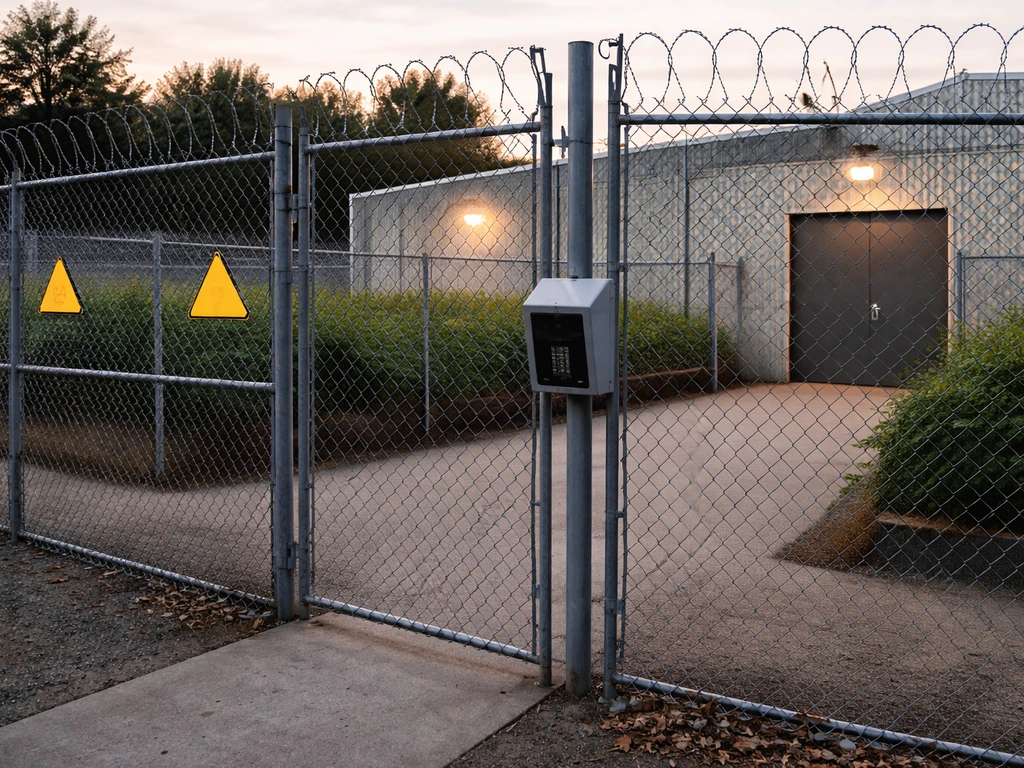
This is where many applications stall or get denied. States are serious about facility and security requirements, and a weak security plan or non-compliant facility is one of the fastest ways to lose your application or face post-license enforcement.
Security systems
Most states require a commercial-grade security system that includes 24/7 video surveillance covering all entry and exit points, storage areas, and the cultivation canopy itself. Video must typically be retained for 30 to 90 days depending on the state. You will also need alarmed entry points, restricted access controls (key cards or coded locks) limiting access to the canopy and storage areas, and often a backup power source for the security system. Some states require you to provide remote access to surveillance footage for the licensing agency on request.
Track-and-trace
Every commercial cannabis plant, harvest, and transfer must be logged in your state's seed-to-sale tracking system. Washington, Oregon, Nevada, and Massachusetts all mandate participation in a state-designated system (Metrc is the most common platform across states). You tag plants at specific growth stages, log harvests, record waste, and report every transfer out of your facility. Failing to maintain accurate track-and-trace records is one of the top reasons cultivators receive violations. Get your staff trained on this system before you ever touch a plant.
Standard operating procedures and inspections
Most states require you to submit written standard operating procedures (SOPs) covering everything from pesticide use and waste disposal to employee training and visitor logs. These SOPs are reviewed during your application and must be maintained and updated as your operations evolve. Inspectors can show up announced or unannounced after licensure to verify that what you documented in your application matches what is actually happening in your facility.
Plant limits, canopy rules, and operational constraints
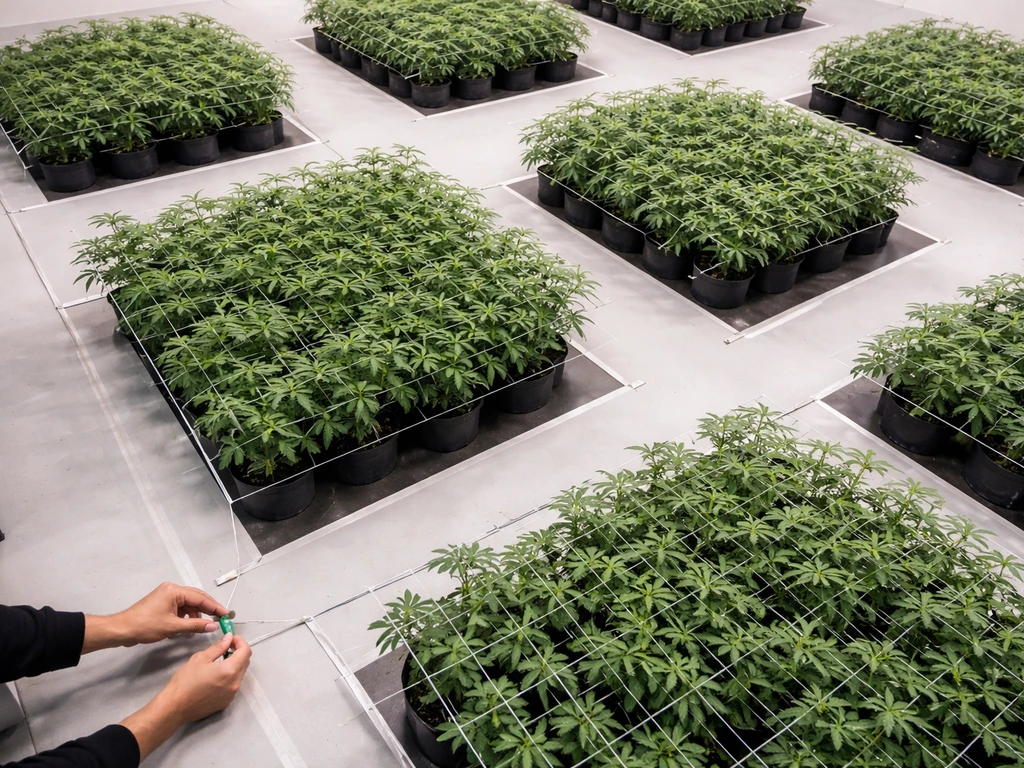
Commercial cultivation licenses are almost always tied to canopy size limits, not just raw plant counts, though some states use both. Canopy refers to the total area under active plant production, and many states tier their license categories around canopy thresholds.
For example, Nevada separates cultivation establishments by canopy tier, with different fees and operational requirements at each level. Massachusetts similarly distinguishes license tiers by canopy size, with microbusiness cultivators capped at smaller footprints than standard cultivators. Washington's LCB limits canopy size based on the license tier applied for, and producers must not exceed the licensed canopy without applying for an amendment.
Operational constraints that typically apply once you are licensed include:
- You may only cultivate within your licensed premises as described in your application
- Canopy cannot be expanded beyond your licensed tier without applying for an amendment and paying additional fees
- Pesticide use is restricted to state-approved products; applying unlisted pesticides is a serious violation
- All cannabis must stay within the licensed premises until transferred to another licensed entity via a logged manifest
- Outdoor cultivation has additional requirements around fencing, light pollution, and public visibility in many states
- Hours of operation for deliveries and transfers may be restricted by state or local rule
If you plan to grow outdoors or in a mixed indoor/outdoor greenhouse, make sure your state's regulations specifically allow your intended cultivation method. Some states only license indoor cultivation at certain license tiers.
Renewals, amendments, and what happens when things go wrong
Most commercial grow licenses are issued for one year and must be renewed annually. Washington's LCB, for instance, issues annual licenses with renewal fees tied to your canopy tier. Washington’s producer license annual issuance and renewal fee is $1,000, and the LCB may reduce the tier if production-space plant-canopy requirements are not met by the end of year one renewal fees tied to your canopy tier. Missing your renewal window can result in your license lapsing, which means you have to stop operations until it is reinstated or reapplied for. Set a calendar reminder well in advance: most states require renewal applications to be submitted 30 to 90 days before expiration.
If you need to change your licensed premises, add a new financial interest holder, modify your canopy size, or make other material changes to your operation, you typically need to file a license amendment before making that change. Operating outside your license conditions without an amendment is a violation, even if the change seems minor. For Washington specifically, the LCB notes that changes to an existing license are submitted through its online portal as part of the licensing amendment process changes to an existing license are submitted through the LCB online portal.
Common violations and how to avoid them
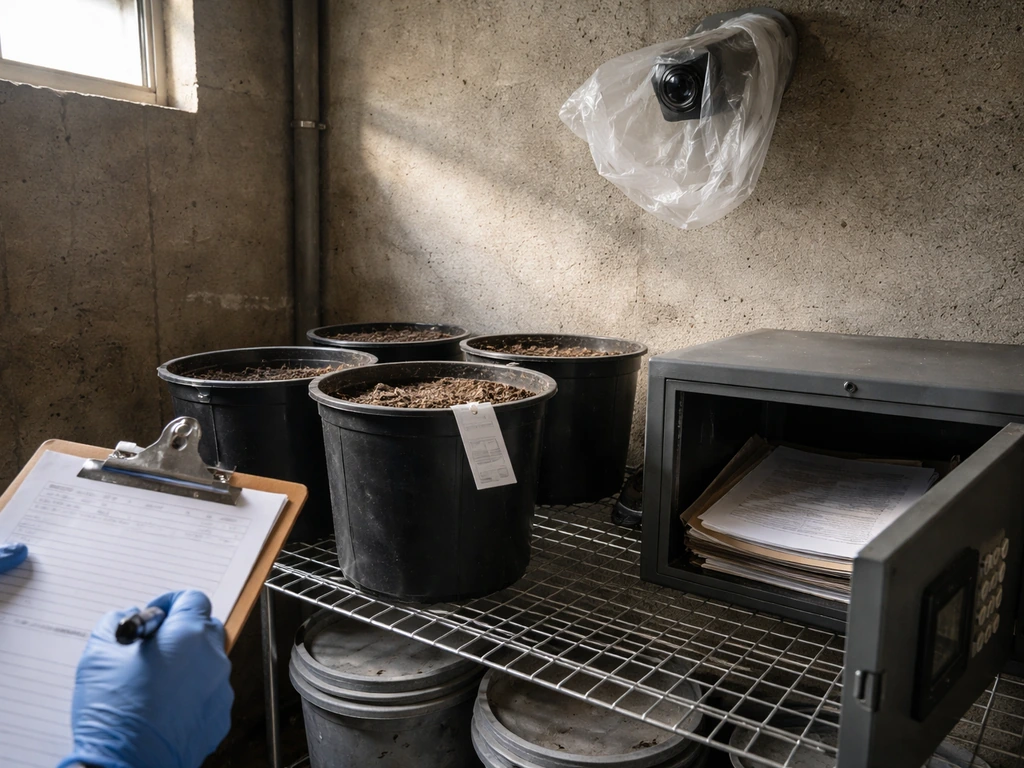
The violations that most commonly result in fines, license suspensions, or revocations fall into a few categories: track-and-trace discrepancies (plants or inventory that cannot be accounted for in the system), security system failures or lapses in surveillance coverage, sales to unlicensed parties, operating outside licensed canopy, and pesticide violations. Many of these are procedural failures rather than intentional misconduct, which means they are largely preventable with good internal controls and staff training.
Enforcement typically begins with a compliance inspection and a notice of violation. Depending on severity, penalties range from written warnings and fines to license suspension or revocation. Repeat violations escalate quickly. The best defense is an honest, accurate operation that matches your license application from day one.
Your next steps for getting started
Here is a practical checklist of what to do right now if you are serious about pursuing a commercial grow license:
- Identify your state's cannabis licensing agency and look up the specific cultivation license name and current application status (some states have open enrollment, others use limited application windows or lotteries)
- Contact your local city or county planning department to confirm whether commercial cannabis cultivation is permitted where you plan to operate and what local approvals are required
- Download your state's current cultivation license application and review every document requirement before you start gathering materials
- Run a background check on yourself and any co-owners or investors now, before you invest further, to identify any potential disqualifiers early
- Get a site plan and security plan drafted for your proposed facility, as these are commonly cited reasons for application delays
- Consult a cannabis-specialized CPA about your financial projections, particularly around tax obligations under federal law
- Budget for a timeline of 6 to 12 months from application submission to first harvest, and plan your capital accordingly
- Look into whether your state offers provisional or conditional licenses that allow some facility preparation before final approval
The regulatory details for specific states, including Arizona's commercial grow licensing process and Alaska's cultivation facility requirements, vary enough that they deserve their own focused review. Use state-specific resources from your licensing agency as the primary source of truth, since rules update frequently. What this guide gives you is the framework to understand what you are getting into and the right questions to ask as you work through your specific jurisdiction's process.
FAQ
If I’m only planning to grow a small amount to sell later, do I still need a commercial grow license?
In most states, you can qualify as “commercial” based on intent to sell into the supply chain, not just on how many plants you start with. If you are producing for sale, you generally need the commercial grow license even if you only plan to sell a small initial batch. The key decision point is whether the harvest will be transferred to licensed buyers under the state’s tracking system, not whether you call the operation “small” or “experimental.”
Do I need to amend my commercial grow license if I add investors or change ownership?
Yes, ownership changes can trigger licensing review. Adding an investor, changing officers, transferring membership interests in an LLC, or bringing in a new financial interest holder often requires advance approval or a license amendment before closing the deal. A common mistake is signing investment documents first and then applying for the amendment after, which can put the license at risk if the state treats the change as unapproved control.
What happens if my security system fails briefly or video goes down during setup?
You usually cannot use a license to cover “temporary” gaps in coverage, especially for security. If surveillance, access controls, or alarm monitoring are down, many states treat it as a violation and may require you to document corrective actions. Build redundancy into your plan (for example, backup power and documented uptime testing) and report issues quickly to the licensing agency when required by your state’s rules.
How do I prevent track-and-trace violations, especially when staff make tagging mistakes?
Track-and-trace problems are typically judged more harshly when they are created by operational shortcuts, not when they result from system errors that you correct immediately. Train staff to follow the exact tagging workflow for each growth stage, and keep internal reconciliation reports so you can catch mismatches early. If your state requires specific evidence for corrections, make sure you follow that process instead of rewriting records.
If I get the commercial grow license, do I still need local permits to operate?
Often, yes. Even when you already have a state cultivation license, local zoning, fire safety, building permits, and sometimes conditional use approvals can be separate and must be obtained before you start operating. A practical approach is to get written confirmation of local approval requirements before signing a facility lease, because some jurisdictions will not allow cannabis use even if the state license is approved.
Can I sell cannabis directly to customers with a commercial grow license?
Many states permit transfers to other licensed entities only, and they restrict direct sales to end consumers. If you want to sell to customers, you generally need an additional retail authorization and must route product through the compliant chain of custody. Also check whether your state restricts “delivery” or “consumption” activities to specific license types, since these are sometimes treated differently from standard retail.
What pesticide and waste mistakes most often lead to fines or license problems?
Yes, pesticide and waste rules can create eligibility risk even if you are otherwise compliant. The common issue is using products or application methods that are not allowed, not documented in your SOPs, or not tracked in the way your state expects. If your state has a pesticide compliance program, confirm what is permitted before you order inventory, and align your SOPs with actual supplier labels and application records.
How early should I start my renewal application for a commercial grow license?
Renewals are frequently time-sensitive, and the risk is not only a lapse, it can also include operational disruption if your renewal application is late. Set a reminder well before the state’s minimum submission window, and prepare the renewal package early so you can update SOPs, security documentation, and track-and-trace reports while the license is still active.
Do I need a license amendment if I expand my grow area or change cultivation methods?
It depends on your state, but if you change the licensed premises, expand canopy, or modify the cultivation method beyond what was approved, you likely need an amendment before you do the work. Don’t rely on informal permission, because enforcement often focuses on whether the physical operation matched the approved license conditions. Create an internal “change control” checklist and confirm triggers that require prior approval in writing.
If a co-owner has a criminal record, does that automatically disqualify the whole commercial application?
Many states disqualify certain applicants based on specific conviction types, but there can be nuance in lookback periods, what counts as a related offense, and how partnerships are evaluated. The safest decision aid is to compile your ownership and key personnel list, then compare each person’s record against the state’s disqualifying offense categories. If anything is borderline, ask the licensing agency for clarification or use a cannabis compliance attorney to assess your exact risk.
How can I prepare for unannounced inspections after I receive my commercial grow license?
Most states require annual or ongoing compliance reporting and impose inspections for both scheduled and surprise reviews. A common mistake is treating SOPs as “paper compliance” and not matching them to day-to-day practice, which inspectors can detect through staff interviews and facility walk-throughs. Set up internal audits that mirror what inspectors look for, including security coverage logs and seed-to-sale reconciliation.
Cannabis Personal Grow License: State-by-State Guide
State-by-state guide to cannabis personal grow license eligibility, limits, application steps, fees, and ongoing complia