To get an Arizona commercial cannabis cultivation license today, you apply through the Arizona Department of Health Services (ADHS) using their online LicensingOnline portal. ADHS is the single state agency that issues, renews, and enforces all marijuana establishment licenses in Arizona, including cultivation facilities. You'll need to meet eligibility requirements, pass a background check, submit a detailed application with supporting documents, and pay the applicable fees before you can legally grow cannabis commercially in the state.
Arizona Commercial Grow License: Step-by-Step Guide

Marcus Whitley
3 May 2026
What an Arizona commercial grow license actually is
An Arizona commercial cannabis grow license is the state authorization that lets a business legally cultivate marijuana for sale within the regulated market. Without it, any commercial cannabis cultivation in Arizona is illegal, full stop. This is distinct from personal cultivation, which is covered under separate rules for individual adults. If you're looking to grow cannabis as a business, supply a dispensary, or operate as a standalone cultivator, the commercial license is what you need.
Arizona's adult-use marijuana framework is governed by A.R.S. Title 36, Chapter 28.1, which is the legal backbone that ADHS uses to issue licenses and conduct background checks on applicants. The law distinguishes between marijuana establishments (which includes cultivators, dispensaries, testing labs, and transporters) and individual adults growing at home. Commercial cultivation falls squarely under the marijuana establishment category.
It's also worth noting that Arizona combines medical and adult-use licensing under one roof at ADHS, so you're dealing with one agency and one portal regardless of whether you're targeting the medical or recreational market. That simplifies things compared to states with separate regulatory bodies.
License types and who qualifies
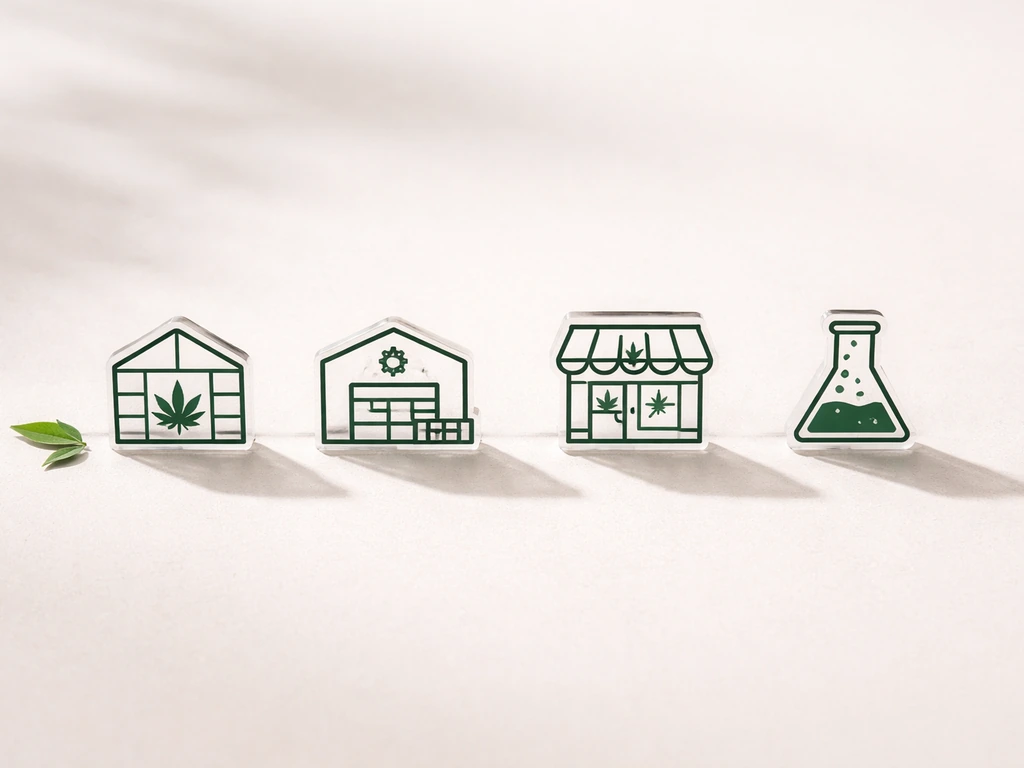
Arizona's marijuana establishment licensing includes several facility types. For commercial cultivation specifically, you're looking at the Marijuana Establishment Cultivator license. If you are planning to operate as a cultivator, be sure your business is set up for the commercial grow license category. Other establishment types include dispensaries (retailers), marijuana product manufacturers, and marijuana testing facilities. Each is its own license category, though some entities hold multiple license types.
Eligibility basics under Arizona law require that applicants be at least 21 years old, and both the entity and its principal officers, board members, and key employees must pass ADHS background investigations. The background check process is managed directly by ADHS and looks at criminal history, prior marijuana license violations, and other disqualifying factors defined in statute. Having a felony drug conviction doesn't automatically disqualify you in Arizona's adult-use framework, but ADHS reviews each case individually.
Unlike some other states, Arizona does not currently have a separate micro-cultivator or tiered size-based license structure with dramatically different fee scales for small versus large operations. The license type is based on facility function, not plant count tier. That said, your canopy size affects your operational footprint and compliance obligations once licensed.
How the application process works
Everything starts at the ADHS LicensingOnline portal. You create an account, select the appropriate marijuana establishment license type, and begin the application. ADHS reviews applications for completeness before moving them into full processing, so submitting an incomplete application just causes delays.
Here's the general flow you should expect:
- Create an account on the ADHS LicensingOnline portal (portal.azdhs.gov or the current ADHS licensing URL).
- Select 'Marijuana Establishment' and the specific facility type (cultivator).
- Complete the application form, which covers ownership structure, principal officers, proposed facility location, and operational plans.
- Submit background check information for all required individuals (principal officers, board members, key employees).
- Upload all required supporting documents (see the list below).
- Pay the application fee.
- Wait for ADHS to process the application and conduct background investigations.
- If approved, pay the licensing fee and receive your license before beginning operations.
Documents and information to prepare

Getting your paperwork together before you start the application saves real time. ADHS requires detailed information about your proposed facility and your principals. Here's what you should have ready:
- Business entity formation documents (articles of incorporation, LLC operating agreement, etc.)
- Ownership and organizational chart showing all individuals with financial interest
- Personal history and background disclosure forms for all principal officers and key employees
- Government-issued ID for each individual subject to background checks
- Proposed facility address and proof of property control (lease, deed, or letter of intent from landlord)
- Floor plan or site plan of the cultivation facility
- Security plan describing cameras, access controls, and alarm systems
- Business operating plan covering cultivation methods, waste disposal, and employee training
- Financial documentation demonstrating sufficient capitalization to operate
ADHS can and does request additional documentation during review, so treat this as a minimum baseline rather than an exhaustive list. Check the current ADHS marijuana licensing page for the latest required document checklist, since specific requirements can be updated.
How long does it take?
Arizona does not publish a rigid statutory timeline for marijuana establishment license processing. Realistically, applicants should plan for several months from submission to approval. Background investigations take time, especially when multiple principals are involved or when additional documents are requested. Having a complete, well-organized application is the single biggest factor in moving the process along efficiently.
Costs, canopy limits, and what you need to operate

Arizona's marijuana establishment fees are set by ADHS and are subject to change, so always verify current amounts directly on the ADHS licensing page before budgeting. As a general framework, marijuana establishment applicants pay both an application fee and a separate annual licensing fee. Historically, Arizona has charged application fees in the range of a few hundred to a few thousand dollars depending on license type, with annual fees higher for active license holders. Budget for both, and factor in that enforcement fines must be paid before ADHS will accept your annual renewal fee.
Arizona does not impose a hard statewide plant count cap on commercial cultivators in the same way that some states cap home growers at 6 or 12 plants. Instead, commercial cultivators operate within the canopy and space constraints defined by their licensed facility and operational plan. Your facility's approved square footage and your growing methods (indoor, outdoor, greenhouse) determine your practical capacity. This is why your facility plan and site documentation are so critical at the application stage.
On the operational requirements side, here's what ADHS expects licensed cultivators to have in place from day one:
- A compliant security system with video surveillance covering all cultivation, storage, and entry/exit areas
- Restricted access controls so only authorized personnel can enter the grow space
- Seed-to-sale tracking using Arizona's state-designated track-and-trace system (currently METRC)
- All cannabis products tested at a licensed Arizona marijuana testing facility before sale
- A compliant waste disposal plan for plant material and cannabis waste
- Employee training and recordkeeping that demonstrates ongoing compliance
Renewals, inspections, and staying compliant
Arizona marijuana establishment licenses are not a one-and-done deal. ADHS inspects each licensed marijuana facility twice per year. ADHS communication says it inspects each licensed marijuana facility twice per year, and frequent priority violations can put a license at risk of suspension or revocation. These aren't surprise audits you can avoid; they're built into the regulatory calendar. Inspectors look at your security systems, tracking records, physical facility condition, employee compliance, and whether you're operating within your approved plan.
Violations found during inspections are categorized by priority level. Minor issues are usually correctable on the spot or within a short window. Priority violations that aren't corrected promptly, or that recur frequently, put your license at risk of suspension or revocation. ADHS takes repeat non-compliance seriously, and license loss is a real outcome, not just a theoretical threat.
For renewals, ADHS processes annual license renewals through the same LicensingOnline portal. One important rule: if you've received any enforcement fines from ADHS, those fines must be paid in full before ADHS will accept your renewal fee. Don't let outstanding fines accumulate thinking you'll deal with them at renewal time. That approach creates a hard stop on your renewal and risks a lapse in your license.
Your ongoing recordkeeping obligations include maintaining accurate METRC tracking records for all plants and product, keeping employee training logs, preserving security footage for the required retention period, and documenting all waste disposal events. ADHS can request these records at any time, not just during scheduled inspections.
Where to find the official forms and avoid costly mistakes
The official starting point is the ADHS marijuana licensing page at azdhs.gov. From there you'll find links to the LicensingOnline portal, current fee schedules, required document checklists, and any regulatory updates. Do not rely on third-party summaries (including this article) for fee amounts or specific form requirements. Regulations and fees change, and the ADHS page reflects the current, authoritative version.
Here are the most common mistakes applicants make that cause delays or denials:
- Submitting incomplete applications without all required principal officer information, which stalls background checks
- Listing a facility address where zoning doesn't permit cannabis cultivation (always confirm local zoning approval before submitting)
- Underestimating the detail required in the security and operational plans
- Missing the distinction between the application fee and the licensing fee, and failing to budget for both
- Assuming approval means you can operate immediately, before receiving the actual license certificate from ADHS
- Failing to enroll in METRC before beginning cultivation operations
- Not paying outstanding enforcement fines before attempting annual renewal
Local zoning is worth calling out specifically. Arizona municipalities and counties have their own rules about where cannabis facilities can operate, including setback requirements from schools, churches, and residential areas. ADHS won't approve a facility at a location that isn't zoned for it, so confirming local approval before you commit to a lease saves you from a very expensive mistake.
Your practical next steps
If you're ready to move forward today, here's a concrete action sequence to follow:
- Go to azdhs.gov and navigate to the Marijuana Licensing section to review current requirements and fee schedules.
- Identify and confirm that your proposed facility location is properly zoned for commercial cannabis cultivation at the local level.
- Gather your business formation documents, ownership structure, and identify all individuals who will need background checks.
- Create your account on the ADHS LicensingOnline portal and begin the application for a Marijuana Establishment Cultivator license.
- Draft your security plan and operational plan before starting the application so you're not improvising those sections under time pressure.
- Register for METRC (Arizona's track-and-trace system) early so you understand the tracking requirements before you're licensed.
- Budget for both the application fee and the annual licensing fee, plus reasonable working capital to cover the months between application and first sale.
- Set a calendar reminder for your annual renewal date and keep enforcement fines at zero so renewal is never blocked.
Arizona's commercial cannabis licensing process is manageable if you approach it organized and informed. If you're researching commercial grow licensing in Alaska, the requirements and licensing pathway can differ from Arizona's system Arizona's commercial cannabis licensing process. A weed grow license refers to the state authorization required to legally cultivate marijuana commercially under Arizona's marijuana establishment rules Arizona's commercial cannabis licensing process. The application itself isn't the hard part. What trips people up is going in without a complete facility plan, without confirmed local zoning, or without understanding what compliance looks like after approval. Get those foundations right first, and the ADHS process becomes a lot more straightforward.
FAQ
Does an Arizona commercial grow license approval depend on who owns the business, or only the facility location?
Not necessarily. Arizona’s rules generally require the legal entity to be properly set up and its principal officers, board members, and key employees to pass background investigations. If your ownership structure changes during review, you may need to report the change and provide updated information, which can restart or slow processing.
Can I apply for an Arizona commercial grow license before I sign a lease or lock the facility address?
You can face delays if your proposed address or parcel details are not consistent across your application and your final lease or ownership documents. ADHS expects the licensed facility site and facility plan to match the submitted documentation, so clarify the exact premises and zoning status before you upload final materials.
If a principal has a felony drug conviction, does that automatically disqualify them for an Arizona commercial grow license?
A prior felony drug conviction does not automatically bar you, but the background review is individualized. What matters is the specific history, the statute factors ADHS evaluates, and whether there were prior marijuana-related license violations or other disqualifying circumstances tied to the principals or entity.
After I receive an Arizona commercial grow license, can I expand my grow or change my cultivation method right away?
Yes, you generally must operate within your approved cultivation type and facility parameters. If you plan to add grow space, change from one cultivation method to another (for example, indoor to greenhouse), or materially expand canopy beyond what’s described in your application, expect to go through additional review and updates rather than assuming you can “scale up” freely.
What happens if my METRC or waste disposal records are incomplete between inspections for an Arizona commercial grow license?
Ongoing recordkeeping is not limited to scheduled inspections. If your METRC tracking, waste disposal documentation, or security footage retention is incomplete, you can receive enforcement actions even if you are otherwise “operationally compliant,” so build internal audit routines before your first inspection.
If I want to grow for sale, do I use the same process as personal cultivation rules in Arizona?
Adult-use cultivation at a commercial establishment requires the establishment license pathway. If you only intend to grow for personal use, that is handled under the separate personal cultivation framework, which is not the same authorization for selling.
Can I start construction for my cultivation facility while waiting for an Arizona commercial grow license?
Yes. Arizona local governments control zoning and location eligibility. Even if ADHS processing is underway, you can be stopped at the licensing stage if the municipality or county does not approve the site for a marijuana establishment, so obtain local approval or written confirmation before spending heavily on buildout.
Does an Arizona commercial grow license allow me to sell directly to consumers, or do I need other licenses?
Selling product requires additional licensing beyond the cultivation license, depending on your role in the supply chain. Many growers sell to licensed dispensaries or other licensed parties, but you need to ensure the downstream licenses and transfer requirements are consistent with your intended business model.
If I hire contractors for parts of the grow, do I still have full compliance responsibility under an Arizona commercial grow license?
Arizona cultivators are expected to use the state’s tracking system and maintain required records for the plants and product. If you plan to use contractors for cultivation tasks, security, or waste handling, you still remain responsible for ensuring the required documentation is completed and retained in a way ADHS can review.
How should I plan renewals if I might have enforcement fines related to my Arizona commercial grow license?
If you receive enforcement fines, you should treat them as a blocking item for renewal planning. Don’t assume you can pay at the end of the cycle, because ADHS may reject renewal acceptance until amounts are fully satisfied, which can create a lapse risk.
Next Article
502 Grow License for Sale in Washington: Options & Steps
Washington 502 grow license options and steps to apply or buy via transfer, with due diligence and compliance basics.