Getting a New Jersey micro grow license will cost you a minimum of $1,500 in direct CRC fees: $100 to submit your application, $400 upon approval, and $1,000 for the annual license fee (with the first year reduced by what you already paid in submission and approval fees, so effectively $500 at licensing). That's the floor. Add background check fees, METRC setup, security infrastructure, and ongoing compliance costs, and most microbusiness cultivators budget $5,000 to $15,000 or more for the full first-year picture depending on build-out status and how many owners need background checks. If you need help understanding the grow therapy tax ID number requirement, review the tax documentation guidance that applies to your licensed business.
NJ Micro Grow License Cost and How to Apply Step by Step

Marcus Whitley
24 Apr 2026

What you'll actually pay: NJ micro grow license cost breakdown

The CRC fee schedule (effective November 20, 2024) sets the official costs. Here's how those fees stack up for a microbusiness cultivator:
| Fee Type | Microbusiness Amount | Notes |
|---|---|---|
| Application submission fee | $100 | Paid when you submit |
| Application approval fee | $400 | Paid upon conditional or annual approval |
| Annual license fee (Class 1 Cultivator) | $1,000 | First year reduced by submission + approval fees paid ($500 net at licensing) |
| Background investigation (per owner/principal) | $250 per person | Conditional license applicants and social equity businesses are exempt |
| Cannabis Business ID card | $25 per card | Required for each employee |
| Location change fee | $1,000 | If you move or change premises later |
| Majority ownership change fee | $20,000 | Significant post-approval change |
A solo owner with a conditional license first (which exempts you from the background check fee) pays $100 + $400 + $500 net at annual licensing = $1,000 in CRC fees in year one. An annual applicant with two owners pays $100 + $400 + $500 + $500 in background checks = $1,500. Every year after that, the renewal is $1,000.
Beyond CRC fees, budget realistically for: a security system that meets N.J.A.C. 17:30-9 and 17:30-10 requirements (cameras, access control, alarms), a METRC seed-to-sale tracking subscription, legal or consulting help if you need it, municipal zoning/permits, and your actual facility build-out. Those costs vary widely but are often the biggest line items in the first year.
Micro grow vs. other NJ cultivation licenses: pick the right one
New Jersey issues cannabis cultivation licenses under two main tracks: standard business licenses and microbusiness licenses. If you're searching for a "micro grow license," you're looking at the microbusiness Class 1 Cannabis Cultivator category. The microbusiness track has lower fees and simpler entry, but it comes with hard operational caps that you must stay within for the life of the license.
The CRC defines a microbusiness cultivator with these specific limits: no more than 10 employees at one time, a physical plant no larger than 2,500 square feet (including all grow areas and equipment directly used in cannabis operations), canopy height no more than 24 feet, and no more than 1,000 mature cannabis plants per month. If your operation is or will grow beyond any of those limits, you need to apply under the standard cultivation license track, which has higher tiered annual fees based on canopy size.
One thing that trips people up on the square footage rule: the 2,500 sq ft limit applies to your physical plant (the spaces and equipment directly used in cannabis operations), not your entire building footprint. You can have a larger property with non-cannabis-related space, as long as your cannabis operation itself stays within 2,500 sq ft. That said, the CRC is clear that you must maintain that limit as a microbusiness, even if you later want to use adjacent space.
If you're already exploring the broader NJ grow license landscape, the microbusiness track is covered under that same CRC licensing umbrella with its own fee tier. The standard NJ cultivation license covers everything from small canopy operations up to large commercial facilities, and those annual fees scale up significantly compared to the flat $1,000 microbusiness rate.
What you need before you apply

The CRC requires everything to be submitted electronically through the New Jersey Adult Use Licensing Application System. Before you open that portal, gather everything below so you're not stopping mid-application.
Eligibility you must confirm first
- 100% of ownership interest must be held by New Jersey residents who have lived in NJ for at least the past 2 consecutive years at the time of application
- At least 51% of owners, principals, and employees must be residents of the municipality where your business will be located, or a directly bordering municipality, at the time of application
- Your operation must fit within the microbusiness caps: 10 employees max, 2,500 sq ft physical plant, 1,000 mature plants per month, 24-foot canopy height
Documents and materials to prepare
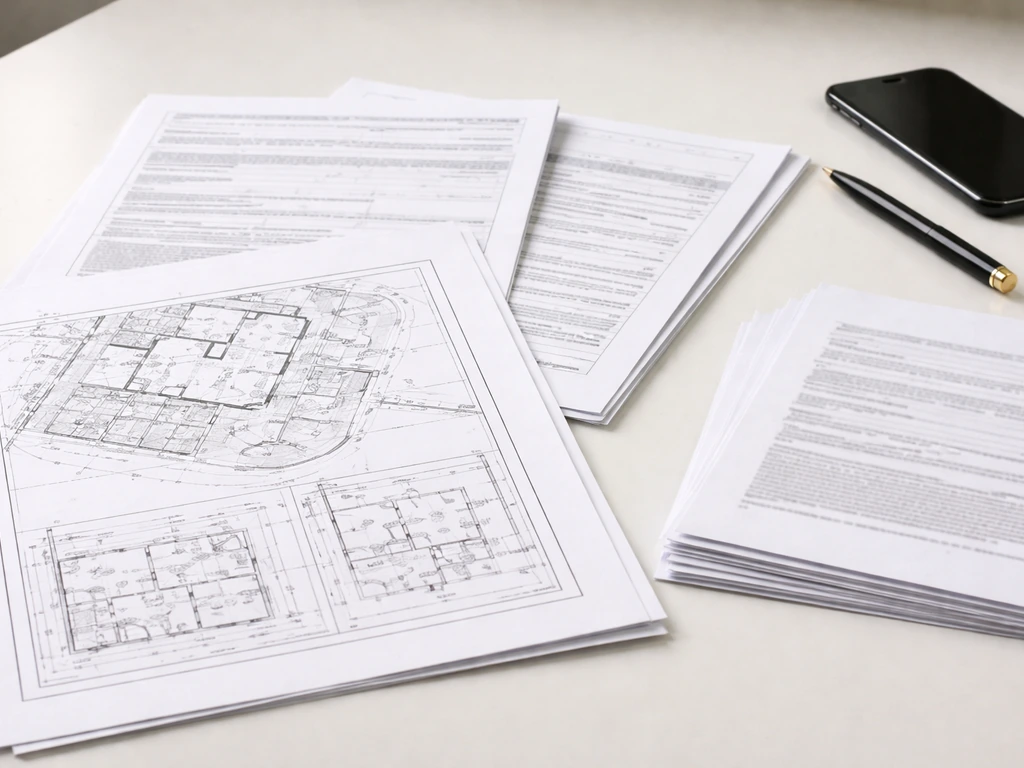
- Proof of NJ residency for all owners (2+ consecutive years)
- Municipal zoning approval or documentation showing your location is in a cannabis-permitted zone
- Site plan and floor plan of your physical plant (showing the 2,500 sq ft area clearly)
- Security plan and evidence that your premises meet N.J.A.C. 17: 30-9 and 17:30-10 security requirements
- Standard Operating Procedures (SOPs) for cultivation operations
- Ownership structure documentation (who owns what percentage)
- Background investigation materials for each owner and principal (if applying as an annual license, not conditional)
- Business formation documents (LLC operating agreement, articles of organization, etc.)
- Municipality/local approval documentation
The CRC is strict about completeness and legibility. Blurry scans, missing attachments, or incomplete sections will result in a Cure Letter giving you a chance to fix errors, but that adds weeks to your timeline. Getting documents right the first time is genuinely worth the extra prep.
How to submit the NJ micro grow license application, step by step
- Create an account in the NJ-CRC Licensing Portal (the New Jersey Adult Use Licensing Application System) at the CRC's official website
- Start a new application and select 'Microbusiness' as your applicant category and 'Class 1 Cannabis Cultivator' as your license type
- Complete all required sections: ownership information, location details, facility description, employee projections, and residency documentation
- Upload all required documents (site plan, security plan, SOPs, municipal approvals, residency proofs, business formation docs) — use Save & Continue frequently to avoid losing progress
- Pay the $100 application submission fee through the portal at the time of submission
- Wait for CRC staff to review your submission; if anything is missing or unclear, you'll receive a Cure Letter in the portal with a deadline to fix it
- If your application moves forward, you'll receive a notice of approval (conditional or annual) and an invoice for the $400 approval fee
- For a conditional license: pay the $400 approval fee, then within 165 days apply for conversion to an annual license
- For an annual license (or when converting from conditional): pay the $400 approval fee, background check fees for each owner/principal ($250 per person), and then the $1,000 annual licensing fee (minus submission and approval fees already paid, so $500 net) before proceeding to the compliance phase
- Work with CRC compliance staff through the SOP review, METRC setup, premises build-out confirmation, and preliminary onsite inspection
- After a final compliance inspection, the Office of Compliance and Investigations generates a compliance report; final compliance approval results in an invoice before your license is issued
No applicant is guaranteed a Board meeting date or a specific outcome after final application review. The CRC Board considers applications and makes the approval decision, so even a complete, well-prepared application goes through that layer before moving into compliance.
Timeline and what affects how fast you get approved
There's no published hard deadline for CRC review timelines, and applicant experience varies. What you can control is how quickly you move through each stage, and understanding what causes delays helps you avoid them.
If you submit a conditional application first, you get 165 days after conditional approval to convert to an annual license. That gives you time to secure your location, finalize your build-out, and get municipal approvals in order before committing to full annual licensing fees and background checks. Many applicants use that window strategically.
The biggest causes of delays are incomplete or illegible document uploads, residency documentation that doesn't clearly establish the 2-year NJ residency requirement, zoning or municipal approval that isn't in place at the time of application, and SOPs that don't address CRC requirements specifically enough. Each Cure Letter response cycle adds time.
The compliance phase after approval adds additional time: METRC setup, SOP review, build-out inspection, and the final compliance inspection all happen sequentially. Having your facility genuinely ready for inspection before the compliance review starts will shorten this phase significantly. Trying to finish construction during the inspection window is a common mistake.
Renewal, compliance, and what staying licensed actually costs
Your microbusiness cultivator license renews annually through the NJ-CRC Licensing Portal. The renewal fee is $1,000 per year. You upload required renewal documentation in the portal, submit the renewal application, and the renewal fee is charged at the time of submission.
If the CRC needs additional information during renewal review, your application can be returned to you in the portal to cure. Once your renewal is approved, you receive an invoice by email. That invoice must be paid within 30 days. If you miss that window, you get a final notice. If you don't pay within 60 days total, the renewal is automatically rejected in the portal and your license can be rescinded.
Renewal can be denied on several grounds beyond just late fees. The CRC can deny renewal for failure to maintain compliance with applicable laws and regulations, failure to maintain microbusiness status (if you've exceeded the employee, square footage, or plant limits), providing inaccurate or outdated information, or accumulating three or more major violations within the preceding 12 months. Compliance isn't a one-time thing: it's ongoing.
Ongoing compliance costs to budget for include your METRC subscription (seed-to-sale tracking is mandatory), any required employee ID cards at $25 each, and the cost of maintaining your security systems to CRC standards. NJ-CRC applicant guidance also notes that Cannabis Business Identification Cards have a $25 issuance fee. If you ever need to move locations or change majority ownership, those fees ($1,000 and $20,000 respectively) are substantial, so factor them into long-term planning.
Budget checklist: total cost planning and traps to avoid
Use this as your working budget framework for year one as a microbusiness cultivator:
| Cost Item | Estimated Amount | Notes |
|---|---|---|
| CRC application submission fee | $100 | Due at submission |
| CRC approval fee | $400 | Due upon conditional or annual approval |
| Annual license fee (net year one) | $500 | Year one reduced by fees already paid; $1,000 face value |
| Background checks (per owner/principal) | $250 each | Waived for conditional applicants and social equity businesses |
| Employee cannabis business ID cards | $25 each | Budget per employee |
| Security system (cameras, access control, alarms) | $2,000–$10,000+ | Must meet N.J.A.C. 17:30-9 and 17:30-10; varies widely by facility |
| METRC setup and subscription | $500–$1,500/year | Mandatory seed-to-sale tracking |
| Facility build-out (within 2,500 sq ft) | $5,000–$50,000+ | Highly variable; zoning and construction costs |
| Municipal permits and zoning approvals | $500–$2,000+ | Varies by municipality |
| Legal or consulting help (optional but common) | $1,000–$5,000+ | Application prep, SOPs, zoning navigation |
| Year 2+ annual renewal | $1,000/year | Plus ongoing METRC and compliance costs |
Common pitfalls that cost extra money or time
- Applying before municipal zoning approval is confirmed — your application stalls and you may need to resubmit
- Owners who don't meet the 2-year NJ residency requirement at the time of application — this disqualifies the entire application
- Incomplete or blurry document uploads triggering a Cure Letter cycle, adding weeks to the timeline
- Underestimating security system requirements and failing the compliance inspection, requiring a re-inspection
- Not having METRC set up before the compliance review phase begins
- Missing the renewal invoice payment window (30-day payment deadline, 60-day hard cutoff) and losing the license
- Growing beyond microbusiness limits (employees, plants, square footage) and risking renewal denial or enforcement action
- Ignoring that a majority ownership change costs $20,000 — plan your ownership structure carefully before applying
The practical next step today: go to the NJ Cannabis Regulatory Commission website (njcannabis.gov), pull the current fee schedule and application guide for recreational business licensing, and confirm you meet the residency and microbusiness eligibility requirements before spending any time on documents. If you're also exploring the financial side of your NJ cannabis operation, the state's NJ grow tax credit programs may be worth reviewing as a parallel track once you have your license in place. Many cultivators also look at options like growing tax-free to reduce ongoing tax impact after licensing.
FAQ
What is the total nj micro grow license cost in year one if I have more than one owner and I apply as conditional first?
In most cases, you still pay the $100 submission and $400 approval CRC charges up front, then you net a lower first-year annual fee at conversion. Your conditional-to-annual decision mainly affects when background check charges and the annual licensing fee hit. If you have two owners, you should budget background checks as soon as you convert, then assume you will add METRC, security, and compliance costs on top of the CRC totals.
Do I have to pay METRC and security costs before my license is approved, or can I plan those after?
You can often delay some spending, but you should not plan to wait until the last minute. The compliance phase includes METRC setup, SOP review, and inspections, and those items must be ready when the CRC starts the compliance workflow. A practical approach is to confirm METRC onboarding timing and security installation lead times early, because late readiness is a common cause of extended compliance delays.
How many background checks should I expect for the nj micro grow license cost, and what if one owner is not in New Jersey yet?
The background check charges generally scale with the number of owners included in your application. If an owner does not clearly establish the required residency period, the application can be delayed because the CRC needs residency documentation that clearly supports the 2-year NJ residency requirement. If timing is tight, consider coordinating background check timing and document gathering so you can respond to Cure Letters without pushing conversion or compliance dates.
Does the 2,500 sq ft cap apply to my entire facility building, or only the cannabis operational areas?
It applies to the physical plant used for cannabis operations, not your full property footprint. That means grow areas and equipment directly used in cannabis activities are what count. You can often keep office, storage for non-cannabis purposes, or other non-operational space outside the counted limit, but you should document how the cannabis portion stays within 2,500 sq ft because exceeding the limit can impact ongoing microbusiness status.
What happens if I exceed the microbusiness limits later, even if I started under 2,500 sq ft and 1,000 plants?
Microbusiness status must be maintained for the life of the license. If you exceed employee headcount at one time, grow beyond the canopy height or plant-per-month limit, or expand the cannabis operational footprint, the CRC can treat that as a compliance failure that affects renewal. Planning ahead for staffing changes and plant scheduling (especially monthly plant counts) helps reduce the risk.
Are there any hidden costs that commonly surprise first-time applicants beyond CRC fees?
Yes. The most frequent “surprises” are the cost and lead time to reach inspection-ready security standards, legal or consulting costs to tighten SOPs to CRC expectations, and municipal zoning or local permits that are slower than expected. Also, background check timing and residency documentation gaps can extend timelines, which increases the period you are paying for building readiness and compliance preparation.
Can I avoid Cure Letters by how I upload documents, and what format issues are most common?
You cannot eliminate review, but you can reduce Cure Letter risk by uploading clear, readable scans, ensuring every required attachment is present, and matching the content to each section requested in the portal. A common mistake is uploading images that are too low-resolution or missing pages, which forces additional cycles to correct. Before submission, do a page-by-page completeness check against the application checklist.
Does the CRC guarantee a Board meeting date, and how should I plan financially if my timeline slips?
No, there is no guarantee of a specific Board meeting date or outcome. Financially, this means you should assume there could be waiting time between “final application review” and an approval decision. If you are paying ongoing rent or construction costs during the wait, it is smart to build a contingency buffer into your plan so you can keep compliance preparation on track if the review pace varies.
For renewal of a nj micro grow license, when is the renewal fee actually charged and what if my payment is delayed?
The renewal fee is charged at the time you submit the renewal application in the portal. After approval, you receive an invoice by email, and you need to pay within 30 days to avoid a final notice. If payment is not completed within a 60-day total window, the renewal can be automatically rejected in the portal, which can lead to rescission.
What counts as a “major violation” for renewal denial risk?
The article explains that renewal can be denied if you accumulate three or more major violations within a 12-month period, but it does not define every violation category. Because the designation matters, treat any enforcement action or corrective action as potentially significant, and keep a compliance log of issues, remediation steps, and dates so you can see patterns early before they stack into renewal risk.
If I need to move locations or change ownership, how do those fees affect long-term planning?
Relocation and majority ownership changes carry substantial CRC change fees, and they can interrupt your operational timeline. Since these costs are not limited to the year you move, plan ahead by mapping your likely future space needs and considering ownership structure stability. If you think a move or ownership change is probable within a couple of years, factor both the change fees and the operational downtime during approvals and compliance updates.
Next Article
NJ Grow Tax Credit Guide for Cannabis Cultivators
Step-by-step NJ grow tax credit guide for cannabis cultivators: eligibility, filings, deadlines, docs, and compliance ti