If you're searching for an 'NJ grow license,' the answer you get depends heavily on whether you want to grow cannabis commercially or at home. New Jersey does not currently allow recreational home cultivation. Adults 21+ cannot legally grow cannabis plants at home under existing NJ law as of April 2026, despite ongoing policy debate and public comments to the Cannabis Regulatory Commission (CRC) about potential future personal-use grow rules. If you want to legally grow cannabis in New Jersey right now, you need a commercial cultivation license issued by the NJ-CRC. This guide walks you through exactly what that means, which license type fits your situation, and what you need to do today to apply.
NJ Grow License: From Zero to Submitted in New Jersey

Marcus Whitley
20 Apr 2026

What 'NJ Grow License' Actually Means
The term 'grow license' isn't an official NJ-CRC label. The Commission uses 'cannabis cultivator license' for commercial growing operations. There is no separate 'home grow permit' or personal-use cultivation registration available to the public at this time. The NJ-CRC does publish a Personal Use Cannabis Rules framework (N.J.A.C. 17:30, Personal Use Cannabis), but that covers possession, use, and organization of personal-use cannabis, not home cultivation. Home growing remains off the table legally, even though the February 2026 CRC public meeting included comments pushing for Maine-style personal-use plant limits. Until the law actually changes, growing at home means risking criminal or civil penalties.
One thing to note as of April 2026: the NJ-CRC updated its definitions of hemp, cannabis, and marijuana based on THC thresholds, effective April 13, 2026. This matters because plants or products that fall below the THC threshold may be regulated as hemp rather than cannabis. If you're thinking about growing hemp specifically, that's a separate licensing track through the NJ Department of Agriculture, not the CRC. This article focuses on cannabis cultivator licenses under the CRC. This is not legal advice; for specific situations, consult a licensed NJ attorney.
Who Can Apply: Eligibility Basics

To apply for a commercial cannabis cultivator license in New Jersey, you need to meet a set of baseline eligibility requirements. The NJ-CRC reviews both the business entity and the individuals connected to it, called 'Persons of Interest.' Here's what eligibility generally requires:
- You must be at least 21 years old.
- Your business entity must be actively registered and in good standing with the NJ Division of Revenue and Enterprise Services (DORES). If your LLC or corporation isn't current with DORES, the CRC will not issue or maintain your license.
- All Persons of Interest, including owners, officers, and anyone with a significant stake in the business, must pass a background check via the NJ-CRC Fingerprinting process.
- You must have or be able to secure a physical premises in New Jersey with local municipal and zoning approval for cannabis cultivation.
- You cannot have certain disqualifying legal history, though the CRC does allow applicants to submit additional information if potentially disqualifying records surface during the background check.
New Jersey does not require you to be a NJ resident to own or operate a cannabis business, but your legal entity must be registered in the state and in good standing. If you're applying as a microbusiness, there are specific ownership and operational constraints tied to that license class (more on that below). Social equity applicants may also have access to priority review or expedited pathways, so it's worth checking the CRC's current application announcements for any active social equity rounds.
Choosing the Right Cultivation License Category
This is where most people get confused. The NJ-CRC structures cultivator licenses into tiers based on the size of your operation. Getting this choice right from the start is critical, because the license class you apply for determines your fees, canopy limits, and operational requirements.
Microbusiness Cultivator
A microbusiness cultivator is designed for small-scale operations. The key physical limits are strict: your entire physical plant, meaning all spaces, equipment, and infrastructure directly used for cultivation, cannot exceed 2,500 square feet. On top of that, your canopy height cannot exceed 24 feet. Microbusinesses also face ownership restrictions, typically requiring that all owners are NJ residents who are actively involved in the day-to-day operation. The annual licensing fee for a microbusiness is $1,000. If your grow operation fits within these dimensions, the microbusiness track is simpler, cheaper, and worth serious consideration.
Tier I Cultivator
Tier I is the next step up. It covers mature canopy areas greater than 2,500 square feet and up to 10,000 square feet. If you're planning a mid-size indoor or greenhouse operation that goes beyond the microbusiness footprint, this is likely your category. The annual licensing fee for a standard (non-microbusiness) business is $5,000. Tier I operations face more extensive compliance obligations, including a full operational sustainability plan, which microbusinesses are exempt from under N.J.A.C. 17:30-9.4.
Higher Tiers

The CRC defines additional tiers for larger canopy operations beyond 10,000 square feet. If you're planning a large-scale facility, check the current CRC Recreational Business Application page for the full tiered canopy thresholds and corresponding fee lines from the official CRC Fee Schedule (effective November 20, 2024).
| License Type | Physical Plant / Canopy Limit | Annual Fee | Key Restriction |
|---|---|---|---|
| Microbusiness Cultivator | ≤2,500 sq ft total physical plant; canopy height ≤24 ft | $1,000 | Owner-operator NJ residency and involvement requirements |
| Tier I Cultivator | Mature canopy >2,500 sq ft and ≤10,000 sq ft | $5,000 | Full sustainability plan required |
| Tier II+ Cultivator | >10,000 sq ft (see CRC for specific thresholds) | $5,000+ | Higher compliance burden; verify current CRC fee schedule |
Key Compliance Requirements Before You Apply
Getting approved isn't just about submitting paperwork. The CRC evaluates whether your operation is actually ready to run legally and safely. Here are the compliance areas you need to nail before and after approval.
Premises and Zoning
Your cultivation facility must be in a location that the municipality has zoned to allow cannabis operations. You need written municipal and zoning approvals before the CRC will deem your application complete. Do not sign a long-term lease on a space until you've confirmed it's in a cannabis-friendly zone, because many NJ municipalities have opted out of allowing cannabis businesses entirely. Contact your local planning or zoning office first. This is one of the most common application killers.
Security Requirements

Your facility must have a credible security plan. This includes physical security measures at your premises and documented crime prevention techniques. Your cannabis business operations manual (required under N.J.A.C. 17:30-9.6) must include safety procedures covering disaster and fire emergency protocols as well as crime prevention. The manual must be available for CRC inspection at any time. Think of it as a living compliance document, not a one-time filing.
Ownership and Background Fitness
Every Person of Interest tied to your license application will be sent a CRC Fingerprinting Form as part of the background check process after the CRC deems your application ready to proceed. If disqualifying information is found, you have the right to submit additional information. Don't skip full disclosure on ownership and control in your application. The CRC is specifically looking for changes in ownership or control that could affect eligibility, and you'll need to attest annually that nothing material has changed.
Packaging and Product Handling
As a cultivator, you're also responsible for proper packaging before any transfer. Under N.J.A.C. 17:30-16.2, unusable cannabis must be packaged in secure areas connected to your cultivation space before it leaves the facility. All packaging must meet specific standards, including USP container requirements referenced in the rule. The CRC's Packaging and Labeling Guide (2024) gives you the practical details on what's required after testing and before transfer to market.
Ongoing Business Standing
You must keep your business registration active and in good standing with DORES throughout the life of your license, not just at the time of application. Letting your business registration lapse can put your license at risk. You also need to operate under the legal name on your license at all times, as required by N.J.A.C. 17:30-9.4.
The Application Process: From Document Prep to Submission
The NJ-CRC application process has two main tracks: a conditional application and an annual license application. Most new applicants start with the conditional application, which is faster to process but requires you to later convert to an annual license once your facility is ready for inspection.
Step-by-Step Application Process

- Confirm your municipality allows cannabis cultivation businesses and obtain written zoning and local approval for your specific location before anything else.
- Register your business entity with the NJ Division of Revenue and Enterprise Services (DORES) and confirm active good standing status.
- Decide on your license tier (microbusiness vs Tier I vs higher) based on your planned canopy size and operational footprint.
- Prepare your application packet, which must include: proof of municipal and zoning approvals, your business entity documentation, site plans for your cultivation facility, an operating plan describing how you'll run the cultivation operation, and documentation identifying all Persons of Interest.
- Submit the completed application through the NJ-CRC's official application portal during an open application window. Check the CRC's Recreational Business Application page for current open periods, as the CRC does not accept applications on a rolling basis at all times.
- After submission, the CRC reviews your packet for completeness. If documents are missing or defective, your application will not advance to board consideration. You may be asked to provide additional materials.
- Once the application is deemed complete, all Persons of Interest receive CRC Fingerprinting Forms. Background checks are completed at this stage.
- The CRC Board reviews and votes on your application. Approval at this stage triggers fees: an approval fee, background check fee, and annual licensing fee.
- For annual license applicants, you then have 365 days from notice of approval to pass a successful final onsite assessment (inspection) at your facility. If you fail to pass within that window, the CRC declines to issue the annual license and your approval is returned.
- After passing the onsite assessment, the CRC issues your annual cannabis cultivator license, and you can legally commence operations.
Processing Timeline to Expect
Plan for significant lead time. The CRC currently processes conditional applications in approximately 4 to 5 weeks. Annual license applications and conditional-to-annual conversions take considerably longer, typically 12 to 26 weeks. That's three to six months just for the review phase, not counting the time you spend preparing documents, securing your location, or waiting for local approvals. If you're planning to open a cultivation business, start this process much earlier than you think you need to.
Costs, Renewals, and Ongoing Obligations
Here's a realistic picture of the financial obligations tied to an NJ cannabis cultivator license. If you are specifically focused on getting a “529 grow tax free” strategy, you should talk to a tax professional before you rely on cannabis license or cultivation details for any tax planning.
Fees
The official CRC Fee Schedule (effective November 20, 2024) lists all applicable fees. Beyond the annual licensing fee ($1,000 for microbusiness, $5,000 for standard businesses), you'll also pay an application fee at submission, an approval fee when the board approves you, and background check fees for each Person of Interest. Check the current fee schedule on the CRC website because fees can change and the schedule is your authoritative source.
Renewals
Your license is not permanent. You must submit annual renewal applications through the CRC. As part of renewal, you'll also need to submit an annual verification statement attesting that there has been no change in ownership or control that would affect your eligibility. Microbusinesses are exempt from certain requirements in this process, so check the current regulatory text for your specific exemptions. Missing a renewal deadline or letting your DORES registration lapse can jeopardize your license.
Post-Approval Compliance Costs
Beyond fees, budget for the practical costs of staying compliant: maintaining your security systems, keeping your operations manual current and inspection-ready, meeting packaging and labeling requirements before every transfer, and completing any required reporting. If you're a Tier I or higher business, you'll also need an operational sustainability plan (N. J. A.
C. 17:30-9. 4). These are ongoing obligations, not one-time boxes to check.
It's also worth being aware of the microbusiness cost structure compared to standard licensing, as the difference is significant. If you want a deeper breakdown of the nj micro grow license cost, including how the licensing fees compare to standard categories, review the full microbusiness cost structure in the CRC fee schedule. The nj micro grow license cost topic covers that comparison in more depth.
Common Mistakes and a Practical Readiness Checklist
Most application problems come down to a handful of avoidable mistakes. Here's what trips people up most often, followed by a checklist you can use today.
The Most Common Application Mistakes
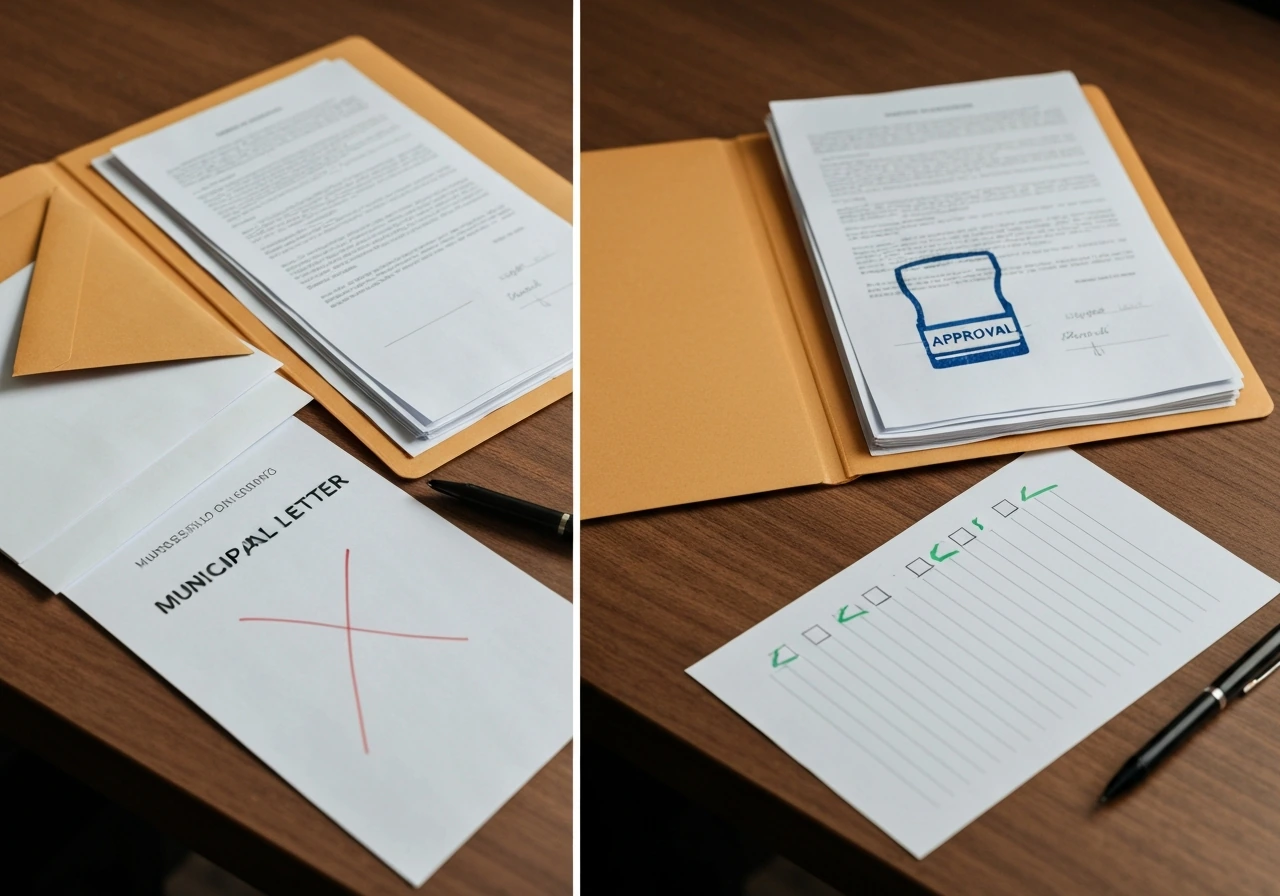
- Securing a location before confirming municipal zoning approval for cannabis cultivation. Many NJ municipalities have opted out; verify this first, every time.
- Submitting an incomplete packet. Missing even one required document, like a site plan or zoning letter, stops your application from reaching board review.
- Letting DORES business registration lapse before or during the process. The CRC checks this and it will kill your application or your existing license.
- Choosing the wrong license tier. Applying as a microbusiness when your planned operation exceeds 2,500 square feet (or vice versa) creates problems that are hard to fix mid-process.
- Underestimating the timeline. People plan to open in six months and don't account for 12 to 26 weeks of CRC review plus the 365-day window to complete the onsite assessment.
- Not having a complete, inspection-ready operations manual before the onsite assessment. The CRC can inspect your manual at any time and it must meet the requirements of N.J.A.C. 17:30-9.6.
- Assuming home growing is legal while they wait. It is not. Don't grow cannabis at home while your commercial application is pending.
Your Pre-Application Readiness Checklist
- Confirm your municipality has opted in to allow cannabis businesses and verify your specific location is properly zoned for cultivation.
- Obtain written zoning and municipal approval for your site before signing any lease.
- Register your business entity with DORES and confirm it is in active good standing.
- Determine your license tier based on your planned canopy and physical plant size (microbusiness ≤2,500 sq ft vs Tier I 2,500–10,000 sq ft vs higher).
- Review the current CRC Fee Schedule (effective November 20, 2024) and budget for application, approval, background check, and annual licensing fees.
- Identify all Persons of Interest and prepare them for the fingerprinting and background check process.
- Draft your site plan and operating plan for the cultivation facility.
- Begin drafting your cannabis business operations manual, including safety, fire emergency, and crime prevention procedures.
- If applying as a Tier I or higher business, begin developing your operational sustainability plan.
- Check the NJ-CRC Recreational Business Application page for the current application window. Applications are not always open.
- Plan your timeline realistically: 4 to 5 weeks for conditional review, 12 to 26 weeks for annual review, plus up to 365 days to complete the onsite inspection after approval.
- Consult a licensed NJ cannabis attorney if you have questions about eligibility, disqualifying history, or ownership structure. This guide is informational, not legal advice.
If you're also curious about the financial side of operating, there are related topics worth exploring: NJ does have a tax credit framework that may apply to cannabis businesses, and understanding the cost breakdown specific to micro-scale cultivation operations can help you model your business before committing to an application path. You may also need a grow therapy tax ID number for tax filings related to your cannabis business. If you are specifically looking for tax advantages, you may also want to explore topics like 529 grow tax free planning and how it could relate to your broader investment strategy.
FAQ
Is “nj grow license” the same thing as a home growing permit in New Jersey?
No. “Grow license” is not an NJ-CRC term for consumer home cultivation. As of April 2026 there is no public personal-use home cultivation permit or registration, so anyone seeking an approval to grow plants for use at home is looking for the wrong category. If you want legal cultivation, you need a commercial cannabis cultivator license through the NJ-CRC.
If my plants might be below the updated THC threshold, can I avoid cannabis licensing by growing “hemp”?
Possibly, but you should not assume classification automatically. The April 13, 2026 THC-threshold update can shift whether something is regulated as cannabis versus hemp, but hemp growing follows a different licensing track with the NJ Department of Agriculture. Confirm the intended crop, expected THC profile, and the regulatory classification you will use before you invest in licensing or facility buildout.
Do I need to be an NJ resident to qualify for a cultivator license?
You do not have to be a resident to own or operate, but the business entity generally must be registered in New Jersey and in good standing. The key exception is often the microbusiness tier, which typically includes ownership and residency-like constraints for owners who must be actively involved in day-to-day operations.
What’s the biggest reason conditional applications get delayed or denied?
For most applicants it is readiness gaps, especially zoning approval timing and incomplete operational documentation. The CRC typically won’t deem the application complete if required municipal and zoning approvals are missing, and many applicants also underestimate how detailed their security plan and required operations manual must be before inspection.
Can I sign a lease before I confirm my location is zoned for cannabis?
It is risky. The practical issue is that many municipalities have opted out or restrict cannabis cultivation, and the CRC requires written municipal and zoning approvals before you can move forward. Before you sign a long-term lease, get written confirmation from your local planning or zoning office that the location can qualify.
How do I choose between microbusiness, Tier I, and higher tiers without accidentally applying to the wrong class?
Start by measuring the actual cultivation-related footprint you will use, because the microbusiness cap is not just “growing space,” it includes all spaces and infrastructure directly used for cultivation, and you also have a strict canopy height limit. Then compare your planned mature canopy area to the Tier I bracket boundaries. If you are borderline, model worst-case layouts to avoid needing a re-route later.
What should I prepare as part of the required cultivation operations manual?
Beyond general policies, your manual needs to be inspection-ready and cover disaster and fire emergency protocols plus crime prevention procedures. Treat it as a maintained document, not a one-time upload, and plan to update it as equipment, security processes, or facility layouts change.
What does “Person of Interest” mean in the application process?
It refers to individuals connected to your license who are reviewed as part of eligibility, and they will receive CRC fingerprinting forms as part of the background-check workflow after the CRC deems your application ready to proceed. A common mistake is failing to track changes in ownership or control later, so set up internal documentation that makes it easy to report and attest to changes accurately.
Do I need to package cannabis in a secure area connected to cultivation before transfer?
Yes. Unusable cannabis must be packaged in secure areas connected to your cultivation space before it leaves the facility. Even if you think transfers will be “small” or infrequent, you still need to build the workflow so packaging happens in the approved connected security area and with materials that meet the required standards.
How long should I expect the process to take, realistically, beyond the CRC review time?
The CRC review windows are only part of the timeline. You also need time for facility readiness (security systems, documentation, and an inspection-ready state), municipal approvals, and conditional-to-annual conversion. Plan lead time of several months total, and start earlier if you are dependent on local approval schedules.
What are the most common license maintenance mistakes after approval?
Two big ones are letting your DORES business registration lapse and missing renewal deadlines. Another frequent issue is failing to keep operating under the legal name on the license, so set up reminders and compliance ownership internally (who tracks renewals, who monitors registration status, and who manages changes in control).
Can fees change after I budget using the schedule?
They can, which is why you should budget using the current CRC Fee Schedule and re-check it right before submission. Fees also stack beyond the annual license fee, including submission-related costs, approval fees, and background check fees for each Person of Interest, so total cost planning should include the full lifecycle, not just the annual number.
Next Article
Grow Therapy Tax ID Number: Find and Verify Today
Find and verify the correct Grow Therapy tax ID for cannabis licensing, banking, invoicing, and forms with a quick check