If you're searching for a "Grow Therapy" tax ID number, you almost certainly need it to complete a specific task today: filling out a cannabis license application, setting up a vendor or banking relationship, completing a W-9, or signing a contract. The fastest path forward is understanding exactly which legal entity you're dealing with, confirming its EIN (Employer Identification Number) from a reliable source, and verifying that the name and number match before you submit anything. For Florida records specifically, you can use Sunbiz's official FEI/EIN search to look up the entity information by number confirming its EIN (Employer Identification Number) from a reliable source. Here's how to do all of that.
Grow Therapy Tax ID Number: Find and Verify Today

Marcus Whitley
9 Apr 2026

What "Grow Therapy" actually refers to and why a tax ID matters
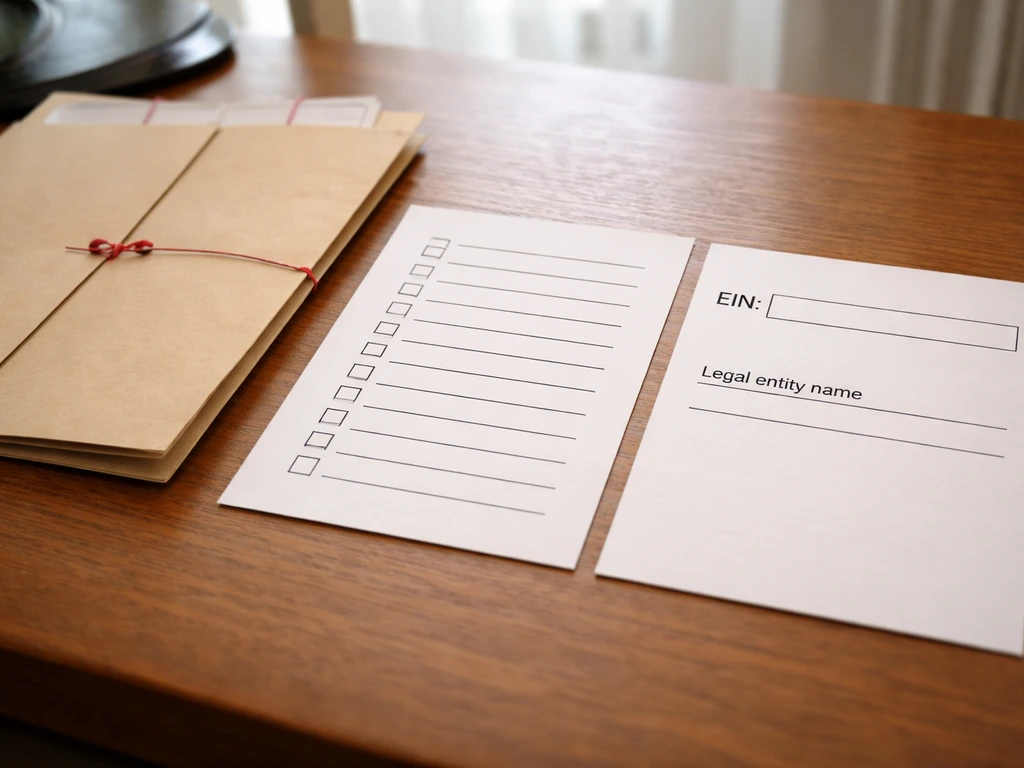
"Grow Therapy" isn't a standardized legal term or government program. In the context of cannabis cultivation and licensing, it typically refers to a specific business entity that operates under that name or a variation of it. For example, Florida's Sunbiz corporate registry lists an entity called "AS YOU GROW THERAPY, LLC" with an FEI/EIN of 87-2226126. That kind of variation (a trade name vs. the official registered legal name) is exactly where people run into trouble when searching for a tax ID.
The tax ID, specifically the EIN assigned by the IRS, is what ties a business entity to its federal tax account. When you need it for cannabis-related work, the reason is almost always one of three things: a state licensing portal is asking for it, a financial institution requires it to open an account or process payments, or you're completing a federal tax form like a W-9 for a contractor or vendor relationship. Each of those scenarios has slightly different requirements, but they all start in the same place: confirming the correct legal name and matching EIN.
Finding the correct Grow Therapy tax ID
Before you go hunting for an EIN, you need to confirm the exact legal name of the entity. This matters more than most people realize. The IRS matches EINs against legal names, and a mismatch will cause rejections on information returns, licensing portals, and banking applications. The legal name is whatever appears on the business formation documents filed with the state, not a DBA, brand name, or abbreviated version.
For a business like "AS YOU GROW THERAPY, LLC," the legal name is the full string as registered in Florida. The FEI/EIN on that Sunbiz record is 87-2226126. You can cross-reference this by looking at the principal mailing address, registered agent name, and authorized managers listed in the same public record. Those details help you confirm you have the right entity, not a similarly named one.
If the entity you're dealing with is in a different state or is incorporated under a slightly different name, you'll want to check that state's business registry directly. Most states maintain a searchable public database of registered entities. Search by the full legal name, not just "Grow Therapy," and look for the FEI/EIN field in the returned record.
Common scenarios where you need this number today
Cannabis license applications
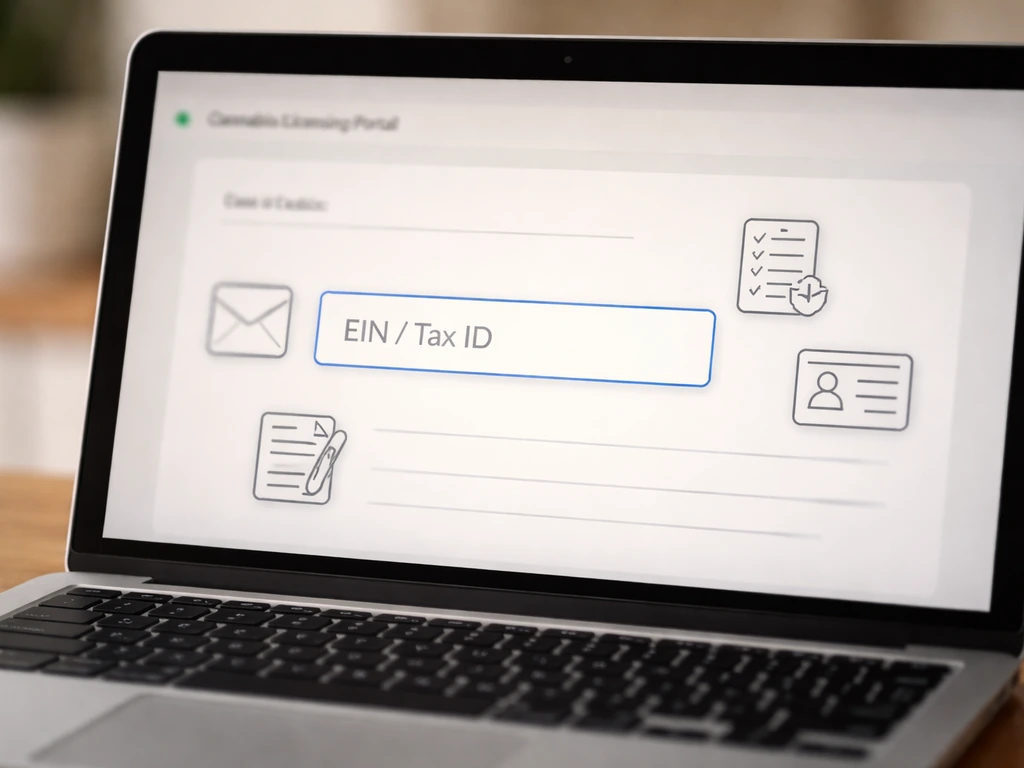
State cannabis licensing portals routinely ask for an EIN during registration or application submission. New Jersey's cannabis portal, for instance, explicitly lists "EIN Number: Your EIN # registers your company for federal tax purposes" as a required field for portal registration. The NJCRC also requires that the business name on the application be identical to the name on business formation documents as registered with the state. If you're entering a vendor or partner's EIN (rather than your own) in a licensing workflow, the same rule applies: the name and EIN must match exactly. If you're curious about the financial side of getting licensed in New Jersey, the nj micro grow license cost can be a useful starting point for understanding what you're committing to before you start gathering documents.
Banking and payment setup
Cannabis businesses and their vendors often need to provide an EIN when opening business bank accounts, setting up merchant processing, or establishing vendor accounts. Financial institutions use EINs to verify business identity and comply with their own anti-money-laundering obligations. If you're setting up a payment arrangement with a grow therapy provider, you'll typically be asked to supply their W-9, which contains their legal name and TIN (EIN for a business entity).
IRS forms and contracting
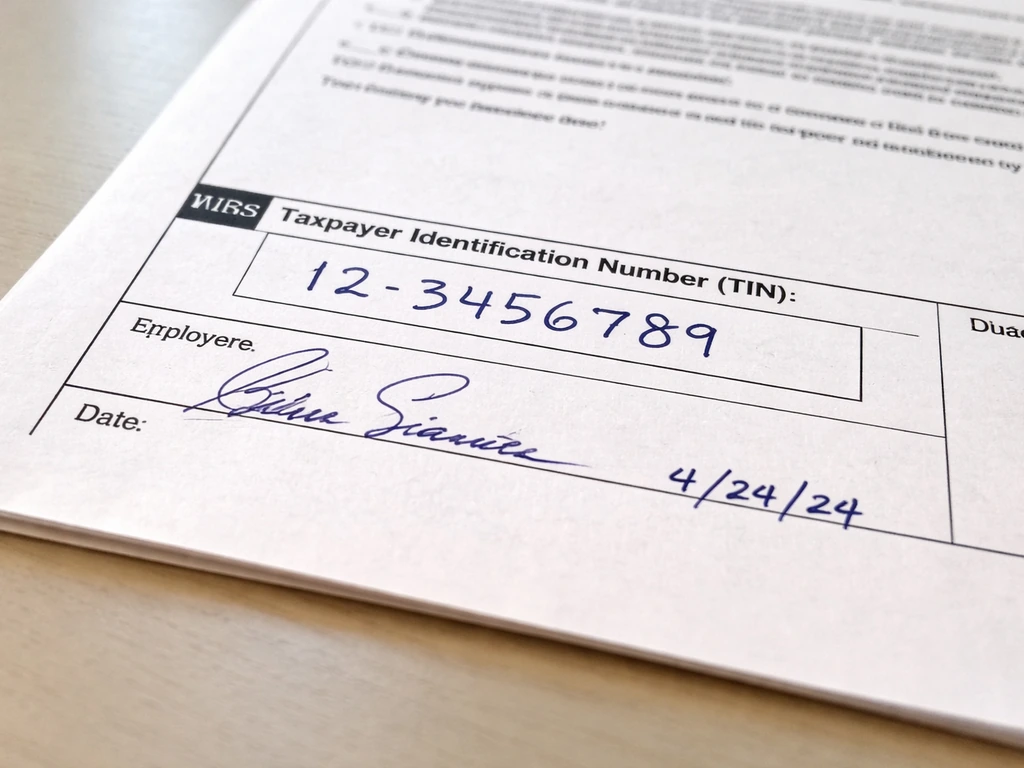
The IRS Form W-9 is the standard mechanism for collecting a correct Taxpayer Identification Number from a business payee. If you're paying a vendor or contractor and need to issue a 1099 at year end, you request a completed W-9 from them. That form will include their legal business name, entity type, and EIN. This is the cleanest way to get the tax ID you need because it puts the responsibility on the business to provide accurate information in writing. If a Grow Therapy entity is your payee, request their W-9 directly.
Where to look for EIN and tax ID documentation
There are several reliable places to find or confirm an EIN. Here's where to check, in order of reliability:
- The entity's own records: The IRS issues a CP 575 confirmation letter when an EIN is assigned. Any legitimate business will have this letter on file. Ask them for a copy or for a completed W-9.
- State business registries: Most states publish EINs (sometimes listed as FEI numbers) in their public entity lookup tools. Florida's Sunbiz is a well-known example. Search by legal entity name.
- IRS Letter 147C: If you are the business owner and need to confirm your own EIN, you can contact the IRS directly and request a Letter 147C ("EIN Previously Assigned"). This letter confirms the EIN associated with your legal business name.
- Prior tax filings and official correspondence: EINs appear on federal tax returns, payroll filings, and IRS notices. These documents are authoritative references for your own entity's EIN.
- IRS TIN Matching: The IRS offers a TIN Matching program that allows payers to validate name/TIN combinations before submitting information returns. This is a payer-side tool, not a general lookup, but it confirms whether a name and EIN pair is consistent in IRS records.
One thing to keep in mind: you cannot freely look up another business's EIN through the IRS. The IRS does not maintain a public EIN lookup tool for arbitrary businesses. Your options are the state registry, direct request to the business, or the TIN Matching program (which requires you to be a registered payer with an account).
How to verify you have the right tax ID

Having a number isn't enough. You need to confirm it matches the right legal entity. Here's how to do that without making costly mistakes.
First, compare the legal name exactly as it appears on the EIN documentation against the name on whatever form or system you're entering it into. The IRS checks name control (typically the first four characters of the business name) when processing filings electronically. A mismatch triggers a rejection. Even something as small as "LLC" vs. "L.L.C." or a missing comma can cause issues in some systems.
Second, confirm the state of formation matches what you expect. An entity called "Grow Therapy" in Florida and one with the same name in New Jersey are legally distinct entities and will have different EINs. The Sunbiz record for AS YOU GROW THERAPY, LLC includes the principal mailing address and registered agent, which helps you verify you're looking at the right Florida entity, not a similarly named one in another state.
Third, if the entity has gone through a name change, be aware that the IRS maintains prior name controls for an EIN even after the change. This means TIN matching may behave differently depending on which name the entity used when filing under that EIN. If you're getting a mismatch in an automated system, ask the entity what name they currently file under with the IRS, not just their current marketing name.
| Verification Method | Best For | Limitation |
|---|---|---|
| State business registry (e.g., Sunbiz) | Confirming EIN for registered entities | Not all states publish EINs publicly |
| W-9 from the entity | Contractor/vendor payee situations | Relies on entity providing accurate info |
| CP 575 or Letter 147C | Confirming your own entity's EIN | Only available to the business owner/authorized rep |
| IRS TIN Matching Program | Pre-filing validation for payers | Requires payer registration; not a public lookup |
| Prior tax filings/IRS notices | Your own historical records | Not available for third-party EINs |
When you can't find it: what to do right now
If you've checked the state registry and can't find a matching record, your next move is to contact the entity directly. Ask them for two things: a completed and signed W-9, and a copy of their EIN confirmation letter (CP 575) or Letter 147C. IRS.com explains that a 147C letter is commonly used for EIN verification when businesses need to confirm their information with financial institutions or other third parties Letter 147C. A legitimate business will be able to provide at least one of these. The W-9 is the most practical document for most situations because it was designed exactly for this purpose.
If you're the business owner and can't locate your own EIN, call the IRS Business & Specialty Tax Line. After verifying your identity, an IRS representative can confirm the EIN associated with your legal business name and mail you a Letter 147C. You can also look at any past federal tax return or payroll filing, which will have the EIN on it. The IRS explicitly warns not to use a prior employer's EIN or borrow one from another entity, even temporarily. Each legal entity has its own EIN and they are not interchangeable.
If a licensing portal is blocking your progress because it can't validate an EIN, check whether the portal accepts alternative identifiers. Some state systems allow a state-issued entity ID or Corp ID in lieu of an EIN in certain steps. New Jersey's cannabis application workflow, for example, references both EIN and Entity ID/Corp ID as part of the submission process. Understanding the full nj grow license application process can clarify which identifier is required at which stage.
How tax IDs fit into cannabis licensing across states
Cannabis licensing in the US is handled at the state level, and each state has its own process for verifying business identity during the application workflow. But almost all of them eventually need a federal EIN, because the EIN is how a business registers for federal taxes and establishes its identity for financial compliance.
In New Jersey, for example, a cannabis business must be registered with the NJ Division of Revenue and Enterprise Services and obtain a license from the NJCRC. After getting an EIN, the business files Form NJ-REG to obtain a Business Registration Certificate (BRC), which is required for contracting and is tied to certain compliance processes. The BRC and EIN together establish the business's identity in the regulated ecosystem. Those pursuing nj grow tax credit programs will also find that EIN-based registration is a prerequisite for qualifying.
The NJCRC's business resources also connect compliance workflows, including agent card processes, back to business-accounting identifiers, which means your EIN shows up not just at the application stage but throughout ongoing compliance obligations. If you want a broader view of how tax treatment interacts with cannabis grow programs, 529 grow tax free programs illustrate how specific structures can affect the tax obligations tied to your cultivation operation.
The general pattern across states is consistent: you form the entity with the state, get an EIN from the IRS, register for state taxes, and then use those identifiers in your licensing application. Any vendor, partner, or contractor you interact with in that ecosystem will also need to provide their EIN through the same chain of documentation. Getting the tax ID right at each step isn't just a paperwork formality. In a regulated industry like cannabis cultivation, a mismatch can delay an application by weeks or trigger a compliance flag that's hard to resolve after the fact.
Your quick-reference checklist
- Confirm the exact legal name of the entity you're looking up (not a trade name or abbreviation).
- Search the state's business registry using the full legal name and note the FEI/EIN listed.
- Cross-reference the address, registered agent, and entity type in the registry record to confirm it's the right entity.
- Request a completed W-9 directly from the entity for any payee or contractor situation.
- If you need your own EIN confirmed, locate your CP 575 or call the IRS to request a Letter 147C.
- Before entering the EIN into a licensing portal or e-filing system, verify the name control matches what the IRS has on file.
- If the portal accepts alternative identifiers (state entity ID or Corp ID), confirm which identifier is required for each specific step.
- Keep copies of all EIN documentation with your licensing application materials for future compliance audits.
FAQ
When “Grow Therapy” is a brand name, which EIN should I use for a portal or contract?
Use the EIN only for the specific legal entity you are contracting with, not the grow name or brand you see on invoices. If a portal or bank account is asking for your EIN, it should be the EIN tied to your entity’s formation documents, and the payee’s W-9 should show the exact legal name and TIN that correspond to that EIN.
What should I do if a licensing portal says my EIN is invalid or doesn’t match the business name?
If the system rejects the EIN, first verify the name control by checking the first four characters of the exact legal name on the W-9 or IRS letter, then re-enter the EIN with the same punctuation expectations (no swapped digits, no missing hyphen if the field expects it). If the rejection persists, request a new W-9 from the business, because it’s the fastest way to correct typos on the payee’s side.
Can I use another company’s EIN if the “Grow Therapy” provider tells me it will work?
No, you generally should not. EINs are tied to specific legal entities, and using another entity’s EIN can cause mismatches on W-9/1099 processing, licensing records, and bank onboarding. The article recommends getting the entity’s own W-9 or EIN confirmation letter rather than borrowing an EIN, even temporarily.
I can’t find “Grow Therapy” in the state registry. How do I avoid picking the wrong entity?
If you cannot locate the entity in a state registry, try searching for the exact registered legal suffix and formatting (for example, LLC vs L.L.C., Inc vs Corporation) and also check whether the entity is registered under a different official name after a state amendment. If still missing, contact the business directly and ask for the current W-9, plus their EIN confirmation letter, to avoid associating your records with a similarly named entity.
If a portal won’t accept an EIN, should I switch to a state Entity ID/Corp ID?
Ask the portal what field it needs at each step (EIN, Entity ID, Corp ID). Some workflows accept a state identifier first, but the EIN usually becomes required for federal tax identity verification later. If you only provide the state ID where the EIN is required, you may pass initial checks but still get blocked at submission.
What’s the safest way to collect the grow therapy provider’s tax ID number for onboarding?
If you’re requesting a tax ID for vendor setup, require a signed W-9 from the payee before you enter their EIN into licensing or banking systems. The practical rule is simple: your records should be based on the W-9 legal name and TIN, not on what you copied from a website, email signature, or invoice.
How do EIN verification issues happen when a cannabis business changed its name?
If a business has changed its name, TIN matching can behave differently depending on what legal name it used when filing. Request confirmation of the exact current name they file under with the IRS, or use the legal name shown on the most recent W-9 they provide, since that is what most automated systems expect.
I think I lost our EIN. Where can I confirm the correct one without guessing?
If you are the business owner and need your own EIN, don’t rely on prior payroll or an old employer’s documents. Instead, use an EIN confirmation letter like Letter 147C (or pull it from a recent federal return you filed under your entity), and confirm the EIN with the IRS if you need it urgently for registration.
Do I need to update or re-verify a Grow Therapy EIN/W-9 later for 1099 reporting?
For 1099 and similar year-end reporting, the payer typically needs the vendor’s correct legal name and TIN from the W-9 to avoid back-and-forth corrections later. Even if you already collected an EIN earlier for licensing, re-check the W-9 when preparing 1099 forms to reduce the chance of a name-control mismatch at tax time.
Next Article
529 Grow Tax Free: How Earnings Become Tax Free
Understand how 529 earnings can grow tax free for qualified college costs, plus state rules, penalties, and how to avoid