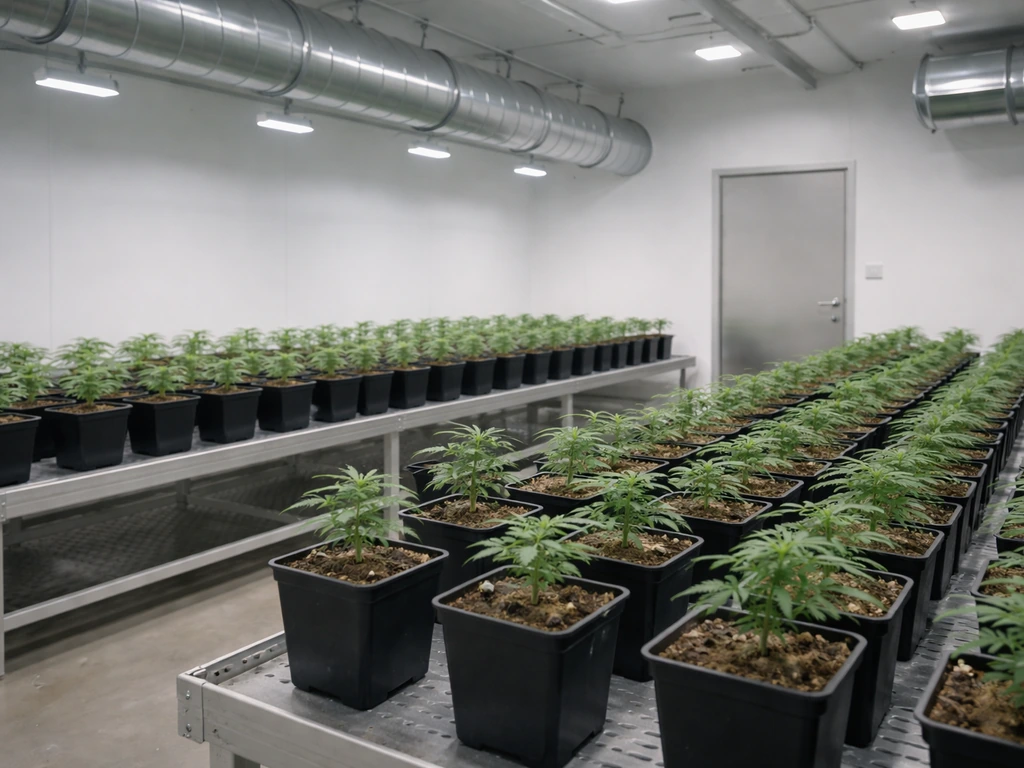
Yes, as of April 4, 2026, Ohio residents can legally grow cannabis at home. The right survived the most recent legislative overhaul, though the governing law shifted. If you are 21 or older, living at your primary residence, and you follow the plant limits and location rules, you are operating within the law. Here is exactly what that looks like in practice.
Ohio Issue 2 Home Grow Update: Legal Limits and Steps

Marcus Whitley
4 Apr 2026
What "Ohio Issue 2 home grow" actually means
Issue 2 was the ballot measure Ohio voters approved in November 2023 to legalize adult-use cannabis. One of its core provisions was the right for adults to cultivate a limited number of marijuana plants at home for personal use. That right was originally codified in Ohio Revised Code § 3780.29. The idea was straightforward: if you are a legal adult, you should be able to grow a few plants at home without needing a commercial license.
The political road since then has been bumpy. The Ohio legislature passed Senate Bill 56 (136th General Assembly), which made significant changes to the adult-use cannabis framework. Critics argued some of those changes directly undermined what voters approved in Issue 2. Regardless of the political debate, S.B. 56 is the law, and its effective date was March 20, 2026. The practical effect on home growers: the statutory home that contained the home-grow rules moved, but the right itself was preserved.
The latest update: what changed on March 20, 2026
This is the most important thing to know if you are searching for an update today. Ohio Revised Code § 3780.29, the original home-grow provision from Issue 2, was formally repealed effective March 20, 2026 by S.B. 56. If you are looking at an old reference to § 3780.29, it no longer governs your grow.
The governing law as of April 4, 2026 is Ohio Revised Code Chapter 3796. The home-grow authorization, the plant limits, and the location and security requirements all live in Chapter 3796 now, primarily under § 3796.04. The substance of the rules is largely carried over from the original Issue 2 framework, so if you were already growing legally before March 20, 2026, you are likely still compliant, but you should confirm your setup against Chapter 3796's specific language.
Who qualifies to grow at home
Ohio's home-grow law applies to "adult-use consumers," which in plain English means adults 21 and older. There is no state registration or special permit required to home grow. Your eligibility is based on meeting these baseline conditions:
- You are 21 years of age or older.
- You are growing at your primary residence, not a secondary home, vacation property, or someone else's address.
- You are not cultivating on behalf of another person.
- You are not growing for sale or profit.
- Your residence is not a Type A or Type B family child care home, a halfway house, community transitional housing facility, or a similar regulated facility.
- If you rent, your lease does not explicitly prohibit the otherwise-authorized activity.
That last point about rentals catches a lot of people off guard. Ohio law does not override a landlord's lease terms. If your rental agreement prohibits cannabis cultivation, you do not have a legal right to grow there even if you are otherwise eligible. Read your lease before you start.
Plant and possession limits: the exact numbers
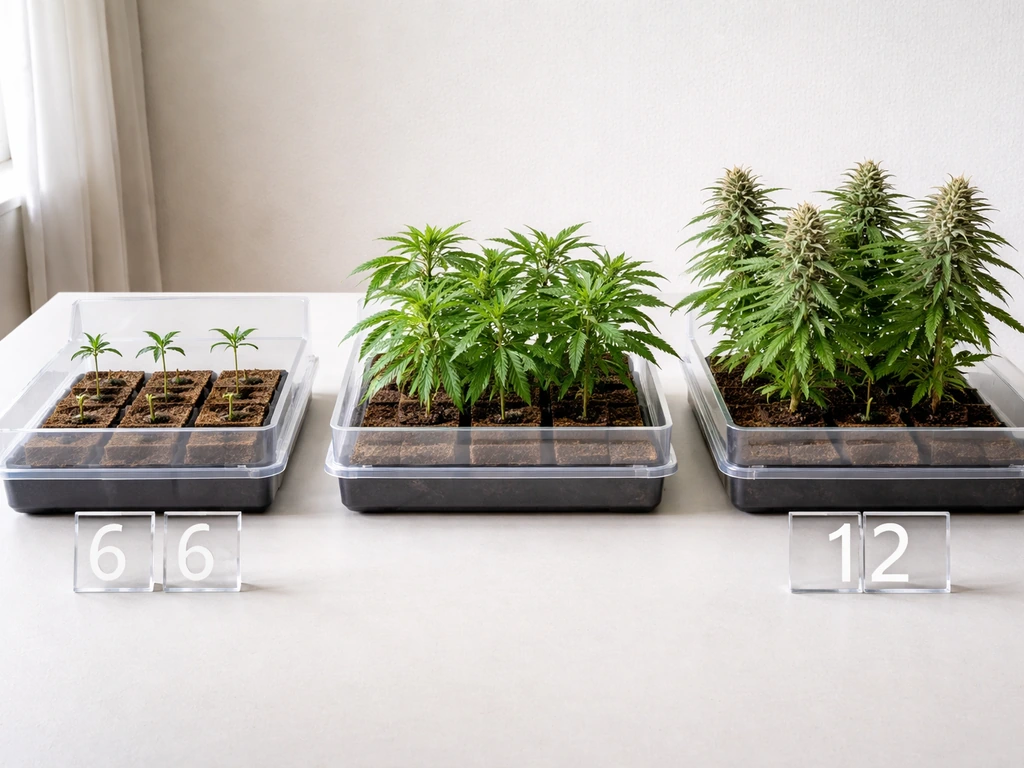
Chapter 3796 sets two separate caps that work together. The per-person limit is six homegrown marijuana plants per adult-use consumer. The per-residence limit is twelve homegrown marijuana plants total at a single residence. So if you live alone, you are capped at six. If two adults 21 or older share a home, you can have up to twelve combined. A third adult in the same house does not add more plants, because twelve is the household ceiling regardless of how many adults live there.
One thing the statute does not do is distinguish between vegetative and flowering stages. All plants count toward your limit, period. A seedling counts the same as a plant in full flower. If you have six clones rooting under lights and six more plants in a tent, that is twelve plants at one residence, which is the maximum. Plan your canopy accordingly.
On the possession side, once you harvest, the plant material becomes a possession quantity question. Ohio's framework under § 3796.221 references 2.5 ounces of plant material (excluding seeds, live plants, and clones being actively cultivated) as a relevant quantity threshold for transfer purposes. Ohio Revised Code § 3796.221(4)(i) allows transfer of homegrown marijuana to another adult-use consumer within a limit that includes “two and one-half ounces of plant material,” excluding seeds, live plants, and clones being cultivated or possessed under § 3796.04 2.5 ounces of plant material. Keep your harvested and cured cannabis within reasonable personal-use amounts and well-separated from your live plant count mentally and physically.
Setting up your grow to actually stay compliant
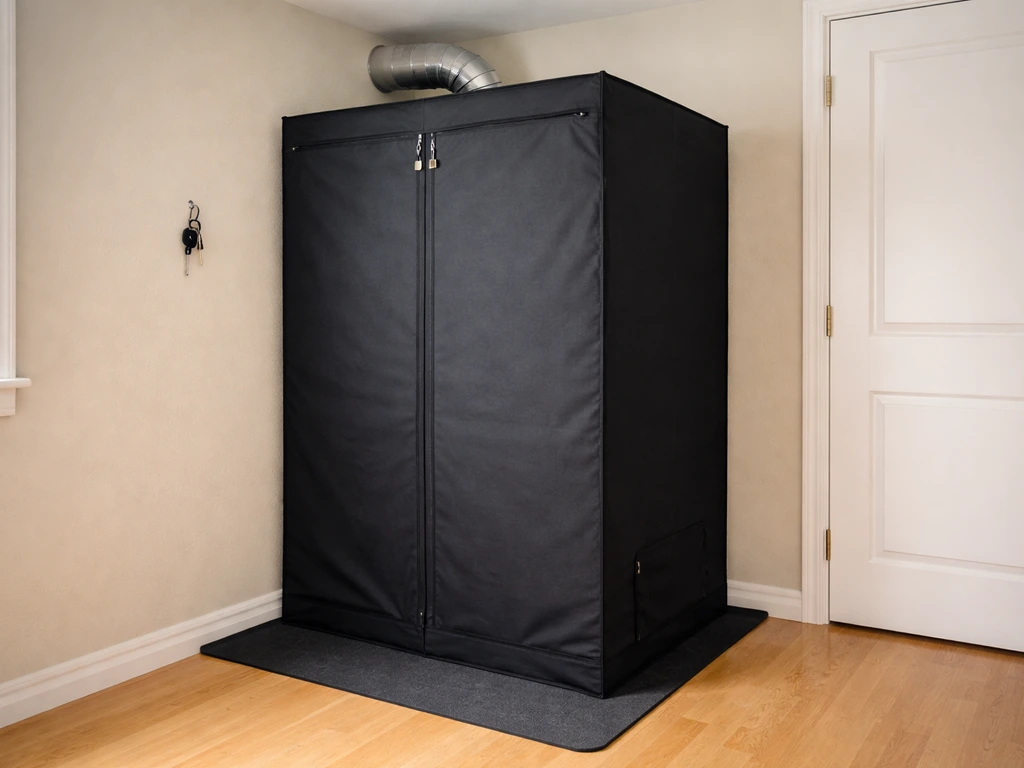
The law is specific about where and how you grow. Meeting these conditions is not optional, they are what separates a legal home grow from an illegal one. Here is how to structure your setup.
Location and security
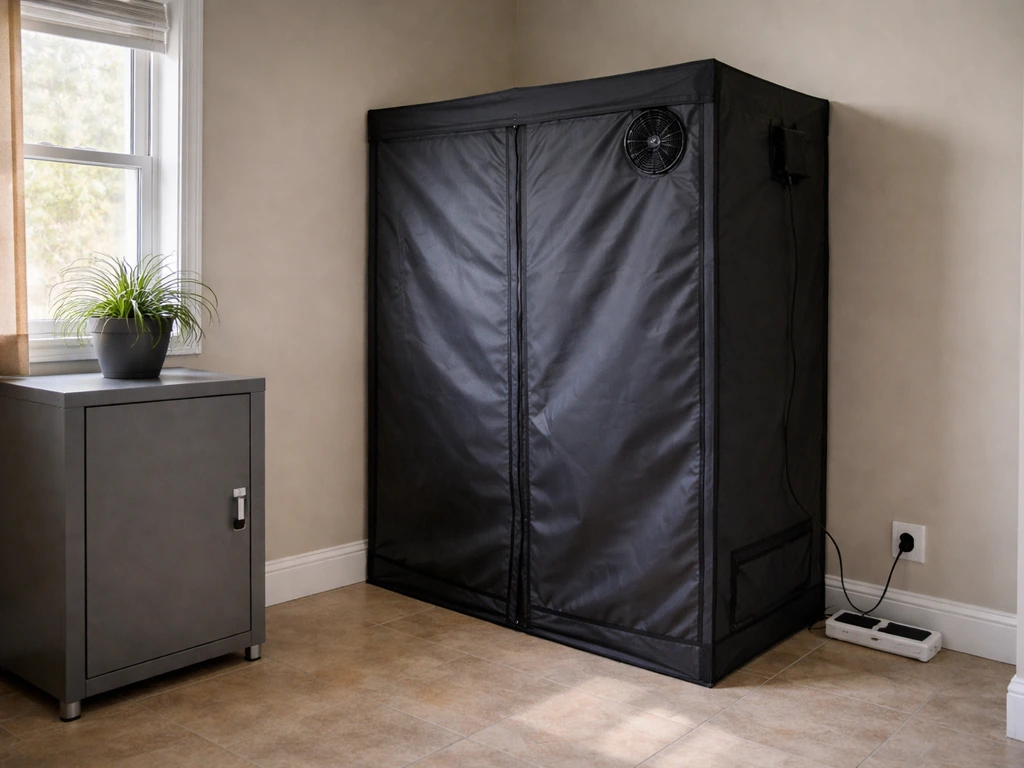
Your cultivation must take place in a secured closet, room, greenhouse, or other enclosed area that is in or on the grounds of your primary residence. The enclosure must prevent access by anyone under 21. In practical terms, this means a lockable space. A tent inside a locked room works. A locked shed on your property works. An open shelf in a shared common area does not.
The plants also must not be visible by normal unaided vision from a public space. This matters especially for outdoor or greenhouse grows. If a neighbor or passerby on the sidewalk can look over your fence and see your plants, you have a visibility problem. Use privacy screening, opaque greenhouse panels, or position your plants away from sight lines.
Practical steps to stay within the rules
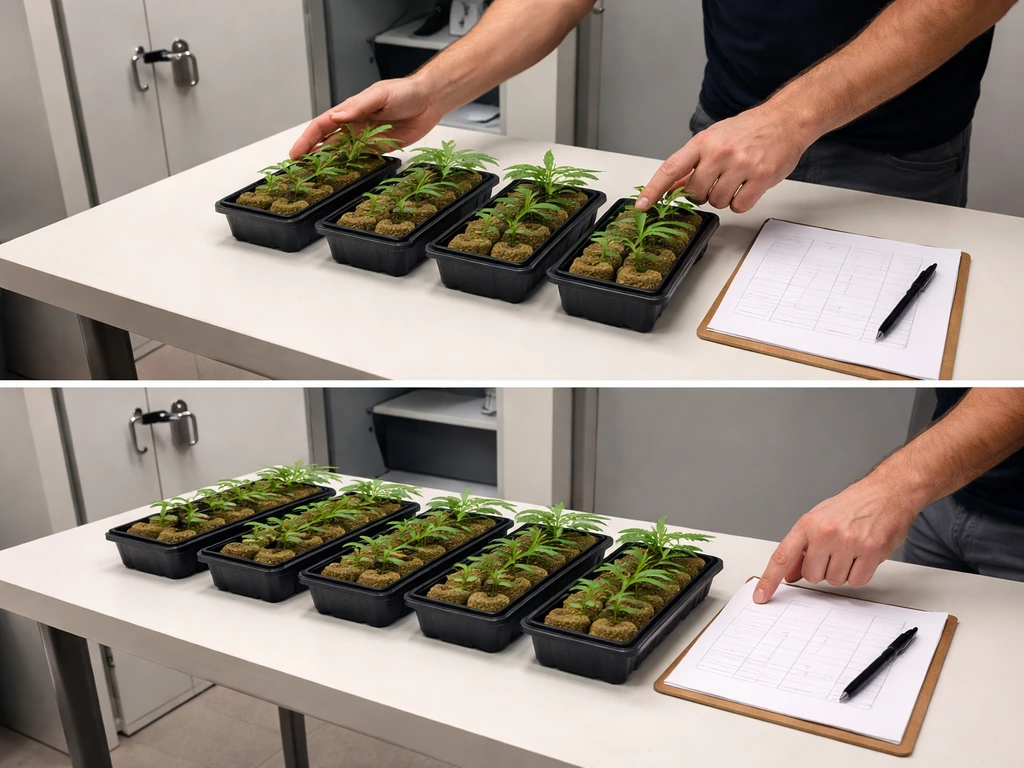
- Count your plants before and after any propagation cycle. Do not let clones or seedlings push you past six per person or twelve per residence.
- Lock your grow space. A simple padlock on a tent or room door demonstrates the intent to restrict access.
- Audit your outdoor visibility. Walk your property line and check sight lines from the street, sidewalk, or neighboring properties.
- Review your lease or HOA rules before starting. If there is a prohibition, home grow is not a legal option at that address.
- Keep harvested material organized and labeled with the date of harvest. This helps you track possession quantities and shows good-faith compliance if questions arise.
- Do not grow at any address other than your primary residence. Having a second grow at a friend's house or storage unit is not covered by the home-grow provision.
Recordkeeping
Ohio's home-grow law does not require formal recordkeeping for personal cultivators the way commercial licenses do. But keeping informal notes, a simple grow journal or even photos with timestamps, gives you a way to document that your plant count, location, and practices were within legal bounds. If you ever need to explain your operation to law enforcement, documentation of your plant count history and your security setup is far more useful than having nothing.
Home grow vs. a cannabis cultivation license
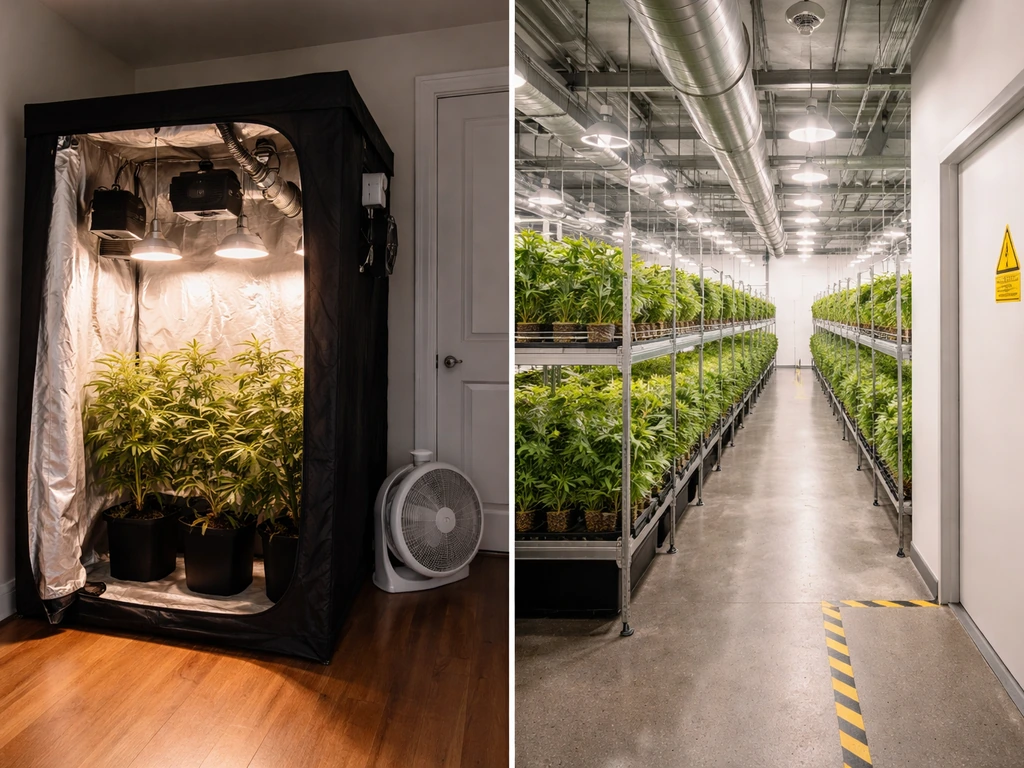
Home grow is strictly for personal use. The moment your goals extend beyond that, you are in licensed-operator territory. Chapter 3796 is explicit: home grow does not authorize selling or profiting from homegrown marijuana, and it does not authorize cultivating on behalf of another person. Both of those activities require a commercial cultivator license.
Under the former Chapter 3780 framework (still instructive on the commercial side), adult-use cultivators at the Level I or Level II tier could cultivate and distribute to other licensed operators. That commercial pathway exists completely separately from the personal home-grow allowance. If you are interested in what commercial licensing looks like in a neighboring state as a comparison point, the requirements for a craft grow license in Illinois give a useful sense of scale, cost, and regulatory complexity involved in going commercial.
The line between home grow and licensed cultivation is not about the number of plants alone. It is about intent and conduct. Selling even a single gram of homegrown cannabis, or growing plants at someone else's request so they can possess them, takes you outside the home-grow protections entirely. If you are thinking about eventually going commercial, know that the licensing process is a separate, formal undertaking. To understand how that process works for applicants in a legal adult-use state, reviewing an Illinois cannabis grow license application is a useful reference for what to expect in terms of documentation, fees, and compliance requirements, even though Ohio's specifics will differ.
Comparing home grow rules across states
Ohio's framework is fairly typical of states that include home-grow rights in adult-use legalization. Here is how Ohio's current rules compare to common benchmarks:
| Rule | Ohio (Chapter 3796) | Typical Range in Other States |
|---|---|---|
| Plants per adult | 6 | 3 to 6 |
| Plants per household cap | 12 | 6 to 12 |
| Stage distinction (flower vs. veg) | None, all plants count | Varies; some states count only mature plants |
| Primary residence required | Yes | Yes in most states |
| Visibility restriction | Not visible from public space | Common requirement |
| Access restriction | Secured, prevents under-21 access | Common requirement |
| Rental/lease override | Lease can prohibit | Common in most states |
| Registration required | No | No in most adult-use states |
One area where states vary significantly is how they handle flowering versus vegetative plant counts. Ohio counts all plants regardless of stage, which is simpler to understand but can be more restrictive in practice. Some states only count mature or flowering plants, giving growers more flexibility to maintain seedlings and clones on top of a flowering canopy. If you are curious how a neighboring adult-use state structures things, Illinois home grow rules are worth reading for a direct comparison.
What will actually get your grow into legal trouble
Most home growers do not run into problems because they set out to break the law. They run into problems because they misread the rules or let their grow drift out of compliance gradually. Here are the specific situations most likely to create legal risk:
- Exceeding the plant count: Under the former § 3780.29 framework, cultivating double the maximum permitted number of plants was an explicit enforcement trigger tied to criminal penalties. That principle carried into the post-S.B. 56 structure. Twelve plants per residence is the hard ceiling. Going over is the clearest way to lose home-grow protection.
- Growing at the wrong address: If you maintain plants at a secondary property, a friend's house, or any location that is not your primary residence, those plants are not covered by the home-grow provision.
- Visible plants: Outdoor or greenhouse grows that are visible from the street or a neighbor's property violate the visibility condition and eliminate your legal protection even if your plant count is fine.
- Unsecured access: If minors can access your grow space, you are not meeting the security requirement. This applies even if you just leave a grow tent unlocked in a shared living space.
- Transferring to non-adult-use consumers: The transfer right under § 3796.221 only applies when you are giving homegrown cannabis to another adult-use consumer (someone 21 or older) under specific conditions and quantity limits. Giving cannabis to anyone under 21, or selling it to anyone, is outside the law.
- Growing in prohibited premises: If your home qualifies as a child care facility or transitional housing under Ohio's definitions, home grow is not permitted regardless of plant count or security setup.
- Ignoring your lease: A rental agreement that prohibits cannabis cultivation overrides your right to home grow at that address. Growing in violation of your lease is not just a civil issue with your landlord, it removes the legal protection for that cultivation.
Your compliance checklist
Before you start or continue your grow under Ohio's current post-S.B. 56 rules, run through these points:
- Confirm you are 21 or older and growing at your primary residence.
- Count all plants (every stage) and confirm you are at or under six per adult and twelve per household.
- Verify your grow space is enclosed and lockable, preventing access by anyone under 21.
- Walk your property line and confirm no plants are visible from any public space.
- Check your lease or HOA rules for any prohibition on cultivation.
- Confirm your address is not a regulated child care or transitional housing facility.
- Keep any harvested cannabis for personal use only. Do not sell, and only share with adults 21 or older within the legal quantity limits.
- Maintain informal records of your plant count, harvest dates, and security measures.
- Reference Chapter 3796 of the Ohio Revised Code (specifically § 3796.04 and § 3796.221) as your governing legal source, not the now-repealed § 3780.29.
FAQ
Do I need a state permit or registration to do the ohio issue 2 home grow right?
No state-issued badge or permit is required for qualifying adult-use home cultivation. If you are challenged, the practical proof is usually showing you meet the baseline conditions (age 21+, primary residence, within the plant caps) and that your grow setup matches the enclosure and visibility requirements described in Chapter 3796.
Can two households coordinate so one grow stays under the limit by “sharing” plants or equipment?
There is no allowance in the home-grow rules that lets you temporarily “borrow” extra plants from another household to stay under the cap. Each residence is treated as its own location for the household plant ceiling, so plan so the total at each address never exceeds twelve.
If I stagger planting over time, does ohio issue 2 home grow let me have a higher number during transitions (like when seedlings are in)?
Yes, but you still must count every live plant and you must keep your total at or under the applicable cap at that residence. The law does not split limits by plant stage, so a start-up phase with seedlings and clones counts the same as mature plants.
Does a greenhouse or locked backyard area count as compliant if someone can see plants from the street?
Switching from indoor to a greenhouse structure does not automatically fix visibility issues. If normal unaided vision from public spaces can see the plants, you are not meeting the “not visible” requirement, even if the structure is secure and on your property.
Can I grow under ohio issue 2 at a second home, vacation property, or temporary rental?
If you live at a residence, you can only grow at the primary residence address that meets the law’s location rules. Moving your grow to a secondary property or temporary address typically creates risk because the authorization is tied to where your “primary residence” is.
What security measures matter most for complying with the enclosure requirement under Chapter 3796?
Legal risk increases if you invite under-21 people into the cultivation enclosure, or if the enclosure is not truly access-restricted. “Secured” is about preventing access by anyone under 21, so locks, key control, and barriers matter.
If I keep photos and a grow journal, does that protect me if my plant count was accidentally too high?
Yes. You can keep a grow journal or take time-stamped photos, but do not treat documentation as a substitute for compliance. If your plant count or visibility setup is off, records will not cure the underlying violation.
If I stay under the plant limits, can I still give away small amounts to friends?
Possession and transfer rules are separate from cultivation. Even if you stay within the home plant cap, you should not distribute plant material to others, because home cultivation does not authorize selling or profiting from homegrown cannabis.
What should I do if I realize I exceeded the twelve-plant household cap or had visibility problems?
Cleaning and disposal of excess plants, tools, and plant material should be handled in a way that preserves the separation between your live plant count and any harvested material, and you should avoid any conduct that looks like distribution. If you think you exceeded the cap, pause new growth and get legal guidance rather than “moving things around.”
Do cloning or “mother plants” change how the plant limit is calculated under ohio issue 2 home grow?
If a plant is actively being cultivated, it is treated as part of the count, so delaying the count by calling something “future harvest” is not reliable. Your safer approach is to count all live actively cultivated plants as part of your total.
How does the twelve-plant household limit work if adult roommates or occasional adult visitors are in and out?
For shared households, the household ceiling of twelve applies regardless of how many adults live there. If only two adults are 21+ and living there, you can have up to twelve combined, but you should not assume you can add more plants for adult visitors who are not permanent residents.
If I plan to expand beyond personal use, what conduct crosses the line from home grow to needing a commercial license?
If you are considering switching from personal growing to anything that resembles commercial activity, you should assume you are leaving the home-grow protections. The line is intent and conduct, so growing for someone else’s possession or any selling activity requires a licensed commercial pathway.
Next Article
How to Get a Micro Grow License in Canada: Step-by-Step
Step-by-step on getting a Canadian micro-cultivation cannabis licence, eligibility, costs, timelines, and compliance bas