As of April 2026, Illinois does allow home cannabis cultivation, but it comes with a catch that surprises a lot of people: you have to be a registered medical cannabis patient to grow at home legally. Recreational users cannot grow at home in Illinois, full stop. If you meet the eligibility requirement, the rules are manageable, but they are specific, and going outside them carries real legal risk. This guide walks you through exactly what the law says, what you need to do, and how to stay on the right side of it.
Illinois Home Grow Rules: Legal Limits and Compliance Checklist

Marcus Whitley
16 Apr 2026
Quick legality check: what Illinois actually allows for home grow

Illinois legalized recreational cannabis in 2020 under the Cannabis Regulation and Tax Act (410 ILCS 705), but home cultivation for recreational users was never included in that legalization. The only people who can legally grow cannabis at home in Illinois are registered qualifying patients under the Compassionate Use of Medical Cannabis Program Act.
The Illinois Cannabis Regulation Oversight Office states it plainly in their official FAQ: only registered qualifying medical cannabis patients may grow up to 5 cannabis plants at home. If you are not a registered patient, growing any cannabis plants at home is illegal under state law, regardless of how many plants you have or how discreetly you grow them.
So before reading any further, ask yourself: are you a registered qualifying patient under Illinois' medical cannabis program? If yes, keep reading. If no, the rest of this guide does not unlock home grow rights for you, at least not under current law.
Home grow limits and requirements: plants, possession, and location
The 5-plant cap and how it's measured
A qualifying patient may cultivate up to 5 cannabis plants per household. That "per household" language matters: it is not 5 plants per person. If two qualifying patients live under the same roof, the household limit is still 5 plants total, not 10.
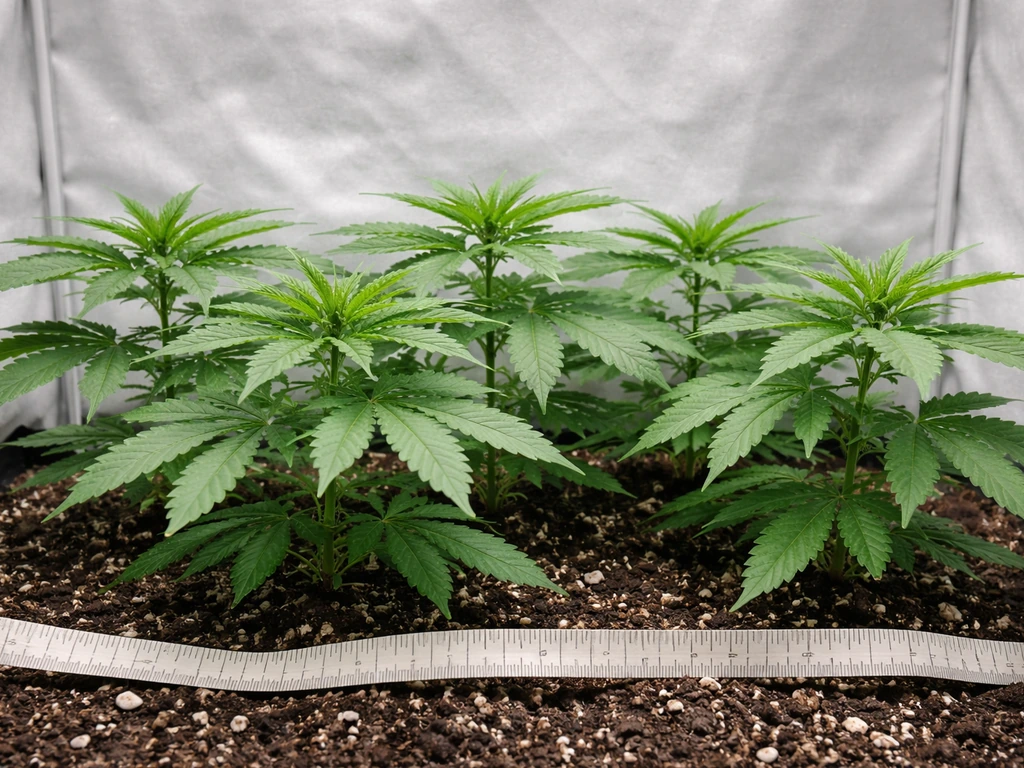
The statute also defines what counts toward that 5-plant limit. Only plants that are more than 5 inches tall are counted. Seedlings and immature plants under 5 inches tall do not count toward your statutory cap, which gives you some flexibility in the early stages of a grow cycle, but do not treat this as a loophole to run large numbers of seedlings indefinitely.
Where you can grow: location and setup requirements
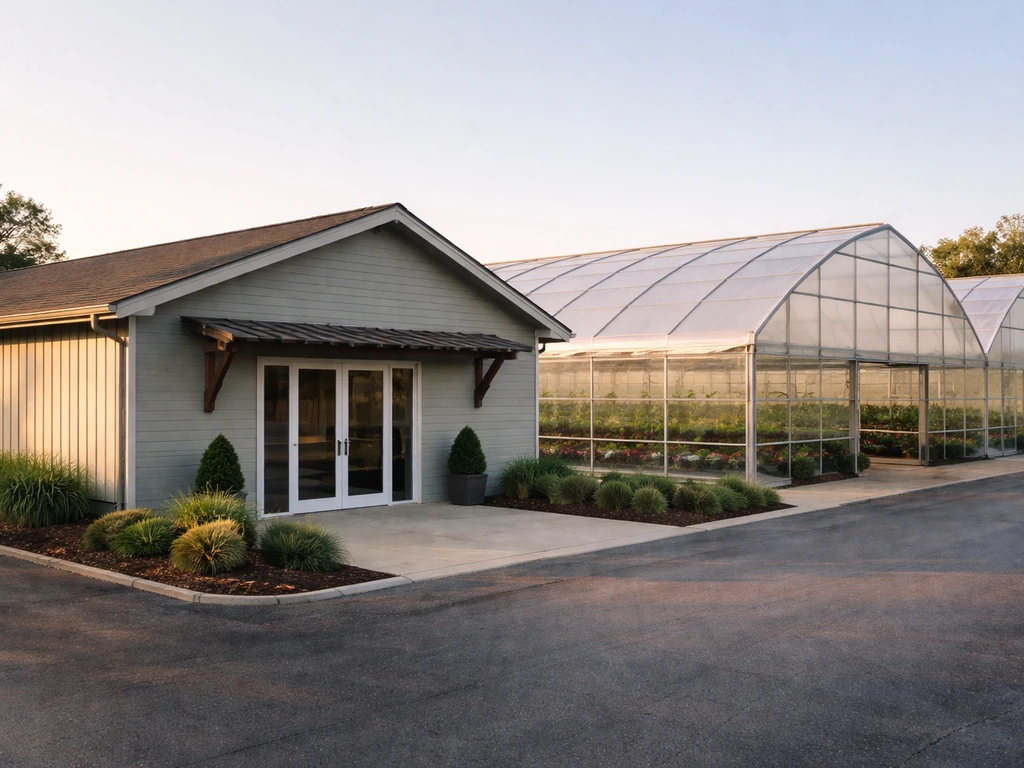
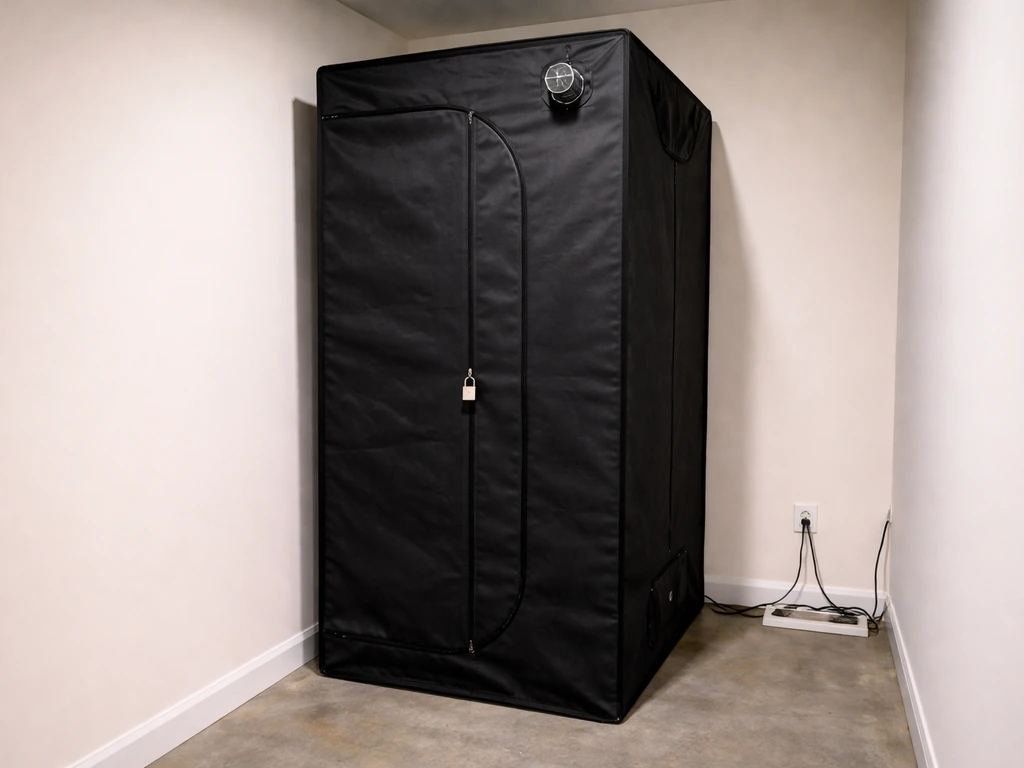
The law requires that all home-grown cannabis plants be cultivated in an enclosed, locked space. The statute defines this as a closet, room, greenhouse, building, or other enclosed area equipped with locks or security devices that limit access to authorized individuals. A shed or greenhouse on your residential property can qualify, as long as it meets the definition.
Plants cannot be in ordinary public view. That means a window garden visible from the street, a backyard grow visible over a fence, or plants on a front porch do not comply with the law. The intent is that your cultivation operation should not be visible to a passerby or neighbor without actively trying to look.
Cultivation must also be tied to your residential property. The law is not designed for someone to grow plants at a storage unit, a friend's house, or a commercial property. It is a home-based exemption connected to where you actually live.
Security and unauthorized access
Beyond having a lock on the space, you are required to take reasonable precautions to prevent unauthorized access, specifically including access by anyone under 21. The law does not give you a detailed checklist of what "reasonable precautions" looks like, but the baseline is that a locked space with a key or combination that you control should satisfy this. Leaving a grow tent with a cheap zipper that anyone could open probably would not.
How licensing and registration work vs. unlicensed home growing
One of the most common points of confusion is whether home growers need any kind of license or registration beyond their medical patient card. The short answer is no, as long as you stay within the statutory home-grow conditions. The Cannabis Regulation and Tax Act specifically authorizes qualifying patients to cultivate at home "without a cultivation center or craft grower license." Your medical patient registration is the authorization; no separate grow license is required.
Commercial cultivation in Illinois is an entirely different world. Getting a craft grow license in Illinois involves an extensive application process, facility requirements, background checks, fees, and ongoing state oversight. That pathway exists for businesses, not for patients growing a few plants at home.
If you are curious about what the licensed commercial pathway looks like, the Illinois cannabis grow license application process involves regulatory requirements that are dramatically more burdensome than the home-grow exemption, which reinforces why staying within the patient home-grow rules matters so much. The moment you step outside the exemption, you are no longer operating under a protected framework.
The bottom line: if you are a registered qualifying patient and you follow the rules, you do not need a license. If you exceed the statutory limits or fail to meet the conditions, you lose the protection of the exemption and expose yourself to enforcement under Illinois cannabis law.
Step-by-step compliance checklist
This checklist is not legal advice. It is a practical translation of what the statute requires so you can take concrete steps to stay within the law. If your situation is complicated, talk to a licensed Illinois attorney.
- Confirm your eligibility: verify that you are a registered qualifying patient under the Illinois Compassionate Use of Medical Cannabis Program Act and that you are at least 21 years old. If you are not currently registered, home cultivation is not legal for you.
- Count your plants correctly: keep no more than 5 cannabis plants over 5 inches tall at any time in your household. If you share a home with another qualifying patient, you still share a single 5-plant household cap.
- Set up an enclosed, locked space: use a room, closet, tent in a locked room, greenhouse, or similar enclosed area fitted with a working lock or security device. The lock should restrict access to you and any other authorized individuals only.
- Block public visibility: position your grow so it cannot be seen from the street, neighboring properties, or any public vantage point. Opaque tent walls, covered windows, or indoor locations away from windows all help here.
- Prevent unauthorized access: keep keys, combinations, or access credentials away from anyone under 21 and anyone not authorized under the Act. Do not leave the grow space unlocked when unattended.
- Store harvested cannabis securely: apply the same logic to your harvested product. Keep it in secure, child-resistant containers in a location not accessible to minors or unauthorized individuals.
- Stay on your residential property: do not move plants to a non-residential location. The home-grow exemption is tied to your residence.
- Monitor the plant count through your grow cycle: as seedlings cross the 5-inch threshold, they count toward your cap. Plan your grow cycle so you do not accidentally exceed 5 countable plants.
- Check for rule updates periodically: cannabis regulations can change. Review the official sources at least once a year (see the section below on where to verify).
Where to find official sources and verify the current rules
Illinois cannabis law is statutory, which means the authoritative text lives in the Illinois Compiled Statutes. The home cultivation provision is at 410 ILCS 705/10-5, and the definitions that support it (including the definition of "enclosed, locked space") are at 410 ILCS 705/1-10. Both sections are available on the Illinois General Assembly website (ilga.gov). Before you set up your grow, pull up the current text and read Section 10-5 directly. It is not long, and reading the actual statute is the most reliable way to know exactly what you are working with.
The Illinois Cannabis Regulation Oversight Office also maintains an official FAQ page that summarizes the home-grow rules in plain language. This is a good place to check for updated guidance or clarifications that may not be reflected in a static article like this one. Agency guidance can sometimes lag behind statutory changes or get updated more quickly than third-party resources, so going to the source matters.
A practical verification routine: once a year, check 410 ILCS 705/10-5, check 410 ILCS 705/1-10, and check the Cannabis Regulation Oversight Office FAQ. If anything has changed since you last read them, update your setup accordingly. States do amend cannabis laws, and Illinois is no exception. It is worth the 15 minutes.
For context on how neighboring states handle similar rules, looking at something like Ohio's Issue 2 home grow provisions can help you understand the range of approaches states take, though Illinois has its own distinct requirements that you must follow regardless of what other states permit.
Common issues that create real legal risk
Growing without a patient registration
This is the single most common misunderstanding. People hear that Illinois legalized cannabis and assume home grow came with it. It did not. Recreational users have no legal pathway to grow at home under current Illinois law. If you are not a registered qualifying patient, you are not covered by the home-grow exemption, period. The Illinois Department of Agriculture’s Medical Cannabis Pilot Program FAQ explains that legality for patient cultivation is restricted/structured through the medical cannabis program framework, rather than being broadly available to recreational home growers patient cultivation is restricted/structured through the Illinois medical cannabis program framework.
Exceeding the plant cap
Going over 5 plants (that are more than 5 inches tall) moves you outside the statutory exemption. The law explicitly provides for liability and penalties when growers exceed the authorized limits, including potential loss of home cultivation privileges. Six plants does not seem like a lot more than five, but legally it makes a significant difference.
Insecure or visible setups
Failing to use an enclosed, locked space or allowing plants to be visible from a public area are explicit statutory violations. A grow tent in an unlocked garage, plants on a balcony, or a greenhouse with translucent panels visible over a fence all create compliance problems. These are not minor technicalities; they are conditions written directly into the law.
Misunderstanding the household limit
If multiple qualifying patients live together, they do not each get their own 5-plant allowance. The cap is per household. This catches people off guard when two roommates or spouses both hold patient registrations and assume they can combine allowances.
Assuming inspections and enforcement won't happen
Illinois does not operate a routine home inspection program for patient growers, but enforcement can be triggered by complaints, visibility, or other law enforcement contact. If your grow is visible to neighbors, you are more likely to generate a complaint. If law enforcement has a reason to enter your residence and finds plants outside the statutory conditions, the home-grow exemption will not protect you. Staying compliant is not just about avoiding proactive inspections; it is about making sure you are covered in any scenario.
Penalties for falling outside the exemption
The statute is clear that exceeding the home-grow conditions can result in liability and penalties, including the potential loss of home cultivation privileges. Depending on how far outside the exemption someone falls, additional state cannabis law penalties may apply. This is another reason to treat the rules as hard limits, not suggestions.
| Requirement | What the law says | Common mistake |
|---|---|---|
| Eligibility | Must be a registered qualifying medical cannabis patient, age 21+ | Assuming recreational users can home grow |
| Plant limit | Up to 5 plants more than 5 inches tall, per household | Counting per person instead of per household |
| Space requirement | Enclosed, locked space with security limiting access to authorized individuals | Using unlocked tents or unsecured garages |
| Visibility | Not in ordinary public view | Growing near windows or on outdoor patios |
| Unauthorized access | Reasonable precautions to prevent access by anyone under 21 | Leaving grow space accessible to minors |
| Location | Must be at your residential property | Growing at a storage unit or non-residential location |
FAQ
If I am a registered medical cannabis patient, can I still grow if I have the plants at my rental property but the leaseholder is not the patient?
In Illinois the authorization is tied to cultivating on your residential property, so location matters. If you do not actually reside there or you cannot access and secure the enclosed space you use for cultivation, you may not meet the home-based conditions. Consider getting clarity from the landlord and ensure the plants are in your locked, enclosed area under your control, not shared space under someone else’s access.
How should I count plants if they are in different rooms within the same locked enclosure, or if I use multiple tents?
Plant counting is based on the statutory limit for the household, and the law counts qualifying plants that are more than 5 inches tall. Splitting a grow across multiple tents in one locked, enclosed area does not increase the cap, so you still need to track total mature plants across the household, not per tent or per room.
Do clones count toward the 5-plant limit if they are under 5 inches tall?
The statute uses height as the counting threshold. If a clone is not more than 5 inches tall, it should not be counted toward the cap, but once it exceeds that threshold it will. Keep simple measurement records so you can explain your compliance if your setup is questioned.
What if I accidentally let plants become visible from a neighbor’s yard or from the street, even briefly?
Visibility can be a compliance problem because ordinary public view is not allowed. If you notice light leaks or plant lines that could be seen from outside, fix the issue immediately by adjusting the enclosure, screening, or placement so the plants are not observable without active searching. Temporary visibility can still be treated as evidence of a statutory violation.
Can I store tools, fertilizer, or drying equipment in the same room as the plants?
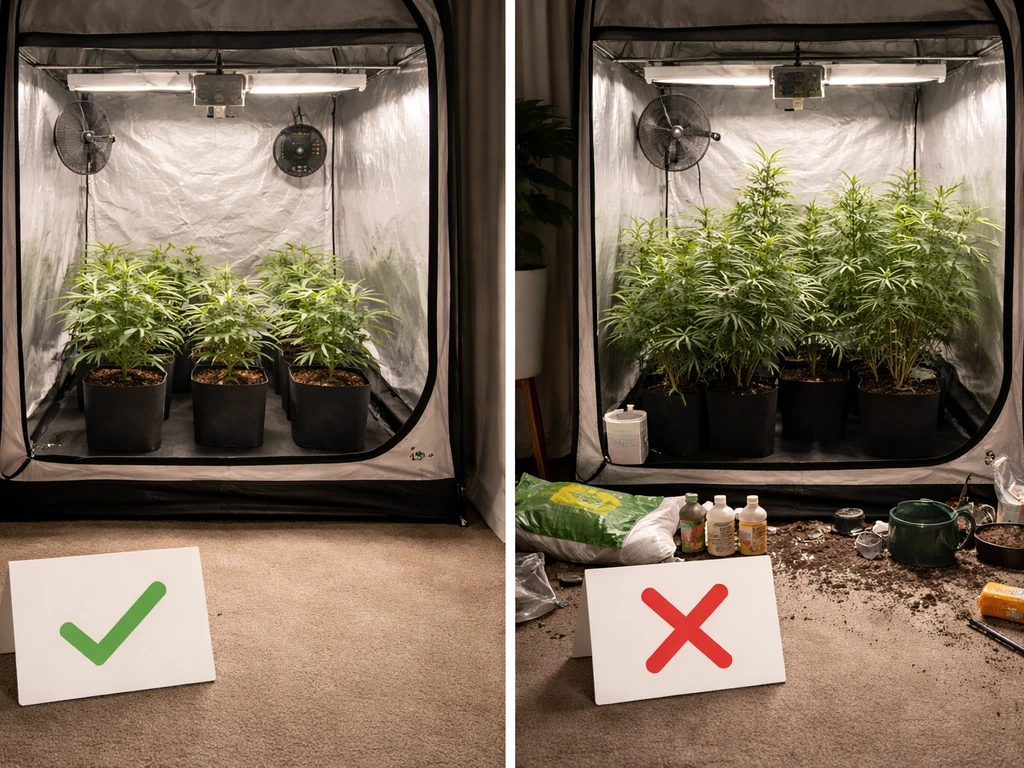
The key is whether your cultivation is in an enclosed, locked space that restricts access. If tools and drying materials are outside that locked, enclosed area, they can undermine your ability to show you followed the reasonable access safeguards. Keep all grow-related materials within the same locked enclosure where practical.
Does the “under 21” access restriction mean I need to lock up the plants themselves or just prevent access to the locked room?
The intent is to prevent unauthorized access, including access by anyone under 21. A locked, controlled-access enclosure is the practical approach, but you should also make sure there is no easy circumvention, such as a door code you share, an unlocked keypad, or leaving keys where others can reach them.
If two qualifying patients live together, how do we handle situations like one patient moves out mid-grow?
The household cap is still applied to the household, not to each patient personally. If household composition changes, you should reassess whether the remaining household members still qualify and whether you are over the 5-plant limit for that new household status. When in doubt, reduce plant numbers to stay within the cap.
Do I need to keep my medical registration documents at home to prove eligibility?
The law hinges on being a registered qualifying patient, so having documentation can be important in practice if you are asked to demonstrate eligibility. Keep your patient registration information accessible, but do not assume paperwork alone cures other violations like lack of a locked enclosed space or plants visible from public view.
Can I grow in a shed or greenhouse, and what makes it compliant?
A shed or greenhouse can qualify if it meets the definition of an enclosed, locked space and restricts access to authorized individuals. The practical requirement is that it must be secured with locks or security devices you control and positioned so plants are not in ordinary public view. If translucent panels allow easy viewing from outside, that can create a compliance problem.
Does the article’s 5-inch rule apply to all plant stages, including late-flower plants that get measured at different times?
Count based on the statutory threshold, more than 5 inches tall. In real time, plants grow quickly, so a “one-time” measurement may not reflect where they are at the moment. For compliance, track plant height when deciding whether they are within the cap, especially when adding new plants or reclassifying seedlings to vegetative growth.
What is the safest way to respond if a neighbor complains or law enforcement asks about the grow?
Treat the conditions as hard limits and be ready to show you are a qualifying patient and that plants are in a locked enclosed space not visible from public areas. Avoid improvising explanations that contradict what is physically set up. If anything looks out of compliance, the safest next step is to consult a licensed Illinois attorney before making changes or statements.
If I want to stop growing, do I still need to keep the area locked and secured?
Once you stop cultivating, you should still keep the secured-area mindset while you remove plants and related materials. If plants are already present and not removed, they remain subject to the access and enclosure requirements. After removal, ensure the enclosure is no longer being used in a way that could be misconstrued or left accessible.
How often should I re-check the rules, and what should trigger an immediate re-check?
The practical routine is at least yearly, but you should also re-check after any significant life or setup change, such as moving, changing household members, upgrading from seedlings to vegetative growth, or modifying your enclosure. Also re-check if your local agency guidance changes, because clarifications can come faster than third-party summaries.
Next Article
Craft Grow License Illinois: Step-by-Step Guide
Illinois craft cultivation license guide: eligibility, limits, application steps, fees, compliance, renewal, and common