In Illinois, the cultivation license you need depends entirely on your scale. If you want to run a smaller commercial grow, you're looking at a Craft Grower License (up to 5,000 sq. ft. of flowering canopy, expandable to 14,000 sq.
Illinois Cannabis Grow License Application: Step by Step Guide

Marcus Whitley
5 May 2026
ft. ). If you want to operate at a larger, full commercial scale, you're looking at an Adult Use Cultivation Center License. Both are issued by the Illinois Department of Agriculture (IDOA) under the Cannabis Regulation and Tax Act (CRTA, 410 ILCS 705), and both come with serious documentation, security, and fee requirements before you ever see an approval.
IDOA also states that, before you apply, you must be a registered business in good standing with the Illinois Secretary of State NLS.
This guide walks you through the full process for 2026, from picking the right license to staying compliant after you're open. Note: this is informational guidance, not legal advice. Always verify current rules directly with IDOA and Illinois regulators, as requirements and application windows can change.
The two main cultivation license types in Illinois
Illinois draws a clear line between two commercial cultivation license categories, and which one you apply for shapes everything: the fees, the facility size, and the regulatory burden.
| License Type | Issued By | Canopy Size | Application Fee | License Award Fee | Key Use Case |
|---|---|---|---|---|---|
| Craft Grower License | IDOA | Up to 5,000 sq. ft. (expandable to 14,000 sq. ft.) | $5,000 | $40,000 | Smaller commercial cultivation operations |
| Adult Use Cultivation Center License | IDOA | Larger commercial scale (no fixed canopy cap) | $100,000 | $100,000 | Large-scale cultivation, processing, and transport |
The Craft Grower is defined in the CRTA as a facility licensed to cultivate, dry, cure, and package cannabis. The Cultivation Center is broader: it covers cultivating, processing, transporting (unless restricted), and supplying cannabis products to other cannabis business establishments. If you are planning a boutique grow with limited canopy, the Craft Grower route is almost certainly the right fit. If you are building out a large-scale facility with processing and distribution in mind, you are looking at the Cultivation Center path.
It is worth knowing that Illinois also has rules around home cultivation. Those rules are separate from commercial licensing and have their own conditions. If you are wondering about personal grows rather than a commercial license, the home grow framework is a different conversation entirely.
Who can actually apply: eligibility and ownership rules
Illinois has strict eligibility requirements baked into 8 IAC Part 1300, and disqualification can happen for reasons that trip up even well-prepared applicants. Here is what you need to know before you spend time or money on an application.
Principal Officer definition
Illinois defines a Principal Officer more broadly than most people expect. If you own more than 1% interest in a privately held entity (or more than 5% in a publicly traded one), you are a Principal Officer. The same applies to officers, partners, managers, and anyone with authority to control operations or responsibility for debts or financial arrangements. Every Principal Officer must be credentialed separately through IDOA's portal as part of the process, and every one of them is subject to the eligibility rules below.
Disqualifying factors
IDOA will deny an application for a Conditional Adult Use Cultivation Center License (CAUCCL) if any of these apply:
- Any Principal Officer or board member is under 21 years old
- A Principal Officer or board member does not meet the Act's eligibility criteria
- The application contains false or misleading information
- Any person with a 5% or greater financial or voting interest is delinquent in filing state taxes or paying tax obligations
- The proposed location does not comply with local zoning rules
- Required materials, documents, or fees are not submitted on time or completely
Ownership concentration limits
The CRTA also caps how many cultivation center licenses any single person or affiliated group can control. No one who is employed by, an agent of, under contract with, or a principal officer of a cultivation center can hold legal, equitable, or beneficial ownership interests that result in controlling more than three cultivation center licenses. This is an important check if you are part of a larger cannabis group or multi-state operator.
Step-by-step application roadmap
IDOA uses a five-step framework for cultivation center applicants. Here is how to think about each stage in practical terms.
- Complete the license application through IDOA's Online Licensing and Registration Portal during an open application phase. Applications for a CAUCCL are only accepted during a 14-calendar-day window after IDOA announces the commencement date, so watch for official announcements carefully.
- Obtain and maintain an active license. Once conditionally approved, you must satisfy inspection and fee requirements before the full license is issued.
- Credential all employees and Principal Officers in the IDOA portal. This is a separate process from the business license application. Each person gets an agent ID card through IDOA's online credentialing system.
- Obtain access to IDOA's Seed-to-Sale traceability program (Metrc). You cannot operate without being enrolled in this system.
- Ensure ongoing compliance with the CRTA (410 ILCS 705) and 8 IAC Part 1300 before you open and continuously while operating.
Documents and forms you need to prepare
Based on 8 IAC § 1300.102, a CAUCCL application requires a substantial package of documentation. Start assembling these early because gathering them under a 14-day window is genuinely difficult.
- Legal name of the applicant entity and proposed physical address of the facility
- Operations and Management Practices Plan: this covers oversight procedures, a plant monitoring system, a cannabis container tracking system, accurate recordkeeping procedures, and a staffing plan
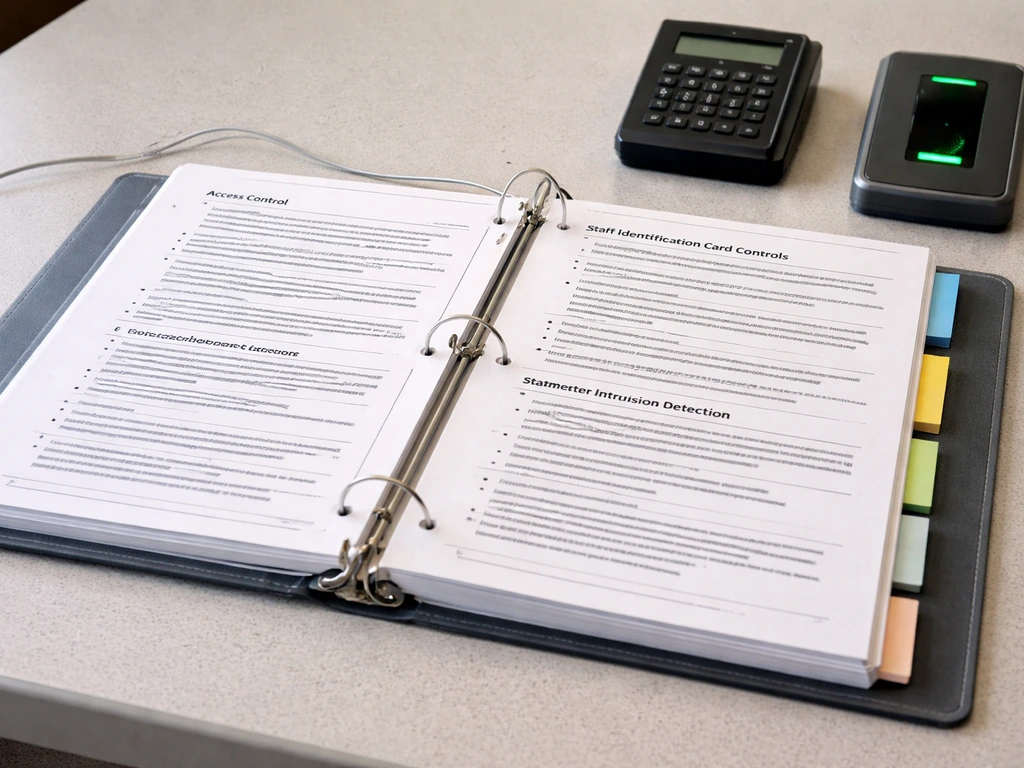
- Security plan that has been reviewed by the Illinois State Police (ISP), covering facility access controls, perimeter intrusion detection, personnel identification systems, and 24-hour CCTV surveillance with real-time access for law enforcement and IDOA
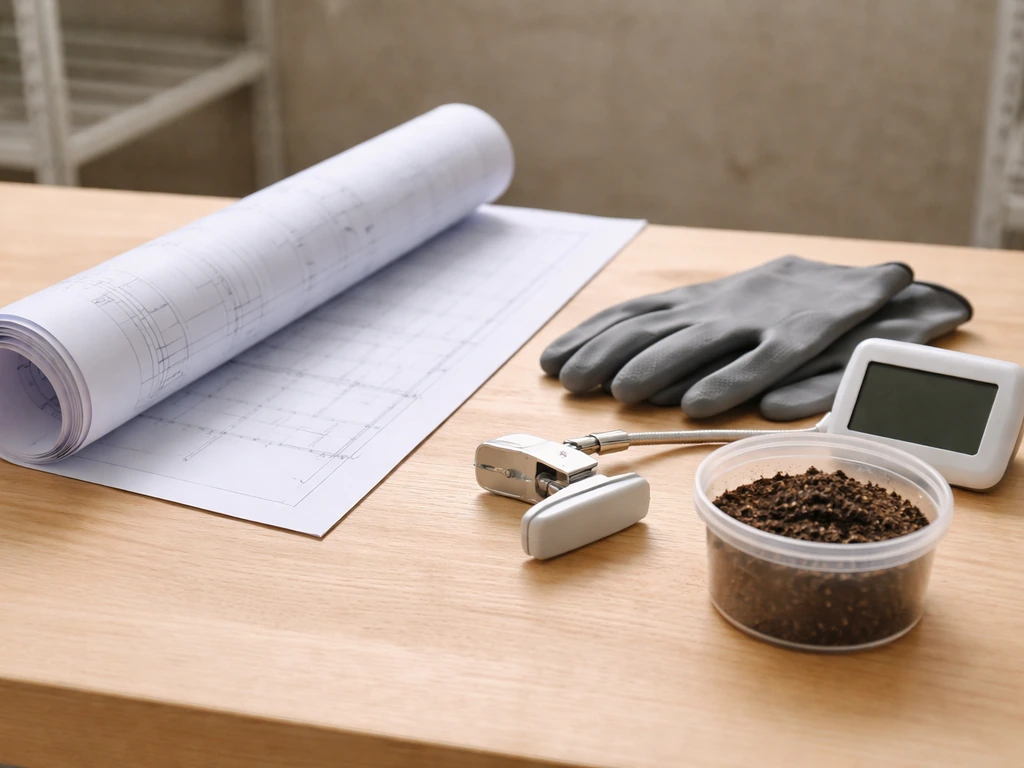
- Plot plan of the facility and surrounding area
- Facility drawings, elevations, and cross-sections showing the operational and production areas
- Principal Officer information: identity documentation, background disclosure, and ownership interest percentages for every qualifying individual
- Evidence of local zoning compliance or approval
- Tax compliance documentation for anyone with 5% or greater financial or voting interest
- Application fee payment ($100,000 for Cultivation Center, $5,000 for Craft Grower, nonrefundable)
The Craft Grower application follows the same general framework under 8 IAC Part 1300, though some specific thresholds and fee amounts differ as shown in the fee table above. Review the specific subpart for Craft Growers in the administrative code before you build your document package.
Fees, timelines, and how the review process works

The fees in Illinois are not small, and IDOA is explicit that all license fees are nonrefundable. Pay close attention to what you are paying for and when.
| License Type | Application Fee | License Award Fee | Refundable? |
|---|---|---|---|
| Adult Use Cultivation Center | $100,000 | $100,000 | No |
| Craft Grower | $5,000 | $40,000 | No |
The application fee is paid when you submit. The license award fee is paid later, once you have received a conditional approval and are moving toward full licensure. For the Cultivation Center, IDOA will not issue the actual adult-use cultivation license until the facility has been inspected for compliance with the Act and local zoning, and the $100,000 registration (award) fee has been paid. A prorated amount may apply in some situations.
On timeline: Illinois has historically run application phases in limited windows rather than on a rolling basis. The 14-calendar-day application window for CAUCCL applications is set by IDOA's announced commencement date. After submission, review involves scoring applications on a merit basis and then a compliance inspection before final license issuance. This entire process from application to an operational license has typically taken many months. Build your business planning around a realistic multi-month runway, not a quick turnaround.
If your application is returned because required materials or fees are missing, you have 10 calendar days to resubmit the complete application. If it is still incomplete after that, it is not scored and is returned. This is a hard deadline with no further opportunities, so do not rely on the cure window as a safety net.
Facility, security, and operational requirements
Illinois takes facility and security requirements seriously, and these are areas where applications often fall short. Getting these right in your application documents matters as much as the business plan itself.
Security plan requirements
Your security plan must be reviewed by the Illinois State Police before submission. At minimum, it needs to address:
- Facility access controls (who gets in, how, and under what conditions)
- Perimeter intrusion detection systems
- Personnel identification systems for all staff and visitors
- 24-hour, 7-days-a-week CCTV surveillance covering both interior and exterior areas, with real-time access provided to authorized law enforcement and IDOA
The 24/7 CCTV requirement is mandated by 8 IAC § 1300.185 and must meet specified minimum technical standards. This is not a checkbox item: the system needs to be functional and compliant before your facility inspection, not after.
Facility and site plan requirements
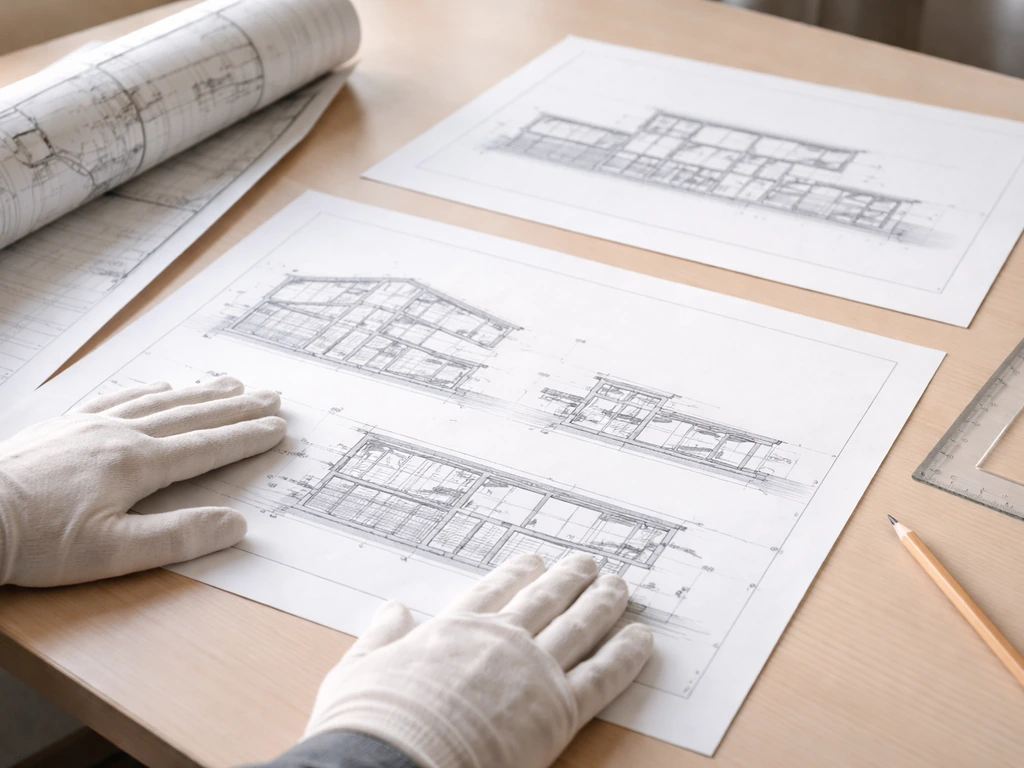
Your application package needs a plot plan plus detailed facility drawings including elevations and cross-sections of production and operational areas. These documents need to show controlled access zones, where cannabis is grown and processed, where it is stored, and how movement through the facility is controlled. Vague or incomplete plans are a common reason applications score poorly or get flagged in review.
Operational requirements
Your Operations and Management Practices Plan is effectively your SOP manual in application form. It needs to demonstrate how you will monitor plants at every stage, track cannabis containers (tied to Metrc), keep accurate records, manage staff, and maintain oversight. Think of this document as the operating manual for your facility, written for a regulator who has never visited your site.
Mistakes to avoid and a compliance checklist
These are the most common ways Illinois cultivation license applications fail or get disqualified, based on the regulatory framework.
- Missing the application window: the 14-day window for CAUCCL applications is firm. Late submissions are not accepted.
- Submitting an incomplete package: any missing document or fee triggers a deficiency notice, and you only get one 10-day chance to fix it before the application is returned unscored.
- Skipping the ISP security plan review: your security plan must be reviewed by the Illinois State Police before you submit, not after.
- Ignoring local zoning: IDOA will not approve a facility that does not comply with local zoning requirements. Confirm zoning compatibility before you pick a site.
- Overlooking Principal Officer eligibility: every person who qualifies as a Principal Officer must meet all eligibility criteria. One disqualified officer can sink the whole application.
- Tax delinquency: anyone with 5% or greater financial or voting interest must be current on state taxes. Check this before you apply.
- Incomplete facility plans: plot plans and drawings that lack detail about controlled access areas, production zones, and security infrastructure will hurt your application score.
- Not preparing for Metrc enrollment: Seed-to-Sale traceability is a legal requirement before operations begin. Start learning the system early.
- Paying the wrong fee or missing fee payment: all fees are nonrefundable. Double-check the current fee schedule on IDOA's official site before submitting.
Pre-submission compliance checklist
- Confirmed proposed facility address and local zoning compliance
- Identified all Principal Officers and confirmed each meets age (21+) and eligibility requirements
- Verified no Principal Officer or 5%+ interest holder has state tax delinquencies
- Security plan drafted and submitted to ISP for review, with written confirmation of review in hand
- CCTV system specified in security plan meets 24/7 and real-time access requirements
- Plot plan, facility drawings, elevations, and cross-sections completed
- Operations and Management Practices Plan completed (plant monitoring, container tracking, recordkeeping, staffing)
- All Principal Officer identity and background documentation collected
- Application fee confirmed and ready (correct amount for your license type)
- IDOA portal account created and application form completed in full
- Application window dates confirmed with IDOA's official announcements
After you submit: approvals, inspections, and staying licensed
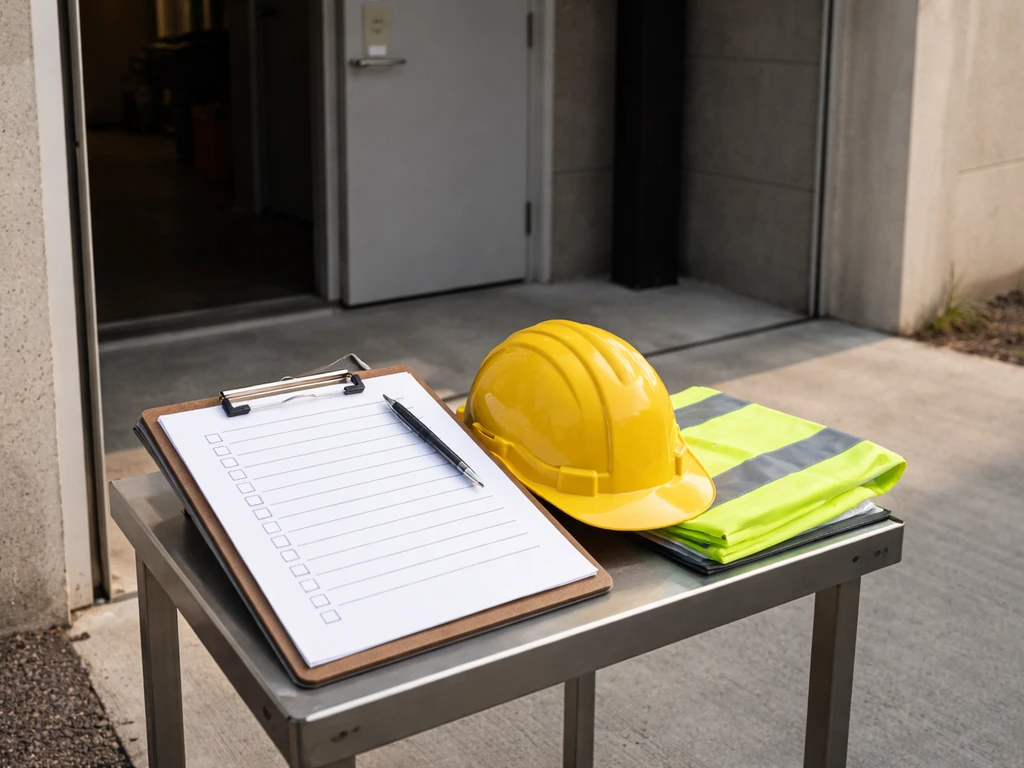
Submitting is not the finish line. Here is what happens after your application goes in and how to maintain your license once you have it.
From conditional approval to full licensure
If your application meets all requirements and scores well in IDOA's review process, you will receive a Conditional Adult Use Cultivation Center License (CAUCCL). This is not a license to operate yet. Before IDOA will issue the actual adult-use cultivation license, your facility must pass a compliance inspection that checks both CRTA compliance and local zoning, and you must pay the $100,000 license award fee (or a prorated amount). Only after all of that is satisfied does IDOA issue the full operational license.
Credentialing employees and Principal Officers
Before anyone works at your facility, all Principal Officers and agents must be credentialed through IDOA's portal and receive their individual agent ID cards. Illinois uses IDOA's NLS (NIC Licensing Solutions) portal for licensing and for credentialing agents associated with cannabis business licensing. This is a separate process from your business license application, and it must be completed before operations begin. Do not wait until after approval to start this process, because credentialing each person takes time.
Getting set up on Metrc
Illinois uses Metrc as its Seed-to-Sale traceability platform, and you are required to obtain access and enroll before you can legally operate. This means training your staff, setting up your account, and integrating your plant monitoring and container tracking procedures with the system. IDOA designates getting Metrc access as Step 4 of 5 in their official process, and ongoing compliance with Metrc tracking is one of the core operational obligations you carry as a licensee.
Ongoing compliance
Once you are operational, staying licensed means maintaining everything you committed to in your application. That includes keeping your security systems functional and accessible to law enforcement in real time, staying current with Metrc tracking, keeping agent credentials up to date as staff changes, and continuing to meet 410 ILCS 705 and 8 IAC Part 1300 requirements. IDOA can inspect your facility, and any material noncompliance puts your license at risk. Treat the SOPs in your Operations and Management Practices Plan as living documents you actually follow, not just paper you submitted.
If you are exploring a smaller-scale commercial grow, the Craft Grower License path has its own specific rules and fee structure worth examining in detail. And if you are asking whether Illinois allows personal cultivation rather than a commercial license, Illinois home grow rules operate under a completely different framework with different eligibility and plant limits.
Rules in Illinois cannabis licensing have shifted multiple times since the CRTA passed in 2019, and they can change again. Always confirm current application windows, fee amounts, and regulatory requirements directly with IDOA at their official cannabis licensing portal and by reviewing the current 8 IAC Part 1300 administrative code before you submit anything.
FAQ
After I receive conditional approval in my illinois cannabis grow license application, can I start hiring and operations right away?
Yes. For Principal Officers, IDOA credentialing is a separate step that happens through its portal and must be completed before anyone begins work at the facility. If you wait until after conditional approval, you can miss the time you need for each individual to receive an agent ID card.
If my illinois cannabis grow license application is returned as incomplete, do I get another chance after the 10 days to fix it?
Not exactly. Missing items (like fees or required documents) can trigger a return with a strict 10-calendar-day resubmission deadline, and an incomplete resubmission after that point is not scored. Treat this as a one-time correction window, not a reliable cure period.
Do Illinois security requirements in an illinois cannabis grow license application get checked only during the site inspection?
Your security plan must be reviewed by the Illinois State Police before you submit, and the CCTV and other controls must be operational and compliant by the time of your facility inspection. Planning for inspection-ready security is different from submitting a concept plan.
When should I set up Metrc for my illinois cannabis grow license application, and can I operate before enrollment?
For traceability, you need to obtain Metrc access and enroll before you can legally operate. In practice, many applicants also build their SOPs and container tracking workflow around Metrc first, then train staff so early operational days do not create tracking gaps.
How does the scoring and inspection process affect timing for the illinois cannabis grow license application?
Illinois uses scoring and then a compliance inspection for the cultivation center pathway. A common mistake is assuming “submission equals review.” You still need to pass facility compliance and, for cultivation centers, pay the large award fee before the adult-use license issues.
If I’m part of a larger group, how can affiliation impact my eligibility in an illinois cannabis grow license application?
If you are a member of a broader cannabis group, the ownership and control caps for cultivation center licenses can apply through employment, agency, contracts, or officer roles. You should map all affiliations and check whether any individual could be treated as controlling more than three cultivation center licenses.
Who counts as a Principal Officer for an illinois cannabis grow license application?
IDOA treats the “Principal Officer” concept broadly, so roles beyond the typical executive titles can still count. Before you finalize your application package, compile your ownership and operational authority list and confirm who must be credentialed, because each Principal Officer must be credentialed separately.
What level of detail do Illinois expects in the plot plan and facility drawings for an illinois cannabis grow license application?
Facility drawings are not just architectural plans. They need to show controlled access zones and explain how cannabis movement is controlled across growing, processing, storage, and operational areas, with enough specificity that a regulator can evaluate compliance.
How should I plan financially for the nonrefundable fees and different fee timing in an illinois cannabis grow license application?
Fees are nonrefundable, and the application fee versus later award fee timing matters for cash flow. For cultivation centers, the adult-use cultivation license issuance is tied to inspection and payment of the registration (award) fee, which is substantially later than the application submission.
Can I use the same document package template for a Craft Grower license and a Cultivation Center license in Illinois?
Usually yes for the document package, but the key is that the administrative code subparts differ for Craft Grower versus cultivation center. You should use the correct thresholds, fee amounts, and required elements for your chosen license type rather than mixing templates across license categories.
Next Article
Illinois Home Grow Rules: Legal Limits and Compliance Checklist
Illinois home grow rules for cannabis: legal limits, location rules, license vs no-license path, compliance checklist.