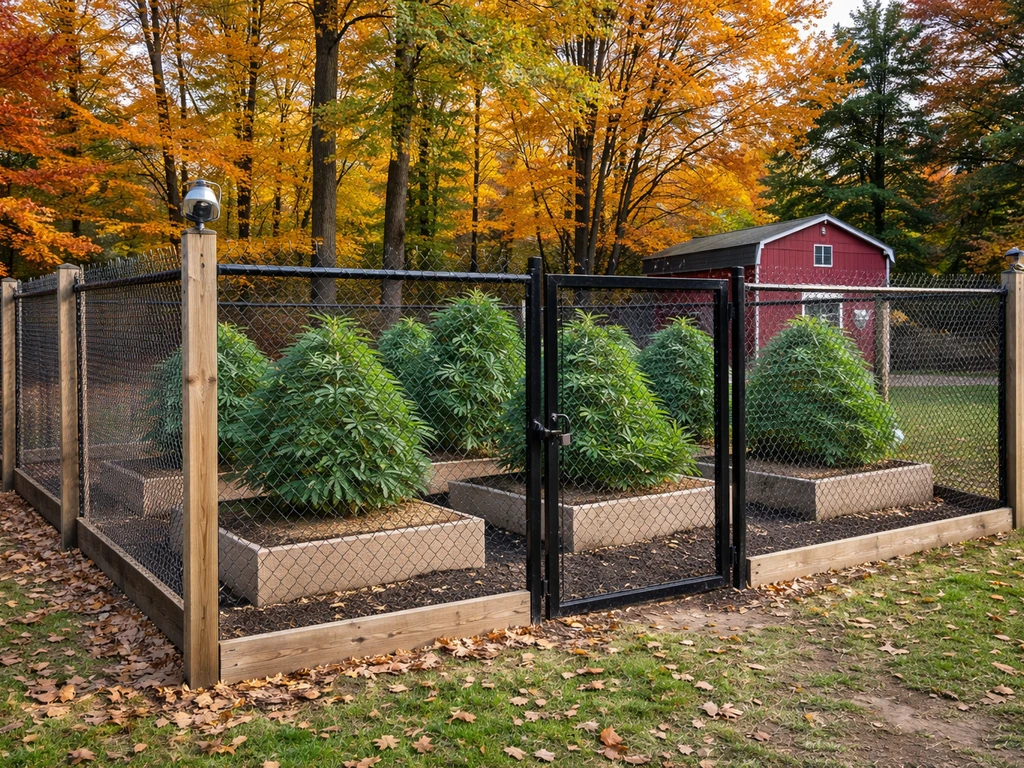
Under MCL 333.27954, home cultivation is protected from civil infraction status only if two conditions are both met: (1) the plants cannot be visible from a public place without binoculars, aircraft, or other optical aids, and (2) the plants are grown in an enclosed area equipped with locks or other functioning security devices that restrict access. Both conditions are required. Meeting just one is not enough.
That second condition is the one that trips up most outdoor growers. "Enclosed area with locks" applies to outdoor grows too, not just indoor rooms. A fenced backyard with a locking gate qualifies if it also blocks visibility. An open yard with plants in pots does not qualify, even if your neighbors cannot see them today. The law is written to require active security measures, not just geographic luck.
Michigan grow licensing basics
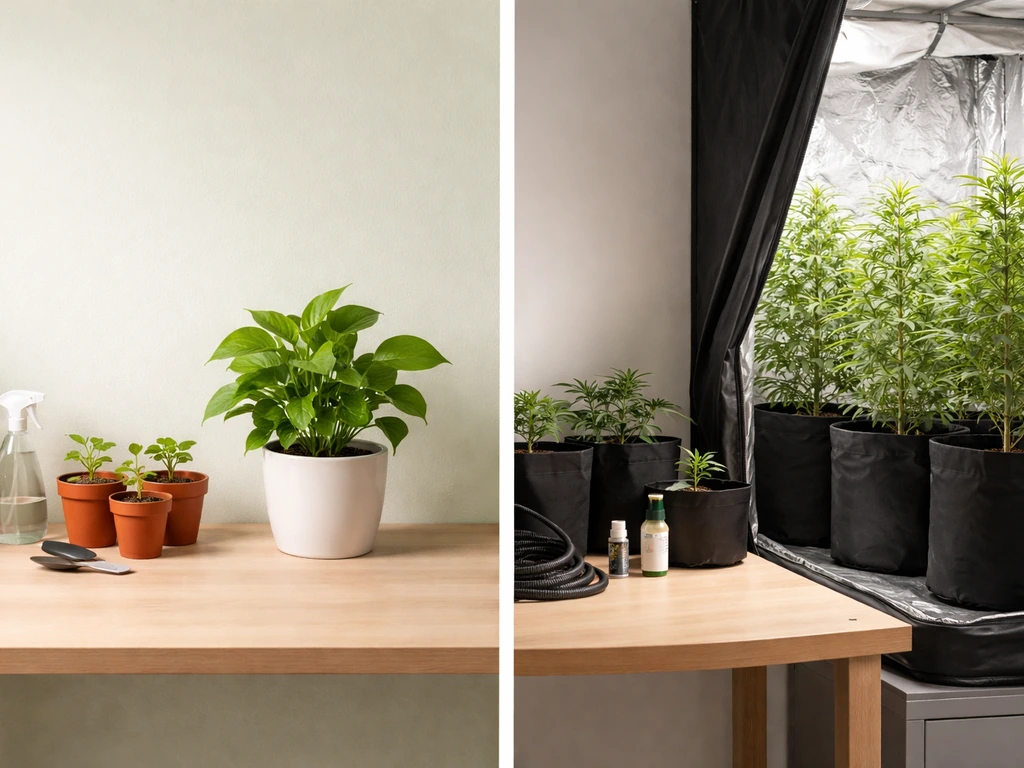
For personal home cultivation, there is no license required. The MRTMA allows adults 21 and over to grow up to 12 plants per household for personal use without any state license. This is purely a personal-use exemption, and it is tied to the household, not to each individual adult living there. Multiple adults in the same home still share one 12-plant cap.
If you want to grow more than 12 plants, sell cannabis, or supply a dispensary, you need a commercial license from the Cannabis Regulatory Agency (CRA). At that point, you are operating a marijuana establishment and must follow a completely different set of rules. The license types relevant to cultivation include Class A, Class B, Class C grower licenses (distinguished primarily by plant count and canopy size), and the Excess Marijuana Grower license for very large operations.
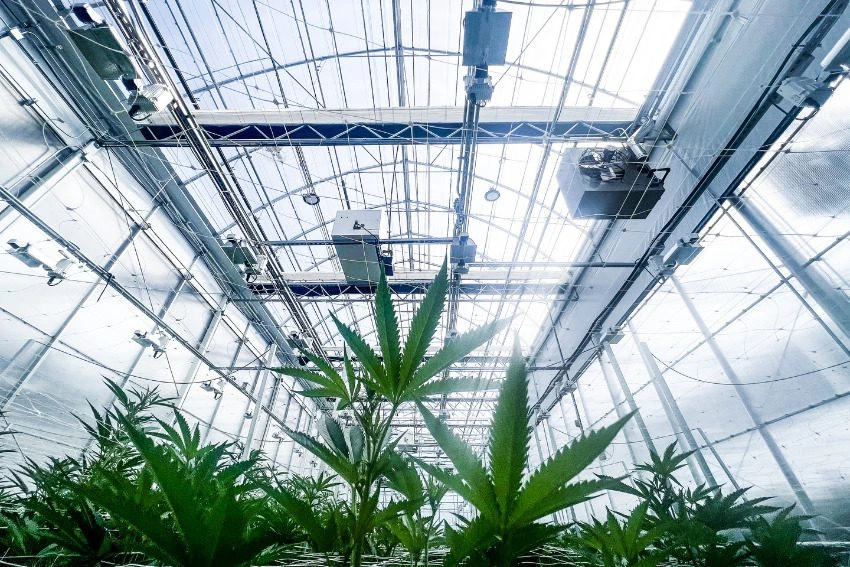
Where cultivation can occur matters a great deal under both the personal-use rules and the commercial licensing framework. Home grows must happen on the property where the person resides. For commercial licensed grows, the CRA's administrative rules require outdoor cultivation areas to be contiguous with the licensed building and fully enclosed by fences or barriers. Local zoning also plays a role: some Michigan municipalities have opted out of allowing marijuana establishments entirely, which affects where a commercial grow can be sited.
Eligibility, plant limits, and home/property requirements
For home growers, eligibility is simple: you must be 21 or older. The plant limit is 12 plants per household. Possession of up to 2.5 ounces of usable cannabis on your person is also protected under MRTMA, with up to 10 ounces allowed at home. Exceeding the 12-plant limit is addressed under MCL 333.27965, which lays out the civil infraction penalty framework for cultivation violations including growing beyond the personal-use limit.
Your property setup matters more than most people expect. The enclosed, locked area requirement is not a suggestion. For outdoor grows, this practically means a structure like a locked greenhouse, a fully enclosed garden space with a secured gate, or another setup where both visibility and access are controlled. A privacy fence alone may not be enough if someone can see over it from a second-story window of a neighboring property or from a public road.
For commercial applicants, eligibility requirements expand significantly. The CRA conducts background checks on all applicants, principal officers, and stakeholders. Michigan residency requirements also applied historically, though the current rules should be verified with the CRA directly at time of application. Any felony convictions related to controlled substances can affect eligibility.
How to apply for a Michigan grower license
If you are pursuing a commercial grow license, the CRA uses a two-step application process. Here is how it works in practice, from launching a grow operation in Michigan all the way through your first inspection.
- Step 1 (Prequalification): Create an account in the CRA's online licensing system and submit your prequalification application. This covers your background check, entity information, financial disclosures, and ownership structure. The CRA reviews this before you can proceed to Step 2.
- Pay the $3,000 non-refundable application fee: This fee is required before the CRA reviews your Step 2 prequalification materials. If you are applying for multiple licenses, clarify with the CRA how the fee applies across applications.
- Step 2 (Facility License Application): Submit your facility-specific application, which includes your proposed premises, security plan, floor/site plan, and compliance attestations. The CRA's Step 2 paper packet also requires signatures confirming your understanding of Michigan marijuana law.
- Bureau of Fire Services (BFS) plan review: If you are applying for a Class A, B, or C grower license or an Excess Marijuana Grower license, your facility plans must pass a BFS plan review as part of Step 2.
- Wait for CRA inspection scheduling: The CRA recommends not submitting Step 2 more than 60 days before your facility will be ready to pass inspection. Submit too early and you may be denied or asked to resubmit.
- Receive your license and pay the initial licensure fee: Adult-use marijuana establishment licenses carry three types of fees: the application fee, an initial licensure fee, and a renewal fee. Amounts vary by license type. For example, the initial licensure fee for each Excess Marijuana Grower license (covering 2,000 plants) is $24,000.
Timeline-wise, the CRA does not publish a guaranteed processing window, but applicants commonly report several months from Step 1 submission to receiving an active license. Build this into your planning. Do not sign a lease or build out a grow facility before you have at least received Step 1 approval.
Outdoor-specific compliance
Whether you are a home grower or a licensed commercial cultivator, outdoor cannabis in Michigan comes with its own compliance layer. The rules for licensed businesses are more detailed, but the core principles overlap with what personal-use growers must also follow.
Visibility and public access
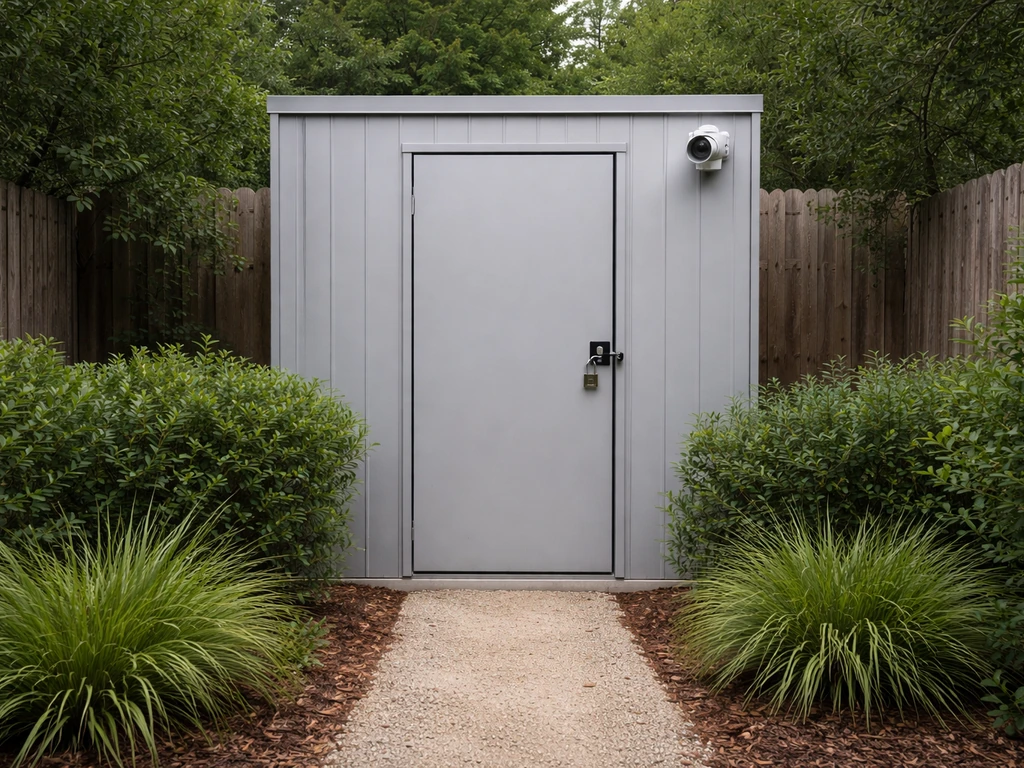
Plants must not be visible from a public place without optical aids. This applies to both home growers (under MCL 333.27954) and licensed facilities (under CRA administrative rules). For outdoor grows, this almost always means solid fencing or an enclosure that is tall enough and opaque enough to block all sight lines from public roads, sidewalks, and adjacent properties. If a passerby can identify your plants from the street, you are out of compliance regardless of your license status.
Security requirements
Home growers need locks or other functioning security devices on their enclosed grow area. For licensed commercial outdoor cultivators, the CRA administrative rules go further: the outdoor cultivation area must be fully enclosed by fences or barriers, and all entries must be locked and accessible only to authorized persons and emergency personnel. Surveillance cameras, visitor logs, and other security measures that apply to the indoor portions of a licensed facility generally extend to any outdoor areas as well. Understanding the full scope of michigan outdoor grow rules before you build your setup will save you from expensive retrofits later.
Keeping minors and unauthorized people out
The security requirement is not just about theft. Preventing access by minors is a core compliance expectation under Michigan law. For home growers, this means your locked enclosure needs to actually restrict access, not just technically have a lock. A gate latch that a 10-year-old can open is not a functioning security device in any meaningful legal sense. For licensed facilities, this is a formal compliance requirement tied to your license.
Odor and neighbor considerations
Michigan's personal-use statute does not explicitly mandate odor control for home growers, but odor can draw complaints that lead to inspections. Commercial licensed growers face odor control obligations under local ordinances and, in some jurisdictions, under their conditional use permits. Even as a home grower, being a good neighbor here is practical self-protection. Flowering cannabis in July and August can be detected from quite a distance.
Common pitfalls and how to stay compliant
Most people who run into trouble with outdoor cannabis in Michigan do so because of a few predictable mistakes. Here is what to watch for.
| Mistake | Why it matters | How to avoid it |
|---|
| Plants visible from the street | Civil infraction under MCL 333.27954 even with 12 or fewer plants | Use solid fencing or an enclosed structure with no sight lines to public areas |
| No locks on the grow area | Removes the legal protection for home cultivation | Install a locking gate or enclosure; document that security devices are functional |
| Exceeding 12 plants at home | Civil infraction under MCL 333.27965 penalty framework | Count all plants in all growth stages; seedlings count toward the limit |
| Applying for the wrong commercial license type | Wrong license means wrong plant limits and wrong fees; delays your operation | Match your intended plant count and business model to the correct CRA license class before applying |
| Submitting Step 2 too early | CRA recommends not submitting more than 60 days before your facility is inspection-ready; early submission can stall your application | Have your facility substantially built out before submitting Step 2 |
| Ignoring local zoning | Some Michigan municipalities have opted out of marijuana establishments; a state license does not override a local ban | Verify your municipality's status with the CRA's municipality lookup and confirm zoning approval before signing a lease |
| Assuming outdoor means unregulated | Outdoor areas at licensed facilities have the same security and visibility requirements as indoor spaces | Apply all CRA security rules to your outdoor footprint, not just the building interior |
One mistake that is easy to overlook: if you ever suspect someone else is operating outside these rules in your area, Michigan has a clear process for that too. Knowing how to report an illegal grow operation in Michigan can matter if a neighbor's non-compliant operation puts your own legal grow under scrutiny.
What to do first today
If you are a home grower, your checklist is short. Confirm you are 21 or older, count your plants and stay at or under 12, make sure your grow area is fully enclosed with functioning locks, and verify that no plants are visible from any public vantage point. Walk your property perimeter the way a code enforcement officer would. If you find sight lines, close them.
If you are pursuing a commercial outdoor grow license, start by researching your local municipality's opt-in status. Then review the CRA's current license types to identify which class fits your intended plant count. The CRA bulletin on plant count consolidation also explains how stacked Class C licenses consolidate plant counts for cultivation in a single location, including an example of up to 2,000 plants under one adult-use Class C grower license subject to conditions the CRA's current license types. Build a realistic facility timeline before you submit anything, because the 60-day inspection-readiness rule is easy to underestimate. Create your CRA online account, begin gathering your financial and ownership documentation, and budget for the $3,000 non-refundable application fee plus the initial licensure fee for your target license class.
The rules here are specific but not unworkable. Michigan is a legal grow state with a functioning licensing system. As long as you match your setup to the actual legal requirements rather than assumptions about what should be fine, staying compliant is straightforward.