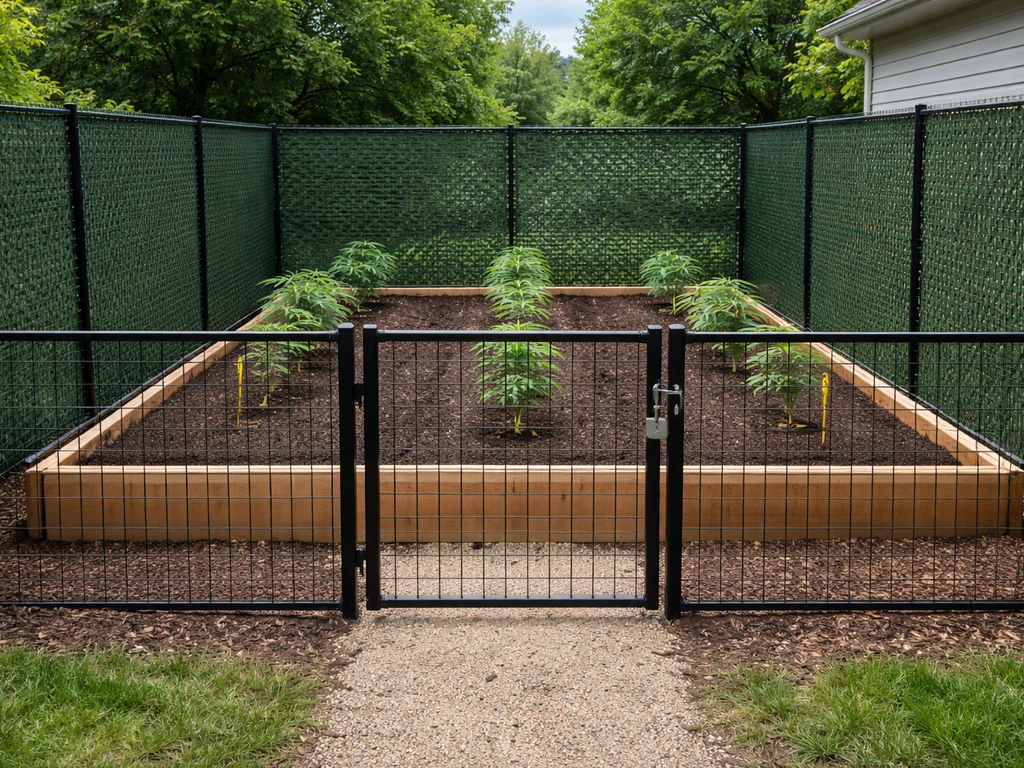
If you're in Michigan and you've spotted what looks like an illegal cannabis grow, the short answer is: call your local law enforcement or use Michigan State Police tip lines for non-emergency reports, and route complaints about licensed businesses to the Cannabis Regulatory Agency (CRA). Don't approach the site, don't confront anyone, and don't try to gather evidence yourself. This guide walks you through exactly what to do, who to call, and what to say.
How to Report an Illegal Grow Operation in Michigan

Marcus Whitley
8 Apr 2026

Quick safety check and what not to do
Before anything else: if you're witnessing something that feels dangerous right now, such as armed individuals, obvious criminal activity in progress, or any immediate threat, call 911. That's it. Don't try to document it first, don't linger, just call.
For everything else that's suspicious but not an active emergency, use the non-emergency channels covered below. The Michigan State Police tip line page is explicit on this: "If you have an emergency call 911," and non-emergency suspicious activity goes through tip channels.
Here's a hard list of things not to do, regardless of how curious or motivated you are:
- Do not trespass on private property to get a better look or take photos.
- Do not confront the people operating the grow.
- Do not touch, remove, or move any plants or equipment.
- Do not use drones or covert recording devices to surveil private property (Michigan law prohibits installing or using devices to observe, record, or transmit from a private place without consent).
- Do not call 911 just to report something that looks suspicious but isn't an emergency. Use the non-emergency numbers instead.
- Do not share your tip publicly on social media before reporting it officially.
What counts as an illegal grow in Michigan
Michigan legalized recreational cannabis under the Michigan Regulation and Taxation of Marihuana Act (MRTMA), so not every cannabis grow you spot is illegal. Adults 21 and over can legally grow up to 12 plants at their residence for personal use. That's the baseline. Going above that threshold starts to cross into civil infraction territory: 13 to 24 plants can result in civil fines, and larger counts may trigger criminal charges depending on the circumstances.
Beyond plant counts, legality also depends on whether the operation is licensed. A commercial cannabis grow requires a state license issued through the CRA, plus local approval. If you're seeing what looks like a large-scale commercial operation with no visible licensing, that's a real red flag. For context on what a compliant grow looks like, legal outdoor grow in Michigan covers what licensed personal and commercial outdoor cultivation is actually supposed to look like under state rules.
Things that may suggest an illegal operation (without being conclusive on their own):
- Dozens or hundreds of plants visible (well beyond the 12-plant personal limit).
- Commercial-scale lighting, ventilation, or irrigation equipment in a residential property.
- Frequent foot traffic or vehicle activity at odd hours.
- Strong cannabis odor combined with other signs of large-scale cultivation.
- No visible licensing signage where a commercial facility would require it.
- Operation in a location where cannabis businesses are not permitted (e.g., near a school).
One important caution: odor alone is not a reliable indicator. Michigan courts have signaled that the smell of cannabis by itself doesn't automatically establish probable cause for a search. So if you only smell something and see nothing else, that's worth noting but probably not a standalone reason to file a report.
Who to report to in Michigan and how to contact them

Michigan gives you several reporting routes depending on what you're dealing with. Here's a clear breakdown:
| Situation | Who to Contact | How to Reach Them |
|---|---|---|
| Emergency / immediate danger | 911 | Call 911 |
| Non-emergency suspicious activity (general) | Michigan State Police / MICH-TIP | 1-855-MICHTIP (855-642-4847) |
| Anonymous tip (any non-emergency) | Crime Stoppers of Michigan | 1-800-773-2587 or online tip form |
| Complaint about a licensed marijuana business | Cannabis Regulatory Agency (CRA) | [email protected] or 517-284-8599 |
| Suspected illegal grow near you (local) | Your local police department | Non-emergency number for your jurisdiction |
| Mailing a tip to CRA enforcement | CRA Enforcement Division | P.O. Box 30205, Lansing, MI 48909 |
For most people reporting a suspected illegal residential grow, your first call should be to your local police department's non-emergency line, or to the MSP tip line at 1-855-642-4847. If you believe a licensed cannabis facility is operating outside its license terms, file a complaint directly with the CRA at [email protected] or call 517-284-8599.
The CRA also has an official complaint submission process on their website for matters involving marijuana businesses, both adult-use and medical. If you're dealing with a business rather than a private residence, that's your clearest path to a formal record.
If you'd prefer to stay completely anonymous, Crime Stoppers of Michigan (1-800-773-2587) is the most straightforward option. Crime Stoppers of Michigan says that when you submit an anonymous tip by phone or online, you receive a Tip Reference Number for follow-up blank" rel="noopener noreferrer">stay completely anonymous. The City of Monroe’s official Crime Stoppers Anonymous page says the program uses the anonymous toll-free number 1-800-773-2587 and is intended for people who are afraid to call police due to retaliation concerns blank" rel="noopener noreferrer">Crime Stoppers of Michigan (1-800-773-2587). They issue a tip reference number so you can follow up later without ever identifying yourself.
Information to gather before you call or submit a tip
A vague tip is hard to act on. The more specific and factual your report, the more useful it is. Before you pick up the phone, try to have the following ready:
- Exact address or precise location description (cross streets, landmarks, GPS coordinates if possible).
- Date(s) and time(s) of what you observed.
- What you saw: number of plants if visible, scale of operation, type of facility (house, warehouse, barn, outdoor field).
- Odors, sounds, or activity patterns (e.g., generators running overnight, frequent vehicle arrivals).
- Vehicle descriptions: make, model, color, and license plate numbers if you observed them from a public place.
- Number of people you observed and any identifying details (without approaching anyone).
- Photos or video you took legally from a public vantage point (street, sidewalk, your own property).
- Any safety concerns: weapons, aggressive behavior, chemical smells that might suggest something beyond cannabis.
Local tip forms, like the narcotics tip form used by some Michigan municipalities, specifically prompt for date, time, and activity details. Following that same structure in any report makes your information easier to process.
How to describe what you saw
When you make the report, stick to what you actually observed. Don't characterize it as "definitely illegal" or make conclusions about criminal intent. Just describe the facts plainly. Here's a rough script you can adapt:
"I'm calling to report suspicious activity that may involve an unlicensed cannabis grow operation. The location is [address or description]. I observed [what you saw: plant count if visible, equipment, scale] on [date] at approximately [time]. I also noticed [vehicles, people, activity patterns, odors]. I'm not sure if this is legal or licensed, but based on the scale of what I saw, I wanted to report it for investigation."
That framing keeps you in the lane of a witness, not an investigator. You're reporting observable facts and leaving the legal determination to the authorities. Here's a quick checklist for your report:
- State the location clearly and specifically.
- Describe what you observed in plain terms (plants, equipment, scale).
- Include dates and times of observation.
- Note any vehicles or people observed from a public location.
- Mention any safety concerns or unusual activity.
- Avoid legal conclusions: say "what appeared to be" rather than "an illegal grow."
- Ask for a tip reference number or report number so you have a record.
Anonymity, retaliation risk, and evidence cautions

Worrying about retaliation is legitimate, especially if the operation is close to where you live. The good news is you have real options for staying anonymous. Crime Stoppers of Michigan explicitly allows anonymous tip submission and provides a tip reference number so you can check on your report without ever giving your name. The MICH-TIP line (1-855-642-4847) also accepts tips without requiring identification.
If you go the anonymous route, do not call from a phone that can be easily traced back to you. Use a public phone or a voice-over-IP app if you're genuinely concerned. Avoid submitting a tip from a device logged into your personal accounts.
On evidence collection: photographs and video you take from a public street or sidewalk are generally fine. The line is private property. Michigan law explicitly prohibits using devices to observe, record, or transmit activity in a private place without consent. That means you cannot go onto someone's land to record, and you cannot use a drone to peer into a private yard or building. Any evidence collected that way could also create legal problems for you and may not even be usable.
Also worth keeping in mind: do not attempt to verify or investigate the grow yourself before reporting. That puts you at physical risk, potential legal risk, and it rarely adds anything that trained investigators can't develop on their own with a credible tip.
What happens after you report
After submitting a tip, manage your expectations. Law enforcement and regulatory agencies receive a lot of tips and prioritize based on available information and resources. You probably won't get a callback confirming action was taken, especially if you reported anonymously.
If you reported through Crime Stoppers, save your tip reference number. It's how you follow up without breaking anonymity. If you reported to the CRA enforcement division by email or phone, you can follow up at [email protected] or 517-284-8599, but expect that investigations take time and details generally aren't shared with the public.
If authorities contact you for more information, you're not obligated to provide more than you're comfortable sharing. Answer what you can factually, stick to what you observed directly, and let them know if you have concerns about your safety.
One thing worth noting: if the situation seems to be escalating (more activity, signs of confrontation, increased vehicle traffic), report again. You can file multiple tips. Don't assume one report is enough if circumstances change.
Understanding the legal context helps you report better
The more you understand what's actually legal in Michigan, the better you are at spotting what isn't. Michigan's cannabis licensing framework is detailed: commercial grows require specific license types, compliance with local zoning, and ongoing oversight by the CRA. Michigan outdoor grow rules explains the specific regulations that govern outdoor cultivation, which is helpful context if what you're seeing is an outdoor setup.
It's also useful to understand that the barrier to running a legal commercial grow is genuinely high, which is part of why unlicensed operations exist. If you're curious about what the legitimate licensing path looks like, how to start a grow operation in Michigan walks through what a compliant, licensed operation actually requires. That context makes it easier to recognize when something clearly doesn't fit that picture.
Reporting a suspected illegal grow isn't about being a neighborhood watchdog or making legal judgments. It's about passing specific, factual observations to the people whose job it is to investigate. Stick to the facts, use the right channels, stay safe, and let the process work.
FAQ
Is it legal to report only based on the smell of cannabis in Michigan?
You can still report, but treat odor as a lead rather than proof. If you smelled it, note the date, time, wind direction, and how strong it was, but only include visual or other observable facts you actually saw (for example, lights on late at night or plant equipment).
What should I do if I think the grow might be medical cannabis but still looks unlicensed?
Report it the same way you would any suspected unlicensed business. If it seems to be operating as a cannabis business, submit a complaint to the Cannabis Regulatory Agency (CRA) so regulators can determine licensing status and whether any medical activity is being handled properly.
Do I need to call 911 if I see suspicious activity that might be a grow but no immediate threat?
No. Only call 911 for immediate danger or active criminal activity, such as threats, violence, or armed people. If it is suspicious but not an emergency, use the local non-emergency line or the Michigan State Police tip line route.
How do I report an illegal grow if I only know the neighborhood but not the exact address?
Use the most precise location you can describe, such as the street name, nearby cross street, unit or building description, gate access point, or distinct landmarks. If you can safely estimate plant count, scale, and equipment location, include those details too, since investigators may match your description to property records.
Can I take photos or video if the grow is behind a fence on private property?
Avoid filming through a fence, peeking into windows, or recording from within private areas. Photos from a public sidewalk or street are generally safer, but do not use devices to observe or transmit activity from a private place without consent. If you cannot confirm you are recording only from public areas, skip recording.
Is it okay to use a drone to document the grow?
No. Drones can be treated as unlawful observation of private property if you are recording inside areas you do not have permission to access. Stick to witness reporting and, if appropriate, documentation from public areas only.
Should my report include my opinion on whether the operation is illegal?
No. Keep it factual. Say what you observed, such as approximate plant count (if visible), visible grow equipment, business signage, vehicle patterns, and timing. Avoid conclusions like “definitely illegal,” “they are trafficking,” or guesses about intent.
What information makes my tip more actionable in Michigan?
Include specific timestamps, exact location, what you saw (size of setup, lighting, irrigation, ventilation, tents, or racking), and any repeated activity pattern. If you can describe vehicles without identifying license plates as certainty, include make/model/color and whether they appear to be delivery or commercial vehicles.
If I report anonymously, how will I know if anything happens?
You usually will not. If you use Crime Stoppers, save the tip reference number so you can follow up while staying anonymous. Expect that agencies may not provide updates, especially for anonymous tips.
Can I submit more than one tip if the situation changes?
Yes. If activity escalates, such as more people arriving, increased traffic, or signs of confrontation, file another report with updated details. It helps investigators reassess risk and timing.
What if the operation might be legal, but I am not sure?
You still can report uncertainty, but phrase it as a question and focus on what looks different. For example, note your observations about scale and licensing indicators you can see, without claiming it is illegal. Authorities can cross-check against licensing and local approval.
What if I’m afraid of retaliation after reporting?
Use anonymity options like Crime Stoppers, and avoid calling from a device that clearly ties back to you if you are concerned. Do not confront anyone, and do not return to the area to verify details. If you feel you are in immediate danger, call 911.
What should I do if authorities contact me for more information?
Answer only what you can confirm from your own observations. If you have safety concerns or do not want to share more than necessary, say so. Providing extra speculation can hurt credibility, so stick to the facts you directly witnessed.
Next Article
Michigan Outdoor Grow Rules: Step-by-Step Compliance Guide
Step-by-step Michigan outdoor grow rules guide: legal checks, site security, plant limits, records, and how to verify PD