A Class A recreational grow license in Michigan authorizes you to cultivate up to 100 marijuana plants at a single licensed facility under the Michigan Regulation and Taxation of Marihuana Act (MRTMA). It is the smallest of the three commercial grower tiers regulated by the Cannabis Regulatory Agency (CRA), which makes it the most realistic starting point for first-time cultivators. If you are trying to figure out whether this is the right license for you, what it costs, and exactly how to apply, here is everything you need to know.
Class A Grow License Michigan: Requirements, Costs, and Steps

Marcus Whitley
12 Apr 2026
Michigan cannabis grow license basics: Class A, B, and C
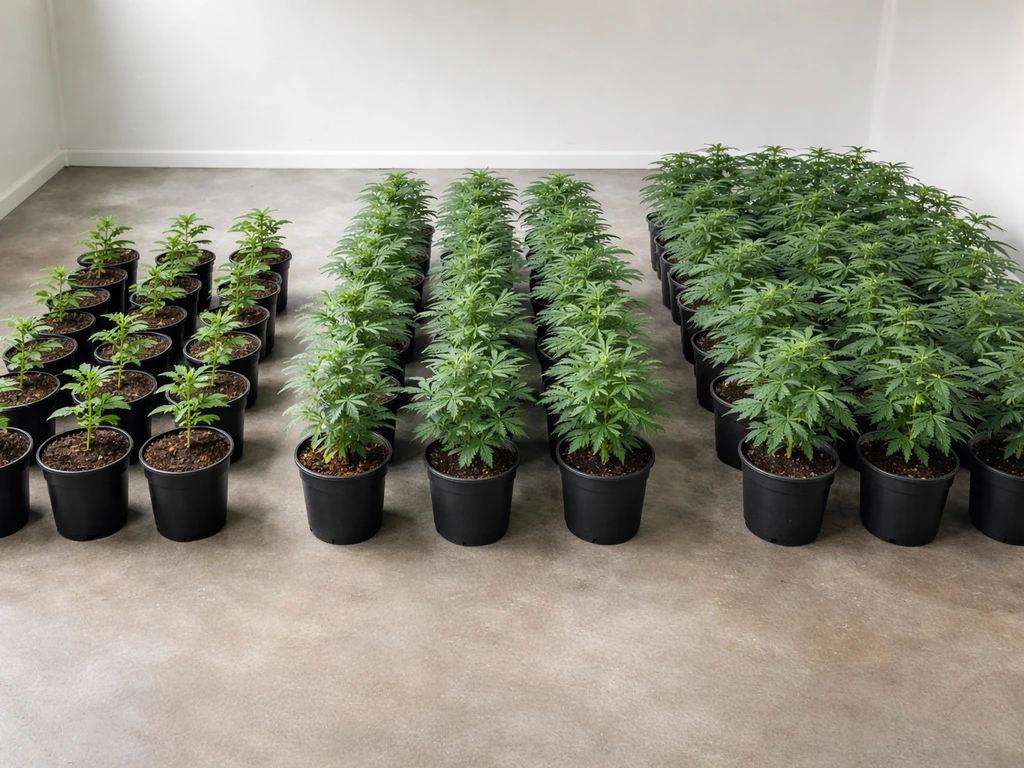
Michigan's CRA issues three tiers of adult-use (recreational) grower licenses, and the tier you hold determines exactly how many plants you are legally allowed to cultivate. This is not a soft guideline, it is a hard regulatory limit. The three classes are straightforward in terms of plant counts, but choosing the wrong one will either cap your output unnecessarily or put you in a licensing category you are not operationally or financially ready for.
All three classes are adult-use commercial licenses, not home grow permits. If you are just looking to grow a small number of plants for personal use at home, Michigan law allows adults to grow up to 12 plants for personal use without any license at all. The Class A, B, and C licenses are for people running or planning to run a legitimate cannabis cultivation business. If that is you, read on.
To get a solid overview of how Michigan structures its cultivation licensing landscape before diving into the Class A specifics, it helps to understand what a grow license in Michigan actually covers at a foundational level.
Class A grow license eligibility and requirements
To qualify for a Class A marijuana grower license in Michigan, you need to meet a set of eligibility criteria that the CRA evaluates across two application phases. Here is what you need to have in order before you even start the paperwork.
- You must be at least 21 years old.
- You must be a Michigan resident or operate a Michigan-registered business entity (LLC, corporation, partnership, or sole proprietorship). The main applicant is the entity seeking the license, not just an individual.
- You cannot hold a license if you have been convicted of a felony within the past ten years, or any marijuana-related felony within the past ten years (the CRA reviews criminal history during prequalification).
- Your proposed facility must be located in a municipality that has passed an ordinance allowing marijuana establishments under Section 205 of MRTMA. If your local municipality has not opted in, you cannot get a license there, full stop.
- Your facility must be a physical, dedicated location that can pass a CRA inspection. This is not a paperwork exercise; the building and its grow setup need to be real and inspection-ready.
- All individuals with a financial or ownership interest in the applicant entity (called "directly and indirectly" interested parties) must also pass the CRA's suitability review.
- You must demonstrate proof of financial responsibility, which the CRA reviews as part of Step 2.
One thing that catches a lot of applicants off guard: the CRA controls the fingerprinting process. Local law enforcement will not collect fingerprints on behalf of the CRA, and the CRA will not accept fingerprint reports that were completed before you were specifically instructed to submit them. Do not try to get fingerprints done early to save time. You will be directed to complete that step at the right point in the process.
How to apply for a Class A recreational grow license in Michigan
Michigan's CRA uses a two-step application process for all adult-use establishment licenses, including the Class A grower license. The two steps are not interchangeable, and you cannot skip ahead. Here is the sequence.
Step 1: Prequalification
Prequalification is where the CRA vets you and your business entity before anything else happens. You submit information about all owners, investors, and key personnel. The CRA reviews financial disclosures, criminal history, and whether your entity structure is legitimate and compliant. Pay the $3,000 nonrefundable application fee at this stage. This fee is the same regardless of which grower class you are applying for, and it does not come back to you if your application is denied.
If you pass prequalification, the CRA will authorize you to move to Step 2. Do not submit a Step 2 application before being cleared through Step 1.
Step 2: Establishment license application
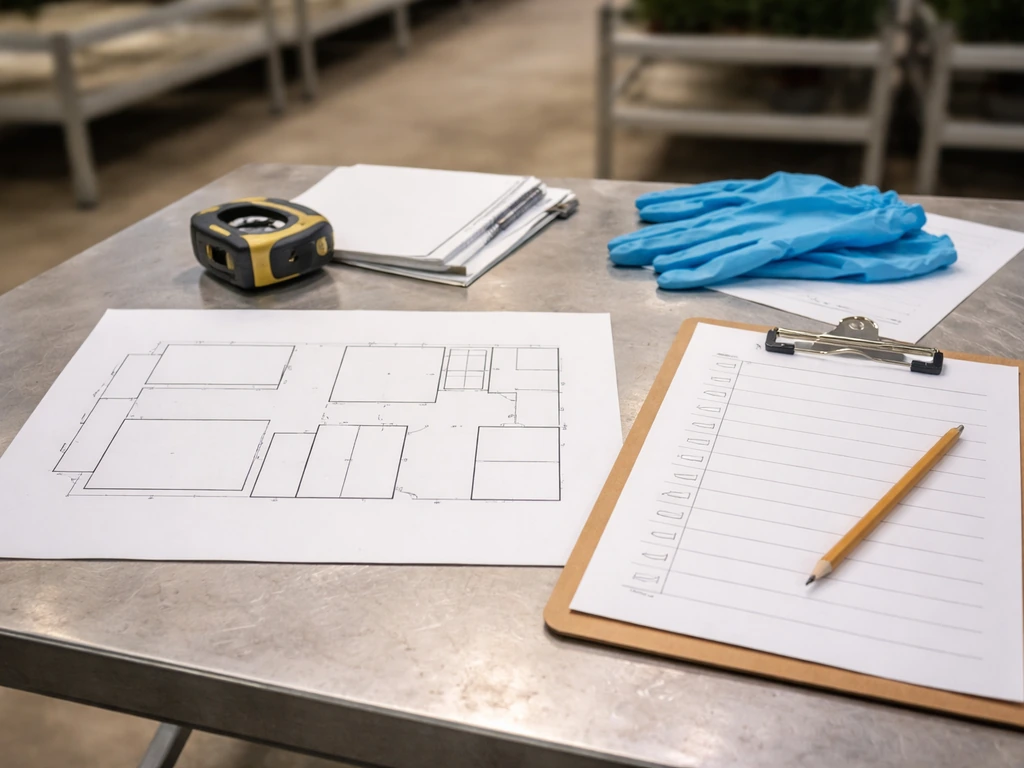
Step 2 is where you apply for the actual operating license tied to your specific facility. The CRA has a dedicated Class A Marijuana Grower application instructions packet that tells you exactly what to include. At Step 2, you will submit:
- Business specifications for the proposed cultivation facility
- Proof of financial responsibility
- Municipality information confirming your location is in an opt-in jurisdiction
- General employee information
- Floor plans and facility details sufficient for CRA inspection
The single most important rule at Step 2: do not submit your application unless your facility will be ready to pass a CRA inspection within 60 days of that submission. The CRA is explicit about this. If your buildout is six months away, wait. Submitting prematurely wastes everyone's time and can complicate your application.
After Step 2: inspection and license issuance
Once your Step 2 application is submitted and under review, the CRA will schedule an inspection of your facility. If you pass, you receive your state operating license. After the operating license is approved, you have ten business days to pay the regulatory assessment fee (more on that below). Then, and only then, you can legally begin cultivating.
For a broader look at how the commercial licensing pathway works in Michigan, the guide on obtaining a Michigan commercial grow license walks through the general framework that applies across all establishment types.
Class A grow license cost in Michigan: fees and budget planning

Here is a breakdown of the fees you should plan for. These are state-level regulatory fees only; local fees, facility costs, and operating expenses are separate.
| Fee Type | Amount | When You Pay It |
|---|---|---|
| Step 1 prequalification application fee | $3,000 (nonrefundable) | At Step 1 submission |
| Class A initial licensure fee | $1,200 | At Step 2 / upon license issuance |
| Regulatory assessment (Class A cap) | Up to $10,000 (capped by statute) | Within 10 business days of operating license approval |
| Annual renewal fee | Varies; allow 30+ days processing time | Before license expiration each year |
The $3,000 prequalification fee is the first check you write, and it is gone whether you get licensed or not. The $1,200 initial licensure fee comes at Step 2. The regulatory assessment is the variable piece: the CRA charges a regulatory assessment for each license issued, and for Class A growers, that assessment is capped at $10,000 by statute. Your actual assessment may be lower, but plan for the cap in your budget.
In total, before your first plant goes in the ground, you are looking at a minimum of $4,200 in state fees (prequalification plus initial licensure), plus up to $10,000 in regulatory assessment, for a realistic total of up to $14,200 in licensing fees alone. That does not include facility construction or renovation, security systems, compliance software, or your initial inventory of seeds or clones.
For renewals, the CRA recommends starting the renewal process as early as possible and building in at least 30 days for processing. If your license lapses, you cannot legally operate, so do not treat renewal as an afterthought.
Class A vs Class B vs Class C: which one do you actually need?
The three grower classes exist on a simple scale. Choosing the right one matters because applying for the wrong class either limits your growth potential or puts you in a more expensive, more scrutinized tier than you are ready for. Here is how they compare.
| License Class | Plant Limit | Scale | Best For |
|---|---|---|---|
| Class A | Up to 100 plants | Small | First-time cultivators, small operations, low-capital startups |
| Class B | Up to 500 plants | Medium | Established growers scaling up, mid-size commercial operations |
| Class C | Up to 1,500 plants (per location, subject to conditions) | Large | Large-scale commercial cultivation with significant capital and infrastructure |
If you are just getting into commercial cultivation in Michigan, Class A is almost always the right starting point. The plant limit of 100 is meaningful for a real business, the fees are the lowest of the three tiers, and the regulatory burden, while still substantial, is more manageable than Class C. You can always apply for a higher class later or stack licenses as your operation grows.
Class B at 500 plants makes sense if you already have cultivation experience, a facility capable of handling that volume, and the capital to match. Class C at up to 1,500 plants per location is a serious commercial operation that requires significant investment in infrastructure, staffing, and compliance systems. The CRA does allow license stacking under certain conditions, which is relevant if you eventually want to scale a Class C operation across multiple sites.
If you are still working through whether you need a commercial license at all or trying to understand the full range of what licensing to grow marijuana in Michigan looks like, the article on getting a license to grow pot in Michigan covers the broader picture, including the personal-use home grow rules that do not require any license.
Common gotchas, timelines, and compliance checklist before you start growing
This is where a lot of applicants make avoidable mistakes. Go through this list honestly before you submit anything.
The big mistakes to avoid
- Starting to grow before your license is fully approved and issued. This sounds obvious, but people do it. There is no gray area: you cannot cultivate a single plant under a Class A license until the state operating license is in hand and the regulatory assessment is paid.
- Applying in a municipality that has not opted in. Check your local ordinances before you sign a lease or buy a property. If the municipality has not passed a compliant Section 205 ordinance, you cannot get a CRA license there regardless of how good your application is.
- Submitting Step 2 before your facility is ready for inspection. The 60-day readiness rule is not a suggestion. Submit only when your buildout is 60 days or less from being inspection-ready.
- Getting fingerprints done on your own schedule. Wait for the CRA to direct you. Early fingerprint submissions are rejected.
- Underestimating the regulatory assessment in your budget. The cap is $10,000. Plan for it.
- Forgetting that all owners and investors must pass CRA suitability review, not just the primary applicant. A single disqualified investor can kill your application.
- Missing your renewal window. Build the 30-plus day processing time into your calendar and start early.
Pre-application compliance checklist
- Confirm your municipality has an active, compliant Section 205 ordinance allowing marijuana establishments.
- Form or confirm your business entity (LLC, corporation, etc.) and have all ownership and financial interest information documented.
- Verify that all owners and investors pass the criminal history eligibility requirements (no disqualifying felonies within the past ten years).
- Identify and secure a physical facility location. Do not sign a long-term lease on a property until zoning compliance is confirmed.
- Budget at minimum $14,200 in state licensing fees (prequalification, initial licensure, and regulatory assessment cap) before your first plant.
- Confirm your facility can realistically be inspection-ready within 60 days of your planned Step 2 submission date.
- Do not arrange fingerprinting independently. Wait for CRA instruction on timing.
- Set a calendar reminder for your annual license renewal at least 45 days before your license expiration date.
- Do not start cultivating until you have your state operating license in hand and have paid the regulatory assessment.
The CRA's licensing process is methodical, not fast. From Step 1 submission through final license issuance, you should expect the process to take several months, especially if your facility needs buildout. Apply early, get your municipality sorted first, and do not put plants in the ground based on optimism about approval timing. The license has to be real and in your hand before you grow a single plant.
FAQ
Can I apply for a class a grow license michigan if I do not yet own the facility building?
Yes, but your Step 2 application still has to be realistic for inspection within 60 days. If you only have a tentative lease or purchase agreement, align the term and buildout schedule so you can complete the facility requirements before the CRA inspection date.
What happens if my facility is not inspection-ready within the 60-day window after I submit Step 2?
The safest move is to delay Step 2 submission until your buildout and readiness steps are complete. Submitting early can force delays, create documentation problems, and prolong your timeline even if you are otherwise eligible.
Do I need fingerprints more than once during the process?
Plan on fingerprints being collected only in the controlled manner the CRA directs during the correct phase. Do not try to pre-doprints, because the CRA will not accept earlier fingerprint reports, and this can stall your prequalification progress.
Are the $3,000 prequalification fee and Step 2 initial licensure fee refundable if I am denied?
No. The $3,000 prequalification fee is explicitly nonrefundable, and the Step 2 initial licensure fee is part of the costs you should treat as paid for processing. Budget assuming neither amount comes back to you.
How early should I start renewal for a class a grow license michigan to avoid a lapse?
Start as soon as the renewal window opens, and build in at least 30 days for processing. Because you cannot legally operate if your license lapses, do not wait for last-minute timing, especially if inspections or paperwork updates are required.
Is class a grow license michigan only for growing, or does it also cover distribution and sales?
A grower license authorizes cultivation at the licensed facility within the plant limit for that tier. Selling, processing, or distributing typically requires separate authorization, so confirm what additional licenses your intended business model needs before you invest in buildout.
Can I start growing immediately after the operating license approval, or is there another step?
After operating license approval, you still have a short payment deadline to pay the regulatory assessment fee, and you should wait until those requirements are satisfied before cultivating. Build your workflow so the assessment payment is handled quickly after approval.
How do I budget for the regulatory assessment if the cap is $10,000 for class a?
Use the statutory cap as your upper bound, because your actual assessment may be lower but is not guaranteed to be. For planning, treat regulatory assessment as a risk variable and keep contingency for the full amount.
What is the biggest mistake applicants make when choosing between class a, b, and c?
Applicants often choose based on “eventual growth” rather than realistic capacity, costs, and readiness. If you are not operationally prepared, moving up later can be less expensive than overcommitting to the wrong tier from day one.
Does license stacking apply to class a later, or is it only for scaling to higher tiers?
License stacking is relevant if you later scale across multiple sites or operations. It is not something to assume automatically for a first location, so plan for how additional facilities would be licensed and operated under CRA rules when you expand.
If I can legally grow up to 12 plants at home without a license, do I still need a class a grow license michigan?
Those personal-use rules are separate from commercial licensing. If your plan is to run a licensed cultivation operation, sell within the adult-use market, or exceed personal-use limits, you need a commercial grower license such as Class A.
How long does it usually take from submission to actually receiving the class a grow license in michigan?
Expect several months from Step 1 submission through final issuance, and longer if facility buildout is required. Build your timeline around inspection readiness rather than submission dates, and avoid assuming approvals will arrive quickly.
Next Article
License to Grow Pot in Michigan: Step-by-Step Guide
Step-by-step to get a Michigan cannabis grow license, choose the right type, prepare documents, submit, and stay complia