Canada's largest legal grow operation is a title that gets thrown around a lot, and the answer depends entirely on how you measure it. By licensed indoor growing area, Aurora Cannabis has historically ranked at the top, with its Aurora Sky facility in Alberta carrying a disclosed company-level capacity exceeding 500,000 kg per year. Canopy Growth has disclosed a facility footprint of roughly 730,000 square feet. But if you're searching this phrase because you want to understand how large-scale legal cultivation actually works in Canada, or how to build one yourself, that's a different question worth answering in full.
Canada’s Largest Legal Grow Up: How to Verify Size and Get Licensed

Marcus Whitley
3 May 2026
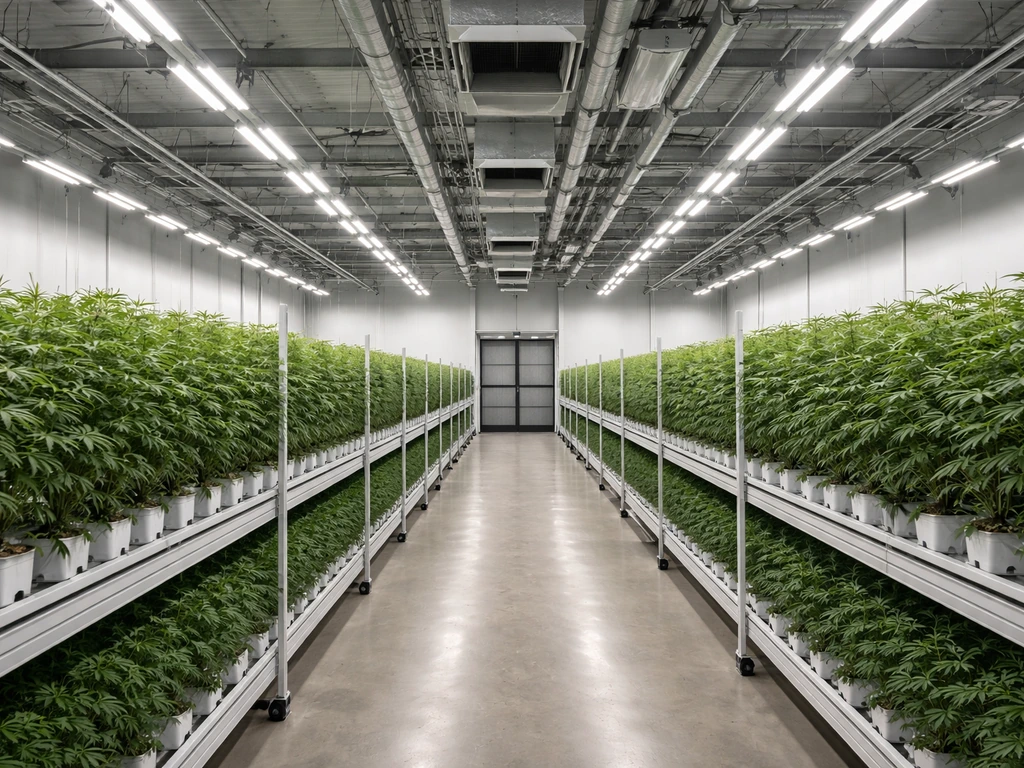
What 'Canada's largest legal grow' actually means
The phrase 'largest legal grow up' is genuinely ambiguous. Most people who search it are trying to do one of three things: find out which licensed producer or facility is the biggest by size or output, understand how large-scale legal cultivation is structured so they can model or replicate it, or figure out how to grow cannabis legally at a meaningful scale themselves. This article covers all three, because the regulatory framework is the same regardless of which question brought you here.
One thing worth flagging: the term 'grow up' instead of 'grow op' doesn't change the substance. In Canadian cannabis licensing, the relevant unit is the licensed site, and the relevant metrics are licensed indoor growing area (measured in square metres), outdoor grow area, and production capacity expressed in kilograms per year per cannabis class. Those are the numbers that matter both for identifying the 'largest' and for planning your own operation.
How Canada's legal cultivation framework is set up
Canada regulates cannabis cultivation at the federal level under the Cannabis Act and Cannabis Regulations (SOR/2018-144). Health Canada is the licensing authority for cultivation, processing, and sale for medical purposes. Provinces and territories handle distribution and retail within their own borders, but the grow licence itself always comes from Health Canada. If you're thinking about a provincial layer on top of this, it exists mainly on the sales and distribution side, not the grow side.
This matters because there's no provincial 'grow licence' for commercial cannabis. Whether you're in BC, Alberta, Ontario, or anywhere else, you apply to Health Canada for a federal cultivation licence, and the Cannabis Regulations govern what you can and can't do on your site. If you're specifically looking for Ontario details, the practical way to start is by reviewing Ontario-specific licensed grow-ops through the Health Canada registry and comparing them to the provincial context list of legal grow-ops in ontario. Provinces may have their own business licensing or zoning requirements that interact with your application, but the core cultivation authorization is entirely federal.
How to verify 'largest' claims using credible sources
If you want to verify who actually holds the biggest legal grow authorization in Canada, start with Health Canada's official list of licensed cultivators, processors, and sellers under the Cannabis Act, published on Canada.ca. This is the primary federal registry. It's structured as a table showing each licence holder by name, province or territory, and date of initial licensing. Aurora Cannabis Enterprises Inc., for example, appears with multiple site entries, which tells you they hold authorizations across more than one location.
The Health Canada list confirms who is licensed and where, but it doesn't publish capacity figures directly. For that, you need to look at company public filings. Publicly traded licensed producers are required to disclose facility-level production capacity in their annual information forms and management discussion and analysis documents filed with securities regulators. That's where figures like Aurora Sky's capacity and Canopy Growth's facility square footage come from. Use the regulator list to confirm legitimacy, then use public filings to compare scale.
Be cautious with third-party rankings. A lot of 'Canada's largest' claims come from press releases or investor decks that cite 'funded capacity' or 'estimated annual capacity,' which can reflect maximum theoretical output rather than actual licensed and operational output. The most credible metric is the licensed indoor growing area reported monthly through Health Canada's Cannabis Tracking and Licensing System (CTLS), which requires licence holders to report their total indoor area in square metres as of the end of each month.
Licence types and what changes at large scale
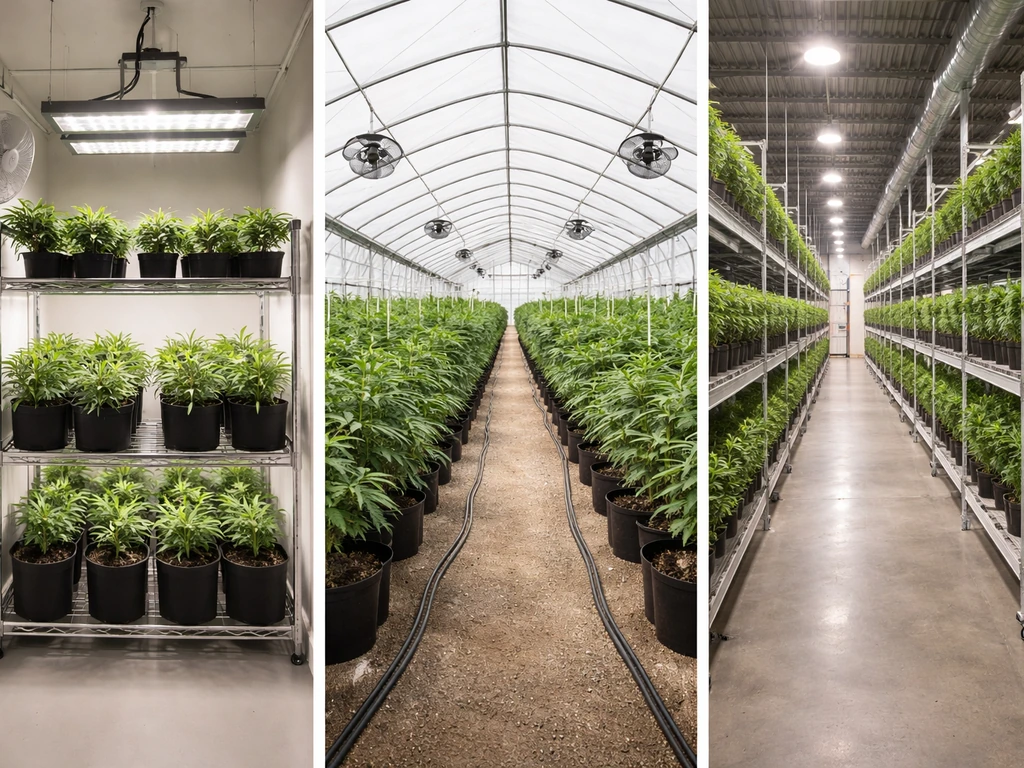
The Cannabis Regulations define three cultivation licence classes: micro-cultivation, standard cultivation, and nursery. For any operation that could reasonably be called 'large scale,' standard cultivation is the relevant category.
| Licence Class | Typical Scale | Key Characteristics |
|---|---|---|
| Micro-cultivation | Small operations | Lower security requirements, limited canopy area, suits craft-scale grows |
| Standard cultivation | Commercial/large scale | No hard upper limit on area, full security requirements, GPP compliance, full CTLS reporting |
| Nursery | Propagation focused | Produces cannabis plants and seeds for supply to other licence holders |
At standard cultivation scale, production capacity inputs reported to Health Canada include kilograms per year per applicable cannabis class and number of plants or seeds per year per applicable cannabis class. As your licensed area grows, so do your compliance obligations. You'll need a full Organizational Security Plan, perimeter cameras capable of recording presence at all times, documented standard operating procedures, and monthly CTLS reporting. Every expansion of your outdoor grow area after initial licensing also requires Health Canada approval before you can use it.
The licensing pathway step by step
The federal application process has a clear sequence. Skipping steps or submitting incomplete documentation is the single biggest cause of delays, so treat this order seriously.
- Send written notice to local authorities (municipality, Indigenous governing body if applicable) where your site is located before you submit your application. This is a regulatory requirement under the Cannabis Regulations, not optional.
- Create personal user accounts and CTLS accounts for all identified key individuals, including those who will need security clearances.
- Submit security clearance applications for all individuals who require them. This runs in parallel with application prep but must be initiated early because clearance timelines are outside your control.
- Prepare your Organizational Security Plan (OSP). This covers both physical security measures (camera placement, perimeter controls, access controls) and people-security elements including SOPs. Gaps in the OSP are the most common source of application delays.
- Prepare your Good Production Practices (GPP) report. This is a separate required document covering your operational compliance framework under the Cannabis Regulations.
- Describe your standard operating procedures and site layout in detail. Your licensed indoor growing area and any outdoor areas must be clearly specified.
- Submit the complete application through Health Canada's licensing portal. After passing screening, Health Canada's published service standard is 80 business days for review of a new application.
- Respond to any Health Canada requests for additional information promptly. Slow responses extend your timeline significantly.
- Receive your licence. You cannot begin any cannabis activities until the licence is issued.
- Apply for a CRA cannabis excise licence separately (Form L300, with a business plan). This is a parallel federal requirement for anyone who will be selling cannabis.
For site plan changes after licensing, such as adding a new grow area or expanding your footprint, Health Canada's published service standard for a site plan change requiring approval is 45 business days from application received to decision. Plan your expansion timelines around that.
What compliance actually looks like at scale
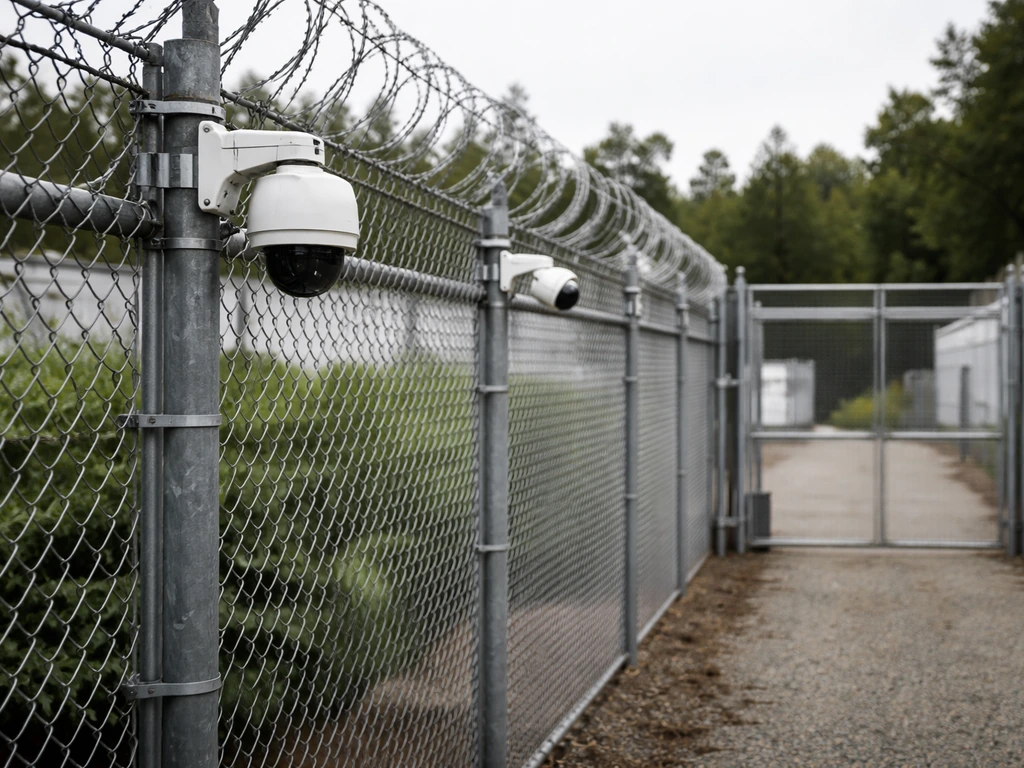
Security requirements
Standard cultivation licences require perimeter cameras capable of recording the presence of a person at all times. Your physical security measures need to be documented in your OSP and consistently implemented on site. Health Canada conducts inspections to assess compliance with the Cannabis Act and Regulations, and inspectors assess whether what's actually happening at your site matches your documented OSP and SOPs.
Monthly CTLS reporting
Every cultivation licence holder submits monthly reports through CTLS. These cover cultivation and production activity, inventory additions and reductions, and sales or distributions. Inventory is reported in kilograms for cannabis products, and by number for seeds and plants. The system enforces a strict variance control: if there's more than a 5% variance between your opening inventory for the current month and the prior month's closing inventory, CTLS blocks submission until the discrepancy is corrected. At large scale, this means your internal inventory tracking has to be tight and reconciled before you touch the submission.
Good Production Practices
GPP compliance is an ongoing obligation, not just an application requirement. Health Canada's GPP guidance document covers the required elements under the Cannabis Regulations, including sanitation, pest control, quality control systems, and documentation practices. At scale, these practices need to be systematically embedded into your operations, not managed informally.
Recalls and ongoing obligations
Licence holders are required to maintain a voluntary recall system, including conducting periodic recall simulations. If a recall is needed, you must report initial information to Health Canada before commencing the recall. This is easy to overlook during normal operations but becomes critical at scale when the volume of product in the market increases.
Costs, timelines, and where things go wrong
Health Canada doesn't publish a fixed fee schedule that scales linearly with facility size, but the real cost drivers at large scale are facility construction and security infrastructure, legal and consulting support to prepare the OSP and GPP report, security clearance processing time (which you can't control), and the operational readiness required before your first inspection. Many applicants underestimate the documentation burden, particularly the OSP. Health Canada has explicitly noted that OSP discrepancies and inconsistencies can delay processing of an application or change request, and this is consistently cited as the most common blocker for large facilities.
A realistic minimum timeline from starting your application preparation to receiving a standard cultivation licence is 12 to 18 months, and that's with a clean, complete submission. The 80 business days Health Canada targets for application review is after passing screening, and screening itself takes additional time. If your OSP or GPP report needs revisions, each round of back-and-forth adds weeks. Large operations with complex site plans and multiple principals requiring security clearances should plan for longer.
- OSP gaps or inconsistencies between your written plan and physical site setup
- Security clearance delays for key personnel
- Missing or incomplete written notice to local authorities before application submission
- Site plan that doesn't clearly define licensed growing areas in square metres
- Failure to account for the CRA excise licence as a separate parallel process
- Underestimating how long CTLS account setup and training takes before operations begin
If you're planning a large-scale grow and want to understand how facility scope, production capacity reporting, and Health Canada's broader licensing framework fit together, the topics covering legal grow ops in Canada, Health Canada grow licensing, and BC's medical grow licensing process all connect directly to what's covered here and are worth exploring alongside this guide. If you are specifically researching legal grow ops in Canada, you can use this as a blueprint for what large-scale operators must document, report, and secure throughout the licensing process.
FAQ
If “largest” is unclear, what is the best metric to compare Canadian grow operations fairly?
Use Health Canada’s licensing registry to confirm the operator and each licensed site, then compare scale using licensed indoor growing area from CTLS reporting (not press “capacity” numbers). Capacity disclosures in investor documents can reflect theoretical or planned throughput, while CTLS reflects what is actually licensed and reportable on a month-by-month basis.
Why do different sources name different operators as Canada’s largest grow?
“Largest” can change depending on whether you sort by licensed indoor area, outdoor area, or production capacity (kg per year) by cannabis class. If you compare apples to oranges, a site with higher indoor square metres can still rank lower on certain production-capacity categories, so decide the metric first before concluding who is largest.
How can I verify size when the federal registry does not list capacity numbers?
Health Canada’s registry confirms licensing, but it does not publish capacity figures directly. To estimate scale, pair the registry entry with public securities filings for publicly traded license holders, and treat any “estimated annual capacity” language as potentially different from the figures being reported through CTLS.
What should I watch for to avoid being misled by investor decks or press releases?
Some “largest” claims use funded capacity, planned expansions, or maximum theoretical output. A practical check is to look for language about “funded,” “expected,” or “target” capacity, then cross-check whether the facility’s indoor area is reflected in CTLS reporting as of the relevant months.
Does Ontario have its own cannabis cultivation licence for commercial grow operations?
No, Ontario does not issue a separate provincial cultivation licence that replaces the federal grow licence for commercial cannabis. You still apply to Health Canada for the cultivation authorization, and any Ontario steps are typically business licensing, zoning, or distribution and retail obligations that interact with but do not replace the federal licence.
Can I expand my licensed footprint right away if construction is finished?
If your goal is expansion after you already hold a licence, you cannot assume you can start using added outdoor area immediately. Outdoor grow area changes require Health Canada approval before use, and site plan changes have their own decision timelines, so plan buffer time into your project schedule.
What happens if our security plan documents well, but real-world implementation is inconsistent?
Inspections assess whether the site matches your documented OSP and SOPs. If your camera coverage or perimeter monitoring procedures are not implemented consistently on site, you risk findings even if your written documents look complete, so test operational readiness before inspection windows.
How can large operators avoid CTLS submission blocks related to inventory variances?
CTLS variance controls mean poor inventory reconciliation can stop submissions. A common failure mode at scale is having delays in intake, weight conversions, or transfer documentation that create inventory mismatches, so reconcile opening and closing inventories early each month and document adjustment reasons.
Do I really need recall simulations, and how should they be handled operationally?
Recall obligations include maintaining a voluntary recall system and running periodic recall simulations. The practical gap operators hit is treating recall planning as a once-a-year exercise, but at scale you need regular, scripted drills with clear internal triggers and reporting steps to Health Canada.
What is the most common documentation mistake that delays large facility applications?
Health Canada has noted OSP discrepancies and inconsistencies as frequent blockers. Before submitting, run an internal “consistency audit” to ensure the OSP, diagrams, access controls, camera coverage maps, and SOPs all use the same terminology, locations, and responsibilities without contradictions.
What timeline should I plan for when building the documents and preparing for clearances?
The 12 to 18 month range assumes clean, complete submissions and can extend further when security clearances and site planning are complex or when you need revisions to OSP or GPP. A good next step is to build a project plan that separates document drafting, site build-out, and clearance lead times rather than treating everything as one queue.
What cost drivers matter most for a large-scale standard cultivation licence?
Costs do not scale like a simple fee formula. Real drivers include construction and physical security infrastructure, the legal effort to prepare OSP and GPP materials, security clearance processing time you cannot control, and the operational readiness needed before the first inspection, so get costing quotes that reflect those components.
How do I know whether standard cultivation is the right licence class for my planned operation?
If you’re unsure whether you qualify for “large scale,” focus on the cultivation class boundaries and choose the class that aligns with your planned operation. For any operation that is realistically large scale, standard cultivation is typically the relevant class, but confirm with the Health Canada rules applicable to your cannabis class and activities.
Next Article
Medical Grow License BC: Step-by-Step Application Guide
BC medical grow license guide: eligibility, types, application steps, fees, timelines, plant limits, and compliance chec