Legal grow ops in Canada are cannabis cultivation operations that are explicitly authorized under the Cannabis Act and its accompanying regulations. That authorization comes in two very different forms depending on your situation: personal home cultivation (a limited right available to most Canadian adults) or a federally licensed commercial operation regulated by Health Canada. These are not the same thing, and the rules, requirements, and effort involved are miles apart. This guide walks through both, then focuses on the commercial licensing path in enough detail that you can actually take next steps.
Legal Grow Ops in Canada: Compliance Guide to Launch

Marcus Whitley
19 Apr 2026
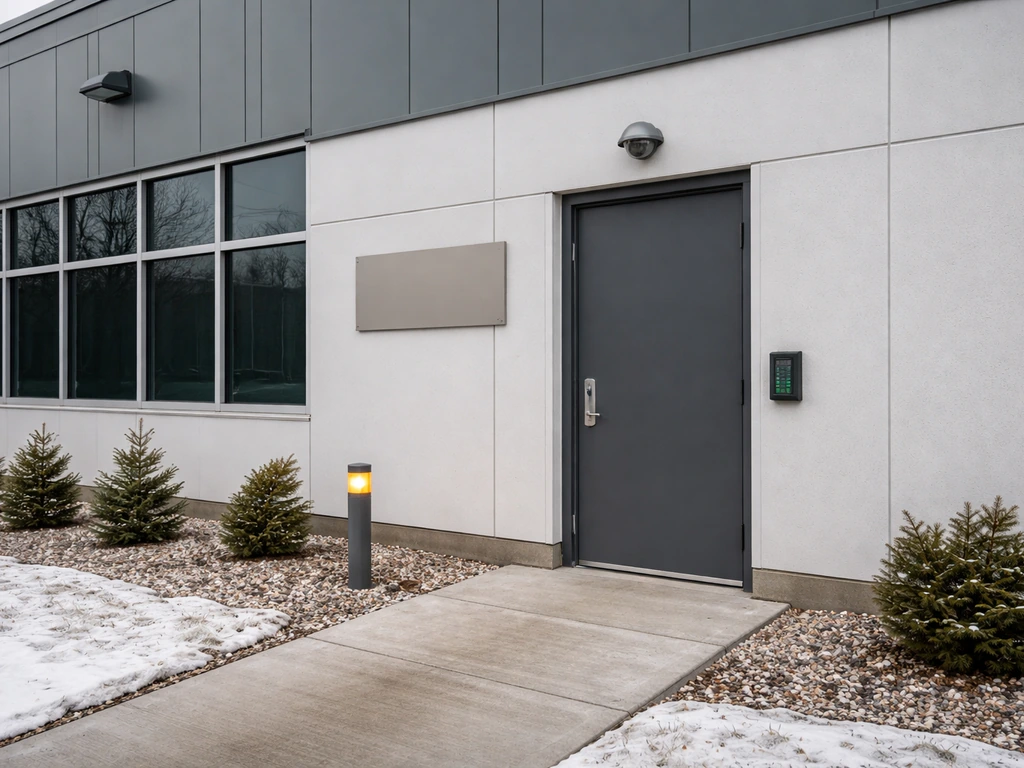
Home grows vs. licensed commercial operations: which one applies to you?
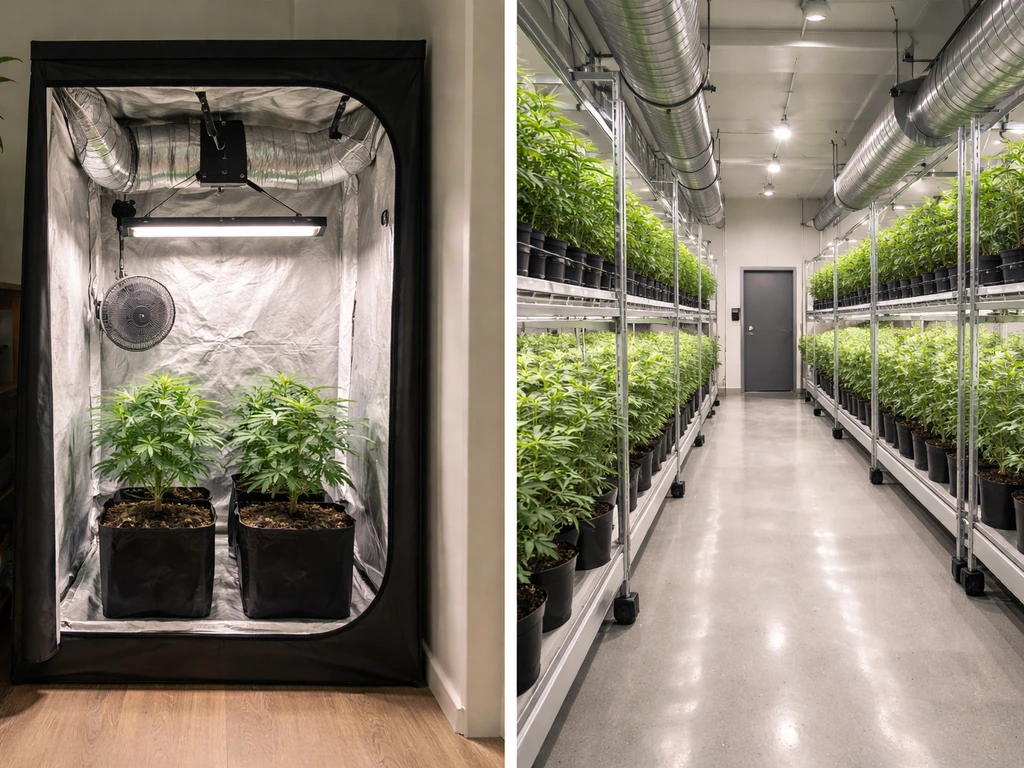
Under the Cannabis Act, most Canadian adults (19+ in most provinces, 18+ in Alberta and Quebec) can grow up to four cannabis plants per household for personal use. That is the only cultivation that is legal without a federal licence. There are no applications, no facility inspections, and no monthly reports. The four-plant rule is a household limit, not a per-person limit, and the plants must not be visible from a public place. Quebec and Manitoba have prohibited personal cultivation at the provincial level, so check your province's rules before planting anything.
Everything beyond personal home cultivation, including growing to sell, distribute, or produce for medical purposes, requires a federal licence issued by Health Canada. This is what most people mean when they search for "legal grow ops in Canada." These operations can range from small micro-cultivation sites to large standard cultivation facilities, and they come with a full stack of federal, provincial, and municipal compliance obligations. Canada's largest legal grow operations typically fall into the standard cultivation category due to their scale and compliance requirements large standard cultivation facilities. If you specifically need Ontario examples, use this list of legal grow-ops in Ontario to see what licensed operations look like in practice.
Who actually regulates cannabis cultivation in Canada
Cannabis cultivation in Canada sits under three layers of government, and you need to satisfy all three before you can legally operate. Missing any one layer is enough to get you shut down or denied a licence.
- Federal (Health Canada): Issues the actual cannabis licence under the Cannabis Act and Cannabis Regulations. Sets requirements for security, record-keeping, seed sourcing, plant tracking, physical facility standards, and monthly reporting through the Cannabis Tracking and Licensing System (CTLS). No Health Canada licence means no legal commercial grow, full stop.
- Provincial/Territorial: Sets labour, occupational health, electrical, and fire codes that apply to your facility. Some provinces, like British Columbia, also publish their own guidance for prospective licensed producers. Provincial authorities do not issue the cannabis licence itself, but their rules still apply to how you build and operate.
- Municipal: Controls land use through zoning bylaws and issues development and building permits. Cities like Calgary, Ottawa, and municipalities across B.C. and Manitoba all require separate municipal approvals before or alongside your federal licence application. If your site is not zoned for cannabis production, you may need a rezoning or development permit before Health Canada will even look at your application seriously.
Health Canada is explicit about this: licence holders are expected to comply with all relevant federal, provincial, and municipal laws and bylaws, including zoning, building permits, electrical and fire safety codes, and nuisance controls for odour, noise, and light. Provincial and municipal compliance is your responsibility to sort out before and during your federal application, not after.
Licence types: picking the right one before you apply

Health Canada issues several distinct licence types for cultivation. Choosing the right category upfront saves you from applying for something you do not qualify for or that does not match your planned operation.
| Licence Type | What It Covers | Key Size Note |
|---|---|---|
| Micro-cultivation | Growing cannabis plants for sale or distribution | Maximum 800 m² of canopy/grow surface area |
| Standard cultivation | Growing cannabis plants at larger commercial scale | No fixed upper size limit; more security requirements than micro |
| Nursery | Propagating cannabis plants (seeds, clones, mother plants) for sale to other licence holders | No canopy limit specified, but activities are restricted to propagation |
| Micro-processing | Processing cannabis into products at small scale | Often paired with micro-cultivation for vertically integrated small operations |
| Standard processing | Processing cannabis at commercial scale | Includes extraction, manufacturing of cannabis products |
For most people starting out, micro-cultivation is the logical entry point. Health Canada specifically notes that micro-cultivation, nursery, and micro-processing licences allow you to start with a modest-sized site and scale up to a standard licence later. The 800 m² canopy ceiling for micro-cultivation gives you real room to operate commercially while keeping your initial compliance burden lower than a standard cultivation licence. Any changes to grow area size after you are licensed require Health Canada approval, so factor your growth plan into your initial application.
Medical cultivation licences (used by licensed producers who supply the medical cannabis market) fall under the same federal framework. If you are exploring a medical-specific pathway, the medical grow licence process in British Columbia or a Health Canada grow licence for medical purposes involves the same CTLS application system and the same core compliance requirements, with some specific additional obligations around medical sales.
How to apply: the actual steps and what to expect
The application process runs through Health Canada's Cannabis Tracking and Licensing System (CTLS), an online portal where you submit your application, pay fees, and manage your licence once issued. Here is the sequence as it actually works in practice.
- Confirm your site is municipally compliant first. Before spending time on the federal application, verify that your proposed site is zoned for cannabis production (or that you have approval for a rezoning), and that you have or can obtain the required building and development permits. This step trips up more applicants than any other.
- Identify all key personnel who need security clearances. Any individual who will have unsupervised access to cannabis at your site, along with directors, officers, and other specified roles, must apply for a Health Canada security clearance. Security clearances involve RCMP background checks. Health Canada can refuse a clearance if it finds the applicant poses an unacceptable risk to public health or public safety. Start this early because clearance processing runs in parallel with the rest of your application.
- Prepare your site plan and physical security design. Your application must include a detailed site plan showing grow areas, access points, storage, and the location of visual monitoring (cameras) and intrusion detection devices. The level of detail required is higher for standard cultivation than for micro-cultivation. Make sure your grow surface area does not exceed the limit for your licence category.
- Draft your standard operating procedures and organizational security plan. You need documented procedures for cultivation activities, sanitation, plant tracking, waste disposal, and security. For standard cultivation licences, an organizational security plan is a specific requirement.
- Apply through CTLS, submit the screening fee, and submit security clearance applications. The licence application screening fee and security clearance fees are separate. Health Canada's non-binding service standard for screening new applications is 30 business days, but the overall timeline from application to licence issuance is typically much longer when you factor in security clearances, site inspections, and any deficiencies Health Canada asks you to address.
- Notify local authorities within 30 days of licence issuance. Once your licence is issued, you must provide written notice to your local government senior official, local fire authority, and the local police or RCMP detachment within 30 days. This is a legal requirement, not optional.
A practical note on timelines: do not plan your business launch around Health Canada's 30-business-day screening standard. For cultivation, processing, and sale (medical purposes) licences under the Cannabis Act and its Regulations, Health Canada’s screening service standard is 30 business days, with related review timing described on its service standards page Health Canada’s 30-business-day screening standard for medical purposes licence applications and amendments. That standard applies only to the screening step, not the full review, inspection, and issuance process. Building in a timeline of 12 months or more from application submission to licence in hand is realistic for most new applicants.
Facility and security requirements you need to get right
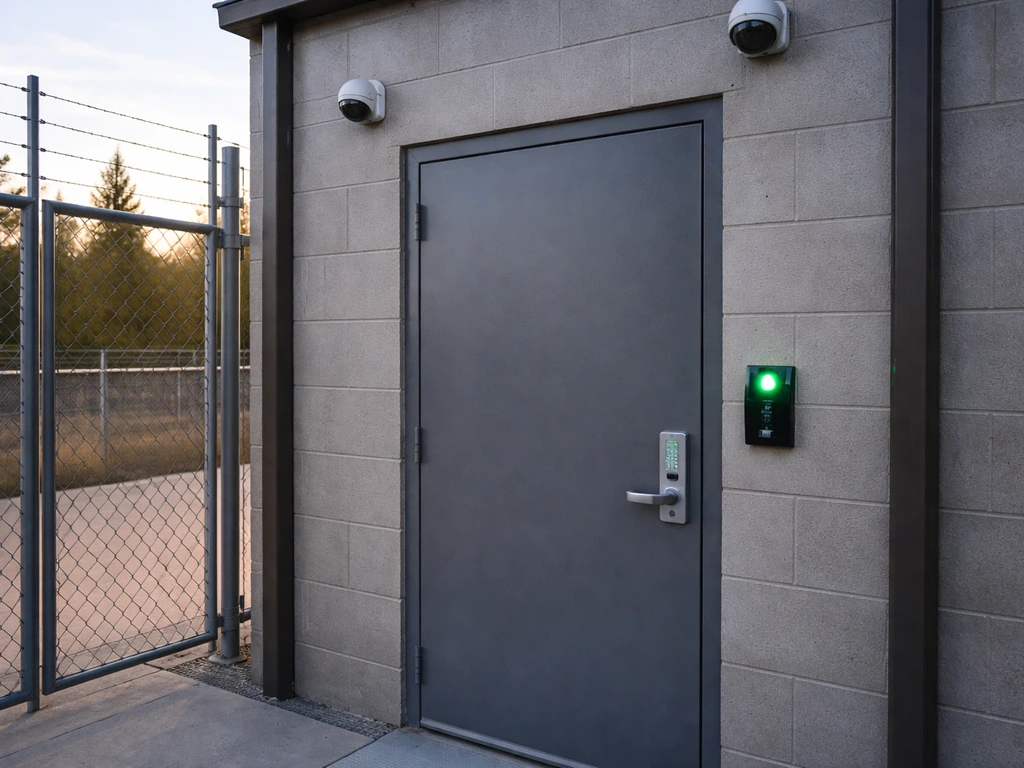
Physical security is one of the areas where applicants most often underestimate what is required. Health Canada prescribes specific security measures based on your licence type, and your site must reflect those measures from day one.
For standard cultivation licences, the requirements include a defined organizational security plan, visual monitoring (camera) coverage of key areas, and intrusion detection systems. Micro-cultivation licences have lighter but still meaningful security requirements. A 2025 regulatory amendment (published in the Canada Gazette, March 12, 2025) streamlined some requirements, notably removing the obligation to actively monitor and maintain intrusion detection and visual monitoring devices in operations areas when no activities are occurring and no cannabis is present. That is a practical relief for smaller operators, but the underlying security infrastructure still needs to be in place.
Beyond security, your facility must meet all applicable provincial and municipal building, electrical, and fire safety codes. Your municipality may require separate inspections and sign-offs. Odour, noise, and light nuisance controls are also an explicit Health Canada expectation, and many municipalities have bylaws that go even further. If your facility smells or makes noise that bothers neighbors, expect complaints that can escalate to compliance action.
Your grow areas must not exceed the canopy limits authorized by your licence category. Any addition of new grow areas requires prior Health Canada approval through a site plan change process. Do not expand first and ask later, because operating beyond your authorized grow surface area can result in enforcement action, including financial penalties or seizure of cannabis.
Plant management, sourcing, and record-keeping
How you source your starting material matters a lot. Cannabis seeds and plants (clones) used in a licensed grow operation must come from authorized sources, meaning other Health Canada licence holders. You cannot legally start your licensed grow with seeds purchased from a non-licensed source, even if those seeds are otherwise legal for personal use. Possessing more starting material than you have declared in your licence application, or conducting activities outside what your licence authorizes, can trigger enforcement action.
Record-keeping is not just a formality. Every plant, every lot of cannabis, every transfer, every destruction event needs to be tracked. Health Canada requires licence holders to submit monthly reports through the CTLS no later than the 15th day of each month. These reports cover cannabis inventory, production data, and other activity-specific information. CTLS system errors can block report submission, and late or replacement reports get flagged by Health Canada. Build a routine for pulling and submitting these reports well before the deadline every month.
Waste disposal also follows specific rules. Cannabis waste must be rendered unrecoverable before disposal, and the process must be documented. This is an area that comes up in inspections, so make sure your SOPs cover it explicitly.
Staying compliant after your licence is issued
Getting your licence is step one. Keeping it is the ongoing job. Health Canada conducts inspections as part of its compliance and enforcement mandate, and it collaborates with other federal partners including the Canada Revenue Agency and law enforcement. In the 2024-2025 fiscal year, Health Canada conducted 889 inspection activities and issued 37 non-compliant inspection reports with escalated compliance actions. Being inspected is normal; being found non-compliant has real consequences including warnings, financial penalties, licence suspension, or revocation.
Licence renewal is handled through CTLS. The renewal option becomes available in CTLS four months before your licence expiry date, and Health Canada requires your renewal application to be submitted at least three months before expiry. If you miss that window and Health Canada cannot process your renewal before the expiry date, your licence can lapse. Renewal requires updated physical security information, including the location of your visual monitoring and intrusion detection devices, so do not treat it as a rubber-stamp process.
Beyond renewals, any material change to your operation, such as adding grow areas, changing your site plan, or bringing on new key personnel who need security clearances, requires notifying Health Canada and in many cases getting prior approval. Under the Cannabis Regulations, licence holders must provide written notice to local authorities within 30 days after issuance, amendment, suspension, reinstatement, or revocation of the licence. Changes you make without authorization can put your licence at risk.
Your practical compliance checklist
Before you submit anything to Health Canada, work through this list. Each item represents a real failure point for new applicants.
- Confirm your proposed site is zoned for cannabis production or that a rezoning/development permit is in progress
- Check provincial and municipal building, electrical, fire, and nuisance bylaws for your specific location
- Identify all individuals who require Health Canada security clearances and start those applications early
- Choose the correct licence type (micro-cultivation, standard cultivation, nursery, or combined) based on your actual planned operation
- Prepare a detailed site plan with grow area dimensions that do not exceed your licence category's canopy limit
- Design and document your physical security setup: cameras, intrusion detection, access controls
- Draft standard operating procedures covering cultivation, sanitation, plant tracking, waste disposal, and security
- Confirm your intended starting material sources are authorized Health Canada licence holders
- Set up a CTLS account and understand the monthly reporting workflow before you start operations
- Plan your renewal submission for at least three months before your licence expiry date
One final note: this guide is meant to give you a clear map of how the system works and what you need to do, but it is not legal advice. Cannabis licensing regulations are detailed, jurisdiction-specific, and can change. The right move for any serious application is to read the current Health Canada guidance directly on their official site, check with your province and municipality before committing to a site, and consider getting professional help from a regulatory consultant or lawyer with cannabis licensing experience. The rules are workable, but the details matter.
FAQ
Can I run a legal grow ops in canada from my home as a federally licensed operation?
In many cases, no. Even if personal cultivation is allowed where you live, a federally licensed grow still has to meet your municipality’s zoning and building requirements, plus Health Canada facility and security expectations. If your property is zoned for commercial cultivation, you may still need permits and inspections, and some municipalities effectively restrict cultivation. Plan for a zoning check and pre-application conversations with your local permitting office before investing.
What happens if my plants or canopy temporarily exceed what my licence authorizes?
Exceeding canopy limits or operating outside your approved site plan can trigger enforcement, even if the overage is short and accidental. The key risk is that your actual grow surface and activity do not match your approved authorization. If you anticipate any temporary changes, apply for the required site plan change or authorization before the change, and keep documentation that shows your approved boundaries were followed.
Can I use clones or seeds from personal grow sources for a licensed commercial operation?
No. Starting material for a licensed grow must come from authorized sources, typically other Health Canada licence holders. Using seeds or clones from a non-licensed source can create a compliance issue because the issue is the authorization status of the supplier, not whether the material could be legal for personal use. Use a documented procurement chain aligned to your licence requirements.
Do I need provincial and municipal approvals before I submit to CTLS?
You need to sort out provincial and municipal compliance before and during the federal application, not after. Practically, many applicants avoid last-minute surprises by obtaining relevant permits, zoning confirmation, or written municipal guidance early. If you cannot show municipal readiness, it can delay or complicate your federal review because Health Canada expects your site to be compliant across layers of government.
How strict is the “plants must not be visible from a public place” rule for home cultivation?
It is enforced based on what members of the public can see from a public place, so visibility includes sightlines from streets, sidewalks, and adjacent properties. Practical mitigations include proper placement within the yard, screening or enclosure, and avoiding tall structures or positioning that creates visible openings. Visibility assessments can be subjective, so err on the side of more concealment.
When I apply for micro-cultivation, can I scale up later without reapplying?
You can potentially scale, but not by expanding your grow area without Health Canada approval. The article notes that changes to grow area size after you are licensed require authorization. In practice, scaling up usually involves a site plan change process, which can take time, so align your expansion milestones with the approval timeline.
Do security requirements apply immediately at day one, even before you plant?
Yes. Your site must reflect the security measures based on your licence type from the start, not after production begins. Even if certain monitoring obligations were streamlined by the 2025 amendment, the core idea remains that the security infrastructure must be in place and capable of meeting the regulatory expectations. Keep security system documentation and operational readiness evidence.
What do I need to do if CTLS is down and I miss the monthly report deadline?
CTLS errors can block submission, so don’t rely on waiting until the last minute. Build in buffer time, keep evidence of any system outage, and have an internal back-up workflow for retrieving required inventory and production inputs. If you cannot submit by the deadline, act immediately and document the reason, because late or replacement reports can be flagged.
Are monthly reports only for inventory, or do they include production and transfer details too?
They include more than just stock counts. Health Canada’s expectation is that reporting covers cannabis inventory plus activity-specific information such as production and transfers, depending on what your operation does. Set up your record-keeping so that each month’s reporting package is complete, including lot tracking, movement, and destruction events when they occur.
How should we document cannabis waste so it passes inspection?
You need to show that waste was rendered unrecoverable before disposal and that the process was documented. In practice, your SOP should include what waste qualifies, who performs the step, what method is used to render it unrecoverable, where it is stored prior to disposal, and how the disposal event is recorded. Inspectors typically look for consistency between what the facility did and what the records show.
Can I change key personnel without telling Health Canada?
No. Bringing on new key personnel who need security clearances is a material change, and it requires notifying Health Canada, often with prior approval depending on the change and your licence conditions. Treat key-person updates like operational changes, not administrative paperwork, and plan for lead time for security clearance.
Is being inspected random, or can minor issues trigger more scrutiny?
Inspections are part of compliance and enforcement, but problems can increase scrutiny. The article highlights that complaints, especially about odour, noise, and light, can escalate into compliance action. In practice, repeated minor non-compliances, inconsistent records, or unresolved municipal issues can lead to more intense follow-up, so correct issues quickly and document corrective actions.
What’s the most common renewal mistake that causes a licence to lapse?
Missing the renewal window in CTLS. Renewal availability is four months before expiry, and you must submit at least three months before the licence expires to avoid lapse. Also remember that renewal involves updated physical security information, so start gathering device location details and security documentation well ahead of submission.
Do material changes like adding grow rooms require prior approval every time?
Generally, yes. Adding grow areas, changing your site plan, and other material operational changes require notifying Health Canada and in many cases obtaining prior approval. If you make changes first and seek approval later, you may put your licence at risk because your operations would not match your authorized description and site plan.
Next Article
List of Legal Grow Ops in Ontario: Verify Licensed Facilities
Find Ontario’s licensed cannabis grow ops, verify facilities via official lists, confirm licensee and permissions, avoid