The short answer: as of April 2026, psilocybin grow kits are not legal for general consumer purchase and use in Colorado. You cannot legally buy a kit, grow Psilocybe cubensis at home, and consume or share the results outside of Colorado's tightly licensed system. There are real personal-use protections for adults 21 and older, but they come with hard limits. Here is exactly what those limits are, what "legal" actually means in this context, and how to figure out your safest path forward before you buy anything.
Psilocybin Grow Kits Legal in Colorado: Compliance Guide

Marcus Whitley
17 Apr 2026
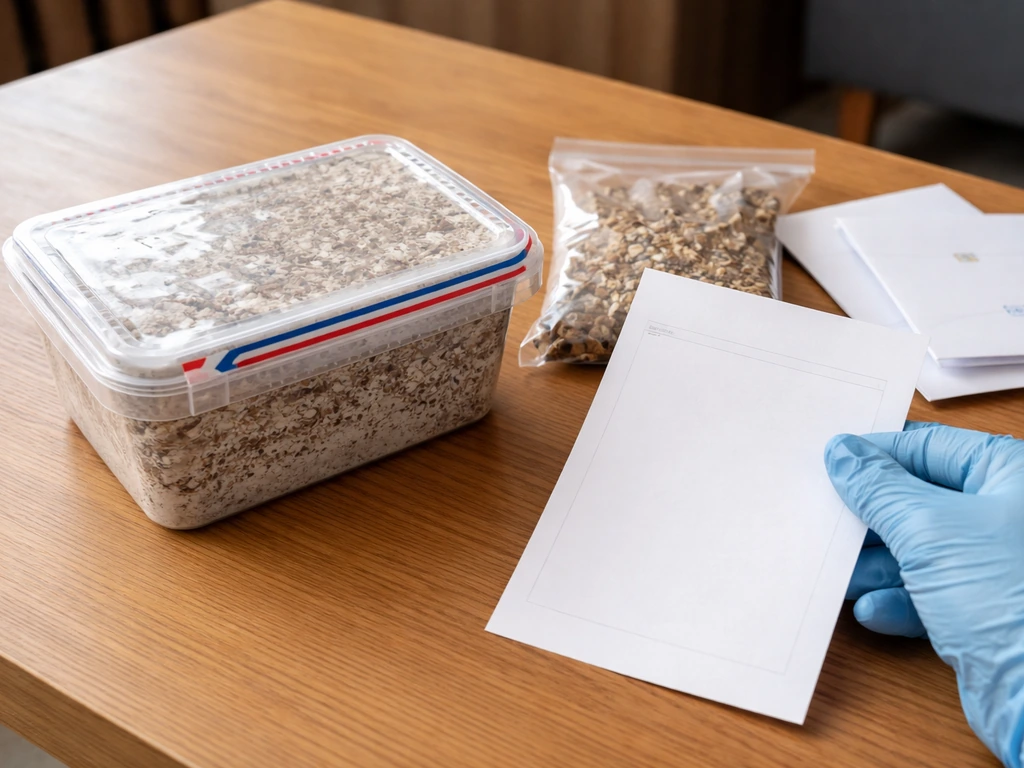
What "legal" really means for psilocybin grow kits in Colorado
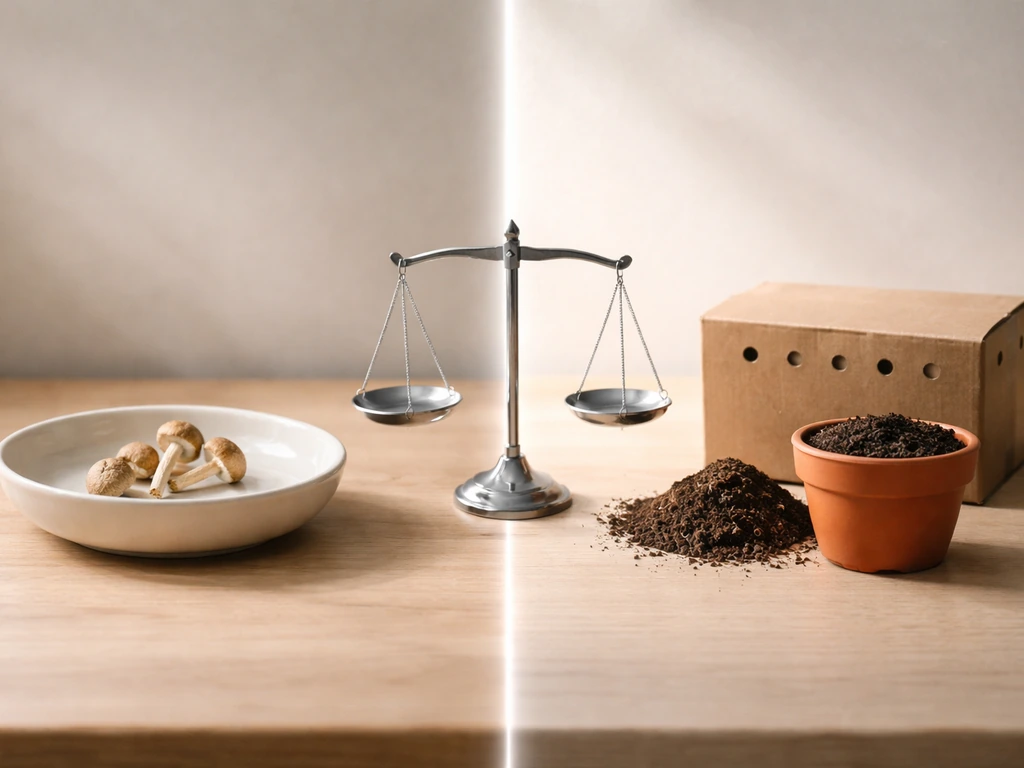
When people see headlines about Colorado "legalizing" psilocybin, they usually picture something like cannabis: licensed shops, home grows, and a clear consumer pathway. The reality for psilocybin is much narrower. Colorado's Proposition 122 (now codified largely under CRS § 18-18-434) created personal-use protections, not a free consumer market.
Under CRS § 18-18-434, an adult 21 or older can possess, consume, share, cultivate, or manufacture Natural Medicine for personal use without violating state law, provided no money changes hands. That word "remuneration" matters enormously. The same statute explicitly carves out anything done for business or commercial purposes, meaning the moment you grow to sell, distribute commercially, or even buy a kit from someone selling it as a cultivation product for psilocybin, you are in different legal territory.
So "legal" here means a narrow personal-use carve-out, not a consumer market. There is no licensed dispensary where you can walk in and buy a Psilocybe cubensis grow kit the way you would buy cannabis seeds. Selling psilocybin mushrooms or related products outside the licensed healing center framework is still a felony in Colorado.
Colorado's actual rules: cultivation, possession, and transfer
Colorado runs two parallel tracks for psilocybin: the personal-use track and the licensed commercial track. Understanding both is critical before you do anything.
The personal-use track
Adults 21 and older may cultivate psilocybin-containing fungi for personal use without remuneration. That means no payment received, no sale, no commercial distribution. Sharing without payment is technically allowed under the statute, but there are still restrictions around minors, public consumption, and any activity that looks like unlicensed manufacturing or sales. The Colorado Bar Association has noted that personal use generally cannot be the sole basis for detention or arrest, but offenses tied to minors or unlicensed sales remain fully criminal.
The licensed commercial track
Everything beyond personal use flows through Colorado's licensed system, overseen by the Colorado Department of Natural Medicine (working with DOR and DORA). A state license is required to operate a cultivation facility, manufacturing facility, or testing facility. Colorado's regulations under 1 CCR 213-1-5-5020 set detailed cultivation procedures, sanitation requirements, and recordkeeping obligations for licensed Natural Medicine Cultivation Facilities. Transfers between license categories must follow strict rules outlined in 1 CCR 213-1-5-5005. None of this is accessible to a casual consumer buying a grow kit online.
As of early 2026, the only consumer-facing access point in Colorado's licensed system is a state-licensed Healing Center, where a licensed Facilitator provides supervised Natural Medicine Services. Psilocybin is the only natural medicine currently available through these centers, with regulatory expansion still under review. You cannot take product home from a Healing Center; the entire model is supervised, on-site use.
Denver adds another layer: the city's Natural Medicine FAQ is explicit that it is against the law to buy or sell psilocybin mushrooms, psilocybin products, or any other type of natural medicine. The Colorado Department of Natural Medicine has issued cease-and-desist orders to businesses commercially selling psilocybin mushrooms, and dispensing natural medicine as part of any business promotion or commercial activity is a criminal offense.
Psilocybe cubensis vs. generic "psilocybe" kits: why the species label matters
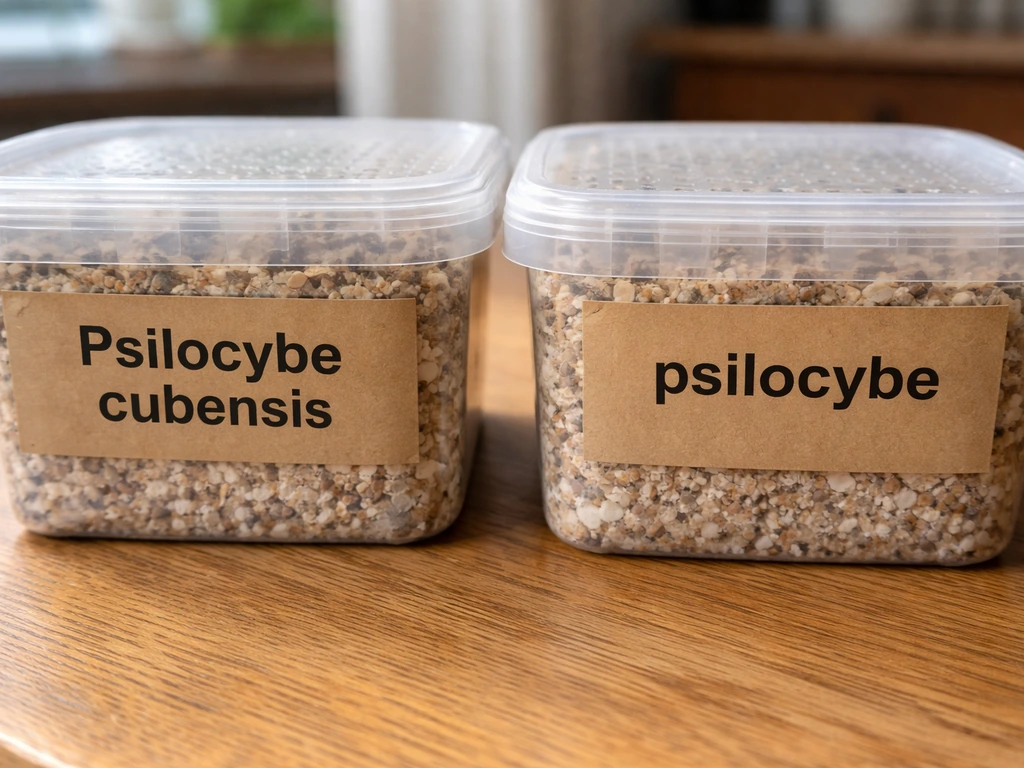
This distinction trips people up constantly. Colorado's Natural Medicine regulations specifically define "Fruiting Body(ies)" in relation to Psilocybe cubensis, the species most commonly sold in grow kits. That species-specific language in 1 CCR 213-1-1-1025 is not accidental; regulators are tracking the specific fungi that contain psilocybin and psilocin, both of which are federally scheduled under the Controlled Substances Act.
Some vendors market "gourmet mushroom grow kits" or sell spore syringes labeled for "microscopy use only," arguing that spores themselves do not contain psilocybin and therefore occupy a legal gray area. This is technically true in some states (spores are legal to buy in many places for research purposes), but the moment those spores are used to cultivate psilocybin-containing fungi, you have crossed into cultivation of a federally scheduled substance. In Colorado, the personal-use cultivation protection applies to the cultivation act, but it does not sanitize the federal-level risk or make purchasing a kit "legal" in any simple sense.
The practical takeaway: do not assume a kit labeled "Psilocybe" without specifying the species is safer or more legal than one labeled "Psilocybe cubensis." Any kit designed to grow psilocybin-producing fungi falls under the same regulatory reality. The species name on the label does not change what you are actually growing.
How the USA landscape compares, and how to check your own state
As of mid-2025, a GAO report identified Colorado and Oregon as the only two states that had passed laws broadly legalizing adult use of psilocybin while establishing regulated programs. But "broadly legalizing" does not mean a consumer grow-kit market exists in either place.
| State | Personal cultivation allowed? | Consumer grow kits legal? | Licensed access pathway |
|---|---|---|---|
| Colorado | Yes, for personal use (21+, no remuneration) | No clear legal consumer market | Licensed Healing Centers only |
| Oregon | No | No | Licensed service centers (Measure 109 / ORS 475A) |
| Most other US states | No | No | None (psilocybin remains a Schedule I controlled substance at state level) |
| Federal (all states) | No | No | Research/DEA schedule only |
Oregon's Measure 109 (ORS 475A) is worth comparing directly because it gets cited alongside Colorado often. Oregon's Department of Revenue is explicit: Measure 109 does not allow personal cultivation of psilocybin. The Oregon Health Authority licenses manufacturing, transportation, delivery, sale, and purchase of psilocybin products, but only within its regulated service framework. A grow kit purchased in Oregon with intent to cultivate psilocybin would not be protected under Measure 109.
For any state not listed above, psilocybin is almost certainly a Schedule I substance at the state level, with no cultivation protections whatsoever. A handful of cities (like Detroit and Seattle) have deprioritized enforcement, but "deprioritized" is not the same as legal, and it offers no protection against state or federal charges.
The fastest way to verify your state's current rules: go directly to your state's department of health or attorney general website and search for "psilocybin" or "natural medicine." Do not rely on news articles or vendor websites, which may be months or years out of date. For Colorado specifically, the Colorado Department of Natural Medicine (naturalmedicine.colorado.gov) is the primary regulatory source.
How to evaluate any grow kit offer safely

If you are looking at a grow kit being sold online or in a store, here is what to actually scrutinize before you hand over any money.
What legitimate kit sellers say
- They clearly state the kit is for gourmet or culinary mushroom species (oyster, shiitake, lion's mane, etc.) with no psilocybin-containing species in the product.
- Spore sellers restrict sales to states where spore possession is legal and label products strictly for microscopy or taxonomy research.
- They do not make explicit or implied claims that their product can or should be used to cultivate psilocybin for consumption.
- They disclose their business license or state registration if operating in a regulated state.
Red flags to walk away from
- Marketing language like "fully legal in Colorado" or "decriminalized = legal to grow" without citing the actual statute and its limits.
- Kits specifically labeled for Psilocybe cubensis or other psilocybin-containing species sold as consumer grow products.
- Vendors claiming that selling spores is legal everywhere, so the kit is legal everywhere. Spore legality varies by state and does not cover cultivation.
- No physical business address, no verifiable state license, or payment methods that avoid standard financial rails.
- Claims that a Colorado "personal use" protection covers purchasing a kit from a commercial seller. It does not. The protection covers the cultivation act itself, not the commercial transaction.
It is also worth knowing that Colorado's licensed testing facilities do not test personal-use natural medicine on licensed premises. There is no formal quality or safety verification pathway for anything grown outside the licensed commercial system, which adds a practical risk on top of the legal one.
Your compliance checklist before doing anything
If you are serious about staying on the right side of the law in Colorado (or anywhere), work through this list before making any purchase or starting any cultivation.
- Check the Colorado Department of Natural Medicine website directly for the most current rules. Regulations are still evolving as of 2026.
- Read CRS § 18-18-434 yourself. Specifically look at the definitions section for what "personal use" excludes. This is public law and readable without a legal degree.
- Confirm whether any commercial sale of a psilocybin grow kit to you would itself constitute an unlawful transaction under Colorado or federal law, regardless of what you intend to do with it.
- Do not conflate "decriminalized" with "legal to cultivate." Deprioritized enforcement is not a legal protection. If Colorado's personal-use statute does not cover your specific activity, you have no statutory shield.
- If your interest is in licensed commercial cultivation, understand that a state license is mandatory. Reviewing what a colorado grow license costs is a useful first step before exploring that path.
- If your interest is in the commercial cannabis side of things (where licensed home and commercial grows are more developed), the rules are completely separate. Guides on how to legally grow for dispensaries explain the cannabis licensing structure, which is a more mature regulatory system with clearer consumer and cultivator pathways.
- If you are specifically looking at the Colorado commercial cultivation framework for plants (not fungi), reviewing what is required to grow for a dispensary in Colorado can give you a sense of how Colorado structures licensed cultivation more broadly, even though the natural medicine rules are a separate regulatory track.
- Consult a licensed Colorado attorney if you have any specific situation, transaction, or business plan in mind. Nothing here is legal advice.
The bottom line: Colorado's psilocybin rules give adults more personal-use flexibility than most states, but they do not create a lawful consumer market for grow kits. The only clearly licensed pathway for psilocybin access is a state-licensed Healing Center. If you want to stay fully compliant today, that is where the legal pathway begins and ends.
FAQ
If I am 21 or older in Colorado, is it legal for me to buy a psilocybin grow kit online for personal use?
No. The personal-use protection is limited to the act of possessing, consuming, sharing, or cultivating Natural Medicine without remuneration, but it does not create a lawful consumer market for buying kits. Purchasing a kit from someone who is commercially offering psilocybin cultivation products puts you at higher legal risk, and there is no state-licensed retail pathway where these kits are authorized for general sale.
What does “no remuneration” mean in practice if friends split costs or I reimburse someone?
Remuneration generally means any payment or value given in exchange for the Natural Medicine or the activity related to it. Reimbursing someone for their time, spores, equipment, or grow materials can be argued as payment depending on facts, especially if there is a profit motive or a quid pro quo. If any money changes hands beyond ordinary, non-restricted costs unrelated to the cultivation outcome, expect greater legal exposure.
Can I legally grow for personal use but share the product with others without payment in Colorado?
Sharing without payment is described as technically allowed under the personal-use carve-out, but it is not an unlimited permission. Practical restrictions can still apply around minors, public consumption, and whether the conduct looks like unlicensed manufacturing or distribution. If you are unsure whether the sharing could be interpreted as organized distribution rather than casual, non-remunerated sharing, the risk increases.
Does growing mushrooms that are not labeled “Psilocybe cubensis” make it safer or more legal in Colorado?
Not in any straightforward way. Colorado’s regulations focus on psilocybin-containing fungi and define “Fruiting Body(ies)” in a way that is tied to the relevant fungi that produce the controlled compounds. If the kit is intended to produce a psilocybin-containing fruiting body, the legal reality tracks that outcome more than the wording on a vendor label.
Are psilocybin spores or “microscopy” spores legal to buy in Colorado?
They can be legal to sell and buy in some contexts, but that does not automatically make cultivation legal. If you purchase spores with the intent to cultivate psilocybin-containing fruiting bodies, you are likely shifting into cultivation of Natural Medicine that is protected only under Colorado’s personal-use carve-out (no remuneration) and still carries federal risk. Also, vendor labeling does not control legality of what you do with the spores.
What counts as “public consumption,” and could it make personal-use protections disappear?
If you consume in a public place, in a way visible to the public, or where minors could be present, regulators and enforcement authorities may treat it as a separate and more serious violation. Personal-use protections do not mean you can use anywhere. A conservative approach is to limit consumption to private, controlled settings with no minors present and no conduct that could be seen as openly facilitating use.
If I take a kit to a lab to test my mushrooms myself, is that allowed?
Colorado licensed testing facilities are not described as providing testing for personal-use material. Trying to route personal grows through a commercial testing channel is therefore not a reliable compliance plan, and handling or transporting controlled substances for testing can create additional legal issues. If testing is important to you, assume there is no formal quality or safety verification pathway for personal grows.
How strict is Colorado about “minor” involvement, and what if a minor is around but not directly involved?
Minor involvement can elevate enforcement risk even if the adult argues they did not provide the substance to a minor. Having minors present where cultivation occurs, where storage is accessible, or where use happens can create facts that look like facilitation or unsafe distribution. Treat any access by minors as a major compliance red flag.
Does the city of Denver have different rules than the state, and do Denver rules override state personal-use protections?
Denver’s guidance is explicit that buying or selling psilocybin mushrooms or products is against the law in the city. City enforcement guidance typically aligns with the state framework on commercial activity, and it can affect how strictly local authorities pursue related conduct. Even if state law provides a narrow personal-use carve-out, Denver rules increase risk around purchase and sale activities.
Could the federal Controlled Substances Act create legal risk even if Colorado’s personal-use carve-out applies?
Yes. Colorado’s personal-use provisions do not remove federal exposure. Because psilocybin and related compounds are federally scheduled, cultivation or possession may still create federal legal risk depending on circumstances. This is one reason the article emphasizes that “legal” in Colorado is narrow and not the same as being risk-free overall.
What is the safest next step if I want compliant access in Colorado?
Plan around the state-licensed Healing Center model with on-site, supervised services by a licensed Facilitator. If you want a clearly authorized pathway, avoid purchasing kits or products intended for home cultivation and instead use the regulated access route that is designed to operate within Colorado’s licensing system.
Next Article
Colorado Grow License Cost: Fees, Budgeting, and Timelines
Break down Colorado grow license costs, fees, renewals, and timelines, plus budgeting tips by commercial vs non-commerci