Yes, you can legally grow cannabis for dispensaries in the United States, but only if you hold the right state-issued cultivation license, meet your state's facility and security standards, use an approved seed-to-sale tracking system, and structure your supply relationship with dispensaries the way your state requires. There is no single national pathway. Every state with a legal cannabis market sets its own rules, and those rules differ significantly. What follows is a practical breakdown of how the whole process actually works, from picking the right license to staying compliant once you are up and running.
How to Legally Grow for Dispensaries: State Guide

Marcus Whitley
18 Apr 2026
Who can legally grow cannabis for dispensaries
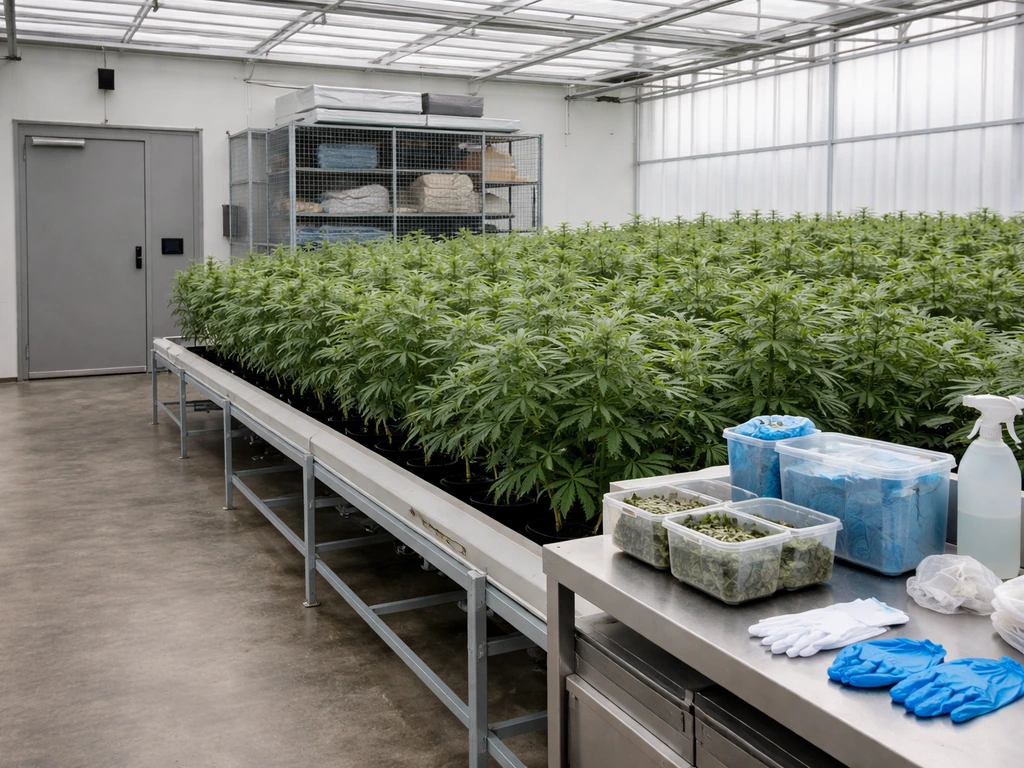
In every adult-use and medical cannabis state, only licensed cultivators can legally produce cannabis intended for commercial sale through dispensaries. You cannot simply grow cannabis and sell it to a dispensary because you have a good product. The cultivator license is what gives you the legal authority to produce, harvest, trim, and package cannabis for transfer into the regulated supply chain.
Most states treat cultivation as one of several distinct license categories, each tied to a specific business activity. A cultivation license does not automatically let you distribute, process, or retail. California, for example, licenses each activity separately under the Department of Cannabis Control: cultivation, distribution, retail, manufacturing, and testing are all distinct license types. If you want to grow and then transport your product to a dispensary, you need a distribution license on top of your cultivation license, or you need to work through a licensed distributor.
Some states allow vertical integration, where a single entity holds cultivation, processing, and retail licenses. New Jersey, for instance, allows configurations like an ATC (Alternative Treatment Center) that operates dispensaries and also cultivates. But even in vertically integrated models, each activity still requires its own authorization within that license structure.
As a practical matter, if you are not the dispensary owner yourself, you are a supplier. You grow the cannabis, and a dispensary purchases it from you. That relationship must go through the licensed supply chain, which typically means cultivation license, then distribution or transfer to a licensed distributor, then sale to a licensed retailer. Skipping any step in that chain is what creates compliance failures.
Choosing your pathway: license type, ownership, and contracts
Before you apply for anything, you need to map out which pathway fits your situation. There are three common scenarios for a grower who wants to supply dispensaries.
- You are an independent cultivator who will grow cannabis and sell it wholesale to dispensaries. You need a commercial cultivation license, and depending on your state, either a separate distribution license or access to a licensed distributor to move your product.
- You are part of a vertically integrated operation that grows and retails. You still need each applicable license (cultivation and retail at minimum), but you supply yourself internally rather than selling to a third party.
- You are a contract cultivator — growing on behalf of or in partnership with an existing license holder. Some states allow this; others restrict who can be listed as an owner or operator, which affects what kinds of contractual arrangements are legally permissible.
On ownership: most states require every person with a financial or ownership interest above a set threshold to be listed on the license application and pass a background check. In Michigan, for example, the prequalification step requires background checks of the main applicant and all supplemental applicants. A silent investor who owns 15% or more of your cultivation operation may need to be listed and approved before your license is granted. This matters if you are raising capital or forming a partnership, because adding an investor after the fact can trigger a change-of-ownership review.
On contracts: a purchase agreement between a cultivator and a dispensary is a normal part of doing business, but it does not replace licensing. The dispensary can commit to buying from you in writing, but until your cultivation license is active and your product has passed compliance testing, no legal transfer can happen. Draft your business agreements with this sequencing in mind.
How licensing requirements vary by state
State cannabis programs differ in structure, fees, eligibility rules, and application procedures. Here is a practical comparison of several major markets to show where the differences actually fall.
| State | Regulatory Body | Application Portal | Prequalification / Background Check | Municipal Authorization Required | Key Cultivation License Notes |
|---|---|---|---|---|---|
| California | Dept. of Cannabis Control (DCC) | Cultivation Licensing System (CLS) | Yes — each owner submits an Owner Application for fingerprinting | Yes — local authorization from city or county is required before state license | Cultivation and distribution are separate licenses; distributor required for transport to dispensary |
| Colorado | Marijuana Enforcement Division (MED) | MED licensing portal | Yes | Yes — local jurisdiction approval required | METRC mandatory for all licensed businesses; cultivators must have active METRC account before operating |
| Illinois | IDOA / IDFPR | NLS (licensing portal) | Yes — background checks as part of prequalification | Yes | Adult-use licenses opened in application windows; METRC (Seed-to-Sale Solution) required |
| Michigan | Cannabis Regulatory Agency (CRA) | CRA online portal | Yes — Step 1 prequalification with $3,000 non-refundable fee | Yes — municipality must have adopted an ordinance authorizing the facility type | Two-step process: prequalification then facility license; municipal ordinance is a hard gate |
| Massachusetts | Office of Cannabis Management (OCM) | OCM portal | Yes | Yes — host community agreement with municipality required | METRC mandatory; tagged plants must remain under the same license throughout their lifecycle |
| Nevada | Cannabis Compliance Board (CCB) | CCB online portal | Yes | Yes | METRC required; licensed distributor involved in delivery to dispensary |
| Oregon | Oregon Liquor and Cannabis Commission (OLCC) | OLCC licensing system | Yes — worker permits required for employees in supply roles | Yes — local land use compatibility required | Testing must be entered into METRC via an OLCC-licensed lab before any transfer is valid |
The common thread across all of these states: you need local approval before you can get a state license, background checks on all owners are standard, and seed-to-sale tracking through a state-approved system (almost universally METRC) is mandatory. The differences are mostly in how many steps the state breaks the process into and what the fees look like.
If you are focused on Colorado specifically, the licensing cost structure there has its own breakdown worth reviewing in detail, as the state uses tiered fees based on license type and canopy size. Colorado's approach to grow licensing costs is covered separately for readers who want that level of detail. If you are also researching psilocybin grow kits legal colorado, note that Colorado's cannabis licensing and compliance framework can be a helpful comparison point for understanding how state rules, permits, and tracking obligations may differ across regulated products. Colorado grow licensing costs can vary by license type and canopy size, so budgeting early helps you avoid delays.
Facility requirements, plant counts, security, and compliance
Canopy and plant limits
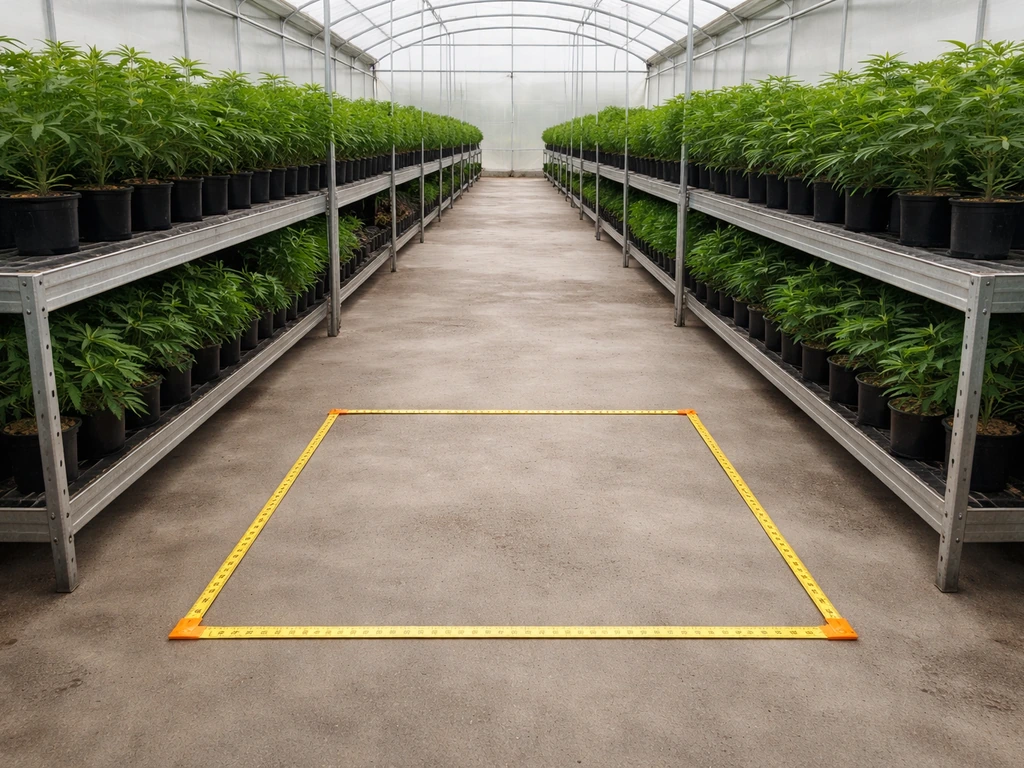
Most states define cultivation license tiers based on canopy size (the total square footage of plants in active growth) rather than raw plant count. California has multiple cultivation license types ranging from specialty cottage (2,500 sq ft or less indoor) up to large cultivator, each with its own fee tier. Colorado similarly structures licenses by canopy size. Your license tier determines not just your fees but also your plant limits and sometimes your facility footprint requirements. Choosing a tier too small means you cannot grow enough to make the operation viable; choosing one too large means you pay higher fees without filling the space.
Facility and zoning
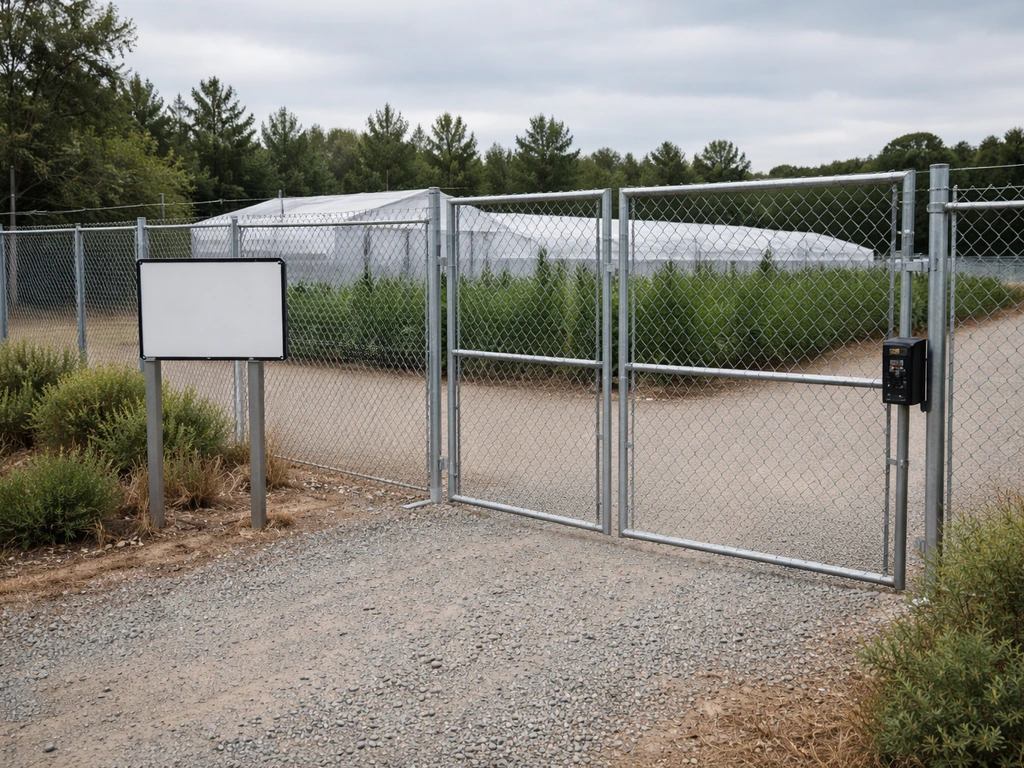
Your grow facility must be located in a zone that permits cannabis cultivation under local land use rules. This is a real obstacle that kills applications early. Before you sign a lease or buy property, confirm that the parcel's zoning classification is compatible with cannabis cultivation in your municipality. In Oregon, for example, OLCC requires a land use compatibility statement before licensing proceeds. In Michigan, the municipality must have adopted an ordinance specifically authorizing your type of cannabis establishment before the state can issue you a license. Do not assume agricultural or industrial zoning automatically covers cannabis; many do not.
Security requirements
Every commercial cannabis cultivation facility must meet minimum security standards. These typically include perimeter fencing or controlled access, camera systems covering all entry/exit points and canopy areas with footage retained for a minimum period (commonly 30 to 90 days depending on state), alarm systems, and restricted access zones where only licensed employees and authorized visitors can enter. Some states also require a security plan submitted with your application describing how you will meet these requirements.
Environmental and operational controls
Indoor and mixed-light cultivators typically must demonstrate control over temperature, humidity, lighting, and ventilation. Some states are beginning to layer in energy reporting requirements or environmental compliance documentation. California's DCC has pushed environmental considerations as part of its licensing criteria. If your state has these requirements, they will be part of your facility plan review during the application process.
Seed-to-sale tracking: how cannabis actually moves from your farm to a dispensary
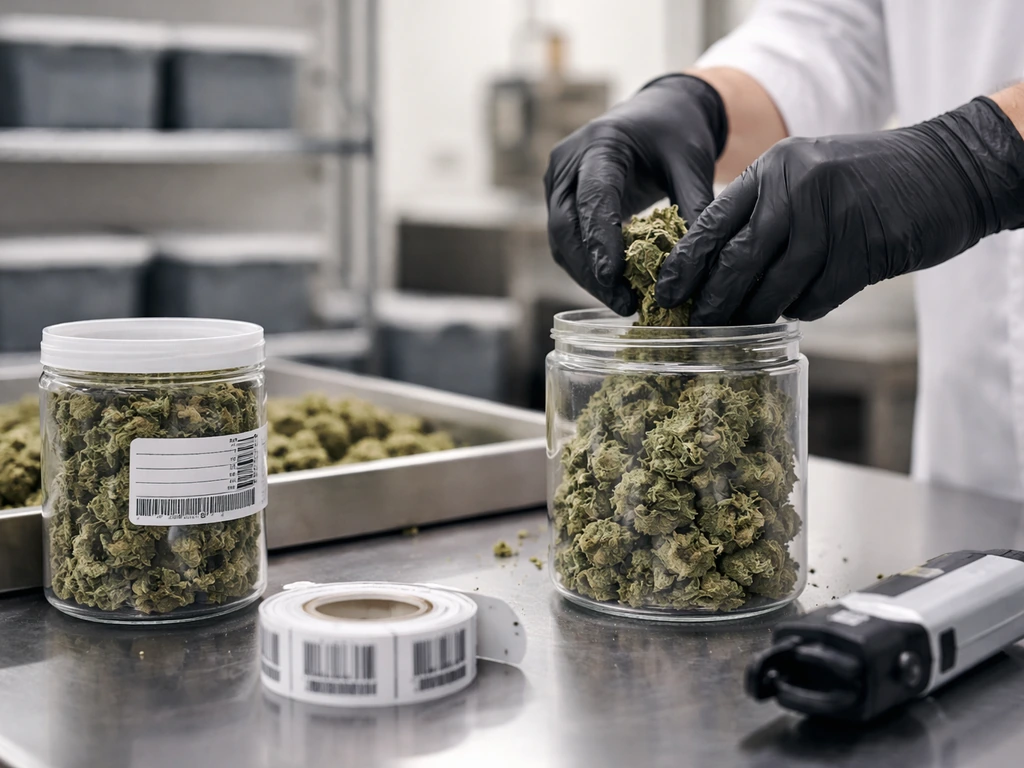
METRC (Marijuana Enforcement Tracking Reporting Compliance) is the dominant seed-to-sale tracking platform in US cannabis markets. Colorado, California, Massachusetts, Nevada, Illinois, Oregon, and Michigan all use METRC or a METRC-based system as their required tracking solution. If you are cultivating for the commercial market, you will be using METRC.
Here is what the tracking workflow actually looks like from cultivation to dispensary sale.
- Plant tagging: Every plant at a certain growth stage (usually when it enters the vegetative stage) gets a physical METRC tag. Massachusetts is explicit that once a plant is tagged under a license, it stays under that license. You cannot re-tag or move a plant to a different license without a formal transfer process.
- Harvest logging: When you harvest, you record the harvest batch in METRC, including wet weight and the source plants. This is how regulators track yield against your licensed canopy.
- Package creation: After drying and trimming, you create packages in METRC — each package gets a tag and is associated with the harvest batch. This is the unit that will eventually transfer to a distributor or retailer.
- Testing: Before transfer, packages must be submitted to a licensed testing laboratory. In Oregon, testing must be entered into METRC by an OLCC-licensed lab; testing done outside that workflow does not satisfy the requirement, regardless of the actual test results. Testing typically covers potency, pesticides, water activity, residual solvents (for concentrates), and microbiological contamination.
- Manifests and transfers: When your tested, compliant product is ready to move, you generate a transfer manifest in METRC that lists every package, its weight, destination license, and route. In California, this transfer must go through a licensed distributor. In Nevada, a licensed distributor is also involved in the delivery step. The receiving party confirms receipt in METRC, and the transfer is closed.
- Dispensary receipt: The dispensary receives the manifest, reconciles the physical product against the METRC record, and accepts the packages into their inventory. From that point, the product is under the dispensary's license until it is sold to a consumer.
Common tracking failures that lead to compliance violations include: untagged plants discovered during an inspection, weight discrepancies between what was harvested and what was packaged, transfers initiated before testing is complete, and manifests that do not match the physical product. Any of these can trigger an investigation, a hold on your license, or worse.
Colorado is explicit on one point worth highlighting: a business without an activated and functional METRC account cannot operate or exercise the privileges of their license at all. Get your METRC account set up and functional before your first plant goes in the ground.
Application timeline, costs, and what to prepare
Typical timeline
Expect the licensing process to take anywhere from three months on the fast end (in a well-organized state with a clear application window) to over a year in states with high application volumes, competitive scoring processes, or local approval bottlenecks. Illinois adult-use licenses are issued during application windows managed through the NLS portal, meaning you can only apply when the state opens a round. Michigan's two-step process (prequalification first, then facility license) adds time because you cannot proceed to step two until step one is approved. Michigan’s CRA explains this as a two-step application approach, with prequalification first and then a facility or later licensing step after a location is established Michigan's two-step process (prequalification first, then facility license).
Fee ranges
Application and license fees vary widely by state and license tier. Michigan charges a non-refundable $3,000 prequalification application fee before you even get to the facility license stage. State license fees for cultivation typically range from a few hundred dollars for small-tier licenses in some states to tens of thousands of dollars annually for large canopy licenses. Colorado grow license cost details are influenced heavily by canopy size and license tier, so you can use that same framework to estimate your likely fee range before you apply Colorado grow licensing costs. Annual renewal fees are usually separate from initial application fees. Local permit fees add to this total. Budget for all layers: state application, state license, local permit, and any zoning or land use review fees.
What your application package typically needs to include
- Business entity formation documents (articles of incorporation, operating agreement, ownership structure)
- Owner information and background check consent for every qualifying owner or financial interest holder
- Local authorization documentation: zoning approval, conditional use permit, or municipal license depending on your jurisdiction
- Proof of premises: executed lease or deed, premises diagram with dimensions and security layout
- Security plan: camera placement, access control, alarm system details
- Cultivation plan: canopy size, grow method (indoor/outdoor/mixed-light), plant counts, pesticide use protocols
- Business operating procedures: how you will handle waste disposal, inventory tracking, employee training
- Financial documentation: proof of capitalization or funding sufficient to operate (amount varies by state)
- METRC account registration (some states require this before application; others before license activation)
In California, every owner must individually create an account in the Cultivation Licensing System (CLS) and submit an Owner Application that includes fingerprinting. The main business application also requires you to identify the local authority that issued your local authorization and the type of local approval you received. This owner-by-owner submission is a step many applicants underestimate in terms of how long it takes to coordinate across a multi-owner group.
Staying compliant after you open: audits, reporting, renewals, and enforcement risks
Ongoing reporting
Once you are licensed, your compliance obligations do not stop. You are reporting continuously through METRC every time you tag a plant, create a harvest batch, package product, or initiate a transfer. Regulators in every METRC state can pull your inventory records at any time. Gaps, discrepancies, or patterns that suggest diversion will trigger follow-up.
Beyond METRC, many states require periodic financial reporting, waste disposal logs, pesticide application records, and employee training documentation. Oregon requires worker permits for employees performing duties in licensed supply roles including cultivation. Keep those records current and accessible.
Inspections and audits
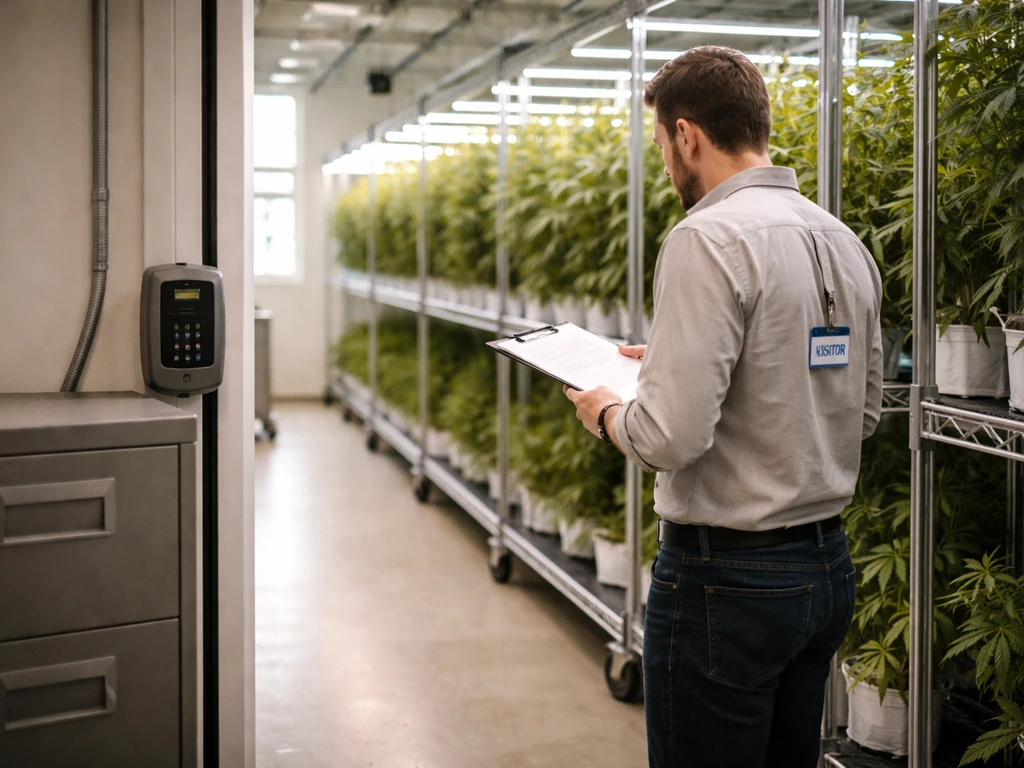
Expect unannounced inspections from your state regulator, especially in the first year. Inspectors will verify that your physical plant count matches your METRC records, that your security systems are operational, that all employees on-site are permitted, and that your facility matches the premises diagram you submitted. The most common violations found during inspections are inventory discrepancies, inadequate security camera coverage, and unlocked restricted access areas. Walk your own facility monthly against your application documents to catch these before an inspector does.
License renewals
Most state cultivation licenses renew annually. Renewal typically requires a fee payment, confirmation that your premises and ownership have not changed (or filing updated documentation if they have), and a clean compliance record. Some states will flag your renewal if you have open violations or unpaid fines. Put your renewal date on a calendar with a 90-day lead time to give yourself room to gather documents and address any outstanding issues.
Enforcement risks that can end your license
The most serious enforcement outcomes are license suspension and revocation. These typically result from: selling cannabis outside the licensed supply chain (diversion), falsifying METRC records, operating with an expired or inactive license, employing unlicensed individuals in roles that require licensure, failing an inspection after a prior warning, or having an ownership change that was not disclosed and approved. A license revocation in most states also disqualifies the involved owners from applying for new licenses for a set period, sometimes permanently.
California's distribution framework is a good illustration of how seriously states take supply chain integrity. The DCC's distributor regulations require chain of custody documentation, specific handling of test batches that fail compliance, and documentation at every step. A cultivator who tries to transfer product without going through a licensed distributor (in California's model) is not just violating a technicality; they are exposing themselves to criminal and civil enforcement.
Your practical next steps
Getting from "I want to grow for dispensaries" to "I am a licensed, operating cultivator" requires working through a specific sequence of steps. Use this checklist to confirm where you stand and what still needs to happen.
- Confirm your state has a legal commercial cannabis market and that cultivation licenses for supply to dispensaries are available and currently open for application.
- Identify the correct license type for your situation: standalone cultivator, cultivator-plus-distributor, or vertically integrated. Check whether your state requires a separate distribution license to transfer to a dispensary.
- Research your local jurisdiction: confirm that cannabis cultivation is permitted by local zoning, that the municipality has the necessary ordinance in place (critical in Michigan and others), and identify what local approval you need before you can apply at the state level.
- Identify all ownership stakeholders who will need to be disclosed and background checked. Coordinate their documentation early — this is frequently what delays applications.
- Secure or identify your premises. Verify zoning, get an executed lease or purchase agreement, and prepare a premises diagram with security layout.
- Draft your security plan, cultivation plan, and standard operating procedures to the level of detail your state application requires.
- Register for METRC (or your state's designated tracking system) as early as the state allows. Some states let you register before your license is issued so you are ready to activate immediately.
- Calculate your total startup budget: state fees, local fees, security infrastructure, tracking system costs, legal/compliance review, and working capital through your first harvest.
- Submit your local authorization application first, get that approval in hand, then proceed to the state application.
- After license issuance, complete any pre-operational inspections your state requires before you can start growing or transferring product.
This article provides regulatory and procedural information only, not legal or business advice. Requirements change, and what is accurate today may shift if your state updates its regulations. Always verify current rules directly with your state cannabis regulatory agency and consult a cannabis compliance attorney if you are navigating complex ownership structures or have prior legal history that could affect eligibility.
FAQ
Can I sign an agreement with a dispensary before my cultivation license is approved?
Yes, in most states you can market and contract before your license is active, but you generally cannot take delivery, transfer packaged product, or accept payments tied to actual licensed inventory before authorization and initial compliance steps are complete. Use contract language that conditions performance on license activation, successful METRC onboarding, and passing required testing.
How do states treat silent investors or LLC members when I’m trying to legally grow for dispensaries?
If you hold any ownership stake that meets your state’s threshold, you usually cannot avoid the application and background-check process by using a shell entity or passing through “silent” investors. Many programs treat both direct and indirect interests as “interest holders,” and they can trigger a change-of-ownership review if investors are added after submission.
Do I always need a distribution license if I want to supply a dispensary with my own crop?
Not always. Even when the cultivator is licensed, the material may still need to move through specific transfer mechanisms that match your state’s distribution rules (for example, licensed distributor involvement, or state-authorized transfers depending on your license structure). Confirm whether your license includes authority to transfer to retailers, or whether you must route transfers through the state’s required intermediary.
What happens if my METRC account is set up late or not fully functional when I’m ready to start?
METRC account status can determine whether you can operate at all. If your account is not activated and functional, some states prohibit you from starting cultivation activities under your license privileges, even if you are otherwise approved. Align your METRC setup timeline with your facility readiness so you are not stuck waiting after construction is complete.
Why do licensing timelines often take longer than expected, and what costs are easy to miss?
Start by budgeting for the full local permitting stack, not just state fees. Some jurisdictions require zoning approvals, conditional use permits, fire inspections, and local authority sign-offs that can take longer than the state process. Treat local approvals as a gating item, and avoid signing long leases until zoning and use approvals are likely.
Can I use existing contractors or staff to help me launch if they are not state-permitted employees?
They usually cannot. Employment of people in roles that require state licensure (for example, certain on-site responsibilities tied to cultivation operations) often triggers enforcement if workers are not properly permitted. Build a process for verifying employee authorization before scheduling them for cultivation floor duties.
What security details do inspectors typically check first at cultivation facilities?
Commonly, you need to ensure your security footage retention, camera placement, access control, and alarm monitoring meet exact requirements, and that restricted areas are physically controlled. Inspectors often focus on practical compliance, such as whether doors to restricted zones stay locked and whether cameras actually cover entry points and canopy areas.
How can I reduce METRC compliance errors like untagged plants or weight discrepancies?
No. Seed-to-sale systems typically require tagging and inventory reconciliation in specific sequences, and inspectors look for untagged plants, mismatched weights, and transfer records that do not line up with what is physically present. Build a reconciliation routine that compares what METRC says exists to what you can physically account for during audits.
If the dispensary buys my harvest, can I ship it before it passes testing?
A purchase commitment usually helps your planning, but it does not replace testing, product release requirements, and system-recorded transfers. Even if the dispensary wants to buy, you generally cannot legally transfer inventory before required testing is complete and your records show the product is eligible for sale within the regulated flow.
What should I do 60 to 90 days before renewal to avoid renewal problems?
Renewal can be denied or delayed if you have unresolved violations, unpaid fines, or documentation gaps. Put your renewal prep on a schedule (for example, 90 days before) and do an internal compliance audit that includes inventory reconciliation, security operational checks, and employee permit verification.
What kinds of ownership changes can jeopardize my cultivation license?
Ownership changes can trigger enforcement even if you did not sell cannabis “outside the chain.” Many states treat unapproved ownership transfers as a compliance failure that can lead to license action, including suspension or revocation, depending on severity and timing. Use a documented plan for any equity change, and confirm in advance whether filings or approvals are required.
Do indoor, mixed-light, and greenhouse grows have the same compliance requirements for recordkeeping?
Growers often assume “cannabis” rules are uniform across crops and products, but some states define different compliance obligations based on product type, and some require additional documentation for environmental controls or waste handling. Before scaling, confirm whether your state has extra logs, reporting categories, or operational constraints for your specific cultivation method and outputs.
Next Article
Psilocybin Grow Kits Legal in Colorado: Compliance Guide
Colorado compliance guide for psilocybin grow kits: legality, Psilocybe vs Psilocybe cubensis, and buy-safe checklists.