Getting a cannabis cultivation license in Louisiana is not a simple matter of filling out a form and paying a fee. The state caps commercial medical marijuana cultivation at just two licensed producers, selected through a competitive bid process. There is no adult-use home-grow license available today, and no open-enrollment window where anyone can apply. If you want to grow cannabis legally in Louisiana right now, you need to understand exactly which narrow pathway exists, what it costs, and what the state actually requires before you invest time or money in an application.
How to Get a Grow License in Louisiana: Step by Step

Marcus Whitley
7 May 2026

Choose the right Louisiana grow license type
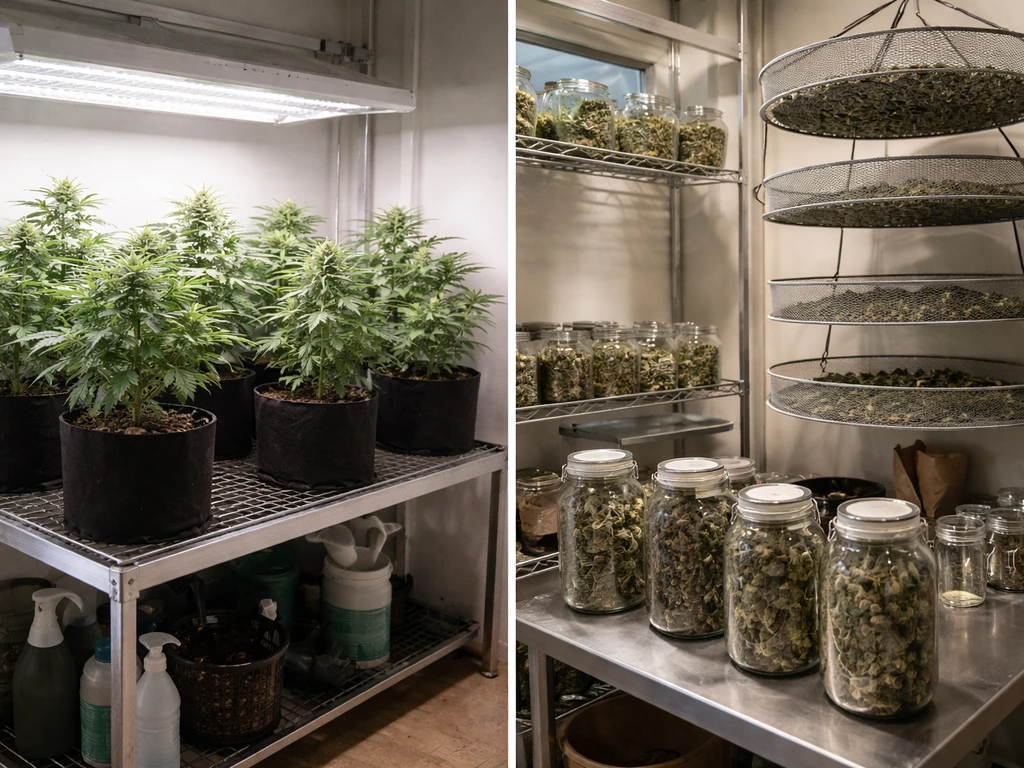
Louisiana's legal cannabis market is medical-only as of May 2026. Proposed adult-use legislation has moved through committee stages but has not been enacted into law, so there is no recreational grow license to pursue yet. On the medical side, the Louisiana Department of Health (LDH) Cannabis Program is the sole regulatory authority, having taken over from the prior framework in August 2022.
The Louisiana Department of Health states that, as of August 1, 2022, it assumed regulatory authority over Louisiana’s medical (therapeutic) marijuana program under Act 491 and Act 492 of the 2022 Regular Legislature LDH assumed regulatory authority over Louisiana’s medical marijuana program in August 2022.
LDH issues what the state calls a production facility license (sometimes referred to as a permit in the administrative code) to entities that cultivate, extract, process, produce, transport, and distribute therapeutic marijuana.
There are effectively two license tracks worth knowing about. The first is the full production facility license, which covers cultivation through distribution and is the main commercial pathway. The second is a contractor/specialty permit for businesses that contract with a licensed producer to perform specific functions, such as providing cultivation labor or processing services. Both are governed by Louisiana Revised Statutes Title 40 and the Louisiana Administrative Code Title 51, Part XXIX.
One thing to know right away: a proposed personal cultivation permit concept did appear in Louisiana legislative history (House Bill HLS 22RS-503), which would have created an annual personal cultivation permit for qualifying medical patients. That bill did not become law. As of today, there is no licensed pathway for individuals to grow cannabis at home in Louisiana, medical card or not.
| License Type | Who It Covers | Governing Authority | Current Status |
|---|---|---|---|
| Production Facility License | Commercial cultivators, processors, distributors | LDH Cannabis Program | Active, capped at 2 statewide |
| Contractor/Specialty Permit | Businesses contracting with a licensed producer | LDH Cannabis Program | Active, requires producer relationship |
| Personal Cultivation Permit | Individual medical patients (proposed) | LDH / Legislature | Not enacted, unavailable |
| Adult-Use Cultivation License | Recreational growers (proposed) | Legislature / TBD | Not enacted, unavailable |
If you are pursuing the commercial production facility license, read every section below. If you are a business looking to work as a contractor for one of Louisiana's two licensed producers, the contractor permit track is relevant to you, and the background check and operational requirements still apply, though the application is tied to your relationship with the primary licensee.
Eligibility and prerequisites before you apply
Before spending a dollar on the application, you need to honestly assess whether your organization can clear Louisiana's eligibility bar. The state's requirements are substantial, and the competitive bid process means LDH is not just checking boxes but evaluating which applicant is best qualified.
Basic entity requirements
- You must be applying as a legal business entity, not an individual sole proprietor.
- In-state firms must be able to allow LDH to physically inspect the proposed facility before a permit-to-operate is issued.
- Out-of-state firms must provide documentation proving they are regulated by an equivalent licensing authority in their home jurisdiction, plus a written attestation about the character of majority owners and an acknowledgment that Louisiana's regulatory authority applies to them.
- All majority owners and certain key employees must clear a criminal history background check under Louisiana Revised Statutes § 40:1047. Disqualifying offenses are defined in statute.
- You must demonstrate financial capacity to build, secure, and operate a compliant facility, since the license fee alone is $100,000 per year.
The two-license cap and competitive bid process
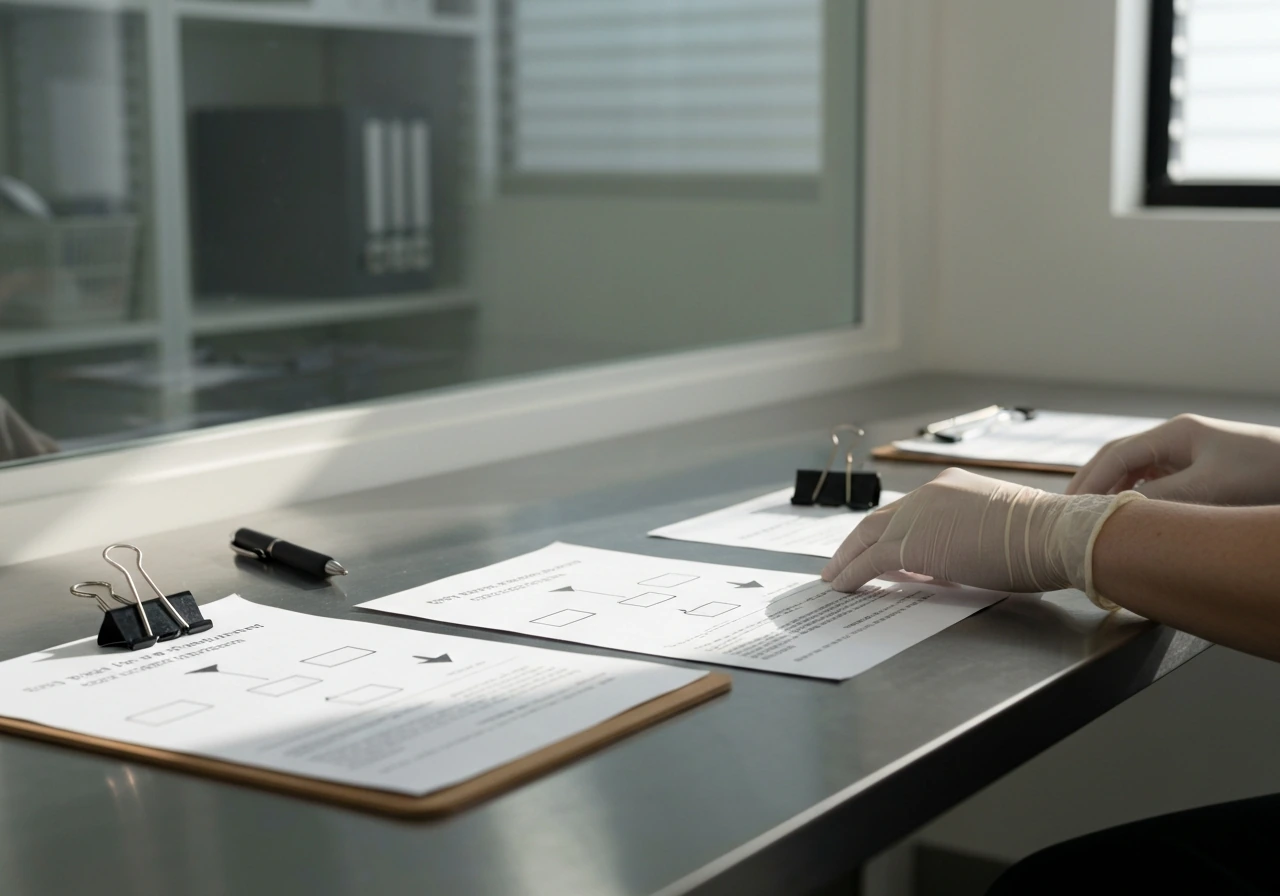
Louisiana law explicitly limits the number of cultivation/production licenses to two statewide. If both slots are currently occupied, LDH is not accepting new production facility applications. The state uses a competitive bid process to award licenses when a slot becomes available. This means your application is scored and ranked against other applicants, not simply approved or denied based on meeting minimum requirements. Monitoring LDH's Cannabis Program page for announcements of open bid periods is your first practical step.
Step-by-step application process
Louisiana's application process for a medical marijuana production facility license is not a single form. It is a package submission that LDH reviews before advancing you to the inspection and permitting phase. Here is how it works in sequence.
- Monitor LDH's Cannabis Program page (ldh.la.gov) for announcement of an open competitive bid period. Applications are only accepted during these windows.
- Download and review the current application requirements document from LDH. The regulatory framework is in Louisiana Administrative Code Title 51, Part XXIX, specifically sections 501, 503, and 505.
- Prepare your full application package (detailed in the documents section below) and submit it to LDH's Cannabis Program through the department's designated submission channel. As of 2026, LDH manages medical marijuana licensing separately from the Office of Alcohol and Tobacco Control, which runs its own License Management Portal for other regulated industries. Confirm the exact submission portal or address directly with LDH's Cannabis Program office before submitting.
- Pay the nonrefundable $10,000 application fee at the time of submission. This fee is not returned if your application is denied.
- LDH reviews your application package, evaluates it in the competitive bid context, and may request additional documentation or clarification.
- If your application advances, LDH schedules a physical facility inspection for in-state applicants. The facility must be substantially complete and meet all security and operational standards at the time of inspection.
- If the inspection is passed and LDH approves your application, you are issued a permit-to-operate. The annual $100,000 license fee is then due.
- Permits are nontransferable and must be renewed annually. Each permit covers growing, cultivating, processing, transporting, and distributing medical marijuana within the scope granted.
Because this process is competitive and document-heavy, plan for several months of preparation before a bid window even opens. Applicants who submit incomplete packages are effectively disqualified, so thoroughness matters more than speed.
Fees, timelines, and how long it takes
The costs here are significant compared to states with open-enrollment commercial licensing systems. Budget accordingly before committing to the process.
| Fee Type | Amount | Notes |
|---|---|---|
| Application fee | $10,000 | Nonrefundable, due at submission |
| Annual license fee | $100,000 | Due upon approval, renewed annually |
| Annual permit fee (administrative/inspection) | $100 | Separate administrative fee for certain permitting actions |
| Facility preparation costs | Variable | Facility must meet security, HVAC, electrical, and operational standards before inspection |
Timeline is harder to predict because it depends on when LDH opens a competitive bid window. Once a window is open, the review process from submission to inspection to decision can take several months. LDH must inspect the facility at least once before issuing a permit-to-operate, and after production begins, the department inspects at least twice annually.
In Louisiana, LDH conducts an initial inspection before issuing a permit-to-operate and verifies that the applicant has connection or access to the Louisiana Medical Marijuana Tracking System (LMMTS) before operations begin [initial inspection before issuing a permit-to-operate and verifying LMMTS connection or access](https://www. legis. la. gov/legis/Law.
aspx? d=1295736). Build a realistic timeline that assumes 6 to 12 months from initial preparation to receiving a permit, assuming a bid window opens promptly. If no slot is currently available, the wait could be indefinite.
For comparison, states like Maryland and Washington have more open cultivation licensing markets with different fee structures and application timelines. If you are specifically looking for how to get a grow license in Washington state, the licensing process and requirements are different from Louisiana's limited commercial tracks states like Maryland and Washington. If you are specifically trying to understand how to get a grow license in Maryland, the Maryland licensing rules and timelines will differ from Louisiana’s competitive bid process states like Maryland. Louisiana's two-license cap makes it one of the most restricted commercial cultivation environments in the country.
What you must prepare: documents, site, and security
Louisiana Administrative Code Title 51, Section XXIX-505 spells out what must be in an application. This is not a short list. Pull these together before the bid window opens so you are ready to submit quickly.
Facility documentation
- A detailed site plan of the entire facility.
- Architectural drawings and schedules covering all operational areas, including mechanical, electrical, plumbing, HVAC, and drainage systems.
- A product safety plan for the growth, cultivation, and harvest phase, covering hazard identification, monitoring procedures, and controls.
- A product safety plan for the production and packaging phase, with equivalent hazard documentation.
- Business entity formation documents and ownership information for all majority owners.
- Background check documentation for relevant owners and employees as required under § 40:1047.
- For out-of-state applicants: proof of equivalent regulation in the home jurisdiction and a written attestation from majority owners regarding character and submission to Louisiana's authority.
Security requirements
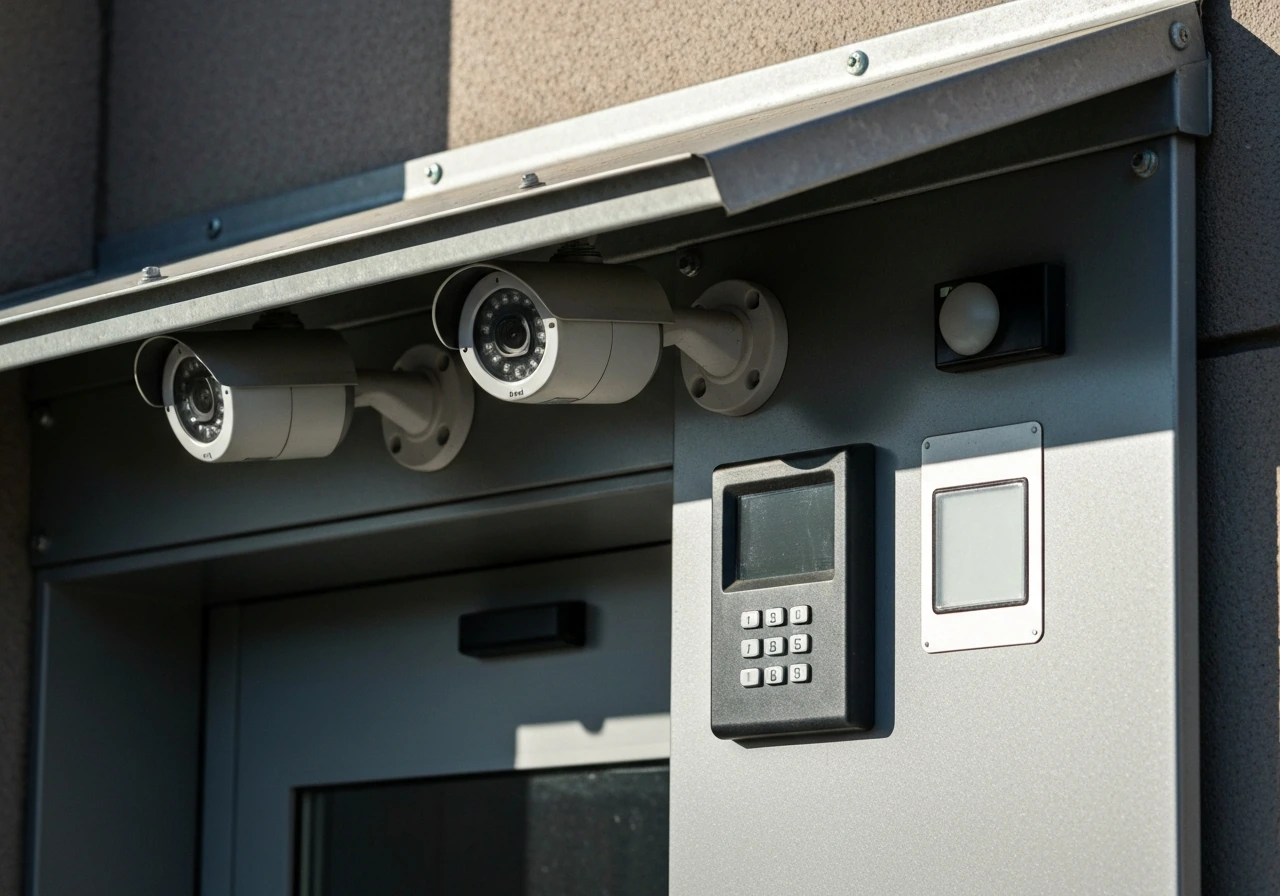
Security is not optional and not minimal. Louisiana's rules require a full security infrastructure in place at inspection time. Specifically:
- Operational alarm systems covering the facility.
- Video surveillance cameras covering all points of entry and exit, plus all restricted-access areas. Coverage must be continuous and recorded.
- A panic device capable of directly contacting law enforcement, installed and functional.
- Secure locking systems and door controls limiting access to restricted areas.
- Limited-access area protocols: visitors may not be in restricted-access areas unaccompanied unless no marijuana is present.
- A written visitor access policy and log.
Operational plan
You must submit a written operations plan that includes standard operating procedures (SOPs) for cultivation in each facility production area. This is not a template document. It needs to reflect your actual facility layout, your specific cultivation methods, and your compliance workflow. LDH reviewers compare your SOPs against your site plans, so they must be consistent and detailed.
Compliance after approval: plant limits, records, inspections, renewals
Getting the license is the beginning, not the end. Louisiana's minimum standards for licensed producers are ongoing obligations that LDH actively enforces.
Tracking system connectivity
Every licensed facility must possess the hardware and software required to connect to the Louisiana Medical Marijuana Tracking System (LMMTS) before production begins. All specified cultivation and production events must be documented in LMMTS within 24 hours of occurrence. This is a hard requirement, not a best practice. Losing connectivity or failing to log events on time is a compliance violation.
Inspections
LDH inspects every approved production facility at least twice per year after the licensee begins producing therapeutic marijuana. Inspectors verify that your actual facility and operations match the plans and SOPs you submitted. They also review finished product test results. You cannot treat your application documents as static after approval. If your facility changes, your documentation must change too, and you need to notify LDH.
Renewals and nontransferability
Permits and licenses are annual. The $100,000 annual license fee is due each renewal cycle. Your permit cannot be sold, transferred, or assigned to another entity. If your business changes ownership structure significantly, you may need to reapply or at minimum notify LDH immediately. Missing a renewal deadline or failing an inspection can result in suspension or revocation.
Plant limits and canopy
Louisiana does not publish a single statewide plant count limit the way some states do for home cultivation. Instead, your production capacity is tied to what is described in your approved facility plans and operating license. You may only cultivate within the scope of your approved operational areas. Any expansion requires amended plans and potentially additional LDH review.
Common mistakes and a ready-to-use application checklist
Most applications that fail do so for predictable reasons. Here are the most common ones, followed by a checklist you can use to audit your own package before submission.
Most common rejection reasons
- Submitting outside of an open competitive bid window, when LDH is not accepting applications.
- Incomplete facility documentation: missing HVAC schedules, drainage plans, or mechanical drawings.
- Product safety plans that are generic templates rather than facility-specific documents.
- SOPs that describe cultivation methods inconsistent with the site plan submitted.
- Background check paperwork missing for required owners or employees.
- Out-of-state firms failing to provide the attestation and equivalent-regulation documentation.
- Facility not ready for inspection when LDH schedules a site visit, forcing a delay that can disqualify a competitive bid submission.
- Panic device or video surveillance system not installed or not functional at inspection time.
- LMMTS hardware and software not ordered or not configured before the inspection.
Application checklist
- Confirm LDH Cannabis Program has an open competitive bid window before doing anything else.
- Verify your business entity is properly formed and registered in Louisiana.
- Collect ownership and majority-owner identity documentation for all relevant parties.
- Initiate background checks for all owners and employees required under § 40: 1047 early, since these take time.
- Prepare a complete site plan with all mechanical, electrical, plumbing, HVAC, and drainage schedules.
- Write facility-specific product safety plans for both the cultivation/harvest phase and the production/packaging phase.
- Write SOPs for each production area in your facility, ensuring they match the site plan.
- Confirm your security infrastructure: alarms, video surveillance (entry/exit and restricted areas), panic device, locking systems, and visitor access controls.
- Order and configure LMMTS-compatible hardware and software.
- Prepare the $10,000 nonrefundable application fee payment.
- If applying from out of state: gather proof of equivalent regulation and prepare majority-owner attestation letters.
- Do a full internal review comparing every document against every other document for consistency before submitting.
- Submit the complete package through LDH's Cannabis Program designated channel during the open bid window.
- Schedule your facility to be fully operational and inspection-ready the moment you submit.
Your next step today is straightforward: go to ldh.la.gov and navigate to the Cannabis Program section. Check whether a bid window is open or announced. If it is not, set up a way to monitor LDH announcements, then use the waiting period to build your facility, draft your documents, and clear your background checks. Do not wait for a bid window to start preparing, because the window may be short and the application package takes months to assemble correctly. Everything described in this guide is regulatory information to help you understand the process. For guidance specific to your legal situation or business structure, consult a licensed attorney familiar with Louisiana cannabis law.
FAQ
If only two cultivation slots exist statewide, how can I tell whether LDH is accepting new production facility applications right now?
You need to confirm there is an active competitive bid or announcement for an available license slot. If LDH has not posted an open bid window for production facility licensing, you generally cannot submit a new full production facility application even if you meet eligibility. Treat any “general” contact page or waiting list as secondary, the bid-window posting is the decision trigger.
What does “contractor/specialty permit” mean if I am not applying as the main grower?
If you are supporting one of the licensed producers, your path is typically narrower and tied to your relationship with the primary licensee. Your obligations still include background checks and operational compliance, but you do not replace the licensed producer, you perform defined functions (for example cultivation labor or specific processing services) under their supervision and documentation framework.
Can a company get a grow license if the owner is eligible but one of the key employees fails a background check?
Often, eligibility is evaluated across relevant persons connected to the applicant, not only the named business entity. Even if leadership is suitable, a failing background check for a required person can prevent advancement. Before applying, identify who LDH requires for background scrutiny (owners, officers, and other defined roles) and run a pre-check for each person who would be named in the submission.
Do my SOPs have to match my exact facility layout, and what happens if we change the facility after submission?
Yes, SOPs are reviewed against your site plans and the way you say you will cultivate in each production area. If you modify the facility or materially change cultivation workflows after approval, you should assume LDH will expect updated documentation and possible notification or amended plans. Build change-control into your project so you can keep the narrative, drawings, and procedures aligned.
How strict is the Louisiana Medical Marijuana Tracking System requirement, especially the 24-hour logging rule?
It is strict and tied to compliance. You should plan operationally for connectivity and logging redundancy, for example assigned staff for LMMTS events, a written escalation process for system downtime, and internal audits before a compliance deadline is missed. The risk is not only failing to log, it is logging late or inconsistently with the actual production event.
Is it enough to plan security on paper, or does security need to be fully installed by the inspection?
Security must be in place at the time of inspection, not just described. Expect LDH inspectors to verify that physical controls, access management, and required monitoring match your operational plan. If you are still building out security measures, you should address that before inspection scheduling to avoid delays or denial of permit-to-operate.
How much time should we budget from starting preparation to actually receiving a permit-to-operate?
Assuming a bid window opens promptly, a realistic working range is often 6 to 12 months from preparation through decision, because LDH review can advance to inspection before a permit-to-operate is issued. If no slot is available, the timeline becomes indefinite, so focus on readiness once a window opens rather than expecting an instant review after you “submit whenever.”
What if LDH does not accept our full production facility application because the slots are full?
When the two statewide slots are occupied, new full production facility applications are not accepted under the current cap. In that case, your practical options are to monitor for future competitive bid periods or explore the contractor/specialty permit track if it fits your business. Do not assume you can wait out a slot by filing a partial package.
Are there any restrictions on transferring or selling the license after we receive it?
Yes. The permit or license cannot be sold, transferred, or assigned to another entity. If there are significant ownership changes, you should expect LDH to require notification or additional steps, potentially including re-approval processes. Plan corporate transactions with cannabis counsel so you can protect continuity of compliance.
Is there a specific plant count limit in Louisiana like some states have for cultivation?
Louisiana does not generally operate like “a single statewide plant limit” for licensed cultivation. Your allowed capacity is tied to what is authorized in your approved operational areas and facility plans. If you want to increase capacity beyond what is approved, you should expect amended plans and potentially more LDH review.
How should we prepare for ongoing renewals and inspections so we do not get suspended?
Because permits are annual and require renewal, your compliance calendar should include renewal deadlines, inspection readiness, and internal documentation audits. Missing renewal deadlines or failing inspections can lead to suspension or revocation. Set up internal SOP training refreshers and periodic LMMTS reconciliation checks so your day-to-day operations match the paperwork you rely on during inspections.
Next Article
How to Get a Grow License in Washington State: Step-by-Step
Step-by-step process to get a Washington cannabis grow license, from eligibility and site prep to application, review, a