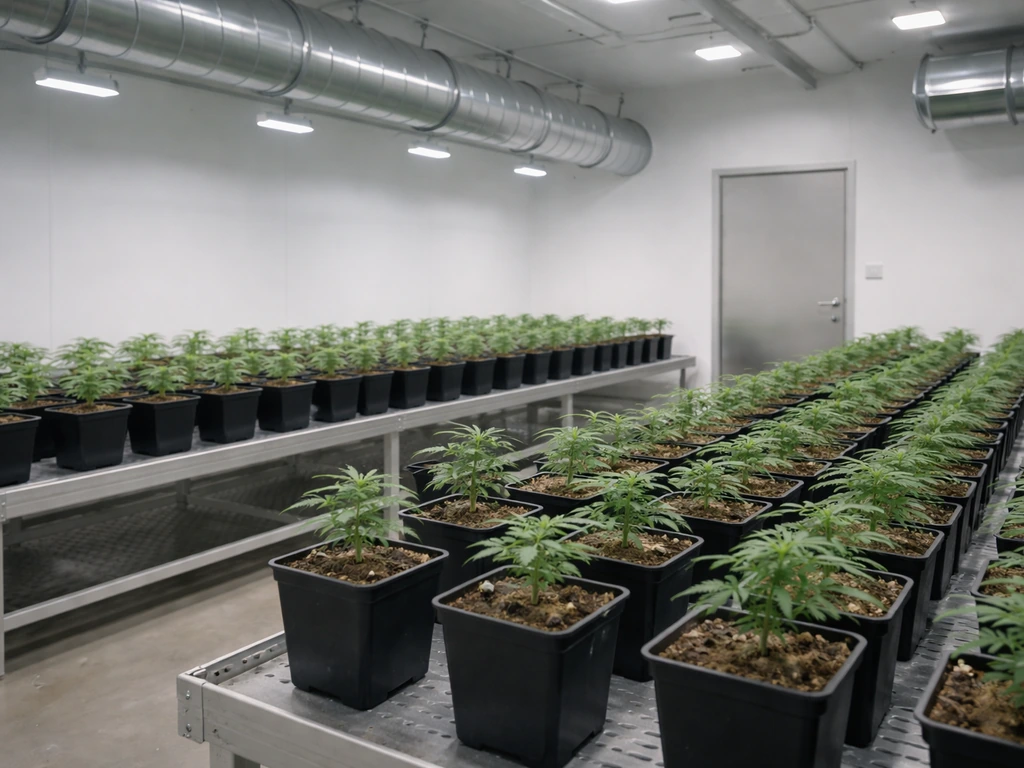
To get a cannabis grow license in Maryland, you apply through the Maryland Cannabis Administration (MCA) as either a Micro grower or a Standard grower, depending on the scale of your operation. blank" rel="noopener noreferrer">All applications go through the Maryland OneStop portal at onestop. Maryland OneStop describes itself as the central hub for Maryland State licenses, forms, certificates, permits, applications, and registrations, including MCA applications Maryland OneStop portal. md.gov. There is no separate "medical cannabis grow license" application open to new applicants today, the MCA consolidated medical and adult-use cultivation into one unified business licensing framework. If you were researching how to get a license to grow medical weed in Maryland specifically, this guide covers exactly what you need.
How to Get a Grow License in Maryland Step by Step

Which Maryland grow license actually applies to you
This is the first place people get confused, so let's clear it up fast. Maryland used to run a separate Medical Cannabis program under COMAR 10.62, administered by the Maryland Medical Cannabis Commission (MMCC). That framework still exists in regulation and covers legacy medical cannabis grower licenses issued under that program. But new applicants today are applying under the Maryland Cannabis Administration's unified licensing framework, codified in COMAR 14.17.
Under the MCA framework, "grower" is a cannabis business license type that covers cultivation for both medical and adult-use supply. So if your goal is to legally grow cannabis in Maryland, whether you started searching for a medical grow license or just a general grow license, the MCA business licensing process through OneStop is your path.
One more thing worth flagging: the MCA also has a "Process to Legally Obtain Medical Cannabis" page on their website. That page is for patients registering to buy cannabis, not for people who want to grow it commercially. Do not confuse the patient registry with the business licensing process. They are completely separate.
Who can apply: eligibility and applicant requirements
Maryland's MCA sets eligibility requirements for cannabis business applicants. Here is what you generally need to qualify before you even think about submitting an application.
- You must be at least 21 years old.
- You must be able to pass a criminal history records check. If you receive a conditional license after the lottery, a background check is required under Alcoholic Beverages and Cannabis Article §36-505. A criminal record does not automatically disqualify you, but certain serious offenses may.
- You must register an account on the Maryland OneStop portal before you can access or submit an application.
- Business entities applying for a license must be properly formed and registered in Maryland.
- Social equity applicants may have specific eligibility criteria that provide priority or additional opportunities in the licensing process — check MCA's current guidance on social equity qualifications.
Maryland uses a lottery-based system for awarding cannabis business licenses. This means meeting eligibility requirements does not guarantee a license, it means your application can be entered into the lottery pool. If your application is selected, you receive a conditional license, which then triggers additional steps before a full license is issued.
Micro grower vs. Standard grower: what each license allows
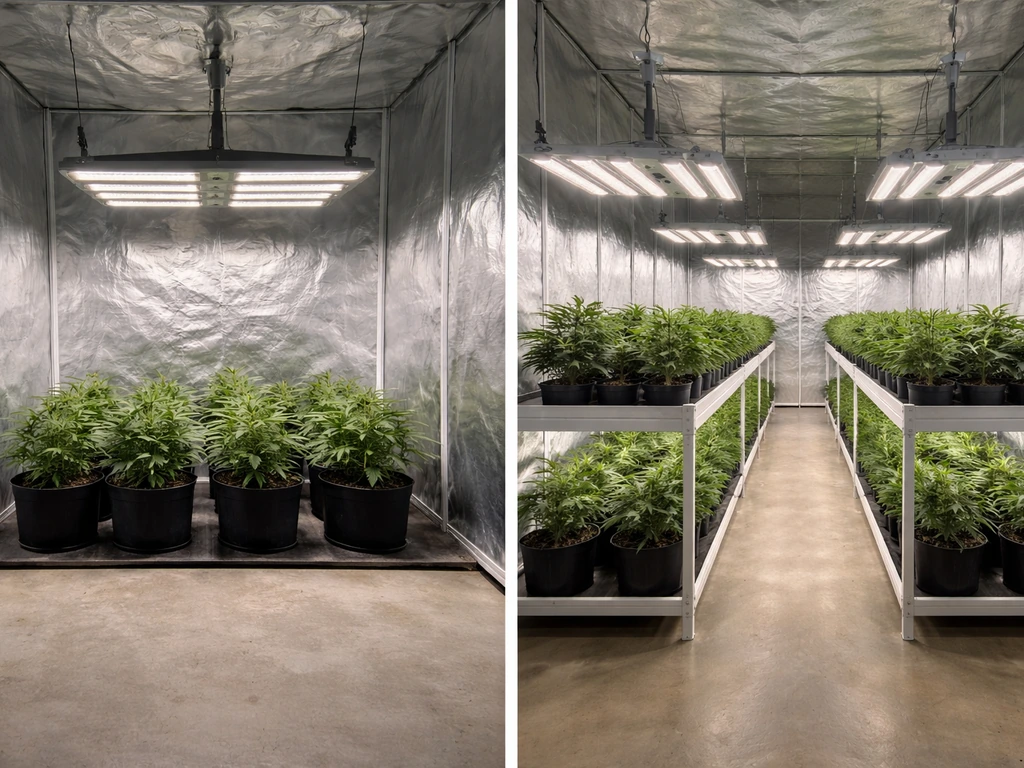
Maryland defines two cultivation license tiers under COMAR 14.17. Your choice between them comes down to the size of your operation. Both are official "grower" license types, the distinction is canopy size and the fees attached.
| License Type | Max Indoor Canopy | Application Fee | Best For |
|---|---|---|---|
| Micro Grower | Up to 10,000 sq ft (or equivalent) | $1,000 | Small-scale cultivators, new entrants, lower capital operations |
| Standard Grower | Up to 300,000 sq ft (or equivalent) | $5,000 | Mid-to-large commercial cultivation operations |
The canopy limits are calculated by the MCA and may account for equivalents if you are growing outdoors or in a mixed format. If you are just starting out or do not have the capital or facility space for a large operation, the Micro grower license is the practical starting point. The $1,000 vs. $5,000 application fee difference is also worth factoring in early, since these fees are non-refundable.
There are no plant count limits spelled out the same way you might see in home cultivation rules. The operative limit for commercial growers is canopy square footage, not individual plant numbers. So plan your facility layout around canopy area.
How to apply: the step-by-step process
Maryland routes all cannabis business license applications through the Maryland OneStop portal. Here is the process from start to finish.
- Go to onestop.md.gov and click "Register" to create a new account. You will need to verify your email address before the account becomes active. Do this well before any application window opens — you do not want to be scrambling with account setup at the last minute.
- Once logged in, navigate to the MCA cannabis business licensing section within OneStop. Look for the grower license application specific to the license tier you are applying for (Micro or Standard).
- Complete the full application form. This includes your business information, ownership structure, facility location (or proposed location), financial disclosures, and any social equity documentation if applicable.
- Upload all required supporting documents directly in the portal. The MCA specifies what documents are needed — gather these in advance so you are not rushing at submission time.
- Pay the non-refundable application fee: $1,000 for Micro, $5,000 for Standard. Payment is processed through the portal.
- Submit your application before the deadline for the current application window. The MCA announces application periods — check their official site for open windows.
- Wait for the lottery results. If selected, you will receive a conditional license notification.
- Complete the criminal history records check required under §36-505 after receiving your conditional license.
- Satisfy any remaining conditional license requirements (facility inspections, final documentation, etc.) to receive your full grower license.
Timeline, fees, and what happens after you submit
The honest answer on timeline is that Maryland's lottery-based system means there is no single fixed timeline from application to license in hand. That said, here is a realistic picture of each phase.
- Application window: MCA announces specific open periods. Applications are not accepted on a rolling basis — you apply during a designated window.
- Lottery and conditional award: After the window closes, the MCA conducts its lottery. Timeline from close of window to lottery results has varied, so monitor MCA communications closely.
- Criminal history records check: Once you receive a conditional license, you must complete your background check. This adds time to the process depending on processing speeds.
- Conditional to full license: After you pass the background check and satisfy remaining conditions (facility readiness, compliance sign-offs), MCA can issue a full license.
- Total realistic timeline: Expect the full process from application submission to an active license to take several months minimum, potentially longer depending on lottery timing and how quickly you can satisfy conditions.
On fees: the application fees ($1,000 for Micro, $5,000 for Standard) are non-refundable regardless of lottery outcome. Budget for that upfront. There are also annual licensing fees outlined in COMAR 14.17.21.02 that kick in once you hold a license, review the MCA fee schedule so you understand the ongoing cost of holding a license, not just the application cost.
Documents, facility readiness, and compliance prerequisites
This is the area where most applicants are underprepared. Having a strong application means having your documentation and facility plan organized before you open the OneStop portal. Here is what to get ready.
Business and ownership documentation
- Articles of incorporation or organization for your business entity
- Operating agreement or bylaws
- List of all owners, officers, and individuals with a financial interest (with percentage ownership)
- Government-issued ID for each principal
- Any existing Maryland business registration or SDAT filing
Facility and operational documents
- Proposed or confirmed facility address and proof of control (lease, deed, or letter of intent from property owner)
- Facility floor plan showing canopy area, security zones, and access points
- Security plan covering surveillance, access control, and alarm systems
- Inventory tracking plan showing how you will comply with MCA's seed-to-sale tracking requirements
- Standard operating procedures (SOPs) for cultivation, sanitation, waste disposal, and employee safety
Financial documentation
- Proof of capitalization or available funds to build out and operate your facility
- Financial statements if required by MCA for your license tier
- Business plan outlining your operational and financial projections
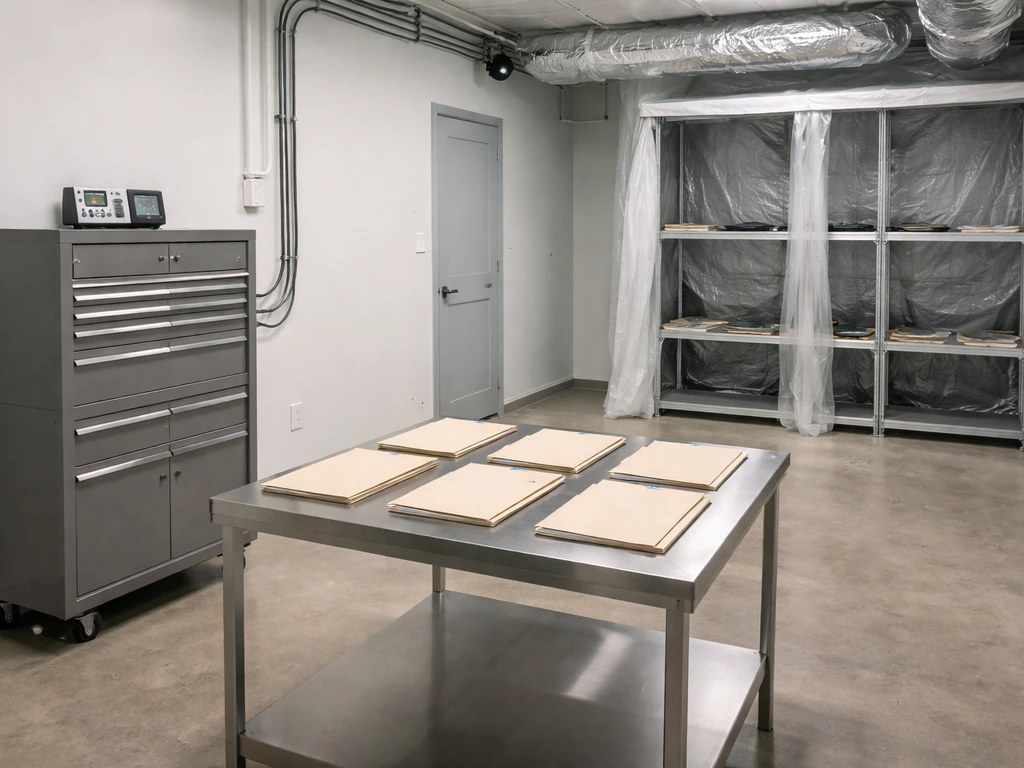
On facility readiness specifically: you do not need a fully built grow facility to apply, but you need to demonstrate you have a realistic, compliant plan and control of a suitable property. Local zoning is your responsibility, confirm your proposed facility location is zoned to allow cannabis cultivation before you commit to it. MCA will not sort out local zoning issues for you.
Common mistakes and your practical checklist to start today
After going through the Maryland licensing framework, here are the mistakes that consistently trip up applicants, and how to avoid them.
Mistakes to avoid
- Confusing the patient registry with the business license process. The MCA's medical cannabis patient pages are not for grower applicants. Use OneStop for business licensing.
- Waiting to set up your OneStop account. Account registration and email verification takes time. Do it now, not the day the application window opens.
- Not confirming local zoning first. You can have a perfect application and lose your facility plan because the location is not zoned for cannabis cultivation. Check zoning before anything else.
- Underestimating the non-refundable fee. The application fee is gone whether you win the lottery or not. Make sure you are financially ready to absorb that loss if you are not selected.
- Submitting an incomplete application. Missing documents or incomplete disclosures will hurt your application. Treat the checklist from MCA as a hard requirement, not a suggestion.
- Ignoring ongoing compliance costs. The application fee is just the entry point. Annual licensing fees, tracking system costs, security infrastructure, and operational compliance are all recurring expenses.
Your next steps starting today
- Go to the Maryland Cannabis Administration website (cannabis.maryland.gov) and find the current licensing page. Check whether an application window is open or announced.
- Go to onestop.md.gov and register your account right now. Verify your email. Done — that is your access to the application when the window opens.
- Decide whether you are applying as a Micro grower (up to 10,000 sq ft canopy) or Standard grower (up to 300,000 sq ft). This determines your fee and your application path.
- Identify a potential facility location and verify local zoning permits cannabis cultivation at that address.
- Start assembling your documentation: business entity formation, ownership disclosures, facility plan, security plan, and financial proof.
- Review COMAR 14.17 (the MCA licensing regulations) and the MCA's Cannabis License Application FAQs for the most current requirements before you submit.
- If you are pursuing social equity status, confirm your eligibility criteria and gather supporting documentation early — this can affect your application priority.
Maryland's licensing process is competitive and lottery-based, which means preparation quality matters a lot. The applicants who succeed are usually the ones who had everything organized before the window opened, not the ones who figured it out as they went. Other states like Louisiana and Washington have their own cultivation licensing frameworks that differ significantly from Maryland's approach, so if you are comparing states, make sure you are looking at Maryland-specific rules rather than assuming processes transfer. If you are specifically looking for the steps to get a grow license in Washington State, you will need to follow that state’s own cannabis licensing process Washington have their own cultivation licensing frameworks. If you need the Louisiana steps instead, you should look up how to get a grow license in Louisiana and follow that state's application process.
FAQ
Do I need to be a Maryland resident to get a grower license through the MCA?
Eligibility rules can include ownership and control requirements, so residency alone is not the determining factor. Plan for how the application describes who owns the entity, who manages operations, and whether those people meet MCA criteria, since ownership structure issues are a common reason applications get delayed or narrowed.
If I apply as a Micro grower but later outgrow the canopy limits, can I upgrade my license?
In many cases you would need a new approval or an amended license tied to your canopy and facility plan, rather than simply switching sizes. Before selecting Micro vs Standard, map your expected expansion and ask your team to align the application design with the facility buildout you can actually complete if you win the conditional stage.
What happens if my application is selected and I receive a conditional license, do I lose the right to proceed if I miss deadlines?
A conditional license typically requires you to complete specific follow-on steps before a full license is issued. Missing operational, documentation, or inspection-related deadlines can force denial or rollback, so set internal dates immediately after conditional selection and track each deliverable in OneStop.
Can I apply without a fully built facility, but still meet the MCA requirements?
Yes, you may not need a completed grow, but you must show you have control of a suitable property and a compliant, realistic plan. A common misstep is presenting generic layouts, so attach a site and facility concept that matches your chosen canopy area and the operational control you describe.
How strict is zoning, and what if my city or county says the location is not allowed?
Local zoning is the applicant’s responsibility, so you should verify zoning in writing before investing heavily. If zoning is uncertain, you can treat that uncertainty as a major risk factor, because MCA will not resolve local land-use conflicts for you.
Does Maryland limit cannabis growers by plant count or by canopy size, especially for mixed outdoor or indoor setups?
The effective limit is canopy square footage rather than individual plant numbers, including any equivalencies calculated by MCA. If you plan an outdoor, greenhouse, or mixed system, have your measurements and facility description prepared to match how MCA expects the canopy to be calculated.
Are the Micro and Standard application fees refundable if the lottery does not select my application?
No, the application fees are non-refundable even if you are not selected. Treat the $1,000 and $5,000 fees as sunk costs and consider running a go/no-go checklist before submission to reduce the chance you spend the fee on an underdeveloped application.
What annual costs should I budget for after I receive a license?
Beyond the one-time application fee, there are ongoing annual licensing fees under the MCA framework. Budget for recurring compliance costs too, such as recordkeeping, facility upkeep, and any required updates to keep your operations aligned with what you represented in your application.
If I am researching medical cannabis specifically, do I apply differently than adult-use growers?
New applicants generally do not use a separate commercial “medical grow” application, since cultivation is handled under a unified business licensing framework. Your differentiator is usually how your business is structured and how you plan to operate under the grower license, not which program you label your application with.
Can I use a patient registry or patient process to satisfy business licensing requirements?
No, the patient registration process is separate from commercial business licensing. Business applicants need to go through the MCA framework and apply via the OneStop portal, since patient-facing steps do not substitute for business authorization to cultivate.
What documents or planning elements usually make an application stronger in Maryland’s lottery?
Because selection is lottery-based, the main advantage comes from avoiding avoidable issues. Prepare a complete facility and operations plan (especially canopy area calculations), ensure your entity and ownership details are consistent, and compile site control and zoning evidence before the application window so you do not scramble after submission.
How to Get a Micro Grow License in Canada: Step-by-Step
Step-by-step on getting a Canadian micro-cultivation cannabis licence, eligibility, costs, timelines, and compliance bas