Getting a license to grow cannabis in California means going through the state's Department of Cannabis Control (DCC). There's no shortcut, but the process is more straightforward than most people expect once you understand which license type fits your situation. This guide walks you through exactly what to do today, from picking the right license to staying compliant after approval.
How to Get a License to Grow Marijuana in CA: Step by Step

Marcus Whitley
10 Apr 2026
Medical vs. adult-use: which track are you on?
California unified its medical and adult-use cannabis programs under the DCC, so there isn't a completely separate licensing track for medical cultivation the way some other states have. Commercial cultivation licenses issued by the DCC cover both markets. A licensed cultivator can sell into the medical supply chain or the adult-use market (or both) depending on their business relationships and the license they hold.
Where medical grows get treated differently is at the individual, non-commercial level. A qualified patient or their primary caregiver can cultivate cannabis for personal medical use under California's Health and Safety Code without a commercial license, as long as the grow stays within the limits set by state and local law. That's typically six plants per person, though some localities allow more for verified medical patients. If you're growing strictly for your own medical use and staying within those limits, you don't need a DCC commercial cultivation license. But the moment you're growing commercially, distributing, or selling in any form, you need a license regardless of whether your customers are medical or adult-use.
The rest of this guide focuses on the commercial licensing pathway through the DCC, which applies to anyone growing beyond personal-use limits or intending to enter the supply chain.
Pick the right license type before you do anything else
Choosing the wrong license type is one of the most common mistakes new applicants make. The DCC defines cultivation license types based on grow method (outdoor, indoor, or mixed-light) and canopy size. Getting this right upfront saves you from having to amend or reapply later.
Here's a simplified breakdown of the main cultivation license tiers:
| License Type | Method | Canopy / Plant Limit |
|---|---|---|
| Specialty Cottage Outdoor | Outdoor | Up to 25 mature plants or up to 2,500 sq ft of canopy |
| Specialty Outdoor | Outdoor | 2,501 – 5,000 sq ft of canopy |
| Small Outdoor | Outdoor | 5,001 – 10,000 sq ft of canopy |
| Outdoor | Outdoor | 10,001 sq ft up to 1 acre of canopy |
| Specialty Cottage Indoor | Indoor | Up to 500 sq ft of canopy |
| Specialty Indoor | Indoor | 501 – 5,000 sq ft of canopy |
| Small Indoor | Indoor | 5,001 – 10,000 sq ft of canopy |
| Specialty Cottage Mixed-Light Tier 1 & 2 | Mixed-Light | Up to 2,500 sq ft of canopy |
| Small Mixed-Light Tier 1 & 2 | Mixed-Light | 2,501 – 10,000 sq ft of canopy |
If you're just starting out and growing outdoors, the Specialty Cottage Outdoor license is likely your entry point. It caps you at 25 mature plants or 2,500 square feet, which is manageable for a small operation. Indoor and mixed-light licenses require you to identify your power source at the time of application, so factor that into your prep work.
If you're thinking about larger-scale grows, it's worth understanding the cost implications early. how much is a grow license in California depends heavily on which tier you choose, since fees scale with canopy size. And if you've heard about the 99-plant limit in a medical context, that's a separate consideration covered in detail in this guide on 99 plant grow license California rules.
Who can apply: eligibility basics
You need to meet a few foundational requirements before submitting anything to the DCC. These aren't hoops for the sake of hoops; they're conditions the state requires to make sure licensed operators are legitimate and accountable.
- You must be 21 or older.
- You need a legal business entity in California (sole proprietor, LLC, corporation, partnership, etc.) or be applying as an individual under certain structures.
- Your premises must be located in a California jurisdiction that allows cannabis cultivation (not all cities and counties do).
- You must have local authorization from your city or county before the state will approve your license.
- All owners, financiers, and certain other individuals connected to the business must be disclosed and are subject to background checks.
- You cannot hold a license if you've been convicted of certain offenses, though California has some of the more permissive eligibility rules in the country after cannabis justice reforms.
The local authorization piece is critical and often the biggest bottleneck. Your city or county must have a cannabis cultivation ordinance that allows what you're doing, and you need proof of that authorization in hand before the state will process your application. Check with your local planning or business licensing department first, before investing time in the state application.
Documents you'll need to gather
- Proof of local authorization (permit, license, letter, or other documentation from your city or county)
- Business formation documents (articles of incorporation, operating agreement, etc.)
- Ownership and financial interest disclosures for all individuals with ownership stakes
- Premises diagram showing canopy areas with dimensions and aggregate square footage (required for all cultivation licenses)
- Proof of legal right to occupy the premises (lease, deed, or owner permission letter)
- Power source information for indoor and mixed-light applicants
- If applicable: water source documentation for operations with diversion systems
The premises diagram deserves extra attention. The DCC has specific requirements: you need to clearly identify all canopy areas, label their dimensions, and note the aggregate square footage if the canopy is noncontiguous. For operations involving water diversion, GPS coordinates may also be required. The DCC publishes a dedicated guidance page on premises diagrams, and it's worth reading before you draw anything up.
How to apply today: the step-by-step process
All annual commercial cultivation licenses are processed through the DCC's Cultivation Licensing System (CLS), which is an online portal. Here's how to work through it.
- Confirm your local authorization is in place. You'll need to know which local authority type (city or county) issued it and have the documentation ready to upload.
- Create or log in to your DCC account at the CLS portal (dcc.ca.gov). If you don't have an account, you'll register first.
- Start a new annual cultivation license application. Select the license type that matches your canopy size and grow method.
- Enter your business and ownership information. You'll disclose all owners, financial interest holders, and their personal information for background screening.
- Enter your premises information. This includes the address, the local authority type that provided your authorization, and confirmation that your premises is in good standing with that local authority.
- Upload your premises diagram. Make sure it meets DCC formatting requirements before you upload it.
- Upload your local authorization documentation and any other supporting documents the application requests.
- For indoor or mixed-light licenses: identify your power source(s) in the application.
- Submit the application and pay the application fee. The DCC will not begin reviewing your application until the fee is received.
- After submission, monitor your application's Processing Status in the CLS dashboard. The system shows progress checkpoints, and the DCC may request additional documents before the application moves forward.
- Respond promptly to any DCC requests for supplemental materials. Delays in responding can slow your timeline significantly.
One thing to know: submitting the main application in the CLS is not the end of the process. The DCC's guidance is explicit that there are additional steps after the initial submission before the application is considered complete and reviewed. Keep an eye on your CLS dashboard and the email address tied to your account.
Also worth noting: as of January 1, 2026, provisional cultivation licenses are no longer in effect. The DCC's timeline of key dates confirmed that date as the cutoff. If you've been operating on a provisional license, you needed to have converted to an annual license before that date. Going forward, all new applicants are applying for annual licenses only.
What it costs, how long it takes, and how much you can grow
Fees for cultivation licenses in California are set by the DCC and scale based on canopy size and license type. The DCC publishes a full fee schedule on its Application and License Fees page. As a general benchmark: smaller cottage-tier licenses have lower fees, while larger outdoor or indoor licenses cost significantly more. The fees are split into an application fee (paid when you submit) and an annual license fee (paid when the license is issued and at each renewal). The DCC bases these fees on economist findings about actual costs to regulate the cannabis industry, so they aren't arbitrary.
Processing time varies. After you submit a complete application with all required documents and fees paid, the DCC review process can take several weeks to a few months depending on application volume and whether the DCC needs additional information from you. Incomplete applications or slow responses to DCC requests are the main reasons timelines stretch out.
Plant and canopy limits are set by your license tier. For example, a Specialty Cottage Outdoor license caps you at 25 mature plants or 2,500 square feet of canopy, whichever is smaller. You cannot exceed these limits without modifying your license, and growing beyond your licensed canopy is one of the faster ways to end up with a disciplinary action. The DCC also allows canopy reductions after licensing, but there are specific rules about how and when you can do that, especially for certain license types.
What happens after you're approved
Getting the license is step one. Keeping it requires consistent compliance with DCC regulations. Here's what you need to stay on top of.
Track-and-trace is non-negotiable
Every licensed cultivator in California is required to use the state's track-and-trace system, which runs on METRC. You must track cannabis plants and inventory from seed to sale, log activities within the system, and complete the mandatory METRC training before you begin operations. The DCC has a published 5-step guide for the Track-and-Trace System to walk you through setup and daily use. Failures in track-and-trace compliance show up consistently in the DCC's license denial and disciplinary action records, so this is not an area to cut corners on.
Security requirements
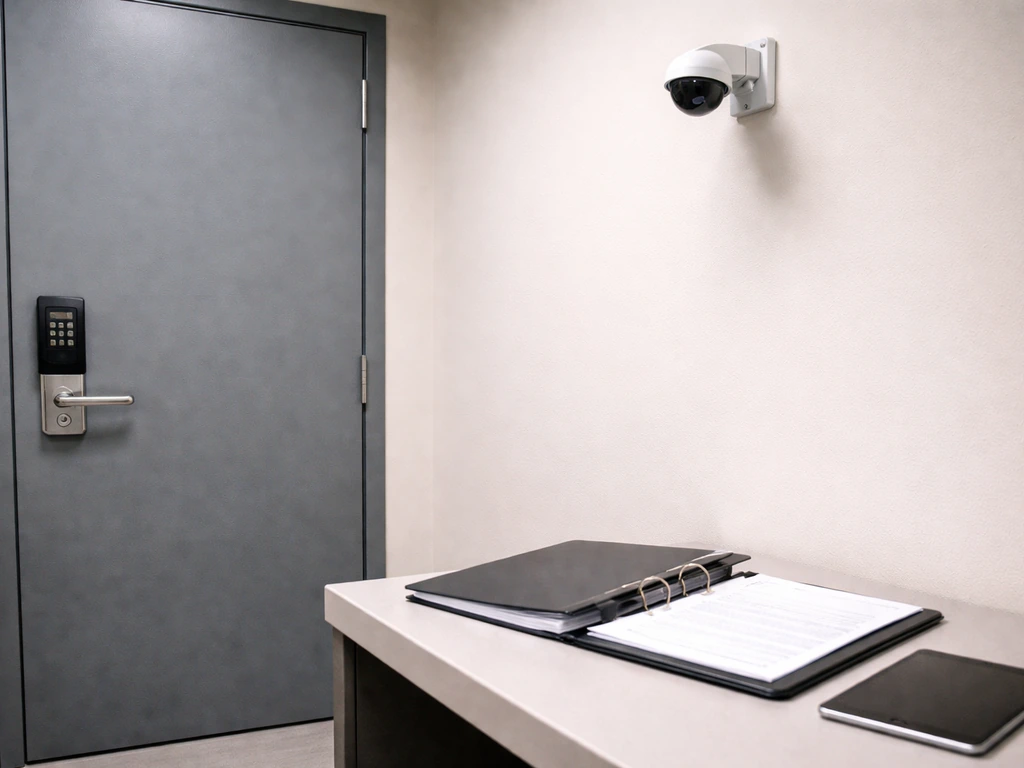
You're required to maintain physical security measures at your cultivation site. This includes limiting access to authorized individuals, preventing theft, and ensuring the premises is secured against unauthorized entry. The DCC's self-inspection checklist for cultivators outlines the specific security standards you're expected to meet, and inspectors will check these during site visits.
Recordkeeping and reporting
You need to maintain detailed records of your cultivation activities, including inventory, waste disposal, and business transactions. These records must be kept for a minimum period and made available to DCC inspectors on request. At each annual renewal, indoor and mixed-light licensees are also required to report total electricity use by power source to the DCC. This is an easy thing to forget, but it's a required renewal condition.
Renewals
Annual licenses need to be renewed each year through the CLS. The DCC has a dedicated CLS renewal user guide that walks through the steps, including paying the renewal fee through the system's checkout workflow. Don't wait until the last minute: late renewals can create gaps in your license status, and operating without a valid license puts everything at risk. The renewal is also the point where the DCC reviews whether you've remained in compliance and whether your local authorization is still current.
Inspections
The DCC can conduct inspections of your premises at any time during business hours. Inspectors will check your canopy against your licensed size, verify your track-and-trace records, review security measures, and confirm your operations match what was approved. The DCC's cultivator self-inspection checklist is a practical tool: use it yourself before an official inspection to catch any gaps. Common issues that lead to citations include canopy overages, incomplete METRC records, and security lapses.
Changes to your operation
If you need to make changes after you're licensed, such as modifying your canopy size, changing ownership, or updating your premises, most changes need to go through the CLS and may require DCC approval before you implement them. The DCC provides specific guidance on how to make cultivation license changes using the CLS, so check that before making any operational adjustments to avoid inadvertently violating your license conditions.
Your actual next steps
If you're starting from zero today, here's the practical order of operations: First, check whether your city or county allows commercial cannabis cultivation at the location you have in mind. If local authorization isn't available, nothing else matters. Second, decide on your canopy size and grow method so you can identify the correct license tier. Third, gather your documents (business formation, premises diagram, ownership disclosures, proof of right to occupy). Fourth, apply through the DCC's CLS portal, pay your application fee, and monitor your application status. From there, respond quickly to any DCC requests and prepare your operations (including METRC setup) so you're ready to launch the moment the license issues.
The DCC also publishes a full guidance and checklists hub for applicants and licensees, including an application readiness checklist specifically for cultivators. Downloading that before you apply is genuinely useful and can save you from submitting an incomplete package that delays everything.
FAQ
Can I get a cultivation license in California if my city or county doesn’t allow cannabis cultivation yet?
Usually no. The DCC requires local authorization before it will process a commercial cultivation application, so you typically need proof that your city or county has an ordinance and that your proposed site is eligible. If your area is not issuing authorizations, consider applying only when a permit or local approval is available, or choose a different location.
If I plan to sell to both medical and adult-use customers, do I need separate cultivation licenses?
Not in most cases. The DCC issues commercial cultivation licenses that can cover both markets, but what you can sell and where you can sell depends on your license scope and your business relationships with distributors or retailers. You still must comply with the same DCC and METRC track-and-trace requirements for all product you move.
What’s the difference between growing for personal medical use versus applying for a commercial cultivation license?
Personal medical cultivation is handled under California’s non-commercial rules and plant limits that apply per qualified patient, often around six plants per person (with possible local variations for verified patients). As soon as you grow beyond those limits, intend to distribute, or operate as a business supply source, it becomes commercial and requires a DCC license.
How do I decide which grow license tier I’m eligible for if my plans might change later?
Base the initial application on your realistic canopy size and grow method, because amending later can slow you down and may require re-review. If you anticipate capacity changes, consider planning to match one license tier from the start, or use canopy reductions after licensing only if your specific license type allows it under the DCC rules.
Can I submit my application in the Cultivation Licensing System (CLS) and wait, or do I need to do more after submission?
You need to do more. The main submission in CLS is not always the end of the review flow, and your application may require additional steps and responses after the initial filing. Monitor your CLS dashboard and the email tied to your account, and respond quickly to any DCC requests to avoid delays.
What happens if I submit incomplete documents or miss a required item in the application?
Incomplete applications are a common reason processing timelines stretch out. Before submitting, use the DCC’s cultivator application readiness checklist and verify each item that feeds into premises, ownership, and operational disclosures. If the DCC asks for corrections, treat them as time-sensitive, because slow responses can extend review or lead to denial.
I’m drawing my premises diagram myself. What are the most common mistakes that cause problems during review or inspections?
A frequent issue is unclear canopy area boundaries, missing or inconsistent dimensions, or mistakes in how you report aggregate square footage when areas are not contiguous. If your operation involves water diversion, GPS-related details may be required. Build your diagram around the DCC’s premises diagram guidance and double-check labels and calculations.
Do I need METRC set up before I start growing, or can it be done after the license is issued?
You should plan to complete METRC training and setup before you begin operations, because once you start, you are responsible for tracking plants and inventory in the system and logging required activities. Waiting until after you begin can create immediate compliance gaps that show up in DCC enforcement actions.
If my power source changes after I get licensed, does that affect my compliance obligations?
Yes. The DCC requires indoor and mixed-light licensees to report electricity usage by power source at renewal, and you must keep your operational information consistent with what was approved. If your energy setup changes materially, use CLS and follow DCC guidance for updates so you don’t create a mismatch at renewal or during an inspection.
What security measures should I have in place before the DCC ever inspects?
At minimum, you need site security that limits access to authorized people, reduces theft risk, and prevents unauthorized entry. Keep access controls and the physical layout consistent with what you represented in your application, and use the DCC self-inspection checklist to verify you meet the expected standard before an inspector arrives.
How long do I need to keep cultivation records, and what if I don’t have them during an inspection?
You must maintain detailed records (including inventory and waste disposal information) for a minimum retention period and provide them upon request. If you cannot produce records during an inspection, it can lead to enforcement action. Set up recordkeeping workflows early so METRC logs and internal documentation stay aligned.
Can I reduce my canopy size after licensing to lower costs?
Sometimes, but reductions have specific rules and may depend on license type and timing. The article notes canopy reductions are allowed under certain conditions, so confirm the procedure through CLS and ensure the change does not put you out of compliance with your current license tier’s plant or canopy limits.
When should I renew my cultivation license, and what’s the risk of renewing late?
Renew as early as you can through CLS, not at the last minute. Late renewals can create gaps in license status, and operating without a valid license puts your business at risk. Renewal is also where the DCC checks whether you stayed compliant and whether local authorization remains current.
Are inspections only scheduled, or can the DCC show up unexpectedly?
They can happen at any time during business hours. Inspectors can verify canopy against your licensed limits, review METRC records, and check security. Use the self-inspection checklist regularly, not just once before renewal.
What changes after licensing typically require CLS updates or prior approval?
Changes like ownership updates, premises changes, or modifications that affect canopy size or operational scope usually need to go through CLS and may require DCC approval before you implement them. If you are unsure whether a change is “material,” follow the DCC’s change guidance rather than updating operations informally.
Next Article
How Much Is a Grow License in California Cost Breakdown
California cannabis grow license costs by type, fees, renewals, and local add-ons with budgeting tips to estimate total