Quick answer: what a California grow license actually costs
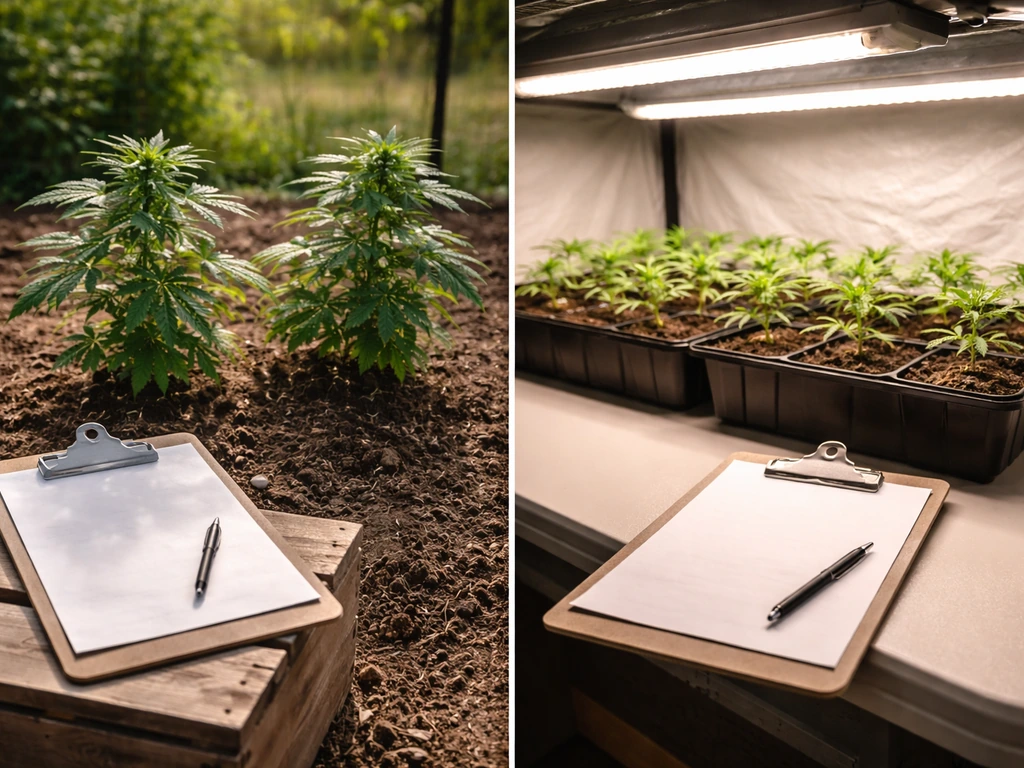
A California cannabis cultivation license costs anywhere from a few hundred dollars to well over $80,000 per year, depending on your license type and canopy size. That wide range is not a dodge. It reflects a real tiered fee structure set by the Department of Cannabis Control (DCC), where a Specialty Cottage Outdoor license runs $135 to apply and $1,205 annually, while a Medium Indoor license costs $8,655 to apply and $77,905 every year. Most people asking this question are either a small home-scale cultivator or a first-time small commercial operator, so realistically you're looking at somewhere between $135 and a few thousand dollars for the state portion alone. But the state fee is only part of the total picture.
License types that affect what you pay
California does not have a simple single "grow license." The DCC structures cultivation licenses by canopy size, production type, and lighting method. The main categories are Specialty Cottage, Specialty, Small, Medium, and Large, and each category has sub-types: Outdoor, Indoor, and Mixed-Light (Tier 1 or Tier 2). The bigger your canopy and the more energy-intensive your setup, the higher your fee tier.
It is also critical to understand California's dual licensing model. Every cannabis cultivator must hold both a state license (issued by DCC) and a local permit or authorization from the city or county where the grow is located. You cannot operate with just one of the two. The state fee schedule only covers the DCC side. Your local jurisdiction sets its own permit fees, and those vary significantly from one city or county to the next.
There is no "home cultivator" commercial license track at the state level. California does allow personal adult-use home cultivation of up to six plants under Prop 64 without a commercial license, but that is not a licensed track. If you want to sell, distribute, or grow beyond personal use, you need a commercial cultivation license. Getting a license to grow marijuana in California requires going through the full DCC application process, which this article walks through.
State fee examples by license type
| License Type | Application Fee | Annual License Fee |
|---|
| Specialty Cottage Outdoor | $135 | $1,205 |
| Small Outdoor | $535 | $4,820 |
| Specialty Indoor | $2,170 | $19,540 |
| Small Mixed-Light Tier 2 | $2,250 | $20,235 |
| Medium Mixed-Light Tier 2 | $4,945 | $44,517 |
| Medium Indoor | $8,655 | $77,905 |
| Large Outdoor | $13,990 base | $640 per additional 2,000 sq. ft. |
| Large Indoor | $77,905 base | $7,080 per additional 2,000 sq. ft. |
For large cultivation licenses, the annual fee has a base amount plus a per-square-foot component that scales with canopy size. So if you're planning a large operation, you'll need to calculate the base fee plus the add-on for every additional 2,000 square feet beyond the tier threshold.
Application fees, renewal fees, and ongoing costs
The DCC splits fees into two buckets. The application fee is due when you submit. The annual license fee is due when your license is approved, and then again every year at renewal. So in your first year, you're paying both the application fee and the annual license fee. From year two onward, you're paying only the annual license fee (unless your license type or canopy size changes).
There is one useful cost-reduction option worth knowing: if you operate at limited capacity during a renewal period and select "Yes" for limited operations in the DCC's Cannabis Licensing System (CLS), your renewal fee drops to 20% of the original annual license fee. That can make a meaningful difference if you're scaling back temporarily.
Beyond the DCC fees, plan for several recurring operating costs. Local permit fees are charged annually by most jurisdictions. Electricity usage reporting is required at renewal, and some cultivators hire compliance consultants to handle it. If your license type or canopy size changes, your renewal fee changes too, so budget for the possibility of re-tiering.
Where to verify exact fees and avoid outdated numbers
Fee schedules do change. The DCC publishes its official cultivation license fee table directly on its website, and that page lists both the application fee and annual license fee for every cultivation license type. That is the only number you should trust. Do not rely on blog posts, Reddit threads, or third-party guides for the specific dollar amounts, including this article. Always cross-check with the DCC's cultivation fee schedule page before submitting your application or building your budget.
For local fees, go directly to your city or county's cannabis office or planning department. Many jurisdictions list their permit fees in a publicly available fee schedule. If you cannot find it online, call the local cannabis licensing office directly. Local fees are not on the DCC's website.
One more official resource: the DCC's general application and license fees explainer page walks through when each fee type is due and what happens if you underpay. The DCC can require you to pay the balance plus a penalty if you submit less than the required amount, so it is worth reading before you submit.
How to estimate your total licensing budget before applying
Building a realistic budget is straightforward once you know your license type. Here is a practical way to do it:
- Identify your license type: figure out which DCC cultivation license category fits your canopy size and lighting setup (Outdoor, Indoor, or Mixed-Light, and the size tier).
- Look up the DCC fee for that type: find the application fee and annual license fee on the DCC's current cultivation fee table.
- Calculate your first-year state cost: application fee + annual license fee = your Year 1 state total.
- Calculate your ongoing annual state cost: the annual license fee each renewal year (or 20% of that if you plan to use the limited operations option).
- Get your local permit fee: contact your city or county cannabis office to confirm the local authorization permit cost and renewal schedule.
- Add mandatory supporting costs: budget for the $5,000 surety bond (see next section), Live Scan fingerprinting fees, and document preparation.
- Add local compliance and operational costs: local land-use or building requirements, electricity reporting, and any consultant fees your situation requires.
As a simple example: a Small Outdoor cultivator would pay $535 (application) + $4,820 (first-year license fee) = $5,355 in DCC fees for Year 1, then $4,820 per year after that, before adding local and ancillary costs.
Common gotchas that can change your total cost
The surety bond is one that catches people off guard. The DCC requires commercial cannabis license applicants to submit proof of a surety bond of blank" rel="noopener noreferrer">at least $5,000 payable to the State of California for each licensed premises. This is not a fee paid to the DCC. You purchase a bond from a surety company, and the annual premium you pay to maintain it is an ongoing operating cost. The DCC provides Form 8113 (the Commercial Cannabis Licensee Bond form) to specify exactly what is required.
Local requirements are the other big variable. Some cities and counties have moratoriums and simply do not allow commercial cultivation. Others require conditional use permits, zoning variances, or additional local operating permits on top of the standard local authorization. These add cost and time. One important detail: if you submit your DCC application with a valid local authorization document already in hand, the local jurisdiction has a 10 calendar day response window. Without it, that window stretches to 60 business days, which can significantly delay your approval timeline and push back when your license fee is due.
Background checks are another cost bucket that is easy to overlook. The DCC requires fingerprinting through the Live Scan service for owners. You can contact [email protected] to request Live Scan service details. Each owner listed on the application may need to complete this, so factor in the per-person cost if you have multiple owners. The 99 plant grow license in California route, for example, involves the same owner documentation requirements as any other commercial cultivation application.
Owner documentation is another area where people get deficiency notices that slow things down. You will need business formation documents filed with the California Secretary of State, such as articles of incorporation or operating agreements, and a Statement of Information. The DCC recommends uploading updated copies whenever new documents are filed. Getting these together before you apply avoids back-and-forth delays.
If you have an Indoor or Mixed-Light license type, the CLS application also requires you to specify your power source types. Local jurisdictions may add land-use or building requirements around generators and other site equipment, which can translate into additional permits and costs at the local level.
How to apply for your specific situation
All state cultivation license applications go through the DCC's Cannabis Licensing System (CLS). The CLS is an online portal where you submit your application, upload required documents, and pay your fees. Here is what to have ready before you start:
- Your local authorization document (permit, approval letter, or equivalent from your city or county cannabis office)
- Business formation documents: articles of incorporation, LLC operating agreement, or equivalent, plus your Statement of Information from the CA Secretary of State
- Owner Submittal Forms (DCC Form 9101) completed for each owner
- Surety bond documentation (DCC Form 8113, obtained from a licensed surety company)
- Live Scan fingerprint results or a pending Live Scan request confirmation for all owners
- Power source information if applying for an Indoor or Mixed-Light license
- Site and premise documents as required by the DCC's required documents section in CLS
The Designated Responsible Party (DRP) is the individual owner with legal authority to bind the business and serves as the primary contact for the application. DCC describes the Designated Responsible Party (DRP) as the primary contact for application and license-related issues and authorized to communicate application or license-specific information with DCC. Make sure the right person is identified before you start the CLS workflow, since changing this later adds steps.
After you submit the main application in CLS, there are additional steps before DCC can formally review it. Follow the CLS prompts carefully, and watch for any deficiency notices requesting missing documents. Responding quickly to deficiencies keeps your application moving.
For your local application, start with your city or county's cannabis or planning department website. Look for the commercial cannabis permit or conditional use permit application. Complete that process in parallel with your state application if your jurisdiction allows it, since having your local authorization ready when you file your DCC application gives you the shorter 10-day local review window instead of the 60-business-day track.
The bottom line: your total Year 1 cost will be your DCC application fee plus your DCC annual license fee, plus local permit fees, plus the surety bond premium, plus fingerprinting costs, plus any document preparation expenses. For a small outdoor cultivator, that realistically lands somewhere in the $6,000 to $10,000 range once local fees and ancillary costs are included. For a medium or large indoor operation, you are looking at tens of thousands per year in state fees alone. Know your tier before you start.