What "99 plant grow license" means in California

Let's get the most important thing out of the way first: California does not have a license specifically called a "99 plant grow license." That phrase gets passed around a lot online, but it does not correspond to any real license tier in the state's regulatory framework. If you've been searching for it hoping to find a magic number that unlocks a specific permit, you're going to want to reset your expectations before spending any money or time on an application.
The "99 plants" idea likely originated from old federal sentencing guidelines, where cultivating under 100 plants sometimes placed a grower in a lower mandatory-minimum penalty bracket. That federal nuance got misinterpreted over the years as a California-specific license threshold. It isn't. California's Department of Cannabis Control (DCC) structures its cultivation licenses around canopy square footage and lighting method, not a raw plant headcount, with one narrow exception at the very smallest tier.
Understanding this distinction is the single most important thing you can do before you start any application process. The wrong assumption here can lead you to apply for the wrong license type, pay the wrong fee, or build out a grow operation that doesn't match your actual permit.
Which California license pathway matches a 99-plant limit
California's commercial cultivation licenses are defined under Business and Professions Code § 26061 and administered by the DCC. The smallest commercial tier is called "Type 1C," also known as Specialty Cottage. This is the only category that uses a mature plant count as an alternative threshold, and even then, the cap is 25 mature plants for outdoor cultivation, not 99.
Here's how the Specialty Cottage tiers actually break down by cultivation type:
| License Tier | Cultivation Method | Max Canopy / Plant Limit |
|---|
| Type 1C – Specialty Cottage Outdoor | Outdoor (sunlight only) | Up to 2,500 sq. ft. of canopy OR up to 25 mature plants (alternative threshold) |
| Type 1C – Specialty Cottage Indoor | Indoor (artificial light) | Up to 500 sq. ft. of canopy |
| Type 1C – Specialty Cottage Mixed-Light | Mixed-light (sun + supplemental) | Up to 2,500 sq. ft. of canopy |
| Type 1 – Specialty Outdoor | Outdoor | Up to 5,000 sq. ft. of canopy |
| Type 2 – Small Outdoor | Outdoor | 5,001–10,000 sq. ft. of canopy |
The takeaway: if someone tells you there's a California license that lets you grow 99 plants commercially, that is not accurate under current DCC regulations. The only plant-count-based threshold in the small-tier system is 25 mature plants for Specialty Cottage Outdoor. Everything else is measured in square feet of canopy.
If you want to grow more than 25 mature plants outdoors, you move into canopy-based licensing, and the number of plants that fit in, say, 5,000 square feet of canopy will vary depending on your training methods, plant spacing, and cultivar. The plant count itself stops being the legal limit, the canopy footprint becomes the controlling number.
What about personal (non-commercial) cultivation?
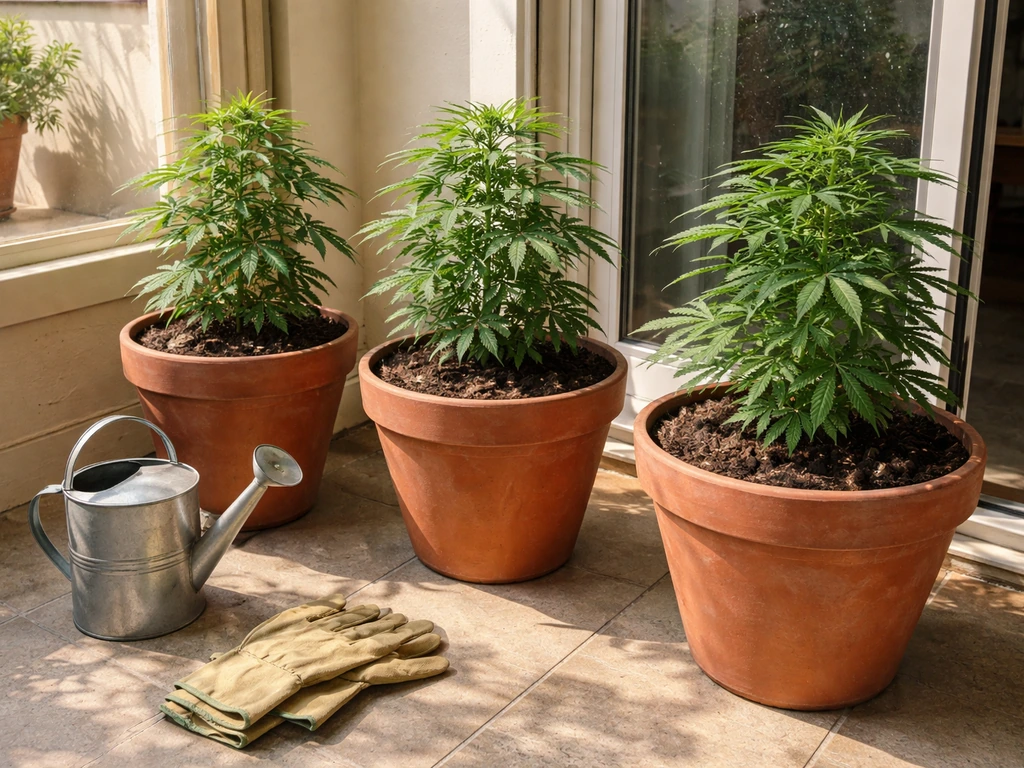
California's adult-use personal cultivation rules under Health and Safety Code § 11362.2 allow adults 21 and older to grow up to 6 living plants per private residence without a commercial license. California Health and Safety Code § 11362.2 requires that personal cannabis cultivation comply with local ordinances and, within the private residence or grounds context, follow quantity and locked-space requirements blank" rel="noopener noreferrer">personal cultivation rules. This is a personal-use exemption, not a commercial license pathway, and it does not extend to 99 plants in any scenario. Local jurisdictions can add restrictions on top of this, so always check your city or county ordinances before you start digging holes in your backyard.
California license costs: application, renewal, and other fees
The DCC publishes its official fee schedule, and fees are set based on findings from economists studying the California cannabis industry. They are not arbitrary, but they are real costs you need to budget for before you apply. Fees are tiered by license type and canopy size, meaning a Specialty Cottage Outdoor license (the 25-mature-plant outdoor tier) will cost less than a larger outdoor or indoor license.
For the most current fee amounts, you should check the DCC's official fee page directly, since these figures can be updated. That said, how much a grow license costs in California depends on which tier you're applying for, and there are a few cost components you need to account for beyond just the application fee itself.
- Application fee: paid when you submit your application; non-refundable even if you're denied
- License fee: paid after approval, before the DCC issues your actual license
- Surety bond: at minimum $5,000 payable to the State of California per licensed premises, required as part of the annual application checklist
- Renewal fees: due annually; the DCC requires cultivation and microbusiness licensees to report total electricity use per power source at renewal time
- Local permit costs: your city or county will almost certainly charge its own fees for local authorization, which is a separate cost from state fees
The surety bond requirement is one that catches people off guard. It's not a large amount compared to the overall cost of setting up a legal cultivation operation, but it's a hard requirement, and you'll need to budget for it regardless of your license tier.
Eligibility and requirements: what you need before you apply

Before you sit down to fill out an application in the DCC's Cultivation Licensing System (CLS), you need to have a few things firmly in place. Missing any of these will stall or kill your application.
- Local authorization first: California requires a valid local authorization (city or county permit, license, or conditional use approval) before the state will finalize your license. You cannot skip this step or apply for state and local approval simultaneously in most cases.
- Proof of a legal premises: you need documentation showing you have the right to use the cultivation site, whether that's ownership records or a lease that explicitly allows cannabis cultivation.
- Owner and financier information: all owners, financial interest holders, and certain key personnel must be disclosed. Background checks are part of this process.
- Surety bond: obtain a $5,000 surety bond payable to the State of California for each licensed premises before submitting your annual license application.
- Canopy plan and site map: you'll need to document your cultivation area, describe your lighting method, and show that your setup matches the license tier you're applying for.
- Water source documentation: California takes water rights seriously for outdoor cultivation. Be prepared to document your water source.
- Business entity formation documents: if applying as a business (LLC, corp, etc.), you'll need your formation documents, operating agreements, and similar paperwork.
If you're unsure which license tier to select based on your planned canopy or plant count, working through the details of how to get a license to grow marijuana in California can help you map your setup to the right application category before you commit.
Application steps: how to submit and what happens after
The DCC uses its Cultivation Licensing System (CLS) as the online portal for all cultivation license applications. Here's how the process flows from start to finish.
- Create a DCC account: go to the DCC's online licensing portal and register. You'll need a valid email address and will go through an identity verification step.
- Start a new application in the CLS: select the correct license type (e.g., Specialty Cottage Outdoor) and begin filling out the main application form.
- Enter owner and premises information: provide all required disclosures about owners, financiers, and the cultivation site itself.
- Upload required documents: this includes your local authorization, site map, canopy documentation, water source records, business formation documents, and surety bond.
- Make required declarations: the CLS includes a section where applicants attest to compliance with applicable laws.
- Pay the application fee: payment is made through the portal at the time of submission. This fee is non-refundable.
- Wait for DCC review: the DCC will review your application, may issue deficiency notices requesting additional information, and will communicate with you through the system.
- Pay the license fee upon approval: once approved, you'll pay the license fee and can then print your license from the CLS portal.
- Post your license: your cultivation license must be posted at the licensed premises.
One practical note: deficiency notices are common, not a sign that something is badly wrong. The DCC often asks for clarifications or additional documentation. Respond promptly and completely to avoid delays.
Compliance basics after approval: staying within the plant limit
Getting your license is the beginning, not the end. Once you're licensed, staying compliant means understanding exactly what your license permits and operating within those boundaries every single day.
If you hold a Specialty Cottage Outdoor license under the 25-mature-plant alternative threshold, that 25-plant cap applies to mature plants. Immature plants (clones and seedlings) are generally accounted for separately under DCC regulations, but you should review your specific license conditions for how your site's canopy and plant counts are tracked in the state's track-and-trace system (METRC).
Track-and-trace compliance is non-negotiable. Every plant must be tagged and tracked through the METRC system from propagation through harvest and sale. Missing tags or unreported plant movements are among the most common violations cited in DCC inspections.
At renewal time, keep in mind that cultivation and microbusiness licensees must report total electricity use for each power source to the DCC. This applies particularly to indoor and mixed-light operations. Start tracking your energy consumption now so you're not scrambling at renewal.
Your local authorization also has its own renewal timeline and conditions. Missing a local renewal can invalidate your state license, so keep both renewal dates on your calendar and treat them as equally important.
Common mistakes and how to sanity-check before you pay
Before you submit an application or pay any fees, run through this sanity-check list. These are the mistakes that cost people real money and time.
- Assuming "99 plants" is a legal threshold in California: it is not. Don't plan your operation around this number. Use the DCC's actual canopy and plant-count thresholds for your license tier.
- Skipping local authorization: applying for a state license before securing local approval is a waste of time and money. Local authorization must come first.
- Choosing the wrong license tier: if your canopy exceeds the Specialty Cottage limits (500 sq. ft. indoor, 2,500 sq. ft. outdoor/mixed-light, or 25 mature plants for outdoor), you need a higher tier. Applying for the wrong tier will result in a deficiency or denial.
- Forgetting the surety bond: the $5,000 surety bond is a required document in the annual application checklist. It's easy to overlook and will stall your application if missing.
- Relying on third-party sites for current fee amounts: non-official sources (including sites that reference a "99-plant grow license") are not authoritative. Always verify current fees directly on the DCC website before budgeting.
- Not budgeting for METRC setup costs: the track-and-trace system has its own setup and ongoing costs that are separate from DCC licensing fees.
- Ignoring local zoning: even if your city or county allows cannabis cultivation, specific zones may prohibit it. Confirm zoning before you sign a lease or purchase property.
- Treating approval as a finish line: compliance is ongoing. Inspections can happen, renewal deadlines are real, and electricity reporting is required.
The regulatory landscape in California is genuinely complex, and the gap between what circulates online and what the actual DCC regulations say is significant. Take the time to read the DCC's own materials, confirm your local jurisdiction's rules, and if you're investing serious money into a cultivation operation, consider consulting a licensed cannabis compliance professional before you start. This article gives you the regulatory framework, but it's not a substitute for advice tailored to your specific situation.