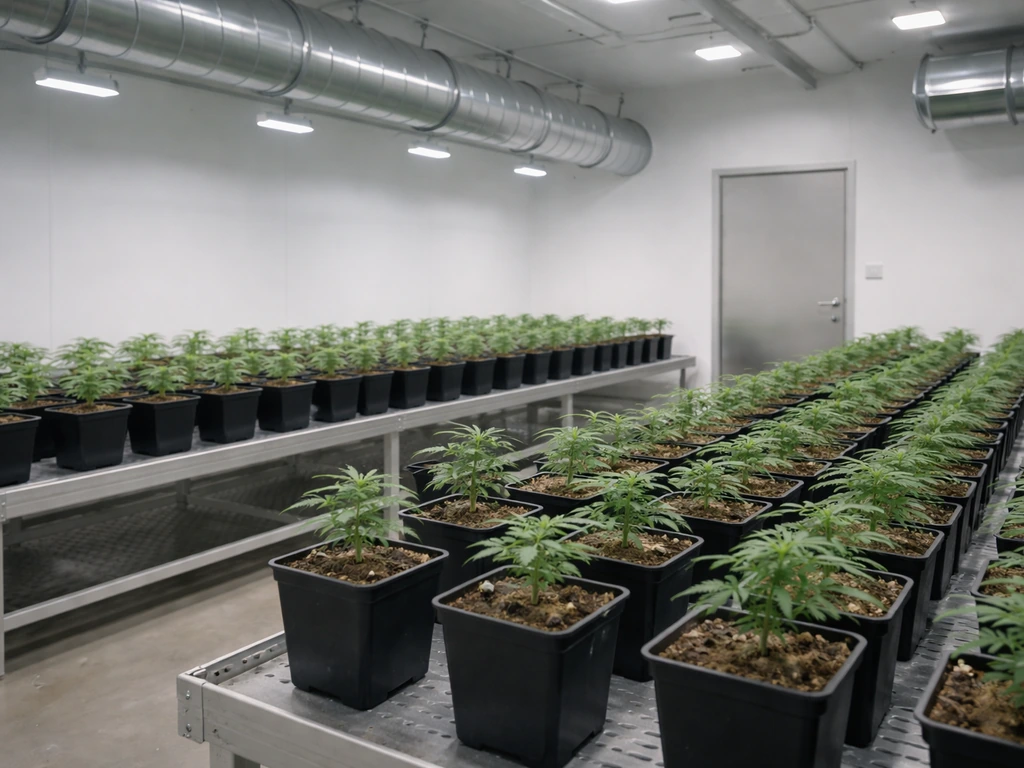
The honest answer is: there is no single number. How many plants you can grow with a growers license depends entirely on which US state you're in, what specific license type or tier you hold, and sometimes even which county or city your grow site sits in. A licensed cultivator in California might be capped by canopy square footage rather than a plant count. A home grower in New York can legally keep up to six plants per adult. A Tier 1 producer in Washington operates under a completely different set of rules than a Tier 3. The 'how many plants' question only gets a real answer once you nail down those three things: state, license class, and local rules.
How Many Plants Can You Grow With a Grower’s License?

Marcus Whitley
4 Apr 2026
Why the plant limit depends on your state and license type
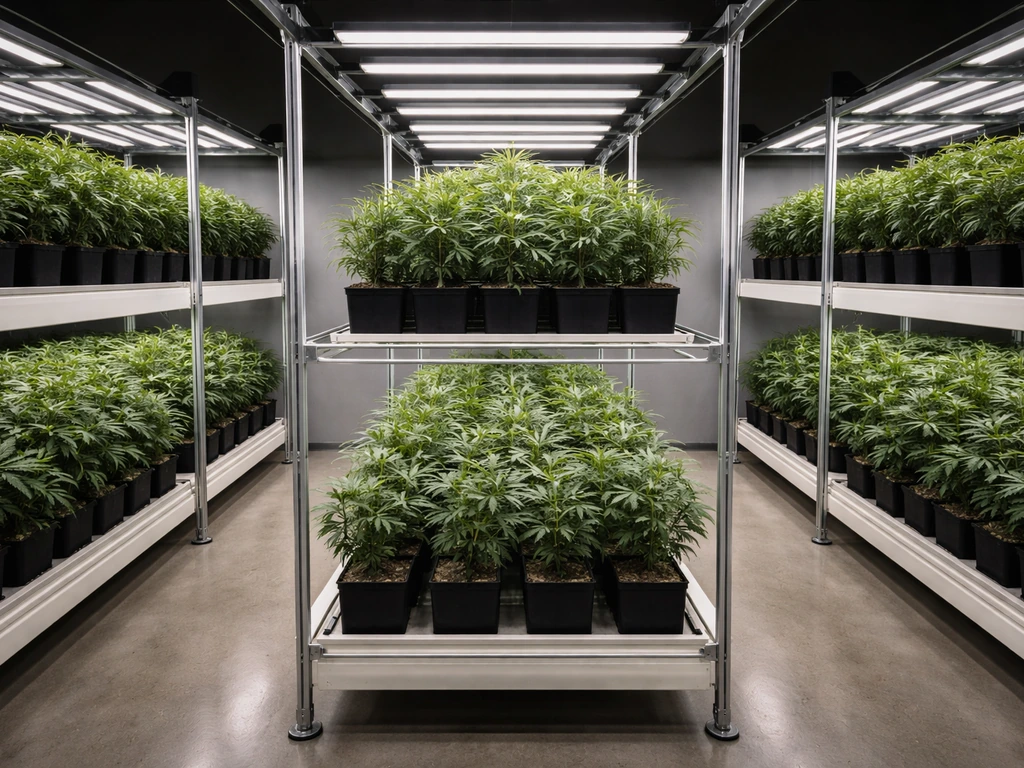
Cannabis cultivation is regulated at the state level in the US, which means every state writes its own rules. But it goes deeper than that. Even within a single state, the plant or canopy limit usually changes based on the license category you hold. A personal home grow license carries a completely different cap than a commercial cultivation license, and commercial licenses are often broken into tiers or size classes with different limits at each tier.
New York is a clear example. The state's Office of Cannabis Management distinguishes between personal home cultivation, which allows up to six plants per adult with a household maximum, and licensed commercial cultivation, which operates under a separate regulatory framework with different metrics entirely. These are not interchangeable categories, and the plant count from one does not carry over to the other.
Local rules layer on top of state rules too. Washington State is a good illustration: the Washington State Liquor and Cannabis Board blank" rel="noopener noreferrer">will not issue cannabis producer, processor, or retail licenses for locations on residential property, partly because inspectors must have access without a warrant. That local zoning constraint can affect whether you can even operate a licensed grow at a given address, let alone how many plants you're authorized to keep there. Washington LCB’s location requirements explain how site and location factors can restrict where cannabis licensees may operate and how to evaluate a proposed location for licensing compliance blank" rel="noopener noreferrer">local zoning constraint can affect whether you can even operate a licensed grow at a given address. Santa Cruz County in California similarly imposes local canopy square-footage caps and distinguishes mature from immature growth areas on top of what the state requires.
The short version: your state sets the framework, your license class sets the specific limit, and your local jurisdiction can tighten things further. You need all three pieces before you have your real number.
How plant limits are defined (plants vs canopy vs square footage vs batches)
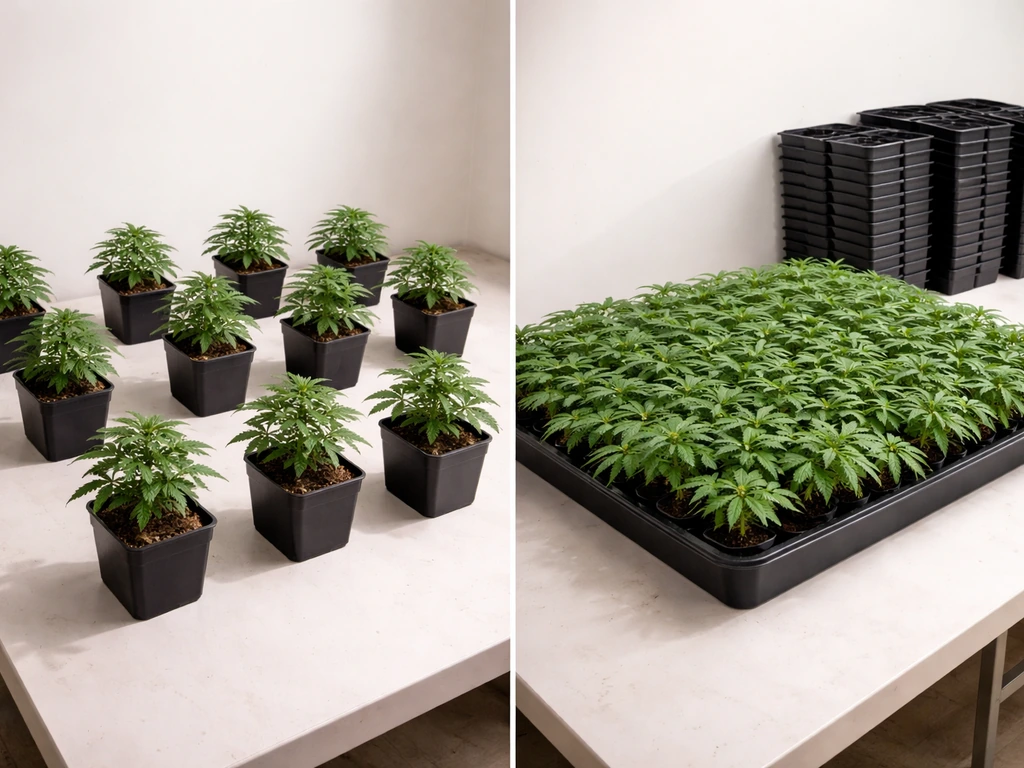
This is where a lot of growers get tripped up. Not all states measure cultivation limits the same way, and some don't use a plant count at all. Here are the four main metrics regulators use:
- Plant count: A flat number of plants you're authorized to have on the licensed premises at any one time. Counts typically include all life stages unless the rules specifically exempt seedlings or clones.
- Canopy square footage: The total area occupied by mature or flowering plants, measured in square feet. California's regulations are built heavily around this metric. A license might authorize 5,000 square feet of canopy, not a specific plant number.
- Batch or harvest batch: California's regulations formally define 'harvest batch' as a specifically identified quantity of cannabis harvested at one time or within a 72-hour period from a single cultivator. Some compliance limits are set per batch rather than per plant.
- Tiers or size classes: Many states combine square footage or plant count with a tiered license structure. You apply for a specific tier, and that tier's authorized area or count is your ceiling. Moving up a tier requires a separate application or license upgrade.
New York's Office of Cannabis Management publishes a dedicated 'Determining Plant Canopy' guidance document (last updated May 15, 2024) that explains exactly how regulators measure canopy for compliance purposes, including definitions for mature versus flowering versus canopy tiers. That kind of document is exactly what you need to read for your own state, because the regulatory definition of what counts toward your limit is often more important than the number itself.
The practical takeaway: before you assume your license authorizes a certain number of plants, find out what unit of measure your state actually uses. If it's canopy square footage, you need to know how your state defines 'canopy' (mature plants only? all plants? includes veg room?). If it's a plant count, you need to know which growth stages are included.
Find your exact legal number: where to check in your jurisdiction's rules
The most direct path to your exact limit is your state cannabis regulatory agency's website. Every licensed cannabis state has one, and they publish the regulations, license type definitions, and often plain-language guidance documents. Here's where to look:
- Your state's cannabis regulatory agency website: Look for the cultivation license page, the administrative code section governing producers or cultivators, and any published guidance documents (like NY's canopy guidance). Search for your license tier or class by name.
- Your actual license document: The license itself often states your authorized canopy area, plant count, or both. Pull it out and read it. The 'authorized premises' description matters too.
- Your jurisdiction's local ordinance: Check whether your county or city has imposed additional restrictions on canopy size, plant counts, or site requirements that are stricter than the state minimum.
- State regulations (administrative code): For California, that's the California Code of Regulations. For Washington, it's the WAC (Washington Administrative Code). These are the authoritative legal texts that define terms like 'canopy,' 'batch,' and 'mature plant.'
- State agency FAQ or compliance guidance: Many agencies publish plain-language documents specifically because these rules are confusing. NY's canopy guidance document is a good example of what to look for.
If you're in California and trying to understand how larger plant counts work under state law, a detailed breakdown of how to grow 99 plants legally in California is worth reading to understand what the state's tiered system actually allows and requires at that scale.
Common cannabis grow license misconceptions that lead to exceeding limits
Most compliance violations aren't intentional. They come from misreading the rules in ways that are completely understandable but still carry real consequences. Here are the mistakes that come up most often:
- Assuming clones and seedlings don't count: Many growers assume only flowering or 'mature' plants count toward their limit. Whether that's true depends entirely on your state's definition. Some states count all rooted plants regardless of stage. Read the definition before you assume.
- Counting plants across multiple rooms separately: Your limit typically applies to the total licensed premises, not per room. Running 50 plants in veg and 50 in flower doesn't mean you're under a 50-plant cap if both rooms are part of the same licensed premises.
- Reusing plant counts across harvest cycles: Some growers think a plant count resets after harvest. It doesn't work that way. The limit is on how many plants are on site at any given time, not how many you grow per year.
- Misunderstanding canopy vs total grow area: If your limit is stated in canopy square footage, that usually means the flowering or mature plant area only. But don't assume your veg room is unlimited. Some states cap total cultivation area, not just canopy.
- Ignoring temporary overage rules: Some states allow a brief period where plant counts can exceed the license limit during a transition between cycles, but the rules for when and how long are specific. Assuming an informal grace period exists is risky.
- Not updating your license when you scale up: If your production grows beyond your current license tier's limit, you need to upgrade your license before you exceed the current cap, not after.
It's also worth understanding that states with specific numerical caps, like the well-known 99 plant grow license category that appears in several state frameworks, have specific definitions about what counts toward that number. The number sounds clear until you realize the definition of 'plant' for compliance purposes can differ from what you'd intuitively assume.
How to calculate a safe target plant count under your license's metric
Once you know your license's specific metric, here's how to work backward to a practical plant target that keeps you clearly within your limit.
If your limit is a plant count
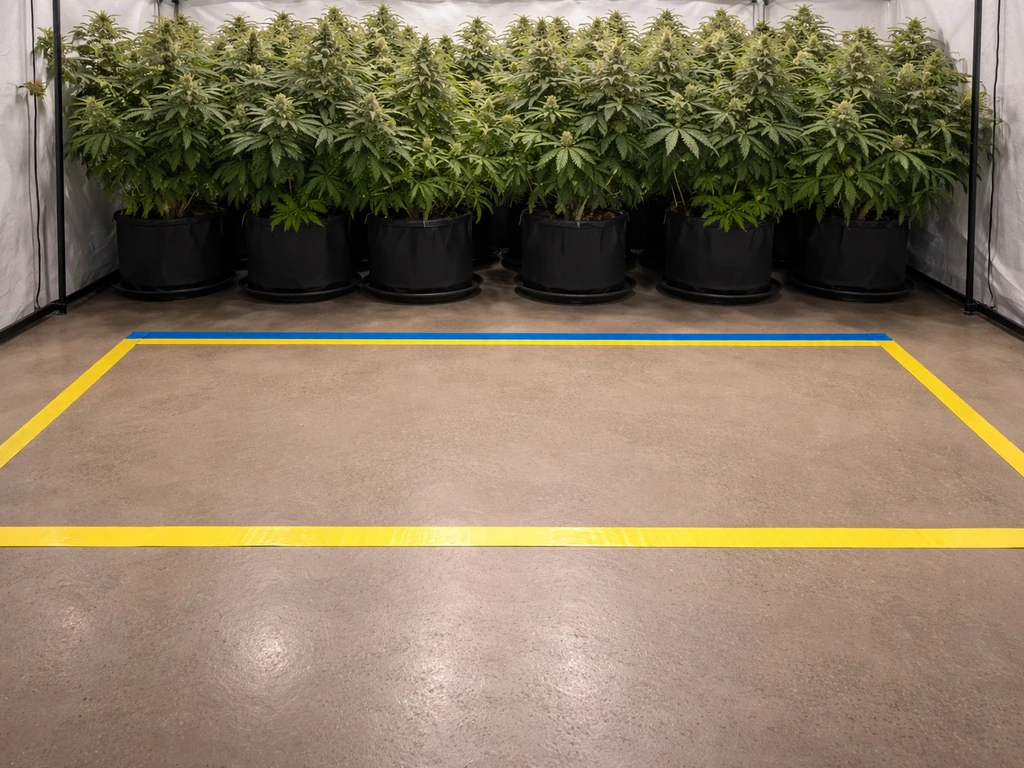
Take your authorized maximum and subtract a buffer of at least 10 percent to account for the plants you're rooting or propagating that might be counted. If your state counts all rooted cuttings, factor in your clone rack. A license authorizing 100 plants might safely support a target of 85 to 90 plants on the floor at any moment, leaving room for clones in propagation without risking a violation during an inspection.
If your limit is canopy square footage
Measure your actual flowering space in square feet and compare it to your licensed canopy cap. Don't measure the entire room. Measure the area where plants will actually sit during flowering. If your canopy cap is 2,500 square feet and your flowering room is 2,000 square feet, you're in good shape. If you're planning to expand into a second room, make sure the combined canopy of both rooms stays under your cap and that both rooms are within your licensed premises footprint.
If your limit involves batches
Understand your state's definition of a batch or harvest batch before you set up your production schedule. California defines a harvest batch as cannabis harvested within a 72-hour window from one cultivator. If your state uses batch-based limits, your production planning needs to align with how batches are defined in the regulations, not just how you think about harvest cycles operationally.
Next steps: confirming compliance (premises, inventory/reporting, signage/operations)
Getting the plant count right is necessary but not sufficient. There are several other compliance areas that directly interact with your plant limit and can create violations even when your count is correct.
Premises authorization: Your license authorizes a specific physical location. Plants growing at any location not covered by your license are unlicensed cultivation, regardless of how many plants are there. Make sure every square foot of your grow space is within your licensed and inspected premises.
Seed-to-sale tracking and inventory reporting: Most licensed cultivation states require you to tag plants and report them in a state-mandated tracking system (Metrc is common). If your tracking system shows more plants than your license authorizes, you have a compliance problem on paper even if your physical count is fine. Keep your tracking system current, especially during propagation and transplant stages.
Signage and operational requirements: Licensed cultivators are typically required to post their license, restrict access to authorized personnel, and maintain records on-site. These aren't just administrative boxes. During an inspection, missing signage or access logs can trigger a more thorough review of your plant count and canopy compliance.
Veg and flower phase separation: Some states track or limit plants differently by growth phase. Make sure your license terms address both phases and that your premises layout matches what's described in your license application. Adding a veg room that wasn't in your original application can create an unauthorized premises issue.
Quick checklist & resources to verify before you plant

Run through this list before you start a new grow cycle, especially if you've recently changed license tiers, moved to a new facility, or added new grow space.
| Verification item | Where to check | Status |
|---|---|---|
| Confirm your exact license tier/class | Your license document | Check before each cycle |
| Identify your state's limit metric (plants, canopy sq ft, batches) | State administrative code or agency website | Confirm once, revisit if rules change |
| Verify which plant stages count toward your limit | State regulations, canopy guidance documents | Critical before propagation |
| Measure your actual flowering/canopy area in sq ft | Physical measurement of licensed premises | Remeasure after any layout change |
| Confirm all grow space is within licensed premises | Your license's authorized premises description | Before adding any new space |
| Check local jurisdiction for additional restrictions | County/city ordinance | Especially relevant in CA, WA |
| Make sure tracking system matches physical plant count | Your seed-to-sale platform (e.g., Metrc) | Before and after any inspection |
| Review any temporary overage or transition rules | State regulations or agency FAQ | During cycle transitions |
The single most important thing you can do before you plant is pull up your state's current administrative regulations and your license document side by side. Rules change. States update canopy guidance, revise tier definitions, and issue new compliance bulletins. What was true for your license class two years ago might not be accurate today. The five minutes it takes to verify your current authorized limit is worth far more than the compliance headache of getting it wrong.
FAQ
If I have room in my facility, can I temporarily grow more plants than my license allows while I wait for an upgrade?
Usually no, because most states tie limits to a specific license type and defined metric, not to intent or past volume. If you want to temporarily exceed a cap, you typically need written authorization for an amendment, batch plan, or expansion, and you must reflect that in the tracking system so regulators do not see an unauthorized inventory spike.
Does moving plants between rooms or zones let me stay compliant if I exceed the plant count?
If your jurisdiction measures by canopy, rearranging plants does not automatically fix compliance because only the areas that count toward “licensed canopy” under your state’s definition matter. If your jurisdiction measures by plant count, shifting plants between rooms can still violate phase or premises rules if those rooms are not authorized and described in your license terms.
How do clones, cuttings, and seedlings count toward my plant or canopy limit?
If you are allowed to propagate on your license, rooted cuttings often count differently than mature plants. Start by checking whether your state counts clones by rooting status, whether the license metric includes immature plants, and how they appear in your tracking system during the propagation window.
Can I keep extra plants in a separate storage room, garage, or off-site location “just temporarily”?
Not necessarily. Many states require that the licensed premises match what was inspected, so using adjacent storage areas, nurseries, or off-site holding for propagation can create an unlicensed cultivation issue even if the plants are never “at full size.” Ask your regulator whether those areas are included in the licensed footprint and how they must be labeled in your tracking system.
What should I do if my Metrc (or equivalent) inventory shows more plants than my physical grow?
Your “on paper” limit is what your tracking system and compliance metric say, not what your eyes tell you. If tags or harvest/batch statuses are wrong, you can end up showing more plants than authorized during an inspection, even if the physical count matches.
Can harvest batch rules affect whether my plant or canopy limit is considered exceeded?
Yes, often there are interaction points that change how the limit is enforced. For example, some states separate veg and flower differently, and certain harvest batch rules effectively create rolling periods where plants must be reconciled. Your best approach is to map your operational schedule to the state’s phase definitions and batch windows before you start.
If I move to a different state, does my previous plant cap or license limit carry over?
You generally cannot assume that a home-use cap applies to a licensed commercial tier, or that a limit in one state carries over to another. State rules are separate, and even within a state, license categories and tiers usually use different metrics, with different definitions of what counts.
Are there items that my state might not count toward the plant limit, like mother plants or non-flowering plants?
Read the specific definition of “plant” (or “canopy” and what is included) because many states exclude or treat certain items differently, such as non-producing plants or how they define a canopy area. If your state defines exclusions, use them in your compliance calculations; if it does not, assume everything in the counted area counts.
If I add new grow space, what are the first compliance checks I should run before starting to use it?
Do a premises and metric double-check. Confirm that every growing area is on the licensed premises description, that any new room was approved or covered by the license terms, and that your tracking setup reflects the correct room or canopy mapping rules so regulators can reconcile it during inspection.
How do I calculate a “safe” plant target so I stay under my authorized limit during normal day-to-day changes?
Start by identifying the unit your state uses for enforcement, then build a safety buffer for propagations and counting delays. Many operators use a conservative target below the maximum, plus a reconciliation routine during transitions like transplanting, harvest staging, and tag changes to ensure your reported numbers do not drift high.
Next Article
How to Get a Micro Grow License in Canada: Step-by-Step
Step-by-step on getting a Canadian micro-cultivation cannabis licence, eligibility, costs, timelines, and compliance bas