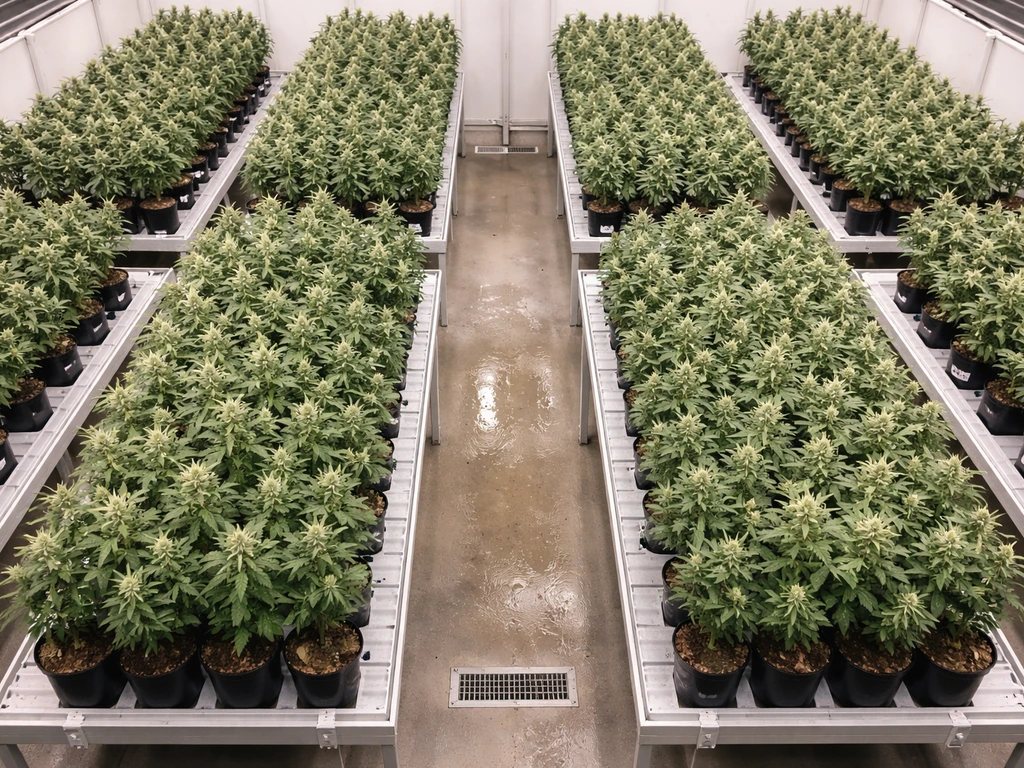
You cannot legally grow 99 plants in California under home cultivation rules. The state caps personal grows at six living plants per residence for adults, full stop. To grow at 99 plants, you need a commercial cultivation license from California's Department of Cannabis Control (DCC), which means going through a full state and local licensing process before a single extra seed goes in the ground.
How to Grow 99 Cannabis Plants Legally in California

Marcus Whitley
24 Apr 2026
California cannabis legality and plant-count basics
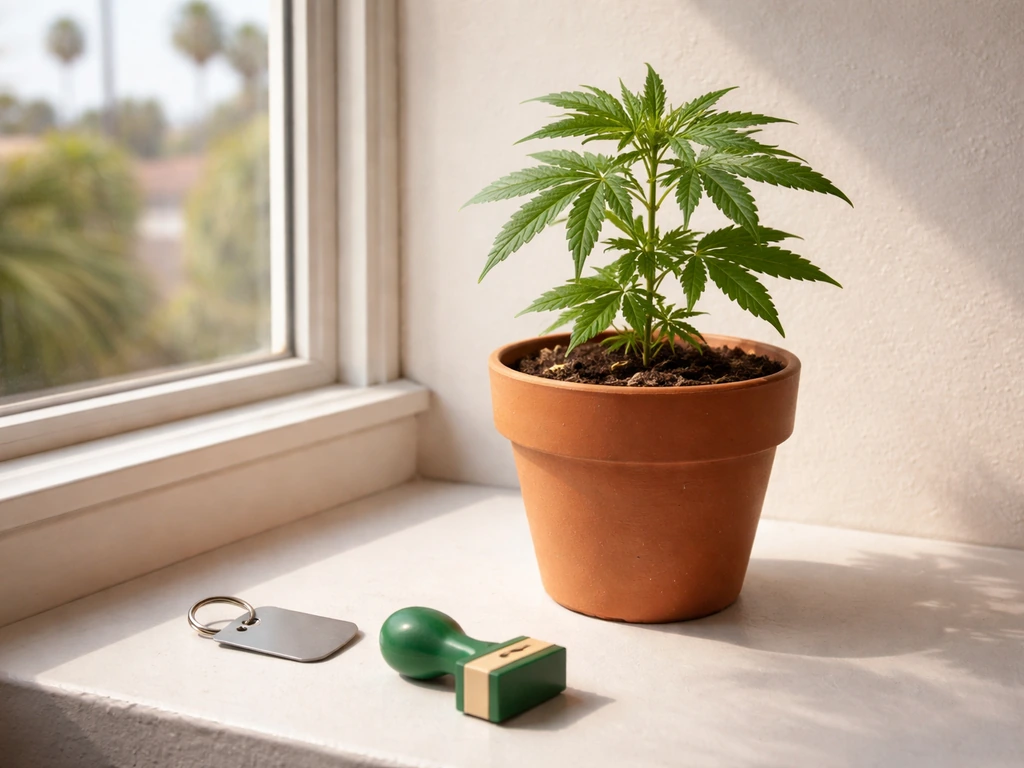
California legalized adult-use cannabis under Proposition 64, and the personal cultivation rules live in Health and Safety Code section 11362.2. That law lets any adult 21 or older cultivate up to six living cannabis plants at their private residence or in a fully enclosed, secured accessory structure on the same parcel. The limit is six living plants total, not six per person in the house, not six per room. If there are two adults in the home, the property still only gets six plants.
Medical patients have slightly different rules under HSC 11362.77: a qualified patient or primary caregiver can maintain blank" rel="noopener noreferrer">up to six mature (flowering) plants or twelve immature plants per qualified patient. That's a bit more flexibility, but it still puts you nowhere near 99 plants. If you are still trying to interpret whether medical limits could get you close, note that a 99-plant operation still generally requires the appropriate commercial cultivation license from the DCC. The moment you want to grow beyond these personal limits, you are operating in commercial territory under California law, regardless of whether you intend to sell the cannabis.
Also worth noting: local governments in California can restrict or outright ban home cultivation even within the state's personal limits. Before assuming you can grow even six plants at home, check your city or county rules. Some jurisdictions prohibit any home growing, and others require that it happens indoors only.
Which license path actually allows 99 plants
Home cultivation is off the table for 99 plants. The only legal path is a commercial cultivation license issued by the DCC. The DCC issues several types of cultivation licenses based on your growing method (outdoor, mixed-light, indoor) and canopy size. Your 99-plant operation would fall under one of the smaller commercial cultivation categories, likely a Specialty or Small tier depending on your total canopy square footage, not just raw plant count.
Here is an important distinction that trips people up: California's commercial licensing system is built around canopy area (square feet of mature, flowering plant space), not a raw plant count. So whether you can legally operate with 99 plants depends heavily on how many square feet those 99 plants occupy in your designated flowering/canopy area. The DCC uses canopy size to determine your license tier, and your license tier determines your fees and obligations.
On top of the state license, you also need local authorization. Your city or county must permit commercial cannabis cultivation at your proposed location before the DCC will even finalize your state license. This means your first real step is always local, not state.
Plant limits by license type and how compliance is tracked
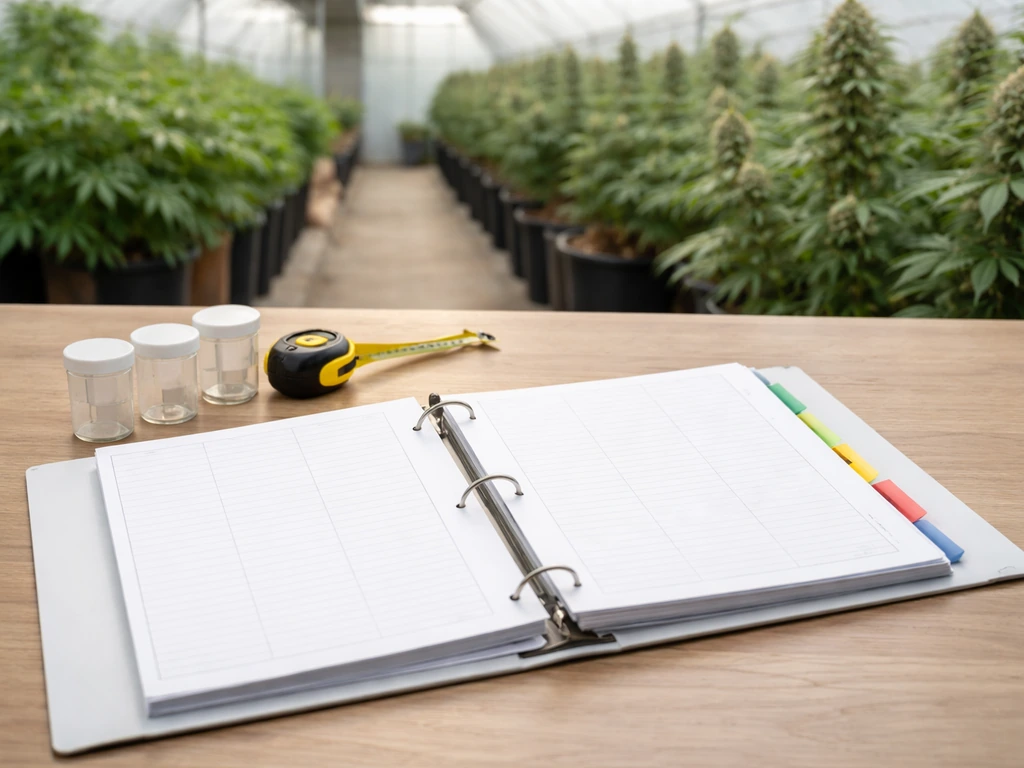
California's DCC defines plant categories precisely, and it matters for compliance. An "immature plant" is a cannabis plant that is not yet flowering and meets certain size/container thresholds. A "mature plant" is one that is actively flowering. Your commercial license's canopy designation applies specifically to the area where mature, flowering plants are grown, so separating your immature and mature plant zones is not optional. Regulations require physical separation between immature lots and flowering canopy areas.
| License Type | Cultivation Method | Canopy Size | Application Fee | Annual Fee |
|---|---|---|---|---|
| Nursery | Any | N/A (propagation only) | $520 | $4,685 |
| Specialty Cottage | Outdoor | Up to 25 sq ft | Varies | Varies |
| Specialty | Indoor/Mixed-Light/Outdoor | Up to 2,000 sq ft (indoor) | Varies | Varies |
| Small | Indoor/Mixed-Light/Outdoor | 2,001–5,000 sq ft (indoor) | Varies | Varies |
| Medium Indoor | Indoor | 5,001–10,000 sq ft | $8,655 | $77,905 |
For a 99-plant canopy, you will most likely be looking at a Specialty or Small indoor (or equivalent outdoor/mixed-light) license tier, depending on your actual square footage. The key compliance mechanic for plant counting is California's track-and-trace system, operated through Metrc (also called CCTT, the California Cannabis Track-and-Trace system). Every commercial cultivator must assign a unique plant tag (a UID tag) to each individual plant when it moves into the designated canopy area or begins flowering. These physical tags are what regulators and inspectors use to verify your plant count. California Code of Regulations section 15048.4 governs the plant tagging rules specifically.
Immature plants in a vegetative or propagation area are tracked separately at the lot or batch level rather than individually, but once a plant enters your flowering canopy, it gets its own tag. This means your 99-plant count (if those are mature/flowering plants) requires 99 individual UID tags actively assigned in the CCTT system. Running plants in the canopy without tags is a compliance violation.
How to apply for a California commercial cultivation license
The DCC processes commercial cultivation license applications through its California Licensing System (CLS), an online portal. The application process has several distinct phases, and skipping steps or getting them out of order is one of the most common reasons applications stall.
Before you submit anything to the DCC

The most important pre-application step is getting your local authorization sorted. Contact your city or county planning or cannabis office to confirm that commercial cannabis cultivation is permitted at your proposed address, and find out exactly what local permits or approvals you need. The DCC requires you to select the Local Authority Type that granted your authorization when you fill out your state application, and DCC staff will contact that local government to verify your approval during their review. Without local authorization, your state application cannot be approved.
Also before applying, contact your County Agricultural Commissioner if you plan to use any pesticides. The DCC's cultivator application checklist specifically requires evidence or attestation that you have contacted the County Ag Commissioner about any active ingredients in your pest management plan. This is a prerequisite, not something you can do after you submit.
The CLS application sequence
- Create an account in the DCC's California Licensing System (CLS) at dcc.ca.gov.
- Each owner listed on the application must create their own account, submit an Owner Application, and complete fingerprinting and a background check through DCC's process.
- Gather and prepare all required documents using DCC's official Application Checklist for Cultivators (premises documents, local authorization, watershed/area determinations per applicable law, power source documentation for indoor or mixed-light grows, pest management plan, and related attestations).
- Submit the full application through CLS, selecting the correct cultivation license type and local authority that issued your authorization.
- DCC reviews the application, contacts your local jurisdiction to confirm local approval, and may request additional information.
- Once approved at the state level and with local authorization confirmed, DCC issues your cultivation license.
Timeline expectations: there is no single published guarantee on how long DCC review takes, and timelines vary based on application completeness and local jurisdiction responsiveness. Applicants who submit complete packages with all required documents and have pre-confirmed local authorization tend to move faster. Incomplete applications can sit for months waiting on correction requests. Planning for at least three to six months from submission to license issuance is a reasonable baseline, though it can be shorter or longer.
Costs, eligibility, and why applications fail
Fees vary significantly by license type. A Nursery license starts with a $520 application fee and a $4,685 annual license fee. A Medium Indoor license carries an $8,655 application fee and a $77,905 annual fee. For a 99-plant operation in a Specialty or Small tier, your fees will likely fall somewhere between these poles, but always check the current DCC fee schedule since fees can be updated.
Beyond fees, factor in the cost of fingerprinting and background checks for every owner, plus any local permit fees (which vary widely by jurisdiction and can be substantial on their own).
On eligibility: all owners must pass a background check. California does not automatically disqualify applicants with prior cannabis convictions, but DCC reviews each case. Any owner with certain serious felony convictions may be disqualified.
The most common reasons applications fail or stall:
- No local authorization or operating in a jurisdiction that bans commercial cannabis cultivation
- Missing or incomplete premises documentation (lease, deed, or landowner authorization)
- Skipping the County Agricultural Commissioner contact for pest management
- Background check issues for one or more owners
- Wrong license type selected for the actual canopy size or cultivation method
- Failure to include required watershed or environmental determinations
- Submitting before local authorization is actually issued (not just applied for)
Staying compliant once you are licensed: operations, storage, reporting, and inspections
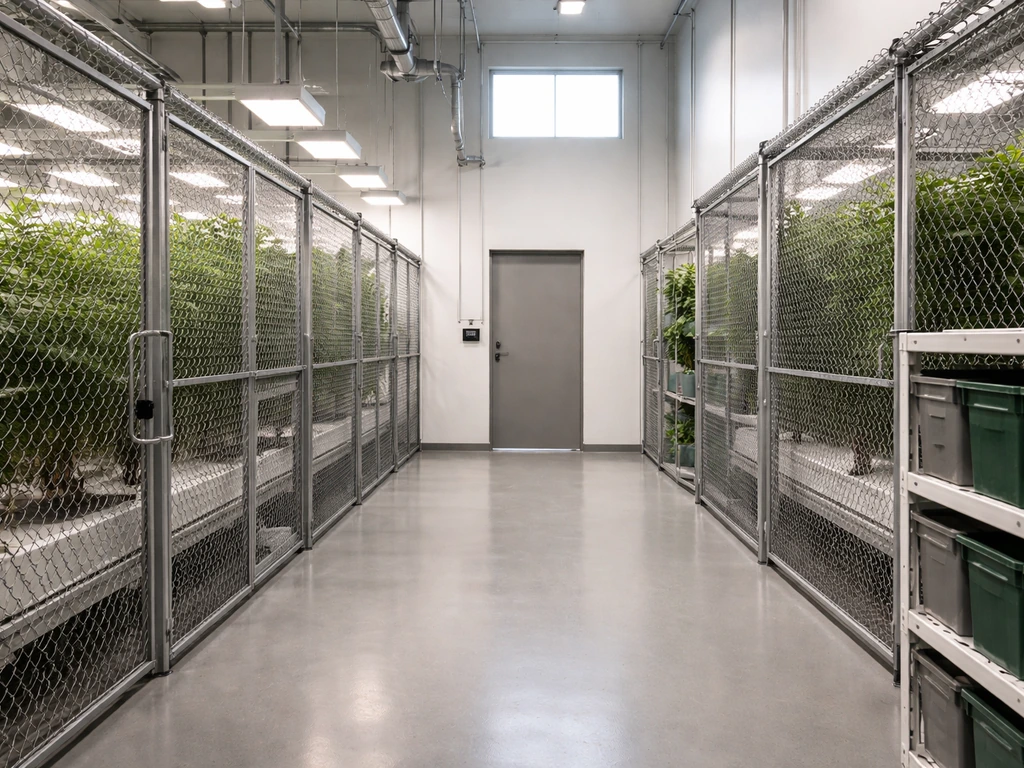
Getting licensed is just the beginning. A 99-plant commercial cultivation operation comes with ongoing compliance obligations that you need to build into your day-to-day workflow before you ever plant anything.
Secure premises and storage
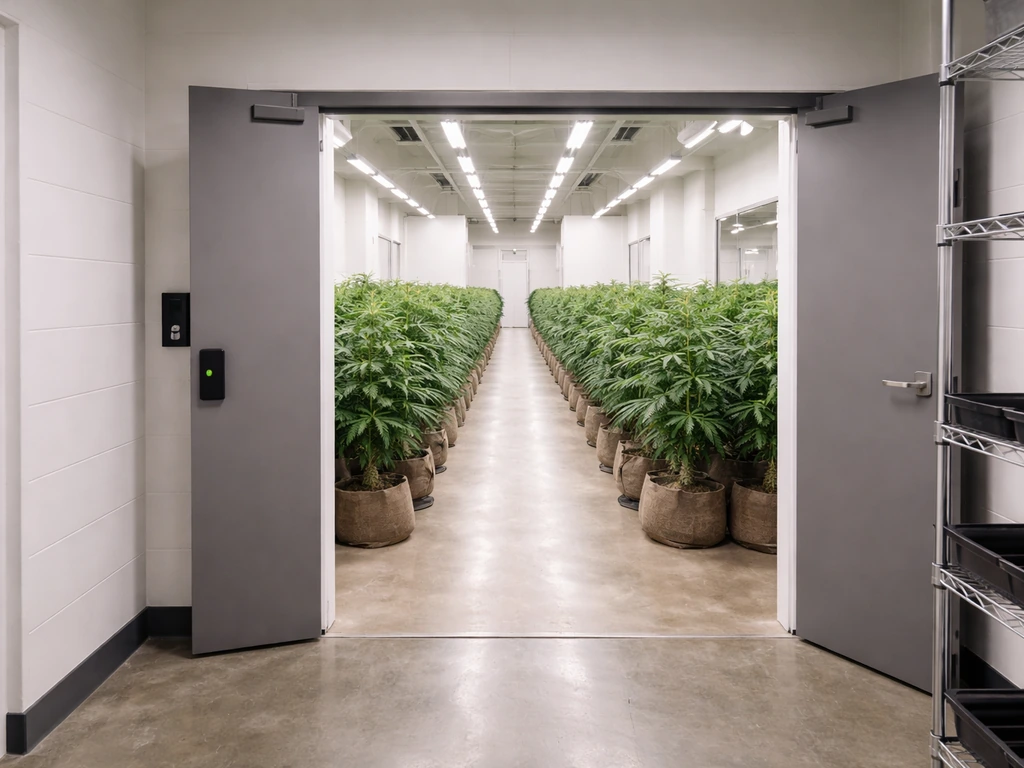
Your licensed premises must be secured against unauthorized access. This means physical security measures: locked entry points, limited access areas, and controls over who can enter the canopy or storage areas. DCC's cultivator self-inspection checklist outlines the specific security requirements, and inspectors will check these during visits. Cannabis that is harvested and drying must be stored in a secure, designated area that is part of your licensed premises.
Cultivation standards and plant segregation
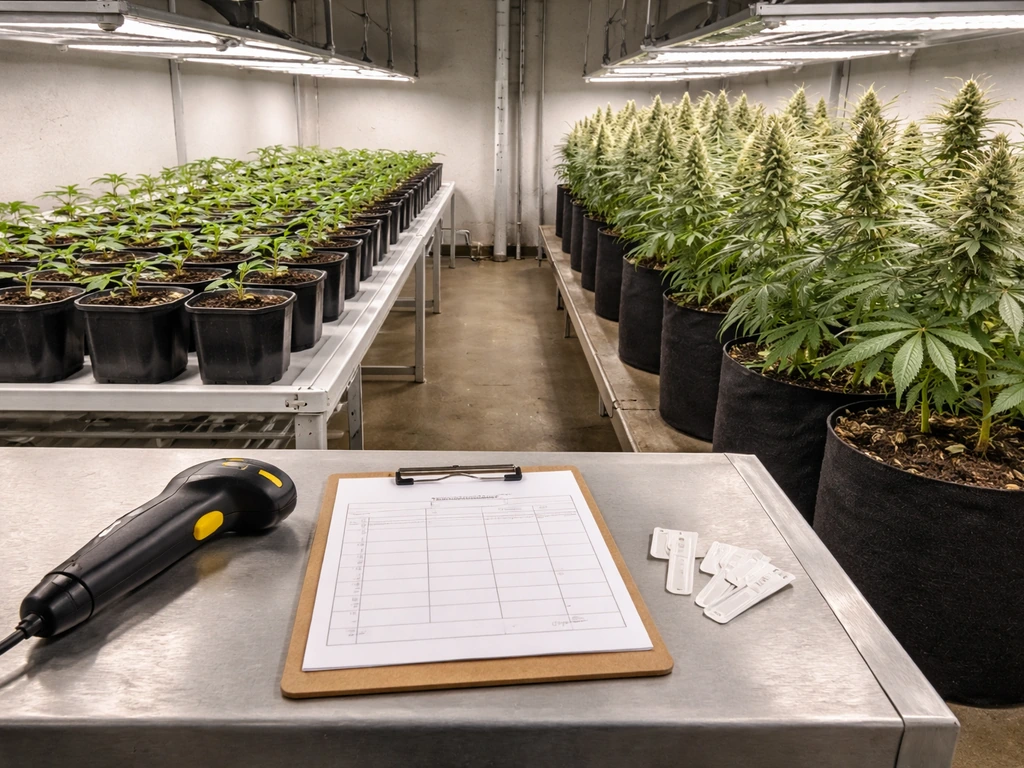
You must maintain physical separation between your immature plant areas and your mature (flowering) canopy. Mixing them together, even temporarily, is a compliance problem. Your designated canopy area (the square footage on your license) must match what you actually use for flowering plants. If you expand beyond your licensed canopy without amending your license, you are out of compliance.
Track-and-trace and recordkeeping
Every commercial cultivator must onboard to California's track-and-trace system (CCTT/Metrc). In a r/weedbiz thread, California cannabis operators also discuss practical questions about using METRC retail IDs alongside the broader track-and-trace workflow in CCTT CCTT/Metrc track-and-trace onboarding. The process involves requesting UID plant tags from DCC, applying them physically to each plant entering your canopy, and reporting the tag assignment in the system. All movements of plants and harvested product must be recorded in CCTT. This is not occasional reporting: it is an ongoing, activity-by-activity obligation. The CCTT records must accurately reflect what is actually happening on your premises because your cultivation tax reporting to the California Department of Tax and Fee Administration (CDTFA) must match your CCTT data.
Taxes
California imposes a cultivation tax based on the category and weight of cannabis you sell or transfer to a manufacturer or distributor. This is reported to the CDTFA, and the weights must align with what you have recorded in CCTT. There is also a cannabis excise tax at the retail level, which affects your downstream transactions. Even if you are only cultivating and not retailing, understanding how the cultivation tax flows through the supply chain matters for your pricing and record-keeping.
Inspection readiness
DCC can and does conduct inspections of licensed premises. The DCC's cultivator self-inspection checklist is a publicly available document, and going through it yourself before any DCC visit is one of the most practical things you can do. It covers everything from canopy compliance and plant tagging to record access and security. Running your own mock inspection against that checklist a few times a year is genuinely useful.
Your practical next-steps checklist for planning a lawful 99-plant grow
If you are serious about doing this legally, here is the sequence to work through. This is a planning roadmap, not legal advice. For questions specific to your situation, consulting a California cannabis attorney or compliance consultant before you spend money is money well spent.
- Confirm local jurisdiction rules: Contact your city or county cannabis/planning office and verify that commercial cannabis cultivation is allowed at your proposed location. Ask what local permits are required and what the timeline and cost are.
- Calculate your canopy square footage: Count your intended mature/flowering plant space in square feet, not just plant count. This determines which DCC license tier you need.
- Identify your DCC license type: Using your canopy square footage and grow method (indoor, mixed-light, or outdoor), find the correct license tier on DCC's current cultivation license fee schedule.
- Budget for all costs: Add up DCC application fees, DCC annual fees, local permit fees, fingerprinting and background check costs for all owners, and operational setup costs (security, track-and-trace hardware/software, etc.).
- Gather required documents early: Use DCC's official Application Checklist for Cultivators. Collect your premises documents, local authorization evidence, power source documentation (for indoor or mixed-light), and watershed/area determinations.
- Contact your County Agricultural Commissioner: If you will use any pesticides, contact the Ag Commissioner before submitting your application and document that contact.
- Set up owner accounts in CLS: Every owner must create an individual account in DCC's California Licensing System and complete the Owner Application and fingerprinting/background check steps.
- Submit your application through CLS: Select the correct license type and local authority type. Attach all required documents. Incomplete submissions delay the process significantly.
- Onboard to CCTT/Metrc: After licensing, go through DCC's track-and-trace onboarding: request UID plant tags, learn the system for reporting plant movements, and build CCTT reporting into your daily workflow.
- Set up CDTFA registration: Register with the California Department of Tax and Fee Administration for cultivation tax reporting before you make your first transfer.
- Review DCC's cultivator self-inspection checklist: Use it to audit your own setup before your first DCC inspection and repeat regularly.
If you want to go deeper on related licensing questions, it is worth understanding how plant counts and canopy limits interact across different license types more broadly, and what a dedicated 99-plant grow license framework looks like in practice. You may be asking how many plants you can legally grow with a growers license, and the answer depends on your license category and canopy area rather than a simple plant cap how many plants you can grow with a growers license. Those topics connect directly to sizing your application correctly and avoiding the most common compliance traps at this scale.
FAQ
If 99 plants isn’t allowed at home, could I still grow 99 plants on a commercial site if I’m not selling any cannabis?
No. In California, “plant count” by itself is not what controls whether you can legally grow, the DCC tier is driven by canopy square footage for flowering/mature plants. So 99 plants can be legal only if your flowering canopy area and license tier match what you actually plan to cultivate, with the required physical separation from immature areas and correct track-and-trace tagging.
What happens if I grow 99 plants “just for personal use” and never sell or transfer them?
If you’re growing beyond the personal limits, you are in commercial territory regardless of intent to sell. Practically, you still need state licensing and local authorization if you exceed the home cap, because regulators treat cultivation at that scale as part of the regulated market supply chain. “Not selling” does not remove the need to comply with licensing, security, tagging, and inspections.
How strict is the rule about assigning UID plant tags for each flowering plant in Metrc, and what mistakes get people in trouble?
Track-and-trace plant tags are issued for each plant when it enters the designated flowering canopy, and regulators expect the physical tags and system records to match. A common compliance mistake is starting flowering plants before the UID tags are assigned in Metrc, or moving plants between zones without recording the movement and assigning tags appropriately.
Can I run both vegetative (immature) plants and flowering plants on the same premises under one license?
Yes, but only if both are true: your license covers both types of canopy areas, and you can keep immature and mature spaces physically separated and clearly designated in your licensed premises. In practice, you must plan layout so that propagation/vegetative lots stay in their area and only plants intended for flowering enter the licensed flowering canopy with the correct tag workflow.
Do I need anything besides DCC licensing and local authorization to start building or operating a 99-plant facility?
Your city or county can require additional permits even after you receive local authorization, and some jurisdictions impose zoning-specific conditions like indoor-only cultivation, odor control requirements, or limits on operating hours. Another edge case is when local approvals allow cultivation but require a separate building permit or change of occupancy before you can start.
What local-authorization problems most often delay or derail DCC license applications?
The DCC application can stall if the “local authority type” and authorization details don’t line up with what your local government approved, or if you submit without meeting local documentation requirements. Before submitting, confirm your exact local permit or authorization number, and verify the address parcel and premises description are consistent with what local government approved.
If I license for a certain canopy size, how risky is it to later expand to use more space or increase plant density?
Plan for it by treating canopy expansion as a compliance event. If you add flowering space beyond what your license lists, you may be operating outside authorized premises even if your plant count stays the same. Many applicants focus on plant numbers and forget that adding grow tables, trellises, or shelving can effectively change usable canopy square footage.
Does the license category depend more on whether I grow indoors versus how many plants I have?
Choose based on the cultivation method that you will actually use, because license requirements differ for indoor, mixed-light, and outdoor workflows and can affect security, environmental controls, and premises design. A common mistake is applying under one method while planning operations that effectively fit another category, which can complicate amendments or delays.
What security measures are regulators really looking for, beyond basic locks, during inspections?
DCC security expectations go beyond “locked doors.” For example, you typically need controls over who can access canopy areas and storage, documented procedures for restricted access areas, and secure storage for harvested product during drying and post-harvest handling. Inspectors also look for record access controls, not just physical barriers.
If I might use pesticides later after I get licensed, do I still need to coordinate with the County Agricultural Commissioner during the application?
Yes, pesticide use triggers a separate compliance gate. If you plan to use pesticides, the DCC requires you to contact the County Agricultural Commissioner before you apply, and your pest management plan must align with the information you provide. A frequent mistake is planning an IPM approach later, after application, instead of addressing it early.
Who needs to pass background checks, and what ownership-structure mistakes cause extra scrutiny?
Generally, background check rules focus on qualifying owners rather than just the person who does the growing. A common pitfall is a corporate or ownership structure that isn’t fully captured in the application, causing additional review. Make sure every required owner is disclosed and understands the timeline implications of fingerprinting and background check processing.
How can I prevent problems where cultivation tax reporting doesn’t match what’s in Metrc?
Yes, because ongoing compliance includes tax reporting that must match CCTT data, and discrepancies can create downstream problems. A practical decision aid is to establish a routine reconciliation process, for example weekly checks that Metrc weights, harvest tags, and batch transfers correspond to your CDTFA reporting records.
How should I use the DCC self-inspection checklist in real operations, not just for preparation before an inspection?
You can use the self-inspection checklist as a practical “mock inspection,” but don’t treat it as purely paperwork. Build a simple internal audit schedule that includes verifying tags are present on plants in the canopy, ensuring access logs or security controls are working, and confirming immature and mature zones remain separated as plants move through the lifecycle.
Next Article
99 plant grow license: how to qualify, calculate, apply
Learn how to qualify, calculate, and apply for a 99-plant cannabis grow license by state, with compliance steps.