Yes, you can legally sell grow tents in most of the United States even though cannabis remains a Schedule I controlled substance under federal law. Grow tents themselves are not controlled. The legal risk is not in the product but in how you sell it: if your marketing, product listings, or business practices signal that you are specifically helping customers grow illegal cannabis, you can cross into federal drug paraphernalia territory. Get the marketing right and understand your state's rules, and selling grow equipment is a legitimate business.
Can I Sell Grow Tents Schedule 1? Legality Checklist

Marcus Whitley
29 Apr 2026
What "Schedule 1" actually means for cannabis
Under the Controlled Substances Act (21 U.S.C. § 812), cannabis containing more than 0.3% delta-9 THC on a dry-weight basis is classified as a Schedule I controlled substance. Schedule I means the federal government has determined there is blank" rel="noopener noreferrer">no currently accepted medical use and a high potential for abuse. That classification drives criminal enforcement exposure for cultivation, sale, and distribution of high-THC cannabis at the federal level, regardless of what your state allows. DEA’s internal guidance also states that products or materials made from the cannabis plant that fall outside the CSA definition of “marijuana,” such as excluded hemp-category materials, are not controlled under the CSA blank" rel="noopener noreferrer">fall outside the CSA definition of “marijuana”.
There is one critical carve-out. The 2018 Farm Bill removed "hemp" from Schedule I. Hemp is legally defined as cannabis with total THC at or below 0.3% dry weight (7 U.S.C. § 1639o). DEA's own regulatory text at 21 CFR § 1308.11 reflects this: tetrahydrocannabinols in hemp are explicitly excluded from Schedule I. So when someone says "cannabis is Schedule 1," they are technically talking about high-THC marijuana, not hemp.
At the state level, "Schedule I" can mean something different. States maintain their own controlled-substance schedules. Virginia, for example, codifies its Schedule I list separately in § 54.1-3446 of the Drug Control Act, which includes its own provisions and exclusions for hemp. Your state's schedule and its hemp exemptions matter just as much as the federal one when you are operating a local business.
Can you sell grow tents when cannabis is Schedule I? The real answer
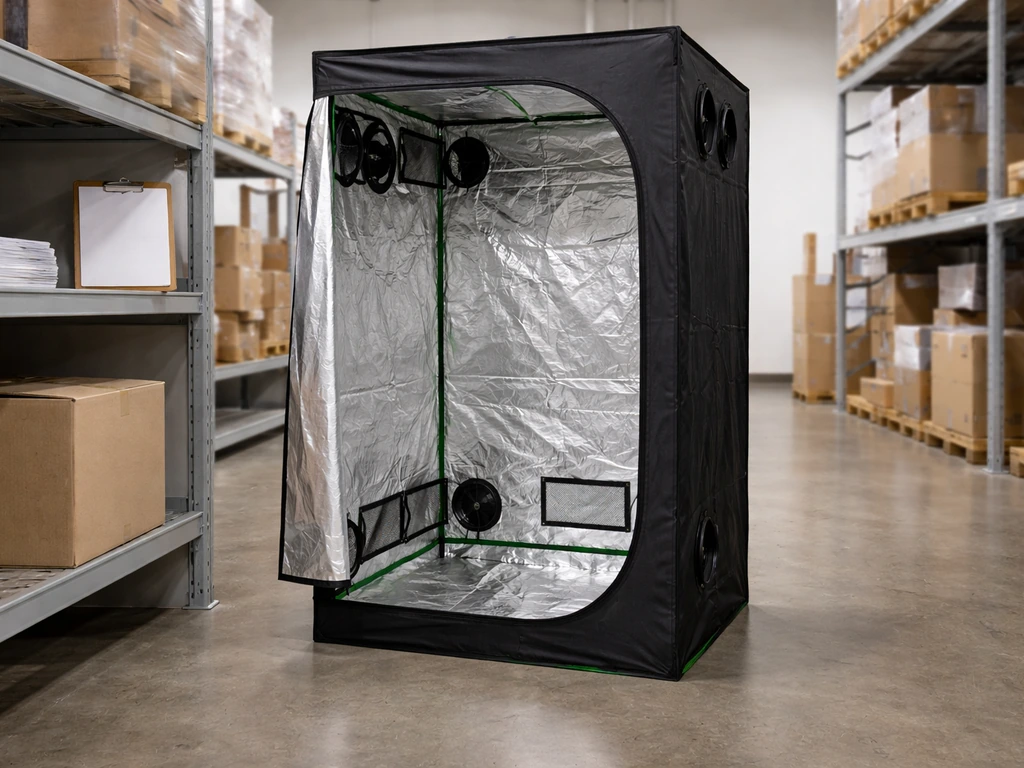
Grow tents are not listed anywhere in federal controlled-substance law. Selling a grow tent is not the same as selling cannabis. The legal complication comes from 21 U.S.C. § 863, the federal drug paraphernalia statute. That law defines paraphernalia as equipment "primarily intended or designed" for use in manufacturing or processing a controlled substance where possession of that substance is unlawful under the CSA.
The word "primarily" is doing a lot of work there. A grow tent has thousands of legal uses: vegetables, herbs, microgreens, mushrooms, hemp, and ornamental plants. It is not inherently drug paraphernalia. What can make it paraphernalia is context, specifically your own marketing context. The statute explicitly says that "descriptive materials accompanying the item" that explain or depict its use for controlled-substance manufacturing are one of the factors courts and prosecutors look at when making a paraphernalia determination.
In plain terms: a grow tent sold on a general gardening website with no mention of cannabis is almost certainly legal. The same tent sold on a page titled "grow the best marijuana at home" with cultivation tips for high-THC cannabis is a very different story. Your marketing is your biggest compliance lever.
Federal vs. state vs. local: how to verify what applies to you
There are three overlapping legal layers you need to check before you start taking payments for grow equipment.
| Level | What to check | Why it matters |
|---|---|---|
| Federal | 21 U.S.C. § 863 (paraphernalia), CSA Schedule I status, DEA guidance on hemp decontrol | Sets the floor for criminal exposure; applies regardless of state law |
| State | Your state's controlled-substance schedule, cannabis legalization status, equipment/paraphernalia statutes | Many states have their own paraphernalia laws; some states with legal cannabis also have equipment retailer rules |
| Local | City/county business license requirements, zoning, any local cannabis-adjacent commerce ordinances | Some municipalities restrict cannabis-related retail even where state law permits it |
Start with the federal layer. Because the DOJ rescinded prior marijuana enforcement guidance in 2018 and directed a return to the rule of law under the CSA, there is no formal federal safe harbor for cannabis-related commerce. That does not mean every grow-tent seller is being prosecuted, but it does mean the federal risk is real if your business looks like it is facilitating illegal cultivation.
Then look at your state. If your state has legalized adult-use or medical cannabis, your state's paraphernalia laws almost certainly include exemptions for cannabis equipment sold to adults in that market. If your state still treats cannabis as a Schedule I substance under its own Drug Control Act, the paraphernalia risk at the state level mirrors the federal one. You need to read both.
Finally, check local rules. Some counties and cities layer on their own restrictions. A quick call to your city business licensing office and a search of your county code for "cannabis" or "paraphernalia" will usually answer whether there are local restrictions on what you can sell or how you can advertise it.
Licensing to sell cannabis grow equipment
In most states, you do not need a special cannabis license to sell a grow tent. Grow tents are general-purpose equipment. A standard retail business license from your city or state is typically all you need, just like selling any other gardening product.
The licensing picture changes if you start selling cannabis products alongside the equipment. New York's Office of Cannabis Management, for example, requires a Cannabinoid Hemp Distributor Permit ($300 application fee) before you can sell or distribute cannabinoid hemp products to licensed retailers. California's Department of Cannabis Control requires a retail license for businesses selling cannabis goods. If you are mixing grow equipment sales with hemp or cannabis product sales, you likely need a license for the product side even if the equipment side is unlicensed.
Some states with medical cannabis frameworks go further. In D.C., licensed cultivation centers are explicitly authorized to possess and use cannabis paraphernalia as part of their licensed operations, and licensed retailers can distribute paraphernalia to qualifying patients. That kind of licensing structure means that within a state-legal cannabis ecosystem, equipment vendors who are also licensed face a different (and more permissive) legal environment than unlicensed sellers.
If you are selling grow equipment to licensed cannabis businesses as a regular wholesale activity, check whether your state classifies you as a "distributor" under cannabis law. California defines a cannabis distributor as someone required to be licensed by the DCC to transport and sell cannabis products between licensed businesses. Supplying equipment is different from supplying cannabis products, but if the line blurs, talk to a business attorney familiar with your state's cannabis licensing framework.
Compliance essentials for your listings, packaging, and customer messaging
This is where most grow-tent sellers either protect themselves or create unnecessary legal exposure. Because the federal paraphernalia statute explicitly treats your own descriptive materials as evidence of intent, the way you write your product listings and market your products is a compliance decision, not just a marketing one.
Product listings and descriptions
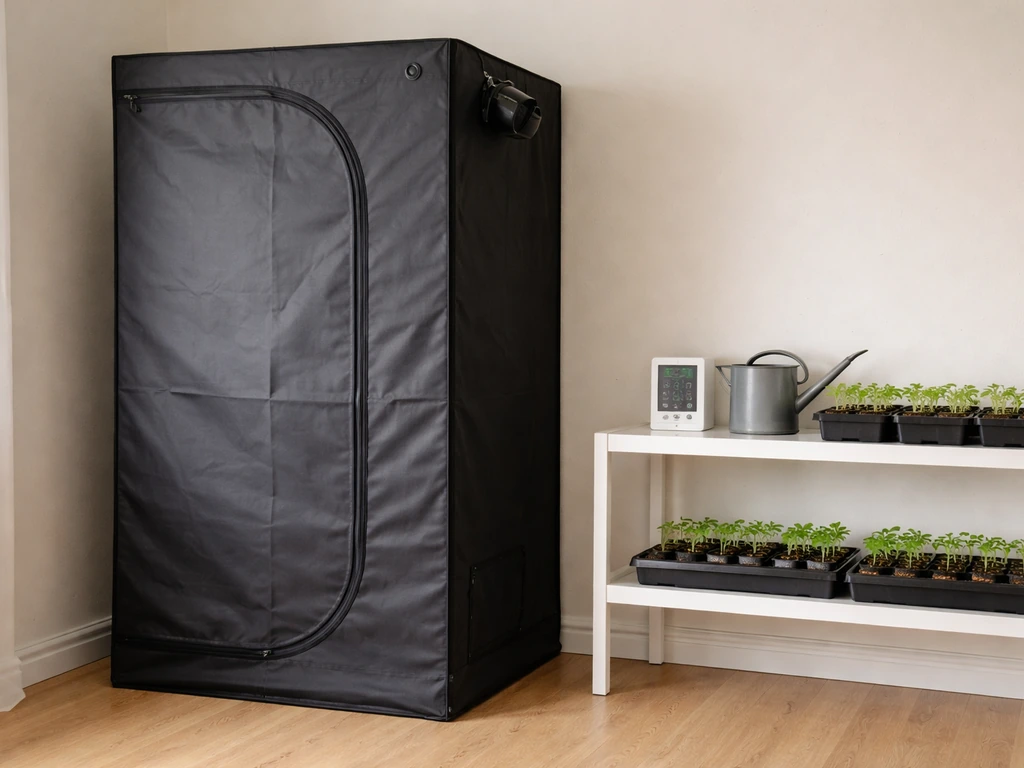
- Describe grow tents in terms of general horticulture: light control, humidity management, year-round growing, vegetable and herb cultivation.
- Do not use phrases like "perfect for marijuana," "cannabis grow tent," or any language that singles out high-THC cannabis cultivation as the primary use.
- If you reference cannabis at all, limit it to legal hemp cultivation where that is accurate and lawful in your state.
- Avoid linking to cannabis cultivation guides or tutorials in your product pages.
- Do not include strain-specific recommendations, THC optimization tips, or any content that implies the product is designed for illegal drug production.
Packaging and shipping
- Ship in neutral packaging with no cannabis-related branding or imagery.
- Review the terms of service for any shipping carrier you use: major carriers have their own restrictions on cannabis-related shipments.
- If you sell through third-party platforms (Amazon, Etsy, Shopify), read their specific policies on cannabis-adjacent products. Platform rules can be stricter than federal law.
- Keep records of where you ship. Shipping grow equipment into a jurisdiction where cannabis is fully illegal and your marketing is cannabis-specific creates compounding risk.
Payment processing
Standard payment processors (Stripe, PayPal, Square) monitor for cannabis-related commerce and can terminate accounts if they determine a business is facilitating cannabis sales or paraphernalia sales. Even if your product is legal, cannabis-specific marketing on your website can trigger their compliance filters. Keep your storefront general, and if a processor asks about your business, be accurate: you sell gardening equipment, not cannabis accessories.
Customer use disclaimers
Adding a clear disclaimer that your products are intended for lawful use only, and that customers are responsible for complying with all applicable laws, is a reasonable step. It does not create an absolute legal shield, but it reinforces the "general use" framing of your business and shows good-faith intent if questions ever arise.
What to do today before you take your first payment
Here is a concrete checklist you can work through right now. None of these steps require a lawyer to start, though a lawyer familiar with your state's cannabis and business laws is worth consulting if you plan to build a serious business in this space.
- Identify your state's cannabis legal status. Look up your state's controlled-substance schedule and find out whether adult-use or medical cannabis is legal. This sets your baseline risk level for equipment sales.
- Search your state's paraphernalia statute. Most states have a paraphernalia law modeled on the federal one. Find out whether your state has exemptions for cannabis-legal markets or for general-purpose equipment.
- Confirm equipment classification. Verify that grow tents are not specifically listed or restricted under any state or local ordinance. A quick search of your state legislature's website for "grow tent" or "cultivation equipment" will usually return nothing, which is what you want to see.
- Review your state's cannabis regulatory agency website. States like New York (OCM), California (DCC), and Virginia (CCA) publish licensing requirements and compliance guidance. Even if you are not selling cannabis, these sites tell you what the regulated ecosystem looks like and whether any equipment-vendor registration is required.
- Audit your existing or planned product listings. Read every product description, category name, and marketing headline with the federal paraphernalia statute in mind. Remove or rewrite anything that specifically ties the product to high-THC cannabis cultivation.
- Check platform and payment-processor terms of service. Before you list anywhere or connect a payment processor, read their cannabis and paraphernalia policies. Know exactly what language will trigger a review or account suspension.
- Set up a general-use disclaimer on your storefront. State clearly that products are sold for lawful horticultural use and that customers are responsible for compliance with their local laws.
- Register your business properly. Get the standard retail or wholesale business licenses your city and state require. This has nothing to do with cannabis licensing but it is foundational to operating legally.
- Document your compliance decisions. Keep a simple record of the steps you took, the statutes you reviewed, and the marketing choices you made. If you ever face a question about intent, documentation of a good-faith compliance process matters.
One thing worth keeping in mind as you build this out: the regulatory landscape around cannabis is genuinely moving. Federal scheduling can change through DEA and FDA administrative processes (Epidiolex's move to Schedule V is a real precedent for how that works). More states are legalizing and building out licensing frameworks. Staying current on your state's rules is an ongoing task, not a one-time checkbox. This site's state-by-state guides are a useful place to track those changes as they happen, especially if you are selling into multiple states or considering expanding your customer base.
If you are also curious about what cannabis strains licensed cultivators are actually growing, or where licensed growers source their pots and containers, those are related questions that touch on the same regulatory territory as equipment sales. If you are trying to plan cultivation, you should also understand what schedule 1 which weed to grow.
And if you are operating in a jurisdiction where unlicensed grow operations are a concern, understanding how regulators and law enforcement identify illegal grow setups is worth knowing if you want to make sure your business does not inadvertently get swept up in that enforcement activity. If you want to see the common red flags and enforcement patterns behind busted grow operations, read more about how grow houses get busted.
If you end up needing to report an illegal grow operation, you can look up BC’s reporting options and what information to include (like location and any observed activity) report a grow op in BC. If you end up needing to report an illegal grow operation, use the correct BC reporting channel and include key details like the location and what you observed report a grow op in BC.
FAQ
Does the “Schedule 1” label automatically make grow tent sales illegal in my state?
Not usually. “Schedule I” can mean different things under federal law versus your state’s drug control statute, and states often include separate hemp definitions and paraphernalia exemptions. You still need to check (1) your state’s THC thresholds and hemp carve-outs, and (2) whether your state treats cultivation equipment sold for lawful plant uses as exempt from paraphernalia laws.
What counts as “marketing context” that could turn a legal tent into paraphernalia?
Context includes more than the product title. It can include keywords in your site code, SEO landing pages, bundled “starter grow” kits, customer instructions that describe cannabis cultivation, affiliate blog posts, social media captions, and even the images you use (for example, pictures of cannabis plants or step-by-step harvesting timelines). If your content primarily teaches or promotes illegal cannabis production, that is the risk zone.
If I sell the tent only, are grow light, carbon filters, or humidity controllers also automatically risky?
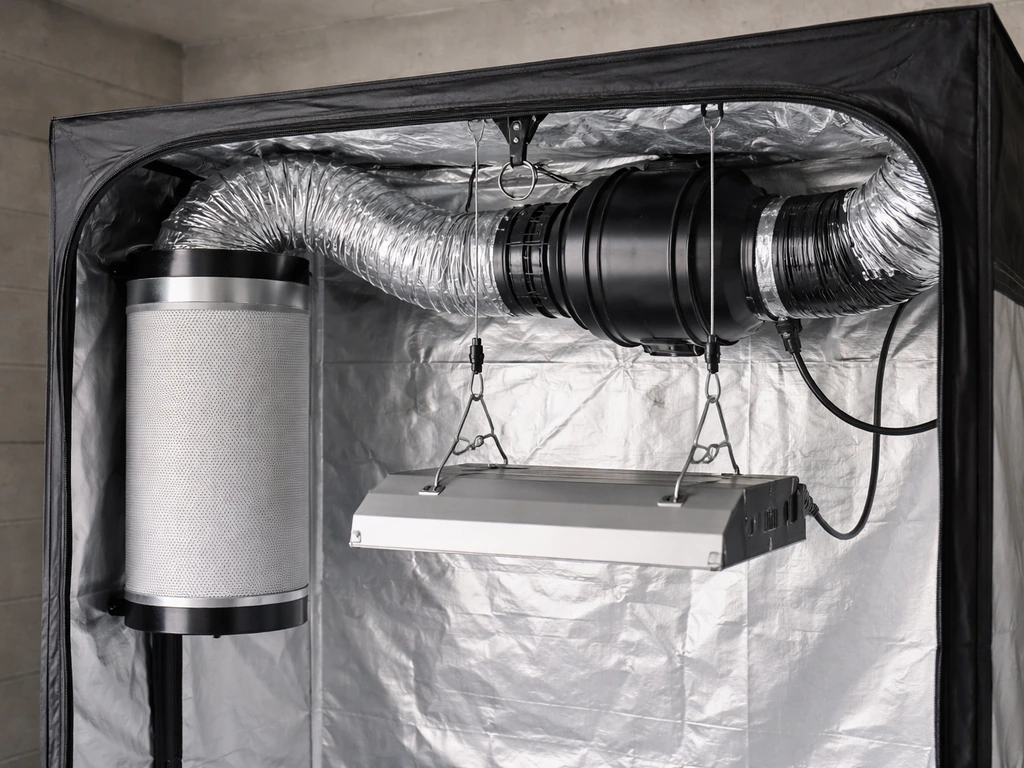
They can be. The tent itself is general-purpose equipment, but paired products and bundles can increase “primarily intended for” arguments. A bundle or checkout flow labeled like a cannabis grow setup, especially with irrigation timers, nutrient plans, or grow schedules, is more likely to be treated as facilitation than selling standalone horticulture tools.
Can I sell grow tents to customers who I suspect will use them for cannabis?
You are generally safer if you do not select, instruct, or target buyers for cannabis production. If you have reason to believe a customer is using the equipment for unlawful high-THC cultivation, continuing sales without any general-use framing can create extra legal exposure. A practical step is to keep policies and listing descriptions strictly horticulture-focused and avoid offering cultivation guidance tied to controlled substances.
Do I need a hemp or cannabis license just to ship grow tents to other states?
Often no, for equipment alone. But if your business model includes distributing hemp-derived products (like CBD goods) or cannabis products, licensing can be required for the product side even if the tent itself is unlicensed. Also, multi-state shipping can trigger state-by-state sales tax and commerce registration duties beyond licensing.
Will adding a disclaimer on my product page protect me if my site content still suggests cannabis use?
A disclaimer helps demonstrate good-faith, but it is not a shield if your overall presentation contradicts it. If your page headings, images, bundled “how to grow” materials, or customer-facing emails still emphasize cannabis cultivation, the disclaimer may carry little weight compared with the rest of the evidence.
How should I describe the tent in listings to reduce risk?
Describe lawful uses with plain horticulture language, for example temperature control for herbs, seed starting for vegetables, or indoor garden enclosures for ornamental plants. Avoid cannabis-specific phrases, avoid “marijuana” cultivation instructions, and avoid naming the tent as part of a “marijuana grow system.” If you include specs like airflow or filtration, keep them tied to general odor or plant-health purposes, not controlled-substance production.
Can payment processors shut me down even if my equipment sales are legal?
Yes. Many processors use automated checks and may flag cannabis-adjacent listings, keywords, or store categories. If you receive account review questions, be prepared to explain that you sell general gardening equipment, not controlled-substances or cultivation instructions. Keeping your branding and checkout descriptors free of cannabis terminology reduces the chance of filter triggers.
What if my customer requests cannabis-specific advice or a grow plan, can I comply?
You should generally refuse. Providing cultivation instructions, schedules, or tailored guidance for producing high-THC cannabis can increase paraphernalia risk because it supports intent and facilitation. A safer approach is to limit responses to general horticulture care, then redirect to lawful growing practices or manufacturer instructions for non-controlled plant uses.
Do local zoning or business licensing rules affect selling grow tents?
They can. Even if the product is legal, your city or county may regulate retail signage, home-based business permits, inventory storage, or advertising restrictions related to cannabis. Before launching, confirm your business license allows the retail activity and that your advertising complies with local rules, especially if you operate online with local pickup.
Is it riskier to sell through marketplaces like Etsy or Amazon than through my own website?
It can be. Marketplaces often have stricter enforcement than the underlying law, and their listing rules may treat cannabis-related keywords as disallowed. Your product can be legal but removed if your title, images, or categories are close to cannabis cultivation. Review each platform’s policy and keep your metadata and variations strictly gardening-focused.
Next Article
Where to Buy Grow Pots Schedule 1: Legal Buy Steps
Step by step, legal options for where to buy grow pots and equipment, checking Schedule 1 vs state hemp or cannabis rule